You Get What They Pay For, War

W.J. Astore

A Few Specifics on the MICIMATT

Readers here have heard of Ray McGovern’s MICIMATT, the military-industrial-congressional-intelligence-media-academe-think-tank complex. It’s gargantuan and lubricated with enormous sums of money.

Consider think tanks. Go to thinktankfundingtracker.org and you’ll see useful information like this:

Top 10 Think Tanks That Receive Funding from Pentagon Contractors

Atlantic Council $10,270,001

Center for a New American Security $6,665,000

Center for Strategic and International Studies $4,115,000

Brookings Institution $3,475,000

Hudson Institute $2,240,000

Council on Foreign Relations $2,095,000

Stimson Center $1,555,763

Aspen Institute $1,125,000

German Marshall Fund $871,010

Carnegie Endowment for International Peace $620,008

I wonder why these think tanks tend to favor the agendas and interests of America’s various weapons makers? Hard to offer “neutral” or “balanced” advice when so much of your funding is coming from the merchants of death.

Now consider these stats, courtesy of former Congressman Dennis Kucinich and The Kucinich Report on Substack:

Military Contractors’ Political Contributions (2023-2024)

According to OpenSecrets, the top defense contractors contributed significantly to political campaigns in the current election cycle:

  • Lockheed Martin – $4,470,698 total ($2,393,034 to Democrats, $2,021,283 to Republicans)
  • Northrop Grumman – $3,354,889 total ($1,903,884 to Democrats, $1,385,924 to Republicans)
  • RTX Corp (Raytheon) – $2,805,535 total ($1,472,920 to Democrats, $1,258,511 to Republicans)
  • General Atomics – $2,507,912 total ($595,947 to Democrats, $1,660,970 to Republicans)
  • L3Harris Technologies – $2,475,712 total ($1,126,096 to Democrats, $1,331,975 to Republicans)

In the presidential race, defense contractors have donated:

  • Kamala Harris – $4,440,605
  • Donald Trump – $1,787,259

In total, the defense sector has contributed over $41.4 million in the 2023-2024 election cycle. For every $1 contributed to political campaigns, these companies receive $10,000 in government contracts—a return on investment most businesses could only dream of.

*****

As weapons makers like Lockheed Martin and RTX throw around millions of dollars to influence Congress, presidential elections, and think tanks, peace organizations that I’m familiar with operate on shoestring budgets where a donation of $1000 is considered large.

My dad taught me the saying, He who pays the piper calls the tune. The weapons makers are paying the piper (think tanks, Congress, the media), and the tunes they’re calling are military marches.

America, we truly get what they pay for, which is war and more war.

A Coda: So far, Bracing Views has received $0.00 from weapons makers. 🙂

Words and War, Hawks and Doves

W.J. Astore

Two of my colleagues at the Eisenhower Media Network, Danny Sjursen and Matthew Hoh, recently gave the best interview I’ve heard on America’s failed wars in Iraq and Afghanistan. You can watch it here.

They were described as anti-war veterans, which is true enough. But it did get me thinking about the words we use to describe war in America, or just words in general that we apply to military actions and the broader military world.

For example, instead of describing Sjursen and Hoh as “anti-war,” why not say they’re “pro-peace” or “pro-sanity” or “pro-humanity” or even “pro-using-history-to-avoid-expensive-and-deadly-quagmire-wars”? OK — that last one may be too long, but I often find pro-peace activists being described as critics, i.e. as malcontents.

Another example might be “think tank.” So many of the thinks tanks within the Beltway in DC are fronts for warrior corporations like Boeing, Raytheon, Lockheed Martin, and so on. Are they really “thinking” freely? And that “tank” word might be more descriptive than they realize, given they always “think” of expensive weaponry like main battle tanks as the solution to everything. (If memory serves, not only did we use the M1 Abrams tank in Iraq; we also tried a few in Afghanistan; similarly, during the Vietnam War, the U.S. Army deployed tanks in jungle areas that were designed to battle their Soviet counterparts on the plains of Germany.)

So maybe “think tank” should mean: “Thinks always of tanks and other ultra-expensive weaponry.”

Here’s a heretical thought: Why are pro-war voices in the establishment referred to as “hawks”? As if they’re noble birds of prey?

I feel sorry for all the real hawks in nature (red-shouldered hawk, Audubon Society photo)

Meanwhile, pro-peace voices are dismissed as passive cooing “doves.” More than a few peace activists have all the energy and tenacity of hawks, and most of the pro-war ones are more likely to be cooing like doves in the ears of their bosses about the wisdom and wonders of going to war and staying there.

I suppose you could call pro-war voices “vultures” or “jackals” or perhaps “ticks” or some other parasite on the body politic, but I’d feel like I’m insulting the tick, which just does what it needs to do to survive. It’s not like ticks have think tanks where they can weigh their choices.

Readers, have a little fun with this. What military/Washington Beltway term annoys you, and how would you define it, in plainspeak? Have at it in the comments section, and many thanks, as always, for reading my posts.

P.S. No one, of course, can beat Orwell and the “war is peace” formulation. And Ambrose Bierce was a master of exposing cant and hypocrisy and dishonesty in his “Devil’s Dictionary.” In their spirit, have at it!

At the Pentagon, Nothing Succeeds Like Failure

101222_pentagon_605_reuters
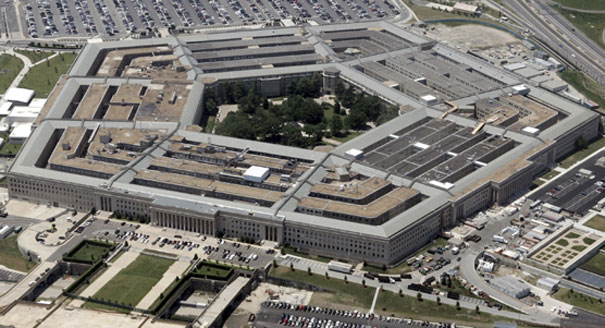
In the puzzle palace on the Potomac, nothing succeeds like failure

W.J. Astore

When it comes to the Pentagon, nothing succeeds like failure. That is the message of William Hartung’s latest article at TomDispatch.com. The Pentagon, Hartung notes, continues to receive massive funding from the American taxpayer, even as its various wars drag on, seemingly without end. Hartung, who wrote a book on Lockheed Martin and the military-industrial complex, has a knack for revealing the latest Pentagon follies. Even as you read his latest at TomDispatch.com, I’d like to add two more items to his list:

1. Washington Think Tanks: Perhaps you’ve heard of them, centers for thinking about national defense, hiring the best and the brightest to come up with disinterested recommendations to safeguard America. Ha!  A few days ago, The National Interest ran an article on what these think tanks were proposing, the “latest fashions in warfighting,” as the article’s title put it.  Please note there’s no “fashion” in peacemaking or war-ending.

Four out of the five think tanks featured in the article were in basic agreement. “Deterrence” had to be based on massive investments in offensive weaponry. There was much agreement as well on modernizing America’s nuclear arsenal, on the need to feature more drones and other unmanned platforms, on air power and power projection, as well as support for the wildly expensive F-35 jet fighter. In sum, more of the same at the Pentagon, only more.

One think tank, the Cato Institute, a Libertarian outfit, dared to depart from Pentagon orthodoxy. Cato called into question the Pentagon’s need for better nukes, prodigal jet fighters, and similar “sticker shock” items on the Pentagon’s wish list. This dissent drew a stinging rebuke from The National Interest, which suggested Cato had developed a defense plan for Canada rather than the great and powerful USA.

To that I say, tell me again what is wrong with Canada?

A question: If four out of five think tanks essentially agree with each other, are not at least three of them redundant?

2.  Forcing Soldiers to Pay Back Bonuses: Yes, you read that right. Even as the Pentagon spends nearly $750 billion a year, even as it avoids any semblance of an audit, U.S. troops who fought overseas are being forced to pay back bonuses that the Pentagon gave them, apparently by mistake (but also with some fraud involved on behalf of recruiters), at a time when the U.S. military was under duress to improve retention rates.

Let’s be clear: In accepting the bonuses, the individual troops were not at fault. They took the money in good faith from a military that patted them on the back for staying in. But now the military says, whoops, we were wrong, we want the money back.

In Pentagon terms, we’re not talking big money. We’re talking chump change.  It’s $15,000 here, $30,000 there. But of course it is big money to the troops and their families. Consider the stress of having government-sanctioned collection agencies on your tail. One soldier had to refinance his house to raise the money to repay an incentive bonus he’d accepted in good faith.

Here’s the kicker. In California, where these abuses and mistakes happened, the military “assigned 42 auditors to comb through paperwork for bonuses and other incentive payments given to 14,000 soldiers.”

Imagine that. The Pentagon can’t even hold an audit, let alone pass one, but it’s willing to hire a platoon of auditors to go after troops and their bonuses.

Here’s my recommendation: Let’s deploy an army of 42,000 auditors to comb through Pentagon paperwork for waste, fraud, and abuse. Let’s get our money back, America. And let’s stop thinking about “fashions” in “warfighting,” and instead dedicate ourselves to ending our wars — before they end us.