War in Somalia

I need to get smart on this

BILL ASTORE

AUG 07, 2025

With an ongoing genocide in Gaza and a dangerous war between Russia and Ukraine, who has the time to look to Africa? As we said when I was still in the military, I need to get smart on this.

Coverage of America’s military adventurism/fiascos in Africa is difficult to come by. Fortunately, there’s Nick Turse at The Intercept, whose latest article is entitled:

PENTAGON: U.S. COUNTERTERRORISM EFFORTS HAVE FAILED AFRICANS

A new Pentagon report sheds light on AFRICOM’s disastrous counterterrorism campaigns.

I know Nick Turse from his days at TomDispatch, so I sent him this note in response to his article:

Bombing worked so well to win the war in Indochina — so why not bomb in Africa?

It seems like the goal is permanent war — you throw gasoline on it with all the weapons exports and drone strikes. And they work — war continues.

I guess that’s my obvious take — pay no attention to their words, watch instead what they do. It’s just war and more war. Given that AFRICOM is a military command, should we be surprised that the “solutions” are always violent ones?

That seems to be the U.S. “strategy” in Africa: bomb the “terrorists” while exporting more weapons related to military “assistance” (the building of indigenous African forces ostensibly allied to the U.S.). Again, it’s a strategy that worked so well in Indochina in the early 1960s …
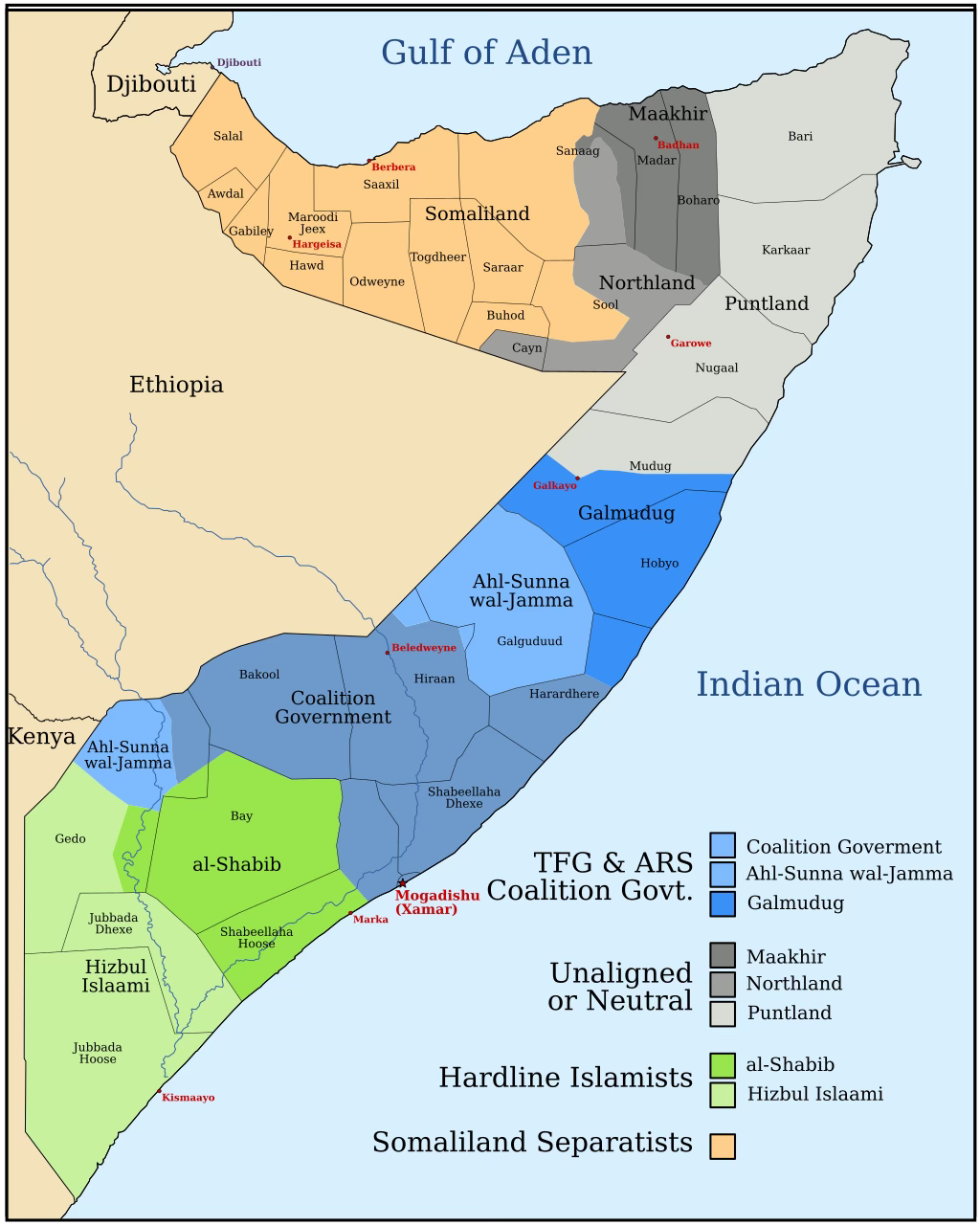
Unfortunately for Somalia, it occupies a strategic position in the Horn of Africa. The U.S. has a major military base in Djibouti.

Besides the perpetuation of war there, I don’t know what the U.S. government is up to in Africa. The mainstream media rarely discusses it. I assume control of scarce resources is a major goal. Also, the military-first AFRICOM approach to the area ensures higher profits for and more power to the military-industrial complex. Geographically, the Horn of Africa is vital to the control of sea and trade routes. Proximity to Yemen, Saudi Arabia, and the Red Sea is obvious. 

In short, I’m exposing my own ignorance as a way of encouraging all of us to get a bit smarter about what our government is up to in Africa. According to the Pentagon’s own sponsored report, it’s not going well. Here’s the kicker from Turse’s article:

“Africa has experienced roughly 155,000 militant Islamist group-linked deaths over the past decade,” reads a new report by the Africa Center for Strategic Studies, a Pentagon research institution. “Somalia and the Sahel have now experienced more militant Islamist-related fatalities over the past decade (each over 49,000) than any other region.”

“What many people don’t know is that the United States’ post-9/11 counterterrorism operations actually contributed to and intensified the present-day crisis and surge of violent deaths in the Sahel and Somalia,” Stephanie Savell, director of the Costs of War Project at Brown University, told The Intercept, referencing the frequent targeting of minority ethnic groups by U.S. partners during counterterrorism operations.

The U.S. provided tens of millions of dollars in weapons and training to the governments of countries like Burkina Faso and Niger, which are experiencing the worst spikes in violent deaths today, she said. “In those critical early years, those governments used the infusion of U.S. military funding, weapons, and training to target marginalized groups within their own borders, intensifying the cycle of violence we now see wreaking such a devastating human toll.”

Terrorist groups are also gaining ground at an exponential rate. “The past year has also seen militant Islamists [sic] groups in the Sahel and Somalia expand their hold on territory,” according to the Africa Center. “Across Africa, an estimated 950,000 square kilometers (367,000 square miles) of populated territories are outside government control due to militant Islamist insurgencies. This is equivalent to the size of Tanzania.” And as militant groups have expanded their reach, Africans have paid a grave price: a 60 percent increase in fatalities since 2023, compared with deaths from 2020 to 2022, according to the report.

As Turse notes, U.S. special forces deployed to Somalia soon after 9/11 as part of the global war on terror (or, if you prefer, the global war of terror). More than two decades of U.S. military strikes (and strife) in the area have only made matters worse. Can we as a nation stand for more of this “success”?

I think the U.S. strategy in Africa is to continue on the same course while suppressing the news of our failures there. Our influence in the region, such as it is, is military-driven, i.e. various African leaders want our weapons and money but little else (because we have little else to offer).

So, all our military leaders can boast of in the region is colossal air strikes. Did you know we used 60 tons of bombs to kill 14 militants in Somalia last February? Victory indeed will soon be ours … if you define “victory” as rising profits for the bomb-makers.

Readers, help me out. If any of you are following America’s war in Africa, I welcome your insights.
Stamping Out War

merlin_169482531_87d89290-a35f-4a5b-8ea3-9f3e607ffa81-jumbo
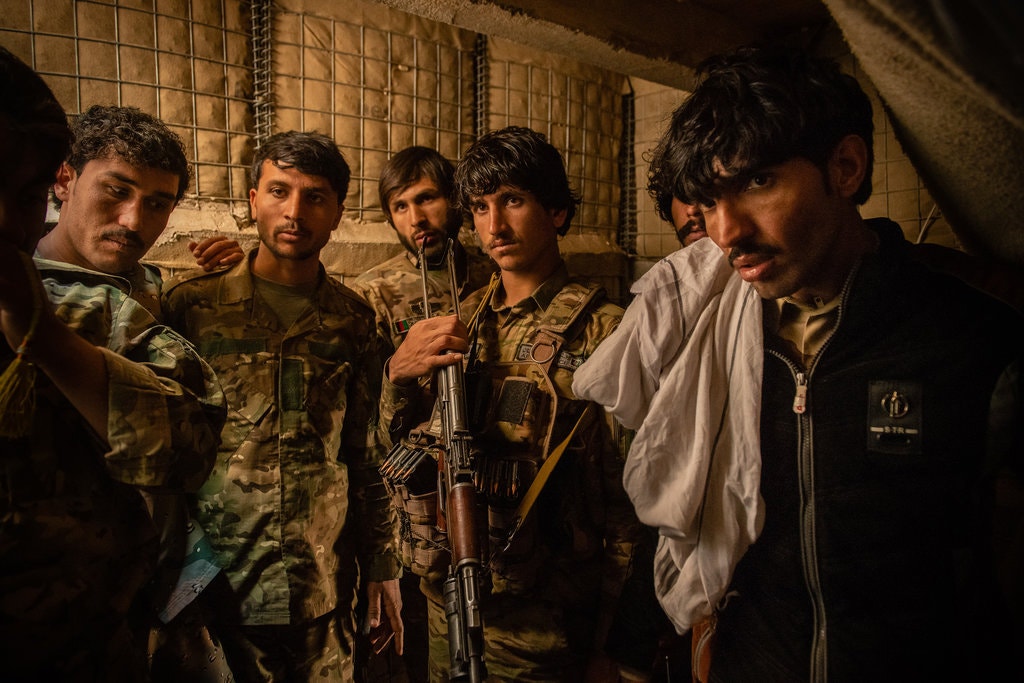
The face of the Afghan War is an unfamiliar one to Americans

W.J. Astore

In my latest article for TomDispatch.com, I detail America’s lack of an antiwar movement — which is partly due to war being literally out of sight for us.  Who knows, for example, of extensive U.S. bombing in Somalia and the innocents killed in that bombing?  Nick Turse has a powerful article on that here.  Wars are rarely covered critically in the mainstream media, and the Trump administration, even more so than previous administrations, has essentially issued blackout orders on information pertaining to U.S. wars and casualty figures.

One piece of encouraging news comes from Afghanistan, where a truce with the Taliban offers hope of an end to that disastrous war.  Yet, as the New York Times reports, the reconciliation process won’t be easy:

In the second decade of this conflict, begun as an act of vengeance by the United States in 2001 and at its peak involving a force of more than 100,000 American troops, the war has increasingly fallen on the backs of young Afghans.

Over the past five years alone, about 50,000 Afghan police officers and soldiers have died fighting. The number for the Taliban is estimated to be the same if not more. The fighting has been brutal, intimate, the same forces on each side often battling each other in familiar localities over long stretches of time.

It’s relatively straightforward for U.S. troops to withdraw from Afghanistan.  But what about the Afghan peoples themselves and their struggles with the legacy of this brutal war?

Here’s the beginning of my article:

There is no significant anti-war movement in America because there’s no war to protest. Let me explain. In February 2003, millions of people took to the streets around the world to protest America’s march to war against Iraq. That mass movement failed. The administration of George W. Bush and Dick Cheney had a radical plan for reshaping the Middle East and no protesters, no matter how principled or sensible or determined, were going to stop them in their march of folly. The Iraq War soon joined the Afghan invasion of 2001 as a quagmire and disaster, yet the antiwar movement died down as U.S. leaders worked to isolate Americans from news about the casualties, costs, calamities, and crimes of what was by then called “the war on terror.”

And in that they succeeded. Even though the U.S. now lives in a state of perpetual war, for most Americans it’s a peculiar form of non-war. Most of the time, those overseas conflicts are literally out of sight (and largely out of mind). Meanwhile, whatever administration is in power assures us that our attention isn’t required, nor is our approval asked for, so we carry on with our lives as if no one is being murdered in our name.

War without dire consequences poses a conundrum. In a representative democracy, waging war should require the people’s informed consent as well as their concerted mobilization. But consent is something that America’s leaders no longer want or need and, with an all-volunteer military, there’s no need to mobilize the rest of us.

Back in 2009, I argued that our military was, in fact, becoming a quasi-foreign legion, detached from the people and ready to be dispatched globally on imperial escapades that meant little to ordinary Americans. That remains true today in a country most of whose citizens have been at pains to divorce themselves and their families from military service — and who can blame them, given the atrocious results of those wars in Afghanistan, Iraq, Somalia, and elsewhere across the Greater Middle East and Africa?

Yet that divorce has come at a considerable cost. It’s left our society in a state of low-grade war fever, while accelerating an everyday version of militarism that Americans now accept as normal. A striking illustration of this: President Trump’s recent State of the Union address, which was filled with bellicose boasts about spending trillions of dollars on wars and weaponry, assassinating foreign leaders, and embracing dubious political figures to mount illegal coups (in this case in Venezuela) in the name of oil and other resources. The response: not opposition or even skepticism from the people’s representatives, but rare rapturous applause by members of both political parties, even as yet more troops were being deployed to the Middle East.

Please read the rest of my article here.  Let’s do our best to stamp out war.

Monday Military Musings

Ford
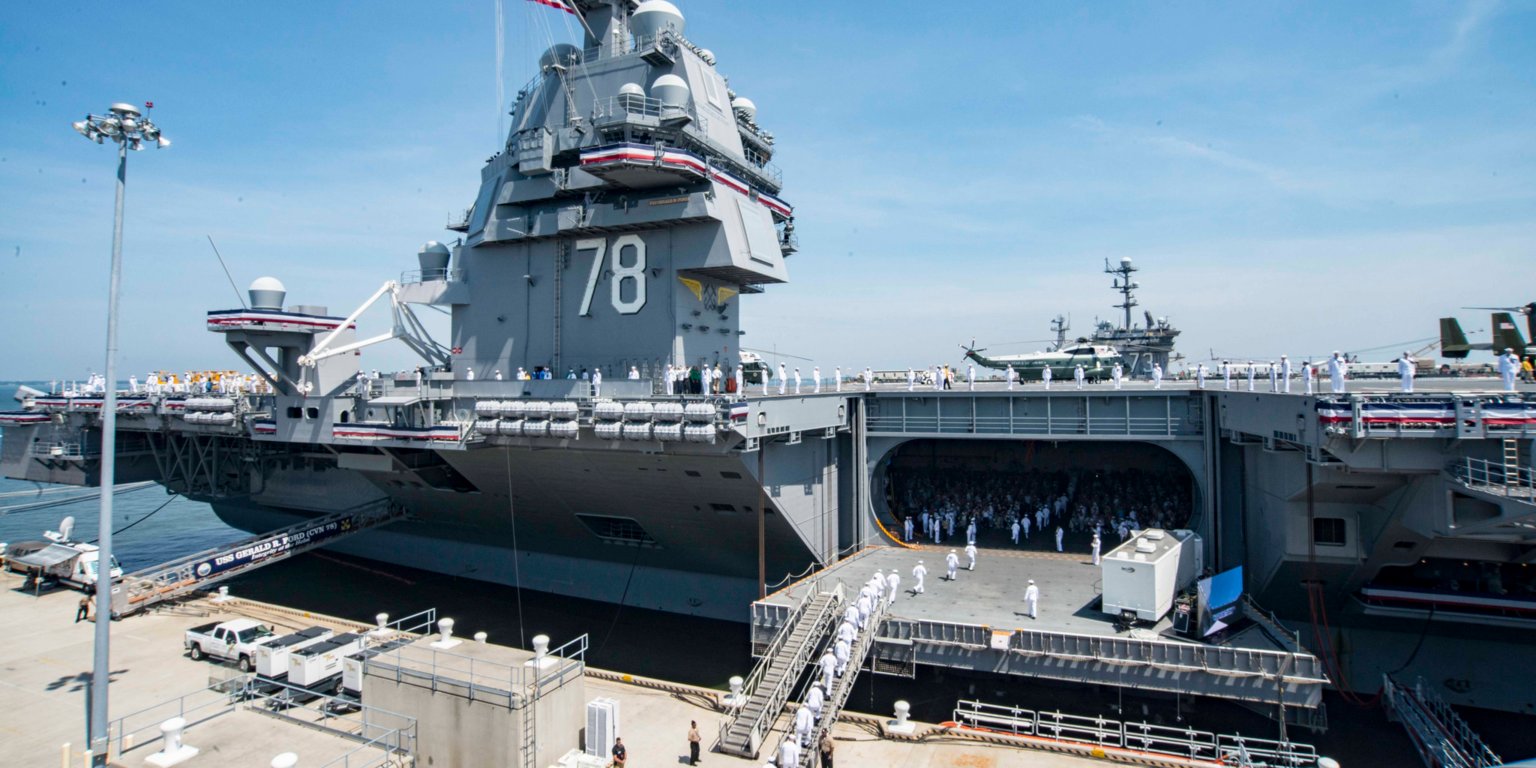
The USS Gerald R. Ford: Giving new meaning to “teething pains”

W.J. Astore

Three news items caught my eye, courtesy of FP: Foreign Policy.  The first involves the U.S. Navy, which has “inked a $14.9 billion contract for two Ford-class aircraft carriers, according to Defense News. The service claims the purchase of two carriers at once will save $4 billion.”

All credit to the Navy: As the Trump administration throws money at the Pentagon, to the tune of $750 billion next year, the Navy is moving at flank speed to order two new aircraft carriers of the Ford class.  The problem is that first Ford-class carrier, which has been a $13 billion disaster: three years behind schedule, billions over budget, with catapults that don’t work, among other serious problems.  But no matter.  Let’s build another two of these mammoth ships while “saving” $4 billion in the process.

Three Ford-class carriers will cost at least $43 billion (despite the $4 billion “savings”), but you hear few dissenting voices in Congress.  Anchors Aweigh, my boys!

The Navy says it needs at least twelve large carriers to perform its mission, but no rival navy has more than one.  Carriers are all about imperial power projection across the globe; does the USA really need more of this for national “defense”?

The second news item comes from America’s endless Afghan war, in which the USA continues to throw billions of dollars at Afghan government security forces despite the always-disappointing results, as documented by the Special Inspector General for Afghanistan Reconstruction (SIGAR):

“The size of Afghanistan’s armed forces is shrinking even as its military faces a sustained challenge from Taliban insurgents. The [SIGAR] report finds that ‘the [Afghan] army and police are at a combined total of just over 308,000, down from 312,000 a year earlier and nearly 316,000 in 2016,’ the AP reports. ‘The cost of arming, training, paying and sustaining those forces falls largely to the U.S. government at more than $4 billion a year.’”

To compensate for the poor performance of Afghan government security forces, the U.S. “has stepped up airstrikes and special operations raids in the country to the highest levels since 2014 in what Defense Department officials described as a coordinated series of attacks on Taliban leaders and fighters.  The surge, which began during the fall, is intended to give American negotiators leverage in ongoing peace talks with the Taliban, The New York Times reports.”

Just what we need: another American “surge” in Afghanistan.  This time, it’s not to win the war; it’s all about gaining “leverage” in ongoing peace talks with the Taliban.  This calls to mind all the bombing the Nixon administration did during its peace talks with North Vietnam in the early 1970s, also in the name of “leverage.”  Look at how well that worked out.

Finally, the third item mentions America’s ongoing and undeclared drone war in Somalia.  Citing a Nation report, FP: Foreign Policy notes that

Since Donald Trump took office, the U.S. military has approximately tripled the number of strikes that it conducts each year in Somalia, according to figures confirmed by the Pentagon, while such actions—and the reasons behind them—have become increasingly opaque.”

“An investigation by the magazine ‘identified strikes that went unreported until they were raised with AFRICOM, but also others that AFRICOM could not confirm—which suggests that another US agency may also be launching air attacks in the region. The investigation also tracked down evidence that AFRICOM’s claim of zero civilian casualties is almost certainly incorrect. And it found that the United States lacks a clear definition of terrorist, with neither AFRICOM, the Pentagon, nor the National Security Council willing to clarify the policies that underpin these strikes.’”

In other words, a war is being waged with no accountability to the American people.  One has to admire the chutzpah of the Pentagon, however, in declaring these drone attacks have only killed “terrorists,” even if that term hasn’t even been defined clearly.

Well, there you have it: Overpriced ships that enable imperialism, overpriced foreign militaries that require more U.S. bombing and special ops raids as a prop “for peace,” and finally a wider, undeclared, war in Africa.  Just another manic Monday in Empire America.

State of (Military) Failure

turse

Tom Engelhardt

Reposted from TomDispatch.com and used by permission.

Someday, someone will write a history of the U.S. national security state in the twenty-first century and, if the first decade and a half are any yardstick, it will be called something like State of Failure.  After all, almost 15 years after the U.S. invaded the Taliban’s Afghanistan, launching the second American Afghan War of the past half-century, U.S. troops are still there, their “withdrawal” halted, their rules of engagement once again widened to allow American troops and air power to accompany allied Afghan forces into battle, and the Taliban on the rise, having taken more territory (and briefly one northern provincial capital) than at any time since that movement was crushed in the invasion of 2001.

Thirteen years after George W. Bush and his top officials, dreaming of controlling the oil heartlands, launched the invasion of Saddam Hussein’s Iraq (the second Iraq War of our era), Washington is now in the third iteration of the same, with 6,000 troops (and thousands of private contractors) back in that country and a vast air campaign underway to destroy the Islamic State.  With modest numbers of special operations troops on the ground and another major air campaign, Washington is also now enmeshed in a complex and so far disastrous war in Syria.  And if you haven’t been counting, that’s three wars gone wrong.

Then, of course, there was the American (and NATO) intervention in Libya in 2011, which cracked that autocratic country open and made way for the rise of Islamic extremist movements there, as well as the most powerful Islamic State franchise outside Syria and Iraq.  Today, plans are evidently being drawn up for yet more air strikes, special operations raids, and the like there.  Toss in as well Washington’s never-ending drone war in Pakistan’s tribal borderlands, its disastrous attempt to corral al-Qaeda in the Arabian Peninsula in Yemen (leading to a grim and horrifying Saudi-led, American-supported internecine conflict in that country), and the unending attempt to destroy al-Shabaab in Somalia, and you have at least seven wars and conflicts in the Greater Middle East, all about to be handed on by President Obama to the next president with no end in sight, no real successes, nothing.  In these same years Islamic terror movements have only spread and grown stronger under the pressure of the American war machine.

It’s not as if Washington doesn’t know this. It’s quite obvious and, as TomDispatch Managing Editor Nick Turse, author of the highly praised Next Time They’ll Come to Count the Dead, points out today in his latest report on the U.S. military’s pivot to Africa, the pattern is only intensifying, something clearly recognized by key American commanders. What’s strange, however, is that none of this seems to have caused anyone in the national security state or the military to reconsider the last 15 years of military-first policies, of bombs dropped, troops dispatched, drones sent in, and what the results were across the Greater Middle East and now Africa. There is no serious recalibration, no real rethinking. The response to 15 years of striking failure in a vast region remains more of the same. State of failure indeed!

Be sure to read Nick Turse on how U.S. military efforts in Africa show more regress than progress.