Peace Dividends? Not in Our Lifetimes

W.J. Astore

War is America’s Growth Stock

When the Soviet Union fell in 1991, America heard something about “peace dividends” and “a new world order.” With the Soviet Union gone, the Cold War over, America could take all the hundreds of billions it had been spending on weapons and wars and spend it instead on America. We could, in theory, embrace peace, reinvest in America, and save our children from a world of incessant wars and preparations for the same.

It was not to be.

The collapse of the Soviet Union coincided with Desert Shield/Storm, when America allegedly kicked its “Vietnam Syndrome” once and for all, according to then-President George H.W. Bush. This “syndrome” was allegedly inhibiting America’s pursuit of righteous victory through military means, and the expulsion of Iraqi forces from Kuwait was allegedly proof that America was back and that military force had powerful efficacy for good.

Out went the idea of peace dividends. This was America’s moment to dominate, a Pax Americana achieved through military force or threats of the same. U.S. dominance of the Middle East contributed to the decision by Al Qaeda to launch attacks against the USA, but any U.S. culpability for 9/11 was swept away by another President Bush, George W., who explained that Al Qaeda had no rationale for 9/11 other than their hatred of American freedoms.

The aftermath of 9/11 was an orgy of American violence directed against “evildoers” everywhere. It was a two-decade global war on terror, GWOT as jihad, leading to wars in Afghanistan, Iraq, Libya, and elsewhere. Even as these wars proved disastrous, those who advocated for them saluted themselves as being right but (perhaps) for the wrong reason, the “wrong” reason being some version of having loved America too much, whereas those who’d opposed these wars were “wrong” even though events had proven them to be right (they were wrong apparently because they didn’t love America enough, especially its domineering government).

It’s been a long time, more than three decades, since I’ve heard anyone mention peace dividends. Even when President Biden ended the Afghan War in 2021, military spending soared upwards, and this was before the Russia-Ukraine War. With the Hamas attacks on Israel and the impending invasion and destruction of Gaza by the IDF, America will likely embrace war and increase military spending with even more fervor.

War is America’s growth stock. Our politicians brag that military aid to countries like Ukraine and Israel serves to create jobs in America. Rarely is any mention made of Russian dead, of Palestinian dead, or for that matter of any dead, as America dominates the global trade in weaponry. The idea of “the merchants of death,” the opposition by the U.S. Senate in the 1930s to making profits by killing people, seems like ancient history, seems absurd, given America’s tight embrace of militarism. If we’re not fighting wars we’re arming others to fight wars. And we console ourselves that we’re only providing “good guys” with guns, for, as the NRA taught us, the only way to stop bad guys with guns is to give good guys even more guns.

Perhaps that’s the essence of U.S. foreign policy today. We give “good guys” like Ukrainians and Israelis all the guns they want to go kill “bad guys” like Russians and Palestinians while congratulating ourselves for “investing” in America’s arms manufactures. Indeed, members of Congress have said that providing older weapons from U.S. stockpiles of the same to countries like Ukraine is positively wonderful, since it forces the U.S. military to buy new weapons for itself, helping to create more jobs among the makers of guns, ammo, and bombs. What a win-win!

Lately I’ve been reading a lot about President Lyndon Johnson and how his “Great Society” and fight against poverty was done in by the calamitous Vietnam War in the 1960s. What’s tragic today in America is that we no longer have a vision of a great society, a better society, a fairer, more just, and more equitable society. Endless war and wildly excessive military expenditures is our only vision.

We put it on our stamps. And that’s where it remains.

The result is that “peace” has become a word rarely heard in America, a Pollyanna-like concept, easily dismissed as pie-in-the-sky. In fact, the last U.S. president to speak sincerely and powerfully for peace was John F. Kennedy, and that was sixty years ago. No president since JFK has stood before us to advance a vision of eventual world peace rather than of endless war and expensive preparations for the same.

We are told and taught today that peace is impossible and war is inevitable. Those who promote peace are dismissed as dreamers and weaklings as the “warriors” and hawks are promoted for their alleged realism and toughness.

Constant wars and preparations for the same destroy democracy and lead to spiritual death, to cite the words of James Madison and Martin Luther King Jr. Those are the true dividends of war, not jobs in American factories producing bullets and bombs. The true dividends of peace are a restoration of democracy and spiritual renewal in America.
Which dividends as a people do we truly want?

War Dividends

W.J. Astore

The Pentagon Budget Keeps Soaring Up, Up, and Away!

When the Soviet Union collapsed in 1991 and the Cold War ended, I heard a lot about peace dividends. It was time to become a normal country in normal (more peaceful) times, said Jeanne Kirkpatrick, an early neocon who served under Ronald Reagan. More than thirty years later, America still awaits its peace dividends from the Cold War.

When the Afghan War came to a sputtering and ignominious end in 2021, I didn’t hear much at all about peace dividends. Even though the Afghan War was costing the United States almost $50 billion a year before it crashed and burned, the Pentagon budget for 2022 went up by that amount rather than down. You’d think the end of wars would lead to a decrease in military spending, but not in America.

And so we come to today, when I learned that the Pentagon budget for 2023, which sat at $802 billion per the request of the Biden administration, has been boosted big time to $847 billion by the House and Senate Armed Services Committees. That’s $45 billion extra for more wars and weapons, a whopping sum of money that would likely end homelessness if it was invested in America.

One thing is certain: war dividends always come through. Peace dividends? Not so much.

How does the Washington Beltway crowd justify such enormous sums for “national defense”? Threat inflation, of course. Because of its debilitating war with Ukraine, Russia is weaker but somehow that means America must spend more because Putin or something. Chinese maneuvers near Taiwan are treated like direct incursions into U.S. coastal waters. A few North Korean missiles are enough to justify more than a trillion dollars for new or revamped nuclear forces over the next thirty years. And of course military Keynesianism is always a factor, as in Pentagon-related jobs spread as widely as possible through every Congressional district.

The Pentagon can’t even pass an audit (for the fifth year in a row!), yet it still gets more and more billions from you the taxpayer.

I took a quick look at NBC News online to see if there were any objections to this massive $847 billion budget for the Pentagon. The only story featured warned that “GOP senators threaten to delay military bill over vaccine mandate.” Yes, what’s truly worrisome is that a few troops might have to accept a COVID vaccine against their will. Geez, where were these senators when the military was jabbing me in the arm every year with a mandatory flu vaccine?

Trees are falling in the forest to print all the money the Pentagon wants (and then some), but few Americans hear a sound since the mainstream media refuses to cover wasteful military spending and disastrous American wars. 

If you should want a sure bet in America, don’t toss money at your favorite sports team. Place your bet on America’s war horse. Whether it wins, places, or shows, or even comes up lame, it will always pay dividends.

Taking On the Military-Industrial Complex

W.J. Astore

To Fight the Unbeatable Foe

To dream the impossible dream/To fight the unbeatable foe/To bear with unbearable sorrow/To run where the brave dare not go …

Whether you call it the military-industrial complex (MIC), the national security state, the MICIMATT,1 the blob, or something else entirely, taking on the MIC and trying to restrain its influence and power is akin to dreaming the impossible dream.

President Eisenhower warned us about the grave threat posed to liberty and democracy by the MIC in 1961. In the early 1980s, as a college student, I wrote against the growth of the MIC and massive Pentagon spending under President Ronald Reagan. After I retired from the military, I started writing articles, giving interviews, etc. against the MIC and militarism in America. I’ve been doing it for fifteen years, and it hasn’t made any discernible difference. Why should it?

The MIC is massive and massively powerful. It consumes more than half of the federal discretionary budget. It employs millions of people. It is wildly profitable for major military contractors like Boeing, Lockheed Martin, and Raytheon. It is sold as essential to America’s national security and safety. Its uniformed members are lauded as heroes. We are all as Americans immersed in a matrix of militarism and imperialism since birth; to fight against it, then, is often seen as un-American.

Spoiler alert: I have no easy answers. There are no silver bullets. Ike called for an alert and knowledgable citizenry (that’s us) who would act as guards against the growing anti-democratic power of the MIC. The MIC responded by making sure we are kept largely docile and ignorant of its plans and actions.

When brave Americans do speak up, they are punished. Not people like me—I’m small fry. I mean people like Martin Luther King Jr., who called America the world’s greatest purveyor of violence during the Vietnam War. That speech made him unpopular even among many of his followers; exactly one year later, he was shot and killed.

People who truly pose a threat to the MIC are taught a lesson. Congresswoman Tulsi Gabbard, at the time also a major in the Hawaii Army National Guard, was smeared by NBC News as a Russian asset when she announced her candidacy for president in 2020. Gabbard was the only mainstream candidate criticizing the MIC and its disastrous regime-change wars. Dennis Kucinich, who bravely advocated for a Department of Peace, was sidelined and silenced by his own party (the Democrats). Jill Stein, who ran in 2016 as the Green Party candidate for the presidency, was also smeared as a “useful idiot” for Russia because she called for major reductions to war budgets.

There are many examples of brave Americans fighting the MIC. Edward Snowden told the truth about abuses of power by U.S. intelligence agencies; he’s in exile in Russia. Chelsea Manning went to prison for bravely exposing war crimes in Iraq. Daniel Hale is in prison for exposing the murderous results of America’s drone wars. Even foreign journalists like Julian Assange aren’t safe. Assange embarrassed the MIC and partially exposed the hideous face of war to Americans, and for that he’s being held in a maximum security prison under conditions meant to break him physically and mentally.

What is to be done? It’s flattering to me that a few readers think I might have answers. I have none. I’m not an organizer, I’m not an agitator or protester, I’m just a retired military schmuck looking for a new way forward for our country (and, by extension, for the planet). A new cold war is not a new way forward. Indeed, a new cold war will only ensure a hotter future for us all, if not an irradiated one.

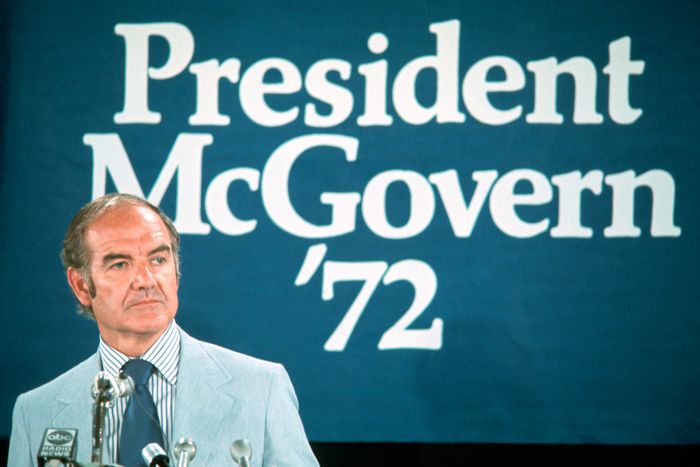
McGovern, a bomber pilot and war hero, never bragged about his war experiences

I think George McGovern had the right approach in 1972. “Come home, America,” McGovern said. Stop trying to dominate the world. Stop claiming that democracy can be spread by bullets and bombs. Downsize the military and the whole MICIMATT and with the money saved send a check to every American. Call it a true peace dividend.

Support our troops—bring them home, is a commonsense message that holds appeal. Returning to Eisenhower, Ike once said that only Americans can truly hurt America. We hurt America when we exaggerate threats overseas, when we give blank checks to warmongers, indeed when we forget how hellish war truly is and how corrosive it is to our democracy (what’s left of it) and our way of life.

I’ve written so much about this that I know I’m repeating myself. And I’m probably preaching to the choir as well. But the choir must keep singing, even when the dogs of war howl to drown us out.

America needs a reformation or a revolution. A restoration of liberty where war and militarism are seen as the antithesis of liberty. Why can’t America be a shining city on a hill? Why do we instead choose to be a dark fortress bristling with cannons?

To dream the impossible dream/to fight the unbeatable foe …

1

Military-industrial-congressional-intelligence-media-academia-think tank complex. An awkward acronym that does help to capture the size and reach of the national security state. The MIC itself is supported by the mainstream media, many colleges and universities that are funded by the DoD, and all those think tanks in the DC area that are often funded by major weapons makers. Truly a Goliath awaiting a David with a slingshot.

Dammit, Where’s My Peace Dividend?

W.J. Astore

Just over 30 years ago, as a young captain in the Air Force, I was celebrating the collapse of the Soviet Union and the arrival of “the new world order.”  Those were the days!  We talked seriously about peace dividends, about America becoming a normal country in normal times, as in peaceful times.  Money on wars and weapons would be redirected to infrastructure improvements and repairs, to critical research in medicine, to improving health care, to renewable sources of energy.  America was ready to vault into the 21st century, no longer haunted by a cold war that could end the world in a heartbeat with nuclear war.

Leave it to America to snatch defeat from the jaws of victory.  For we truly have defeated ourselves since 1991 in our embrace of militarism, weaponry, and war.  And now we face renewed fears of nuclear war without any serious movement to end the proliferation of nuclear weapons.  Indeed, the U.S. military speaks of “investing” in more nuclear weapons as if they’re a growth stock, as if there are dividends awaiting us when we cash them in.  We’ll all cash in our chips, that’s for sure, if the missiles fly.

We seem possessed by a form of MADness, a certain fondness for mutually assured destruction (MAD).  Or, perhaps not fondness but resignation bordering on defeatism, which makes me think of those old posters we had as kids about nuclear war that reminded us there was little we could do once the missiles were launched, so we may as well kiss our ass goodbye.

But the world nevertheless remains full of surprises.  Color me amazed by America’s new love of Ukraine, formerly a Soviet republic that most Americans still can’t place on a map.  (I’ve seen Americans quizzed on the street who place Ukraine in Mexico or Australia.)  We love Ukraine so much that we’re willing to pledge $100 billion or more in aid, most of it in the form of military weapons and training.  America has never had a “special relationship” with Ukraine, so what gives?  My friends tell me we must defend democracy in Ukraine, but democracy doesn’t exist there (nor does it in America, but that’s another story).

The words of Darth Vader come to mind: “You don’t know the power of the Dark Side [of the Force].  I must obey my master.”  And in the case of Congress, that master is obviously the national security state, the MICIMATT of which Congress is a card-carrying member. (MICIMATT: Military-Industrial-Congressional-Intelligence-Media-Academia-Think-Tank Complex.) Think of it as the real “evil empire,” and good luck trying to resist its power and influence.    

Yet, how can America have turned to the “dark side”?  Isn’t America a collection of Jedi knights fighting for freedom?  It sure would be nice to think so!  But when you look at America’s wars in places like Vietnam, Iraq, and Afghanistan, what you see is an incredibly rich empire throwing almost everything at countries and peoples who had little if anything compared to the wealth and power of the U.S. and its ferocious military machine.  You also see enormous profiteering, especially by the “industrial” side of the America’s militarized complex, and incessant lying by the U.S. government about progress and “winning” in its various misbegotten wars.

Only when military defeat is nearly total do U.S. troops finally come home, after which the peace advocates, relatively few in number, are blamed for weakening fighting spirit at home.

Promises of peace dividends, whether after World War II or the Cold War, have simply withered away as wars of conspicuous destruction (Vietnam, Iraq, etc.) fed a society engaged in conspicuous consumption.  A militarized form of Keynesianism provided jobs and wealth for relatively few Americans at the expense of a great many.

Paradoxically, even as America’s wars went bad, no one was ever held accountable.  When the warmongers admitted they were wrong (a rarity), they argued they were wrong for the right reasons.  And those who were truly right, whether about Vietnam or Iraq or Afghanistan, were obviously right for the wrong reasons.  Those “wrong” reasons included preferring peace to war or daring to question the purity of U.S. motives and methods when it came to foreign wars.

And so we’ve come to the point when the so-called Progressives in Congress quickly cave to pressure and withdraw a milquetoast and mealymouthed letter that argued a tiny bit for diplomatic efforts by the Biden administration to end the Russia-Ukraine War.  It was as if they’d become quislings; as if calling for negotiation was equivalent to bowing and scraping before Vladimir Putin.

So, I return to my question: Dammit, where’s my peace dividend?  And the answer is nowhere because powerful forces in America simply love their war dividends — and they’re not about to surrender them.

Note to readers: If you’d like to comment, please go to Bracing Views on Substack. Thanks.

Time for a Real Peace Dividend

W.J. Astore

On “Two Minutes to Midnight,” I talk about some of the themes I’ve developed at this site. Produced by Catalysta, the idea behind the series is to encourage fresh thinking on the challenges confronting us in a rapidly changing world.

Here is the Youtube link: https://www.youtube.com/watch?v=JTc7Qj4AXWU&t=59s

In this interview, I explain how and why America spends way too much on weaponry and wars, and how we can shift the narrative and revive the idea of peace. Echoing George McGovern, it’s time to “come home, America,” to invest in our country and ourselves, rather than to fund more weaponry and more overseas wars.

Near the end of the video, I make an appeal to younger generations of America to lift their voices against the military-industrial-Congressional complex. I urge them not to be intimidated and to speak their mind, explaining that many veterans are just as fed up as they are. Collectively, we need to act. And perhaps the first and most critical step is getting big corporate money out of politics even as we work to make major cuts to the U.S. war budget.

Special thanks to Edward Goldberg at Catalysta.net for inviting me and offering me a chance to share my views with a wider audience.

Nuclear Firecrackers for the Fourth of July

W.J. Astore

Did you know the U.S. is developing a new land-based ICBM? That’s intercontinental ballistic missile, and back in the 1980s we pretty much considered them obsolete in the Air Force. That’s because they’re the least survivable “leg” of the nuclear triad, which consists of ICBMs, nuclear bombers like the B-2 stealth, and submarines like the current Ohio-class ones armed with Trident missiles.

But never mind all that. When I visited Los Alamos National Laboratory (home of the Manhattan Project) as an Air Force captain in the spring of 1992, the mood there was glum. With the collapse of the Soviet Union, Los Alamos was facing major cuts in funding, since back then we naively believed there was going to be a “peace dividend” and the U.S. would return to being a normal country in normal times. We wouldn’t have to “invest,” as our military likes to say, in more nukes. We had plenty already; indeed, more than enough to end life on earth.

But that was then and this is now and the Biden administration, joining the previous Trump and Obama administrations, is “investing” up to $1.7 trillion over the next thirty years in more nuclear weapons to destroy the earth. It’s a job-creator, don’t you know. And rural areas with nuclear missile bases, like Wyoming and North Dakota, don’t want to lose jobs or the billions in federal dollars that flow to their states in the stated cause of nuclear deterrence. Deterring who or what is uncertain.

Americans love things that blow up while lighting up the sky and causing the heavens to glow. We witness it every year at this time. Let’s just hope the nuclear firecrackers stay stashed away. Some firecrackers are too dangerous to contemplate.

I remember back in 1992 walking around the desert at Alamogordo, New Mexico, site of the first atomic blast that preceded Hiroshima and Nagasaki. There’s not much left of the tower where the bomb sat: just the concrete base and some twisted metal. Walking around the area, you can still find sand that’s been fused into glass by the heat of the atomic blast. I didn’t take any home with me as it’s still radioactive. People were walking around with masks before masks became a thing with Covid. It was an eerie experience.

We don’t spend much time, if any, on July 4th thinking about all our weapons that are designed with great care and ingenuity to blow up and kill, whether it’s one person or millions (or perhaps even the planet itself). But I urge you to set aside a few minutes to read Tom Engelhardt’s latest article at TomDispatch.com. He writes about his own eerie and disturbing experience visiting Japan and Hiroshima and thinking about the unthinkable.

Here’s the link: https://tomdispatch.com/an-all-american-horror-story/

Isn’t it high time we finally ended our distinctly American nuclear horror story?

Please — no nuclear firecrackers

Cutting the War Budget

We need McGovern-size cuts to America’s bloated war budget

W.J. Astore

This week, Congress will attempt to override President Trump’s veto of the NDAA, the national defense authorization act, which in 2021 provides $740 billion to the Pentagon and its wars. As usual, there is strong bipartisan support for this massive war budget. Democrats will join Republicans in bowing and scraping before the military-industrial complex, even as they frame it in terms of “supporting” the troops and defending America. In short, Trump’s veto will not stand.

I’m so fed up with Democrats serving the war party, denying health care to all Americans, and so on that I finally changed my political party designation in my home state. I am now a no-party independent instead of a registered Democrat. (My wife joined me as she’s no fan of “handsy” Joe Biden and the refusal of “centrist” Democrats to help people in meaningful ways.)

Perhaps that’s what we all need to do. Reject the Republican and Democratic parties and fight for a political establishment that would put people first rather than billionaires and corporations. Short of revolution, I don’t see other options that promise meaningful change.

To my knowledge, the last major party presidential candidate who called for meaningful reductions in war spending was George McGovern. For example, McGovern called for a defense budget in 1975 of $54.8 billion, roughly $32 billion less than what the Nixon administration had proposed. McGovern, of course, had to couch this in terms of America still being a superpower with a nuclear arsenal that would be second to none, but at least he had the courage to talk of peace and of new approaches to foreign policy that would put diplomacy first instead of weaponry and war. What a loser he was, right?

If we applied a McGovern-size cut to today’s NDAA, we’d be talking about a “defense” budget of roughly $470 billion a year, still plenty of money, one would think, for the Pentagon to defend America. The $270 billion in savings could and should be applied to stimulus checks for Americans desperate for help in these Covid-disturbed times.

Imagine Americans getting a check from the government — a rebate of sorts — as a peace dividend! What would Americans rather have: a bunch of expensive F-35 jet fighters; ultra-expensive newer nuclear weapons on top of the ultra-expensive older ones; or some cash in pocket to buy groceries and pay their rent? I don’t know about you, but more F-35s and more nuclear bombers and missiles are not helping my bottom line.

To return to my changed political party affiliation: When a Democratic president-elect nominates a retired general and board member of Raytheon as the best person to exercise civilian oversight over the Pentagon, you know the Democratic party is a toady to the military-industrial complex and devoid of integrity as well as fresh ideas.

War? What is it good for? Absolutely nothing. Time for some peace dividends, America.

The Military-Industrial Complex Wins Again

Does the Pentagon and its contractors need a stimulus more than the American people?

W.J. Astore

At the American Conservative, I discuss the War on Terror, the nomination of General (retired) Lloyd Austin as Secretary of Defense, the lack of an American anti-war movement, and why we never see a “peace dividend” in the USA. My discussion begins at the 16-minute point.

Also, articles by Matt Taibbi and David Sirota suggest that the biggest winner of the latest Covid-relief stimulus talks in Congress is, believe it or not, the military-industrial complex. Right now there are no plans to send money to the American people, even as nearly 15 million have lost their employer-sponsored health care and millions more face eviction or foreclosure in the new year.

Here are the headlines:

“Stimulus Bill Bails Out Defense Contractors, Denies Direct Payments to Families,” by David Sirota and Julia Rock at https://www.dailyposter.com/p/stimulus-bill-bails-out-defense-contractors

“Amazing” Hypocrisy: Democrats Make Wreck of Covid-19 Relief Negotiations
Democrats stonewalled all year on a new pandemic relief package. Now they’re proposing a new plan that undercuts even Republican proposals, and screws everyone but – get this – defense contractors, by Matt Taibbi at https://taibbi.substack.com/p/amazing-hypocrisy-democrats-make

Taibbi quotes one aide as saying: “There are no direct payments for regular working people, people living off tips. But they made sure there’s a provision in there to help defense contractors who aren’t working right now. They get what they’re looking for.”

In short, the military-industrial complex wins again. The American people? They lose again.

Why America’s Wars Never End

s-l300
Really?

W.J. Astore

Inspired by three recent articles at TomDispatch.com, I’d like to suggest why America’s wars never end.

The first article marking the 30th anniversary of the fall of the Berlin Wall is by James Carroll.  It brought me back to when I was a young Air Force captain on active duty.  All of us in the military were surprised when the wall came down.  Soon the Soviet Union would collapse as well.  I know because I got a certificate signed by President G.H.W. Bush congratulating us for winning the Cold War.

In the early 1990s there was much talk about a New World Order (largely undefined) and a Peace Dividend.  The “new” world order quickly became global military adventurism for the U.S. and the peace dividend withered as Desert Shield/Storm and other operations commenced.

I recall some personnel cuts, but no real cuts in weaponry.  And no change to strategy.  NATO remained even though the Warsaw Pact had dissolved.  Indeed, NATO would soon be expanded (in the cause of peace, naturally), even as U.S. imperial ambitions grew.  It was the “end of history” and the U.S. had triumphed, or so we thought.

But why had we triumphed?  Apparently the lesson our leaders took from it was that military strength was the key to our triumph, therefore more of the same would lead to new triumphs.  Pax Americana was not about democracy or freedom: it was about weapons and wars.  Peace through military strength (and destruction) was the driving philosophy.

Unbounded ambition and unbridled power – that was the new world order for America.  The wall came down in Berlin, but it didn’t come down in our minds.  Instead of an open society, Fortress America became the norm.

The second article is by Allegra Harpootlian and focuses on the “collateral damage” (murdered innocents) of America’s global bombing and drone campaigns.  It made me think of a conversation I had with a student; he’d been in the U.S. Army and fought in Afghanistan.  Basically, he described it as a dirt-poor country with a primitiveness that seemed Biblical to him.  He got me thinking about how we “see” people like the Iraqis and Afghans as less than us.  Different.  Inferior.  Primitive.  From another time, and from another place.

So, when Americans kill civilians in those places, it’s almost like it’s cinematic, not real, “a long time ago, in a galaxy far, far away.”  We just move on.

Of course, Americans are not encouraged to be empathetic people.  The world is supposed to revolve around us.  “You can have it all.”  In a world of selfies, why care about others?  Look out for #1!

To put a bow on this, consider evangelical Christianity and the prosperity gospel.  (The idea God will reward you with material goods and money as a sign of righteousness.)  Remember when charity to others was valued?  Not anymore.

Another way of putting this: In America there’s a huge market for self-help books, videos, etc.  But where are the books and videos encouraging us to help others?

The third article is by Andrew Bacevich and specifically addresses the never-ending nature of America’s wars.  His piece made me think of Congresswoman Tulsi Gabbard, who as a presidential candidate has called for an end to regime-change wars (though not the war on terror).  For her pains, she’s been accused of being a Russian asset by Hillary Clinton & Company.

Why is this?  Because there’s just so much money – literally trillions of dollars – at stake here, and the military-industrial-congressional complex knows how to protect itself.

The Complex offers or supports hundreds of thousands of decent-paying jobs, building weapons, staffing think tanks, and so forth.  President Trump may have voiced some skepticism about America’s failed and failing wars, yet he keeps giving the Pentagon more money.  Hence the wars will continue, no matter what sounds come out of Trump’s mouth.

As Tom Engelhardt has noted, for the Pentagon, failure is success.  Naval accidents mean the Navy needs more money.  Failed wars mean the military needs more money to replace weaponry, “modernize,” and prepare for the next round.  Defeat is victory, as in more money.

To recap, America’s wars persist because a martial imperialism is our new world order; because we have limited empathy for others, especially darker-skinned “primitives”; and because war is simply a thriving business, the Washington way to rule.

Here’s a final, bonus, reason America’s wars persist: thoughtfulness is not valued by the U.S. military.  Another “t” word is: toughness.  The U.S. military would rather be strong and wrong than smart and right.

For all the “think” tanks we have inside the Washington beltway, what matters more than thought is toughness.  Action.  Making the other guy whimper and cry, to cite President Trump.  This is yet another reason why America loses.  We prefer to act first, then (grudgingly) think, then act some more.

Thinking implies prudence.  Caution.  Restraint.  Patience.  Un-American qualities!

Here I think of U.S. officer performance reports, which also stress action, results, even when the results are “fragile,” “reversible,” or even made up.  How many officers have been promoted on pacification campaigns that pacified no one?  On training efforts, e.g. for the Iraqi Army, that trained no one?  On battles or skirmishes “won” that had no staying power?  Remember that Petraeus Surge in Iraq?

In a nutshell, perhaps we wage war without end simply because we want to.  We’ll stop when we wake up from our madness – or when someone makes us stop.

How Do You Justify A $750 Billion Budget?

missiles
Missile Envy

W.J. Astore

I grew up on a steady diet of threat inflation.  Before I was born, bomber and missile “gaps” had been falsely touted as showing the Soviet Union was ahead of the U.S. in developing nuclear-capable weaponry (the reverse was true).  But those lies, which vastly exaggerated Soviet capabilities, perfectly served the needs of the military-industrial complex (hereafter, the Complex) in the USA.  Another example of threat inflation, common when I was a kid, was the Domino Theory, the idea that, if South Vietnam fell to communism, the entire region of Southeast Asia would fall as well, including Thailand and perhaps even countries like the Philippines.  Inflating the danger of communism was always a surefire method to promote U.S. defense spending and the interests of the Pentagon.

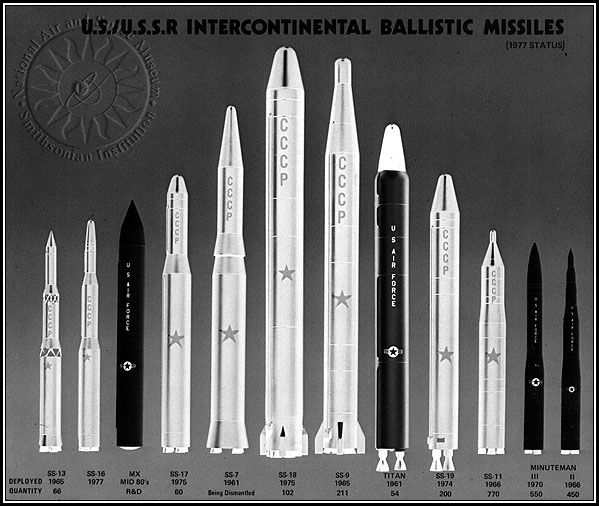
When I was in college, one book that opened my eyes was Andrew Cockburn’s “The Threat: Inside the Soviet Military Machine.”  James Fallows’s “National Defense” was another book I read in those days, together with Helen Caldicott’s “Missile Envy.”  Early in the Reagan years, I recall those old charts that displayed Soviet ICBMs as being bigger than American ICBMs, as if missile size was everything.  The message was clear: the Soviets have more missiles, and they’re bigger!  Yet what really mattered was the accuracy and reliability of those missiles, areas where the U.S. had a decisive edge.  U.S. nuclear forces were also far more survivable than their Soviet counterparts, but such details were lost on most Americans.

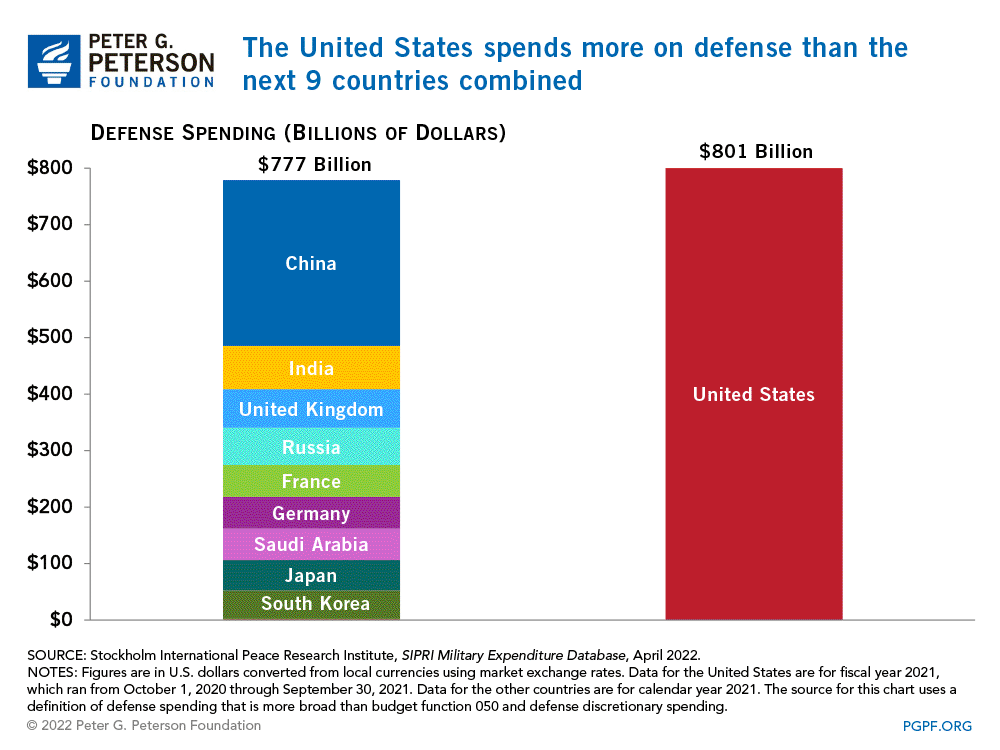
Throughout my life, the U.S. “defense” establishment has consistently inflated the dangers presented by foreign powers, which brings me to the current Pentagon budget for 2020, which may reach $750 billion.  How to justify such an immense sum?  A large dollop of threat inflation might help…

With the Islamic State allegedly defeated in Syria and other terrorist forces more nuisances than existential threats, with the Afghan War apparently winding down (only 14,000 U.S. troops are deployed there) and with Trump professing a “love” fest with Kim Jong-un, where are today’s (and tomorrow’s) big threats?  Iran isn’t enough.  The only threats that seem big enough to justify colossal military spending are Russia and China.  Hence the new “cold war” we keep hearing about, which drives a “requirement” for big spending on lucrative weapons systems like new aircraft carriers, new fighters and bombers, newer and better nuclear warheads and missiles, and so forth.

Which brings me to the alleged Russian collusion story involving Trump.  As we now know, the Mueller Report found no collusion, but was that really the main point of the investigation and all the media hysteria?  The latter succeeded in painting Vladimir Putin and the Russians as enemies in pursuit of the death of American democracy.  Meanwhile Trump, who’d campaigned with some idea of a rapprochement with Russia, was driven by the investigation to take harsher stances against Russia, if only to prove he wasn’t a “Putin puppet.”  The result: most Americans today see Russia as a serious threat, even though the Russians spend far less on wars and weaponry than the U.S. does.

Threat inflation is nothing new, of course.  Dwight D. Eisenhower recognized it and did his best to control it in the 1950s, but even Ike had only limited success.  Other presidents, lacking Ike’s military experience and gravitas, have most frequently surrendered to the Complex.  The last president who tried with some consistency to control the Complex was Jimmy Carter, but the Soviet invasion of Afghanistan, the Iranian hostage crisis, and his own political fortunes drove him to launch a major military buildup, which was then accelerated by Reagan until the collapse of the Soviet Union.

In the early 1990s, I briefly heard about a peace dividend and America returning to being a normal country (i.e. anti-imperial) in normal times, but ambition and greed reared their ugly heads, and U.S. leaders became enamored with military power.  Rather than receding, America’s global empire grew, with no peace dividends forthcoming.  The attacks on 9/11 led the Bush/Cheney administration to double down on military action in its “global war on terror,” leading to disastrous invasions of Afghanistan and Iraq that further served to engorge the Complex with money and power.

Today, faced with a debilitating national debt of $22 trillion and infrastructure that’s aptly described as “crumbling,” you’d think U.S. leaders would finally seek a peace dividend to lower our debt and rebuild our roads, bridges, dams, and related infrastructure.  But the Complex (including Congress, of course) is addicted to war and weapons spending, aided as ever by threat inflation and its close cousin, fearmongering about invading aliens at the border.

And there you have it: a $750 billion military budget sucking up more than sixty percent of discretionary spending by the federal government.  As Ike said, this is no way to live humanely, but it is a way for humanity to hang from a cross of iron.