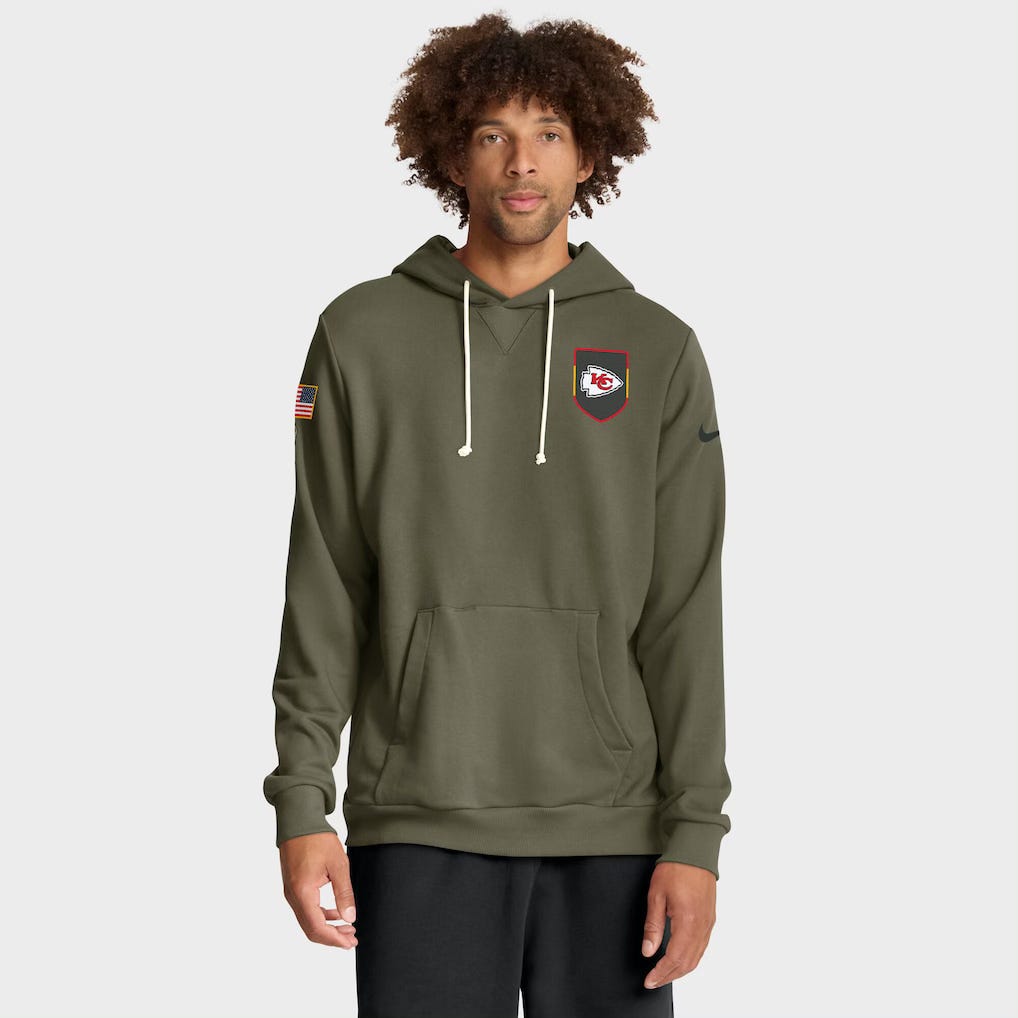
As I watched NFL football yesterday, I noticed coaches on the sidelines wearing “salute to service” fatigue-like hoodies. The NFL does this every year to celebrate the military and to “support our troops.” It’s popular and lucrative to boot, since you can buy this gear on nflshop.com (a hoody will set you back a cool $115).
For $115, you too can own a team hoodie in military olive drab. Hooah!
Sports, especially NFL football, are incredibly powerful and influential within American society.
Back in 2018, I was briefly involved in discussions, associated with the 9/11 Memorial & Museum in New York City, about the role sports played in the aftermath of the attacks in 2001. The general subject was how sports brought the nation together after those attacks. I shared the following comments below with two likeminded colleagues who were involved in the initial discussions, after which I never heard anything from the museum.
I think sports did help to bring the nation together after 9/11. The return of the games showed a return to normalcy. They were a chance for patriotic display and also an opportunity to forget, perhaps for just a moment, the losses America suffered in those attacks.
But they arguably set a precedent. In the aftermath of 9/11, patriotic displays took on a military flavor that has only grown more powerful over the years. My memory is of spontaneous displays that, over time, grew increasingly organized, exaggerated, and linked to corporate and commercial agendas, while retaining a strong military presence.
Anti-war demonstrations failed as the nation mobilized for war against Iraq in 2003. That war proved disastrous. The Bush/Cheney administration hid the costs of war from us (not even allowing us to see flag-draped caskets) and suppressed criticism of a disastrous war by telling us we needed to “support our troops.”
Not to be cynical, but how much of this sports/military/patriotism blending is done, not just for recruiting purposes, but to inhibit any kind of serious (and populist) movement against the “forever” wars we’re waging?
In other words, the post-9/11 sports/military nexus, while it may have soothed the country in the aftermath of 9/11, came with a high price tag: the lack of any serious questions about why we were attacked, and also the discouragement of anti-war protests as both divisive and disrespectful.
To me the high price is reflected in the life of Pat Tillman. He patriotically sacrificed a lucrative NFL career to fight the war on terror. It appears he came to question that war. He was killed by friendly fire [in 2004], which the Army hushed up, giving him a false narrative and a Silver Star under false pretenses. One man’s selfless patriotic act became twisted into a feel-good heroic moment that betrayed the ideals of the Army and of the country (and devastated his family as well).
Does the 9/11 museum really want to tackle tough issues like this? The appropriation of patriotism by the powerful as a way of silencing dissent? The betrayal of ideals we hold dear?
I added the following comment on “camouflage” sports uniforms being marketed around Independence Day in 2018:
I was talking with my wife yesterday. She, like me, hates the camouflage swag that’s been incorporated into sports uniforms. This is not “military appreciation.” It’s more military indoctrination and idolization.
We wear camouflage when we’re in deadly combat. It’s totally inappropriate for games that are supposed to be entertaining and fun, not a matter of life-and-death.
The Romans used gladiatorial games to accustom the mob to violence; to inure them to murder and killing; to train them to support the worst of Rome’s imperial policies. Are we using our games to accustom Americans to incessant warfare and surging military budgets and the “wonders” of our own empire?
I wrote something about this here: As America’s games are becoming more militarized, America’s wars are becoming more game-like, a form of infotainment, at least in the way they’re packaged and sold by the media:
So I think some of this macho militarism is being promoted as a counter to this “feminized society.” Trump tapped this sentiment, calling for protesters to be punched, for the NFL to allow more violent hits, etc.
We’re all supposed to be “real men” again: sort of like the Reagan years. Remember the book, “Real Men Don’t Eat Quiche”? Now it’s real men punch protesters, wear camouflage, and …
I didn’t finish my list of “real men” activities in 2018. Today, we hear even more about “warrior ethos” and the like, about the need to show toughness, e.g. by summarily murdering people on speedboats in the Caribbean who may, or may not, be drug-runners, or by dragging young teenagers off the streets and shipping them hundreds of miles to detention centers because their papers aren’t in order, and so on.
So, as the NFL persists in wearing pseudo-military gear, perhaps they might consider a new rule that would make every player a member of the reserves or national guard, subject to military recall and service from the months of March to August. If they want to salute military service so vigorously, why not just serve in uniform?
There’s a full slate of NFL football games today, meaning there’ll be a full slate of military flyovers and similar ceremonies to “support” our troops. The militarization of sports in America is something to behold, and a new report that tackles the issue is available from a series on “Consuming War” at Brown University. Here’s the link.
It put me to mind of an article I wrote for Huff Post back in 2011. Fourteen years later, the unholy alliance between sports and the military has only deepened.
Here’s what I wrote in 2011. What do you think, readers? Will we ever learn to play ball again without all the military trappings?
America!
The Militarization of Sports — And the Sportiness of Military Service
The co-joining of corporate-owned sports teams and events with the military strikes me as more than disturbing. We’ve created a dangerous dynamic in this country: one in which sporting events are exploited to sell military service for some while providing cheap grace for all.
Writer, History Professor, Retired Lieutenant Colonel (USAF)
Jul 28, 2011, 01:19 PM EDT
Updated Sep 27, 2011
Connecting sports to military service and vice versa has a venerable history. The Battle of Waterloo (1815) was won on the playing fields of Eton, Wellington allegedly said. Going over the top at the Battle of the Somme (1916), a few British soldiers kicked soccer balls in the general direction of the German lines. American service academies have historically placed a high value on sports (especially football) for their ability to generate and instill leadership, teamwork and toughness under pressure.
But in today’s America, we are witnessing an unprecedented militarization of sports, and a concomitant emphasis on the sportiness of military service. With respect to the latter, take a close look at recent Army recruitment ads (which I happen to see while watching baseball). These ads show soldiers lifting weights, playing volleyball, climbing mountains and similar sporty activities. The voice-over stresses that army service promotes teamwork and toughness (“There’s strong. Then there’s armystrong.”) There are, of course, no shots of soldiers under direct fire, of wounded soldiers crying for help, of disabled veterans. Army service in these ads is celebrated as (and reduced to) an action-filled sequence of sporting events.
Today’s militarization of sports is even more blatant. Consider this excellent article by U.S. Army Colonel (retired) Andrew Bacevich, which highlights the “cheap grace” available to crowds at major sporting events. For-profit sports corporations and the Pentagon join hands to orchestrate pageants that encourage (manipulate?) us to cheer and celebrate our flag, our troops and our sports and military heroes, as the obligatory fighter jets roar overhead.
Now, I’m sure there are well-meaning people who see such pageantry as an uncontroversial celebration of love of country, as well as a gesture of generosity and thanks to our military. And this retired veteran admits to feeling my heart swell when I see our flag flying proudly and our troops marching smartly. But the co-joining of corporate-owned sports teams and events (which are ultimately about entertainment and making a buck) with the military (which is ultimately in the deadly business of winning wars) strikes me as more than disturbing.
To cite only one example: The San Diego Padres baseball team takes “tremendous pride” in being “the first team in professional sports to have a dedicated military affairs department,” according to a team press release quoting Tom Garfinkel, the Padres president and chief operating officer. But is it truly “tremendous” for sports teams to be creating “military affairs” departments? As our sporting “heroes” celebrate our military ones, does not a dangerous blurring take place, especially in the minds of America’s youth?
War is not a sport; it’s not entertainment; it’s not fun. And blurring the lines between sport and war is not in the best interests of our youth, who should not be sold on military service based on stadium pageantry or team marketing, however well-intentioned it may be.
We’ve created a dangerous dynamic in this country: one in which sporting events are exploited to sell military service for some while providing cheap grace for all, even as military service is sold as providing the thrill of (sporting) victory while elevating our troops to the status of “heroes” (a status too often assigned by our society to well-paid professional athletes).
Which brings me to a humble request: At our sporting events, is it too much to ask that we simply “Play Ball?” In our appeals for military recruits, is it too much for us to tell them that war is not a sport?
Think of these questions the next time those military warplanes roar over the coliseum of your corporate-owned team.
I never miss a Super Bowl, and this year’s game was close until its somewhat anti-climatic end. Of course, there’s always a winning team and a losing one, but perhaps the biggest winner remains the military-industrial complex, which is always featured and saluted in these games.
How so? The obligatory military flyover featured Navy jets flown by female pilots. Progress! The obligatory shot of an overseas (or on-the-sea) military unit featured the colorful crew of the USS Carl Vinson, an aircraft carrier. A Marine Corps color guard marched out the American flag along with the flags of each of the armed services. The announcers made a point to “honor those who fight for our nation.” All this is standard stuff, a repetitive ritual that turns the Super Bowl into Veterans Day, if only for a few minutes.
What was new about this year’s ceremony was the celebration of Pat Tillman’s life, the sole NFL player (and I think the only athlete in any of America’s “major” sports leagues) to give up his career and hefty paycheck to enlist in the U.S. military after 9/11. Yes, Pat Tillman deserves praise for that, and since the game was played in Arizona and Tillman had been with the Arizona Cardinals, honoring him was understandable. Yet, the network (in this case, Fox) quickly said he’d “lost his life in the line of duty.” No further details.
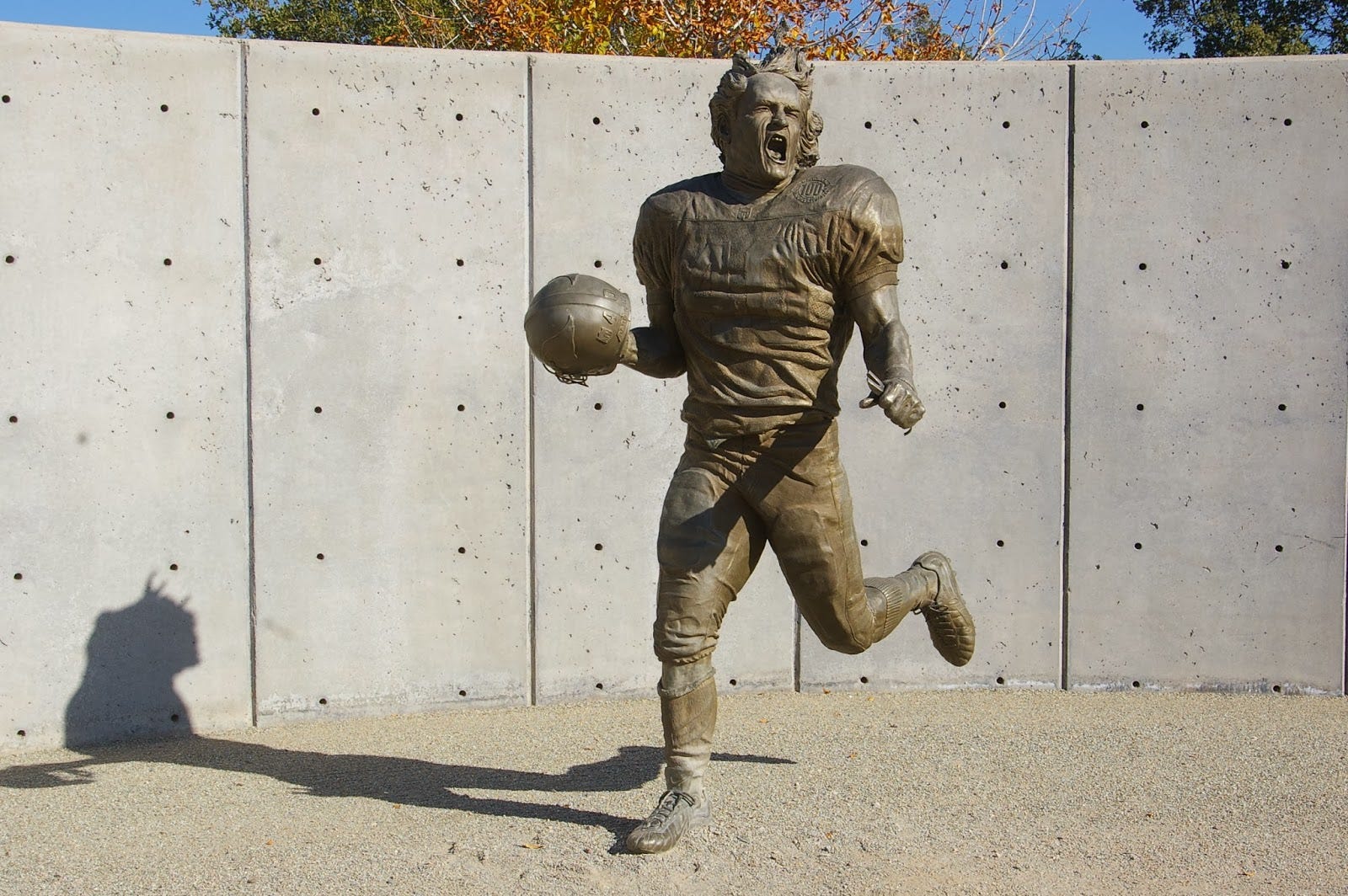
Pat Tillman’s glorious statue
Tillman was killed in a friendly-fire incident that was covered up by the U.S. military in a conspiracy that went at least as high as Secretary of Defense Donald Rumsfeld. The military told the Tillman family Pat had died heroically in combat with the enemy in Afghanistan and awarded him the Silver Star. The Tillman family eventually learned the truth, that Pat had been killed by accident in the chaos of war, a casualty of FUBAR, because troops in combat, hyped on adrenaline, confused and under stress, make deadly mistakes far more often than we’d like to admit.
What makes me sad more than angry is how Tillman’s legacy is being used to sell the military as a good and noble place, a path toward self-actualization. Tillman, a thoughtful person, a soldier who questioned the war he was in, is now being reduced to a simple heroic archetype, just another recruitment statue for the U.S. military.
His life was more meaningful than that. His lesson more profound. His was a cautionary tale of a life of service and sacrifice in a war gone wrong; his death and the military’s lies about the same are grim lessons about the waste of war, its lack of nobility, the sheer awfulness of it all.
Tillman’s statue captures the essence of a man full of life. His death by friendly fire in a misbegotten war, made worse by the lies told to the Tillman family by the U.S. military, reminds us that the essence of war is death.
That was obviously not the intended message of this Super Bowl tribute. That message was of military service as transformative, as full of grace, and I’m sorry but I just can’t stomach it because of what happened to Pat Tillman and how he was killed not only by friendly fire on the ground but how his life was then mutilated by those at the highest levels of the U.S. military.
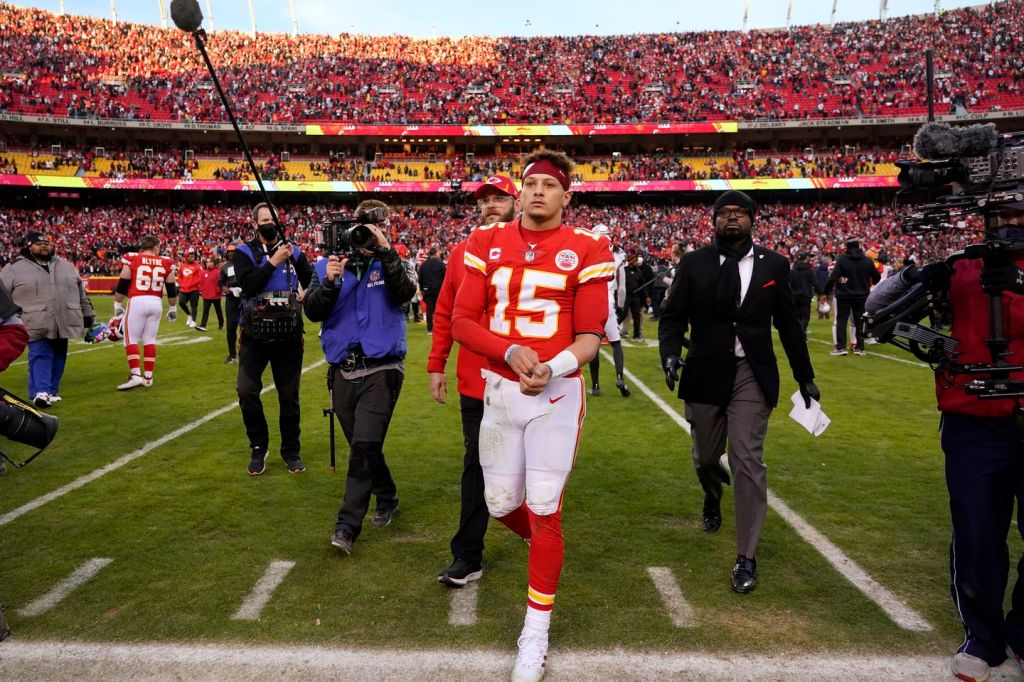
We tackle heavy subjects here at Bracing Views: war, militarism, politics, religion. But surely the heaviest of all is the clear inequity and unnecessary complexity of the National Football League’s overtime rules. Especially in the playoffs, the team that wins the coin flip before OT usually wins the game, though not always, as the Kansas City Chiefs proved this past weekend, as they won the coin toss but lost the game. Also, NFL OT rules for playoff games are different than the OT rules for the regular season (the latter games can end in a tie).
Why not one set of rules for OT for both the regular season and the playoffs? A set of rules that is simple and consistent, producing a victor fairly quickly but without changing the game?
Here’s my idea, which is a variation of the rules for OT that currently exist:
OT shall consist of a single ten-minute period. The team with the highest score at the end of this period wins the game.
If the teams are still tied at the end of this OT period, the winner will be determined by two-point conversions (as teams have the option of trying after touchdowns).
If Team A scores on its 2-point conversion, Team B will then get its try. If Team B succeeds, Team A tries again. If Team B fails, Team A wins. (If Team A had failed and then Team B had succeeded, Team B wins.) Tries will continue until one team succeeds and the other fails, thus the winning team will win by 2-points.
Other details can be worked out, such as the number of timeouts each team gets. I’d suggest two. Also, if one team ties the game at the end of regulation, that team would then kickoff at the start of OT. Otherwise the kickoff is determined by a coin flip.
I like this idea because each team should get plenty of time to have the ball in OT and attempt to score — or even to mount a comeback. And if OT ends in a tie, the 2-point conversion tiebreaker contest will be immensely exciting for the fans since it will involve the offenses and defenses — and the best players and plays — of both teams.
Assuming you watch football, readers, what do you think?
Once Kansas City lost possession of the ball in OT, the Bengals marched quickly down the field and kicked a field goal to win. If OT had been a 10-minute period, however, the Bengals would have tried to score a TD, and KC would have had a chance to answer. If KC had scored a TD on its first possession, the Bengals would have lost without ever getting a chance on offense.
At the end of regulation, the referee will toss a coin to determine which team will possess the ball first in overtime. The visiting team captain will call the toss.
No more than one 10-minute period will follow a three-minute intermission. Each team must possess, or have the opportunity to possess, the ball. The exception: if the team that gets the ball first scores a touchdown on the opening possession.
Sudden death play — where the game ends on any score (safety, field goal or touchdown) — continues until a winner is determined.
Each team gets two timeouts.
The point after try is not attempted if the game ends on a touchdown.
If the score is still tied at the end of the overtime period, the result of the game will be recorded as a tie.
There are no instant replay coach’s challenges; all reviews will be initiated by the replay official.
OVERTIME RULES FOR NFL POSTSEASON GAMES
Unlike regular season games, postseason games cannot end in a tie, so the overtime rules change slightly for the playoffs.
If the score is still tied at the end of an overtime period — or if the second team’s initial possession has not ended — the teams will play another overtime period. Play will continue regardless of how many overtime periods are needed for a winner to be determined.
There will be a two-minute intermission between each overtime period. There will not be a halftime intermission after the second period.
The captain who lost the first overtime coin toss will either choose to possess the ball or select which goal his team will defend, unless the team that won the coin toss deferred that choice.
Each team gets three timeouts during a half.
The same timing rules that apply at the end of the second and fourth regulation periods also apply at the end of a second or fourth overtime period.
If there is still no winner at the end of a fourth overtime period, there will be another coin toss, and play will continue until a winner is declared.
The other day, retired General Michael Flynn called for “one religion under God” in the United States.
Ah, General Flynn, we already have one religion of militant nationalism and imperialism, and we already have one god, the Pentagod, which is the subject of my latest article for TomDispatch.com.
First, one religion. This weekend I watched the New England Patriots play the Cleveland Brown during which a Pentagon recruiting commercial broke out. The coaches wore camouflage jackets and caps, the game started with military flyovers of combat jets, and there even was a mass military swearing-in ceremony hosted by a four-star general and admiral. That same general claimed during an on-field interview during the game that the military is what keeps America free, which might just be the best definition of militarism that I’ve heard.
(Aside: In a true democracy, the military is seen as a necessary evil, because all militaries are essentially undemocratic. The goal of a true democracy is to spend as little as possible on the military while still providing for a robust defense.)
Here’s an illustration, sent by a friend, of America’s one religion:
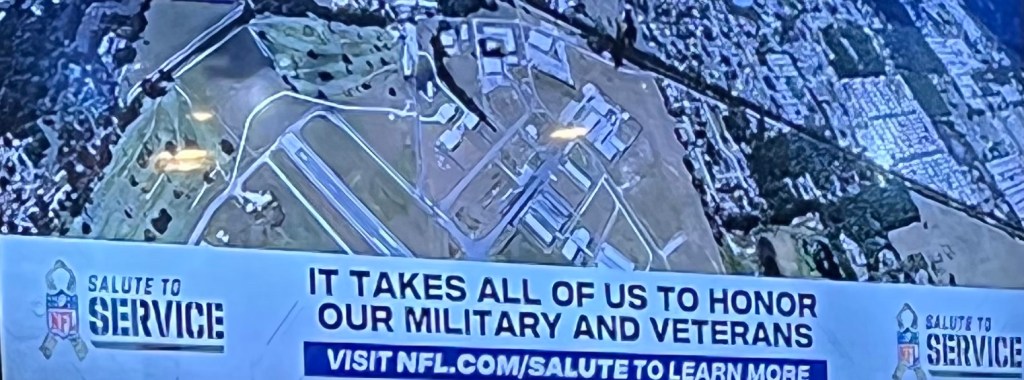
So, according to the NFL and the mainstream media, “all of us” need to honor “our” military and indeed anyone who’s ever worn a uniform, no questions asked, apparently. I wore a military uniform for 24 years: four years as a cadet, twenty as a military officer, and I’m telling you this is nonsense — dangerous nonsense. Don’t “salute” authority. Question it. Challenge it. Hold it accountable and responsible. At the very least, be informed about it. And don’t mix sports, which is both business and entertainment, with military service and the machinery of war.
OK, so now let’s talk about America’s god. As I argue below, it certainly isn’t the Jesus Christ I learned about by reading the New Testament and studying the Gospels in CCD. America has never worshipped that god. Clearly the god we worship — at least as measured by money and societal influence — is the Pentagod, which leads me to my latest article at TomDispatch. Enjoy!
The Pentagon As Pentagod
Who is America’s god? The Christian god of the beatitudes, the one who healed the sick, helped the poor, and preached love of neighbor? Not in these (dis)United States. In the Pledge of Allegiance, we speak proudly of One Nation under God, but in the aggregate, this country doesn’t serve or worship Jesus Christ, or Allah, or any other god of justice and mercy. In truth, the deity America believes in is the five-sided one headquartered in Arlington, Virginia.
In God We Trust is on all our coins. But, again, which god? The one of “turn the other cheek”? The one who found his disciples among society’s outcasts? The one who wanted nothing to do with moneychangers or swords? As Joe Biden might say, give me a break.
America’s true god is a deity of wrath, whose keenest followers profit mightily from war and see such gains as virtuous, while its most militant disciples, a crew of losing generals and failed Washington officials, routinely employ murderous violence across the globe. It contains multitudes, its name is legion, but if this deity must have one name, citing a need for some restraint, let it be known as the Pentagod.
Yes, the Pentagon is America’s true god. Consider that the Biden administration requested a whopping $753 billion for military spending in fiscal year 2022 even as the Afghan War was cratering. Consider that the House Armed Services Committee then boosted that blockbuster budget to $778 billion in September. Twenty-five billion dollars extra for “defense,” hardly debated, easily passed, with strong bipartisan support in Congress. How else, if not religious belief, to explain this, despite the Pentagod’s prodigal $8 trillion wars over the last two decades that ended so disastrously? How else to account for future budget projections showing that all-American deity getting another $8 trillion or so over the next decade, even as the political parties fight like rabid dogs over roughly 15% of that figure for much-needed domestic improvements?
Paraphrasing Joe Biden, show me your budget and I’ll tell you what you worship. In that context, there can’t be the slightest doubt: America worships its Pentagod and the weapons and wars that feed it.
Prefabricated War, Made in the U.S.A.
I confess that I’m floored by this simple fact: for two decades in which “forever war” has served as an apt descriptor of America’s true state of the union, the Pentagod has failed to deliver on any of its promises. Iraq and Afghanistan? Just the most obvious of a series of war-on-terror quagmires and failures galore.
That ultimate deity can’t even pass a simple financial audit to account for what it does with those endless funds shoved its way, yet our representatives in Washington keep doing so by the trillions. Spectacular failure after spectacular failure and yet that all-American god just rolls on, seemingly unstoppable, unquenchable, rarely questioned, never penalized, always on top.
Talk about blind faith!
To read the rest of my article, please go to TomDispatch here. Here’s my conclusion:
Yet, before I bled Air Force blue, before I was stationed in a cathedral of military power under who knows how many tons of solid granite, I was raised a Roman Catholic. Recently, I caught the words of Pope Francis, God’s representative on earth for Catholic believers. Among other entreaties, he asked “in the name of God” for “arms manufacturers and dealers to completely stop their activity, because it foments violence and war, it contributes to those awful geopolitical games which cost millions of lives displaced and millions dead.”
Which country has the most arms manufacturers? Which routinely and proudly leads the world in weapons exports? And which spends more on wars and weaponry than any other, with hardly a challenge from Congress or a demurral from the mainstream media?
And as I stared into the abyss created by those questions, who stared back at me but, of course, the Pentagod.
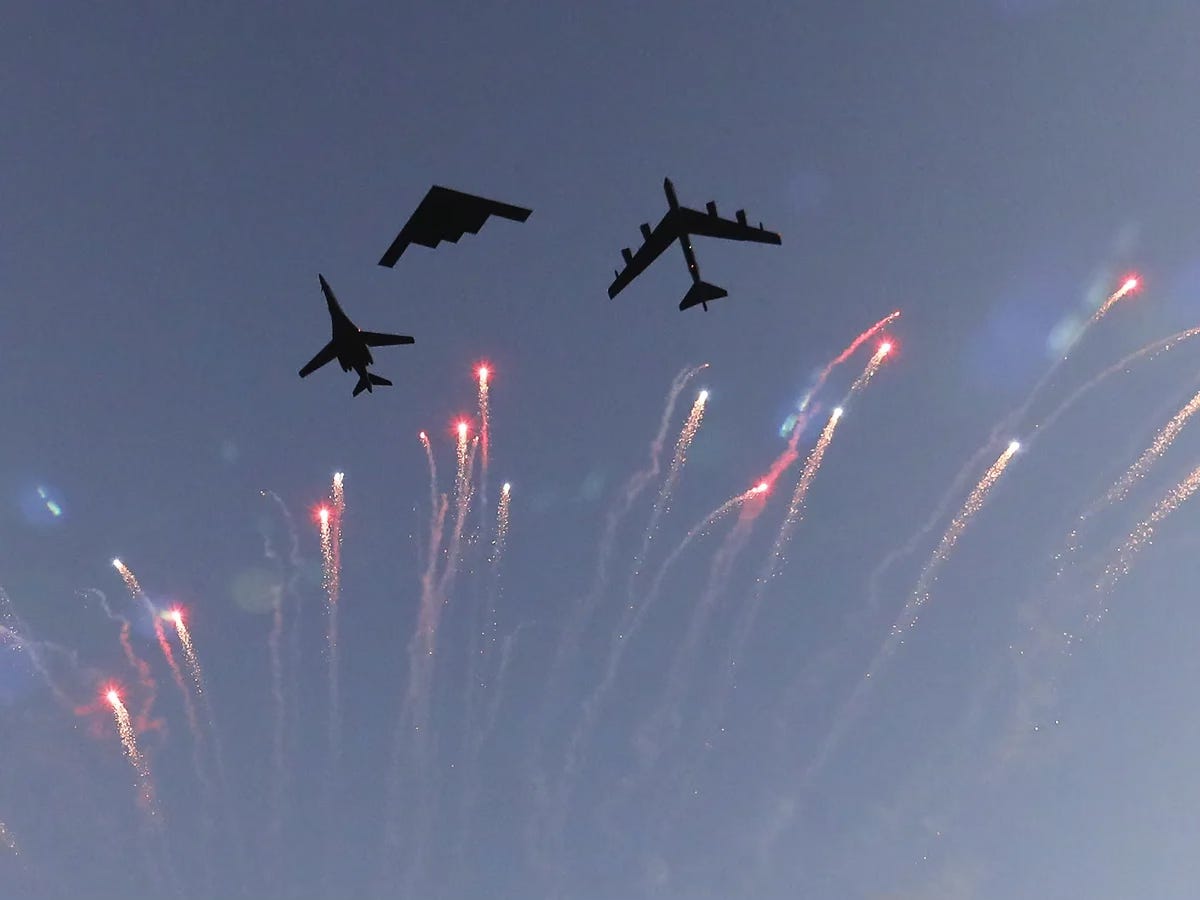
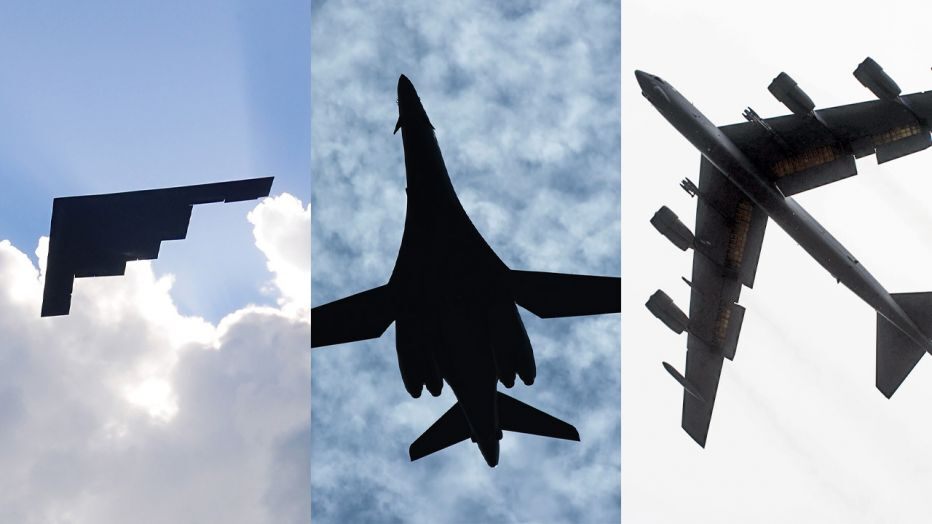
A B-2, a B-1, and a B-52. And I’m proud to be an American …
It’s Super Bowl Sunday — time to gather together and party responsibly, i.e. don’t turn your party into a Covid super-spreader event.
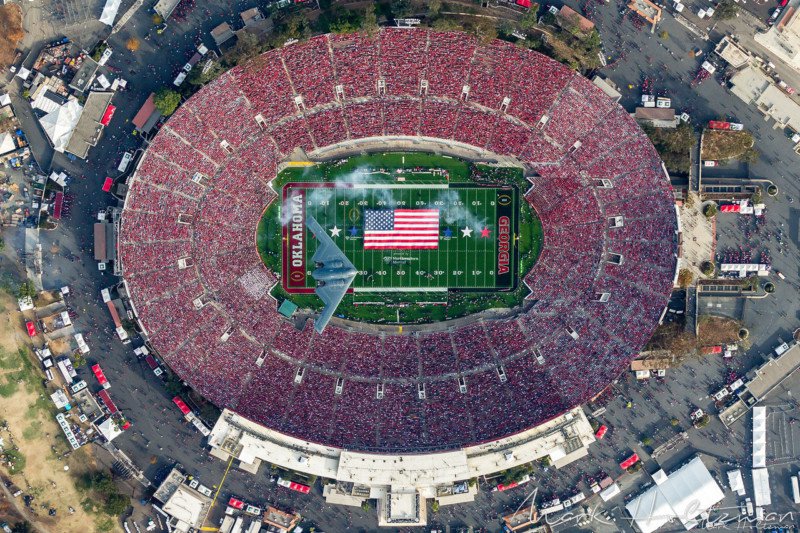
You can always learn a lot about America by watching the Super Bowl — and I’m not talking about football. Pregame ceremonies are telling, as are the elaborate halftime shows. This year, I noted how the Air Force is selling the story of a female pilot, Captain Sarah Kociuba, who will pilot a B-2 stealth bomber to open the festivities. She’ll be joined by a B-1B Lancer and a B-52 Stratofortress. The message, of course, is “pride” in America.
And I thought only the quarterbacks would be throwing bombs.
Seriously, these bombers are all about mass destruction. Possibly even nuclear mass destruction. Why I should feel “pride” in weapons of mass destruction (WMD) is beyond me.
Look! Up in the sky! It’s American-made WMD. Led by a highly-qualified female pilot. Diversity! America!
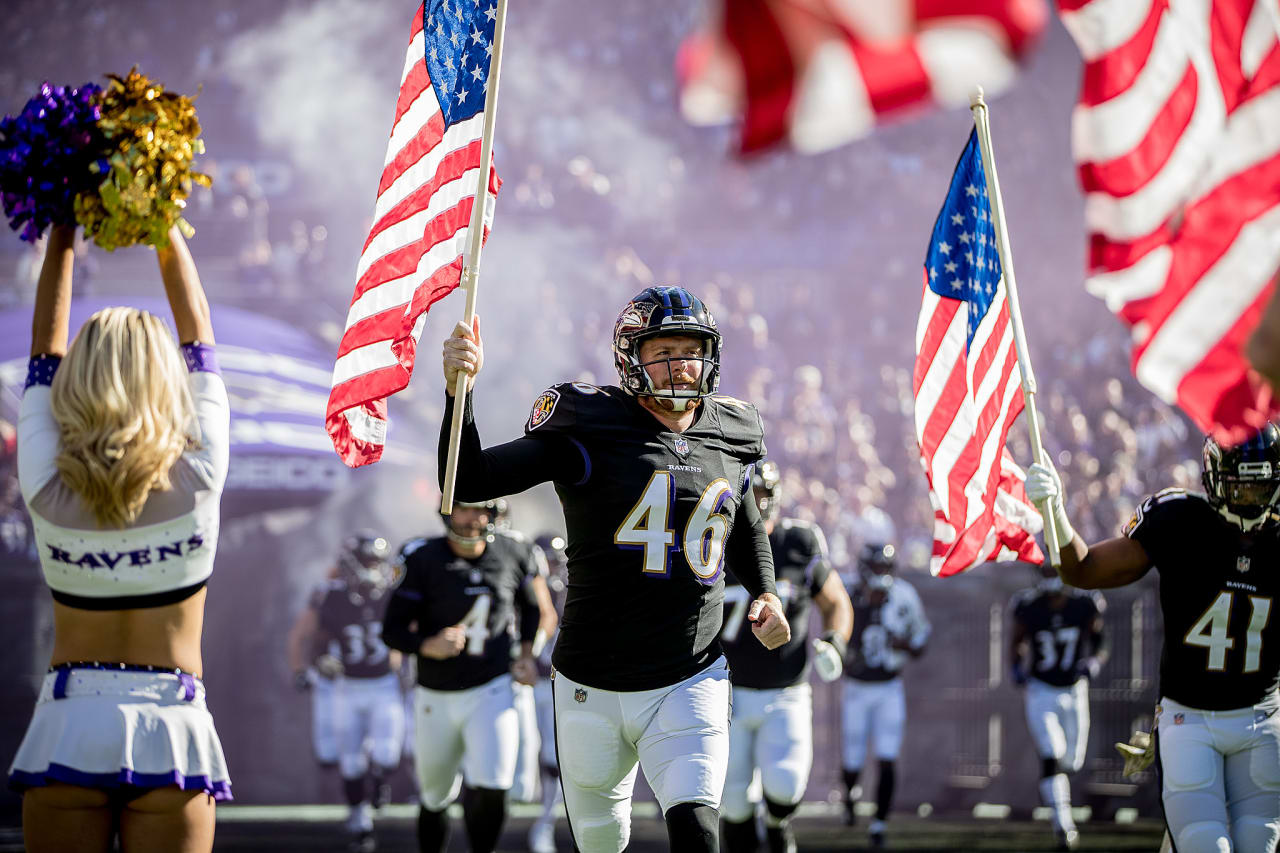
Nothing screams “America!” like huge stadiums, big bombers, and giant flags
W.J. Astore
A few weeks ago, a reader asked me a fair question: Why do I continue to watch football, given my comments on violence in the sport and the militarization of the game, including camouflage uniforms (even for coaches and cheerleaders!). I could have hedged and said I don’t watch much football. I don’t watch college games, and the only NFL game I regularly watch features my home team. In short, I watch about three hours a week, and a little more during the playoffs. Nevertheless, I still watch, so why do I do it?
I wrote back and identified four reasons: Because I’ve watched football since I was a kid (habit) and I enjoy the sport. Because I put my mind in neutral during the game and just enjoy the action (a form of denial, I suppose). Because, like so many Americans, I get caught up in the spectacle of it all, its ritualistic nature. Because it’s often unpredictable and real in a way that “reality” shows are not.
After sending that answer along, another reader noted how my reasons could be made to serve as partial justification for supporting America’s wars, and to be honest the thought had occurred to me before I sent my answer. So, you could say I’ve watched wars since I was a kid and on some level “enjoyed” them (the action, the drama, the spectacle of it all, the way things are “played for keeps”). Perhaps I put my mind in neutral as well (TV trance) while enjoying the “reality” and rooting for the home team (America!). Sports and war are connected in complex ways, and I’m only scratching the surface here.
I’d like to add two more reasons why I watch football. I enjoy rooting for “my” team, and when they win, I’m pleased. When they don’t, I’m bummed. I get over it quickly (after all, it’s just a game, right?), but on some level the games have meaning to me. I identify with “my” team, simple as that.
One more reason: nostalgia. These games recall a simpler time, when we threw a ball around with friends or our dad, then quit for the day to watch a game and scream and shout at the stadium or in our living rooms. (Such nostalgia is not unknown among combat veterans, who look back on war with mixed feelings of horror but also of love, or at least attraction in the sense of a powerful camaraderie and sense of belonging shared by those who were there. It’s one reason for war’s peculiar attraction and perhaps its endurance as well.)
What say you, readers? Do you watch football and, if so, why?
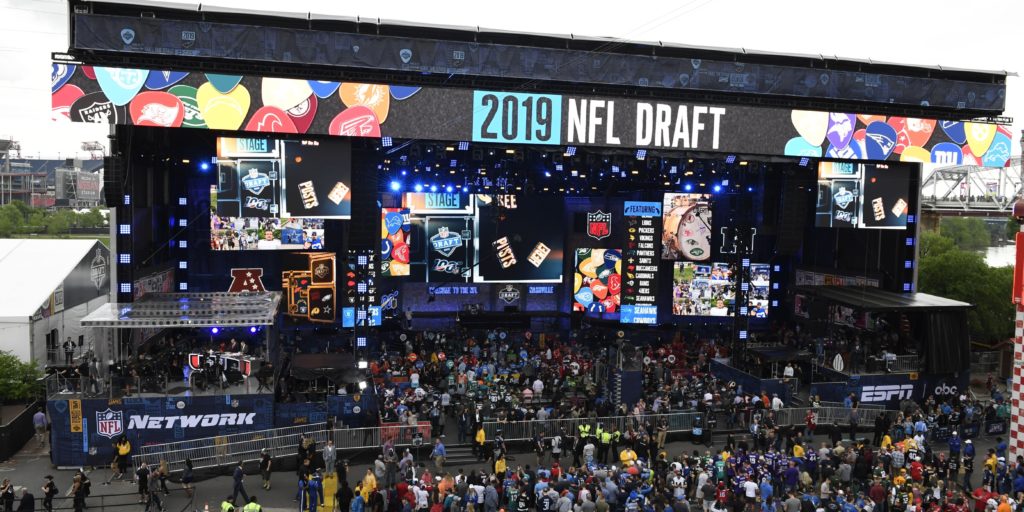
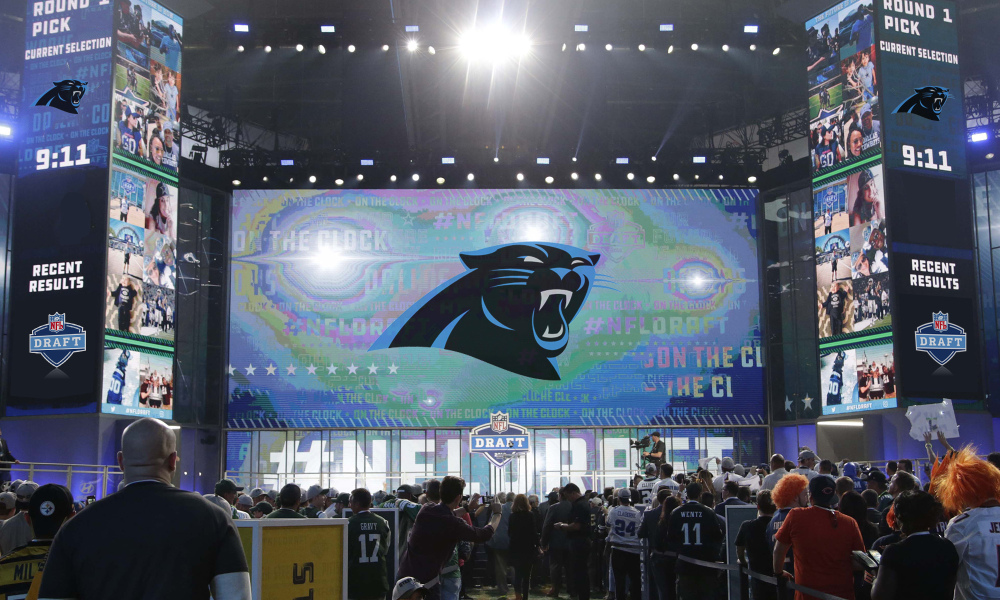
Every year, I watch a little of the NFL draft, one of America’s most revealing cultural displays. This year the draft was held in Nashville over two nights and one day. The NFL claimed 200,000 people showed up in Nashville for the draft, and indeed the outdoor audience resembled a mass political rally. Video boards and celebrities were everywhere. Last year, I wrote about the draft here, and so I won’t repeat those arguments. Suffice to say the draft is a massive commercial for the NFL and a massive exercise in nationalism.
Of course, the NFL is at pains to celebrate the military, and the military is at pains to boost recruitment, which lately has been disappointing. So predictably there was a prominent pro-military display during the draft. Early in the third round of the draft, there was a pause in the “auctioneering” of the athletes. Nine troops walked out in dress uniform: three Marines, two soldiers, two sailors, and two airmen. They stood at attention as the rally members chanted “USA! USA!” Then Lee Greenwood’s anthem came on: “God Bless the USA.” And the assembled masses sang along.
It was an exercise in pure, unadulterated, propaganda. “Proud to be an American,” indeed!
Last August, I wrote about sports and the military for TomDispatch.com, where I quoted this telling observation by Norman Mailer, which he made prior to the Iraq War in 2003:
“The dire prospect that opens, therefore, is that America is going to become a mega-banana republic where the army will have more and more importance in Americans’ lives… [D]emocracy is the special condition — a condition we will be called upon to defend in the coming years. That will be enormously difficult because the combination of the corporation, the military, and the complete investiture of the flag with mass spectator sports has set up a pre-fascistic atmosphere in America already.”
A pre-fascistic atmosphere: a mass rally of 200,000 fans (fanatics?), applauding troops in uniform and singing about how proud they are to be Americans, where at least they know they’re free, as college athletes get auctioned off to NFL mega-millionaire and billionaire owners, all captured on gigantic video boards on prime-time television. Talk about making America great again!
Speaking of the Donald, Trump naturally had to get involved with the draft. One pro-Trump player who was drafted (Nick Bosa) had criticized ex-NFL quarterback Colin Kaepernick, who had taken a knee at several games to raise consciousness of violence against blacks. Bosa had tweeted various insults against Kaepernick, calling him “Crappernick” and “a clown.” Trump, showing his usual leadership skills, urged Bosa in a tweet to “always stay true to yourself,” concluding “MAKE AMERICA GREAT AGAIN!”
Ah, “greatness” has so many different meanings, does it not? But something tells me America’s founders didn’t think “greatness” resided in the conjunction of sports, the military, corporations, and jingoistic shouts of “USA! USA!”
Now this makes me proud to be an American. “Salute to service” during Ravens-Steelers game.
W.J. Astore
A few months ago, I was talking to a researcher about the Pentagon, the military-industrial complex, and America’s fourth (and most powerful?) branch of government: the national security state. After talking about the enormous sweep and power of these entities, she said to me, it’s the elephant in the room, isn’t it? More than that, I replied: It’s the rampaging herd of elephants in the room. Even so, we prefer to ignore the herd, even as it dominates and destroys.
This thought came back to me as I read Danny Sjursen’s recent article at Antiwar.com. His main point was that enormous Pentagon spending and endless wars went undebated during this election cycle. President Trump preferred to talk of “invasions” by caravans of “criminals,” when not denigrating Democrats as a mutinous mob; the Democrats preferred to talk of health care and coverage for preexisting conditions, when not attacking Trump as hateful and reckless. No one wanted to talk about never-ending and expanding wars in the Greater Middle East and Africa, and no one in the mainstream dared to call for significant reductions in military spending.
As Sjursen put it:
So long as there is no conscription of Americans’ sons and daughters, and so long as taxes don’t rise (we simply put our wars on the national credit card), the people are quite content to allow less than 1% of the population [to] fight the nation’s failing wars – with no questions asked. Both mainstream wings of the Republicans and Democrats like it that way. They practice the politics of distraction and go on tacitly supporting one indecisive intervention after another, all the while basking in the embarrassment of riches bestowed upon them by the corporate military industrial complex. Everyone wins, except, that is, the soldiers doing multiple tours of combat duty, and – dare I say – the people of the Greater Middle East, who live in an utterly destabilized nightmare of a region.
Why should we be surprised? The de facto “leaders” of both parties – the Chuck Schumers, Joe Bidens, Hillary Clintons and Mitch McConnells of the world – all voted for the 2002 Iraq War resolution, one of the worst foreign policy adventures in American History. Sure, on domestic issues – taxes, healthcare, immigration – there may be some distinction between Republican and Democratic policies; but on the profound issues of war and peace, there is precious little daylight between the two parties. That, right there, is a formula for perpetual war.
As we refuse to debate our wars while effectively handing blank checks to the Pentagon, we take pains to celebrate the military in various “salutes to service.” These are justified as Veterans Day celebrations, but originally November 11th celebrated the end of war in 1918, not the glorification of it. Consider these camouflage NFL hats and uniforms modeled on military clothing (courtesy of a good friend):
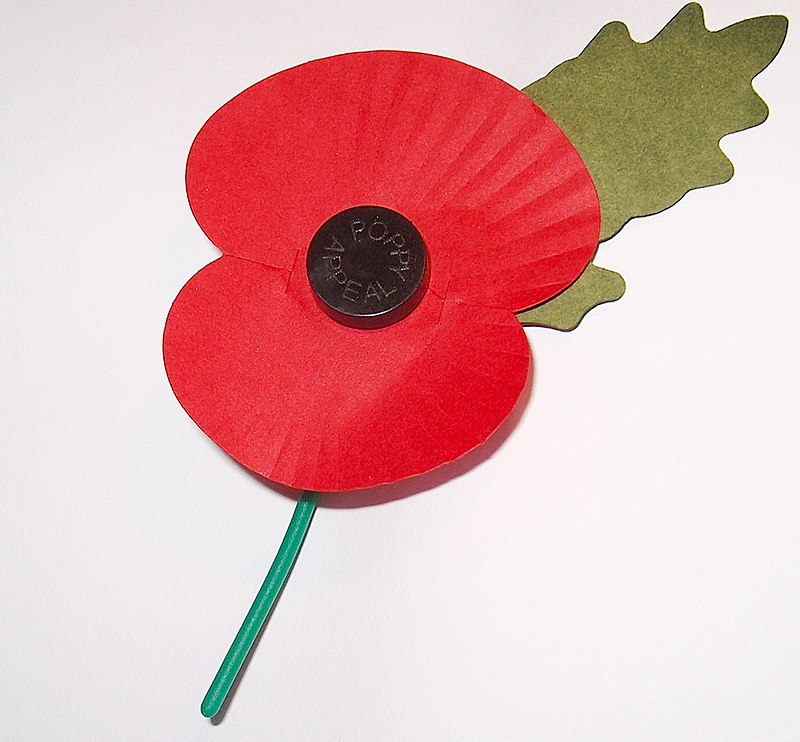
When I lived in England in the early 1990s, the way people marked Veterans or Armistice Day was with a simple poppy. I recall buying one from a veteran who went door-to-door to raise funds to support indigent vets. Students of military history will know that many young men died in World War I in fields of poppies. Thus the poppy has become a simple yet powerful symbol of sacrifice, loss, and gratitude for those who went before us to defend freedom.
No poppies for us. Instead, Americans are encouraged to buy expensive NFL clothing that is modeled on military uniforms. Once again, we turn war into sport, perhaps even into a fashion statement.
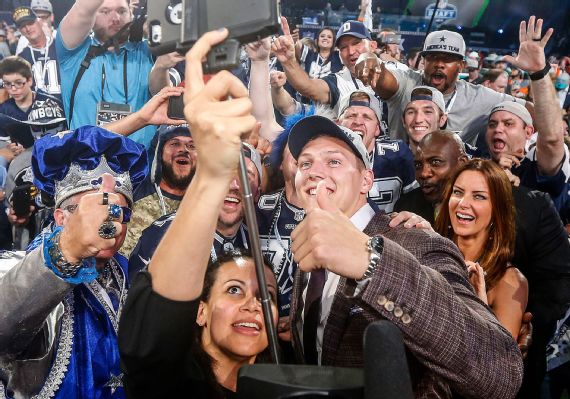
Being drafted in the first round is like winning the lottery
W.J. Astore
Nothing screams “USA!” like the NFL draft held yearly at the end of April, and I managed to watch a few minutes here and there across the three days of blanket coverage offered by ESPN and the NFL network (I also noticed the draft was in prime time on the Fox network). The National Football League (NFL) puts on an extravaganza for the draft. This year I caught a ceremony featuring the family of dead soldier; they “helped” to make a pick in the draft for the Dallas Cowboys. The huge video screen featured the soldier (Captain Ellery Ray Wallace) who’d been killed, and the fans in the dome started chanting “USA! USA!” in homage to a man who must have loved the Cowboys when he was alive. The spectacle of it all just made me sad, no matter how much the NFL tried to sell this and similar photo ops as exercises in helping grieving families to recover from the tragedy of losing a loved one in war.
As I wrote about last year’s draft, “I’m always dazed and amazed by the sheer work that goes into the NFL draft: the thoroughness of it all, the expertise on display, the active and informed involvement of the fans. Imagine if ESPN (or any media outlet, for that matter) covered America’s wars with the same commitment to detail and facts as is displayed yearly for American football!”
And as I wrote about the NFL draft two years ago:
If you’re not familiar with NFL football or ESPN coverage of the same in the USA, you should be, because it says much about the American moment. The first round of the draft kicks off on Thursday night in prime time, followed by the second and third rounds on Friday night in prime time. The draft concludes on Saturday with rounds four through seven, roughly 250 total picks …
Yet this quick summary vastly understates the coverage devoted to the draft. From the end of the Super Bowl early in February to the draft itself at the end of April, coverage of the draft on ESPN is virtually non-stop, with innumerable “mock” drafts for each team and a parade of “experts” speculating about the prospects of each player and team. Exhaustive (and exhausting) is the word to describe this coverage. Interminable is another one.
When Round One finally kicks off, it’s essentially a parade of soon-to-be millionaires. These players, selected from various college football teams, can count on multi-year contracts and signing bonuses in the millions of dollars. ESPN and the NFL stage manages the selection process, turning it into an extravaganza complete with musicians, cheering (or booing) fans, and plenty of past NFL greats, along with the draftees and their families and friends. Coverage also includes shots of the “war rooms” of the various NFL teams as they decide which players to pick, which draft picks to trade, and so on.
The war room — isn’t that a telling phrase?
Indeed, let’s push that further. Most red-blooded NFL fans would be hard-pressed to find Iraq or Afghanistan on a map, but they can tell you all about their team’s draft picks, rattling off statistics such as times in the 40-yard dash, vertical leap, even the size of a player’s hands (considered especially pertinent if he’s a quarterback or wide receiver). What always astonishes me is the sheer wealth of detail gathered about each player, the human intelligence (or HUMINT in military terms). Players, especially those projected to go in the first few rounds, are scrutinized from every angle: physical, mental, emotional, you name it.
With millions of dollars at stake, such an exhaustive approach is not terribly surprising. Yet even with a wealth of data, each year there are major draft busts (e.g. Ryan Leaf, selected #2 overall in the first round and a flop) and major surprises (e.g. Tom Brady, selected late in the 6th round as the 199th pick, meaning that not much was expected from him, after which he won four [now five] Super Bowls). Results from the NFL draft should teach us something about the limits of data-driven “intelligence” in “wars,” yet our various military intelligence agencies continue to believe they can quantify, predict, and control events.
But again what wows me is the extent as well as the slickness of ESPN’s coverage of the draft. As soon as a player is selected, ESPN instantly has video of that player’s college highlights, together with his vital statistics (height, weight, performance at the draft combine in various drills, and so on). Video and stats are backed up by interviews with a draftee’s previous coaches, who extol his virtues, along with interviews with those “war rooms” again as to why they decided to draft that particular player and not another. Once the draft is completed, teams are then awarded “grades” by various commentators, even though these players have yet to play a snap in the NFL. (Imagine if your kid received an instant grade in college — before he attended a single class or completed a single assignment — based upon his performance in high school.)
But you have to hand it to ESPN: their coverage of the draft is an exercise in total information awareness. It’s blanket coverage, an exercise in full-spectrum dominance. It’s slick, professional, and driven by a relentless pursuit of victory by each team (and a relentless pursuit of ratings by ESPN).
In 2016, I made the following proposal, in jest of course, but I repeat it here because I still think it’s telling:
Let’s put ESPN in charge of intelligence gathering and coverage [of America’s wars]. Just imagine if your average red-blooded American devoted as much attention to foreign wars as they do to their favorite NFL team! Just imagine if America’s leaders were held accountable for poor results as NFL coaches and staffs are! America still might not win its wars, but at least we’d squarely face the fact that we’re continuing to lose at incredibly high cost. Indeed, someone high-up in the government might actually be held accountable for these losses.
I know: It’s a frivolous suggestion to treat war like a sport. But is it? After all, America currently treats the NFL draft with all the seriousness of a life-and-death struggle, even as it treats wars with comparative frivolity.
Our wars are games and our games are wars. Small wonder America continues to lose its wars while fielding some winning NFL teams.




 Bracing Views