

Man’s Inhumanity to Man
FEB 08, 2026
Who the hell wants to talk about genocide and man’s inhumanity to man?
I taught courses on the Holocaust, where I came across a two-volume encyclopedia of genocide (see list of references at the end). We humans have a remarkable record of killing each other (usually couched as killing the “other,” the “bad” people). That a two-volume encyclopedia of genocide exists says something truly horrendous about the human condition.
Far too often, a chosen people, a “master race,” decides to eliminate barbarians, inferiors, primitives, race enemies, whatever words are used to demonize other humans. Often, it’s said we must kill them before they kill us, so mass murder is defined and defended in terms of safety and security. The “bad” people force us to kill them. We don’t want to do it—they make us! And we hate them all the more for making us kill.
At the same time, mass murder is often quite profitable for the killers. In the Holocaust, the Nazis systematically stole everything from the Jews they were killing. They stole their houses and apartments, their businesses, their furniture, their jewelry, their clothing: everything they could get their greedy murderous hands on. In Gaza today and on the West Bank, we see Israel stealing land and most everything else from murdered and displaced Palestinians. The Israeli government justifies mass theft and mass death as a defensive war against barbaric terrorists, just as the Nazis saw themselves as being at war with inferior Jews and other racial undesirables like the gypsies.
The Nazis claimed the Jews were an existential threat to the “master race,” thus all Jews had to be killed, even women, children, and babies. The Israeli government claims Hamas is an existential threat to Jews and that all Palestinians are, more or less, members or supporters of Hamas and therefore must be eliminated (murdered or expelled). Women, children, babies: they’re all Hamas.
America has its own history of genocide. Various Native American peoples were murdered, shunted aside onto reservations, sent to “civilizing” schools that denied them their history and identity, most of their land stolen from them. This had to be done, the white man claimed, because the Indians were brutal savages, demonically so.
Today, there is great resistance (certainly among U.S. politicians) to the idea that Israel is conducting a genocide in Gaza. Most U.S. politicians prefer to think of it as a morally justifiable war against Hamas, and even if they don’t completely buy that, they give Israel everything it wants, weapons and money, to facilitate that genocide. Like Pontius Pilate, they wash their hands of blood shed in Gaza, blaming Hamas (or, perhaps for a few, quietly blaming Israel without daring to say it).
Anyhow, these musings came to me as I contemplated a short encyclopedia article I wrote on genocide about 25 years ago. What follows is that article.
GENOCIDE: Legal term coined in 1944 initially to define and condemn Nazi efforts to destroy, deliberately and systematically, Jews as well as Sinti and Roma (Gypsies) in the Holocaust. The term encompasses not only ethnic- and racially-motivated extermination but also cultural, national, and political. Although the term is fairly recent, genocidal practices are nearly as old as recorded history. Witness the Roman annihilation of Carthage at the end of the Third Punic War. Yet genocide as a category is usually applied to events of more recent history, with the Turkish persecution of Armenians during World War I providing a paradigm of ruthless and wholesale murder to extirpate an entire people. Accusing Armenians of being pro-Russian and envying their domination of eastern Anatolia, Turkish officials forced them to emigrate east across mountains in winter. Hundreds of thousands died of exposure, starvation, or in massacres; perhaps 1.5 million died in total from 1915 to 1923.
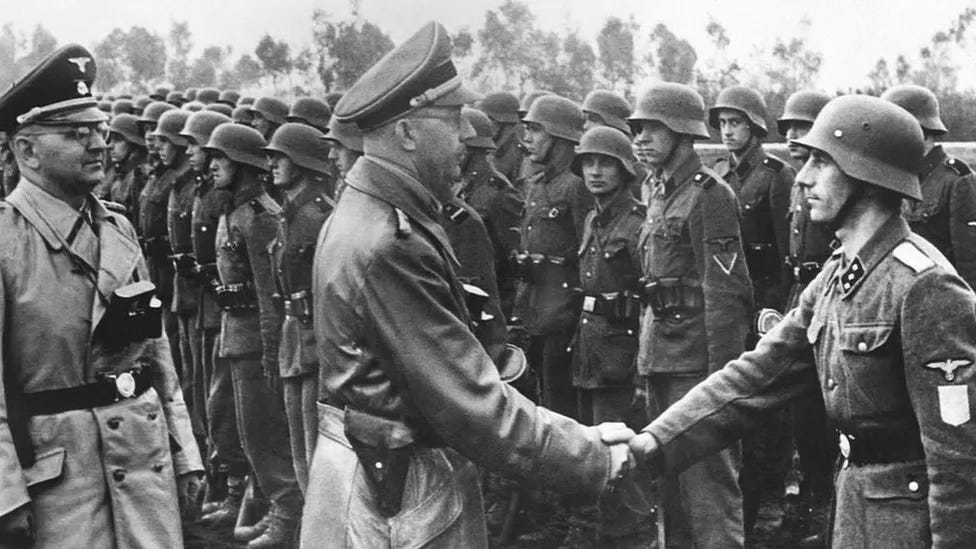
Josef Stalin’s persecution of Ukrainians in the 1930s also constituted genocide, as Stalin distrusted their political loyalty. By confiscating crops and seed grain and preventing emigration, Stalin consigned five million Ukrainians to early graves. Nazi extermination policies were more racially oriented, as Adolf Hitler considered Jews and Gypsies to be irredeemable biological menaces to the purity of Aryan blood. The machinery of death employed by Nazis—railroads and cattle cars, gas chambers and ovens—and the systematic pillaging and gleeful humiliation of victims set a despicably new standard for human barbarity. Six million Jews and half a million Gypsies died at the hands of this evil regime. The post-war Nuremberg Trials prosecuted a few of the more prominent architects of the so-called Final Solution, but many others escaped judgment.
Although the United Nations’ Genocide Convention (1951) made genocide a crime under international law, lack of military forces and international criminal courts to enforce the convention has crippled efforts to deter or punish perpetrators. Acts of genocide continued, whether by the Khmer Rouge in the Cambodian “killing fields” in the 1970s, where one million perished, or by Hutu extremists in 1994, who massacred 800,000 Tutsis in a matter of months as the international community wrung its hands. Events closer to Europe that endangered Western stability drew greater scrutiny. Thus in 1993 the UN created a War Crimes Tribunal to prosecute practitioners of “ethnic cleansing” in the former Yugoslavia. Despite a handful of convictions, prosecution and prevention of genocidal crimes remain serious challenges facing the international community in the twenty-first century.
BIBLIOGRAPHY
Bartov, Omer. Mirrors of Destruction: War, Genocide, and Modern Identity, Oxford, 2000.
Charny, Israel W. Encyclopedia of Genocide, 2 vols, Santa Barbara, CA, 1999.
Power, Samantha. “A Problem from Hell”: America and the Age of Genocide, New York, 2002.
Rosenbaum, Alan S., ed. Is the Holocaust Unique? Perspectives on Comparative Genocide, Boulder, CO, 1998.


 Bracing Views