
Liberty at the Point of a Sword

W.J. Astore

Lessons from Napoleon and Hitler

There’s a man who famously crowned himself emperor rather than submit to the otherworldly power of a pope. A new movie will soon be out on his “glories.” Napoleon Bonaparte, a military genius, embraced war and drove for total victory until his empire collapsed on him and the French people. Napoleon’s Waterloo came in 1815, a decade after perhaps his greatest victory at Austerlitz in 1805. Empires—they often seem to decline slowly before collapsing all at once, though the Napoleonic version flared so brightly that it burned out quickly.

I once studied the military glories of Napoleon, enthusiastically playing war-games like Waterloo and Empire in Arms, where this time maybe I could win a great victory for the emperor. More than a few books on my shelves cover the campaigns of Napoleon. But as my dad quipped to me, Napoleon wanted to give people liberty, equality, and fraternity at the point of his sword.  And that, my dad would say, is an intolerable price to pay for one’s freedom.

Win one for the Emperor

Endless war is, as often as not, the final nail in an empire’s coffin. Early in 1943, after defeat at Stalingrad, which came as a profound shock to a German public sold on the idea it possessed the finest fighting force in history (such rhetoric should sound familiar to Americans today), Joseph Goebbels, the infamous Nazi propaganda minister, gave a fanatical speech calling for “total war” from the German people. Despite disaster at Stalingrad, despite visible and widening cracks in the alleged superiority of the Thousand Year Reich, the German people largely cheered or echoed the cry for more and more war. Two years later, they witnessed total defeat as Germany surrendered unconditionally in May 1945.

As led by Adolf Hitler and his henchmen, Nazi Germany wasn’t interested in peace. These men knew only the feverish pursuit of total victory until it ended in their deaths and total disaster for Germany.  They were the original seekers of “full spectrum dominance” as they asserted Germany was the exceptional and essential nation.

We Americans were supposed to learn something from megalomaniacs like Napoleon and Hitler. Committed to democracy, we were supposed to reject war, to repudiate militarism and the warrior mystique, and to embrace instead diplomacy and the settlement of differences peacefully through international organizations like the United Nations.

America today, however, is busy beating plowshares into swords and sending them to global hotspots like Gaza and Ukraine. What gives?

Endless wars can exhaust even the richest and wisest of empires, and America isn’t as rich or wise as it used to be.  Interestingly, ordinary Americans haven’t been overcome with bloodthirst. Roughly two-thirds of Americans, for example, support a ceasefire in Gaza. But they are a silent majority compared to the loud minority flowing through the halls of power in DC lobbying for war and more war.

The U.S., which largely created the UN in the immediate aftermath of World War II, now does everything it can to block UN calls for ceasefires, whether in Ukraine or Gaza. The U.S., while allegedly manifesting its allegiance to Judeo-Christian values, embraces war and distributes weaponry like the devil while rejecting calls for peace by church leaders such as Pope Francis.

The U.S. is an empire in serious decline because it devotes so much money to wars and more wars.  Military budgets now approach $1 trillion yearly even as the Pentagon just announced it failed its sixth audit in a row.  These repetitive failures provoke a bizarre response from Congress and the President: yet more money for war and dominance.

Whether measured in blood or treasure or both, seeking to dominate the world through military hegemony is a surefire recipe for imperial collapse.  It’s a lesson taught by the fates of Napoleon and Hitler, one U.S. leaders have dismissed as they’ve been caught up in a belief one can be a superpower, a global hegemon, totally dominant, while remaining a beacon of freedom.

Like Napoleon, U.S. leaders sell the idea they’re giving people liberty at the point of a sword.  My dad taught me something about the fallacy and folly of this.
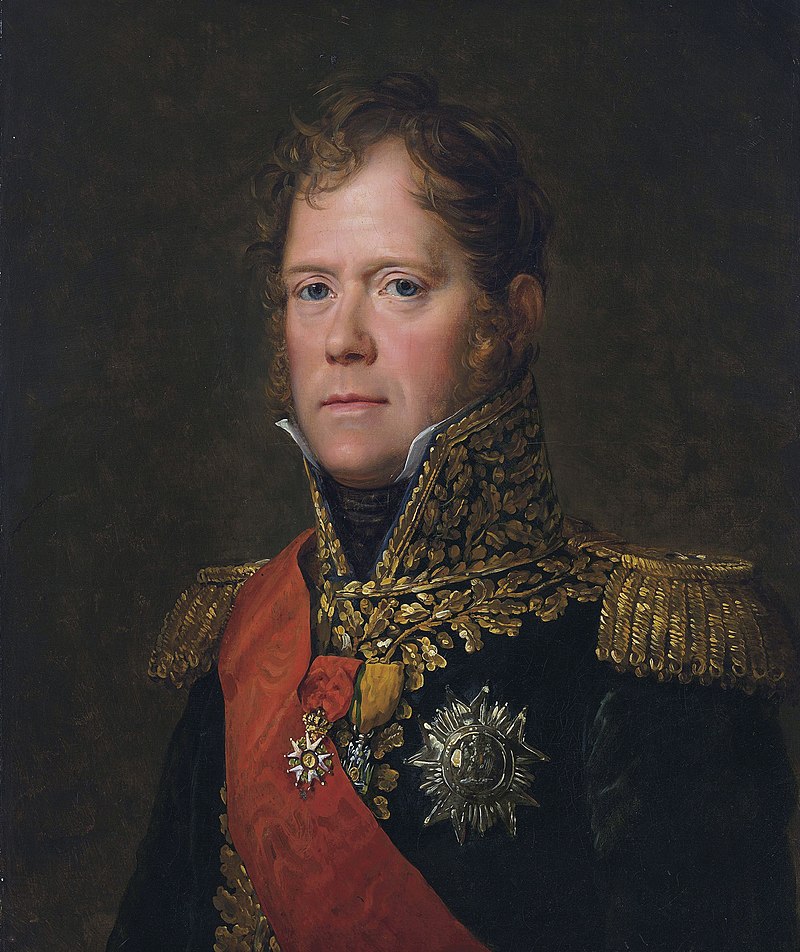
Trump Should Learn from Marshal Ney

Michel Ney, the “bravest of the brave”

W.J. Astore

Treating rivals as enemies has been an identifying characteristic of the Trump administration. Trump has been at pains to denounce Democrats collectively as enemies. He’s denounced with relish the American press (like CNN) as enemies of the people. He knows such incendiary rhetoric inflames his base. He knows it divides Americans, which has made it easier for Trump to rule.

When you denounce your political rivals and the press as not just your personal enemies but enemies of the people, you’re setting the stage for violent actions. Trump’s stage-setting reached its logical culmination with the riots at the U.S. Capitol. Some of the rioters acted like an invading army, planting their own flag, attacking the police, occupying “enemy” offices, even looting. A few apparently contemplated political assassinations of their “enemies.” Having swallowed Trump’s lies, they apparently believed they were the patriots even as their activities amounted to a violent attack on Congress as it attempted to do its job in certifying Joe Biden as the winner of the 2020 election.

Trump and his followers failed in their cosplay coup. Some of the rioters are being tracked down and arrested. Trump himself has already been impeached by Congress for inciting the riot. What should Trump now do?

It comes down to this: Trump instigated and incited a rebellion against Congress and violated the Constitution. His rebellion failed. Is it not time for him to pay a price?

I have a suggestion from history for Trump, a man who is much impressed by his own bravery. (Recall when he claimed he’d rush in without a weapon to take on the armed shooter at Stoneman Douglas high school in Florida.) Mister Trump, learn from Michel Ney, the “bravest of the brave,” the famous Napoleonic marshal who, when he was sent to arrest Napoleon after his return from exile, joined him instead — and paid the ultimate price.

Napoleon and Ney, of course, had their Waterloo. Napoleon was sent yet again into exile, this time much further away from continental Europe, never to return. How did Ney pay for his treachery — his rebellion? He commanded his own firing squad.

When you turn against your government, and when your rebellion fails, you should be prepared to pay for it. Ney knew this. And he met his death with courage.

I have it on the very best authority — Trump’s own words! — that he’s a brave man. With typical hyperbole, he’d probably add he’s the bravest of the brave. In that spirit, then, I urge him to follow Michel Ney. Man up. Give the order that Ney gave unblindfolded:

Soldiers, when I give the command to fire, fire straight at my heart. Wait for the order. It will be my last to you … Soldiers, fire!

I know: Trump commanding his own firing squad? Unlikely indeed! Much more likely is Trump fighting to the last dying gasp — of Rudy Giuliani. And then not paying his estate for services rendered.

America’s Ascetic Warrior-Generals

Irony of ironies: The "ascetic" Petraeus bonded with Broadwell as they ran six-minute miles
Irony of ironies: The “ascetic” Petraeus bonded with Broadwell as they ran six-minute miles

W.J. Astore

A recent article in the New York Times about how General (Ret.) David Petraeus is being honored by the New York Historical Society featured a word often used to describe Petraeus as well as another retired U.S. general fallen on hard times, Stanley McChrystal.  The word is “ascetic.”  The American media loved to hype the ascetic nature of both these men: their leanness, the number of miles they ran or push-ups they did, how hard they worked, how few hours of sleep they required, and so on.  Somehow “ascetic” became associated with superlative leadership and sweeping strategic vision, as if eating sparse meals or running ten miles in an hour is the stuff of a winning general.

Of prospective generals Napoleon used to ask, “Is he lucky?”  In other words, does he find ways to win in spite of the odds?  It seems our media identifies a winning general by how many chin-ups and sit-ups he can perform, or how few calories he needs in a day.

The whole ascetic ideal is not a citizen-soldier concept.  It’s a Spartan or Prussian conceit.  And it’s fascinating to me how generals like Petraeus and McChrystal were essentially anointed as ascetic warrior-priests by the U.S. media.  So much so that in 2007 the Bush Administration took to hiding behind the beribboned and apparently besmirchless chest of Petraeus.

Of course, both Petraeus and McChrystal bought their own media hype, each imploding in his own way, but both manifesting a lack of discipline that gave the lie to the highly disciplined “ascetic” image of the warrior-priest.

And of course both are now being rehabilitated by the powers-that-be, a process that says much about our imperial moment.

Something tells me we’d be better off with a few plain-speaking, un-hyped, citizen-soldier types like Ulysses S. Grant rather than the over-hyped “ascetic warriors” of today.  Or as a friend of mine put it, “I’d prefer a little fat at the gut to lots of fat above the ears.”