

W.J. Astore
Ideas Inspired by My Dad
FEB 03, 2025
I recently published a book, My Father’s Journal, which recounts my dad’s life. If you’re a regular reader of this site, I think you’d enjoy the book, which you can order here. (The paperback is $10, Kindle is $5, and it’s “free” if you have Kindle Unlimited.)
My dad’s journal served to inspire this article for TomDispatch that I wrote during the Covid pandemic in 2020. There is still time to reimagine a better America, one in keeping with the generosity of men and women like my parents, who knew the privations of the Great Depression.
Anyway, here’s my article from March of 2020. I hope it inspires you to consider reading more of my dad’s insights.

Having It Easy in the Beginning, Tough in the End
How My Dad Predicted the Decline of America
BY WILLIAM J. ASTORE (ORIGINAL POST: 3/29/2020)
My dad was born in 1917. Somehow, he survived the Spanish Flu pandemic of 1918-1919, but an outbreak of whooping cough in 1923 claimed his baby sister, Clementina. One of my dad’s first memories was seeing his sister’s tiny white casket. Another sister was permanently marked by scarlet fever. In 1923, my dad was hit by a car and spent two weeks in a hospital with a fractured skull as well as a lacerated thumb. His immigrant parents had no medical insurance, but the driver of the car gave his father $50 toward the medical bills. The only lasting effect was the scar my father carried for the rest of his life on his right thumb.
The year 1929 brought the Great Depression and lean times. My father’s father had left the family, so my dad, then 12, had to pitch in. He got a newspaper route, which he kept for four years, quitting high school after tenth grade so he could earn money for the family. In 1935, like millions of other young men of that era, he joined the Civilian Conservation Corps (CCC), a creation of President Franklin Delano Roosevelt’s New Deal that offered work on environmental projects of many kinds. He battled forest fires in Oregon for two years before returning to his family and factory work. In 1942, he was drafted into the Army, going back to a factory job when World War II ended. Times grew a little less lean in 1951 when he became a firefighter, after which he felt he could afford to buy a house and start a family.
I’m offering all this personal history as the context for a prediction of my dad’s that, for obvious reasons, came to my mind again recently. When I was a teenager, he liked to tell me: “I had it tough in the beginning and easy in the end. You, Willy, have had it easy in the beginning, but will likely have it tough in the end.” His prophecy stayed with me, perhaps because even then, somewhere deep down, I already suspected that my dad was right.
The COVID-19 pandemic is now grabbing the headlines, all of them, and a global recession, if not a depression, seems like a near-certainty. The stock market has been tanking and people’s lives are being disrupted in fundamental and scary ways. My dad knew the experience of losing a loved one to disease, of working hard to make ends meet during times of great scarcity, of sacrificing for the good of one’s family. Compared to him, it’s true that, so far, I’ve had an easier life as an officer in the Air Force and then a college teacher and historian. But at age 57, am I finally ready for the hard times to come? Are any of us?
And keep in mind that this is just the beginning. Climate change (recall Australia’s recent and massive wildfires) promises yet more upheavals, more chaos, more diseases. America’s wanton militarism and lying politicians promise more wars. What’s to be done to avert or at least attenuate the tough times to come, assuming my dad’s prediction is indeed now coming true? What can we do?
It’s Time to Reimagine America
Here’s the one thing about major disruptions to normalcy: they can create opportunities for dramatic change. (Disaster capitalists know this, too, unfortunately.) President Franklin Roosevelt recognized this in the 1930s and orchestrated his New Deal to revive the economy and put Americans like my dad back to work.
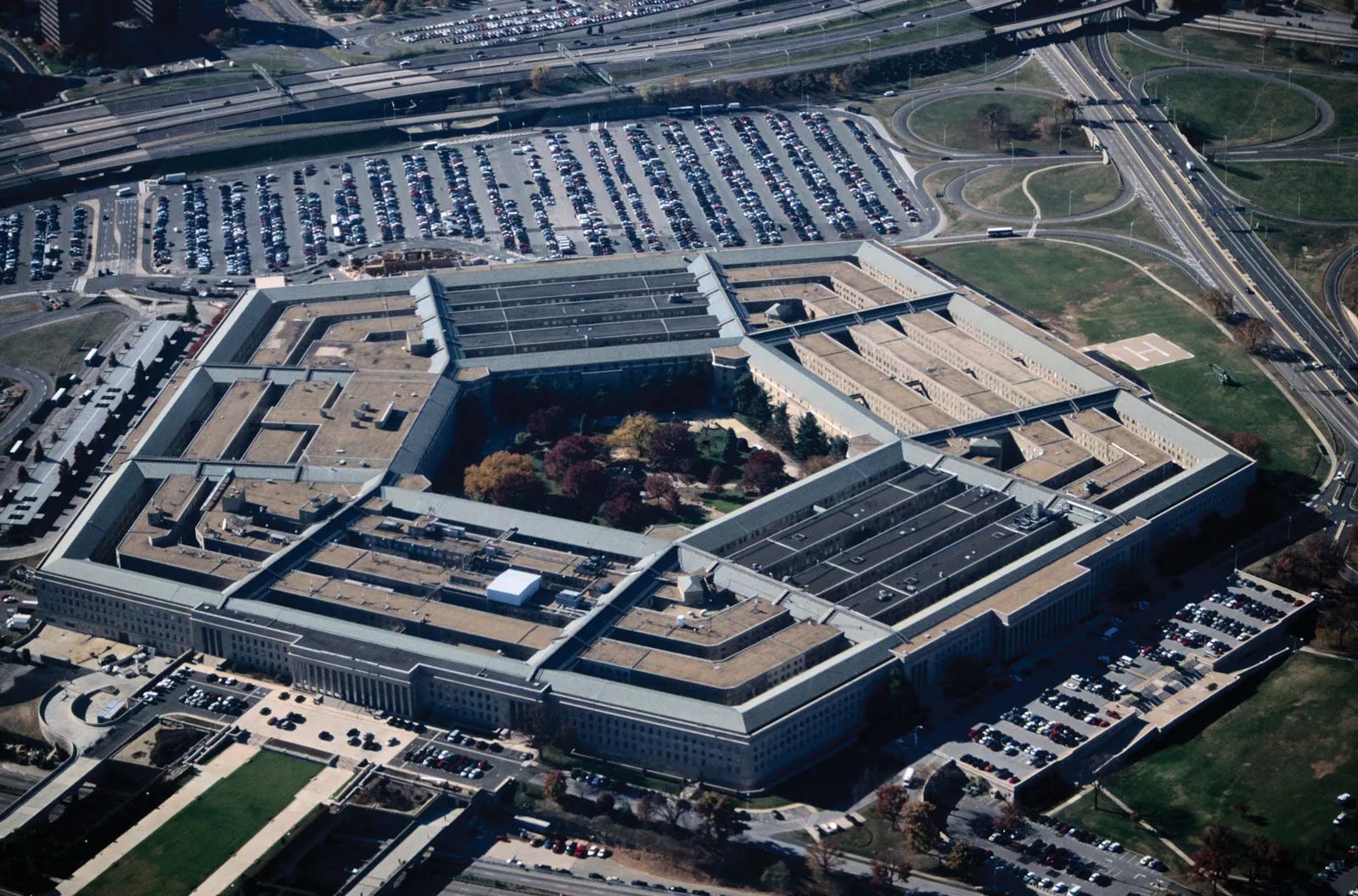
In 2001, the administration of President George W. Bush and Vice President Dick Cheney capitalized on the shock-and-awe disruption of the 9/11 attacks to inflict on the world their vision of a Pax Americana, effectively a militarized imperium justified (falsely) as enabling greater freedom for all. The inherent contradiction in such a dreamscape was so absurd as to make future calamity inevitable. Recall what an aide to Secretary of Defense Donald Rumsfeld scribbled down, only hours after the attack on the Pentagon and the collapse of the Twin Towers, as his boss’s instructions (especially when it came to looking for evidence of Iraqi involvement): “Go massive — sweep it all up, things related and not.” And indeed they would do just that, with an emphasis on the “not,” including, of course, the calamitous invasion of Iraq in 2003.
To progressive-minded people thinking about this moment of crisis, what kind of opportunities might open to us when (or rather if) Donald Trump is gone from the White House? Perhaps this coronaviral moment is the perfect time to consider what it would mean for us to go truly big, but without the usual hubris or those disastrous invasions of foreign countries. To respond to COVID-19, climate change, and the staggering wealth inequities in this country that, when combined, will cause unbelievable levels of needless suffering, what’s needed is a drastic reordering of our national priorities.
Remember, the Fed’s first move was to inject $1.5 trillion into the stock market. (That would have been enough to forgive all current student debt.) The Trump administration has also promised to help airlines, hotels, and above all oil companies and the fracking industry, a perfect storm when it comes to trying to sustain and enrich those upholding a kleptocratic and amoral status quo.
This should be a time for a genuinely new approach, one fit for a world of rising disruption and disaster, one that would define a new, more democratic, less bellicose America. To that end, here are seven suggestions, focusing — since I’m a retired military officer — mainly on the U.S. military, a subject that continues to preoccupy me, especially since, at present, that military and the rest of the national security state swallow up roughly 60% of federal discretionary spending:
1. If ever there was a time to reduce our massive and wasteful military spending, this is it. There was never, for example, any sense in investing up to $1.7 trillion over the next 30 years to “modernize” America’s nuclear arsenal. (Why are new weapons needed to exterminate humanity when the “old” ones still work just fine?) Hundreds of stealth fighters and bombers — it’s estimated that Lockheed Martin’s disappointing F-35 jet fighter alone will cost $1.5 trillion over its life span — do nothing to secure us from pandemics, the devastating effects of climate change, or other all-too-pressing threats. Such weaponry only emboldens a militaristic and chauvinistic foreign policy that will facilitate yet more wars and blowback problems of every sort. And speaking of wars, isn’t it finally time to end U.S. involvement in Iraq and Afghanistan? More than $6 trillion has already been wasted on those wars and, in this time of global peril, even more is being wasted on this country’s forever conflicts across the Greater Middle East and Africa. (Roughly $4 billion a month continues to be spent on Afghanistan alone, despite all the talk about “peace” there.)
2. Along with ending profligate weapons programs and quagmire wars, isn’t it time for the U.S. to begin dramatically reducing its military “footprint” on this planet? Roughly 800 U.S. military bases circle the globe in a historically unprecedented fashion at a yearly cost somewhere north of $100 billion. Cutting such numbers in half over the next decade would be a more than achievable goal. Permanently cutting provocative “war games” in South Korea, Europe, and elsewhere would be no less sensible. Are North Korea and Russia truly deterred by such dramatic displays of destructive military might?
3. Come to think of it, why does the U.S. need the immediate military capacity to fight two major foreign wars simultaneously, as the Pentagon continues to insist we do and plan for, in the name of “defending” our country? Here’s a radical proposal: if you add 70,000 Special Operations forces to 186,000 Marine Corps personnel, the U.S. already possesses a potent quick-strike force of roughly 250,000 troops. Now, add in the Army’s 82nd and 101st Airborne divisions and the 10th Mountain Division. What you have is more than enough military power to provide for America’s actual national security. All other Army divisions could be reduced to cadres, expandable only if our borders are directly threatened by war. Similarly, restructure the Air Force and Navy to de-emphasize the present “global strike” vision of those services, while getting rid of Donald Trump’s newest service, the Space Force, and the absurdist idea of taking war into low earth orbit. Doesn’t America already have enough war here on this small planet of ours?
4. Bring back the draft, just not for military purposes. Make it part of a national service program for improving America. It’s time for a new Civilian Conservation Corps focused on fostering a Green New Deal. It’s time for a new Works Progress Administration to rebuild America’s infrastructure and reinvigorate our culture, as that organization did in the Great Depression years. It’s time to engage young people in service to this country. Tackling COVID-19 or future pandemics would be far easier if there were quickly trained medical aides who could help free doctors and nurses to focus on the more difficult cases. Tackling climate change will likely require more young men and women fighting forest fires on the west coast, as my dad did while in the CCC — and in a climate-changing world there will be no shortage of other necessary projects to save our planet. Isn’t it time America’s youth answered a call to service? Better yet, isn’t it time we offered them the opportunity to truly put America, rather than themselves, first?
5. And speaking of “America First,” that eternal Trumpian catch-phrase, isn’t it time for all Americans to recognize that global pandemics and climate change make a mockery of walls and go-it-alone nationalism, not to speak of politics that divide, distract, and keep so many down? President Dwight D. Eisenhower once said that only Americans can truly hurt America, but there’s a corollary to that: only Americans can truly save America — by uniting, focusing on our common problems, and uplifting one another. To do so, it’s vitally necessary to put an end to fear-mongering (and warmongering). As President Roosevelt famously said in his first inaugural address in the depths of the Great Depression, “The only thing we have to fear is fear itself.” Fear inhibits our ability to think clearly, to cooperate fully, to change things radically as a community.
6. To cite Yoda, the Jedi master, we must unlearn what we have learned. For example, America’s real heroes shouldn’t be “warriors” who kill or sports stars who throw footballs and dunk basketballs. We’re witnessing our true heroes in action right now: our doctors, nurses, and other medical personnel, together with our first responders, and those workers who stay in grocery stores, pharmacies, and the like and continue to serve us all despite the danger of contracting the coronavirus from customers. They are all selflessly resisting a threat too many of us either didn’t foresee or refused to treat seriously, most notably, of course, President Donald Trump: a pandemic that transcends borders and boundaries. But can Americans transcend the increasingly harsh and divisive borders and boundaries of our own minds? Can we come to work selflessly to save and improve the lives of others? Can we become, in a sense, lovers of humanity?
7. Finally, we must extend our love to encompass nature, our planet. For if we keep treating our lands, our waters, and our skies like a set of trash cans and garbage bins, our children and their children will inherit far harder times than the present moment, hard as it may be.
What these seven suggestions really amount to is rejecting a militarized mindset of aggression and a corporate mindset of exploitation for one that sees humanity and this planet more holistically. Isn’t it time to regain that vision of the earth we shared collectively during the Apollo moon missions: a fragile blue sanctuary floating in the velvety darkness of space, an irreplaceable home to be cared for and respected since there’s no other place for us to go? Otherwise, I fear that my father’s prediction will come true not just for me, but for generations to come and in ways that even he couldn’t have imagined.
 Bracing Views