Wars Make the Rich Richer and the Poor Dead

W.J. Astore

On Ending Militarism in America

Also at TomDispatch.com

I read the news today, oh boy. About a lucky man named Elon Musk. But he lost out on one thing: he didn’t get a top secret briefing on Pentagon war plans for China. And the news people breathed a sigh of relief.

With apologies to John Lennon and The Beatles, a day in the life is getting increasingly tough to take here in the land of the free. I’m meant to be reassured that Musk didn’t get to see America’s top-secret plans for — yes! — going to war with China, even as I’m meant to ignore the constant drumbeat of propaganda, the incessant military marches that form America’s background music, conveying the message that America must have war plans for China, that indeed war in or around China is possible, even probable, in the next decade. Maybe in 2027?

My fellow Americans, we should be far more alarmed by such secret U.S. war plans, along with those “pivots” to Asia and the Indo-Pacific, and the military base-building efforts in the Philippines, than reassured by the “good news” that Comrade Billionaire Musk was denied access to the war room, meaning (for Dr. Strangelove fans) he didn’t get to see “the big board.”

It’s war, war, everywhere in America. We do indeed have a strange love for it. I’ve been writing for TomDispatch for 18 years now — this is my 111th essay (the other 110 are in a new book of mine) — most of them focusing on militarism in this country, as well as our disastrous wars in Iraq, Afghanistan, and elsewhere, the ruinous weapons systems we continue to fund (including new apocalyptic nuclear weapons), and the war song that seems to remain ever the same.

A few recent examples of what I mean: President Trump has already bombed Yemen more than once. He’s already threatening Iran. He’s sending Israel all the explosives, all the weaponry it needs to annihilate the Palestinians in Gaza (so too, of course, did Joe Biden). He’s boasting of building new weapons systems like the Air Force’s much-hyped F-47 fighter jet, the “47” designation being an apparent homage by its builder, Boeing, to Trump himself, the 47th president. He and his “defense” secretary, Pete Hegseth, continually boast of “peace through strength,” an Orwellian construction that differs little from “war is peace.” And I could, of course, go on and on and on and on

Buy the Book

Occasionally, Trump sounds a different note. When Tulsi Gabbard became the director of national intelligence, he sang a dissonant note about a “warmongering military-industrial complex.” And however haphazardly, he does seem to be working for some form of peace with respect to the Russia-Ukraine War. He also talks about his fear of a cataclysmic nuclear war. Yet, if you judge him by deeds rather than words, he’s just another U.S. commander-in-chief enamored of the military and military force (whatever the cost, human or financial).

Consider here the much-hyped Department of Government Efficiency (DOGE) led by that lucky man Elon Musk. Even as it dismantles various government agencies like the Department of Education and USAID, it has — no surprise here! — barely touched the Pentagon and its vast, nearly trillion-dollar budget. In fact, if a Republican-controlled Congress has any say in the matter, the Pentagon budget will likely be boosted significantly for Fiscal Year 2026 and thereafter. As inefficient as the Pentagon may be (and we really don’t know just how inefficient it is, since the bean counters there keep failing audit after audit, seven years running), targeted DOGE Pentagon cuts have been tiny. That means there’s little incentive for the generals to change, streamline their operations, or even rethink in any significant fashion. It’s just spend, spend, spend until the money runs out, which I suppose it will eventually, as the national debt soars toward $37 trillion and climbing.

Even grimmer than that, possibly, is America’s state of mind, our collective zeitgeist, the spirit of this country. That spirit is one in which a constant state of war (and preparations for more of the same) is accepted as normal. War, to put it bluntly, is our default state. It’s been that way since 9/11, if not before then. As a military historian, I’m well aware that the United States is, in a sense, a country made by war. It’s just that today we seem even more accepting of that reality, or resigned to it, than we’ve ever been. What gives?
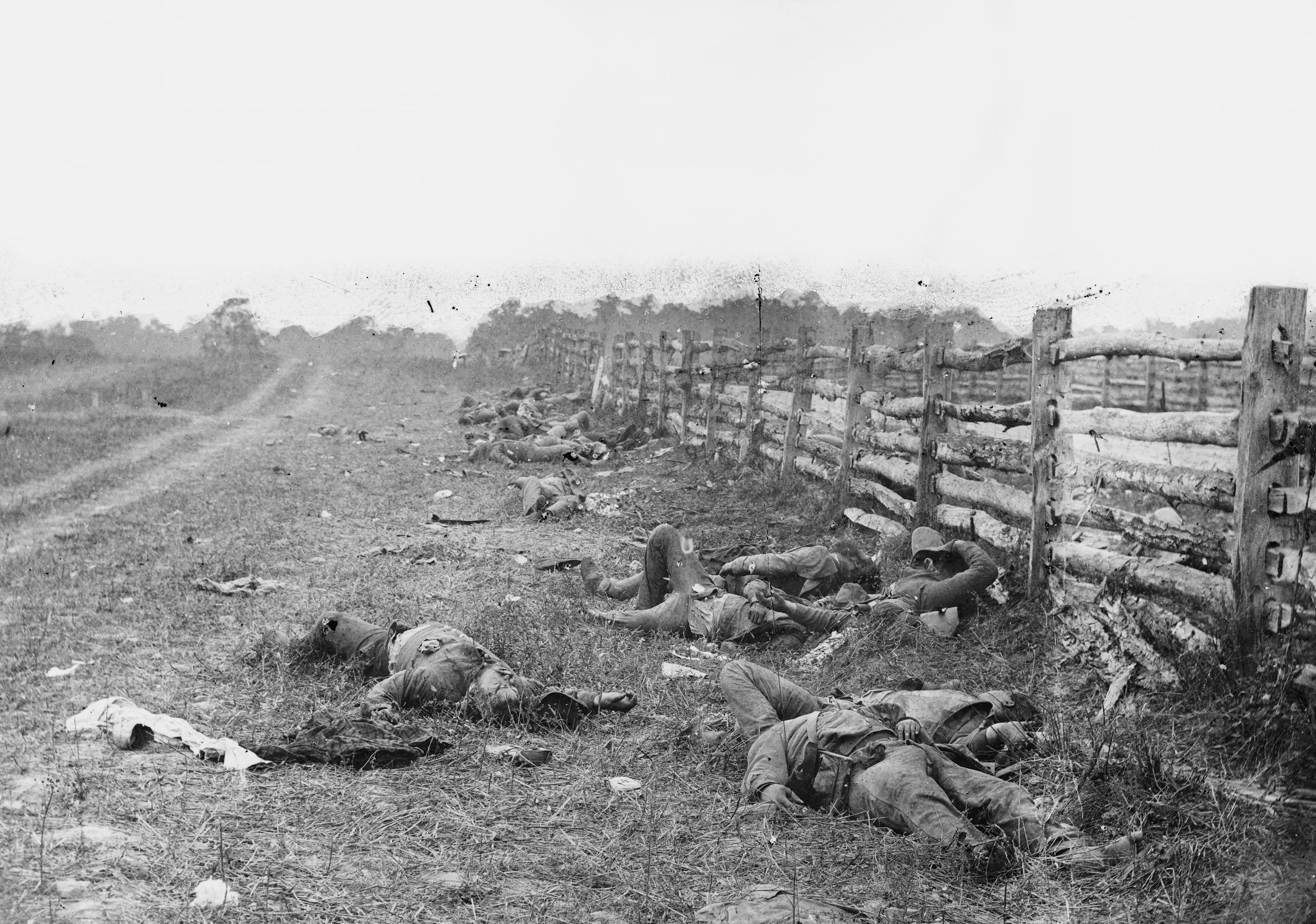
The Face of War: Confederate Dead at Antietam (Matthew Brady)

Remember when, in 1963, Alabama Governor George Wallace said, “Segregation now, segregation tomorrow, and segregation forever”? Fortunately, after much struggle and bloodshed, he was proven wrong. So, can we change the essential American refrain of war now, war tomorrow, and war forever? Can we render that obsolete? Or is that too much to hope for or ask of America’s “exceptional” democracy?

Taking on the MICIMATT(SH)

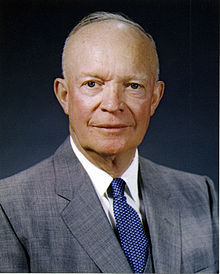
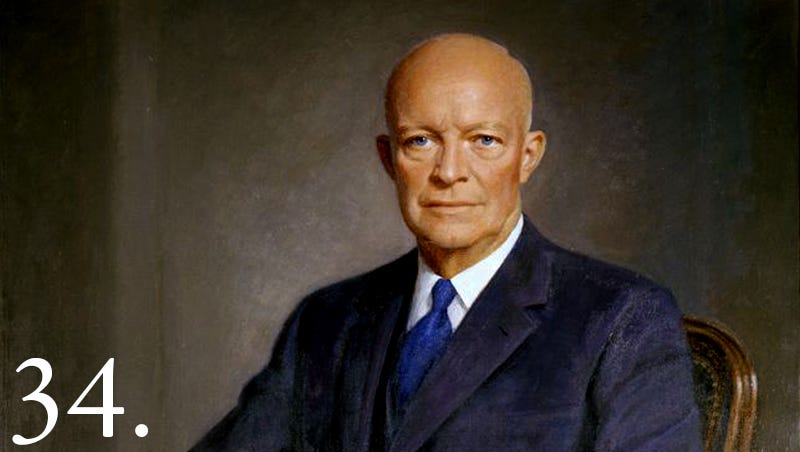
Former CIA analyst Ray McGovern did America a great service when he came up with the acronym MICIMATT, or the Military-Industrial-Congressional-Intelligence-Media-Academia-Think-Tank complex, an extension of President Dwight D. Eisenhower’s military-industrial complex, or MIC (from his farewell speech in 1961). Along with the military and industry (weapons makers like Boeing and Lockheed Martin), the MICIMATT adds Congress (which Eisenhower had in his original draft speech but deleted in the interest of comity), the intelligence “community” (18 different agencies), the media (generally highly supportive of wars and weapons spending), academia (which profits greatly from federal contracts, especially research and development efforts for yet more destructive weaponry), and think tanks (which happily lap up Pentagon dollars to tell us the “smart” position is always to prepare for yet more war).

You’ll note, however, that I’ve added a parenthetical SH to McGovern’s telling acronym. The S is for America’s sporting world, which eternally gushes about how it supports and honors America’s military, and Hollywood, which happily sells war as entertainment (perhaps the best known and most recent film being Tom Cruise’s Top Gun: Maverick, in which an unnamed country that everyone knows is Iran gets its nuclear ambitions spanked by a plucky team of U.S. Naval pilots). A macho catchphrase from the original Top Gun was “I feel the need — the need for speed!” It may as well have been: I feel the need — the need for pro-war propaganda!

Yes, MICIMATT(SH) is an awkward acronym, yet it has the virtue of capturing some of the still-growing power, reach, and cultural penetration of Ike’s old MIC. It should remind us that it’s not just the military and the weapons-makers who are deeply invested in war and — yes! — militarism. It’s Congress; the CIA; related intel “community” members; the mainstream media (which often relies on retired generals and admirals for “unbiased” pro-war commentary); academia (consider how quickly institutions like Columbia University have bent the knee to Trump); and think tanks — in fact, all those “best and brightest” who advocate for war with China, the never-ending war on terror, war everywhere.

But perhaps the “soft power” of the sporting world and Hollywood is even more effective at selling war than the hard power of bombs and bullets. National Football League coaches patrol the sidelines wearing camouflage, allegedly to salute the troops. Military flyovers at games celebrate America’s latest death-dealing machinery. Hollywood movies are made with U.S. military cooperation and that military often has veto power over scripts. To cite only one example, the war movie 12 Strong (2018) turned the disastrous Afghan War that lasted two horrendous decades into a stunningly quick American victory, all too literally won by U.S. troops riding horses. (If only the famed cowboy actor John Wayne had still been alive to star in it!)

The MICIMATT(SH), employing millions of Americans, consuming trillions of dollars, and churning through tens of thousands of body bags for U.S. troops over the years, while killing millions of people abroad, is an almost irresistible force. And right now, it seems like there’s no unmovable object to blunt it.

Believe me, I’ve tried. I’ve written dozens of “Tomgrams” suggesting steps America could take to reverse militarism and warmongering. As I look over those essays, I see what still seem to me sensible ideas, but they die quick deaths in the face of, if not withering fire from the MICIMATT(SH), then being completely ignored by those who matter.

And while this country has a department of war (disguised as a department of defense), it has no department of peace. There’s no budget anywhere for making peace, either. We do have a colossal Pentagon that houses 30,000 workers, feverishly making war plans they won’t let Elon Musk (or any of us) see. It’s for their eyes only, not yours, though they may well ask you or your kids to serve in the military, because the best-laid plans of those war-men do need lots of warm bodies, even if those very plans almost invariably (Vietnam, Afghanistan, Iraq, etc.) go astray.

So, to repeat myself, how do you take on the MICIMATT(SH)? The short answer: It’s not easy, but I know of a few people who had some inspirational ideas.

On Listening to Ike, JFK, MLK, and, Yes, Madison, Too

Militarism isn’t exactly a new problem in America. Consider Randolph Bourne’s 1918 critique of war as “the health of the state,” or General Smedley Butler’s confession in the 1930s that “war is a racket” run by the “gangsters of capitalism.” In fact, many Americans have, over the years, spoken out eloquently against war and militarism. Many beautiful and moving songs have asked us to smile on your brother and “love one another right now.” War, as Edwin Starr sang so powerfully once upon a time, is good for “absolutely nothin’,” though obviously a lot of people disagree and indeed are making a living by killing and preparing for yet more of it.

And that is indeed the problem. Too many people are making too much money off of war. As Smedley Butler wrote so long ago: “Capital won’t permit the taking of the profit out of war until the people — those who do the suffering and still pay the price — make up their minds that those they elect to office shall do their bidding, and not that of the profiteers.” Pretty simple, right? Until you realize that those whom we elect are largely obedient to the moneyed class because the highest court in our land has declared that money is speech. Again, I didn’t say it was going to be easy. Nor did Butler.

As a retired lieutenant colonel in the U.S. Air Force, I want to end my 111th piece at TomDispatch by focusing on the words of Ike, John F. Kennedy (JFK), Martin Luther King, Jr. (MLK), and James Madison. And I want to redefine what words like duty, honor, country, and patriotism should mean. Those powerful words and sentiments should be centered on peace, on the preservation and enrichment of life, on tapping “the better angels of our nature,” as Abraham Lincoln wrote so long ago in his First Inaugural Address.

Why do we serve? What does our oath of office really mean? For it’s not just military members who take that oath but also members of Congress and indeed the president himself. We raise our right hands and swear to support and defend the U.S. Constitution against all enemies, foreign and domestic, to bear true faith and allegiance to the same.

There’s nothing in that oath about warriors and warfighters, but there is a compelling call for all of us, as citizens, to be supporters and defenders of representative democracy, while promoting the general welfare (not warfare), and all the noble sentiments contained in that Constitution. If we’re not seeking a better and more peaceful future, one in which freedom may expand and thrive, we’re betraying our oath.

If so, we have met the enemy — and he is us.

Ike told us in 1953 that constant warfare is no way of life at all, that it is (as he put it), humanity crucifying itself on a cross of iron. In 1961, he told us democracy was threatened by an emerging military-industrial complex and that we, as citizens, had to be both alert and knowledgeable enough to bring it to heel. Two years later, JFK told us that peace — even at the height of the Cold War — was possible, not just peace in our time, but peace for all time. However, it would, he assured us, require sacrifice, wisdom, and commitment.

How, in fact, can I improve on these words that JFK uttered in 1963, just a few months before he was assassinated?

What kind of peace do we seek? Not a Pax Americana enforced on the world by American weapons of war. Not the peace of the grave or the security of the slave. I am talking about genuine peace, the kind of peace that makes life on earth worth living…

I speak of peace because of the new face of war. Total war makes no sense in an age… when the deadly poisons produced by a nuclear exchange would be carried by wind and water and soil and seed to the far corners of the globe and to generations yet unborn… surely the acquisition of such idle [nuclear] stockpiles — which can only destroy and never create — is not the only, much less the most efficient, means of assuring peace.

I speak of peace, therefore, as the necessary rational end of rational men. I realize that the pursuit of peace is not as dramatic as the pursuit of war — and frequently the words of the pursuer fall on deaf ears. But we have no more urgent task.

Are we ready to be urgently rational, America? Are we ready to be blessed as peacemakers? Or are we going to continue to suffer from what MLK described in 1967 as our very own “spiritual death” due to the embrace of militarism, war, empire, and racism?

Of course, MLK wasn’t perfect, nor for that matter was JFK, who was far too enamored of the Green Berets and too wedded to a new strategy of “flexible response” to make a clean break in Vietnam before he was killed. Yet those men bravely and outspokenly promoted peace, something uncommonly rare in their time — and even more so in ours.

More than 200 years ago, James Madison warned us that continual warfare is the single most corrosive force to the integrity of representative democracy. No other practice, no other societal force is more favorable to the rise of authoritarianism and the rule of tyrants than pernicious war. Wage war long and it’s likely you can kiss your democracy, your rights, and just maybe your ass goodbye.

America, from visionaries and prophets like MLK, we have our marching orders. They are not to invest yet more in preparations for war, whether with China or any other country. Rather, they are to gather in the streets and otherwise raise our voices against the scourge of war. If we are ever to beat our swords into plowshares and our spears into pruning hooks and make war no more, something must be done.

Let’s put an end to militarism in America. Let’s be urgently rational. To cite John Lennon yet again: You may say I’m a dreamer, but I’m not the only one. Together, let’s imagine and create a better world.

Copyright 2025 William J. Astore.
The New Merchants of Death

W.J. Astore

America Remains Number One in Selling Deadly Weaponry Worldwide

This weekend, the Merchants of Death Tribunal kicks off on Sunday at 8PM EST. You can register for the event by following this link:

The intent of this “tribunal” is to draw attention to America’s overwhelming dominance of the world’s trade in deadly weaponry and the cost we all pay when “weapons ‘r’ us.” How did the U.S. come to embrace this deadly trade, to the point of boasting of our market dominance as a sign of America’s health and fitness? How did we come to equate arsenals with democracy? And isn’t it high time we denounced this trade in death, as the U.S. Senate did back in the 1930s with the Nye Commission?

Back in 2012, I wrote an article for TomDispatch, “Confessions of a Recovering Weapons Addict,” in which I admitted my own childish enthusiasm for weaponry and all things that go “bang”—and kill. It’s reposted today at TomDispatch and also here below.

To learn more about the Merchants of Death effort, go to https://merchantsofdeath.org.

Weapons ‘R’ Us (2012)

BY WILLIAM J. ASTORE

Perhaps you’ve heard of “Makin’ Thunderbirds,” a hard-bitten rock & roll song by Bob Seger that I listened to 30 years ago while in college. It’s about auto workers back in 1955 who were “young and proud” to be making Ford Thunderbirds. But in the early 1980s, Seger sings, “the plants have changed and you’re lucky if you work.” Seger caught the reality of an American manufacturing infrastructure that was seriously eroding as skilled and good-paying union jobs were cut or sent overseas, rarely to be seen again in these parts.

If the U.S. auto industry has recently shown sparks of new life (though we’re not making T-Birds or Mercuries or Oldsmobiles or Pontiacs or Saturns anymore), there is one form of manufacturing in which America is still dominant. When it comes to weaponry, to paraphrase Seger, we’re still young and proud and makin’ Predators and Reapers (as in unmanned aerial vehicles, or drones) and Eagles and Fighting Falcons (as in F-15 and F-16 combat jets), and outfitting them with the deadliest of weapons. In this market niche, we’re still the envy of the world.

Yes, we’re the world’s foremost “merchants of death,” the title of a best-selling exposé of the international arms trade published to acclaim in the U.S. in 1934. Back then, most Americans saw themselves as war-avoiders rather than as war-profiteers. The evil war-profiteers were mainly European arms makers like Germany’s Krupp, France’s Schneider, or Britain’s Vickers.

Not that America didn’t have its own arms merchants. As the authors of Merchants of Death noted, early on our country demonstrated a “Yankee propensity for extracting novel death-dealing knickknacks from [our] peddler’s pack.” Amazingly, the Nye Committee in the U.S. Senate devoted 93 hearings from 1934 to 1936 to exposing America’s own “greedy munitions interests.” Even in those desperate depression days, a desire for profit and jobs was balanced by a strong sense of unease at this deadly trade, an unease reinforced by the horrors of and hecatombs of dead from the First World War.

We are uneasy no more. Today we take great pride (or at least have no shame) in being by far the world’s number one arms-exporting nation. A few statistics bear this out. From 2006 to 2010, the U.S. accounted for nearly one-third of the world’s arms exports, easily surpassing a resurgent Russia in the “Lords of War” race. Despite a decline in global arms sales in 2010 due to recessionary pressures, the U.S. increased its market share, accounting for a whopping 53% of the trade that year. Last year saw the U.S. on pace to deliver more than $46 billion in foreign arms sales. Who says America isn’t number one anymore?

For a shopping list of our arms trades, try searching the Stockholm International Peace Research Institute database for arms exports and imports. It reveals that, in 2010, the U.S. exported “major conventional weapons” to 62 countries, from Afghanistan to Yemen, and weapons platforms ranging from F-15, F-16, and F-18 combat jets to M1 Abrams main battle tanks to Cobra attack helicopters (sent to our Pakistani comrades) to guided missiles in all flavors, colors, and sizes: AAMs, PGMs, SAMs, TOWs — a veritable alphabet soup of missile acronyms. Never mind their specific meaning: they’re all designed to blow things up; they’re all designed to kill.

Rarely debated in Congress or in U.S. media outlets is the wisdom or morality of these arms deals. During the quiet last days of December 2011, in separate announcements whose timing could not have been accidental, the Obama Administration expressed its intent to sell nearly $11 billion in arms to Iraq, including Abrams tanks and F-16 fighter-bombers, and nearly $30 billion in F-15 fighter jets to Saudi Arabia, part of a larger, $60 billion arms package for the Saudis. Few in Congress oppose such arms deals since defense contractors provide jobs in their districts — and ready donationsto Congressional campaigns.

Let’s pause to consider what such a weapons deal implies for Iraq. Firstly, Iraq only “needs” advanced tanks and fighter jets because we destroyed their previous generation of the same, whether in 1991 during Desert Shield/Storm or in 2003 during Operation Iraqi Freedom. Secondly, Iraq “needs” such powerful conventional weaponry ostensibly to deter an invasion by Iran, yet the current government in Baghdad is closely aligned with Iran, courtesy of our invasion in 2003 and the botched occupation that followed. Thirdly, despite its “needs,” the Iraqi military is nowhere near ready to field and maintain such advanced weaponry, at least without sustained training and logistical support provided by the U.S. military.

As one U.S. Air Force officer who served as an advisor to the fledging Iraqi Air Force, or IqAF, recently worried:

“Will the IqAF be able to refuel its own aircraft? Can the Iraqi military offer adequate force protection and security for its bases? Can the IqAF provide airfield management services at its bases as they return to Iraqi control after eight years under US direction? Can the IqAF ensure simple power generation to keep facilities operating? Will the IqAF be able to develop and retain its airmen?… Only time will tell if we left [Iraq] too early; nevertheless, even without a renewed security agreement, the USAF can continue to stand alongside the IqAF.”

Put bluntly: We doubt the Iraqis are ready to field and fly American-built F-16s, but we’re going to sell them to them anyway. And if past history is a guide, if the Iraqis ever turn these planes against us, we’ll blow them up or shoot them down — and then (hopefully) sell them some more.

Our Best Arms Customer

Let’s face it: the weapons we sell to others pale in comparison to the weapons we sell to ourselves. In the market for deadly weapons, we are our own best customer. Americans have a love affair with them, the more high-tech and expensive, the better. I should know. After all, I’m a recovering weapons addict.

Well into my teen years, I was fascinated by military hardware. I built models of what were then the latest U.S. warplanes: the A-10, the F-4, the F-14, -15, and -16, the B-1, and many others. I read Aviation Week and Space Technology at my local library to keep track of the newest developments in military technology. Not surprisingly, perhaps, I went on to major in mechanical engineering in college and entered the Air Force as a developmental engineer.

Enamored as I was by roaring afterburners and sleek weaponry, I also began to read books like James Fallows’s National Defense (1981) among other early critiques of the Carter and Reagan defense buildup, as well as the slyly subversive and always insightful Augustine’s Laws (1986) by Norman Augustine, later the CEO of Martin Marietta and Lockheed Martin. That and my own experience in the Air Force alerted me to the billions of dollars we were devoting to high-tech weaponry with ever-ballooning price tags but questionable utility.

Perhaps the best example of the persistence of this phenomenon is the F-35 Lightning II. Produced by Lockheed Martin, the F-35 was intended to be an “affordable” fighter-bomber (at roughly $50 million per copy), a perfect complement to the much more expensive F-22 “air superiority” Raptor. But the usual delays, cost overruns, technical glitches, and changes in requirements have driven the price tag of the F-35 up to $160 million per plane, assuming the U.S. military persists in its plans to buy 2,400 of them. (If the Pentagon decides to buy fewer, the cost-per-plane will soar into the F-22 range.) By recent estimates the F-35 will now cost U.S. taxpayers (you and me, that is) at least $382 billion for its development and production run. Such a sum for a single weapons system is vast enough to be hard to fathom. It would, for instance, easily fund all federal government spending on education for the next five years.

The escalating cost of the F-35 recalls the most famous of Norman Augustine’s irreverent laws: “In the year 2054,” he wrote back in the early 1980s, “the entire defense budget will [suffice to] purchase just one aircraft.” But the deeper question is whether our military even needs the F-35, a question that’s rarely asked and never seriously entertained, at least by Congress, whose philosophy on weaponry is much like King Lear’s: “O, reason not the need.”

But let’s reason the need in purely military terms. These days, the Air Force is turning increasingly to unmanned drones. Meanwhile, plenty of perfectly good and serviceable “platforms” remain for attack and close air support missions, from F-16s and F-18s in the Air Force and Navy to Apache helicopters in the Army. And while many of our existing combat jets may be nearing the limits of airframe integrity, there’s nothing stopping the U.S. military from producing updated versions of the same. Heck, this is precisely what we’re hawking to the Saudis — updated versions of the F-15, developed in the 1970s.

Because of sheer cost, it’s likely we’ll buy fewer F-35s than our military wants but many more than we actually need. We’ll do so because Weapons ‘R’ Us. Because building ultra-expensive combat jets is one of the few high-tech industries we haven’t exported (due to national security and secrecy concerns), and thus one of the few industries in the U.S. that still supports high-paying manufacturing jobs with decent employee benefits. And who can argue with that?

The Ultimate Cost of Our Merchandise of Death

Clearly, the U.S. has grabbed the brass ring of the global arms trade. When it comes to investing in militaries and weaponry, no country can match us. We are supreme. And despite talk of modest cuts to the Pentagon budget over the next decade, it will, according to President Obama, continue to grow, which means that in weapons terms the future remains bright. After all, Pentagon spending on research and development stands at $81.4 billion, accounting for an astonishing 55% of all federal spending on R&D and leaving plenty of opportunity to develop our next generation of wonder weapons.

But at what cost to ourselves and the rest of the world? We’ve become the suppliers of weaponry to the planet’s hotspots. And those weapons deliveries (and the training and support missions that go with them) tend to make those spots hotter still — as in hot lead.

As a country, we seem to have a teenager’s fascination with military hardware, an addiction that’s driving us to bust our own national budgetary allowance. At the same time, we sell weapons the way teenage punks sell fireworks to younger kids: for profit and with little regard for how they might be used.

Sixty years ago, it was said that what’s good for General Motors is good for America. In 1955, as Bob Seger sang, we were young and strong and makin’ Thunderbirds. But today we’re playing a new tune with new lyrics: what’s good for Lockheed Martin or Boeing or [insert major-defense-contractor-of-your-choice here] is good for America.

How far we’ve come since the 1950s!

MIC on the Brain

W.J. Astore

Why write so much about the military-industrial complex?

Loyal readers may recall that in June of 2022 M. Davout and I posted a debate between the two of us on the Russia-Ukraine War. This debate is still worth reading, I think.

The other day, my old friend Davout quipped that I had MIC on the brain. Of course, I had suggested that he had Putin on the brain because of his keen support of Ukraine’s war of national liberation, so it was a fair retort. It was also one that I embraced, for as I wrote back to him:

You’re right that I have MIC on the brain. MICIMATT is a useful acronym.  The military industrial congressional intelligence media academia think tank complex.  Awkward, but it captures some of the scope of the MIC.

There’s a reason Ike warned us about the MIC in 1961.  It absorbs more than half of federal discretionary spending.  This year Congress gave it $45 billion more than even Biden and the Pentagon wanted.  And it just failed its fifth financial audit in a row.

Biden, back in the day, stated “show me your budget and I’ll tell you what you value.” Looking at the federal budget, we see what they value.

The MIC’s budget is at least 14 times greater than the State Department’s.  And there are times when State acts as a salesman for U.S. weaponry overseas, as I wrote about here: https://www.huffpost.com/entry/our-state-department-a-ti_b_748658

Back when I wrote that article (2010), the Pentagon Budget was 10 times as great as State.  Now it’s 14 or 15 times as great. Progress!

So, yes, I have the MIC on my brain.  All Americans should.  That’s why Ike said “only an alert and knowledgeable citizenry” has any hope of keeping the MIC under control.

So far, we’ve failed, myself included.

Davout then made this reply:

What are the real problems with the MIC? 

That it functions as a mini-welfare state for many Americans is not a big problem for me. That it supports weapons systems we do not need and in numbers we do not need is a big problem. 

That it needlessly supports redundant bases across the country because of protection from members of congress worried about employment and small business in their congressional districts is not a big problem for me. That it provides military surplus to local police departments is a big problem.

The more crucial issue is to what extent and in which ways are military contractors like Boeing more corrupt, wasteful of US taxpayer dollars or endangering to the common good than Exxon Mobil or Philip Morris or Merck? 

Haven’t you squeezed enough meaning out of Ike’s speech by now? Why not do a deep dive into the Pentagon budget and give like-minded people better arguments to make to their congressional reps than the top line DOD budget figure and Ike’s warning?

To which I made this reply:

One “deep diver” on the Pentagon budget is William Hartung.  You can read his stuff at TomDispatch.com and Responsible Statecraft.  There are other deep divers as well.  One of my colleagues, Christian Sorensen, has done detailed work on the MIC.  Here’s one of his articles: https://www.businessinsider.com/military-industrial-complex-budget-us-security-profit-forever-wars-2021-5

Google his name for more “deep dives.”

“Deep divers” already exist.  I don’t need to duplicate their fine work.

I’m not sure of the relevance of comparing big oil or big tobacco to the MIC.  My focus is on the MIC because that’s what I know best.  Do I need to add nuance to my critique of the MIC by saying there are other bad corporate actors out there too?

You can see I was getting testy, but we’re old friends, so we don’t mince words.

Davout responded by saying:

The point I was making (inelegantly) about the one-sided focus on the MIC is that if one does not see it in the context of other factors, one might tend to deploy it as an explanation in cases where it doesn’t apply. (If one only has a hammer in one’s toolbox, then one might try to use it for tasks for which it is not fitted.) 

For example, you have suggested the US MIC is a major factor explaining the transfer of weapons from western countries to Ukraine. While I think the US MIC does benefit from those transfers (though not so much as one might think, given that some of that weaponry is drawing on overstocks of weapons systems no longer in use), it is not driving this war. Russian aggression, Ukrainian resistance, and NATO countries’ concerns about future Russian aggression are the prime factors driving those weapons transfers. 

To which I replied:

For a grimmer take on the Ukraine war and its implications for the US, consider this article by Chris Hedges: 

The Chris Hedges Report

Ukraine: The War That Went Wrong

And you’re wrong about the MIC and its profits here.  For example, in the case of M-1 tanks, the 31 going to Ukraine will be newly built, despite the fact that we have thousands of Abrams tanks in Army inventory.  Also, most of the weapons/ammo being sent from U.S. inventories have to be replaced.  (Yes, a few weapons systems are obsolete, like MRAPs and M113 APCs, but most aren’t.). Assuming we send F-16s, again these will be new, and Lockheed Martin has already announced they’re willing and eager to produce more.

Don’t worry: the MIC is doing very well indeed [from the Russia-Ukraine War].  It has decades of practice at this.

That was the end of our exchange. I’d add that the MIC profits far more from the atmosphere of uncertainty and anxiety created by the Russia-Ukraine War than it does from the war itself. Even though Russia’s forces haven’t performed well in this war, even though Russia is arguably weaker today than it was before the invasion, the MIC and various preening politicians are exaggerating the Russian threat as a way of boosting military spending. And it’s working, hence the $45 billion extra given to the Pentagon by Congress in this year’s budget.

And so I will continue to have “MIC on the brain” because it continues to grow ever more powerful within our society, and ever more ambitious on the world stage. You might say it’s invaded my brain as well, though (so far) I haven’t sent it more than half of my discretionary income.

Davout and I don’t always agree, but we’re always willing to talk and to listen. We need more conversations among Americans about war and the MIC, for conversing leads to clarity and clarity can lead to a shared commitment to act.

Can the Military-Industrial Complex Be Tamed?

W.J. Astore

Cutting the Pentagon Budget in Half Would Finally Force the Generals to Think

(Also at TomDispatch.com)

My name is Bill Astore and I’m a card-carrying member of the military-industrial complex (MIC).

Sure, I hung up my military uniform for the last time in 2005. Since 2007, I’ve been writing articles for TomDispatch focused largely on critiquing that same MIC and America’s permanent war economy. I’ve written against this country’s wasteful and unwise wars in Iraq and Afghanistan, its costly and disastrous weapons systems, and its undemocratic embrace of warriors and militarism. Nevertheless, I remain a lieutenant colonel, if a retired one. I still have my military ID card, if only to get on bases, and I still tend to say “we” when I talk about my fellow soldiers, Marines, sailors, and airmen (and our “guardians,” too, now that we have a Space Force).

So, when I talk to organizations that are antiwar, that seek to downsize, dismantle, or otherwise weaken the MIC, I’m upfront about my military biases even as I add my own voice to their critiques. Of course, you don’t have to be antiwar to be highly suspicious of the U.S. military. Senior leaders in “my” military have lied so often, whether in the Vietnam War era of the last century or in this one about “progress” in Iraq and Afghanistan, that you’d have to be asleep at the wheel or ignorant not to have suspected the official story.

Yet I also urge antiwar forces to see more than mendacity or malice in “our” military. It was retired general and then-President Dwight D. Eisenhower, after all, who first warned Americans of the profound dangers of the military-industrial complex in his 1961 farewell address. Not enough Americans heeded Ike’s warning then and, judging by our near-constant state of warfare since that time, not to speak of our ever-ballooning “defense” budgets, very few have heeded his warning to this day. How to explain that?

Ike’s warning about the military-industrial complex was also a call to arms to “an alert and knowledgeable citizenry” (Image: WhiteHouse.gov)

Well, give the MIC credit. Its tenacity has been amazing. You might compare it to an invasive weed, a parasitic cowbird (an image I’ve used before), or even a metastasizing cancer. As a weed, it’s choking democracy; as a cowbird, it’s gobbling up most of the “food” (at least half of the federal discretionary budget) with no end in sight; as a cancer, it continues to spread, weakening our individual freedoms and liberty. 

Call it what you will. The question is: How do we stop it? I’ve offered suggestions in the past; so, too, have writers for TomDispatch like retired Army Colonel Andrew Bacevich and retired Army Major Danny Sjursen, as well as William HartungJulia Gledhill, and Alfred McCoy among others. Despite our critiques, the MIC grows ever stronger. If Ike’s warning wasn’t eye-opening enough, enhanced by an even more powerful speech, “Beyond Vietnam,” by Martin Luther King, Jr., in 1967, what could I and my fellow TomDispatch writers possibly say or do to make a difference?

Maybe nothing, but that won’t stop me from trying. Since I am the MIC, so to speak, maybe I can look within for a few lessons that came to me the hard way (in the sense that I had to live them). So, what have l learned of value?

War Racketeers Enjoy Their Racket

In the 1930s, Smedley Butler, a Marine general twice decorated with the Medal of Honor, wrote a book entitled War Is a Racket. He knew better than most since, as he confessed in that volume, when he wore a military uniform, he served as “a racketeer, a gangster for capitalism.” And the corporate-driven racket he helped enable almost a century ago by busting heads from the Caribbean to China was small-scale indeed compared to today’s thoroughly global one.

There’s an obvious lesson to be drawn from its striking endurance, never-ending enlargement, and distinct engorgement in our moment (even after all those lost wars it fought): the system will not reform itself.  It will always demand and take more — more money, more authority, more power.  It will never be geared for peace.  By its nature, it’s authoritarian and distinctly less than honorable, replacing patriotism with service loyalty and victory with triumphant budgetary authority.  And it always favors the darkest of scenarios, including at present a new cold war with China and Russia, because that’s the best and most expedient way for it to thrive.

Within the military-industrial complex, there are no incentives to do the right thing.  Those few who have a conscience and speak out honorably are punished, including truth-tellers in the enlisted ranks like Chelsea Manning and Daniel Hale. Even being an officer doesn’t make you immune.  For his temerity in resisting the Vietnam War, David M. Shoup, a retired Marine Corps general and Medal of Honor recipient, was typically dismissed by his peers as unbalanced and of questionable sanity.

For all the talk of “mavericks,” whether in Top Gun or elsewhere, we — there’s that “we” again (I can’t help myself!) — in the military are a hotbed of go-along-to-get-along conformity.

Recently, I was talking with a senior enlisted colleague about why so few top-ranking officers are willing to speak truth to the powerless (that’s you and me) even after they retire. He mentioned credibility. To question the system, to criticize it, to air dirty laundry in public is to risk losing credibility within the club and so to be rejected as a malcontent, disloyal, even “unbalanced.” Then, of course, that infamous revolving door between the military and giant weapons makers like Boeing and Raytheon simply won’t spin for you.  Seven-figure compensation packages, like the one current Secretary of Defense Lloyd Austin gained from Raytheon after his retirement as an Army general, won’t be an option. And in America, who doesn’t want to cash in while gaining more power within the system?

Quite simply, it pays so much better to mouth untruths, or at least distinctly less-than-full-truths, in service to the powerful. And with that in mind, here, at least as I see it, are a few full truths about my old service, the Air Force, that I guarantee you I won’t be applauded for mentioning. How about this as a start: that the production of F-35s — an overpriced “Ferrari” of a fighter jet that’s both too complex and remarkably successful as an underperformer — should be canceled (savings: as much as $1 trillion over time); that the much-touted new B-21 nuclear bomber isn’t needed (savings: at least $200 billion) and neither is the new Sentinel Intercontinental Ballistic Missile(savings: another $200 billion and possibly the entire Earth from doomsday); that the KC-46 tanker is seriously flawed and should be canceled (savings: another $50 billion). 

Now, tote it up. By canceling the F-35, the B-21, the Sentinel, and the KC-46, I singlehandedly saved the American taxpayer roughly $1.5 trillion without hurting America’s national defense in the least. But I’ve also just lost all credibility (assuming I had any left) with my old service.

Look, what matters to the military-industrial complex isn’t either the truth or saving your taxpayer dollars but keeping those weapons programs going and the money flowing. What matters, above all, is keeping America’s economy on a permanent wartime footing both by buying endless new (and old) weapons systems for the military and selling them globally in a bizarrely Orwellian pursuit of peace through war. 

How are Americans, Ike’s “alert and knowledgeable citizenry,” supposed to end a racket like this? We certainly should know one thing by now: the MIC will never check itself and Congress, already part of it thanks to impressive campaign donations and the like by major weapons makers, won’t corral it either.  Indeed, last year, Congress shoveled $45 billion more than the Biden administration requested (more even than the Pentagon asked for) to that complex, all ostensibly in your name. Who cares that it hasn’t won a war of the faintest significance since 1945. Even “victory” in the Cold War (after the Soviet Union imploded in 1991) was thrown away. And now the complex warns us of an onrushing “new cold war” to be waged, naturally, at tremendous cost to you, the American taxpayer.  

As citizens, we must be informed, willing, and able to act. And that’s precisely why the complex seeks to deny you knowledge, precisely why it seeks to isolate you from its actions in this world. So, it’s up to you — to us! — to remain alert and involved. Most of all, each of us must struggle to keep our identity and autonomy as a citizen, a rank higher than that of any general or admiral, for, as we all need to be reminded, those wearing uniforms are supposed to serve you, not vice-versa.

I know you hear otherwise. You’ve been told repeatedly in these years that it’s your job to “support our troops.” Yet, in truth, those troops should only exist to support and defend you, and of course the Constitution, the compact that binds us all together as a nation.

When misguided citizens genuflect before those troops (and then ignore everything that’s done in their name), I’m reminded yet again of Ike’s sage warning that only Americans can truly hurt this country. Military service may be necessary, but it’s not necessarily ennobling. America’s founders were profoundly skeptical of large militaries, of entangling alliances with foreign powers, and of permanent wars and threats of the same. So should we all be.

Citizens United Is the Answer

No, not that “Citizens United,” not the case in which the Supreme Court decided corporations had the same free speech rights as you and me, allowing them to coopt the legislative process by drowning us out with massive amounts of “speech,” aka dark-money-driven propaganda. We need citizens united against America’s war machine.

Understanding how that machine works — not just its waste and corruption, but also its positive attributes — is the best way to wrestle it down, to make it submit to the people’s will. Yet activists are sometimes ignorant of the most basic facts about “their” military. So what? Does the difference between a sergeant major and a major, or a chief petty officer and the chief of naval operations matter? The answer is: yes.

An antimilitary approach anchored in ignorance won’t resonate with the American people. An antiwar message anchored in knowledge could, however. It’s important, that is, to hit the proverbial nail on the head. Look, for example, at the traction Donald Trump gained in the presidential race of 2015-2016 when he did something few other politicians then dared do: dismiss the Iraq War as wasteful and stupid. His election win in 2016 was not primarily about racism, nor the result of a nefarious Russian plot. Trump won, at least in part because, despite his ignorance on so many other things, he spoke a fundamental truth — that America’s wars of this century were horrendous blunders.

Trump, of course, was anything but antimilitary. He dreamed of military parades in Washington, D.C. But I (grudgingly) give him credit for boasting that he knew more than his generals and by that I mean many more Americans need to challenge those in authority, especially those in uniform.

Yet challenging them is just a start. The only real way to wrestle the military-industrial complex to the ground is to cut its funding in half, whether gradually over years or in one fell swoop. Yes, indeed, it’s the understatement of the century to note how much easier that’s said than done. It’s not like any of us could wave a military swagger stick like a magic wand and make half the Pentagon budget disappear. But consider this: If I could do so, that military budget would still be roughly $430 billion, easily more than China’s and Russia’s combined, and more than seven times what this country spends on the State Department. As usual, you get what you pay for, which for America has meant more weapons and disastrous wars.

Join me in imagining the (almost) inconceivable — a Pentagon budget cut in half. Yes, generals and admirals would scream and Congress would squeal. But it would truly matter because, as a retired Army major general once told me, major budget cuts would force the Pentagon to think — for once. With any luck, a few sane and patriotic officers would emerge to place the defense of America first, meaning that hubristic imperial designs and forever wars would truly be reined in because there’d simply be no more money for them.

Currently, Americans are giving the Pentagon all it wants — plus some. And how’s that been working out for the rest of us? Isn’t it finally time for us to exercise real oversight, as Ike challenged us to do in 1961? Isn’t it time to force the Pentagon to pass an audit each year — it’s failed the last five! — or else cut its budget even more deeply? Isn’t it time to hold Congress truly responsible for enabling ever more war by voting out military sycophants? Isn’t it time to recognize, as America’s founders did, that sustaining a vast military establishment constitutes the slow and certain death of democracy?

Just remember one thing: the military-industrial complex won’t reform itself. It just might have no choice, however, but to respond to our demands, if we as citizens remain alert, knowledgeable, determined, and united. And if it should refuse to, if the MIC can’t be tamed, whether because of its strength or our weakness, you will know beyond doubt that this country has truly lost its way.

Tackling the Military-Industrial Complex

W.J. Astore

Sixty-one years ago, in 1961, President Dwight D. Eisenhower warned America of the threat posed by the military-industrial complex (MIC). To that complex, Ike had rightly added Congress, whose members are generally supportive of immense military spending, especially when it occurs in their district. Americans, in the main, haven’t heeded Ike’s warning, mainly due to government/corporate propaganda, military lobbying and threat inflation, wars and rumors of war, the naked desire for global dominance in the stated cause of keeping the “homeland” safe, and, well, greed.

Ike in 1959

How does “an alert and knowledgeable citizenry” tackle such a beast?  I was part of a discussion this week on strategies to “dismantle” the MIC; more on that in a moment. First, a caveat. When I use the term “military-industrial complex,” I know what I’m referring to and talking about, and so too do my readers. But what about your average American, who perhaps has barely heard of President Eisenhower, let alone his farewell address in 1961?  And what about those who prosper from the MIC, whether they know it or not?  Why should they support calls for “dismantling” a big part of their livelihood?

Random example. I went to the doctor’s office today. The receptionist noted my military background as she told me about her son, whose work on red blood cells is funded by the Department of Defense, and her husband, whose work is connected to Raytheon, a major weapons contractor.  Another example is my previous dental hygienist, whose husband proudly worked on the helmet system for the F-35 jet fighter. So many of our fellow Americans are connected to the MIC; lots of my friends are, especially if they served.  As a retired military officer who writes articles that are generally critical of the MIC, I’m the exception.  Many of my peers are still employed by the MIC in good-paying positions that would be difficult for them to replicate in the private, civilian sector of society.

This is not an argument for how wonderful the MIC is. But reformers need to recognize that significant cuts to MIC funding, desirable as they are, will impact ordinary people first, rather than retired generals and corporate CEOs, who will be just fine no matter what happens.

Whatever your reforming zeal, terminology is vitally important.  To me, talk of “dismantling” the MIC is a non-starter.  Like “defund” the police, it’s doomed to fail because its message is so easily twisted. Recall that for most Americans, the military remains a trusted institution within our society, much more trusted than Congress and the President.  “Support our troops” is almost the new national motto, an adjunct to In God We Trust.  Indeed, Jesus is often envisioned as a warrior-god who’s always on America’s side.

To be persuasive, we shouldn’t say “defund” the Pentagon; “dismantle” also sounds wrong in this moment.  But if we talk of a leaner military, a smarter one, more agile, more cost-effective, more bang for the buck, those phrases will resonate better.  Let’s talk as well of a military focused on national defense, motivated by high ideals, and aligned with liberty, freedom, and democracy.

Look: The MIC has a big advantage over would-be reformers and cost-cutters: the clarity that comes with a common goal, which for the Complex is profit/power.  We live in a capitalist society that values those things. I don’t think we can compete on the money field with the MIC, but we can compete in the realm of ideas and ideals, and the military can be an ally in this, so long as its members remember the ideals of their oaths to the U.S. Constitution.

What do I mean here?  We need to tell Americans their very future is being stolen from them by wanton military spending.  At the same time, their past is being rewritten.  We’re forgetting past American ideals like “right makes might” and the citizen-soldier as a public servant.  Instead, it’s might makes right as enforced by warriors and warfighters.  We are in yet another Orwellian moment where war is peace, surveillance is privacy, and censorship is free speech.

In fighting against this moment, we need to use all tools at our disposal. Somehow, we need to bring people together at a moment when our “leaders” are determined to divide us, distract us, and keep us downtrodden.

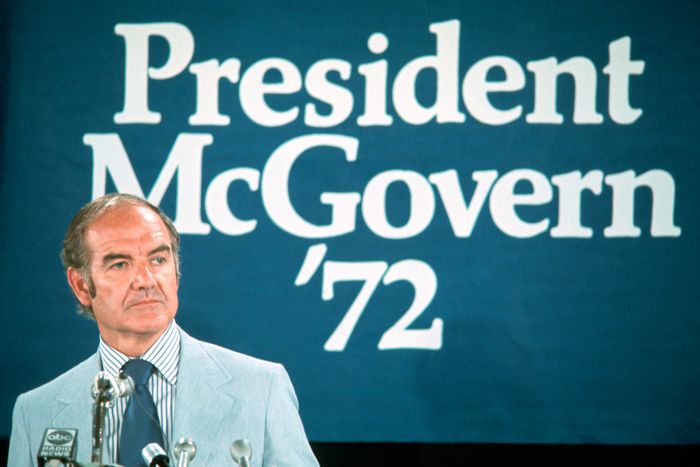
“Come home, America” is a famous speech given fifty years ago by George McGovern. He wanted to cut military/war spending and send rebate checks directly to the American people.  Let’s advocate for that!  Let’s put money back in the pockets of Americans as we make a leaner, smarter, cheaper U.S. military that can pass a financial audit.  (I’d cut all Pentagon funding until it passed an honest and thorough audit.) Most Americans would support major reforms if they were pitched in this way.

At the same time, I’d like to see a revival of the Nye Commission from the 1930s and the “merchants of death” idea.  Whatever else it is, selling weapons is not a way to peace, nor is it life-affirming.  Harry Truman made his mark in Congress during World War II by attacking fraud and waste related to military spending. Again, today’s Pentagon can’t even pass an audit!  We need to show the American people that the Pentagon brass is stealing from them and hiding behind a veil of secrecy that is undemocratic and probably illegal as well. Here, I would love to see Members of Congress act in the spirit of William Proxmire and his “Golden Fleece” awards.  The American people are being fleeced by the MIC, and we should be reminding them of this fact, every single day.

In the 1930s, General Smedley Butler, a Marine veteran who was twice awarded the Medal of Honor, saw how war was a racket, and that to end it, you had to take the profit out of it.  How can America do that?  Can we “nationalize” defense contractors?  Can we make weapons building into a non-profit activity?  Can we reverse Citizens’ United and outlaw weapons lobbying as a form of protected speech (it’s really legalized bribery)?

How about slowing the revolving door between the U.S. military and weapons contractors?  Make it so that retired officers in the grade of major and above must forfeit their pensions if they join a weapons/war firm.  Naturally, no one employed by, and especially on the board of, a defense contractor should ever be approved by Congress as the civilian Secretary of Defense.

Another idea: All retired military officers, CIA-types, etc., who appear on TV and media should be required to reveal their conflicts of interest (if any).  For example, if retired General John Q. Public appears on TV and works for Raytheon, that should be identified in the on-screen chyron, and by the general himself if he has integrity.

It’s high time the Pentagon shares more information with the American people. Secrecy is a huge problem that the MIC hides behind and exploits. Democracy doesn’t work without transparency, which is why the MIC is at pains to hide the truth from us of malfunctioning weaponry and disastrous and murderous wars.

I would add that tackling the MIC is not a liberal issue, it’s not a progressive issue, it’s not a partisan issue: it’s an American issue.  My readers, I’m guessing, are not fans of Fox News or commentators like Tucker Carlson.  But if they’re against war and want to see major reforms to the MIC, recruit them!  Work with them.  They are not the enemy.  Not even the MIC is the enemy.  I was, after all, part of it for 20 years.  The real enemy is war.  The real enemy is spending trillions of dollars on weaponry that could, and just might, destroy us all.  If we can’t set aside our differences and get together to save ourselves and our planet from war’s destructiveness, we’re pretty much doomed, don’t you think?

The MIC is united by profit and power.  Maybe we can find unity in the preservation of our planet and love for the wonderful blessings it has bestowed on us.

Come on people now, smile on your brother everybody get together try to love one another right now.  Right now.  Right now.