Why the Democrats Lost

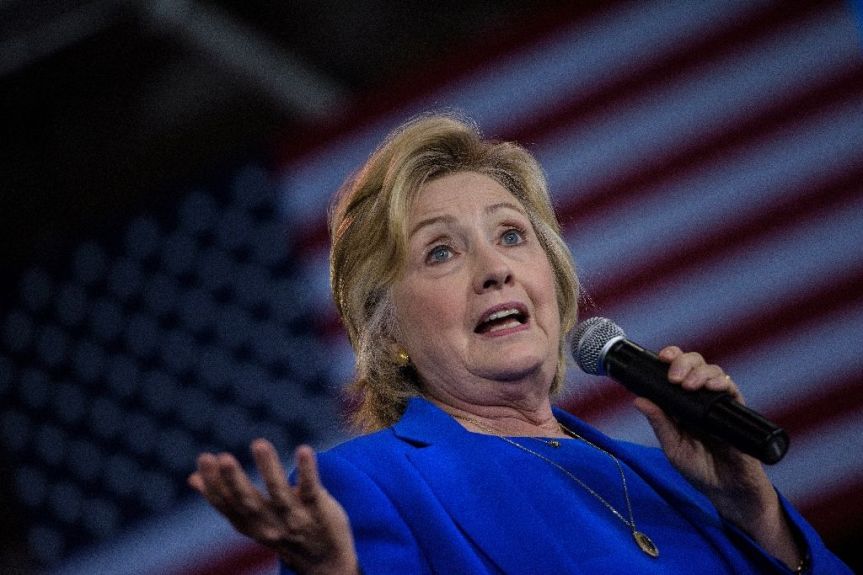
hillary
Hillary: too much hedging, not enough honesty

W.J. Astore

I’ve read a lot of articles on why the Democrats lost the presidency.  All sorts of reasons have been cited.  Some people have blamed Bernie Sanders or Jill Stein.  Others have blamed Comey and the FBI, or Republicans for voter suppression, or white women for voting for Trump, or a message that was too liberal or progressive or too supportive of diversity (too much LGBTQ and transsexuals sharing bathrooms with little girls, and so on).

All of this is nonsense.  The Democrats lost because they fielded a candidate whose personal negatives were too high, whose image as a thoroughly establishment candidate was out of tune with too many people, people seeking change at almost any price.

Hillary Clinton’s weaknesses in this election were legion.  She was an indifferent campaigner.  She chose a man who was largely unknown as her running mate.  She refused to embrace a progressive agenda.  She ran as the only “sane” alternative to her rival, but she had no clear message of her own: just more of the same.  Her motto, “stronger together,” was insipid.  She ran as a hawk on national defense.  Finally, too many people were just tired of the Clintons, just as too many Republicans were tired of the Bushes, hence the early exit by Jeb! Bush.

Here’s what I wrote just after Hillary clinched the nomination in early June:

I remember the first commercial Hillary made, the announcement of her candidacy.  A tedious spot, it focused on her grandmotherly qualities.  It had no vision, no bite, and little hope.  It was about trying to make us feel comfortable with Hillary.  Hey, she’s a mom and a grandma!  Other women like her!  She’s just like us!

It went downhill from there.  Hillary’s campaign has been carefully scripted and modulated, the opposite of impassioned.  Vapidness replaced vision.  That’s why a democratic socialist Jew from Vermont via Brooklyn [Bernie Sanders] gave her a run for her money, because she had no passion or vision and he did (and does).

For me, the defining moment of their debates came when Bernie argued strongly for a $15.00 minimum wage for workers and Hillary was content with offering workers a $12.00 wage. (More than enough, peasants!)  Combine that moment with her infamous statement about the gobs of money she made in three speeches to Goldman Sachs (“Well, that’s what they offered”) and you get a clear sense of who she is and what she’s about.

A quick note: A nursing aide making Hillary’s generous $12.00 hourly wage at 40 hours a week would take 28 years to earn the $675,000 that Clinton “earned” in a few short hours giving those speeches.

As Peter Van Buren explained at his blog, We Meant Well, Hillary’s email controversy “in many voters’ minds became shorthand for a range of issues related to trust, ethics, and propriety, including the Clinton Foundation, pay-for-play, and the Goldman-Sachs speeches.”

Too many people simply didn’t trust Hillary.  I myself didn’t vote for Trump, but I also couldn’t vote for Clinton. For different reasons, I didn’t trust either one.

Hillary could have settled the email controversy fairly easily.  Recall that the story broke back in March of 2015.  All she had to say then was, “I was stupid — and careless — and I’m sorry. I learned my lesson. It won’t happen again.”

But no … being Hillary means never having to say you’re sorry.  Not in a contrite and sincere and fulsome way.

And that’s the primary reason why the Democrats lost the election.

A Silver Lining?

Bernie
Bernie Sanders pointed the way forward for Democrats

M. Davout

Editor’s Intro: My good friend M. Davout is a Democrat.  Like me, he favored Bernie Sanders in the primaries.  After donating to Sanders, holding a Sanders fundraising dinner with like-minded Democrats, making calls on his behalf and voting for him on Super Tuesday, Davout gave his vote to Clinton in the general election. In this article, he suggests that, in this dark political moment, the Sanders primary campaign continues to have a positive impact. For those dedicated to a form of democratic self-rule based on mutual respect and fraternal solidarity, a silver lining exists in the example set by the Sanders campaign of an opposition movement built on a democratic socialist vision that is centered on America’s working families. W.J. Astore

Hillary Clinton was the best-known Democratic establishment politician in the country.  She led a state-of-the-art campaign organization, which enjoyed the unstinting support of a popular incumbent president and first lady, the incumbent vice president, her former primary opponent, and her husband/former president. Her shocking defeat at the hands of an authoritarian-minded political amateur who ran as an unapologetic nativist and bigot should give little satisfaction to progressives.

For the next two years and possibly for the next eight, the federal government will be entirely controlled by a Republican Party, whose decades-long promotion of an “every man for himself” ethos may finally result in the gutting of most, if not all, of the remaining institutional legacies of the Great Society, New Deal and Progressive eras. Or, if Trump’s most objectionable instincts and his impulsive nature are not adequately controlled by the Republican establishment, we may be in for worse—a destabilizing foreign policy that may land us in conflicts that will make George W. Bush’s Iraq adventure seem harmless by comparison.

The silver lining for progressives in this grim picture? It isn’t the expectation that Trump’s election will lead to such catastrophic outcomes that U.S. voters will finally come to their senses and swing in overwhelming numbers to the political left. Stories (whether apocryphal or not) about German leftists of the Thirties, who saw Adolf Hitler’s elevation to the chancellorship in just such terms, should disenthrall us of this idea.

The silver lining, rather, is that Bernie Sanders gave Clinton a real run for her money in the primaries. Had he not run and had she been coronated as the party nominee (an outcome fervently wished by the then-DNC chair and other DC establishmentarians), the electoral defeat of Democrats would likely have been worse and the current feeling of despair would be far deeper. That Sanders, articulating a compelling social democratic vision of sensible self-government for the common good, was able to motivate and mobilize so many young people offers Democrats and left-leaning independents a path forward.

Sanders demonstrated that there is a significant opening for a social democratic party that can appeal across racial and ethnic lines and forge alliances with unions and new economy business people (e.g., producers of green tech and energy, internet entrepreneurs, and urban-based economic interests supportive of mass transit). The importance of that demonstration, which came in the form of millions of votes and volunteer hours, a campaign funding juggernaut powered by small donations, and over 20 state primary or caucus victories, should not be underestimated.

Whether one believes that a party led by Sanders would not have lost Michigan, Wisconsin, and Pennsylvania, the reality is that future candidates of the left cannot afford to cede those states to the party of Reagan-Bush-Trump. If the Democratic Party cannot be reshaped into the social democratic party evoked by Sanders (and soon), his and our goal should be to persuade progressive Democratic politicians to join a new party of the left.

One thing is certain: Another establishment candidate in the mold of a Hillary Clinton, a candidate who is so comfortably ensconced in elite circles that he or she would not recognize the problem in accepting quarter-of-a-million dollar speaking fees from a Wall Street investment firm that helped tank the economy or in declaring Henry Kissinger to be a foreign policy making role model, will only ensure the triumph of reactionary candidates such as Trump.

It’s time for Democratic politicians to recognize the economic realities of ordinary Americans and fight unashamedly for progressive policies that answer the challenge of fostering lives of decency and mutual respect.  It’s time not only to embrace progressive candidates willing to reject a rigged system in the cause of economic and social justice but also to create (or re-create) a political party deserving of such candidates.

Trump Wins! A Few Thoughts on Why

sap
“I won’t play the sap for you.”

W.J. Astore

In my last post, I predicted Trump would lose.  I thought his declinist message and his blatant vulgarity would ultimately cost him too many votes.  As Trump would say, “wrong.”

What are we to take from Trump’s stunning upset?  Here are a few quick thoughts:

  1.  The Democrats ran the wrong candidate.  Remember when Bernie Sanders was saying he had the best chance to defeat Trump?  That the polls favored him and not Hillary? Turns out Bernie was right. People were looking for a candidate who represented change. Real change.  Bernie had that. So too did Trump.  But Hillary was the establishment personified. Not only that, but she had extensive baggage that led to high negatives. Too many people just didn’t like her. Or they simply wanted a fresh face and a new approach — even if that face was Trump.
  2. The October surprise.  Does Trump win without the last minute intervention of the FBI in the email follies? We’ll never know, but Hillary had the momentum prior to the letter issued by the FBI. That letter may have slowed her momentum just enough to allow Trump to win.
  3. All politics is local — or, at least, personal.  The Democrats addressed global issues like climate change.  The Republicans basically denied it’s happening.  The Democrats talked about embracing immigrants and tolerating Muslims.  The Republicans did neither.  What the Republicans did was to emphasize personal pain. The pain of those who’ve seen their jobs disappear and their way of life suffer.  The Republicans also played to nostalgia.  Yes, America is in decline, they said, but we can make the country great again (by making it less inclusive, by keeping out the “bad” people, by being tough).  That message proved appealing to so many Americans who see in Trump the possibility of returning to “the good old days” (whatever that may mean).
  4. I won’t play the sap for you.”  That’s a Humphrey Bogart line from “The Maltese Falcon.”  Many Americans believe they are being played for saps by foreign powers. Trump recognized this.  He called for tougher trade deals.  He called for NATO and other U.S. allies to pay their way.  He promised a new approach to foreign policy, one where enemies would be smashed even as Americans would avoid dumb wars like Iraq.  Basically, Trump promised that America would no longer play the sap for the rest of the world.  And the American people liked what they heard.

That’s my quick take.  Lots of Americans truly wanted a change in course — a sort of reactionary revolution.  That desire led them to downplay Trump’s sexism, ignorance, incivility, and vulgarity.  (Of course, there were some who embraced Trump precisely for these qualities.)  In essence, they simply had no patience for Hillary’s “politics as usual” message.

Finally, let’s not forget that Trump said the election is “rigged.”  He was a sore loser even before the results were in.  What kind of winner will he be?  Much will depend on the answer to that question.

Why Donald Trump Will Lose

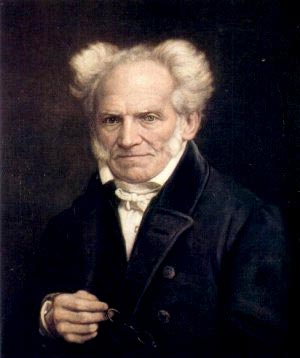
schopenhauer
Arthur Schopenhauer

W.J. Astore

Donald Trump claims that if he loses the election it’s because the whole process is rigged.  But a rigged game is not why Trump will lose.  He’s going to lose because he’s offered no compelling vision about why he should be president.  (I don’t think “making America great again” is such a vision.)

What’s most remarkable to me about Trump’s campaign is how negative it’s been.  America is in decline!  Our inner cities are wastelands! Immigrants are thugs and rapists!  Muslims are out to get us!  Our leaders are stupid and crooked!  Indeed, until recently, Trump argued our top leader wasn’t even born in America.

A relentlessly negative campaign says a lot more about Trump than it does about America.  Sure, this country has problems.  But there are many silver linings in the dark clouds (economy on the mend; job growth up; health care extended to more people; rights for the LGBTQ community more accepted; the U.S. auto industry is back; more action on climate change is forthcoming, as long as Trump doesn’t win).

I was reading Arthur Schopenhauer’s “Counsels and Maxims” and came across a passage that reminded me of Trump.  Here it is:

No man can see over his own height … You cannot see in another man any more than you have in yourself; and your own intelligence strictly determines the extent to which he comes within its grasp …. Hence intercourse with others involves a process of leveling down.  The qualities which are present in one man, and absent in another, cannot come into play when they meet; and the self-sacrifice which this entails upon one of the parties, calls forth no recognition from the other.

Consider how sordid, how stupid, in a word, how vulgar most men are, and you will see that it is impossible to talk to them without becoming vulgar yourself for the time being.  Vulgarity is in this respect like electricity; it is easily distributed…

That’s Trump in a nutshell: vulgar.  Vulgar language.  Vulgar action. Vulgar appeals.  The question is: Will that vulgarity triumph on election day?  Is it enough?  My guess is that it isn’t.  That it won’t be.

His opponent, Hillary Clinton, has her own set of issues, but compared to Trump she has run a more hopeful campaign, or, at the very least, a much less vulgar one.  “Stronger together” is a tepid slogan, but it does stress togetherness, a certain strength in numbers, a degree of tolerance.  And Hillary has simply done a better job than Trump at reaching out to wider constituencies with a message that is positive rather than declinist.

Sure, a lot of people will vote for Trump, and for many reasons.  They don’t like or trust Hillary.  They’re loyal to the Republican Party.  They see something in Trump that resonates with them.  They feel they’ve gotten the shaft and think that a wild card like Trump can help them more than a face card like Hillary.

But ultimately I believe Trump will be done in by his own vulgarity.  He will lose because he couldn’t see past the limitations of his own height — his own flawed character.

But if I’m wrong, prepare yourself for four years of vulgar appeals, of sordidness and stupidity, to quote Schopenhauer.  For as the philosopher said, vulgarity is easily distributed.

What Would My Parents Think of this Election?

001 (2)
My parents in the 1970s

W.J. Astore

In 1976, I remember my mom voted for Jimmy Carter for president.  It surprised me because I was a fan of Gerald Ford, the Republican candidate.  Both Carter and Ford were decent men, and their debates were informative and issues-oriented.  Back then, the big scandal was Jimmy Carter’s admission, in an interview for Playboy magazine, that he had lusted in his heart. What innocent times!  Two generations later, we have a Republican candidate, Donald Trump, who by his own words has done far more than lust in his heart.

My mom would have been appalled by Trump (as are many people today).  My dad, I think, would have found Trump objectionable and shallow.  One of my dad’s favorite sayings was “the empty barrel makes the most noise.”  He didn’t respect other men who bragged and bellowed about themselves.  And he didn’t like anyone who was a sore loser, those who, when they lost, resorted to “sour grapes.”  Even before Trump has lost (if he does), he’s already resorted to sour grapes, claiming the election is “rigged” against him.

I know my parents would be against Trump.  Would they be for Hillary?  I don’t know.  I think my mom would have voted for Hillary, respecting her struggles as a woman for equality and fair treatment in a man’s game (and politics in America is still very much a man’s game, despite important strides made by women).  My dad?  When in doubt, he voted for the Democratic Party.  As a firefighter, he was a union man who knew first-hand the hard experience of factory workers and the penury of a hand-to-mouth existence during the Great Depression.

Resuscitating my parents to vote in 2016: yes, it’s fantasy, one that I share with Tom Engelhardt, who wrote this telling article at TomDispatch.com on next week’s election and what his parents would have thought of the whole spectacle.  To me, two aspects of election 2016 are especially telling when compared to 1976:

  1.  On foreign policy and national defense, Hillary Clinton is running to the right, not only of Jimmy Carter, but of Gerald Ford, a moderate Republican.
  2. Donald Trump not only lacks the fundamental decency of Carter and Ford: he lacks any experience in public service.  His entire life has been dedicated to making money. This may qualify him to run a business, but it doesn’t qualify him to run a country and to represent a people.

A few more words on Trump and what his rise represents.  Trump is the candidate of casino capitalism.  He’s the logical terminus of a system that wants to run everything for profit, winner-take-all.  Such public systems and concerns as education, health care, the prison system, even the military, are increasingly run as businesses, often privatized, the operative words being “efficiency” and “productivity” and “growth.”

With so many sectors of American society being privatized and run as for-profit businesses, with corporations being enshrined as superpower citizens with especially deep pockets to influence public elections, with the media also almost completely privatized and also run for-profit, is it any wonder a candidate like Trump has emerged as the business leader to “make America great again”?  Americans used to call men like Trump “robber-barons.”  Now, some Americans treat Trump as a savior.

In America, we seem to measure societal progress strictly in terms of economic growth as measured by GDP and the stock market.  Such measures are indicative not of true progress but of our shallow desires, our preference for glitzy materialism.  Again, isn’t Trump the very embodiment of insatiable appetite, bottomless greed, and casino capitalism?

I know my parents — decent members of the working classes — wouldn’t have voted for him.  Hillary, I think, would have been their (reluctant) choice.  And I think they’d hope for better candidates in 2020, or, at the very least, a political process that takes vitally important issues like climate change seriously.

Seriousness of purpose is what we need in America, along with courage, honesty, and strength of mind. Let’s strive for those in the aftermath of this depressing election season.

Hillary versus Trump: How the Hell Did that Happen?

trump-clinton

Peter Van Buren

Editor’s Intro: At his “We Meant Well” blog, Peter Van Buren, whose first career was with the U.S. State Department, has an insightful (if somewhat depressing) post on how we ended up with Hillary versus Trump on next Tuesday.  His conclusion: Each candidate in her or his own way represents major cultural and political forces in America, even as neither truly represents the American people’s interests.  Here it is, in its (grim) entirety:

You hear the expression “lesser of two evils” when people talk about how they will vote in November.

Poll after poll shows a growing number of voters saying they will vote negatively – they’re against Hillary, so they’ll hold their nose and vote Trump, and vice-a-versa.

It is also likely a large number of discontented voters will simply stay home on Election Day. Both candidates are among the most unpopular and least trusted in American history. One of them will end up in the White House.

How did we get here? How is it the only two mainstream candidates left standing Hillary Clinton and Donald Trump?

Hillary Clinton: All Appetite

Hillary Clinton is the archetypal 21st century candidate’s candidate, a fully formed tool of the oligarchy. Whether she wins or loses in November, she is the model for the next era of American politics.

Clinton sees The People as some mass to be pandered to and manipulated. She is simply a machine to gain power for its own sake (and money.) The One Percent tagged her early as exactly who they want to see in charge, someone who could be bought off, and she was nice enough to create her own vehicle to allow them to conveniently do that — write a check to the Clinton Foundation. As a bonus, it was also tax-deductible.

If Hillary did not exist, it would have been necessary for the wealthy who control most of America to create her.

The Once and Future Hillary

That wasn’t necessary, as Hillary Clinton had spent her entire life preparing for this.

By all accounts an intelligent, committed, feminist coming out of law school, she quickly fell into the TV classic 1950s role of dependent spouse, as “first lady” of Arkansas when Bill was governor, and of course, in the White House. Sure, she was given health care to mess around with during Bill’s first term, but when the issue crashed and burned, her role was reassigned to make safe speeches calling for more rights for women and girls. Safe in that she was allowed to pound the pulpit for those ideals in enemy territory like China, but not in countries like Saudi Arabia.

She was the good wife. And good wives look the other way when hubby strays a bit, even to the point of having sex in the Oval Office. And that’s because Hillary knew the Democratic Party would owe her for not blowing things completely apart in a messy divorce certain to reveal even more bad news.

First up was a Senate seat, a springboard for her presidential run.

In November 1998 four-term incumbent Democratic New York Senator Daniel Patrick Moynihan announced his retirement, opening a seat in a Solid Blue state. In early 1999 the Clinton’s bought a house in Chappaqua, New York (with “donated” money), all so that by September she was eligible to run as a “New Yorker.” While in the Senate Hillary was served up prime committee slots, and voted the safe votes (the Iraq War vote was safe at the time, of course, as everyone wanted to go to war. Nobody foresaw that one bouncing back the way it did.)

By the time the George W. Bush era finally gave up, everyone on earth knew the next president was going to be a Democrat.

So 2008 was going to be Hillary’s big moment, the first woman president, the one to clean up the Bush wars, who knows, maybe even score a Nobel Prize. But Hillary misread the degree of change Americans wanted, and in return for putting her plans on hold for another cycle or two, she settled in for four years as Secretary of State as a consolation prize. And have you heard? She sat in the Situation Room the night bin Laden was killed!

Taking No Chances

As the 2016 election approached, the Clinton’s took no chances.

The favors Hillary accrued as Secretary of State via the Clinton Foundation were transformed into money and support. As she pretended not to run, Clinton packed her campaign war chest with big-money speeches. A happy “listening tour” (remember the Scooby Van?) was created to show everyone how human Hillary was. Debbie Wasserman-Schultz lined up the Democratic Party machinery. Designated chump Martin O’Malley was set up as the loyal opposition so Hillary could create the appearance she was running against someone in the primary.

Then, oops, Bernie.

When Bernie Sanders came out of nowhere (as had Obama in 2008), Clinton again misread or did not care about how much change many Americans sought. As many long-suspected, and as we all now know after the hacks of the Democratic National Committee servers, the Party machinery was brought to bear against Sanders. The mainstream media was lined up to belittle, marginalize and ignore him. The millennial vote Sanders inspired was largely written off by Clinton. Bernie was reduced to a sad, little old man helping nominate someone at the Democratic Convention he clearly loathed.

Add to that the flood of disdainful remarks talking points-prepped Democratic pundits spewed forth, announcing as one support for Libertarian Gary Johnson or Green Party candidate Jill Stein is near-treason. A voter’s well-reasoned, act-of-conscious decision to support one of the two is held as nothing less than support for the Dark Lord.

The Democrat machinery and the people who control it made Clinton the inevitable candidate. There was no one else who ever had a chance. America was told to suck it up and vote for her, whether they liked it or not.

Trump Stumbles into His Role

The Republican Party fully misunderstood its constituency, thinking one of a spray of robo-candidates would be good enough to simply run as Not Obama, Not Hillary.

Each candidate on offer fell into the mold of ultra-mainstream, such as the why-am-I-here Jeb Bush, or the nut case category with Ben Carson. Ted Cruz couldn’t make up his mind, and vacillated between the two options. The plan was likely to meld the two wings into a ticket and scoop up as many conservative votes as possible.

Whatever Trump may have really been thinking when he started his campaign, he stumbled on to something hiding in plain sight. Large numbers of Americans, mostly white and formerly middle class, were angry. They were really angry. They had been left behind as the country changed, left like an audience at a magic show who saw the trick done, but couldn’t for the life of them figure out how it had happened. These people knew they were getting poorer, they could not find decent jobs, and they wanted someone to blame.

Enter Trump.

He told them it was not their fault. It was because of Obama, it was the Chinese, it was the Muslims, the Blacks, the Democrats, NAFTA, immigrants, refugees, whoever they feared and hated, whatever they wanted to hear. He told them their racism and hate was valid, and gave them a place to express it as no one in the mainstream had ever before done in a modern campaign.

Trump became a predator sniffing the wind. When he sensed people fed up with Hillary’s scamming for donations, he said he was self-funded. When he sensed people wanted change, he said he was an outsider. When voters tired of Hillary’s lawyerly answers and outright lies, Trump came out as plain spoken, even rude and crude — what candidate before had ever spoken of his penis size on the national stage?

Weakness overseas? Bomb the f*ck out of them. Worried about China? Renegotiate. Tired of terrorists? Torture them, maybe kill their families. Problems with the economy? I can fix it, says Trump, and he didn’t need to explain how because while no one really believes it, they want to believe.

Whole races and religions were condemned. People were bored with long think pieces and empty political language. Trump dished things out in 140-character Tweets. Voters made up their minds with the same tool they use to follow Beyonce.

Trump Ascendant

As a sign of Trump’s populism, and his popularity, he has garnered more small-dollar donations for the GOP than any other Republican candidate in history, and all that only since he seriously started asking for contributions in June. “He’s the Republican Obama,” Politico quotes one operative about Trump monetizing his Republican supporters.

Like nearly every person in the media, and the Democratic and Republican parties, I suspect when he first started out Trump never expected the ball to bounce as it did. Running was an ego thing, an elaborate prank, performance art, something maybe good for business. No such thing as bad PR.

But as others wrote him off, including the oligarchy, Trump learned.

Every time someone said “well, that’s the end of Trump” after some outrageous statement, Trump learned he needed only to top himself in the next sound bite. People wanted him to be racist, they wanted him to be larger than life, and they didn’t care if he lied or exaggerated. Most of the media, still reporting his latest statement (birther, debates are rigged) as a bad thing, still don’t get it.

Face It: They Are Us

America will have Trump or Clinton in the White House for the next four years because they are us.

Clinton is the ultimate end product of a political process consumed by big money. She is the candidate of the One Percent. She believes in nothing but the acquisition of power and will trade anything to get it. The oligarchy are happy to help her with that.

Trump is the ultimate Frankenstein product of decades of lightly-shaded Republican hate mongering. He is the natural end point of 15 post-9/11 years of keeping us afraid. He is the mediagenic demagogue a country gets when it abandons its people to economic Darwinism, crushes its middle class, and gives up caring what happens to its minorities.

Both candidates are markers of a doomed democracy, a system which somewhere in the past reached its apex and has only now declined enough that everyone, not just the boiling frogs, can see where we are. They’re us, people. We watched this happen, and we’ll be stuck trying to live with the results.


Trump Is the Grinch: What I Learned from Last Night’s Debate

grinch-frown
Almost the exact expression Trump wore through most of the debate

W.J. Astore

In the last formal debate between Hillary Clinton and Donald Trump, here are a few things I heard:

1. Hillary thinks Trump is unqualified to be president.  Trump thinks Hillary should be locked up as a criminal.

2.  Trump thinks Hillary is a nasty woman.  Hillary thinks Trump is a Russian puppet.

3.  Hillary thinks Trump may start a nuclear war.  Trump thinks Hillary is a loser who will make America vulnerable to foreign powers.

4.  Trump thinks the election is rigged and that the media is firmly in Hillary’s corner. Hillary thinks Trump is encouraging Russia to hack and manipulate the election.

5.  Trump thinks Hillary supports the ripping of babies from the wombs of mothers (late-term abortions).  Hillary thinks Trump is a serial assaulter of women.

6.  Trump says all nine women who accused him of unwanted sexual advances/assaults are either opportunists seeking a few minutes of fame, or stooges in the employ of the Clinton campaign.  Clinton says Trump is a tax dodger, an exploiter of immigrant labor, and an enthusiast for cheap Chinese steel at the expense of American workers.

7.  Trump says Clinton is all talk and no action.  Clinton says Trump is a man who never apologizes and who never takes responsibility for his actions.

Yes, it was that bad.  Usually the question is “Who won the debate,” and the answer is clear: we the American people lost.  Put on the spot, I’d say that Hillary won because of Trump’s refusal to say whether he’d accept the result of the election.  That refusal to accept the will of the voters is fundamentally undemocratic.  To me, it made Trump look like a sore loser even before he’s lost.

I can’t imagine Trump or Hillary supporters had their minds changed while watching this debate.  But I can guess that Hillary picked up more undecided or fence-straddling voters. Why?  Because Trump’s message (as well as his demeanor) was so relentlessly negative. My wife could hardly stand being in the same room with Trump on the TV: he was, in a literal sense, giving her the creeps.  Something tells me many other women across America were similarly repulsed by Trump.  He was more than combative toward Hillary: he was sneering, condescending, and insulting.

Image is important in debates, and Hillary came across as the fresher of the two, the more likable, the more positive, the more focused.  As I watched Trump rant, I told my wife that he reminded me of the Grinch who stole Christmas, with his snarl and his hate and his withered heart.

Will the Grinch steal the election?  From the Grinch’s perspective, the election has already been stolen from him.  That’s my takeaway from the debate: that Trump is a sore loser even before he’s lost.

My post-debate prediction: Welcome to four more years of the Clintons, America.  See you in 2020.

Why This Year’s Presidential Election Is So Depressing

furiosa_2015
I’d vote for Imperator Furiosa before Hillary and Trump

W.J. Astore

This year’s presidential election is depressing.  I suppose Trump and Hillary supporters are fired up.  They want to see “their” candidate win.  But for me, I wish a pox on both their houses, even as I hope the eventual winner is not as bad as he or she appears to be.

With respect to foreign policy, neither candidate comes close to representing my views.  Instead of American exceptionalism, instead of global reach and global power, I believe the U.S. needs to learn the merits of minding its own business.  I want a country that is not imperial, not militaristic, and not intent on waging forever wars against inchoate forces (terror) and with a changing roster of enemies (Al Qaeda/ISIS/radical Islam, North Korea, Iran, and now possibly Russia and China, and who knows who or what else next).  I want active wars in Iraq and Afghanistan to end.  I want U.S. troops to be brought home.

We don’t need a new Cold War, America.  Nor should we be elevating terrorism, a containable threat, to an existential threat.  The true existential threat is incessant greed-wars, which will bankrupt our country even as they administer the death blow to our democracy.

The main candidates, Trump and Clinton, are committed to feeding the national security state.  Both promise more wars, especially war-hawk Clinton.  With Trump, honestly, I have no idea what to expect from him.  Trump has all the makings of a Nero.  He’ll fiddle (or Tweet) while the world burns.  And Hillary?  She’s a self-styled Imperator Furiosa (from the latest Mad Max movie) but without her heart.

So much of U.S. foreign policy nowadays is about selling weaponry.  We sell billions and billions to the Israelis and Saudis (among others), and the peoples of Palestine and Yemen suffer and die as a result.  Are U.S. hands clean merely because we made the weapons (and in some cases subsidized their purchase)?  What kind of “democracy” dominates the world’s arms trade?  In more enlightened days, the U.S. excoriated European countries and their “merchants of death” (this was in the 1920s and 1930s).  Now we are the merchants of death, boasting of all the money we’re making.  We have met the enemy, and he is us.

Trump and Hillary: one a Nero, one an Imperator.  Both American exceptionalists, both believers in the military, both willing to wield big sticks while never speaking softly.  Yes, I find that depressing.

On domestic policy, Hillary hews closer to what I believe, at least in theory.  But in practice who knows with Hillary?  She speaks with forked tongue on so many important issues.  I think liberals/progressives can count on her to be pro-choice, to be pro-LGBTQ, to be (or appear to be) sensitive to racism, to be inclusive (compared to Republicans), to be pro-immigration (again, compared to Republicans).  For many liberals/progressives/democrats, Hillary’s predictability on these issues is enough, especially compared to the hard right positions embraced by Trump/Pence.  And indeed more than a few of my Democratic friends are voting for Hillary based on these positions, together with their faith (fingers crossed) that her Supreme Court nominees will be somewhere to the left of Antonin Scalia.

Is that enough?  Not for me.  Again, it’s Hillary’s opportunism, the way she slips in and out of positions as if they’re so many interchangeable pantsuits, that I find so depressing.  Whether it’s the TPP or fracking or the $15 minimum wage or health care reform or bank reform or what have you, she changes her tune, much like a piper responding to requests.  Yes, he who pays the piper calls the tune, and I can’t pay the piper what Goldman Sachs can.  So I’ll never hear my tune played; only theirs.  And I know how that song ends: with even greater inequality followed by another financial meltdown, and this time maybe the middle class will die.

I can’t vote for more of the same (Hillary) only with more fury.  I can’t vote for random acts of caprice and belligerence guided by ignorance (Trump).  Honestly, you know what I want to do?  Write in “Bernie Sanders.”  He’s not perfect (who is?), but he has character and integrity, and that’s what this country really needs.  I know: Bernie told me to vote for Hillary.  But dammit, Bernie, I can’t do it.

Did I say I was depressed?  After I write in Bernie’s name on November 8th, I’ll walk away from the voting booth with a smile.  And to me that’s not a “wasted” vote.

Clinton, Trump, and the Cynicism of American Politics

gettyimages-610598222-768x491
The best we can do?

Chris Hedges.  From Truthdig.

Editor’s Note: I’ve been reading Chris Hedges since his fine book, “War Is A Force that Gives Us Meaning.”  In this article, Hedges explains the cynicism of the U.S. political process, pinning the tail on the Democratic donkey even as the Republican elephant remains looming in the room.  The Democrats, by moving to the right and by encouraging the rise of “fringe” candidates like Trump, have created a system that has alienated large swathes of the American electorate.  Many of these people have embraced Trump, a political outsider with major, probably fatal, flaws.  It’s what happens in the aftermath of Trump’s probable defeat that worries Hedges — as should it worry all of us.  

Americans are not offered major-party candidates who have opposing political ideologies or ideas. We are presented only with manufactured political personalities. We vote for the candidate who makes us “feel” good about him or her. Campaigns are entertainment and commercial vehicles to raise billions in advertising revenue for corporations. The candidate who can provide the best show gets the most coverage. The personal brand is paramount. It takes precedence over ideas, truth, integrity and the common good. This cult of the self, which defines our politics and our culture, contains the classic traits of psychopaths: superficial charm, grandiosity, self-importance, a need for constant stimulation, a penchant for lying, deception and manipulation, and incapacity for remorse or guilt. Donald Trump has these characteristics. So does Hillary Clinton.

Our system of inverted totalitarianism has within it the seeds of an overt or classical fascism. The more that political discourse becomes exclusively bombastic and a form of spectacle, the more that emotional euphoria is substituted for political thought and the more that violence is the primary form of social control, the more we move toward a Christianized fascism.

Last week’s presidential debate in St. Louis was only a few degrees removed from the Jerry Springer TV show—the angry row of women sexually abused or assaulted by Bill Clinton, the fuming Trump pacing the stage with a threatening posture, the sheeplike and carefully selected audience that provided the thin veneer of a democratic debate while four multimillionaires—Martha Raddatz, Anderson Cooper, Clinton and Trump—squabbled like spoiled schoolchildren.

The Clinton campaign, aware that the policy differences between her and a candidate such as Jeb Bush were minuscule, plotted during the primaries to elevate the fringe Republican candidates—especially Trump. To the Democratic strategists, a match between Clinton and Trump seemed made in heaven. Trump, with his “brain trust” of Rudy Giuliani and Chris Christie, would make Clinton look like a savior.

A memo addressed to the Democratic National Committee under the heading “Our Goals & Strategy” was part of the trove of John Podesta emails released this month by WikiLeaks.

“Our hope is that the goal of a potential HRC [Hillary Rodham Clinton] campaign and the DNC would be one-in-the-same: to make whomever the Republicans nominate unpalatable to the majority of the electorate. We have outlined three strategies to obtain our goal …,” it reads.

The memo names Ted Cruz, Donald Trump and Ben Carson as candidates, or what the memo calls “Pied Piper” candidates who could push mainstream candidates closer to the positions embraced by the lunatic right. “We need to be elevating the Pied Piper candidates so that they are leaders of the pack and tell the press to [take] them seriously.”

The elites of the two ruling parties, who have united behind Clinton, are playing a very dangerous game. The intellectual and political vacuum caused by the United States’ species of anti-politics, or what the writer Benjamin DeMott called “junk politics,” leaves candidates, all of whom serve the interests of the corporate state, seeking to exaggerate what Sigmund Freud termed “the narcissism of small differences.”

However, this battle between small differences, largely defined by the culture wars, no longer works with large segments of the population. The insurgencies of Trump and Bernie Sanders are evidence of a breakdown of these forms of social control. There is a vague realization among Americans that we have undergone a corporate coup. People are angry about being lied to and fleeced by the elites. They are tired of being impotent. Trump, to many of his most fervent supporters, is a huge middle finger to a corporate establishment that has ruined their lives and the lives of their children. And if Trump, or some other bombastic idiot, is the only vehicle they have to defy the system, they will use him.

The elites, including many in the corporate press, must increasingly give political legitimacy to goons and imbeciles in a desperate battle to salvage their own legitimacy. But the more these elites pillage and loot, and the more they cast citizens aside as human refuse, the more the goons and imbeciles become actual alternatives. The corporate capitalists would prefer the civilized mask of a Hillary Clinton. But they also know that police states and fascist states will not impede their profits; indeed in such a state the capitalists will be more robust in breaking the attempts of the working class to organize for decent wages and working conditions. Citibank, Raytheon and Goldman Sachs will adapt. Capitalism functions very well without democracy.

In the 1990s I watched an impotent, nominally democratic liberal elite in the former Yugoslavia fail to understand and act against the population’s profound economic distress. The fringe demagogues whom the political and educated elites dismissed as buffoons—Radovan Karadzic, Slobodan Milosevic and Franjo Tudman—rode an anti-liberal tide to power.

The political elites in Yugoslavia at first thought the nationalist cranks and lunatics, who amassed enough support to be given secondary positions of power, could be contained. This mistake was as misguided as Franz von Papen’s assurances that when the uncouth Austrian Adolf Hitler was appointed the German chancellor in January 1933 the Nazi leader would be easily manipulated. Any system of prolonged political paralysis and failed liberalism vomits up monsters. And the longer we remain in a state of political paralysis—especially as we stumble toward another financial collapse—the more certain it becomes that these monsters will take power.

Fascism, at its core, is an amorphous and incoherent ideology that perpetuates itself by celebrating a grotesque hypermasculinity, elements of which are captured in Trump’s misogyny. It allows disenfranchised people to feel a sense of power and to have their rage sanctified. It takes a politically marginalized and depoliticized population and mobilizes it around a utopian vision of moral renewal and vengeance and an anointed political savior. It is always militaristic, anti-intellectual and contemptuous of democracy and replaces culture with nationalist and patriotic kitsch. It sees those outside the closed circle of the nation-state or the ethnic or religious group as diseased enemies that must be physically purged to restore the health of nation.

Many of these ideological elements are already part of our system of inverted totalitarianism. But inverted totalitarianism, as Sheldon Wolin wrote, disclaims its identity to pay homage to a democracy that in reality has ceased to function. It is characterized by the anonymity of the corporate centers of power. It seeks to keep the population passive and demobilized. I asked Wolin shortly before he died in 2015 that if the two major forms of social control he cited—access to easy and cheap credit and inexpensive, mass-produced consumer products—were no longer available would we see the rise of a more classical form of fascism. He said this would indeed become a possibility.

Bill Clinton transformed the Democratic Party into the Republican Party. He pushed the Republican Party so far to the right it became insane. Hillary Clinton is Mitt Romney in drag. She and the Democratic Party embrace policies—endless war, the security and surveillance state, neoliberalism, austerity, deregulation, new trade agreements and deindustrialization—that are embraced by the Republican elites. Clinton in office will continue the neoliberal assault on the poor and the working poor, and increasingly the middle class, that has defined the corporate state since the Reagan administration. She will do so while speaking in the cloying and hypocritical rhetoric of compassion that masks the cruelty of corporate capitalism.

The Democratic and Republican parties may be able to disappear Trump, but they won’t disappear the phenomena that gave rise to Trump. And unless the downward spiral is reversed—unless the half of the country now living in poverty is lifted out of poverty—the cynical game the elites are playing will backfire. Out of the morass will appear a genuine “Christian” fascist endowed with political skill, intelligence, self-discipline, ruthlessness and charisma. The monster the elites will again unwittingly elevate, as a foil to keep themselves in power, will consume them. There would be some justice in this if we did not all have to pay.

The Clintons: So Many Masks

hillary henry
Scheming, secretive, Machiavellian: birds of a feather

W.J. Astore

As Donald Trump continues to implode, it’s worthwhile considering how he even has a chance at the presidency.  It’s quite simple, actually: Americans don’t trust the Clintons, and rightly so. Why? Because the Clintons, in their quest for office, try to be all things to all people. Even as they talk about the poorest Americans and economic fairness, for example, they’re promising to make special deals for the richest and special trade deals (open trade borders for all!). Even as they criticize Wall Street they praise bankers and the financial elite behind closed doors (cashing-in big-time for these speeches). Even as they talk about the environment and global warning, they praise fracking and the fossil fuel industry.

What do the Clintons really believe?  Like many politicians, they ultimately believe in themselves, in their own quest for power, a quest in which virtually all tactics are justified. In which you can don any mask depending on that day’s audience and performance.

But if you’re all things to all people, you’re basically nothing to no one.  Put differently, if you’ve worn so many different masks for so many audiences, which face is the real you?

Trump’s followers embrace him in part because they think they know where he stands. He’s willing to say unpopular things.  As loutish and crass and ignorant as Trump is, he’s not always holding a finger up to test the political winds.  He’s not always currying favor with (and favors from) established elites.  He may be bad, but he’s genuinely bad.

The Clintons?  The word “genuine” just doesn’t apply.  Words like “scheming” and “secretive” and “Machiavellian,” however, do.

Small wonder that Hillary Clinton is such great friends with Henry Kissinger!