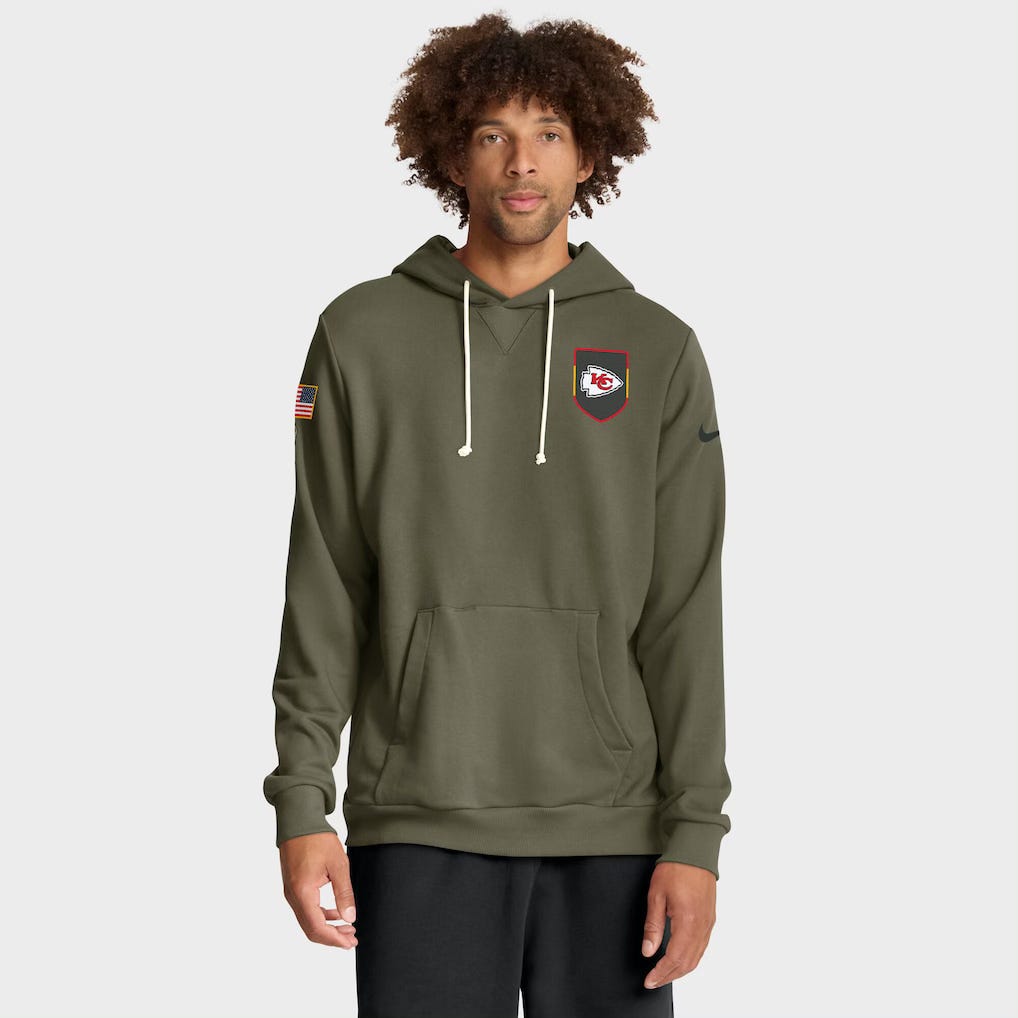
As I watched NFL football yesterday, I noticed coaches on the sidelines wearing “salute to service” fatigue-like hoodies. The NFL does this every year to celebrate the military and to “support our troops.” It’s popular and lucrative to boot, since you can buy this gear on nflshop.com (a hoody will set you back a cool $115).
For $115, you too can own a team hoodie in military olive drab. Hooah!
Sports, especially NFL football, are incredibly powerful and influential within American society.
Back in 2018, I was briefly involved in discussions, associated with the 9/11 Memorial & Museum in New York City, about the role sports played in the aftermath of the attacks in 2001. The general subject was how sports brought the nation together after those attacks. I shared the following comments below with two likeminded colleagues who were involved in the initial discussions, after which I never heard anything from the museum.
I think sports did help to bring the nation together after 9/11. The return of the games showed a return to normalcy. They were a chance for patriotic display and also an opportunity to forget, perhaps for just a moment, the losses America suffered in those attacks.
But they arguably set a precedent. In the aftermath of 9/11, patriotic displays took on a military flavor that has only grown more powerful over the years. My memory is of spontaneous displays that, over time, grew increasingly organized, exaggerated, and linked to corporate and commercial agendas, while retaining a strong military presence.
Anti-war demonstrations failed as the nation mobilized for war against Iraq in 2003. That war proved disastrous. The Bush/Cheney administration hid the costs of war from us (not even allowing us to see flag-draped caskets) and suppressed criticism of a disastrous war by telling us we needed to “support our troops.”
Not to be cynical, but how much of this sports/military/patriotism blending is done, not just for recruiting purposes, but to inhibit any kind of serious (and populist) movement against the “forever” wars we’re waging?
In other words, the post-9/11 sports/military nexus, while it may have soothed the country in the aftermath of 9/11, came with a high price tag: the lack of any serious questions about why we were attacked, and also the discouragement of anti-war protests as both divisive and disrespectful.
To me the high price is reflected in the life of Pat Tillman. He patriotically sacrificed a lucrative NFL career to fight the war on terror. It appears he came to question that war. He was killed by friendly fire [in 2004], which the Army hushed up, giving him a false narrative and a Silver Star under false pretenses. One man’s selfless patriotic act became twisted into a feel-good heroic moment that betrayed the ideals of the Army and of the country (and devastated his family as well).
Does the 9/11 museum really want to tackle tough issues like this? The appropriation of patriotism by the powerful as a way of silencing dissent? The betrayal of ideals we hold dear?
I added the following comment on “camouflage” sports uniforms being marketed around Independence Day in 2018:
I was talking with my wife yesterday. She, like me, hates the camouflage swag that’s been incorporated into sports uniforms. This is not “military appreciation.” It’s more military indoctrination and idolization.
We wear camouflage when we’re in deadly combat. It’s totally inappropriate for games that are supposed to be entertaining and fun, not a matter of life-and-death.
The Romans used gladiatorial games to accustom the mob to violence; to inure them to murder and killing; to train them to support the worst of Rome’s imperial policies. Are we using our games to accustom Americans to incessant warfare and surging military budgets and the “wonders” of our own empire?
I wrote something about this here: As America’s games are becoming more militarized, America’s wars are becoming more game-like, a form of infotainment, at least in the way they’re packaged and sold by the media:
So I think some of this macho militarism is being promoted as a counter to this “feminized society.” Trump tapped this sentiment, calling for protesters to be punched, for the NFL to allow more violent hits, etc.
We’re all supposed to be “real men” again: sort of like the Reagan years. Remember the book, “Real Men Don’t Eat Quiche”? Now it’s real men punch protesters, wear camouflage, and …
I didn’t finish my list of “real men” activities in 2018. Today, we hear even more about “warrior ethos” and the like, about the need to show toughness, e.g. by summarily murdering people on speedboats in the Caribbean who may, or may not, be drug-runners, or by dragging young teenagers off the streets and shipping them hundreds of miles to detention centers because their papers aren’t in order, and so on.
So, as the NFL persists in wearing pseudo-military gear, perhaps they might consider a new rule that would make every player a member of the reserves or national guard, subject to military recall and service from the months of March to August. If they want to salute military service so vigorously, why not just serve in uniform?
The NFL draft started last night, in prime time. I’m fascinated, flabbergasted, and horrified by all the ink spilled and money spent on the draft–what a spectacle it’s become! Even before the draft, there are literally thousands of “mock” drafts, including those that attempt to predict all seven rounds of the draft, like this example. It’s insane! Why go through these exercises when you can simply wait for the draft results? I guess articles like this get clicks, but still …
After the obligatory national anthem and a military flyover featuring four helicopters (A flyover? For the draft?), the commissioner got down to business, Somewhere in the neighborhood of 200,000 people were in attendance outside of Lambeau Field in Green Bay, Wisconsin. There’s one tradition I do like: lusty boos for the commish (the commissioner). It’s all in good fun.
Anyhow, many people have noted the spectacle of mostly Black players being “selected” by mostly white owners. Echoes of the slave auctions of the past? I don’t go there, since the players selected in the 1st round become instant millionaires — they’re not slaves, obviously — but there’s something to the comparison.
When a player is selected, networks like ABC, ESPN, and the NFL Network show instant video highlights, over which “experts” intone whether the pick was wise or unwise, an overpay or a steal, and so on. Each player has a “tale of the tape” with all the player’s stats, including height, weight, arm length, speed in the 40-yard dash, even wrist size! The coverage is exhaustive—and exhausting, especially if you’re not a fan.
If only America took its wars as seriously as it took NFL football. If only events in Gaza were covered with the same objectivity and attention to detail as the draft. Given the media resources expended on it, you’d think the NFL draft was the lifeblood of America, the linchpin of our democracy. Perhaps it is?
With legalized betting, you can now bet on when a player will be drafted. Again, those odds are carefully calculated and supported with reams of data. NFL owners love all this legal betting—it puts a ton of money in their pockets. Just don’t read all the fine print about how America has more gambling addicts than ever.
Football remains #1 in America (along with the Pentagon, I suppose). At so many colleges and universities, the most richly compensated and often most powerful person is the football coach. A fortunate professor with tenure might make $100,000 a year as the football coach takes home several million dollars. Who says America’s students aren’t learning the right lessons at college?
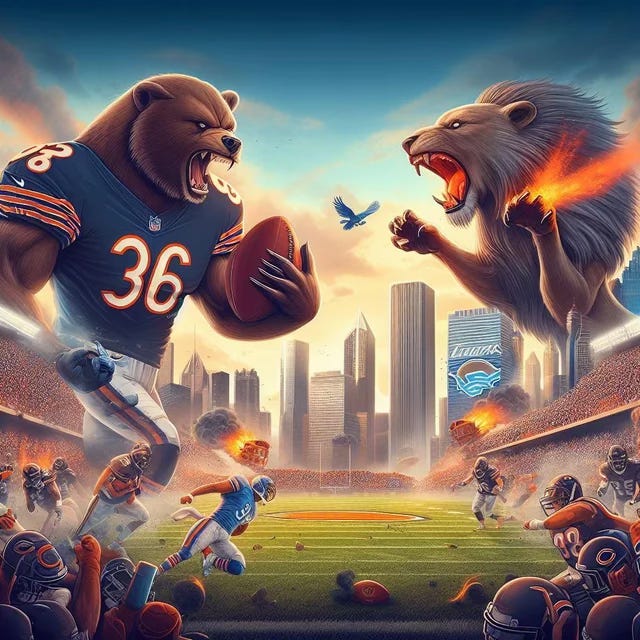
Everything about major American sports like the NFL has been corporatized and monetized. Despite that, I still enjoy following “my” team, don’t ask me why, even as I marvel at the excess of America’s new national pastime of football. Call it a guilty pleasure, something that gets my mind off atrocities and all the other violent excesses of America. I’m just another member of the hoi polloi in the Colosseum, waiting for my bread and circuses. Next up: the Lions take on the Bears as the Eagles fight the Seahawks. Let the games begin!
Bears against the Lions—Bring it on! (AI-generated image)
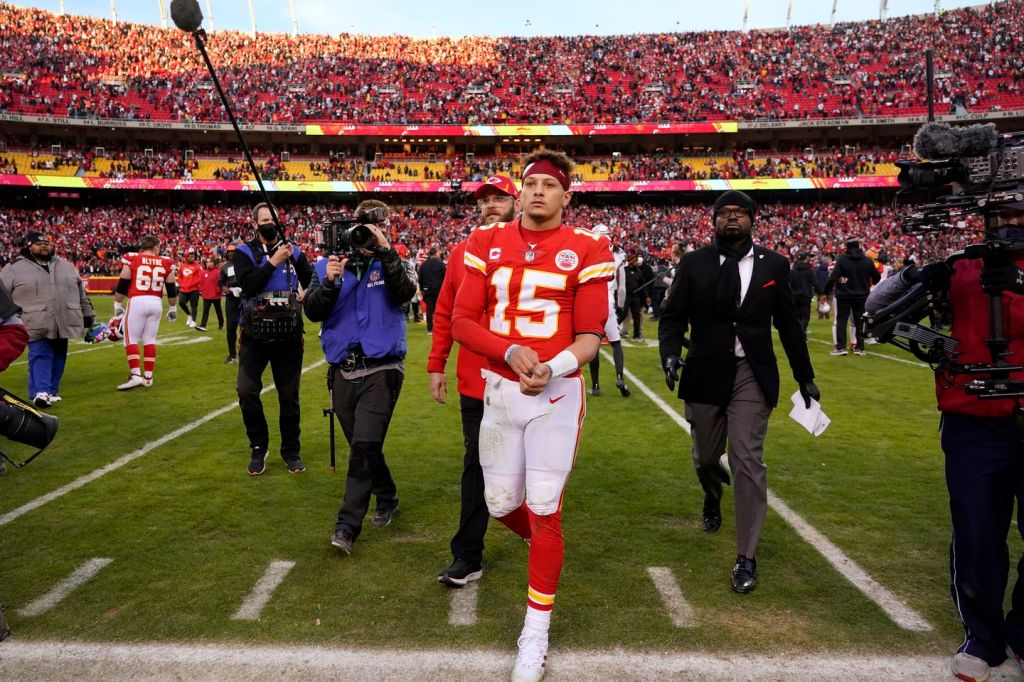
We tackle heavy subjects here at Bracing Views: war, militarism, politics, religion. But surely the heaviest of all is the clear inequity and unnecessary complexity of the National Football League’s overtime rules. Especially in the playoffs, the team that wins the coin flip before OT usually wins the game, though not always, as the Kansas City Chiefs proved this past weekend, as they won the coin toss but lost the game. Also, NFL OT rules for playoff games are different than the OT rules for the regular season (the latter games can end in a tie).
Why not one set of rules for OT for both the regular season and the playoffs? A set of rules that is simple and consistent, producing a victor fairly quickly but without changing the game?
Here’s my idea, which is a variation of the rules for OT that currently exist:
OT shall consist of a single ten-minute period. The team with the highest score at the end of this period wins the game.
If the teams are still tied at the end of this OT period, the winner will be determined by two-point conversions (as teams have the option of trying after touchdowns).
If Team A scores on its 2-point conversion, Team B will then get its try. If Team B succeeds, Team A tries again. If Team B fails, Team A wins. (If Team A had failed and then Team B had succeeded, Team B wins.) Tries will continue until one team succeeds and the other fails, thus the winning team will win by 2-points.
Other details can be worked out, such as the number of timeouts each team gets. I’d suggest two. Also, if one team ties the game at the end of regulation, that team would then kickoff at the start of OT. Otherwise the kickoff is determined by a coin flip.
I like this idea because each team should get plenty of time to have the ball in OT and attempt to score — or even to mount a comeback. And if OT ends in a tie, the 2-point conversion tiebreaker contest will be immensely exciting for the fans since it will involve the offenses and defenses — and the best players and plays — of both teams.
Assuming you watch football, readers, what do you think?
Once Kansas City lost possession of the ball in OT, the Bengals marched quickly down the field and kicked a field goal to win. If OT had been a 10-minute period, however, the Bengals would have tried to score a TD, and KC would have had a chance to answer. If KC had scored a TD on its first possession, the Bengals would have lost without ever getting a chance on offense.
At the end of regulation, the referee will toss a coin to determine which team will possess the ball first in overtime. The visiting team captain will call the toss.
No more than one 10-minute period will follow a three-minute intermission. Each team must possess, or have the opportunity to possess, the ball. The exception: if the team that gets the ball first scores a touchdown on the opening possession.
Sudden death play — where the game ends on any score (safety, field goal or touchdown) — continues until a winner is determined.
Each team gets two timeouts.
The point after try is not attempted if the game ends on a touchdown.
If the score is still tied at the end of the overtime period, the result of the game will be recorded as a tie.
There are no instant replay coach’s challenges; all reviews will be initiated by the replay official.
OVERTIME RULES FOR NFL POSTSEASON GAMES
Unlike regular season games, postseason games cannot end in a tie, so the overtime rules change slightly for the playoffs.
If the score is still tied at the end of an overtime period — or if the second team’s initial possession has not ended — the teams will play another overtime period. Play will continue regardless of how many overtime periods are needed for a winner to be determined.
There will be a two-minute intermission between each overtime period. There will not be a halftime intermission after the second period.
The captain who lost the first overtime coin toss will either choose to possess the ball or select which goal his team will defend, unless the team that won the coin toss deferred that choice.
Each team gets three timeouts during a half.
The same timing rules that apply at the end of the second and fourth regulation periods also apply at the end of a second or fourth overtime period.
If there is still no winner at the end of a fourth overtime period, there will be another coin toss, and play will continue until a winner is declared.
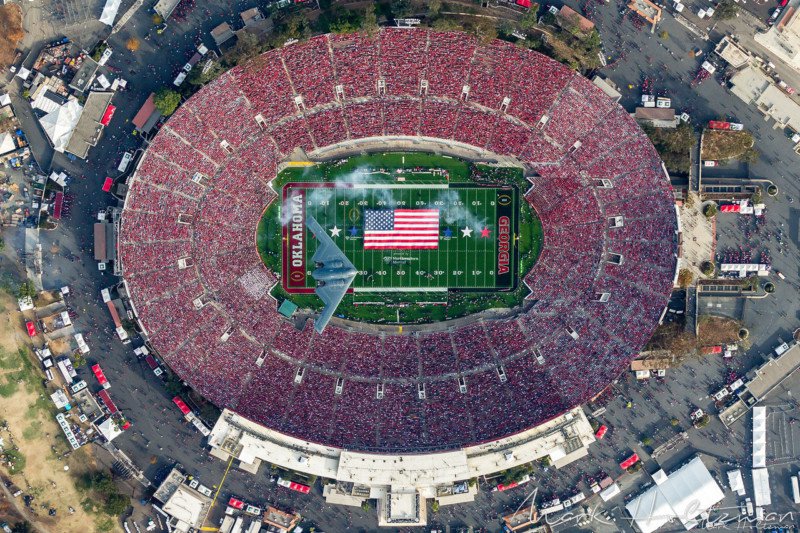
Nothing screams “America!” like huge stadiums, big bombers, and giant flags
W.J. Astore
A few weeks ago, a reader asked me a fair question: Why do I continue to watch football, given my comments on violence in the sport and the militarization of the game, including camouflage uniforms (even for coaches and cheerleaders!). I could have hedged and said I don’t watch much football. I don’t watch college games, and the only NFL game I regularly watch features my home team. In short, I watch about three hours a week, and a little more during the playoffs. Nevertheless, I still watch, so why do I do it?
I wrote back and identified four reasons: Because I’ve watched football since I was a kid (habit) and I enjoy the sport. Because I put my mind in neutral during the game and just enjoy the action (a form of denial, I suppose). Because, like so many Americans, I get caught up in the spectacle of it all, its ritualistic nature. Because it’s often unpredictable and real in a way that “reality” shows are not.
After sending that answer along, another reader noted how my reasons could be made to serve as partial justification for supporting America’s wars, and to be honest the thought had occurred to me before I sent my answer. So, you could say I’ve watched wars since I was a kid and on some level “enjoyed” them (the action, the drama, the spectacle of it all, the way things are “played for keeps”). Perhaps I put my mind in neutral as well (TV trance) while enjoying the “reality” and rooting for the home team (America!). Sports and war are connected in complex ways, and I’m only scratching the surface here.
I’d like to add two more reasons why I watch football. I enjoy rooting for “my” team, and when they win, I’m pleased. When they don’t, I’m bummed. I get over it quickly (after all, it’s just a game, right?), but on some level the games have meaning to me. I identify with “my” team, simple as that.
One more reason: nostalgia. These games recall a simpler time, when we threw a ball around with friends or our dad, then quit for the day to watch a game and scream and shout at the stadium or in our living rooms. (Such nostalgia is not unknown among combat veterans, who look back on war with mixed feelings of horror but also of love, or at least attraction in the sense of a powerful camaraderie and sense of belonging shared by those who were there. It’s one reason for war’s peculiar attraction and perhaps its endurance as well.)
What say you, readers? Do you watch football and, if so, why?
(For an extended essay on sports and the military, please see my latest at TomDispatch.com: “Why Can’t We Just Play Ball? The Militarization of Sports and the Redefinition of Patriotism,” August 19, 2018, http://www.tomdispatch.com/post/176459.)
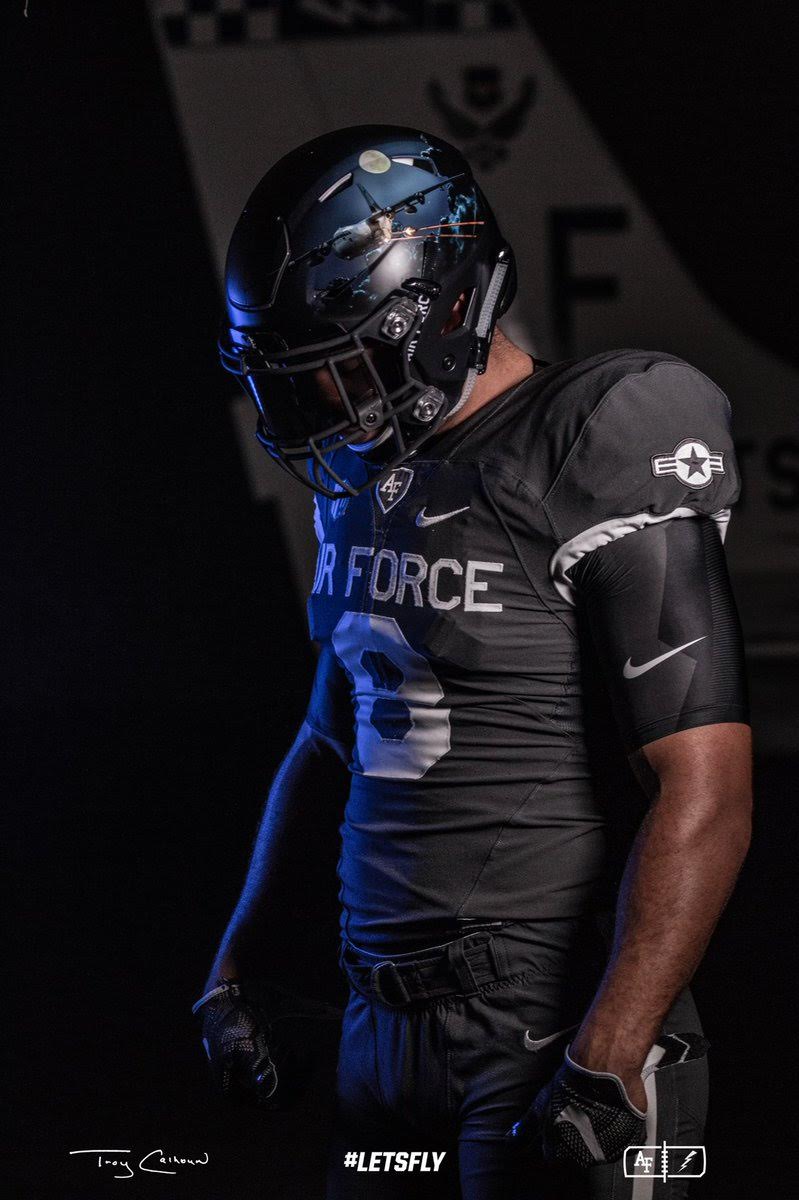
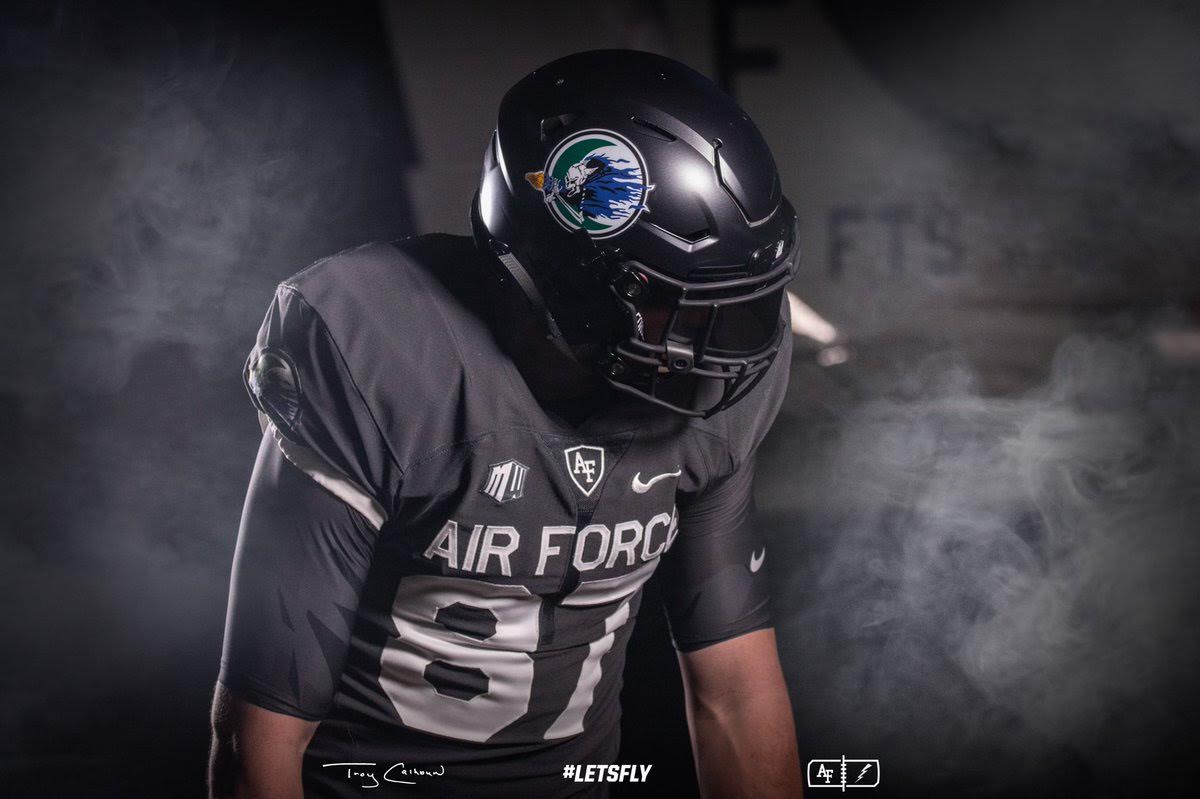
There’s a lot of blurring and blending of sports with the military in the USA today, but my service branch, the U.S. Air Force, has taken it to a new level. The Falcons football team at the USAF Academy has issued a new “alternate” uniform in honor of air power and specifically the AC-130 gunship. What this means is that cadets can now wear helmets that feature spooky, grim-reaper-like images together with images of the AC-130 firing on some indistinct enemy below. Check it out above and below:
The fog and the shark-like tailfin in the background are nice touches. Somebody probably got a promotion and/or a commendation medal for putting this campaign together.
Of course, the Air Force celebrates flight, using falcons as the team mascot, which makes sense. But uniforms dedicated to and celebrating a specific weapon system — really? The AC-130 gunship rains death from the sky; it’s a nasty weapon system and certainly one that I’d want on my side in a shooting war. But putting it on football helmets with images of screaming skeletons is a bit much.
How did military academies like West Point and Annapolis play football for so long with just regular uniforms? Without images of tanks or battleships adorning their uniforms?
I know: I’m an old fuddy-duddy. This is the new military — the military of warriors and warfighters. These new uniforms: so cool! So sexy! Dealing death is so much fun!
Why is it that these new “alternate” football uniforms of the AF Academy remind me, not of our citizen-airmen force of the past, but of some sinister, darker, force of the future? Why does the Star Trek episode, “Mirror, Mirror,” come to mind? (Hint: We’re no longer the “good” Federation.)
Knives and scars are in plain view in the barbarian “mirror” universe of Star Trek
(You can go to https://twitter.com/hashtag/LetsFly and watch an Air Force video that links AC-130 combat footage with the new uniform, complete with lusty music and stoked players.)
When it Comes to the NFL, Trump Should be Flagged and Ejected for Unnecessary Roughness
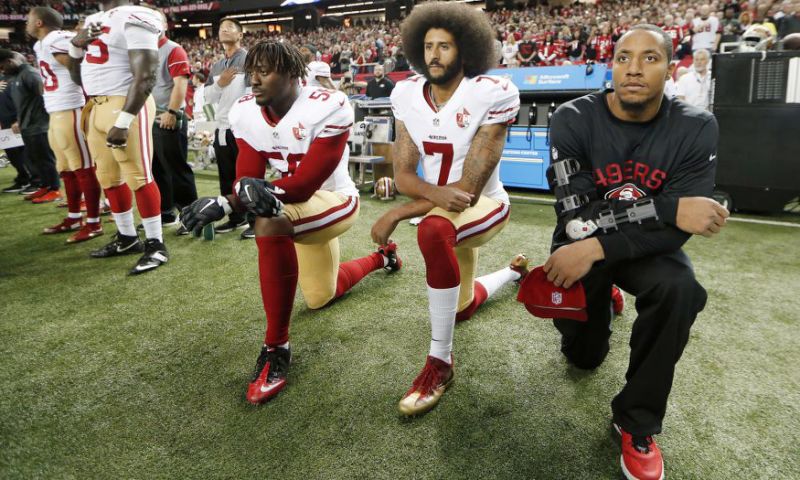
Taking a stand by taking a knee: NFL players, including Colin Kaepernick (#7)
W,J. Astore
President Trump has once again attacked the NFL for exactly the wrong reasons. He wants NFL owners to fire players who take a knee during the national anthem. Their sin, according to Trump, is disrespecting the American flag. Trump also complains that the game has gotten soft, that big and exciting hits of the past are now penalized, so much so that today’s game is boring precisely because it’s insufficiently violent.
Nonsense. First, few players dare to use the game as a platform for protest, perhaps because they fear being blackballed like Colin Kaepernick, the talented quarterback who can’t find a job because he took a knee in protest against racism. Second, the NFL is awash in patriotic displays, everything from gigantic flags and military flyovers to special events to honor the troops. Just one example: During the opening game of this season, uniformed troops waving flags ran out on the field ahead of the New England Patriots as the team emerged from the tunnel. What are troops in camouflaged combat uniforms doing on the field of play?
With respect to violence, the NFL has only lately begun haltingly to address crippling injuries, especially brain abnormalities due to recurrent hits and concussions. Watching an NFL game is often an exercise in medical triage, as players are carted off the field with various injuries. A new feature this season is a tent on the sidelines that injured players may now enter to be treated away from the incessantly probing eyes of sideline cameras. Careers in the NFL are often cut short by crippling injuries, yet Trump claims the game is going down the tubes because it’s not violent enough.
Trump represents a minority view (I believe), but nevertheless a vocal one. Given his narcissism and the grudges he carries, one wonders if he attacks the NFL because of his failed bid to acquire the Buffalo Bills team back in 2014.
Football is the most popular sport in America. It speaks volumes about our culture. That Trump sees it as insufficiently violent and insufficiently patriotic — and that he’s cheered for making these claims — points to the gladiatorial nature of America’s imperial moment. Bread and circuses at home, wars abroad. And U.S. politicians who fiddle while the world burns.
Update: Trump’s comments have drawn a response during the first NFL game today (played in England). Here’s the headline at the Washington Post: NFL Week 3: Ravens, Jaguars respond to President Trump’s comments by linking arms, kneeling during anthem. It will be interesting to see how other teams respond today and during Monday night football.
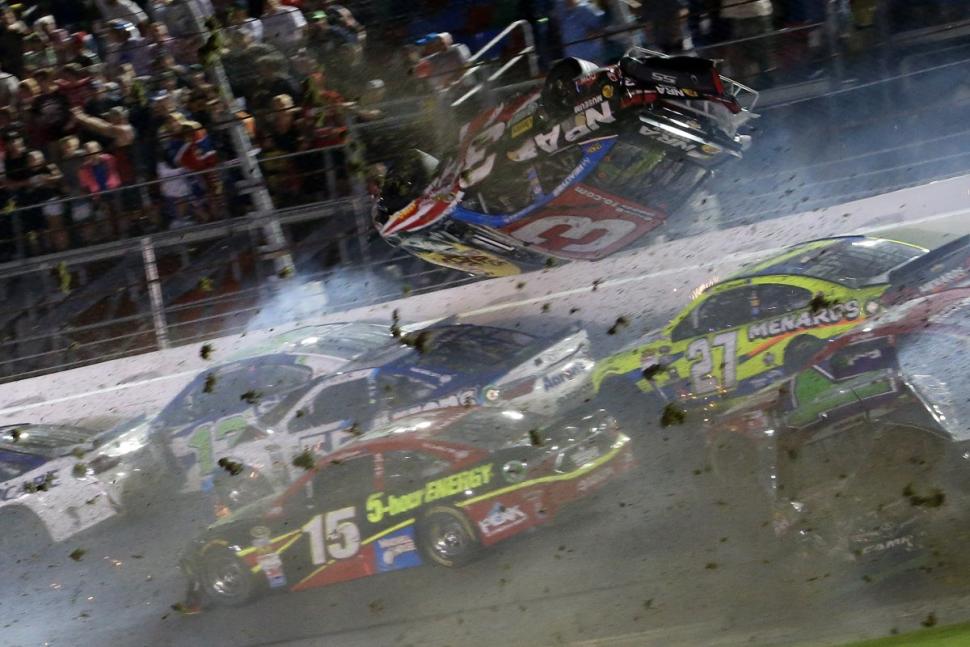
During the Roman Empire, chariot races and gladiatorial games served to entertain the people. The U.S. empire’s equivalent, of course, is NASCAR and the NFL. Serve up some bread to go with the circuses and you have a surefire way to keep most people satisfied and distracted.
That’s true enough, but let’s dig deeper. NASCAR features expensive, high-tech machinery, heavily promoted by corporate sponsors, with an emphasis on high speed and adrenaline rushes and risk-taking — and accidents, often spectacular in nature. Indeed, turn to the news and you see special features devoted to spectacular crashes, almost as if the final result of the race didn’t matter.
Turn to the NFL and you see it’s about kinetic action — big plays and bigger hits, with players often being carted off the field with concussions or season-ending injuries. The game itself is constant stop and go, go and stop, with plenty of corporate sponsors again.
High-octane violence sponsored by corporations facilitated by high-tech machinery; big hits and repetitive stop-and-go action also sponsored by corporations; spectacular (and predictable) smash-ups and serious injuries, all enfolded in patriotic imagery, with the military along for the ride to do recruitment. Yes, our leading spectator sports do say a lot about us, and a lot about our foreign policy as well.
It used to be said that the Romans fought as they trained: that their drills were bloodless battles, and their battles bloody drills. We conduct foreign policy as we play sports: lots of violence, driven by high technology, sponsored by corporations, with plenty of repetition and more than a few crash and burn events.
A good friend wrote to me to contrast rugby with American football (the NFL). In rugby, he explained, the goal is ball control. Big hits are less important than gaining the ball. The play is hard but is more continuous. Playing as a team is essential. In rugby, there’s far less physical specialization of the players (e.g. no lumbering 350-pound linemen as in the NFL); every player has to run long and hard. There’s far more flow to the game and much less interference by coaches.
We could use more flow and patience to our foreign policy, more “ball control” rather than big hits and kinetic action and quick strikes. Yet, much like NASCAR and the NFL, we prefer high-octane “shock and awe,” the throwing of “long bombs,” with a surfeit of spectacular crashes and collateral damage. All brought to you by your corporate sponsors, naturally, where the bottom line –profit– truly is the bottom line.
Perhaps we should look for new sports. Tennis, anyone?
Bruce Fleming, an English professor at Annapolis, has a great letter at the New York Times about the government shutdown. Unlike West Point and the Air Force Academy, most instructors at Annapolis are civilians rather than serving military officers. They have been furloughed because of the government shutdown, so Navy midshipmen are no longer being educated. They’re being herded into large lecture halls by young LTs. Lord knows what they’re learning.
The library staff is furloughed as well. But who needs books nowadays?
But wait! I have good news. Even as education in subjects like English is suspended at Annapolis, the football games continue. There was an alarming report earlier this week that this weekend’s football game might be cancelled due to the shutdown. But lo and behold, football games were restored for all the service academies.
Here are American values clearly on display. Football and tailgates and hoopla: essential. Education in English: optional.
And we wonder why America is in trouble today?
Update (10/7/13): Civilian faculty returned to work today at Annapolis, so “only” one week of classes were missed. I’m just glad no football games were missed. Priorities, people!


 The fog and the shark-like tailfin in the background are nice touches. Somebody probably got a promotion and/or a commendation medal for putting this campaign together.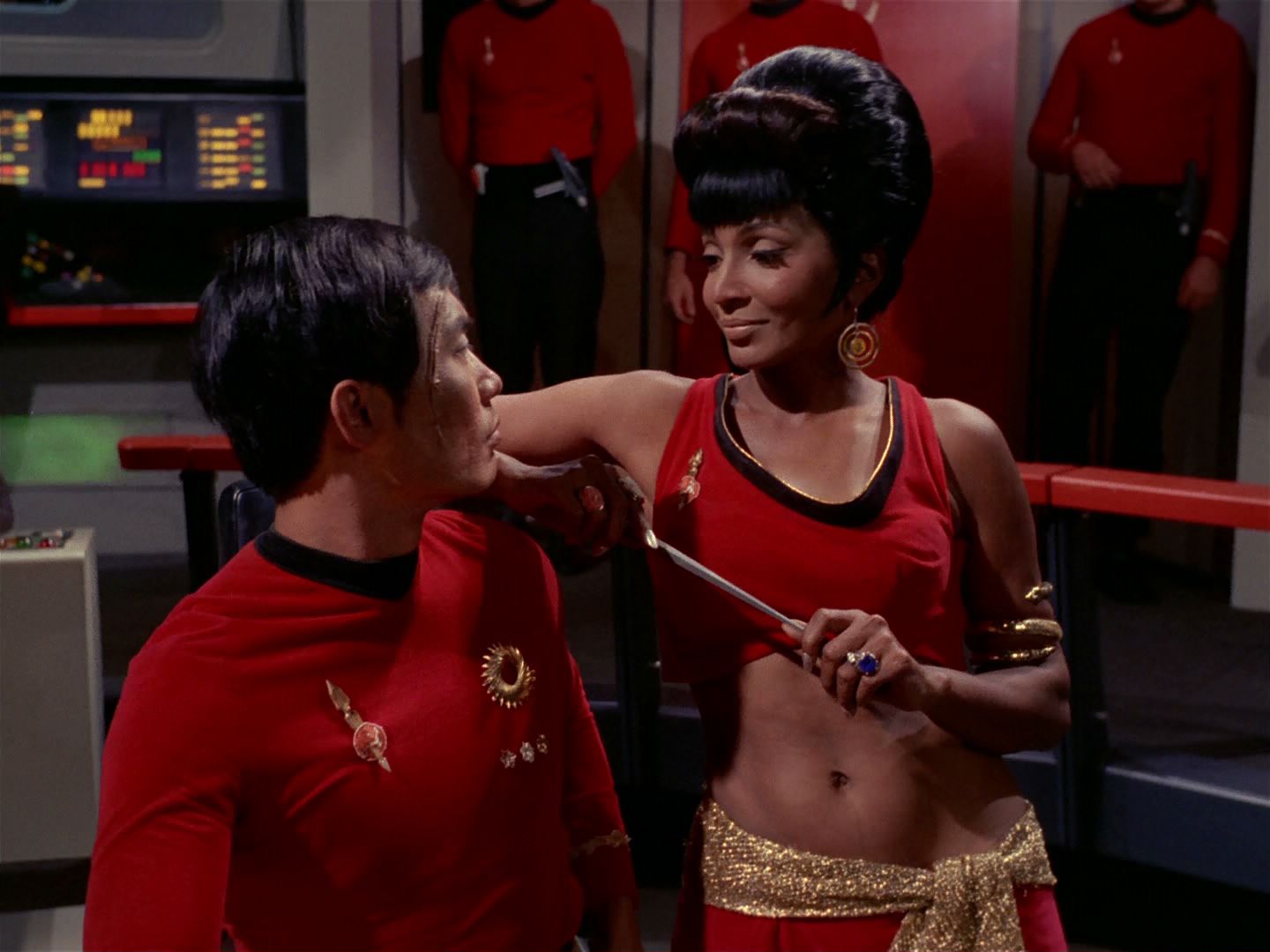

 Bracing Views