There Is Only One Spaceship Earth

W.J. Astore

Freeing the World from the Deadly Shadow of Genocide and Ecocide

Also at TomDispatch.com

When I was in the U.S. military, I learned a saying (often wrongly attributed to the Greek philosopher Plato) that only the dead have seen the end of war. Its persistence through history to this very moment should indeed be sobering. What would it take for us humans to stop killing each other with such vigor and in such numbers?

Song lyrics tell me to be proud to be an American, yet war and profligate preparations for more of the same are omnipresent here. My government spends more on its military than the next 10 countries combined (and most of them are allies). In this century, our leaders have twice warned of an “axis of evil” intent on harming us, whether the fantasy troika of Iraq, Iran, and North Korea cited by President George W. Bush early in 2002 or a new one — China, Russia, and North Korea — in the Indo-Pacific today. Predictably given that sort of threat inflation, this country is now closing in on a trillion dollars a year in “defense spending,” or close to two-thirds of federal discretionary spending, in the name of having a military machine capable of defeating “evil” troikas (as well as combatting global terrorism). A significant part of that huge sum is reserved for producing a new generation of nuclear weapons that will be quite capable of destroying this planet with missiles and warheads to spare.

My country, to be blunt, has long been addicted to war, killing, violence, and massive preparations for more of the same. We need an intervention. We need to confront our addiction. Yet when it comes to war and preparations for future conflicts, our leaders aren’t even close to hitting rock bottom. They remain in remarkable denial and see no reason to change their ways.

To cite two recent examples: Just before Easter weekend this year, President Biden swore he was personally devastated by Palestinian suffering in Gaza. At the same time, his administration insisted that a United Nations Security Council resolution for a ceasefire in Gaza that it allowed to pass was “non-binding” and, perhaps to make that very point, reportedly shipped 1,800 MK84 2,000-pound bombs and 500 MK82 500-pound bombs off to Israel, assumedly to be used in — yes! — Gaza.

The Biden administration refuses to see the slightest contradiction in such a stance. Men like Joe Biden and his chief diplomat Antony Blinken confess to being disturbed, even shocked, by the devastation our bombs deliver. Who knew Israel would use them to kill or wound more than 100,000 Palestinians? Who knew that they’d reduce significant parts of Gaza to rubble? Who knew that a blank check of support for Israel would enable that country to — it’s hard not to use the phrase — offer a final solution to the Gaza question?

Not to be outdone by the Democrats, Republican Congressman Tim Walberg of Michigan recently cited the examples of Hiroshima and Nagasaki in seeking a “quick” end to the conflict in Gaza (before walking his comments back somewhat). For him, Israel remains America’s greatest ally, whatever its actions, even as he argues that Palestinians in Gaza merit no humanitarian aid from the United States whatsoever.

With that horrifying spectacle — and given the TV news and social media, it truly has been a spectacle! — of genocide in Gaza, America’s leaders have embraced the very worst of Machiavelli, preferring to be feared rather than loved, while putting power first and principle last. Former National Security Adviser and Secretary of State Henry Kissinger, recently deceased, rightly vilified for pursuing a Bismarckian Realpolitik, and deeply involved in the devastation of Vietnam, Cambodia, and Laos, might even have blanched at the full-throttled support for war (and weapons sales) now being pursued by this country’s leaders. Dividing the world into armed camps based on fear seems basic to our foreign policy, a reality now echoed in domestic politics as well, as the Democratic blue team and the MAGA Republican red team attack each other as “fascistic” or worse. In this all-American world of ours, all is conflict, all is war.

When asked about such an addiction to war, your average government official will likely claim it’s not our fault. “Freedom isn’t free,” so the bumper sticker says, meaning in practice that this country stands prepared to kill others without mercy to ensure its “way of life,” which also in practice means unbridled consumption by an ever-shrinking portion of Americans and unapologetic profiteering by the richest and greediest of us. Call it the “moderate” bipartisan consensus within the Washington Beltway. Only an “extremist” would dare call for restraint, tolerance, diplomacy, and peace.

A Common Cause to Unify Humanity

Short of an attack on Earth by aliens, it’s hard to imagine the U.S. today making common cause with “enemies” like China, Iran, North Korea, or Russia. What gives? Isn’t there a better way and, if so, how would we get there?

In fact, there is a common foe — or perhaps a common cause — that should unite us all as humans. That cause is Earth, the health of our planet and all the life forms on it. And that foe, to state the obvious (even if it regularly goes unsaid), is war, which is unhealthy in the extreme not just for us but for our planet, too.

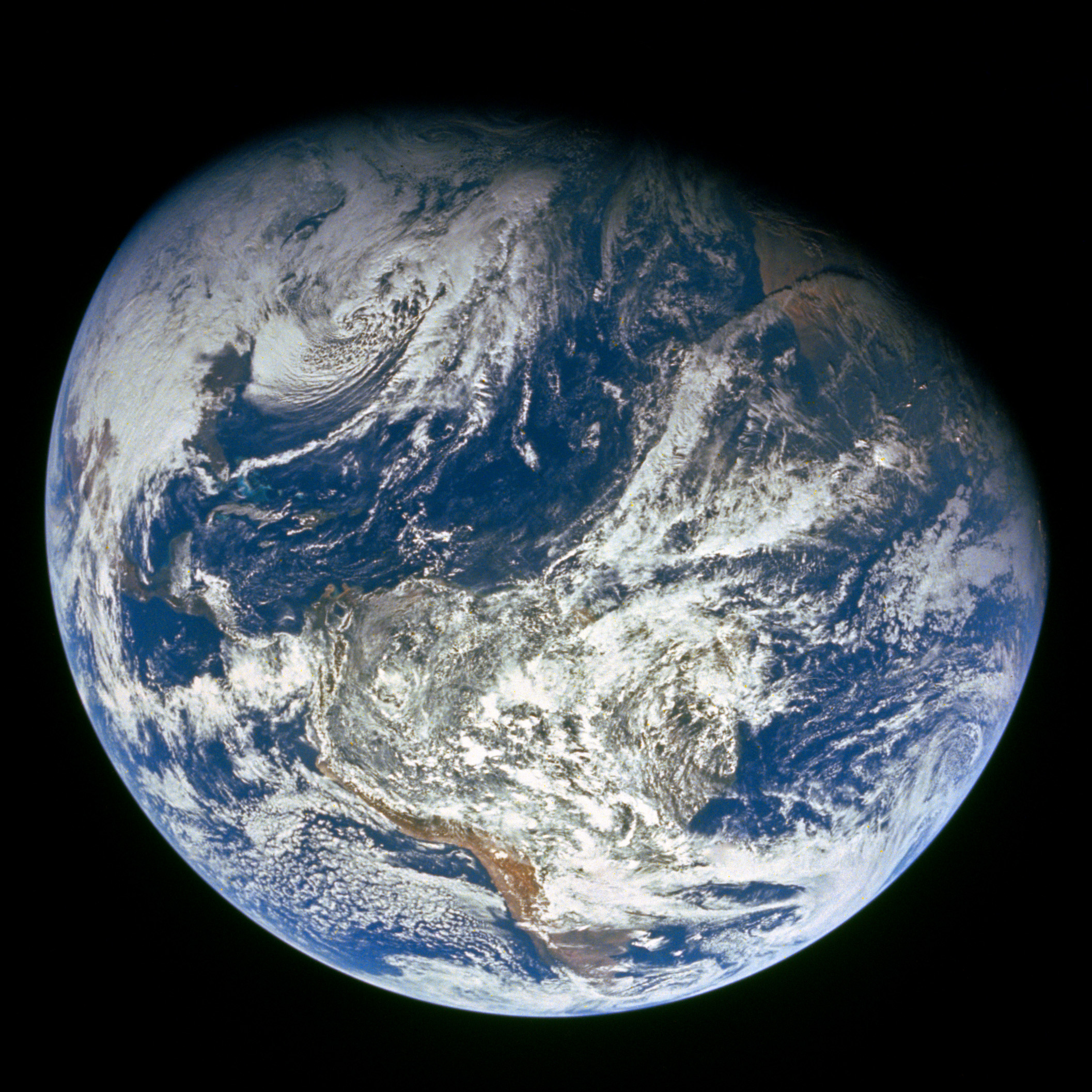
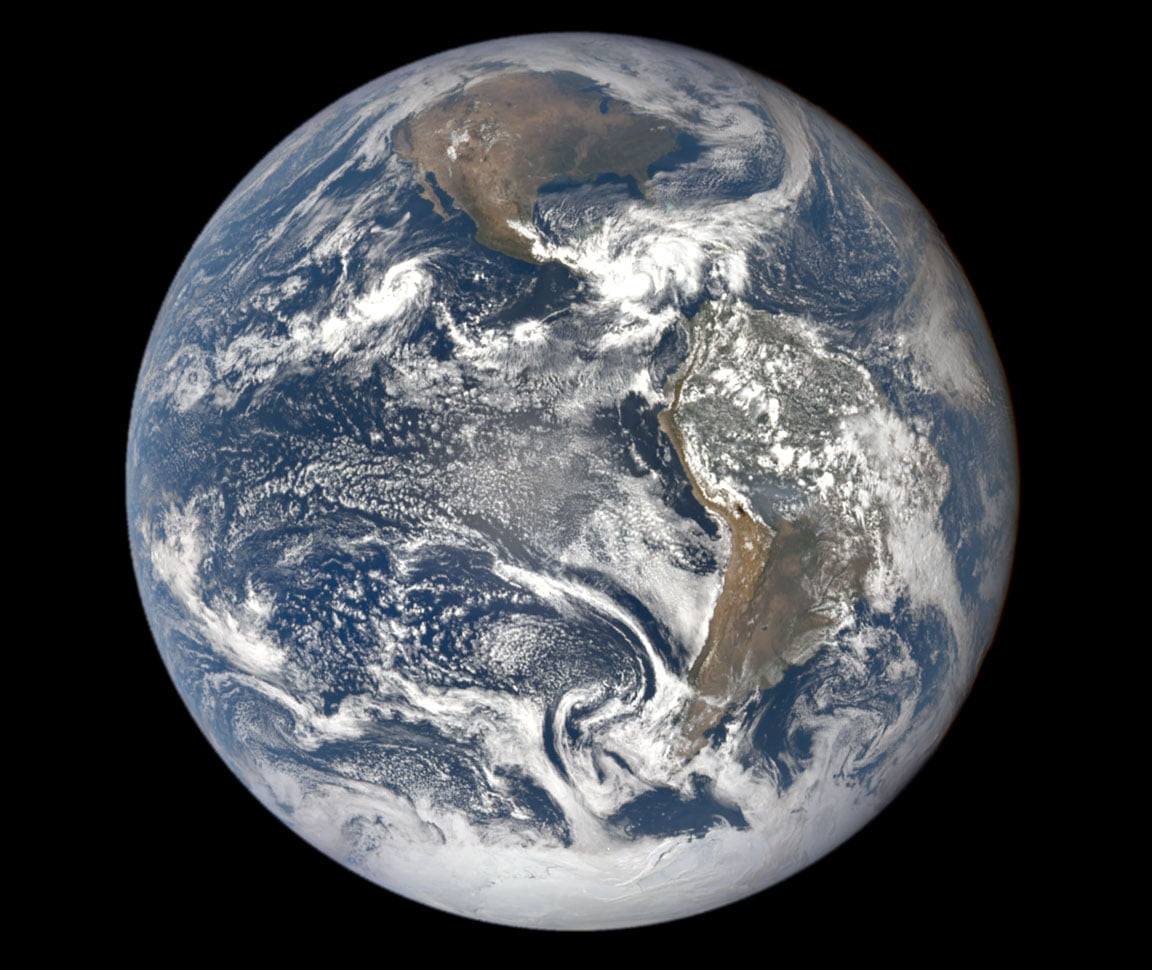
War turns people into killers — of our fellow humans, of course, but also of all forms of life within our (often very large) blast radii. In addition, war is a mass distraction from what should truly matter to us: the sacredness of life and the continued viability of our planet and its ecology. Call it a cliché but there’s no way to deny it: there is indeed only one Spaceship Earth. As far as we know now, our planet is the sole body in the universe teeming with life. Of course, the universe is incomprehensibly vast and there could well be other forms of life out there, but we don’t know that, not with certainty anyway.

Imagine, in a dystopic future, America’s “best and brightest” (or the “best and brightest” of another country) acting in a nuclear fury, employing the very weaponry that continues to proliferate but hasn’t been used since the destruction of two Japanese cities on August 6 and 9, 1945, and so crippling Spaceship Earth. Imagine also that our planet is truly the universe’s one magnificent and magical spot of life. Wouldn’t it be hard then to imagine a worse crime, not just against humanity, but life itself cosmically? There would be no recompense, no forgiveness, no redemption — and possibly no recovery either.

Of course, I don’t know if God (or gods) exists. Though I was raised a Catholic, I find myself essentially an agnostic today. Yet I do believe in the sacredness of life in all its diversity. And as tenacious as life may be, given our constant pursuit of war, I fear the worst.
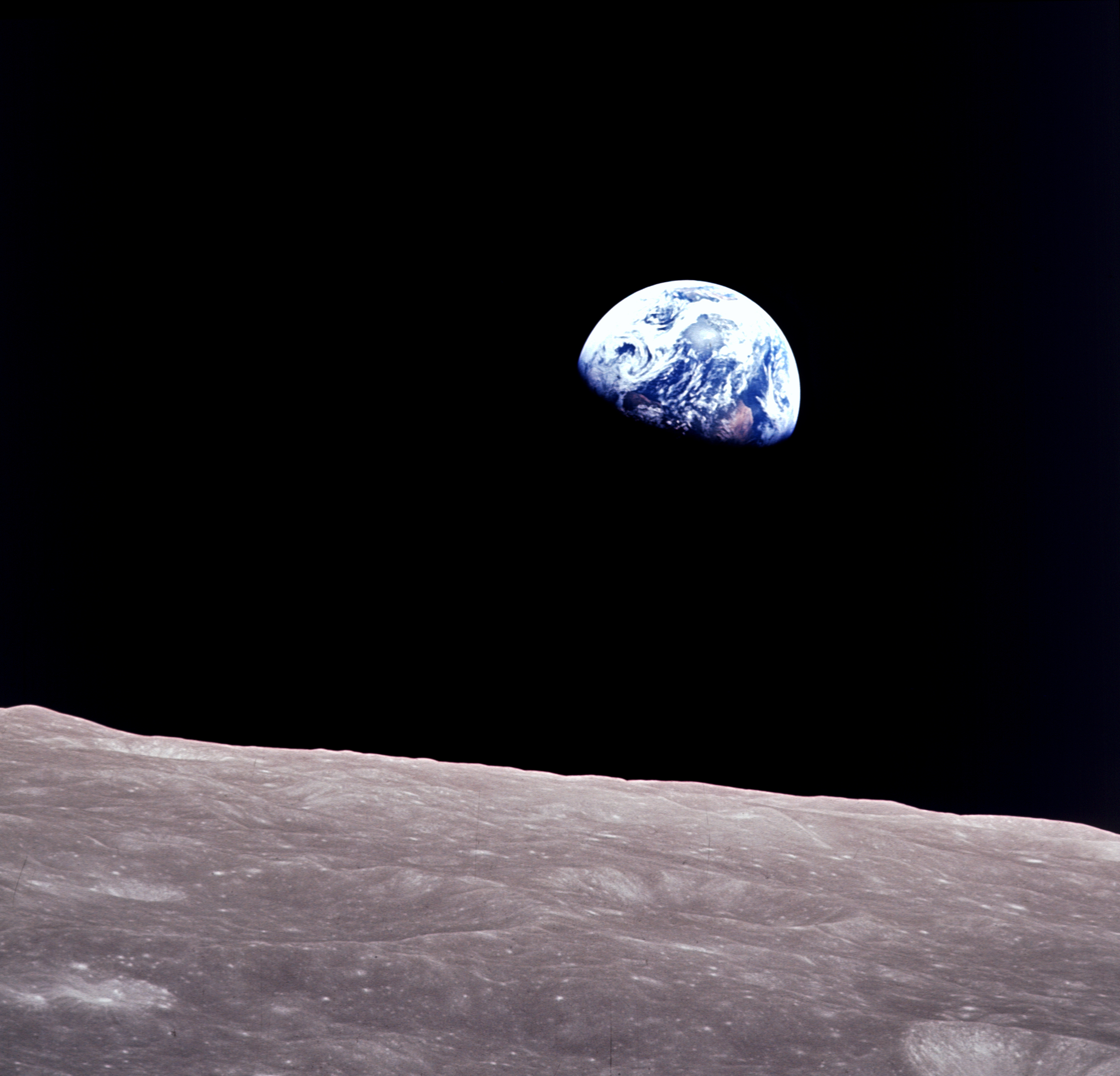
Earthrise from the Apollo 8 mission

If you’re of a certain age, you may recall when the astronauts on Apollo 8 witnessed earthrise as their spaceship orbited the moon in 1968. The crew read from Genesis, though in truth it could have been from any creation story we humans have ever imagined to account for how we and our world came to be. Specific religions or creeds didn’t truly matter at that moment, nor should they now. What mattered was the sense of awe we felt as we first viewed the Earth from space in its full glory but also all its fragility.

For make no mistake, this planet is fragile. Its ecosystems can be destroyed. Not for nothing did the inventor of the atomic bomb, J. Robert Oppenheimer, turn to the Hindu scriptures to intone, “Now I am become death, the destroyer of worlds,” when he saw the first atomic device explode and expand into a mushroom cloud during the Trinity test in New Mexico in July 1945.

In the febrile postwar climate of anti-communism that would all too soon follow, America’s leaders would decide that atomic bombs weren’t faintly destructive enough. What they needed were thermonuclear bombs, 1,000 times more destructive, to fight World War III against the “big fat commie rat.” Now nine (9!) nations have nuclear weapons, with more undoubtedly hankering to join the club. So how long before mushroom clouds soar toward the stratosphere again? How long before we experience some version of planetary ecocide via a nuclear exchange and the nuclear winter that could follow it?

Genocide and Ecocide on a Planetary Scale

The genocide happening in Gaza today may foreshadow one possible future for this planet. The world’s lone superpower, its self-styled beacon of freedom, now dismisses U.N. Security Council resolutions to stop the killing as “non-binding.” Meanwhile, Israel, whose founding was a response to a Holocaust inflicted during World War II and whose people collectively said Never Again, is now killing, starving, and displacing hundreds of thousands of Palestinians in the name of righteous vengeance for Hamas’s October 7th attack.

If the U.S. and Israel can spin mass murder in Palestine as not just defensible, but even positive (“defeating Hamas terrorists”), what hope do we have as a species? Is this the future we have to look forward to, an endless echoing of our murderous past?

I refuse to believe it. It truly should be possible to imagine and work toward something better. Yet, in all honesty, it’s hard to imagine new paths being blazed by such fossilized thinkers as Joe Biden and Donald Trump.

“Don’t trust anyone over thirty” was a telling catchphrase of the 1960s. Now, we’re being told as Americans that we’ll have to place our trust in one of two men almost at or exceeding 80 years of age. Entrusting and empowering political dinosaurs, however, represents an almost surefire path toward future extinction-level events.

Let me turn instead to a 25-year-old who did imagine a better future, even as he protested in the most extreme way imaginable the genocide in Gaza. This February, fellow airman Aaron Bushnell lit himself on fire outside the Israeli embassy in Washington, D.C. He sacrificed his life in a most public way to challenge us to do something, anything, to stop genocide. America’s “leaders” answered him by ignoring his sacrifice and sending more bombs, thousands of them, to Israel.

Aaron Bushnell did, however, imagine a better world. As he explained last year in a private post:

“I’ve realized that a lot of the difference between me and my less radical friends is that they are less capable of imagining a better world than I am. I follow YouTubers like Andrewism that fill my head with concrete images of free, post-scarcity communities and it makes me so much more prepared to reject things about the current world, because I’ve imagined how things could be and that helps me see how extremely bullshit things are right now.

“What I’m trying to say is, it’s so important to imagine a better world. Let your thoughts run wild with idealistic dreams of what the world should look like and let the pain and anger at how it’s not that way flow through you. Let it free your mind and fuel your rage against the machine.

“It’s not too late for you or anyone. We can have the world of our dreams tomorrow, but we have to be willing to fight today.”

His all-too-public suicide was a fiery cry of despair, but also a plea for a better future, one free of mass murder.

Earlier this week, millions of people across America witnessed a total eclipse of the sun. It’s awe-inspiring, even a bit alarming, to see the sun disappear in the middle of the day. Those watching took comfort in knowing that it would reappear from behind the moon in a matter of seconds or minutes and so gloried in that fleeting moment of preternatural darkness.

But imagine if the moon and sun were somehow to become permanently stuck in place. Imagine that darkness was our future — our only future. Sadly enough, however, it’s not the moon but we humans who can potentially cast the Earth into lasting darkness. Via the nuclear winter that could result from a nuclear conflict on this planet, we could indeed cast a shadow between the sun and life itself, a power of destruction that, tragically, may far exceed our current level of wisdom.

We know from history that it’s far easier to destroy than to create, far easier to kill than to preserve. Yet when countries make genocide or ecocide (from nuclear winter) possible and defensible (as a sign of uncompromising “toughness” and perhaps the defense of “freedom”), you know that their leaders are, in some sense, morally obtuse monsters. And who or what are we if we choose to follow such monsters?

As human populations rise, as vital resources like water, food, and fuel shrink, as this planet grows ever hotter thanks to our intervention and our excesses, we’ll need to cooperate more than ever to ensure our mutual survival. Far too often, however, America’s strategic thinkers dismiss cooperation through diplomacy or otherwise as naïve, unreliable, and impractical. “Competition” through zero-sum games, war, or other hyperviolent urges seems so much more “reasonable,” so much more “human.”

To the victor goes the spoils, so it’s said. But a planet despoiled by thermonuclear war, cast into darkness, ravaged by radiation, disease, and death, would, of course, offer no victory to anyone. Unless we put our efforts into ending war, rather than continuing to war on one another, such conflicts will, sooner or later, undoubtedly put an end to us.

In reality, our worst enemy isn’t some “axis” or other combination of imagined foes from without, it’s within. We remain the world’s most dangerous species, the one capable of wiping out most or all of the rest, not to speak of ourselves, with our folly. So, as Aaron Bushnell wrote, free your mind. Collectively, there must be a better way for all creatures, great and small, on this fragile spaceship of ours.
Seeing the Dark Side of the Moon — and of America

W.J. Astore

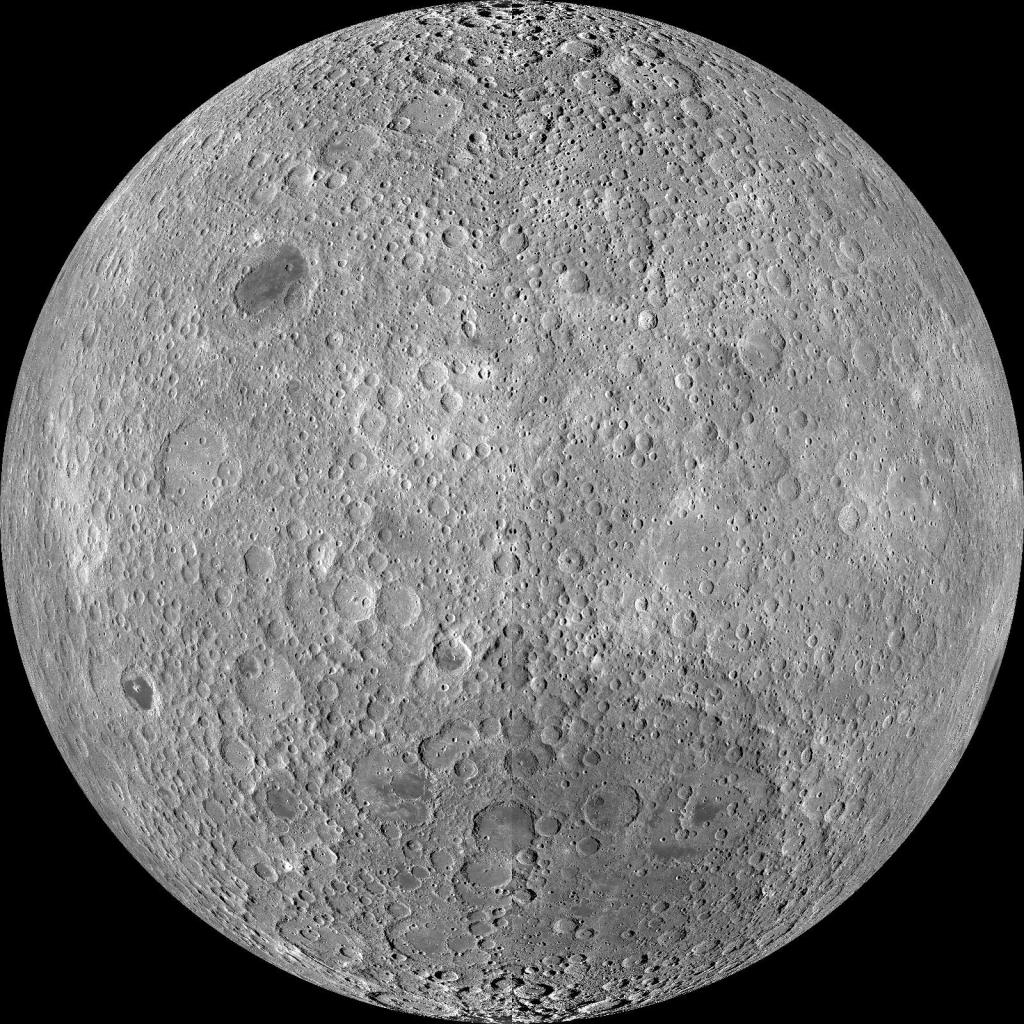
The Moon is the brightest object in the night sky. It has so many meanings in our lives, our history, our folklore and myths. Yet we always see it from one side. Until the beginning of the space age, we never saw its dark side. And that dark side presents us with a whole new idea of the Moon, as so:

A truly captivating vision of the dark side of the Moon, courtesy of NASA

I love seeing familiar objects in unfamiliar ways. Here we see the battered side of the Moon. In a sense, the Moon acts as a shield for the Earth, with some asteroids getting funneled into its gravitational well and striking its surface rather than possibly colliding with the Earth. Without a large Moon near us, life on Earth may have proved more precarious, with more mass extinctions due to asteroid strikes. (I think I’m right here, based upon my own reading on our solar system, which I admit was many, many moons ago.)

Can we also see the dark side of other objects? See the familiar in strikingly unfamiliar ways? How about America? It’s not easy, because those who try to help us to see are often punished for their probing in darker places.

Who are some of these “astronomers” who seek to show us America in a new light? I’d like to mention a few names here: Daniel Ellsberg, Daniel Hale, John Kiriakou, Chelsea Manning, and Edward Snowden. And let’s throw an Aussie in there too: Julian Assange. And an outspoken Catholic worker by the name of Dorothy Day. Or how about an anarchist like Emma Goldman. These men and women (and many others) sought to shine a probing light on some of the darker sides of American behavior, and you won’t be surprised to learn that they suffered for it.

My point here is not to focus exclusively on the dark side of America. Rather, just as it’s an incomplete picture to see the Moon from only one side and perspective, so too is it a limiting experience to see America from only one side. And that “one side” is typically the one most favorable to America, the brightest one, the least cratered one, even the romantic one.

If we seek to understand the Moon in its entirety, we must see all its sides — especially its most battered one. The same is true of America.

Shouldn’t Anyone Who’s Sane Be a Peace Activist?

W.J. Astore

Shouldn’t anyone who’s sane be a peace activist? And shouldn’t we question the sanity — or at least the motives — of anyone who’s constantly advocating for more spending on weapons and war?

How do we change the narrative?  How do we return to Christ’s idea of “blessed are the peacemakers”?

The obstacles are many. The national security state is immensely large and incredibly powerful. The mainstream media is a big problem since it’s been captured by corporations. The few political candidates who advocate for a different path, such as Tulsi Gabbard or Dennis Kucinich, get smeared as useful idiots for the “enemy” or dismissed as impractical dreamers by that same corporate media.

Surely, we need many things to effect meaningful change. We need public funding of elections. We need better education focused on questioning and challenging authority. We need better and braver leaders — but will they simply be assassinated like JFK, MLK, and RFK?  Among others?

We need to speak up, and we are. We need to enlist religion when we can.  True Christianity — true religion — is our natural ally.

We need, as peace activist John Rachel reminded me, to connect cuts in military spending to helping people — that is, we need real peace dividends, “peace checks,” if you will. Rebates to the American people tied directly to much lower spending on wars and weapons.

We need to remember what Master Po said in “Kung Fu”: fear is the only darkness. And thus we need to come into the light.

We need to stop buying guns and start reading books. I once read: “Blessed are the peacemakers, for they shall be called children of God.” I don’t recall blessings being bestowed on weapons and the makers and owners of the same.

There are so many things we need to do.  Most of all, I think, is that we need to respect life and our planet, because if we don’t, the human experiment is going to come crashing down, and too many other forms of life on our planet will be driven to extinction by our own myopic selfishness and folly.

You’ve heard the saying, Power concedes nothing without a demand. We need to demand an end to fear, an end to folly (as with nuclear “modernization” at a cost of $1.7 trillion, never mind the unimaginable costs of a nuclear war).

We need to demand peace.

I think the planet’s oligarchs know the danger.  So they work to keep us divided, distracted, and downtrodden.  (As I’ve written about here.) If we’re kept divided by partisan BS and rumors of war, distracted by infotainment and the like, and downtrodden by medical and other forms of debt, menial work at starvation wages, and so forth, it’s difficult for people to unite.

We need to unite anyway. Unite to save our planet from ourselves and our destructive impulses. From our greed and selfishness.

There was a time when we humans congratulated ourselves as being made in the image of God. When we saw the earth as God’s creation that we should revere. How do we regain reverence for each other and for this wonder-filled planet of ours, a planet that keeps surprising us with its glories?

We need a collective awakening. A mass movement. One that recognizes that peace is normal and that war is insane, one dedicated to exploration of the world around us rather than its exploitation. One that demands the best from our minds even as it touches our souls. Perhaps that’s overly mystical or utopian or just plain fuzzy, but we need something like it or things are going to get far worse for ourselves and our planet.

When Is the Moon Not the Moon?

W.J. Astore

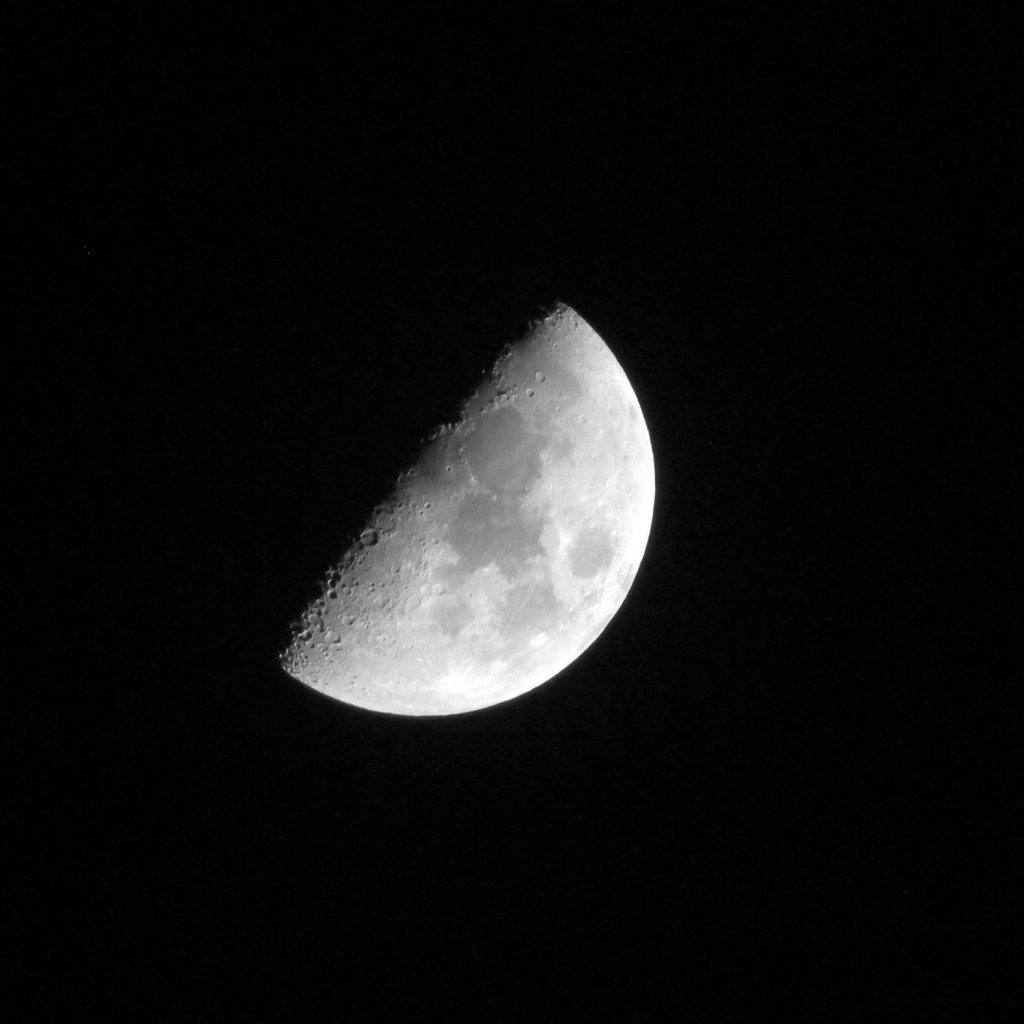
Last night, I got outside with my camera and took this shot of the moon.

It reminded me of one of my “genius” moments as a kid. In the playground, I recall looking up at the moon in the daytime. What is that thing, I asked myself. See, I associated the moon with the nighttime sky; I didn’t know it came out in the daytime as well. So what was that strange object in the daytime sky? Tapping into my little kid brain, I guessed I was seeing a reflection of the earth.

I don’t know when I got sorted out on this. Maybe my older brother, the amateur astronomer with the Tasco telescope, straightened me out. Still, given the way things are going on this earth of ours, we could use a smaller earth close by to escape to. I had one as a kid, if only in my imagination.

I’m still amazed that we went to the moon in 1969, more than a half century ago, and we haven’t gone further into space since. Sure, our probes have, and remarkably so, but I’m astonished that humans haven’t yet been to Mars, a difficult but achievable mission. In “2001: A Space Odyssey,” humanity was already visiting Jupiter and witnessing the birth of the star-child twenty years ago! Obviously, 2001 should have been 2101. Maybe in 80 years we’ll visit the outer planets, assuming we haven’t nuked ourselves back to the Stone Age.

For some reason, I was thinking of the movie “Planet of the Apes” yesterday and its jaw-dropping ending. In the U.S., we seem far more intent on building new nukes than exploring space. We have a mania for destruction, a mania for weapons and wars, thus the ending words of Charlton Heston in that movie were and remain all too appropriate and haunting.

I wish we had a shadow earth, an unspoiled one sitting in the sky, shining down on kids in playgrounds across the world. But we don’t, so we had better wise up and take better care of this one. Unless you want Charlton Heston cursing you out.

When Mother Earth Dies, We All Die

W.J. Astore

Back in March, Tom Engelhardt had a stimulating article at TomDispatch.com on the wounding of planet Earth. He also made mention of the Covid-19 pandemic. And as I read his piece, I thought of Mother Earth suffering from a human-made pandemic. A virus of humans. A human-made flu of fevers (heat waves and fires), chills (freezes in the South), coughs (turbulent weather), thirst (droughts out West), and pain (nearly everywhere).

But, sadly, there’s no vaccine for Mother Earth. All we humans can do is relieve the symptoms by changing our behavior.  Mother Earth is already infected with us; now we need to leave her alone, let her rest, allow her to recover. But we don’t.  We keep stressing her with our actions (and inaction on climate change) and making her symptoms worse.

The only problem: When Mother Earth dies, we all die.

We’re on the fast track to dystopia, which puts me to mind of a recent Splinterlands trilogy written by John Feffer. His latest and last volume is called Songlands, which he writes about here at TomDispatch.com. For a dystopic trilogy, I found it strangely uplifting, for Feffer still sees hope in humans who are willing to sacrifice to save our planet. I urge you to check it out.

It’s amazing to me that ultra-rich billionaires like Jeff Bezos and Elon Musk are saluted for their “investment” in space exploration, as if we humans are going to save ourselves by building stations on the moon or Mars. If Bezos and Musk truly wanted to give back to humanity, they’d be focusing on reducing consumption here on Earth while fighting for preservation and conservation. But their space trips are really ego trips, and their fuel has always been money.

Here’s hoping humanity rejects the “final frontier” nonsense of Bezos and Musk and turns its attention to what really matters: the health and welfare of this wonderful yet fragile world of ours.

For if we refuse to honor Mother Earth, it may be the last sin we humans commit.

We Put A Man on the Moon …

apollo08_earthrise
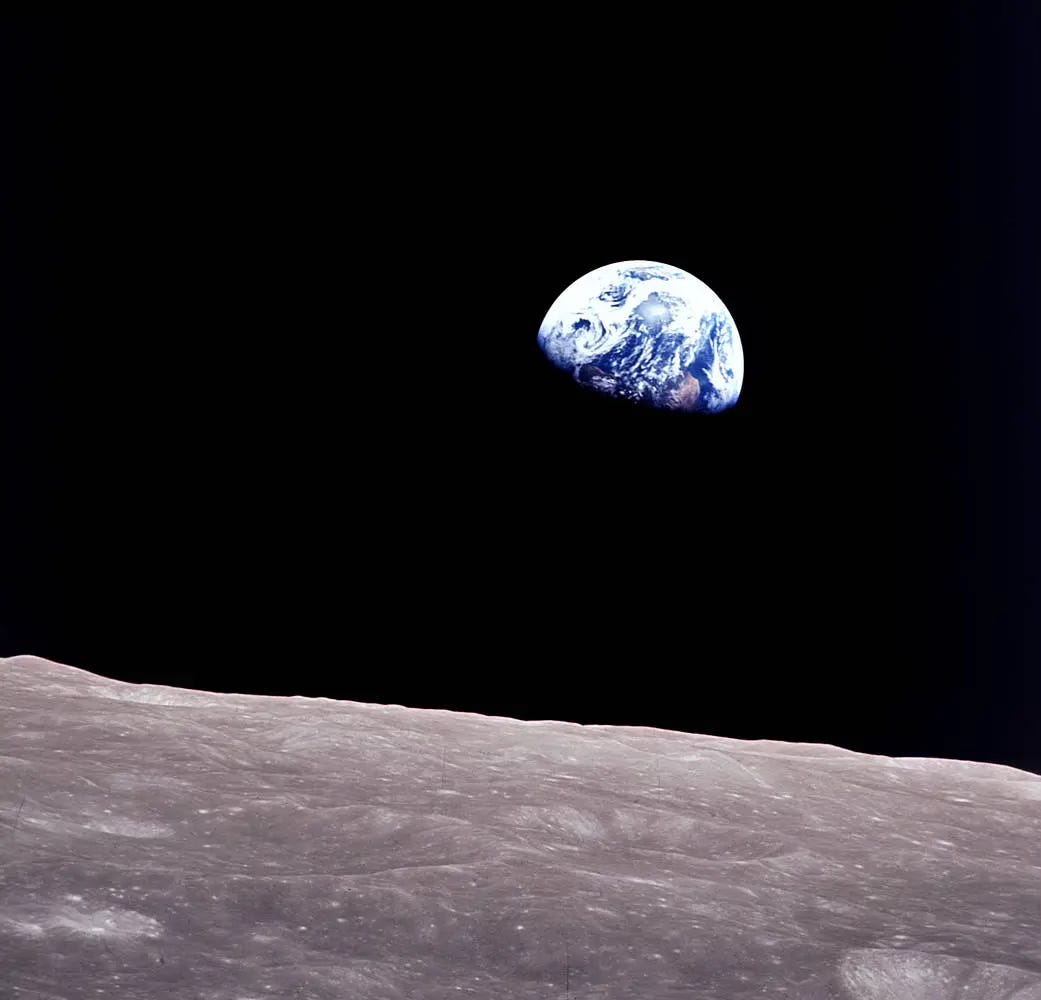
Earthrise as seen by Apollo 8

W.J. Astore

Is it possible the U.S. hit a peak of sorts in 1969?  I know – 1969 was a Nixon year, another year of destruction in Vietnam, though the music in those days was far better than today.  But I’m thinking of Apollo, as in our landing on the moon in July of 1969.  Having recently celebrated the 50th anniversary of the moon landing, that momentous event is still on my mind, especially when I think of the old poster I had on my bedroom wall that showed the Apollo journey from earth to the moon, its various stages and maneuvers.  It was all bewildering to a young boy caught up in the space program, but at least I knew my country was at the forefront of science.

In 1969 America reached the moon!  We respected science.  Many Americans were trying to end a disastrous war in Vietnam.  People marched for civil rights, they fought for equal rights, there was a sense America’s potential was nearly limitless.

WTF in 2020?  Many Americans, including our president, don’t respect science.  We fire doctors for calling out quack medical cures.  We put a breeder of labradoodles in charge of our Covid-19 pandemic response.  Wars just go on forever with little resistance.  We’re sliding backwards in rights for minorities, for women, for workers.  And the space program?  Moribund in the USA.  We’re very much stuck on earth, an earth that is less hospitable to life than it was fifty years ago.

The years 1970-2020 has defined a half-century of American decline.  Perhaps we might speak of five bad “emperors”: Nixon, Reagan, Clinton, Shrub Bush, and Obama, now joined by Trump, our very own blend of Nero and Caligula.  He fiddles and diddles while America burns.

Joe Biden and the establishment Democrats are hardly the answer.  Even Jesus isn’t the answer unless we start taking His words about the rich (and so much else) seriously.  The Jesus of my youth had no use for greed and money and material goods – He taught us our treasure was in heaven, gained by righteous living through faith while manifesting love.  That sacrificial message is drowned out today by the so-called prosperity gospel, preached by ministers who are cashing in even as they tell their followers that wealth is the most legitimate form of God’s grace.  Back in the Catholic church of my youth, such ideas would have been blasphemous.  At my church I recall the example set by Sister Emily and Sister Jane Elizabeth – they sure weren’t living in luxury.  Forgive them, sisters, they know not what they do.

Here we are, in 2020, in a land of un-truth, in a universe of alternative facts, in belief systems where money matters more than anything, where even ministers stoke conflict, and we wonder why we can’t come together and develop a clear, coherent, and coordinated response to the coronavirus crisis.

How to change this?  How about letting experts lead us?  You know the saying: it ain’t rocket science.  But Apollo was rocket science, and so we deferred to experts, and they got us to the moon and back six times and patched together an amazing rescue of Apollo 13 when it went wrong.  To beat Covid-19, we can’t listen to Trump and his band of grifters and losers.  We must listen to the scientists, the doctors, and act collectively based on sound medical science.  The “rocket scientists” will get us through this, together with the humanists and the selfless efforts of so many medical workers and (mostly) nameless others.

Longer term, we need to re-create our government, because it has, quite simply, betrayed most of us.  Simultaneously, we need to move beyond nationalism and think and act on a global scale to save our earth.  If Apollo taught us one thing, it’s the wondrous value of our own planet.  The moon may be a place of magnificent desolation, but who wants to live permanently in desolation?  We need global vision and action, not only to help prevent future pandemics, but also to preserve our planet as a viable biosphere for a global population projected to top ten billion people in the coming decades.

Nobody said it would be easy; yet if we stay on our current course, just about anybody can guess humanity’s fate.  But if we can put a man on the moon, surely we can come together to create a better future for ourselves and our children.

The year was 1969, and this song by the Youngbloods went gold: “Come on people now, smile on your brother, everybody get together, try to love one another right now.  Right now.  Right now.”  It wasn’t – or shouldn’t be — just hippie dreaming.  Indeed, it’s the essence of true Christianity.

Mother Nature: It’s Really Not Nice to Fool with Her

earth
Guess What?  There’s Only One Earth

W.J. Astore

The other day, I was watching a typical truck commercial on TV. It showed trucks literally tearing up the backroads, along with ATVs spinning and jumping and chewing up the countryside, all synonymous with “adventure” and “freedom.”

I remember those old Coors commercials featuring Mark Harmon. They were set in Colorado (I think) and featured him quietly extolling the virtues of barley and clean water. Now most Coors commercials are about self-indulgent partying (but please drink responsibly).

My point? We need a change in mindset — one that values nature and its preservation. We’re doomed if we keep selling the idea “you can have it all,” so go party and tear up nature — who cares as long as you’re having fun?

We act as if we have many planet earths, but we have only one.  And we’re slowly and surely making our planet less habitable for humans.

Our planet is already having its revenge.  As Tom Engelhardt wrote about in a recent article about “Emperor Weather,”

Of course, his [Emperor Weather’s] air power — his bombers, jets, and drones — would be superstorms; his invading armies would be mega-droughts and mega-floods; and his navy, with the total or partial melting of the Greenland and Antarctic ice sheets, would be the rising seas of the planet, which would rob humanity of its coastlines and many of its great cities. His forces would occupy not just one or two countries in the Greater Middle East or elsewhere, but the entire planet, lock, stock, and barrel.

Emperor Weather’s imperial realms would be global on an awe-inspiring scale and the assaults of his forces would fragment the present planet in ways that could make much of it, in human terms, look like Syria. Moreover, given how long it takes greenhouse gases to leave the atmosphere, his global rule would be guaranteed to last an inhumanly long period of time unchallenged.

Heat (think burning Australia today, only far worse) would be the coin of the realm. While humanity will undoubtedly survive in some fashion, whether human civilization as we now know it can similarly survive on a planet that is no longer the welcoming home that it has been these last thousands of years we have no way of knowing.”

Wars will doubtless follow in the wake of disruptions by Emperor Weather, which will only make matters worse for humanity.  Think of all those weapons that run on fossil fuels — ships, planes, and tanks.  All those weapons that pollute the earth while consuming valuable resources that could be used for alternative energies (solar panels, for example).

It’s time to beat our weapons into wind turbine blades, and to make war no more, either on ourselves or on nature.