Donald Trump and American Decline

The Donald: Easy to make fun of ... too easy
Don’t hire him, America

W.J. Astore

Donald Trump says he wants to make America great again.  What does this mean, exactly?

Think about it.  As American workers, how desperate are we to “hire” a man as president whose signature line to wannabe entrepreneurs is, “You’re fired”?  We’re a bit like abused spouses who, despite being bruised and bloodied, still decide to stand by a bully.

Americans sense that our nation is in decline; indeed, that’s the implicit meaning (as noted in this article by Tom Engelhardt) of Trump’s slogan: he wants to make America great again.  As in, we’re not great now, but we have been in the past, and under Trump we will be again.  But how?  Is Trump just going to fire all the “losers” in America?

Many abused workers have placed their faith in Trump to revive America.  Yet the irony is that Trump himself has precipitated America’s decline, what with his tacky casinos, his off-shoring of jobs, his shady business deals that seek to maximize profits while minimizing pay to workers.

So much of our economic health today, such as it is, consists of massive spending tied to a sprawling national security state, which fosters military adventurism and interventionism as well as weapons exports, amplified by casino capitalism (literally “casino,” as in my old hometown, which desperately seeks a casino as a jobs producer).

Back in the day, the city of my birth was proud to manufacture shoes and to ship them around the world.  Now, my city puts it faith in casinos and gambling.  If that’s not a clear sign of economic decline, what is?

Again, consider the irony of placing faith in Trump to reverse this trend.  Nearly 30 years ago, in the song “Gimme What You Got,” Don Henley captured the hollowness of “promoter Trump” with the following lines:

Now it’s take and take and takeover, takeover
It’s all take and never give
All these trumped up towers
They’re just golden showers
Where are people supposed to live?

Trumped up towers – more true today than when Henley penned that song (along with Stan Lynch and John Corey) back in 1988.

How have so many come to place their faith in America’s resurgence in the trumped up BS of Donald Trump?  Again, someone whose signature line as a boorish and preening boss is, “You’re Fired”?

Let’s make America great again.  Come this fall, let’s not hire Donald Trump as our new boss.

Above the people, beside the people, against the people

abe

W.J. Astore

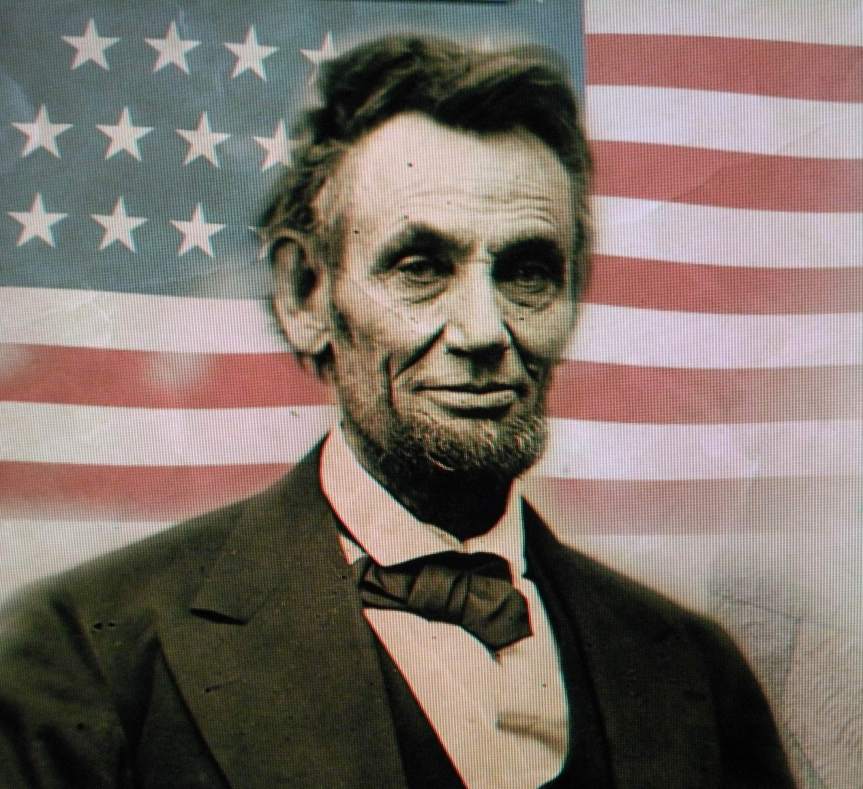
Remember when Abraham Lincoln wrote about our government as being “of the people, by the people, for the people”?  Even after 150 years, those words still resonate, but they are increasingly less true.  Today, our government places itself above the people, and when the government is not working against the interests of (most of) the people, it acts as if the people’s interests are beside the point.

We’ve entered a new historical moment in America, which is precisely the point of Tom Engelhardt’s latest essay at TomDispatch.com.  As Engelhardt notes, our electoral process is “part bread-and-circuses spectacle, part celebrity obsession, and part media money machine.” Our foreign policy, and increasingly our domestic policy as well, is dominated by the national security state, the one leviathan in our government that is never paralyzed.  The political process itself is ever more divisive, polarized, and disconnected from the hardships faced by the working and middle classes.  Even planetary dangers such as climate change are either denied or ignored, as if denial or ignorance will keep seas and temperatures from rising.

The very disconnection of our government from painful realities explains in part the appeal of “maverick” candidates like Donald Trump and Bernie Sanders.  Yes, they are two very different men, but what they have in common is their willingness to take the side of ordinary Americans, who have seen their standard of living stagnate or drop over the last thirty years.  Trump says he wants to make America great again: the implicit message is that we pretty much suck now, that we are a nation in decline, and that the sooner we admit it, the sooner we can take action to restore America to greatness.  Sanders says he wants a future we can believe in, which is at its core much like Trump’s message.  America has serious problems, both men are saying, but greatness is still within our grasp if only we act together as a people.

Again, much separates Trump and Sanders, yet both are willing to admit the times are bad for many hardworking Americans.  What they’re saying is this: the American dream is increasingly a nightmare.  And part of the nightmare is a government that doesn’t act in the people’s interests because it’s been co-opted by special interests.  A government that can’t even do its job, such as to declare war or to advise on a Supreme Court nominee, in accordance with its Constitutional duties.

The promise and potential of our country remains.  But that promise, that potential, is being squandered by an alliance of various interests that are no longer responsive to the people.  If not dead, representative democracy in America is on life support.  Unless we can reinvigorate it, as Engelhardt notes in his article, we will continue to suffer a decline analogous to the declines of other great empires (think Rome, for example).  The difference today is the possibility of planetary-wide destruction, whether quickly from nuclear weapons or slowly from climate change.

Never was a revival in American democracy more urgently needed, not only for ourselves, but for the world.

The Next Commander-in-Chief

Governor_John_Kasich
John Kasich

W.J. Astore

A reader wrote to ask my opinion on which presidential candidate would make the best commander-in-chief.  This is a speculative exercise, of course, but why not speculate? I’ve watched most of the debates and have a sense of the candidates, though of course I’ve never met them and have no direct experience with them.  (I once shook President Bill Clinton’s hand, and saw Hillary in the background, but that’s a story for another day.)  So let’s take the five remaining candidates in alphabetical order:

Hillary Clinton: Often wrong and too hawkish, which is a bad combination. She was wrong on the Iraq War, wrong on Libya, and unapologetic in her fondness for Henry Kissinger. Under Clinton, I see more wasteful military interventions.

Ted Cruz: Far too eager to use military force.  You’ll recall his posturing about “carpet bombing” and making the sand “glow” in the Middle East, apparently by using nuclear weapons.  The recent terrorist attacks in Belgium have him calling for a police state in U.S. neighborhoods where Muslim-Americans live.

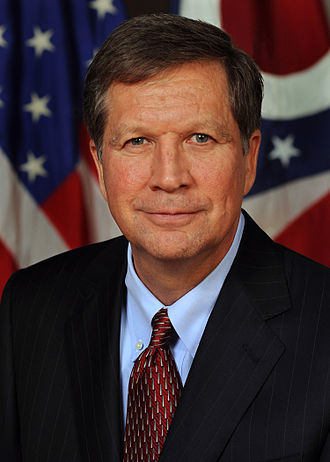
John Kasich: Has experience working military matters while in Congress (18 years on the House Armed Services Committee).  Has executive experience as a governor.  Has had the temerity to criticize the Saudis for supporting radical elements in Islam.  Has opposed wasteful weapons systems (the B-2 and A-12, for example).  Speaks carefully and appears to be temperamentally suited to the job.

Bernie Sanders: He was right to oppose the Iraq War.  Thinks for himself.  Not a slave to neoconservative interventionism.  Yet he lacks experience dealing with the military and with foreign policy.  Has the capacity for growth.

Donald Trump: Lacks an understanding of the U.S. Constitution and his role and responsibilities as commander-in-chief.  Though he has shown a willingness to depart from orthodoxies, e.g. by criticizing the Iraq War and the idea of nation-building, Trump’s temperament is highly suspect.  His bombast amplified by his ignorance could make for a deadly combination.  Hysterical calls for medieval-like torture practices are especially disturbing.

Of the five major candidates, and with Sanders somewhat of a blank slate, I think John Kasich has the best potential — in the short-term — to be an effective commander-in-chief.  This does not mean that I support Kasich for president, for I object to several of his domestic policies.

Not exactly a “bracing view,” perhaps, but it’s my honest attempt to answer a reader’s question.  I do think Sanders has considerable potential to be an excellent commander-in-chief because he possesses moral courage.

Sadly, the odds of either Kasich or Sanders winning in November seem very long indeed.

Clinton versus Trump this fall?

trump
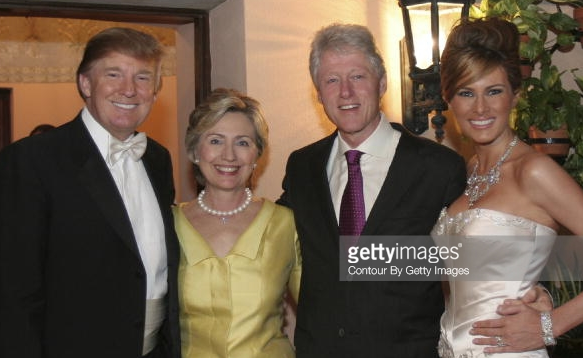
Good chums back in 2005

W.J. Astore

Last night’s primary results suggest it’s Hillary Clinton versus Donald Trump come this fall.  What does this mean for America?

Hillary is the easiest to gauge.  She’s been in politics for a long time and possesses a lengthy and controversial record.  She is of course a transformative candidate, the first female candidate for president from a major party.  That’s where the revolution begins — and ends.  Hillary is a pragmatist who promises a continuation of Obama’s policies.  Even more so than Obama, she is an establishment candidate, well ensconced among Wall Street financiers, K Street lobbyists, and all the other special interests that rule America today through money and power.  If this were 1976, you could well imagine her running as a moderate Republican against a Democratic candidate like Jimmy Carter (or Bernie Sanders).  With respect to foreign policy, she promises a hard line and the continuation of perpetual wars in Iraq, Afghanistan, and elsewhere.

Many liberal Democrats, and more than a few Republicans, will likely vote for her with noses held and fingers crossed.  Mainline Democrats will vote for her based on certain issues, such as Supreme Court vacancies, her pro-choice stance on abortion, and so on.  In a normal election year, an establishment Republican would have a good shot at beating her since Hillary’s negatives are so high.  But this is not a normal year.

Enter Donald Trump.  If Hillary promises more of the same, Trump promises unpredictability.  His simplistic rhetoric about making America great again has obviously resonated, just as Obama’s similarly simplistic message of “hope” and “change” did in 2008.  Trump is a man of (certain) people: unlike Hillary, he’s not a career politician. Unlike Hillary, he’s not tied to the political establishment.  In essence, he’s part wild card, part joker, and his outlandish statements on Muslims and Mexicans and walls and women suggest he’s not playing with a full deck.

No one really knows what a Trump presidency would look like.  I don’t think even Trump knows.  Trump has a habit of speaking off the cuff, of making statements that are more than a little grandiose, partly because he loves to grandstand.  He’s easy to dismiss — all too easy — yet look where he is now, closing in on the Republican nomination despite long odds.

Trump, as I wrote back in July 2015, likes to pose as a proto-fascist.  He likes to boast that the military will follow his orders even if they’re illegal.  (He backed off that statement, but the fact he made it speaks loudly about his judgement.)  On occasion he says something insightful and honest, as when he insisted the Iraq war was a mistake, costing the nation trillions of dollars, or when he attacks poorly negotiated trade deals as hurting working-class Americans.  But with the good comes lots of bad.

A big challenge for Trump this fall will be appearing presidential.  So far his policy knowledge in debates has been a mile wide and an inch deep.  He’s gotten away with this because of the size of the Republican field, but Hillary, the consummate policy wonk, will make mincemeat of him in the fall debates if he continues to speak off the cuff and glide over specifics.

Clinton versus Trump: it’s a grim choice for America.  An establishment oligarch versus a quixotic autocrat.  More of the same versus God knows what.  What they collectively represent is both the decline of progressivism and of conservatism in America.

For now I’m putting my crystal ball aside, except to say that one day (perhaps very soon) Americans may look back with fondness on the eight years Obama was president.

The Bizarre and Scary World of Republicans

11TRANSCRIPTweb-master675
There they go again

W.J. Astore

I watched last night’s Republican debate from Florida (transcript here) and then checked this morning’s coverage from major networks such as NBC and CBS.  The focus of media coverage was the “civility” of this debate compared to previous ones, combined with typical horse race speculations about which candidate won and which lost.

Well, I can’t tell you who won, but I can tell you who lost: the American people lost.

Several lowlights from the debate that stick in my mind:

1. Marco Rubio was asked about climate change and whether human action, such as the emission of greenhouse gases, contributed to it.  Rubio essentially denied that human action had any significant impact on global warming.  The essence of his answer: the climate is changing because the climate always changes.  And the U.S. government can take no action to reduce it.

2.  Donald Trump held to his position on torture.  He believes waterboarding should be used, that laws should be changed to allow harsher means of torture, apparently because the enemy (ISIS) beheads its opponents or drowns them in cages.  He was not challenged on how he would change international laws against torture, nor was he challenged on consistent evidence that torture does not work in efforts to gain accurate intelligence.  Nor were any questions raised about the morality of torture and its proposed expansion if he wins the presidency.

3.  All of the candidates expressed support for sending U.S. ground troops, perhaps 20,000 to 30,000, to combat ISIS in the Middle East.  The situation was presented as a civil war within Islam between radical Sunni and Shia forces, but no candidate explained how U.S. combat forces could win someone else’s civil war, a war driven by fierce ideological differences.  Somehow, magically, the reappearance of big battalions of U.S. troops and massive displays of air power would “shock and awe” radical jihadists into collapse and capitulation.

4.  For the candidates, nothing Obama has done in the last seven years is worthy of the slightest praise.  Obamacare must be repealed.  The Iran nuclear deal is a disaster.  His forthcoming trip to Cuba represents a capitulation to communism.  His executive actions are illegal; all of them must be reversed.

5.  Each candidate tried to best the other on who is more pro-Israel.  According to Trump, “there’s nobody on this stage that’s more pro-Israel than I am.”  Apparently Israel is the only U.S. ally that is worthy of total support and unconditional love by Republican candidates.

6.  Trump refused to qualify his statement that there is “tremendous hate” in the Islamic world directed against the United States.  However, there was no reason given for this hate, and no sense that U.S. military actions overseas, to include invasions, drone strikes, and special ops raids, contribute in any way to Islamic animosity.  The candidates were simply not asked why some, most, or nearly all Muslims “hate” America.

7.  Finally, topics that weren’t discussed at this debate but which are commonly discussed at Democratic debates: racism, shootings by police against Blacks, prison and justice reform, raising the minimum wage, the rising gap between the richest 1% and everyone else, reducing the cost of college education, and efforts to guarantee affordable health care for all.  Nor were women’s issues, such as equal pay for equal work, mentioned.  Indeed, with the exception of Trump’s comment about women being mistreated by the Muslim world, women’s issues simply didn’t exist, not in this debate and not in most of the others.  Indeed, my wife turned to me during a previous Republican debate and said, “Not one of these guys cares one whit about women’s issues — they’re offering us nothing.”

And on that sad yet telling note, I’ll end.


Last Night, Donald Trump Disqualified Himself

Donald Trump
Hail the Leader (Trump at FreedomFest, July 11, 2015 (AP Photo/John Locher)

W.J. Astore

As a retired military officer, I watched last night’s Republican debate from Detroit (transcript here) with a special focus on which candidate is qualified to lead the military as commander-in-chief.  I knew, of course, that Donald Trump had promised in the past to use torture against America’s enemies (last night, he called them “animals”), that he would pursue and kill not only terrorists but their families (apparently because the families always know, according to Trump, what their father/brother/sister is up to, as if there are no secrets in families).  Trump, in short, is an Old Testament “eye for an eye” man: if they behead us, we’ll torture and kill them, end of story.

But Trump was put on the spot when he was asked what he would do if the U.S. military failed to carry out his unlawful orders.  Instead of saying he wouldn’t issue unlawful orders, that he would support and defend the U.S. Constitution, which as president would be his sworn duty to uphold, Trump boasted that the military would follow his orders no matter what.

America: those are the words of a dictator.

Here’s what was said:

BAIER: Mr. Trump, just yesterday, almost 100 foreign policy experts signed on to an open letter refusing to support you, saying your embracing expansive use of torture is inexcusable. General Michael Hayden, former CIA director, NSA director, and other experts have said that when you asked the U.S. military to carry out some of your campaign promises, specifically targeting terrorists’ families, and also the use of interrogation methods more extreme than waterboarding, the military will refuse because they’ve been trained to turn down and refuse illegal orders.

So what would you do, as commander-in-chief, if the U.S. military refused to carry out those orders?

TRUMP: They won’t refuse. They’re not going to refuse me. Believe me.

BAIER: But they’re illegal.

TRUMP: Let me just tell you, you look at the Middle East. They’re chopping off heads. They’re chopping off the heads of Christians and anybody else that happens to be in the way. They’re drowning people in steel cages. And he — now we’re talking about waterboarding.

This really started with Ted, a question was asked of Ted last — two debates ago about waterboarding. And Ted was, you know, having a hard time with that question, to be totally honest with you. They then came to me, what do you think of waterboarding? I said it’s fine. And if we want to go stronger, I’d go stronger, too, because, frankly…

(APPLAUSE)

… that’s the way I feel. Can you imagine — can you imagine these people, these animals over in the Middle East, that chop off heads, sitting around talking and seeing that we’re having a hard problem with waterboarding? We should go for waterboarding and we should go tougher than waterboarding. That’s my opinion.

BAIER: But targeting terrorists’ families?

(APPLAUSE)

TRUMP: And — and — and — I’m a leader. I’m a leader. I’ve always been a leader. I’ve never had any problem leading people. If I say do it, they’re going to do it. That’s what leadership is all about.

Our military does not follow blindly orders issued by “The Leader.” Our military swears an oath to the Constitution.  We swear to uphold the law of the land.  We don’t swear allegiance to a single man (or woman) as president.

Trump’s performance last night reminded me of Richard Nixon’s infamous answer to David Frost about Watergate: “When the president does it, that means it’s not illegal.” No, no, a thousand times no.  The president has to obey the law of the land, just as everyone else has to.  No person is above the law, an American ideal that Trump seems neither to understand nor to embrace.

And that disqualifies him to be president and commander-in-chief.

Might Makes Right: An American Tradition

162111-akmdv

W.J. Astore (also posted at History News Network)

To hear Republican candidates like Donald Trump and Ted Cruz talk, almost any act of violence is justifiable to defeat the enemy. Trump talks of torture, far worse than waterboarding, and total destruction. Cruz ups the ante, speaking of carpet bombing and making the sand glow, apparently via nuclear weapons. Both appear to treat the enemy as inhuman.

Sadly, for America this is nothing new. Just read Bernard Fall on America’s war against Vietnam. In an article for Ramparts (“This Isn’t Munich, It’s Spain”), Fall wrote late in 1965 that the American military strategy in Vietnam was based on massive killing through overwhelming firepower:

The new mix of air war and of land and seaborne firepower in Vietnam is one of technological counter-insurgency — if you keep up the kill rate you will eventually run out of enemies. Or at least armed enemies. Of course, the whole country will hate you, but at least they won’t resist you. What you will get is simply a cessation of resistance — an acquiescence in one’s fate rather than a belief that your side and your ideas have really prevailed.

In other words, America sought to bludgeon the Vietnamese into compliance, rather than winning their hearts and minds through ideas or ideals.

“But what I really fear most,” Fall continued, “is the creation of new ethics to match new warfare. Indications are that a new ethic is already being created, and such influential men as former Secretary of State Dean Acheson have begun to provide its intellectual underpinning.”

Fall cited a speech at Amherst College in 1965 in which Acheson declared:

The end sought by our foreign policy . . . is, as I have said, to preserve and foster an environment in which free societies may exist and flourish. Our policies and actions must be decided by whether they contribute to or detract from achievement of this end. They need no other justification or moral or ethical embellishment. . .

To keep the free world free, America was justified to do anything it desired, irrespective of ethics and morality. Acheson’s words in 1965 have become the essence of U.S. foreign policy today as advanced by men like Trump and Cruz. In short, the end (a “free” society) justifies any means (torture, carpet bombing, perhaps even nuclear weapons) to preserve it.

Fall went on to cite a Pastoral Letter from French Cardinal Feltin in 1960 during France’s war with Algeria. In that letter to French military chaplains, Cardinal Feltin noted:

There cannot be a morality which justifies efficacy by all means, if those means are in formal contradiction with Natural Law and Divine Law. Efficacy, in that case, goes against the very aim it seeks to achieve. There can be exceptional laws for exceptional situations. . . there cannot exist an exceptional morality which somehow takes leave of Natural Law and Divine Law.

Too often in the past as well as today, U.S. foreign policy has taken leave of natural and divine law. The ends do not and should not justify the means, especially when the means (torture, carpet bombing, and the like) contravene the end (a “free” society based on ethical and moral principles).

Rather than posing as protectors of the free world, people like Trump and Cruz should admit their own amorality. They should admit they see the world as a brutal place, occupied by brutes, and that only by slaying those brutes in a brutish way can America preserve its dominant position as chief brute.

Doubtless many of their followers would still salute them for this view. But more reflective souls would see the honesty of Pogo’s famous insight that “We have met the enemy and he is us.”


The Republican Debate of Texas

26DEBATE1jp-master675-v2
Let the insults fly (Rubio and Trump)

W.J. Astore

Last night’s Republican Presidential Debate in Texas would dismay almost anyone interested in debates or politics.  Insults flew.  Boasts filled the air. Donald Trump, Ted Cruz, and Marco Rubio postured about which could be meaner toward “illegals” (undocumented workers).  There was more talk of border walls, of higher defense spending, of cutting taxes, of eliminating Obamacare, of reanimating Antonin Scalia and restoring him to the Supreme Court (think of Stephen King’s “Pet Sematary” but retitled as “SCOTUS Sematary”) — OK, that last one I made up, but if they could, they would.

I took a high school course on “debate and discussion,” and later as a professor I graded my students on debates.  Remember rules like staying on subject?  On following the rules? On keeping to the time allotted, on being civil to your opponent, on sticking to facts, on relying on evidence?  If you don’t recall those criteria, join the club of Trump, Cruz, and Rubio.

Almost any objective observer of the debate would score a win for John Kasich, the governor of Ohio.  He was clear, passionate, and stuck mainly to the subject.  He stressed his executive and governmental experience, spoke in complete sentences, and avoided insults and sound bites.  I don’t agree with much of what Kasich advocates, but he has the temperament and qualifications to make him a sound choice for the presidency.

Trump, of course, plays up his business acumen as preparing him for the presidency, and his argument against bickering politicians like Cruz and Rubio is compelling.  But let’s face it: watch the debates for just a few minutes and you realize Trump is a bully whose main attribute is bombastic self-confidence. By temperament he is unsuited to be president. The grim reality is that Republicans appear to have no answer to him.

This is partly because the debates are about issues only in passing.  They’re mainly about show, and “The Donald” knows how to put on a show.  As Cruz and Rubio split the vote, and Kasich and Carson slowly fade, Trump tightens his grip on the delegate total needed to grab the Republican nomination.

The amazing thing is this: It’s now quite conceivable that come January 2017, we will see Donald Trump inaugurated as president.

Hillary Clinton: A Deeply Compromised Candidate

hillary henry
Hillary and Henry

W.J. Astore

Hillary Clinton is a deeply compromised candidate.  She and her husband have made over $125 million in paid speeches since 2001, including $30 million in 16 months.  There’s nothing wrong with making lots of money: this is America, after all.  But there’s something wrong about accepting big checks from powerful banks and investment houses and then positioning yourself as the champion of “everyday people” in your run for the presidency.

Along with her close alliance with Wall Street, Hillary is essentially a neo-conservative on foreign policy who admires the Real Politik of men like Henry Kissinger.  She promises more interventionism overseas and doubtless more wars.  She is especially close to Israel and advertises herself as a loyal ally to Benjamin Netanyahu.

The person she most closely resembles in recent U.S. politics is Richard Nixon.  Like Nixon, she’s aggressive in foreign policy (recall her infamous quip about the fall of Qaddafi in Libya: “We came, we saw, he died”).  Like Nixon, she is secretive and economical with the truth, despite her truth-telling vows.  Like Nixon, she is a complex person, not without talent, but a person who often doesn’t appear fully comfortable, especially when pressed about her record.  Like Nixon, she leaves very little to chance; there’s calculation to nearly everything she does.

A Hillary Clinton administration promises to be even less transparent than Obama’s.  It would be more in service to the powers that be (big money donors such as the health care industry will come calling for their payback, and they’ll get it).  Despite protestations of being “progressive,” a Clinton administration promises to be regressive in terms of peace, social progress, and fairness for the working classes.

Despite this, her path to the presidency seems remarkably clear.  Bernie Sanders, an honest man of conviction, lacks establishment support.  Hillary’s Republican opponent of the moment, Donald Trump, is an opportunistic business tycoon who apparently says whatever pops into his head.  Trump may be the one candidate with more negative baggage than Hillary.

A Hillary/Trump matchup this fall promises lots of drama, but it’s a lose/lose scenario for anyone looking for real progressive change.

Last Night’s Nasty Republican Debate

debate
Southern charm did not rub off on these candidates

W.J. Astore

One word describes last night’s Republican debate from South Carolina: nasty. That’s the word Donald Trump used to describe Ted Cruz (transcript here), and that’s the word that best describes the tone of most of the debate.  Ben Carson and John Kasich, as usual, tried to take the high road, but Marco Rubio and Jeb Bush joined Trump and Cruz in the mud-slinging, tossing accusations about who’s lying and who isn’t, who’s insulting whose family, ad nauseam. (According to the LA Times, the candidates together made 22 accusations of lying; all that was missing was the old expression we used as kids, “Liar! Liar! Pants on fire!”)

As far as content, there wasn’t much new.  The death of Supreme Court Justice Antonin Scalia touched off a dishonest discussion as to what President Obama should do about his empty seat.  Pretty much all the candidates suggested the “lame duck” president should not nominate a replacement for Scalia (thereby abdicating his Constitutional duties). According to them, Obama is such a polarizing figure, and so untrustworthy, that he should leave to the next president the duty of nominating a new justice.  It was all nonsense, but it illustrated the patent dishonesty of politics as practiced in America today.

As I listened to the debate, the content and tone reminded me of the mean and miserly Ebenezer Scrooge before his conversion.  Again, there was much talk of deporting illegal immigrants, of blowing away our enemies (especially the Islamic State), of protecting gun rights, of ending Obamacare, of lowering taxes on the rich, all to be done in the name of our Lord.

Some media headlines from the debate coverage: “Jeb Bush attacks Donald Trump” (New York Times); “Sparks Fly at Rowdy Republican Debate” (NBC News); “The Gloves Come Off” (CBS News).  Yes, much heat was generated, but precious little light.  A dispiriting exercise, the debate illustrated the bad faith of the leading Republican candidates, as well as the rot within and across our entire political system.

If you missed the debate, consider yourself fortunate.