
More on Trump’s Generals

trump

W.J. Astore

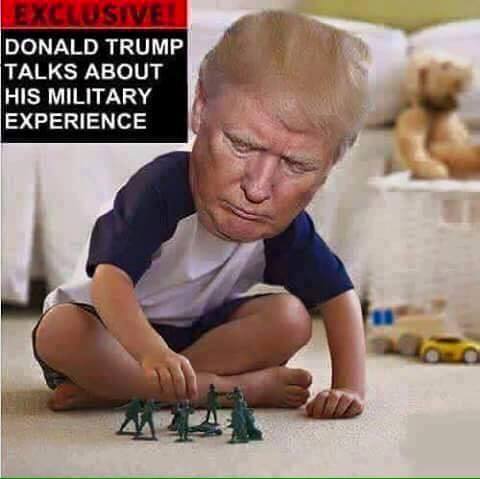
In a longer article for TomDispatch.com, I recently wrote about Donald Trump’s team of generals for national defense and homeland security. Trump wants four senior retired generals, two from the Army and two from the Marine Corps, to serve as his senior civilian advisers in matters of defense and security.

Here’s the point: You simply can’t have civilian control of the military when you appoint senior generals to these positions.

I’m astonished more Americans aren’t outraged at this. It’s a sign of how much militarism has gripped our nation and government, as well as the sweep and scope of the national security state.

I was reading Samuel Hynes’ excellent book, The Soldiers’ Tale: Bearing Witness to Modern War, and came across two passages that resonated with me. In talking about war as a culture, Hynes notes that “Military traditions, values, and patterns of behavior penetrate every aspect of army [and Marine Corps] life and make the most ordinary acts and feelings different.”

The generals Trump is hiring are all military careerists, men whose “traditions, values, and patterns of behavior” are steeped in the ways of the Army and Marine Corps, affecting even “the most ordinary acts and feelings.” Their behavior, their commitments, their loyalties, their world views, are the antithesis to civilian culture and to the ethos of democracy. (For example, General James Mattis, Trump’s selection as Secretary of Defense, is most often described as a “warrior-monk,” a man with a Spartan-like dedication to war.  But would Athens have anointed a Spartan, even as its minister of war?)

Again, the point is not to attack the military. It’s that the U.S. government already has plenty of generals in charge, wielding enormous authority. Trump’s decision to add yet another layer of military authority to his government makes it less of a democracy and more of a junta.

A second point from Hynes. He notes how most citizen-soldiers in America’s military past were not war-lovers, but that a few were, notably General George S. Patton. In the same breath, Hynes notes that dictators like Hitler and Mussolini “loved war.”

Which American general does Trump profess to admire the most? George S. Patton. And who among his generals most resembles Patton as a “real” warrior? According to Trump, it’s General Mattis.

Again, the point is not to attack the military, but rather to note the U.S. national security state already has plenty of warriors and warfighters in charge. Putting an alleged Patton-clone in charge of the Pentagon represents an abrogation of two centuries of American tradition that insisted on civilian supremacy over the military.

Given his inflammatory tweets about nuclear arms races with their “bring it on” mentality, Trump has all the makings of tinpot provocateur, an unstable military poseur who likes to speak loudly while swinging a nuclear-tipped stick. Will Trump’s generals, his Pattons and MacArthurs, serve as a check to his provocations and his posturings? It doesn’t seem likely.

Congress should reject Trump’s choices for Secretary of Defense (Mattis) and Homeland Security (Kelly). Not because these retired generals are bad men, but because they are the wrong kind of people. If you want civilian control of the military (and don’t we still want that?), you need to hire true civilians. Men and women whose identities haven’t been forged in armories. Independent thinkers and patriots with some history of dissent.

How about someone like Daniel Ellsberg for Secretary of Defense? And, since global warming is a huge threat to the U.S., how about Bill McKibben for Homeland Security?

After all, whether they’re in or out of uniform, the U.S. government already has plenty of generals.

The Vietnam War, the Pentagon Papers, and Lying

Arendt
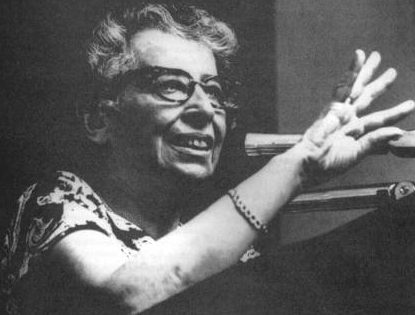
Hannah Arendt (Arendt Center at Bard College)

W.J. Astore

In November 1971, the political philosopher Hannah Arendt published “Lying in Politics: Reflections on the Pentagon Papers” in the New York Review of Books.  Earlier that year, Daniel Ellsberg had shared those highly classified government papers with the U.S. media.  They revealed a persistent and systematic pattern of lying and deception by the government about U.S. progress in the Vietnam War.  By undermining the people’s trust in government, lies and deception were destabilizing democracy in America, Arendt said.  Furthermore, America was witnessing two new and related categories of lying.  The first was lying as public relations, the creation and distribution of images substituting for facts and premised in human manipulability (a Madison Avenue approach to war and foreign policy).  The second was lying tied to a country’s reputation as embraced by professional “problem-solvers” as the basis for political action.  Both categories of lying constituted a crisis to the republic.

Widespread lying during the Vietnam War, Arendt explained, had not been aimed at the enemy, as lies often are in war.  Rather, governmental lying had targeted Americans.  The enemy could hardly be fooled, but most Americans could – at least for a time.  Throughout the war, Arendt noted, senior U.S. government and military officials made decisions about Vietnam with the firm knowledge they could not be carried out, a form of self-deception facilitated by constant goal-shifting.  As goals changed and chaos mounted, U.S. officials then became driven by concerns about saving face.  Image-making and image-saving took precedence over reality. The truth about Vietnam – that the U.S. was losing the war – hurt, therefore it was denied, especially in public discourse.

Official lies can fool even the officials themselves, a fact Pulitzer prize-winning reporter David Halberstam noted in his prescient book, “The Making of a Quagmire,” published in 1965.  With respect to the Kennedy Administration’s support of the corrupt Diem/Nhu government of South Vietnam, Halberstam wrote that:

Having failed to get [the Diem/Nhu regime to make needed] reforms, our officials said that these reforms were taking place; having failed to improve the demoralized state of the [South] Vietnamese Army, the Americans talked about a new enthusiasm in the Army; having failed to change the tactics of the [South Vietnamese] military, they talked about bold new tactics which were allegedly driving the Communists back.  For the essence of our policy was: There is no place else to go.

When reporters began to file stories which tended to show that the [U.S.] policy was not working, its authors, President Kennedy and General [Maxwell] Taylor, clung to it stubbornly.  At least part of the explanation for this apparent blindness is that although they knew things were going wrong, they felt that the alternatives were worse.

This “blindness,” a sustained willingness to deny harsh truths about the Vietnam War, persisted throughout the Kennedy, Johnson and Nixon administrations.  U.S. leaders continued to package and sell a losing effort as a winning product. It helped, in Arendt’s words, that U.S. officials had “a truly amazing and entirely honest ignorance of the historically pertinent background” when it came to Vietnam.  Their ignorance was “honest” in the sense they did not believe facts were all that important to success.  What was needed, U.S. officials concluded, were not incontestable facts but the right premises, hypotheses, and theories (such as the infamous Domino Theory) to fit Vietnam within prevailing Cold War orthodoxies.  Overwhelming applications of U.S. military power would serve to actuate these premises, facts be damned.

Upon taking power in 1969, the Nixon Administration, which had promised a quick and honorable end to the war, continued the lies of previous administrations.  Even as Nixon and Henry Kissinger spoke publicly of peace with honor, they talked privately of a lost war.  To shift the blame for defeat, they cast about for scapegoats (as corroborated recently in the HBO documentary, “Nixon by Nixon: In His Own Words”).  Kissinger settled on South Vietnamese “incompetence” as the primary scapegoat.  He reassured Nixon that, after a “decent interval” between U.S. withdrawal and the inevitable South Vietnamese collapse, most Americans would come to see Vietnam as a regrettable (and forgettable) “backwater.”  Naturally, harsh facts such as these were ones Nixon and Kissinger refused to share with the American people.

For Hannah Arendt, truth as represented by verifiable facts is the chief stabilizing factor in politics.  Lacking truths held in common, action is compromised, judgment is flawed, reality is denied.  Deception feeds self-deception until politics is poisoned and collective action for the common good is disrupted.  Yet lies cannot be eliminated simply by moral outrage, Arendt noted.  Rather, truth must be fought for even as humility before truth must be cultivated.

The American people must fight for the truth: that is the lesson of Arendt’s essay.

Next Week: Part II: More Lies and Deception in the Iraq War of 2003

Henry Kissinger’s Big Stick: Bombing

Kissinger's foreign policy
Kissinger’s foreign policy

W.J. Astore

Greg Grandin has a new book on Henry Kissinger and a new article at TomDispatch.com.  Kissinger, writes Grandin, had an affinity (or perhaps an avidity) for power, especially air power, as a way of demonstrating his (and America’s) resolve.

Notes Grandin:

Henry Kissinger is, of course, not singularly responsible for the evolution of the U.S. national security state into a monstrosity. That state has had many administrators. But his example — especially his steadfast support for bombing as an instrument of “diplomacy” and his militarization of the Persian Gulf — has coursed through the decades, shedding a spectral light on the road that has brought us to a state of eternal war …

Kissinger was very hands-on. “Strike here in this area,” Sitton recalled Kissinger telling him, “or strike here in that area.” The bombing galvanized the national security adviser. The first raid occurred on March 18, 1969.K really excited,” Bob Haldeman, Nixon’s chief of staff, wrote in his diary. “He came beaming in [to the Oval Office] with the report.”

In fact, he would supervise every aspect of the bombing. As journalist Seymour Hersh later wrote, “When the military men presented a proposed bombing list, Kissinger would redesign the missions, shifting a dozen planes, perhaps, from one area to another, and altering the timing of the bombing runs… [He] seemed to enjoy playing the bombardier.” (That joy wouldn’t be limited to Cambodia. According to Washington Post reporters Bob Woodward and Carl Bernstein, when the bombing of North Vietnam finally started up again, Kissinger “expressed enthusiasm at the size of the bomb craters.”) A Pentagon report released in 1973 stated that “Henry A. Kissinger approved each of the 3,875 Cambodia bombing raids in 1969 and 1970” — the most secretive phase of the bombing — “as well as the methods for keeping them out of the newspapers.”

All told, between 1969 and 1973, the U.S. dropped half-a-million tons of bombs on Cambodia alone, killing at least 100,000 civilians. And don’t forgetLaos and both North and South Vietnam. “It’s wave after wave of planes. You see, they can’t see the B-52 and they dropped a million pounds of bombs,” Kissinger told Nixon after the April 1972 bombing of North Vietnam’s port city of Haiphong, as he tried to reassure the president that the strategy was working: “I bet you we will have had more planes over there in one day than Johnson had in a month… Each plane can carry about 10 times the load [a] World War II plane could carry.”

As the months passed, however, the bombing did nothing to force Hanoi to the bargaining table.  It did, on the other hand, help Kissinger in his interoffice rivalries. His sole source of power was Nixon, who was a bombing advocate. So Kissinger embraced his role as First Bombardier to show the tough-guy militarists the president had surrounded himself with that he was the “hawk of hawks.” And yet, in the end, even Nixon came to see that the bombing campaigns were a dead end. “K. We have had 10 years of total control of the air in Laos and V.Nam,” Nixon wrote him over a top-secret report on the efficacy of bombing, “The result = Zilch.” (This was in January 1972, three months before Kissinger assured Nixon that “wave after wave” of bombers would do the trick).

During those four-and a half years when the U.S. military dropped more than 6,000,000 tons of bombs on Southeast Asia, Kissinger revealed himself to be not a supreme political realist, but the planet’s supreme idealist.  He refused to quit when it came to a policy meant to bring about a world he believed heought to live in, one where he could, by the force of the material power of the U.S. military, bend poor peasant countries like Cambodia, Laos, and North Vietnam to his will — as opposed to the one he did live in, where bomb as he might he couldn’t force Hanoi to submit. As he put it at the time, “I refuse to believe that a little fourth-rate power like North Vietnam does not have a breaking point.”

In fact, that bombing campaign did have one striking effect: it destabilized Cambodia, provoking a 1970 coup that, in turn, provoked a 1970 American invasion, which only broadened the social base of the insurgency growing in the countryside, leading to escalating U.S. bombing runs that spread to nearly the whole country, devastating it and creating the conditions for the rise to power of the genocidal Khmer Rouge…

Bombing for Kissinger was a way to show he was tough within an inner circle around Nixon that put a premium on toughness. It was also a way to minimize casualties to Americans while demonstrating a total disregard for casualties among the peoples of Southeast Asia.

Kissinger the bombardier was seduced by the seemingly god-like potential of air power — the ability to strike from on high, to smite evil-doers and those who would thwart Kissinger’s designs.  Best of all, Kissinger never had to bloody his own hands. (Can you imagine Kissinger in a knife fight?  Of course not.  But you can imagine him gleefully gushing over bombing reports and bomb craters as bomber jets knifed through the sky.)

There’s a “Star Trek” episode in which Captain Kirk says, “Above all else, a god needs compassion.”  Kissinger the “air power god” had no compassion.  It was all about power.  The little people who refused to kowtow to him — the Vietnamese, the Cambodians, the Chileans, and so on — these people were simply abstractions for Kissinger.  Put differently, they were pawns on the geopolitical chessboard, to be sacrificed at will by self-styled grandmasters like Kissinger.

In his book “Secrets,” Daniel Ellsberg captured Kissinger’s blithe disregard for the lives of others in a probing question about Vietnamization.  Was it moral, Ellsberg asked, to turn the war over to the South Vietnamese, knowing they were going to incur high casualties while fighting North Vietnam, even as American troops withdrew?  Kissinger had no answer, one senses because the morality of his policies didn’t much matter to him.  The goal was to save America’s “face” in Vietnam; for Kissinger the fates of the peoples of Southeast Asia paled in comparison to the importance of American prestige.

In his deliberately ponderous Germanic accent, Kissinger spoke softly as he wielded the big stick of American bombing. It didn’t work then, nor is it working today for those who still worship at the altar of Kissinger’s Realpolitik.