The Real Evil Empire?

Serving In (or Thinking About) the U.S. Military for 40 Years

BILL ASTORE

Below is my latest article for TomDispatch.com. Why do I write these articles? I started in 2007, this is 2025, and after 112 articles, nearly all of them calling for America to walk a far less militaristic path, militarism and authoritarianism continue to sink their roots deeper into our culture. Talk about fighting a losing war!

I suppose I write them to preserve my sanity—they’re my effort to make sense of what’s happening around me. But I also write them in the hope that my words might matter, that they might, just might, make a small difference, shifting America away from incessant warfare and colossal military spending. I haven’t given up hope, even as military budgets soar to a trillion dollars and above.

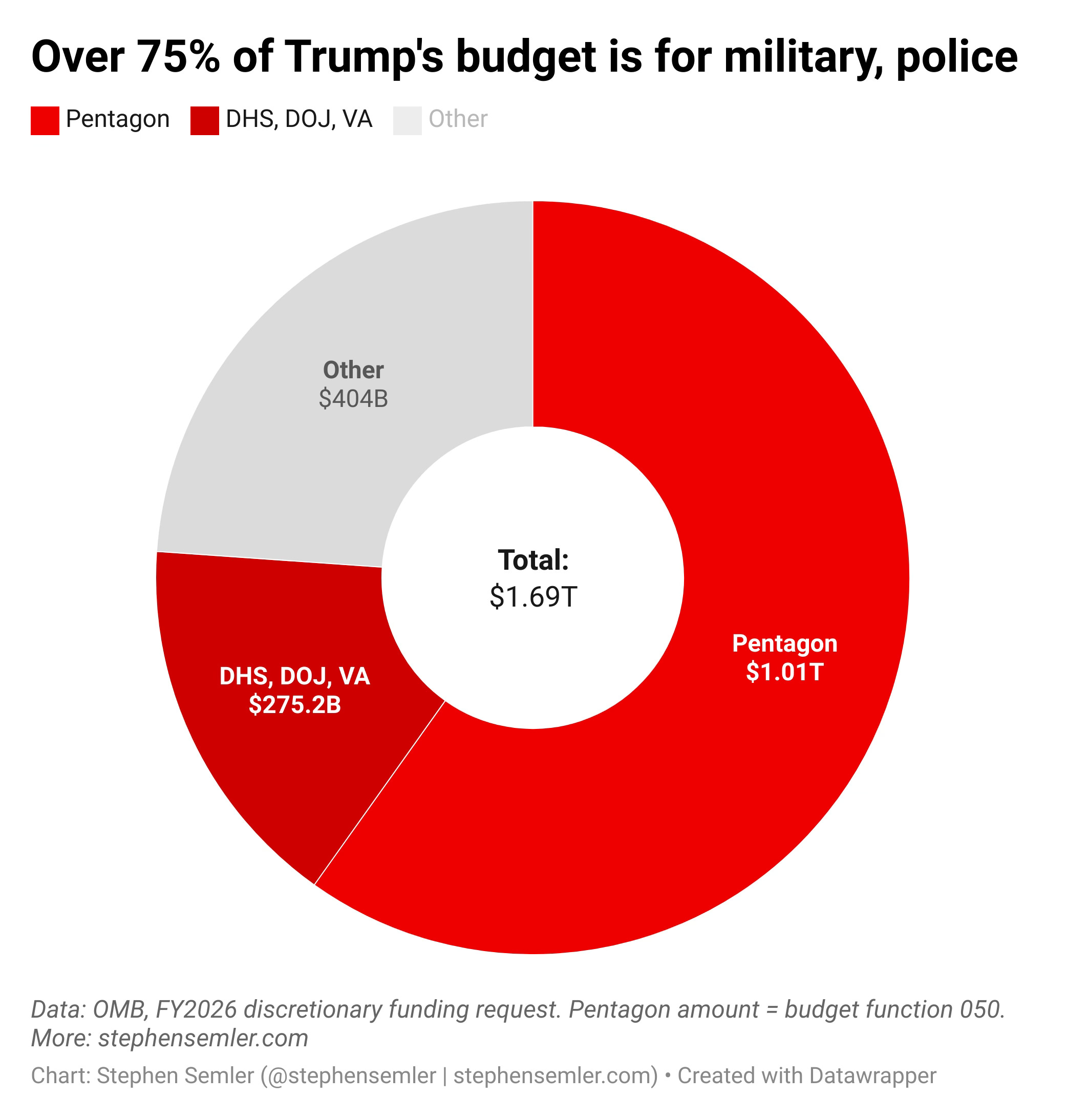
Speaking of which: Here’s an eye-opening chart from Stephen Semler on Trump’s FY2026 budget for America. Sure seems like we’re the Empire in “Star Wars,” doesn’t it?
Anyway, here’s my latest article for TomDispatch:

Forty years ago this month, I was commissioned a second lieutenant in the U.S. Air Force. I would be part of America’s all-volunteer force (AVF) for 20 years, hitting my marks and retiring as a lieutenant colonel in 2005. In my two decades of service, I met a lot of fine and dedicated officers, enlisted members, and civilians. I worked with the Army, Navy, and Marine Corps as well, and met officers and cadets from countries like Great Britain, Germany, Pakistan, Poland, and Saudi Arabia. I managed not to get shot at or kill anyone. Strangely enough, in other words, my military service was peaceful.

Don’t get me wrong: I was a card-carrying member of America’s military-industrial complex. I’m under no illusions about what a military exists for, nor should you be. As an historian, having read military history for 50 years of my life and having taught it as well at the Air Force Academy and the Naval Postgraduate School, I know something of what war is all about, even if I haven’t experienced the chaos, the mayhem, the violence, or the atrocity of war directly.

Military service is about being prepared to kill. I was neither a trigger-puller nor a bomb-dropper. Nonetheless, I was part of a service that paradoxically preaches peace through superior firepower. The U.S. military and, of course, our government leaders, have had a misplaced — indeed, irrational — faith in the power of bullets and bombs to solve or resolve the most intractable of problems. Vietnam is going communist in 1965? Bomb it to hell and back. Afghanistan supports terrorism in 2001? Bomb it wildly. Iraq has weapons of mass destruction in 2003? Bomb it, too (even though it had no WMD). The Houthis in Yemen have the temerity to protest and strike out in relation to Israel’s atrocities in Gaza in 2025? Bomb them to hell and back.

Sadly, “bomb it” is this country’s go-to option, the one that’s always on the table, the one our leaders often reach for first. America’s “best and brightest,” whether in the Vietnam era or now, have a powerful yen for destruction or, as the saying went in that long-gone era, “It became necessary to destroy the town to save it.” Judging them by their acts, our leaders indeed have long appeared to believe that all too many villages, towns, cities, and countries needed to be destroyed in order to save them.

My own Orwellian turn of phrase for such mania is: destruction is construction. In this country, an all-too-offensive military is sold as a defensive one, hence, of course, the rebranding of the Department of War as the Department of Defense. An imperial military is sold as so many freedom-fighters and -bringers. We have the mega-weapons and the urge to dominate of Darth Vader and yet, miraculously enough, we continue to believe that we’re Luke Skywalker.

This is just one of the many paradoxes and contradictions contained within the U.S. military and indeed my own life. Perhaps they’re worth teasing out and exploring, as I reminisce about being commissioned at the ripe old age of 22 in 1985 — a long time ago in a country far, far away.

The Evil Empire

When I went on active duty in 1985, the country that constituted the Evil Empire on this planet wasn’t in doubt. As President Ronald Reagan said then, it was the Soviet Union — authoritarian, militaristic, domineering, and decidedly untrustworthy. Forty years later, who, exactly, is the evil empire? Is it Vladimir Putin’s Russia with its invasion of Ukraine three years ago? The Biden administration surely thought so; the Trump administration isn’t so sure. Speaking of Trump (and how can I not?), isn’t it correct to say that the U.S. is increasingly authoritarian, domineering, militaristic, and decidedly untrustworthy? Which country has roughly 800 military bases globally? Which country’s leader openly boasts of trillion-dollar war budgets and dreams of the annexation of Canada and Greenland? It’s not Russia, of course, nor is it China.

Back when I first put on a uniform, there was thankfully no Department of Homeland Security, even as the Reagan administration began to trust (but verify!) the Soviets in negotiations to reduce our mutual nuclear stockpiles. Interestingly, 1985 witnessed an aging Republican president, Reagan, working with his Soviet peer, even as he dreamed of creating a “space shield” (SDI, the strategic defense initiative) to protect America from nuclear attack. In 2025, we have an aging Republican president, Donald Trump, negotiating with Putin even as he floats the idea of a “Golden Dome” to shield America from nukes. (Republicans in Congress already seek $27 billion for that “dome,” so that “golden” moniker is weirdly appropriate and, given the history of cost overruns on American weaponry, you know that would be just the starting point of its soaring projected cost.)
Buy the Book

When the Soviet Union collapsed in 1991, fears of a third world war that would lead to a nuclear exchange (as caught in books of the time like Tom Clancy’s popular novel Red Storm Rising) abated. And for a brief shining moment, the U.S. military reigned supreme globally, pulverizing the junior varsity mirror image of the Soviet military in Iraq with Desert Storm in 1991. We had kicked the Vietnam Syndrome once and for all, President George H.W. Bush exulted. It was high time for some genuine peace dividends, or so it seemed.

The real problem was that that seemingly instantaneous success against Saddam Hussein’s much-overrated Iraqi military reignited the real Vietnam Syndrome, which was Washington’s overconfidence in military force as the way to secure dominance, while allegedly strengthening democracy not just here in America but globally. Hubris led to the expansion of NATO to Russia’s borders; hubris led to unipolar dreams of total dominance everywhere; hubris meant that America could somehow have the most moral as well as lethal military in the world; hubris meant that one need never concern oneself about potential blowback from allying with Osama bin Laden in Afghanistan or the risk of provoking Russian aggression as NATO floated Ukraine and Georgia as future members of an alliance designed to keep Russia down.

It was the end of history (so it was said) and American-style democracy had prevailed.

Even so, militarily, this country did anything but demobilize. Under President Bill Clinton in the 1990s, there was some budgetary trimming, but military Keynesianism remained a thing, as did the military-industrial-congressional complex. Clinton managed a rare balanced budget due to domestic spending cuts and welfare reform; his cuts to military spending, however, were modest indeed. Tragically, under him, America would not become “a normal country in normal times,” as former U.N. Ambassador Jeanne Kirkpatrick once dreamed. It would remain an empire — and an increasingly hungry one at that.

In that vein, senior civilians like Secretary of State Madeleine Albright began to wonder why this country had such a superb military if we weren’t prepared to use it to boss others around. Never mind concerns about the constitutionality of employing U.S. troops in conflicts without a congressional declaration of war. (How unnecessary! How old-fashioned!) It was time to unapologetically rule the world.

The calamitous events of 9/11 changed nothing except the impetus to punish those who’d challenged our illusions. Those same events also changed everything as America’s leaders decided it was then the moment to double down on empire, to become even more authoritarian (the Patriot Act, torture, and the like), to go openly to “the dark side,” to lash out in the only way they knew how — more bombing (Afghanistan, Iraq), followed by invasions and “surges” — then, wash, rinse, repeat.

So, had we really beaten the Vietnam Syndrome in the triumphant year of 1991? Of course not. A decade later, after 9/11, we met the enemy, and once again it was our unrepresentative government spoiling for war, no matter how ill-conceived and ill-advised — because war pays, because war is “presidential,” because America’s leaders believe that the true “power of its example” is example after example of its power, especially bombs bursting in air.

The “All-Volunteer” Force Isn’t What It Seems

Speaking as a veteran and a military historian, I believe America’s all-volunteer force has lost its way. Today’s military members — unlike those of the “greatest generation” of World War II fame — are no longer citizen-soldiers. Today’s “volunteers” have surrendered to the rhetoric of being “warriors” and “warfighters.” They take their identity from fighting wars or preparing for the same, putting aside their oath to support and defend the Constitution. They forget (or were never taught) that they must be citizens first, soldiers second. They have, in truth, come to embrace a warrior mystique that is far more consistent with authoritarian regimes. They’ve come to think of themselves — proudly so — as a breed apart.

Far too often in this America, an affinitive patriotism has been replaced by a rabid nationalism. Consider that Christocentric “America First” ideals are now openly promoted by the civilian commander-in-chief, no matter that they remain antithetical to the Constitution and corrosive to democracy. The new “affirmative action” openly affirms faith in Christ and trust in Trump (leavened with lots of bombs and missiles against nonbelievers).

Citizen-soldiers of my father’s generation, by way of contrast, thought for themselves. They chafed against military authority, confronting it when it seemed foolish, wasteful, or unlawful. They largely demobilized themselves in the aftermath of World War II. But warriors don’t think. They follow orders. They drop bombs on target. They make the war machine run on time.

Americans, when they’re not overwhelmed by their efforts to simply make ends meet, have largely washed their hands of whatever that warrior-military does in their name. They know little about wars fought supposedly to protect them and care even less. Why should they care? They’re not asked to weigh in. They’re not even asked to sacrifice (other than to pay taxes and keep their mouths shut).

Too many people in America, it seems to me, are now playing a perilous game of make-believe. We make-believe that America’s wars are authorized when they clearly are not. For example, who, other than Donald Trump (and Joe Biden before him), gave the U.S. military the right to bomb Yemen?

We make-believe all our troops are volunteers. We make-believe we care about those “volunteers.” Sometimes, some of us even make-believe we care about those wars being waged in places and countries most Americans would be hard-pressed to find on a map. How confident are you that all too many Americans could even point to the right hemisphere to find Syria or Yemen or past war zones like Vietnam, Afghanistan, and Iraq?

War isn’t even that good at teaching Americans geography anymore!

What Is To Be Done?

If you accept that there’s a kernel of truth to what I’ve written so far, and that there’s definitely something wrong that should be fixed, the question remains: What is to be done?

Some concrete actions immediately demand our attention.

*Any ongoing wars, including “overseas contingency operations” and the like, must be stopped immediately unless Congress formally issues a declaration of war as required by the Constitution. No more nonsense about MOOTW, or “military operations other than war.” There is war or there is peace. Period. Want to bomb Yemen? First, declare war on Yemen through Congress.

*Wars, assuming they are supported by Congressional declarations, must be paid for with taxes raised above all from those Americans who benefit most handsomely from fighting them. There shall be no deficit spending for war.

*Americans are used to “sin” taxes for purchases like tobacco and alcohol. So, isn’t it time for a new “sin” tax related to profiteering from war, especially by the corporations that make the distinctly overpriced weaponry without which such wars couldn’t be waged?

To end wars and weaken militarism in America, we must render it unprofitable. As long as powerful forces continue to profit so handsomely from going to war — even as “volunteer” troops are told to aspire to be “warriors,” born and trained to kill — this violent madness in America will persist, if not expand.

Look, the 22-year-old version of me thought he knew who the evil empire was. He thought he was one of the good guys. He thought his country and his military stood for something worthy, even for “greatness” of a sort. Sure, he was naïve. Perhaps he was just another wet-behind-the-ears factotum of empire. But he took his oath to the Constitution seriously and looked to a brighter day when that military would serve only as a deterrent in a world largely at peace.

The soon-to-be-62-year-old me is no longer so naïve and, these days, none too sure who’s evil and who isn’t. He knows his country is on the wrong path, that the bloody path of bullets and bombs (and profiting from the same) is always perilous for any freedom-loving people to travel on.

Somehow, America needs to be put back on the freedom trail that inspires and empowers citizens rather than wannabe warriors brandishing weapons galore. Somehow, we need to aspire again to be a nation of laws. (Can we agree that due process is better than no process?) Somehow, we need to dream of being a nation where right makes might, one that knows that destruction is not construction, one that exchanges bullets and bombs for ballots and beauty.

How else are we to become America the Beautiful?

Copyright 2025 William J. Astore

“Generation Warfighter” Needs to End

W.J. Astore

Empty Boasts of Having the “World’s Best” Military Hide Rot, Waste, and Stupidity

Sixteen years ago, I made a plea to my fellow citizens to banish the word “warfighter” from our vocabulary. I asked that we stop referring to the U.S. military as the “world’s best,” an empty boast then and, after twin disasters in Iraq and Afghanistan, an emptier one today. (If something can indeed be “emptier,” it’s certainly bellicose boasts of alleged military brilliance.) Today’s military is overstretched, busy guaranteeing Israel’s security as the Israeli Defense Forces demolish and depopulate Gaza. Facing recruiting shortfalls, open-ended imperial commitments across the globe, and fears of hostilities with Russia, China, Iran, or an almost unimaginable and certainly unbeatable combination of the three, the U.S. military faces grim times.  If leaders like President Biden truly want to protect “our” troops, they should look not to God but in the mirror. They should pursue peace through diplomacy while downsizing an unsustainable empire. Isn’t it finally time for “Generation Warfighter” to come to an end before the U.S. military is utterly hollowed out — and America with it?

Having the “Best Military” Is Not Always a Good Thing 
Reclaiming Our Citizen-Soldier Heritage 

By William J. Astore

[Originally posted at TomDispatch in July of 2008]

When did American troops become “warfighters” — members of “Generation Kill” — instead of citizen-soldiers? And when did we become so proud of declaring our military to be “the world’s best”? These are neither frivolous nor rhetorical questions. Open up any national defense publication today and you can’t miss the ads from defense contractors, all eagerly touting the ways they “serve” America’s “warfighters.” Listen to the politicians, and you’ll hear the obligatory incantation about our military being “the world’s best.”

All this is, by now, so often repeated — so eagerly accepted — that few of us seem to recall how against the American grain it really is. If anything — and I saw this in studying German military history — it’s far more in keeping with the bellicose traditions and bumptious rhetoric of Imperial Germany under Kaiser Wilhelm II than of an American republic that began its march to independence with patriotic Minutemen in revolt against King George.

So consider this a modest proposal from a retired citizen-airman: A small but meaningful act against the creeping militarism of the Bush years would be to collectively repudiate our “world’s best warfighter” rhetoric and re-embrace instead a tradition of reluctant but resolute citizen-soldiers.

Becoming Warfighters

I first noticed the term “warfighter” in 2002. Like many a field-grade staff officer, I spent a lot of time crafting PowerPoint briefings, trying to sell senior officers and the Pentagon on my particular unit’s importance to the President’s new Global War on Terrorism. The more briefings I saw, the more often I came across references to “serving the warfighter.” It was, I suppose, an obvious selling point, once we were at war in Afghanistan and gearing up for “regime-change” in Iraq. And I was probably typical in that I, too, grabbed the term for my briefings. After all, who wants to be left behind when it comes to supporting the troops “at the pointy end of the spear” (to borrow another military trope)?

But I wasn’t comfortable with the term then, and today it tastes bitter in my mouth. Until recent times, the American military was justly proud of being a force of citizen-soldiers. It didn’t matter whether you were talking about those famed Revolutionary War Minutemen, courageous Civil War volunteers, or the “Greatest Generation” conscripts of World War II. After all, Americans had a long tradition of being distrustful of the very idea of a large, permanent army, as well as of giving potentially disruptive authority to generals.

Our tradition of citizen-soldiery was (and could still be) one of the great strengths of this country. Let me give you two examples of such citizen-soldiers, well known within military circles because they wrote especially powerful memoirs. Eugene B. Sledge served in the U.S. Marines during World War II, surviving two unimaginably brutal campaigns on the islands of Peleliu and Okinawa. His memoir With the Old Breed is arguably the best account of ground warfare in the Pacific. After three years of selfless, heroic service to his country, Sledge gladly returned to civilian life, eventually becoming a professor of biology. His conclusion — that “war is brutish, inglorious, and a terrible waste” — is one seconded by many a combat veteran.

Richard (Dick) Winters is better known because his exploits were captured in the HBO series Band of Brothers. He rose from platoon commander to battalion commander, serving in the elite 101st Airborne Division during World War II. A hero beloved by his men, Winters wanted nothing more than to quit the military and return to the civilian world. After the war, he lived a quiet life as a businessman in Pennsylvania, rarely mentioning his service and refusing to use his military rank for personal gratification. In Beyond Band of Brothers, he recounts both his service and his ideas on leadership. It’s a book to put in the hands of any young American who wishes to understand the noble ideas of service and sacrifice.

Sledge and Winters were regular guys who answered their country’s call. What comes across in their memoirs, as well as in the many letters I’ve read from World War II soldiers, was the desire of the average dogface to win the war, return home, hang up the uniform, and never again fire a shot in anger. These men were war-enders, not warfighters. Indeed, they would’ve been sickened by the very idea of being “warfighters.”

The term “warfighter” — a combination, I suppose, of “warrior” and “war fighting” — suggests a person who lives for war, who spoils for a fight. Certainly, the United States has fought its share of ruthless wars. But traditionally our soldiers have thought of themselves as civilians first, soldiers second. Equally as important, the American people thought of their troops that way.

Why are we now, with so little debate, casting aside an ethos that served us well for two centuries for one that straightforwardly embraces war and killing? Possibly because we’ve invented a distinctly American product: sanitized militarism. I bumped into it last week at a most unlikely place.

Visiting Gettysburg

Last week, I finally made it to Gettysburg, site of the great three-day battle between Union and Confederate forces in July 1863 that ended with the defeat of General Robert E. Lee’s army. Walking the battlefield was a sobering experience. I found myself on Little Round Top at 5:00 PM, just about the time of day that Union generals rushed men to reinforce the hill against a determined Confederate assault at the close of the battle’s second day. Earlier, I was at the Angle, just when, almost a century and a half ago, Pickett’s Charge failed to pierce the Union center, sealing Lee’s fate on the third day.

The Devil’s Den at Gettysburg

As these events played through my mind, I marveled that I had the battlefield largely to myself. Not that I was alone, mind you. Tour buses circled; cars, trucks, and SUVs whizzed about, but many, perhaps most, Americans who visit Gettysburg get surprisingly little tactile or sensory experience of its difficult topography. Yes, a few kids (and fewer adults) joined me in clambering about the huge, claustrophobically placed boulders of Devil’s Den, and I did spy a couple of guided tour groups on foot. But at the site of a bloodcurdling, distinctly septic nineteenth century battle, most visitors were clearly having a distinctly bloodless, even antiseptic, twenty-first century experience.

That day, I learned a lot about Gettysburg the battle — and maybe a little about us as well. As surely as my fellow tourists were staying in their cars and buses, we, as a people, are distancing ourselves from the realities of war. As we seal ourselves away from war’s horrors, we’re correspondingly finding it easier to speak of “warfighters” and to boast of having the world’s best military.

As we catch a glimpse, from the comfort of our living rooms, of a suicide bombing in Iraq or an American outpost attacked, then abandoned, in Afghanistan, are we not like those tourists in buses at Gettysburg, listening to sanitized recordings telling us what to see and think about the (expurgated) reality in front of us? And who dares challenge the “expert” commentary? Who dares turn off the canned talking heads and stare into the face of war?

But if we are to end our militaristic, yet curiously sanitized, “warfighter” moment, if we are ever to return to our citizen-soldier ethos and heritage, this is just what we must do.

After all, it’s later than you think. Our military now relies not only on a volunteer (if, at times, “stop-lossed”) Army, but increasingly on tens of thousands of hired guns, consultants, interrogators, interpreters, and other paramilitary camp followers. Private, for-profit “security contractors” — companies like Blackwater and Triple Canopy — give a disturbing new meaning to our “warfighter” terminology and the rhetoric that marches in step with it. As even casual students of history will recall, a clear sign of the Roman Empire’s decline was its shift from citizen-soldiers motivated by duty to mercenaries motivated by profit.

Replacing “warfighters” with true citizen-soldiers in the mold of Sledge and Winters would hardly be a solve-all solution at this late date, but it might be a step in the right direction — however unlikely it is to happen. For when we look at our troops, if we don’t see ourselves, then we see aliens or, worse yet, superiors (“warfighters”) in need of “support.” And that’s a clear sign of trouble for the republic.

Want to Be in the “World’s Best Military”? Ask German Veterans

It may come as a shock to some, but the American army wasn’t the best in the field in World War I, or World War II either. And thank heavens for that.

The distinction falls to the Kaiser Wilhelm’s army in 1914, and to Hitler’s Wehrmacht in 1941. Even toward the end of World War II, the American army was still often outmaneuvered and outclassed by its German foe. Because victory has a way of papering over faults and altering memories, few but professional historians today recall the many shortcomings of our military in both world wars.

But that’s precisely the point: The American military made mistakes because it was often ill-trained, rushed into combat too quickly, and handled by officers lacking in experience. Put simply, in both World Wars it lacked the tactical virtuosity of its German counterpart.

But here’s the question to ponder: At what price virtuosity? In World War I and World War II, the Germans were the best soldiers because they had trained and fought the most, because their societies were geared, mentally and in most other ways, for war, because they celebrated and valued feats of arms above all other contributions one could make to society and culture.

Being “the best soldiers” meant that senior German leaders — whether the Kaiser, Field Marshal Paul von Hindenburg, that Teutonic titan of World War I, or Hitler — always expected them to prevail. The mentality was: “We’re number one. How can we possibly lose unless we quit — or those [fill in your civilian quislings of choice] stab us in the back?”

If this mentality sounds increasingly familiar, it’s because it’s the one we ourselves have internalized in these last years. German warfighters and their leaders knew no limitations until it was too late for them to recover from ceaseless combat, imperial overstretch, and economic collapse.

Today, the U.S. military, and by extension American culture, is caught in a similar bind. After all, if we truly believe ours to be “the world’s best military” (and, judging by how often the claim is repeated in the echo chamber of our media, we evidently do), how can we possibly be losing in Iraq or Afghanistan? And, if the “impossible” somehow happens, how can our military be to blame? If our “warfighters” are indeed “the best,” someone else must have betrayed them — appeasing politicians, lily-livered liberals, duplicitous and weak-willed allies like the increasingly recalcitrant Iraqis, you name it.

Today, our military is arguably the world’s best. Certainly, it’s the world’s most powerful in its advanced armaments and its ability to destroy. But what does it say about our leaders that they are so taken with this form of power? And why exactly is it so good to be the “best” at this? Just ask a German military veteran — among the few who survived, that is — in a warrior-state that went berserk in a febrile quest for “full spectrum dominance.”

Fighting to End Wars

Words matter. Let’s start by banishing the word “warfighter,” and, while we’re at it, let’s toss out that “world’s best” boast as well. Boasting about military prowess is more Spartan than Athenian, more Second and Third Reich Germany than republican and democratic America.

Indeed, imagine, for a moment, a world in which the U.S. is no longer “number one” in military might (and, at the same time, no longer fighting endless wars in the Middle East and Central Asia). Would we then be weak and vulnerable? Or would we become stronger precisely because we stopped boasting about our ability as “warfighters” to dominate far from our shores and instead redirected our resources to developing alternative energy, bolstering our education system, reviving American industry, and focusing on other “soft power” alternatives to weapons and warriors? In other words, alternatives we can actually boast about with the pride of accomplishment.

Think about it: Must our military forever remain “second to none” for you to feel safe? Our national traditions suggest otherwise. In fact, if we no longer had the world’s strongest military, perhaps we would be more reluctant to tap its strength — and more hesitant to send our citizen-soldiers into harm’s way. And while we’re at it, perhaps we’d also learn to boast about a new kind of “warfighter” — not one who fights our wars, but one who fights against them.

Copyright 2008 William Astore.

Democracy and War

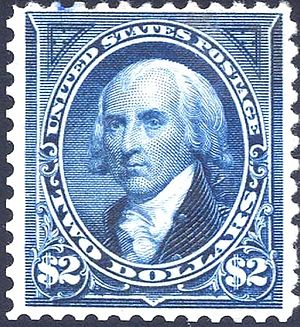
300px-James_Madison_1894_Issue-2$
James Madison knew that endless war is the harshest enemy of liberty

W.J. Astore

Democracies should be slow to start wars and quick to end them.  James Madison taught us that.  Why is America today the very opposite of this?

I thought of this as I read Danny Sjursen’s fine article at TomDispatch.com.  Sjursen, a retired Army major, is a strong critic of America’s forever wars.  He served in Iraq and Afghanistan and lost soldiers under his command.  He knows the bitter cost of war and expresses it well in his article, which I encourage you to read.  Here’s an excerpt:

Recently, my mother asked me what I thought my former students [West Point cadets] were now doing or would be doing after graduation. I was taken aback and didn’t quite know how to answer.

Wasting their time and their lives was, I suppose, what I wanted to say. But a more serious analysis, based on a survey of U.S. Army missions in 2019 and bolstered by my communications with peers still in the service, leaves me with an even more disturbing answer. A new generation of West Point educated officers, graduating a decade and a half after me, faces potential tours of duty in… hmm, Afghanistan, Iraq, or other countries involved in the never-ending American war on terror, missions that will not make this country any safer or lead to “victory” of any sort, no matter how defined.

Repetition.  Endless repetition.  That is the theme of America’s wars today.

Remember the movie “Groundhog Day,” with Bill Murray?  Murray’s character repeats the same day, over and over again.  He’s stuck in an infinite loop from which he can’t escape.  Much like America’s wars today, with one exception: Murray’s character actually learns some humility from the repetition.  He shows a capacity for growth and change.  And that’s how he escapes his loop.  He changes.  He grows.  The U.S. military’s leadership?  Not so much.

But I don’t just blame the senior leaders of the U.S. military.  They’re not that dumb.  It’s the system of greed-war they and we inhabit.  Why change endless war when certain powerful forces are endlessly profiting from it?  War, after all, is a racket, as General Smedley Butler knew.  It’s a racket that’s contrary to democracy; one that buttresses authoritarianism and even kleptocracy, since you can justify all kinds of theft in the cause of “keeping us safe” and “supporting our troops.”

Danny Sjursen, a true citizen-soldier, remembers that war is supposed to be waged in accordance with the Constitution and only to protect our country against enemies.  But being a citizen-soldier has gone out of style in today’s military.  Everyone is supposed to identify as a warrior/warfighter, which has the added benefit of suppressing thought about why we fight.

Eager to fight, slow to think, might be the new motto of America’s military.  Such a motto,  consistent with forever war, is inconsistent with democracy.

Citizen-Soldiers and Defending the Constitution: The Ideal versus the Reality

OLYMPUS DIGITAL CAMERA
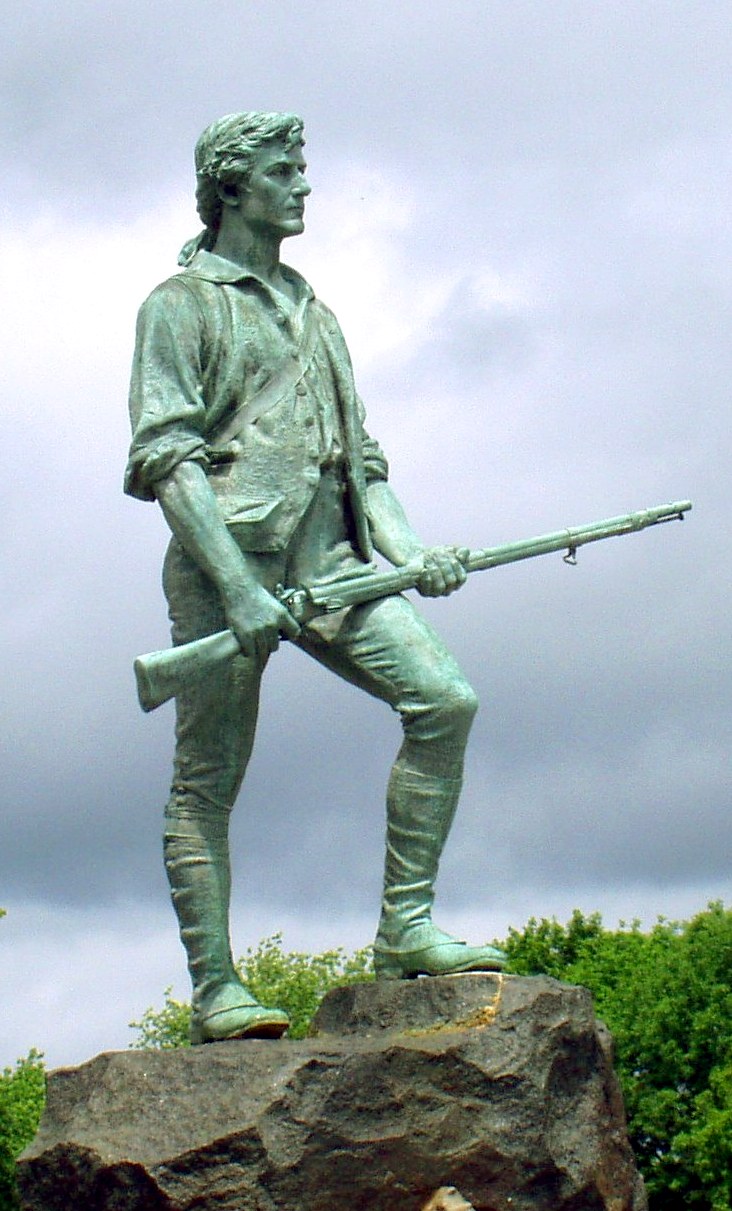
The Minuteman Ideal (Photo by Sean Kraft)

W.J. Astore

Ten years ago, I gave a talk on the ideal of citizen-soldiers and how and why America had drifted from that ideal.  As war looms on the horizon yet again, this time with Iran, we’d be well advised to ask critical questions about our military, such as why we idolize it, how it no longer reflects our country demographically, its reliance on for-profit mercenaries, and the generally mediocre record of its senior leaders.

My talk consisted of notes that I hope are clear enough, but if they aren’t, please ask me to elaborate and I will in the comments section.  Thanks.

 Today [2009] I want to discuss the ideal of the citizen-soldier and how I believe we have drifted from that ideal.

The Ideal: Dick Winters in Band of Brothers; E.B. Sledge in With the Old Breed; Jimmy Stewart.  Until recent times, the American military was justly proud of being a force of citizen-soldiers. It didn’t matter whether you were talking about those famed Revolutionary War Minutemen, courageous Civil War volunteers, or the “Greatest Generation” conscripts of World War II.

Americans have a long tradition of being distrustful of the very idea of a large, permanent army, as well as of giving potentially disruptive authority to generals.

How have we drifted from that ideal?  In six ways, I think:

  1. Burden-sharing and lack of class equity

Historian David M. Kennedy in October 2005: “No American is now obligated to military service, few will ever serve in uniform, even fewer will actually taste battle …. Americans with no risk whatsoever of exposure to military service have, in effect, hired some of the least advantaged of their fellow countrymen to do some of their most dangerous business while the majority goes on with their own affairs unbloodied and undistracted.”

Are we a true citizen-military if we call on only a portion of our citizens to make sacrifices?

All-Volunteer Military, or All-Recruited Military? Our military targets the working classes, the rural poor, young men (mostly men) who are out of work, or high school dropouts, for enlistments.  (Officer corps is recruited somewhat differently.)

With few exceptions, societal elites not targeted by recruiters.

Anecdote: NYT article by Kenneth Harbaugh on exclusion of ROTC from Ivy-League college campuses

“At Yale, which has supplied more than its share of senators and presidents, almost none of my former classmates or students ever noticed the absence of uniforms on campus. In a nation at war, this is a disgrace. But it also shows how dangerously out of touch the elites who shape our national policy have become with the men and women they send to war.

Toward the end of the semester, I took my class to West Point. None of my students had ever seen a military base, and only one had a friend his age in uniform.”

“Support Our Troops” – But who are our troops?  Why are they not drawn from across our class/demographic spectrum?

  1. Estrangement of Progressives and Growing Conservatism/Evangelicalism of the Military

If the operating equation is military = bad, are we not effectively excusing ourselves or our children from any obligation to serve — even any obligation simply to engage with the military? Indeed, are we even patting ourselves on the back for the wisdom of our non-choice and our non-participation? Rarely has a failure to sacrifice or even to engage come at a more self-ennobling price — or a more self-destructive one for progressive agendas.

Example: Evangelicalism at the Air Force Academy versus separation of church and state.

Is our professional military a society within our larger society? 

  1. Many “troops” are no longer U.S. military: They’re private contractors. Instead of citizen-soldiers, they’re (in some cases) non-citizen mercenaries and non-citizen contractors.

Blackwater (Xe), Triple Canopy, Dyncorp, KBR: there are more contractor personnel in Iraq than U.S. military, and many contractors are providing security and doing tasks that our military used to do, like KP, for a lot more money.

Profit incentive: privatizing military is like privatizing prisons.  You create a profit motive for extending military commitments, and perhaps wars as well.

In other words, citizen-soldiers like Sledge and Winters want to come home.  Private mercenaries/contractors want to stay, as long as they’re making good money.

  1. Cult of the warrior: Reference to American troops as “warfighters.” This is contrary to our American tradition of “Minutemen.”  It’s a disturbing change in terminology.

I first noticed the term “warfighter” in 2002. Like many a field-grade staff officer, I spent a lot of time crafting PowerPoint briefings, trying to sell senior officers and the Pentagon on my particular unit’s importance to the President’s new Global War on Terrorism. The more briefings I saw, the more often I came across references to “serving the warfighter.” It was, I suppose, an obvious selling point, once we were at war in Afghanistan and gearing up for “regime-change” in Iraq. And I was probably typical in that I, too, grabbed the term for my briefings. After all, who wants to be left behind when it comes to supporting the troops “at the pointy end of the spear” (to borrow another military trope)?

But I wasn’t comfortable with the term then, and today it tastes bitter in my mouth.

We must not be “warriors” – we must be citizen-soldiers.  And note how the word “citizen” comes first.

Aside:  Warriors may commit more atrocities precisely because they see themselves as different from, and superior to, civilians.

  1. Deference of civilians to military experts, instead of vice-versa. Why I wrote my first piece for TomDispatch.  Idea that President George W. Bush couldn’t make the final decision on the Surge in Iraq until we heard from General David Petraeus.

In a country founded on civilian control of the military, it’s disturbing indeed that, as a New York Times/CBS poll indicated recently (2007), Americans trust their generals three times as much as Congress and 13 times as much as the President.

Also, abdication of responsibility by U.S. Congress.  Our country is founded on civilian control of the military.  But Congress afraid of being charged with hurting or abandoning our troops.

Georges Clemenceau: “War is too important to be left to generals.”  Why?  “Can-do” spirit to our military, no matter how dumb the war.  And militaries seek military solutions.

So, “supporting our troops” must not mean putting blind faith in our military:

In “A Failure in Generalship,” which appeared in Armed Forces Journal in May 2007, Lieutenant Colonel Paul Yingling argues that, prior to the invasion of Iraq in 2003, our generals “refused to prepare the Army to fight unconventional wars” and thereafter failed to “provide Congress and the public with an accurate assessment of the conflict in Iraq.” Put bluntly, he accuses them of dereliction of duty. Bewailing a lack of accountability for such failures in the military itself, Yingling memorably concludes that “a private who loses a rifle suffers far greater consequences than a general who loses a war.”

  1. Oath of Office: Supporting the Constitution of the U.S. against all enemies, foreign and domestic. Oath of allegiance is to the Constitution and to the ideas and ideals we cherish as Americans.  But how are the “long wars” in Iraq and Afghanistan advancing these ideals?  Are they consistent with our defense and our ideas/ideals of citizenship?

Breaking News:  President Obama just decided to send another 17,000 American troops to Afghanistan.  Meanwhile, today in the NYT, U.S. generals are already predicting that 50K+ U.S. troops may need to stay in Afghanistan for the next five years.  In other words, this is not a temporary surge.  [How true! Ten years later, we’re still in Afghanistan with no end in sight.]

So, how do we reverse these trends and reassert our ideal of a citizen-military?

  1. Not with a draft, but perhaps with National Service (AmeriCorps, Green Corps, Peace Corps, Military).
  2. Renewed commitment by Progressives to engage with the military.  To understand the military, its rank structure, its ethos.
  3. Reduce/eliminate dependence on mercenaries/private contractors, even if it costs us more.
  4. Eliminate the “cult of the warrior.”  Replace warfighter rhetoric with citizen-soldier ideal.
  5. Deference to military experts for tactical/battlefield advice is sensible, but ultimately our military is commanded by the president and wars are authorized by the Congress, i.e. our elected representatives
  6. Oath of office: Every time we deploy troops, we must ask: How is this advancing our national ideals as embodied in our Constitution?  How are we defending ourselves?

Permit me to quote a passage from James Madison, the principal architect of the U.S. Constitution.  He noted in 1795 that:

“Of all the enemies of public liberty, war is perhaps the most to be dreaded, because it comprises and develops the germ of every other. War is the parent of armies. From these proceed debts and taxes. And armies, debts and taxes are the known instruments for bringing the many under the dominion of the few… [There is also an] inequality of fortunes, and the opportunities of fraud, growing out of a state of war, and … degeneracy of manners and of morals… No nation could preserve its freedom in the midst of continual warfare.”

And Madison’s idea of continual warfare = our military’s “Long War” = Forever War?  What is our exit strategy?  Do we even have one?

Thank you.

The U.S. Army’s New, Retro, MAGA Uniform

UNIFORMS-1-jumbo
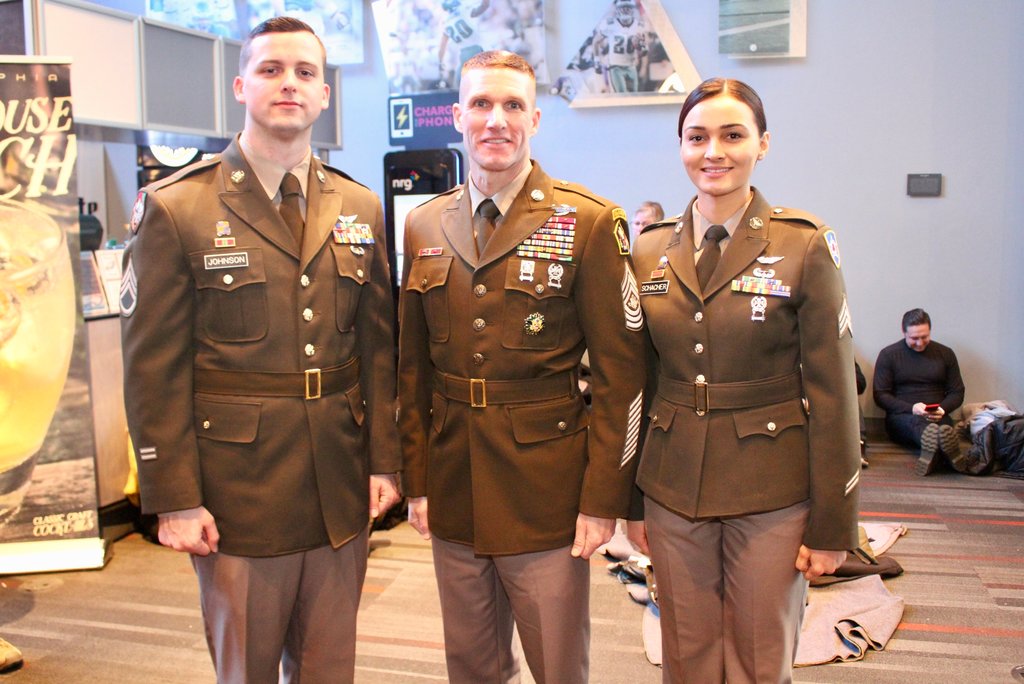
The Army’s new uniforms are a throwback to World War II.  Making the Army Great Again?

W.J. Astore

News that the Army is moving to a new, retro, uniform modeled on World War II-era designs got my military friends buzzing.  Not so much about the “new” (old) uniform, but all the badges, ribbons, tabs, and related baubles and doodads that adorn U.S. military uniforms today, a topic I’ve written about before at TomDispatch.com and here at BV.

First, the new uniform.  World War II was the last “great” war America truly won, so it’s hardly surprising the Army is reaching back to the era of the “greatest generation” and the “band of brothers.”  Why not tap nostalgia for that “good” war, when Americans banded together against the Nazis and the Japanese?  It’s also consistent with Trump’s message about “Making America Great Again”; we can even substitute “the Army” for “America” and keep MAGA.

For Trump, this mythical “great” America seems to center on the 1950s, whereas for the Army it’s WWII and the 1940s.  Still, these MAGA uniforms and hats seem to say the Army and America are currently not great, and that the path to greatness is a retrograde one, a return to the past.  (That return apparently does not include a revival of the draft and America’s citizen-soldier tradition.)

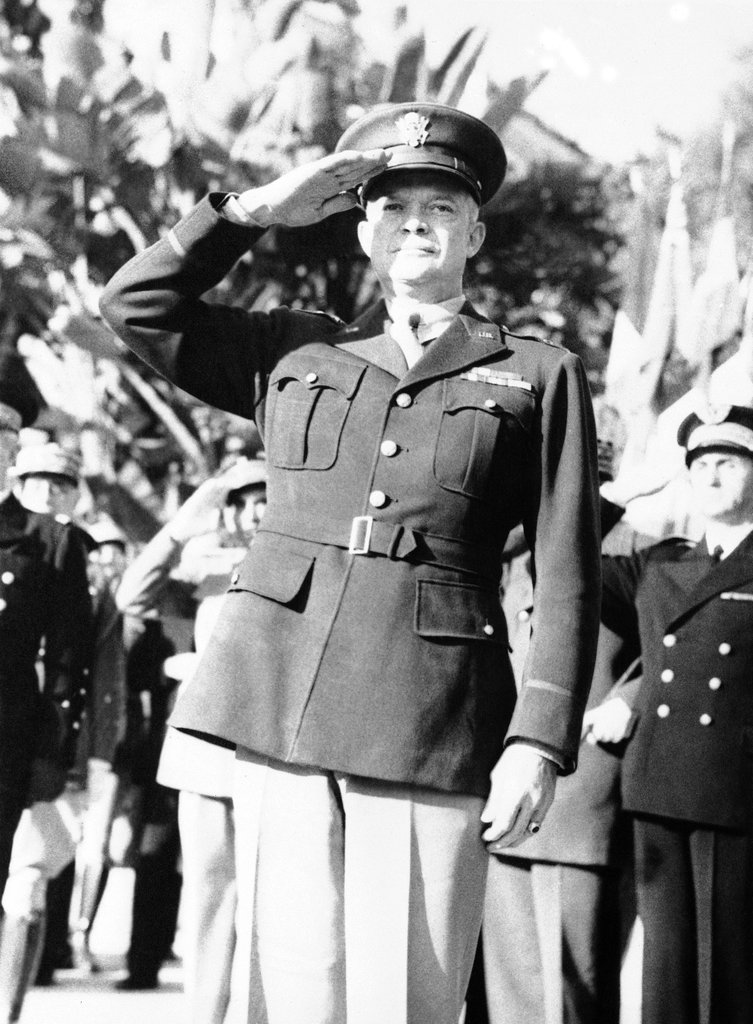
But it was an image of Dwight D. Eisenhower that got my military friends buzzing.  Ike led the invasion of D-Day and was the architect of victory in Europe as supreme allied commander, yet you’d never know it from his simple, almost unadorned, uniform.  Consider the image below of Ike that accompanied the story in the New York Times:

Ike
A victorious Ike returns a salute

As one of my military correspondents, a retired command sergeant major who fought in the infantry in Vietnam, wrote to me:

[Ike was] A man from a cow town in Kansas, Abilene, who was a lower rung grad at West Point and came back from WW I as a Major.  Twenty years later as a LTC enters WW II and comes back a Five Star General, one of only about five ever made and he has two, count them, two  tiny rows of ribbons, no hero badges, not even a bolo badge to show what a great marksman he is, no para wings, no ranger tab, no CIB/EIB and FIVE, COUNT THEM, FIVE STARS on his shoulders.  He also ran for, won, and was a pretty damned good [Republican president] for eight years.  The Generals we have had since, starting with Westy [William Westmoreland] were all losers although they all had badges, ribbons, medals, patches all over their sorry asses BUT no VK medals, no VVN medals, no Victory Medals from any damned place I can think of.  Well, maybe Grenada or Panama, or a bar fight in Columbus, GA.  Home of Ft Benning… Something to think about, eh?

All those “bells and whistles” on military uniforms today “are like Vanity License Plates for one’s car,” this same command sergeant major noted.  Speaking of vanity, a retired colonel told me there’s a company “that’ll miniaturize your ‘rack’ so you can wear your ribbons on your lapel—all of them—when you separate [from the military].  LOOK AT ME: I’M A HERO!”

One thing is certain: We have a ribbon- and badge-chasing military.  (General David Petraeus was the worst.)  People literally want to wear their “achievements” on their sleeve — or blouse — or jacket, even after they leave the military.  Military members chase these baubles.  They “achieve.”  But what about quieter achievements that you can’t wear?  How about integrity, honesty, commitment, fairness?  What about intelligence?  Dedication to the craft of arms that doesn’t involve getting a fancy badge like jump wings from France?

The Army’s retro-chic uniforms won’t be of any value if we keep valuing the wrong things.  A Boy Scout military that keeps chasing merit badges for the sake of promotion of self is a very bad thing, irrespective of uniform design.

Yet there’s another side to all this.  As my colonel-friend put it:

Here’s the real cost of this ribbon chasing.  There’s an enormous number of man-hours expended on writing and chasing the paperwork to award these doodads…  At a time when the military is allegedly overtaxed and burned out, why are they wasting so much effort on this nonsense?  Why are some units hiring editors to keep the decorations moving?  In survey after survey, AF pilots cited decorations and other administrative nonsense, not deployments, as the reason they don’t want to stay in.  But since generals groom and promote only those who think like them (having selected them when they were captains), nothing changes.  “You have to take care of your people,” they say, and if you listen to E-9s [the senior enlisted] people are happiest when they get doodads.

As another close military friend put it: “And don’t even get me started on the ridiculous number of ribbons and badges today.  A captain today will have as many ribbons as a circa-1944 two-star [general]. [In their new retro uniforms,] they’ll just look like extras in a war movie.”

In sum, a jury of my peers has come back with a verdict on the Army’s new retro uniform: Love the look, but can you please bring back as well the humble citizen-soldiers of Ike’s era, the ones who won wars without all the gratuitous self-promotion?

John McCain the “Warrior”

mccain
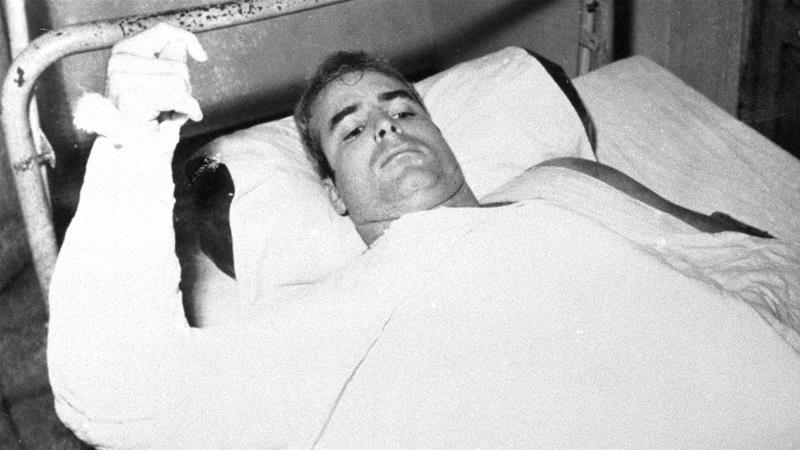
John McCain as a POW during the Vietnam war

W.J. Astore

I’ve been seeing a lot of headlines, and reading quite a few tributes, about John McCain.  A common word used to describe him is “warrior,” as in this op-ed at Al Jazeera of all places.  If you do a quick Google search with “John McCain” and “warrior” you’ll see what I mean.

I’m a firm believer in the citizen-soldier tradition.  Warrior-speak, I believe, is inappropriate to this tradition and to the ideals of a democracy.  “Warrior” should not be used loosely as a substitute for “fighter,” nor should it replace citizen-sailor, which is what John McCain was (or should have been).

Yes, John McCain came from a family of admirals.  He attended the U.S. Naval Academy.  He became a naval aviator.  He was shot down and became a prisoner of war.  He showed toughness and fortitude and endurance as a POW under torture.  But all this doesn’t (or shouldn’t) make him a “warrior.”  Rather, he was a U.S. Navy officer, a product of a citizen-sailor tradition.

It’s corrosive to our democracy as well as to our military when we use “warrior” as a term of high praise.  Many Americans apparently think “warrior” sounds cool and tough and manly, but there’s a thin line between “warrior” and “warmonger,” and both terms are corrosive to a country that claims it prefers peace to war.

In sum, it says something disturbing about our country and our culture when “warrior” has become the go-to term of ultimate praise.  By anointing McCain as a “warrior,” we’re not praising him: we’re wounding our country.

Ending America’s Cult of the Warrior-Hero

IMG_1656
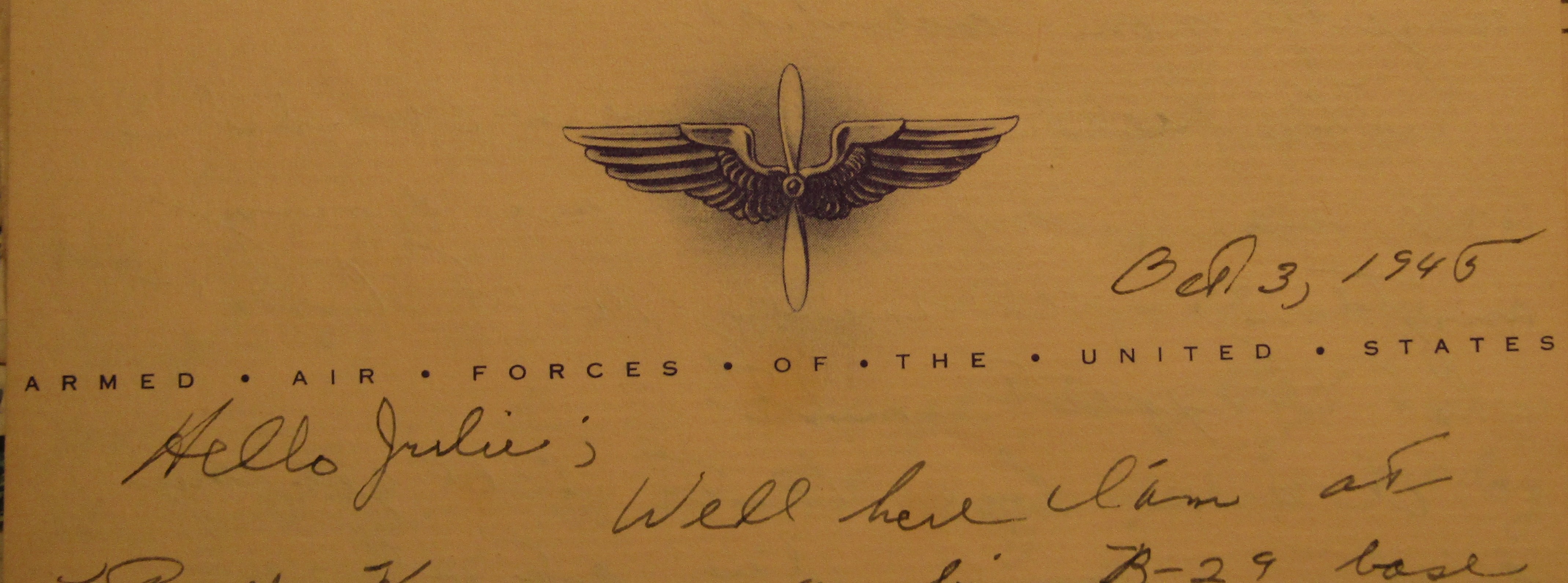
A letter to my dad from 1945

W.J. Astore

Every now and again I look over my dad’s letters from World War II.  He was attached to an armored headquarters company that didn’t go overseas, but he had friends who did serve in Europe during and after the Battle of the Bulge in late 1944.  Also, he had two brothers, one who served in Europe attached to a quartermaster (logistics) company in the Army, the other who served in the Pacific as a Marine.

Reading my dad’s letters and those from his friends and brothers, you get a sense of the costs of war.  They mention friends who’ve been killed or wounded in action; for example, a soldier who lost both his legs when his tank ran over a mine.  (His fellow soldiers took up a collection for him.)  They talk about strange things they’ve seen overseas, e.g. German buzz bombs or V-1 rockets, a crude version of today’s cruise missiles.  They look forward to furloughs and trips to cities such as Paris.  They talk about bad weather: cold, snow, mud.  They talk about women (my dad’s brother, Gino, met a Belgian girl that he wanted to marry, but it was not to be).  But perhaps most of all, they look forward to the war’s end and express a universal desire to ditch the military for civilian life.

All of my dad’s friends wanted to get out of the military and restart their civilian lives.  They didn’t want a military career — not surprising for draftees who thought of themselves as citizen-soldiers (emphasis on the citizen).  In their letters, they never refer to themselves as “warriors” or “warfighters” or “heroes,” as our society is wont to do today when talking about the troops.  War sucked, and they wanted no part of it.  One guy was happy, as he put it, that the Germans were getting the shit kicked out of them, and another guy was proud his armored unit had a “take no prisoners” approach to war, but this animus against the enemy was motivated by a desire to end the war as quickly as possible.

Reading these letters written by citizen-soldiers of the “greatest generation” reminds me of how much we’ve lost since the end of the Vietnam War and the rise of the “all volunteer” military.  Since the 9/11 attacks in particular, we’ve witnessed the rise of a warrior/warfighter ideal in the U.S. military, together with an ethos that celebrates all troops as “heroes” merely for the act of enlisting and putting on a uniform.  My dad and his friends would have scoffed at this ethos — this idolization of “warriors” and “heroes” — as being foreign to a citizen-soldier military.  Back then, the country that boasted most of warriors and heroes was not the USA: it was Nazi Germany.

Discarding the citizen-soldier ideal for a warrior ethos has been and remains a major flaw of America’s post-Vietnam military.  It has exacerbated America’s transition from a republic to an empire, even as America’s very own wannabe Roman emperor, Donald Trump, tweets while America burns.

Men (and women) of the greatest generation served proudly if reluctantly during World War II.  They fought to end the war as quickly as possible, and they succeeded.  America’s endless wars today and our nation’s rampant militarization dishonor them and their sacrifices.  If we wish to honor their service and sacrifice, we should bring our troops home, downsize our empire and our military budget, and end our wars.

America’s Surging Warrior Ethos

W.J. Astore

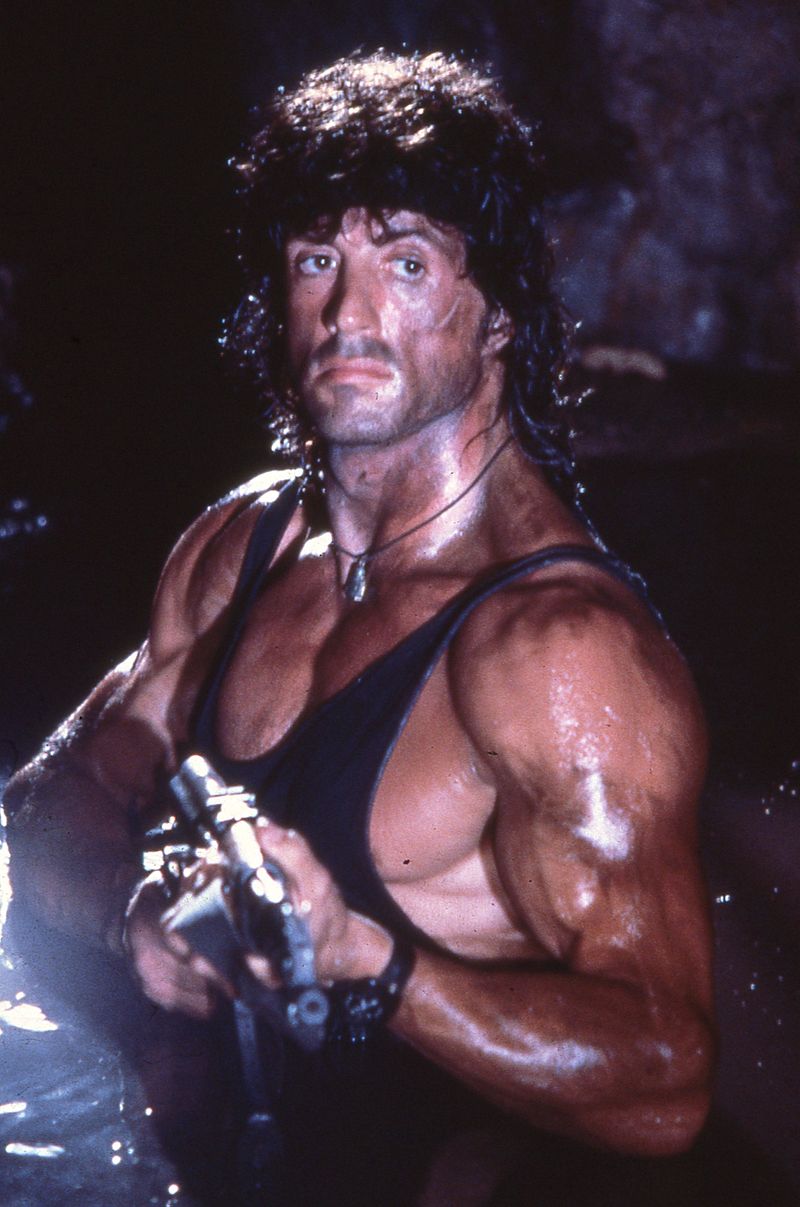
I’ve written a lot about America’s warrior ethos and how it represents a departure from a citizen-soldier ideal as embodied by men like George Washington and Major Dick Winters (of “Band of Brothers” fame).  This warrior ethos grew in the aftermath of defeat in Vietnam and the ending of the draft.  It gained impetus during the Reagan years and was symbolized in part by the development of fictional rogue symbols of warrior-toughness such as John Rambo.  Today’s U.S. military has various warrior codes and songs and so on, further reinforcing ideals of Spartan toughness.

John_Rambo
The Rambo Ideal: “Sir, Do We Get to Win This Time?” (Wiki)

My writings against this warrior hype have, on occasion, drawn fire from those who identify as warriors.  I’d like to share two examples.

Here is the first:

The day that we encourage our soldiers to be anything but warriors is the day that we start losing battles and wars. If we are controlled by citizens who are our ultimate leaders then it is up to them to handle the niceties of diplomacy and nation building.  But most of them don’t have the balls to get into the thick of things and try and convert the citizens of the place we are fighting to play at being nice children in the sand pile.  We had to dominate Japan to the nth degree to get them to surrender and so the same for Germany.  You academics never to cease to amaze me with your naïveté.

This reader cites World War II and America’s victory over Japan and Germany without mentioning the Greatest Generation’s embodiment of the citizen-soldier ideal and their rejection of Japanese and Nazi militarism.  Back then, America’s victory was interpreted as a triumph of democracy over authoritarian states like Japan and Germany.  While it’s true the Soviet Union played the crucial role in defeating Nazi Germany, the Soviets ultimately lost the Cold War, another “victory” by a U.S. military that didn’t self-identify as warriors.  Despite this history, this reader suggests that America’s recent military defeats are attributable to weak civilian leadership and a lack of warrior dominance.  He fails to notice how America’s new ethos of the warrior, inculcated over the last 30 years, has produced nothing close to victory in Iraq, Afghanistan, and elsewhere.

My second example comes from a U.S. Marine:

I watched the transition we made from life takers and widow makers to peace keepers and other terms that did us no good whatsoever.  Then, in 1987, along came a new Commandant, General Al Grey, who resurrected the warrior ethos in our Corps.

We were told, and accepted the fact, that the best way to win a war or battle was to kill the enemy in numbers that could not be sustained.  We did just that during Desert Storm.  I flew 67 combat missions in an F/A-18 and took great pride and satisfaction in killing as many Iraqis as I could so that when our infantry and other ground units pushed through the berms and other obstacles, they had a clear path to their objectives.

We need more emphasis on killing the enemy and maintaining a warrior ethos and less drivel from folks like you who think it’s some type of a debating match rather than combat we undertake when our nation goes to war.

Basically, this Marine argues that war is killing.  Kill enough of the enemy and you win.  Of course, winning by attrition and body count failed during the Vietnam War, but I’m guessing this Marine would argue that the U.S. military simply didn’t kill enough of the enemy there.

This Marine further sets up a straw man argument.  Nowhere did I write or even suggest that war is “some type of debating match.”  Nowhere did I write or even suggest that war doesn’t involve combat and killing.  But criticism of the warrior ideal is often caricatured in this way, making it easier to dismiss it as “naïve” or “drivel.”

The warrior ethos is surging in America today, and not just within the military.  Witness the U.S. media’s positive reaction to President Trump’s missile strikes on Syria or the use of “the mother of all bombs” against ISIS in Afghanistan.  Gushing media praise comes to presidents who let slip the “beautiful” missiles and “massive” bombs of war.

Two centuries ago, the rocket’s red glare, the bombs bursting in air, did so over an American fortress that was under attack on our soil.  They gave proof through the night that America’s citizen-soldiers were defending our country (our flag was still there).  Nowadays, our rocket’s red glare appears in Syrian skies, our bombs bursting do so in remote regions of Afghanistan, giving proof through the night that America’s warrior ethos is anywhere and everywhere, killing lots of foreign peoples in the name of “winning.”

Call me naïve, say I write drivel, but I don’t see this as a victory for our democracy, for our country, or even for our “warriors.”

Is the Idea of a Military Coup Hysterical?

cincinnatus_cincinnatorum
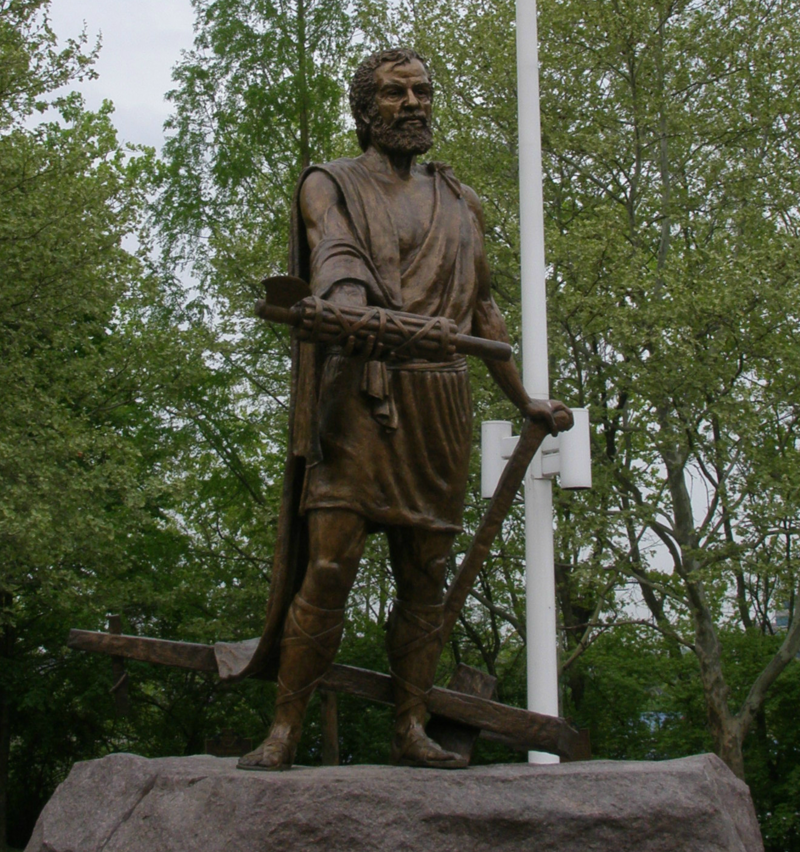
Unlike George Washington or Cincinnatus, today’s warrior-generals don’t return to the plough.  They cash-in at the trough of the military-industrial complex

W.J. Astore

The National Review labels the idea of a military coup in Trump’s America “hysterical.” Here’s David French criticizing my recent article at TomDispatch.com:

Here we go again — another article talking about how the retired generals in Trump’s cabinet, civilians who are nominated by a civilian and confirmed by a civilian senate, represent the erosion of the principle of civilian control over the military. But this time, there’s a hysterical twist. The nomination of James Mattis for secretary of defense and John Kelly for secretary of homeland security and the selection of Michael Flynn for national security adviser is worse than a real-life coup. No, really.

French goes on to say the following:

Lots of people read this nonsense. Lots of people believe this nonsense. I’ve been arguing for some time that the prime threat to our national unity isn’t action but reaction. Activists and pundits take normal politics (retired generals have a long history of serving this nation in civilian offices, beginning with George Washington) and respond with an overreaction that pushes their fellow citizens into believing that the sky is falling.

In my article for TomDispatch.com, I made the same point that retired generals have a long history of serving this nation, beginning with Washington.  But Washington was a special case, an American Cincinnatus, a citizen first, a soldier second.  As I mentioned in my article, today’s generals are cut from a different cloth.  They self-identify as warriors first and foremost.  Even when they retire, they usually go to work immediately for the military-industrial complex, making millions in the process.

French seems to think that if a civilian like Donald Trump nominates four recently retired warrior/generals, and if a civilian Congress approves them, this in no way constitutes a coup.  And, strictly speaking, that’s true.

Yet consider this.  These four warrior/generals will direct the Department of Defense, Homeland Security, and the National Security Council.  Professional warriors are filling the highest leadership positions in a superpower military complex that is supposed to be overseen by civilians.  They will command budgetary authority approaching a trillion dollars annually. If this isn’t a de facto military coup, what is?

Consider as well that their boss, Donald Trump, professes to admire two American generals: George S. Patton and Douglas MacArthur.  In choosing Patton and MacArthur, Trump has all the signs of an immature military hero-lover. Mature historians recognize that generals like George C. Marshall, Dwight Eisenhower, and Omar Bradley were far more distinguished (and far more in keeping with the American citizen-soldier ideal) than Patton and MacArthur. Indeed, both Patton and MacArthur were over-hyped, deliberately so, for propaganda purposes during Word War II. MacArthur was a disaster in the Philippines, and Patton wasn’t even needed during D-Day. Both fancied themselves to be warriors; both were vainglorious showboats, stuck on themselves and their alleged military brilliance.

“Retired” warriors are simply not the right men in a democracy to ride herd on the military. Warrior/generals like Mattis, Flynn, and Kelly — men defined by the military and loyal to it for their entire lives — are not going to become free-thinkers and tough-minded critics in a matter of months, especially when they’ve already cashed in after retirement by joining corporate boards affiliated with the military-industrial complex.

Look, I realize some Americans see nothing wrong with generals taking charge of America. As one disgruntled reader wrote me, “I value the experience of generals who led Soldiers and Marines in combat on the ground.”

Well, I value that too.  So does our country, which is why the Joint Chiefs of Staff (JCS) advise our president.  But what Trump has done is to surround himself with a rival JCS, his own band of warriors, generals that he sees as the equivalent to Patton and MacArthur. He’s created a dynamic in which the only advice he’ll get on national security is from military minds.  And if you’re looking to Congress as a check on military rule, consider that the last time Congress formally exercised its authority to declare war was December 1941.  Yes, 75 years ago this month.

Hey, nothing to worry about here.  Don’t get hysterical.  Let the “civilian” generals rule! After all, what could possibly go wrong?

Further Thoughts: I think many in America equate militarism to fascism; they think that, so long as jackbooted troops aren’t marching loudly down American streets and breaking down doors, militarism doesn’t exist here.

But militarism, as a descriptive term, also involves the permeation of military attitudes and values throughout civil society and political culture in America.  Since 9/11, if not before, Americans have been actively encouraged to “support our troops” as a patriotic duty.  Those troops have been lauded as “warriors,” “war-fighters,” and “heroes,” even as the U.S. military has become both thoroughly professionalized and increasingly isolated from civil society.  This isolation, however, does not extend to public celebrations of the military, most visibly at major sporting events (e.g. NFL football games).  (A small sign of this is major league baseball players wearing camouflaged uniforms to “honor” the troops.)

Trump’s decision — to put four senior “retired” generals in charge of America’s military and national security — acts as an accelerant to the permeation of military attitudes and values throughout America’s civil society and political culture.  Again, the USA, one must recall, was founded on civilian control of the military as well as the ideal of the citizen-soldier.  The latter ideal is dead, replaced as it has been by a new ideal, that of the warrior.

And civilian control?  With four generals in command, enabled by an inexperienced civilian commander-in-chief whose ideal general is defined by Patton and MacArthur, you have in essence a repudiation of civilian control.


America’s Post-Democratic Military

Three_soldiers
America’s citizen-military no longer exists

W.J. Astore

In October 2005, during the Iraq War, historian David M. Kennedy noted that “No American is now obligated to military service, few will ever serve in uniform, even fewer will actually taste battle …. Americans with no risk whatsoever of exposure to military service have, in effect, hired some of the least advantaged of their fellow countrymen to do some of their most dangerous business while the majority goes on with their own affairs unbloodied and undistracted.”

We have, in essence, a post-democratic military in the U.S. today, which is the subject of my latest article for TomDispatch.com.  You can read the entire article here; what follows is the first section on how our citizen-soldier tradition morphed into a professional force of volunteer-warriors augmented by privatized forces of mercenaries and corporations.

From TomDispatch.com:

In the decades since the draft ended in 1973, a strange new military has emerged in the United States. Think of it, if you will, as a post-democratic force that prides itself on its warrior ethos rather than the old-fashioned citizen-soldier ideal.   As such, it’s a military increasingly divorced from the people, with a way of life ever more foreign to most Americans (adulatory as they may feel toward its troops).  Abroad, it’s now regularly put to purposes foreign to any traditional idea of national defense.  In Washington, it has become a force unto itself, following its own priorities, pursuing its own agendas, increasingly unaccountable to either the president or Congress.

Three areas highlight the post-democratic transformation of this military with striking clarity: the blending of military professionals with privatized mercenaries in prosecuting unending “limited” wars; the way senior military commanders are cashing in on retirement; and finally the emergence of U.S. Special Operations Command (SOCOM) as a quasi-missionary imperial force with a presence in at least 135 countries a year (and counting).

The All-Volunteer Military and Mercenaries: An Undemocratic Amalgam

I’m a product of the all-volunteer military.  In 1973, the Nixon administration ended the draft, which also marked the end of a citizen-soldier tradition that had served the nation for two centuries.  At the time, neither the top brass nor the president wanted to face a future in which, in the style of the Vietnam era just then winding up, a force of citizen-soldiers could vote with their feet and their mouths in the kinds of protest that had only recently left the Army in significant disarray.  The new military was to be all volunteers and a thoroughly professional force.  (Think: no dissenters, no protesters, no antiwar sentiments; in short, no repeats of what had just happened.)  And so it has remained for more than 40 years.

Most Americans were happy to see the draft abolished.  (Although young men still register for selective service at age 18, there are neither popular calls for its return, nor serious plans to revive it.)  Yet its end was not celebrated by all.  At the time, some military men advised against it, convinced that what, in fact, did happen would happen: that an all-volunteer force would become more prone to military adventurism enabled by civilian leaders who no longer had to consider the sort of opposition draft call-ups might create for undeclared and unpopular wars.

In 1982, historian Joseph Ellis summed up such sentiments in a prophetic passage in an essay titled “Learning Military Lessons from Vietnam” (from the book Men at War):

“[V]irtually all studies of the all-volunteer army have indicated that it is likely to be less representative of and responsive to popular opinion, more expensive, more jealous of its own prerogatives, more xenophobic — in other words, more likely to repeat some of the most grievous mistakes of Vietnam … Perhaps the most worrisome feature of the all-volunteer army is that it encourages soldiers to insulate themselves from civilian society and allows them to cling tenaciously to outmoded visions of the profession of arms.  It certainly puts an increased burden of responsibility on civilian officials to impose restraints on military operations, restraints which the soldiers will surely perceive as unjustified.”

Ellis wrote this more than 30 years ago — before Desert Storm, the invasions of Afghanistan and Iraq, or the launching of the War on Terror.  These wars (and other U.S. military interventions of the last decades) have provided vivid evidence that civilian officials have felt emboldened in wielding a military freed from the constraints of the old citizen army.  Indeed, it says something of our twenty-first-century moment that military officers have from time to time felt the need to restrain civilian officials rather than vice versa.  Consider, for instance, Army Chief of Staff General Eric Shinseki’s warning early in 2003 that a post-invasion Iraq would need to be occupied by “several hundred thousand” troops.  Shinseki clearly hoped that his (all-too-realistic) estimate would tamp down the heady optimism of top Bush administration officials that any such war would be a “cakewalk,” that the Iraqis would strew “bouquets” of flowers in the path of the invaders, and that the U.S. would be able to garrison an American-style Iraq in the fashion of South Korea until hell froze over.  Prophetic Shinseki was, but not successful.  His advice was dismissed out of hand, as was he.

Events since Desert Storm in 1991 suggest that the all-volunteer military has been more curse than blessing.  Partially to blame: a new dynamic in modern American history, the creation of a massive military force that is not of the people, by the people, or for the people.  It is, of course, a dynamic hardly new to history.  Writing in the eighteenth century about the decline and fall of Rome, the historian Edward Gibbon noted that:

“In the purer ages of the commonwealth [of Rome], the use of arms was reserved for those ranks of citizens who had a country to love, a property to defend, and some share in enacting those laws, which it was their interest, as well as duty, to maintain. But in proportion as the public freedom was lost in extent of conquest, war was gradually improved into an art, and degraded into a trade.”

As the U.S. has become more authoritarian and more expansive, its military has come to serve the needs of others, among them elites driven by dreams of profit and power.  Some will argue that this is nothing new.  I’ve read my Smedley Butler and I’m well aware that historically the U.S. military was often used in un-democratic ways to protect and advance various business interests.  In General Butler’s day, however, that military was a small quasi-professional force with a limited reach.  Today’s version is enormous, garrisoning roughly 800 foreign bases across the globe, capable of sending its Hellfire missile-armed drones on killing missions into country after country across the Greater Middle East and Africa, and possessing a vision of what it likes to call “full-spectrum dominance” meant to facilitate “global reach, global power.”  In sum, the U.S. military is far more powerful, far less accountable — and far more dangerous.

As a post-democratic military has arisen in this country, so have a set of “warrior corporations” — that is, private, for-profit mercenary outfits that now regularly accompany American forces in essentially equal numbers into any war zone.  In the invasion and occupation of Iraq, Blackwater was the most notorious of these, but other mercenary outfits like Triple Canopy and DynCorp were also deeply involved.  This rise of privatized militaries and mercenaries naturally contributes to actions that are inherently un-democratic and divorced from the will and wishes of the people.  It is also inherently a less accountable form of war, since no one even bothers to count the for-profit dead, nor do their bodies come home in flag-draped coffins for solemn burial in military cemeteries; and Americans don’t approach such mercenaries to thank them for their service.  All of which allows for the further development of a significantly under-the-radar form of war making.

The phrase “limited war,” applied to European conflicts from the close of the Thirty Years’ War in 1648 to the French Revolution in 1789, and later to conventional wars in the nuclear age, has fresh meaning in twenty-first-century America.  These days, the limits of limited war, such as they are, fall less on the warriors and more on the American people who are increasingly cut out of the process.  They are, for instance, purposely never mobilized for battle, but encouraged to act as though they were living in a war-less land.  American war efforts, which invariably take place in distant lands, are not supposed to interfere with business as usual in the “homeland,” which, of course, means consumerism and consumption.  You will find no rationing in today’s America, nor calls for common sacrifice of any sort.  If anything, wars have simply become another consumable item on the American menu.  They consume fuel and resources, money, and intellect, all in staggering amounts.  In a sense, they are themselves a for-profit consumable, often with tie-ins to video games, movies, and other forms of entertainment.

In the rush for money and in the name of patriotism, the horrors of wars, faced squarely by many Americans in the Vietnam War era, are now largely disregarded.  One question that this election season has raised: What if our post-democratic military is driven by an autocrat who insists that it must obey his whims in the cause of “making America great again”?

Come 2017, we may find out.