I wonder why the Trump administration is so interested in Venezuela?
Oh, so that’s why.
A barrel of oil is selling for about $60 this morning. 303 billion barrels at $60 a barrel is more than $18 trillion in future earnings (likely much more than this as the price of oil climbs to $100 per barrel and higher).
Who put America’s oil off the coast of Venezuela? Remember, it’s the Gulf of America, people.
In other news, the admiral in charge of SOUTHCOM is retiring early. Rumor has it he’s objected to the kill and regime change policies of Trump and Hegseth vis-a-vis Venezuela.
President Trump himself recently admitted he’s authorized covert overt CIA activities against the Venezuelan government. A CIA-orchestrated coup combined with U.S. military attacks on Venezuela is likely coming. It’s shrouded in drug war rhetoric, but of course the real goal is control over Venezuela’s oil.
The recent award of the Nobel Peace Prize to a Venezuelan opposition leader is another fig leaf in this operation. Once again, war will be sold to the American people as advancing democracy when it’s really all about the Benjamins.
Trump and Hegseth’s murderous strikes against alleged drug-running boats (at least five already destroyed) is another pretext for regime change. Yet the USA was more than happy to tolerate, even encourage, a massive drug trade in heroin during the Afghan War.
Oh well. War always finds a way, especially when oil is involved. Just think of the Iraq regime change invasion in 2003. That went so well, didn’t it?
This short video by Max Blumenthal sums it up quite well:
Conveniently, the government is still shut down, so I guess Trump can’t ask Congress for a formal declaration of war. Yet another unconstitutional war has already started and Congress is nowhere to be found.
It’s time for regime change for democracy right here in America.
Last Tuesday, I appeared again on Judge Napolitano’s show. We talked about the Russia-Ukraine War and President Trump’s efforts to foster a peace deal, as well as the so-called Deep State and (briefly) the CIA.
The show’s lede raises a provocative question: Can America be rid of the CIA? Anything is possible in theory; the problem is the sprawling size and enormous power of the so-called intelligence community, or IC. (This idea of “community” was already a euphemism in the 1970s, as the movie “Three Days of the Condor” reveals; I’ve always liked how Robert Redford’s character scoffs at the “community” conceit.)
There are eighteen (18!) agencies that make up the IC with a combined yearly budget just north of $100 billion. For all that spending on intelligence, America has not fared well in recent wars in places like Iraq and Afghanistan. A bureaucracy of that size and reach is difficult to corral and control, especially since its budget keeps rising. Threat inflation is a major component of these rising budgets; you’re not going to get a threat assessment from the IC that says, well, actually, America’s pretty safe, let’s spend money on infrastructure, education, and social uplift.
As Chuck Schumer once said about Trump’s efforts to challenge the IC, the community has “six ways from Sunday” to get back at the president. That is, of course, more than worrisome. POTUS is supposed to command the IC; the IC is supposed to serve the president while upholding the U.S. Constitution. The IC shouldn’t scheme to “get back” at the president—any president.
My guess is that Trump has learned that lesson from Schumer. He’s appeasing the IC by giving it more and more money. Meanwhile, a Trump loyalist, Tulsi Gabbard, is trying to exert a measure of control as DNI, or Director of National Intelligence. I can’t imagine the in-fighting going in within the “community” as Gabbard releases files that suggest elements within the IC put their thumbs on the scale against Trump’s runs for president.
Eighteen agencies, $100 billion, and less than impressive results suggest a deep state that is out of control and in urgent need of major reform. Meanwhile, Edward Snowden’s revelations show a power structure that is more than willing to illegally spy on and surveil Americans.
For democracy to prosper, Americans need privacy and the government should be transparent to and controllable by the people. Instead, the IC is shrouded in secrecy and Americans are the ones whose lives are transparent to and controllable by the IC.
Of course, I’m not suggesting the IC is peeking under every door—unless you’re some kind of crazy dissident who believes genocide is wrong and the military-industrial complex is dangerous. You know—someone like Dwight D. Eisenhower.
Exposing official lies: that is Julian Assange’s “crime”
Chris Hedges
Today I saw this speech by Chris Hedges and decided to share it here for all my readers. Julian Assange is being punished for truth-telling; punished as an example to others who might also seek to tell the truth; punished in a way that exposes the repression of a justice system that offers injustice to those who dare to challenge the powerful. “Tyranny imposed on others is now imposed on us,” Chris Hedges says in this speech. I urge you to read it, listen to it, and ponder his words. W.J. Astore
WASHINGTON, D.C. — Merrick Garland and those who work in the Department of Justice are the puppets, not the puppet masters. They are the façade, the fiction, that the longstanding persecution of Julian Assange has something to do with justice. Like the High Court in London, they carry out an elaborate judicial pantomime. They debate arcane legal nuances to distract from the Dickensian farce where a man who has not committed a crime, who is not a U.S. citizen, can be extradited under the Espionage Act and sentenced to life in prison for the most courageous and consequential journalism of our generation.
The engine driving the lynching of Julian is not here on Pennsylvania Avenue. It is in Langley, Virginia, located at a complex we will never be allowed to surround – the Central Intelligence Agency. It is driven by a secretive inner state, one where we do not count in the mad pursuit of empire and ruthless exploitation. Because the machine of this modern leviathan was exposed by Julian and WikiLeaks, the machine demands revenge.
The United States has undergone a corporate coup d’etat in slow motion. It is no longer a functioning democracy. The real centers of power, in the corporate, military and national security sectors, were humiliated and embarrassed by WikiLeaks. Their war crimes, lies, conspiracies to crush the democratic aspirations of the vulnerable and the poor, and rampant corruption, here and around the globe, were laid bare in troves of leaked documents.
We cannot fight on behalf of Julian unless we are clear about whom we are fighting against. It is far worse than a corrupt judiciary. The global billionaire class, who have orchestrated a social inequality rivaled by pharaonic Egypt, has internally seized all of the levers of power and made us the most spied upon, monitored, watched and photographed population in human history. When the government watches you 24-hours a day, you cannot use the word liberty. This is the relationship between a master and a slave. Julian was long a target, of course, but when WikiLeaks published the documents known as Vault 7, which exposed the hacking tools the CIA uses to monitor our phones, televisions and even cars, he — and journalism itself — was condemned to crucifixion. The object is to shut down any investigations into the inner workings of power that might hold the ruling class accountable for its crimes, eradicate public opinion and replace it with the cant fed to the mob.
I spent two decades as a foreign correspondent on the outer reaches of empire in Latin America, Africa, the Middle East and the Balkans. I am acutely aware of the savagery of empire, how the brutal tools of repression are first tested on those Frantz Fanon called “the wretched of the earth.” Wholesale surveillance. Torture. Coups. Black sites. Black propaganda. Militarized police. Militarized drones. Assassinations. Wars. Once perfected on people of color overseas, these tools migrate back to the homeland. By hollowing out our country from the inside through deindustrialization, austerity, deregulation, wage stagnation, the abolition of unions, massive expenditures on war and intelligence, a refusal to address the climate emergency and a virtual tax boycott for the richest individuals and corporations, these predators intend to keep us in bondage, victims of a corporate neo-feudalism. And they have perfected their instruments of Orwellian control. The tyranny imposed on others is imposed on us.
From its inception, the CIA carried out assassinations, coups, torture, and illegal spying and abuse, including that of U.S. citizens, activities exposed in 1975 by the Church Committee hearings in the Senate and the Pike Committee hearings in the House. All these crimes, especially after the attacks of 9/11, have returned with a vengeance. The CIA is a rogue and unaccountable paramilitary organization with its own armed units and drone program, death squads and a vast archipelago of global black sites where kidnapped victims are tortured and disappeared.
The U.S. allocates a secret black budget of about $50 billion a year to hide multiple types of clandestine projects carried out by the National Security Agency, the CIA and other intelligence agencies, usually beyond the scrutiny of Congress. The CIA has a well-oiled apparatus to kidnap, torture and assassinate targets around the globe, which is why, since it had already set up a system of 24-hour video surveillance of Julian in the Ecuadorean Embassy in London, it quite naturally discussed kidnapping and assassinating him. That is its business. Senator Frank Church — after examining the heavily redacted CIA documents released to his committee — defined the CIA’s “covert activity” as “a semantic disguise for murder, coercion, blackmail, bribery, the spreading of lies and consorting with known torturers and international terrorists.”
All despotisms mask state persecution with sham court proceedings. The show trials and troikas in Stalin’s Soviet Union. The raving Nazi judges in fascist Germany. The Denunciation rallies in Mao’s China. State crime is cloaked in a faux legality, a judicial farce.
If Julian is extradited and sentenced and, given the Lubyanka-like proclivities of the Eastern District of Virginia, this is a near certainty, it means that those of us who have published classified material, as I did when I worked for The New York Times, will become criminals. It means that an iron curtain will be pulled down to mask abuses of power. It means that the state, which, through Special Administrative Measures, or SAMs, anti-terrorism laws and the Espionage Act that have created our homegrown version of Stalin’s Article 58, can imprison anyone anywhere in the world who dares commit the crime of telling the truth.
We are here to fight for Julian. But we are also here to fight against powerful subterranean forces that, in demanding Julian’s extradition and life imprisonment, have declared war on journalism.
We are here to fight for Julian. But we are also here to fight for the restoration of the rule of law and democracy.
We are here to fight for Julian. But we are also here to dismantle the wholesale Stasi-like state surveillance erected across the West.
We are here to fight for Julian. But we are also here to overthrow — and let me repeat that word for the benefit of those in the FBI and Homeland Security who have come here to monitor us — overthrow the corporate state and create a government of the people, by the people and for the people, that will cherish, rather than persecute, the best among us.
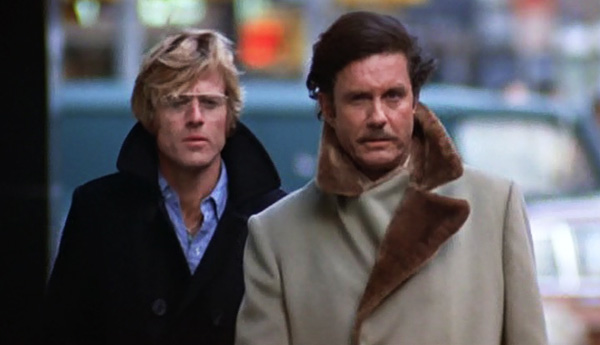
I recently rewatched “Three Days of the Condor” (1975) featuring Robert Redford and Faye Dunaway. It’s a smart and understated spy thriller that takes on the Central Intelligence Agency (CIA) and the deadly games the agency plays in its pursuit of global dominance. In the aftermath of the Vietnam War and the backlash from Richard Nixon and Watergate, not to mention America’s role in overthrowing the Allende government in Chile in 1973, it became acceptable in Hollywood to make films that portrayed the U.S. government as sometimes less than noble in all its pursuits. Condor, the codename for Redford’s character, stumbles across a plot within the CIA to overthrow governments in the Middle East so that U.S. corporations could dominate the oil market, and for that he and his colleagues in the special branch where he works must die. The movie follows his efforts to stay alive among people who will execute their own for the greater good of The Company (the CIA).
At the end (spoiler alert), Redford goes to the New York Times as a whistleblower in an effort both to stay alive and to reveal the nefarious machinations of the CIA. A CIA senior official, played by Cliff Robertson, confronts Redford and asks him a question that is deadly in its implications: Will they print it? Redford is confident the newspaper will, but Robertson, in asking Redford how he can be sure that they will, reminds us that there’s no certainty the “liberal” New York Times will go against the wishes of the CIA.
Robert Redford and Cliff Robertson in “Three Days of the Condor”
This was on my mind today as news broke once again that the CIA is collecting “bulk data” on Americans without Congressional authorization and outside of normal oversight. Well, as some of my students used to say, if you’ve done nothing wrong, you have nothing to fear from the diligent and honest agents of the CIA, right?
There’s a little scene in the movie where Condor laughs at the conceit of the CIA in referring to themselves as the intelligence “community.” A community of powerful and ultra-secretive intelligence agencies — I’m sure we have nothing to fear from such an Orwellian concoction.
Anyway, if you haven’t seen “Three Days of the Condor,” I recommend it. As a bonus, it has one of the most powerful yet understated romantic relationships caught on film, with Redford and Dunaway both superb in portraying two people on the edge who are desperately looking for connection.
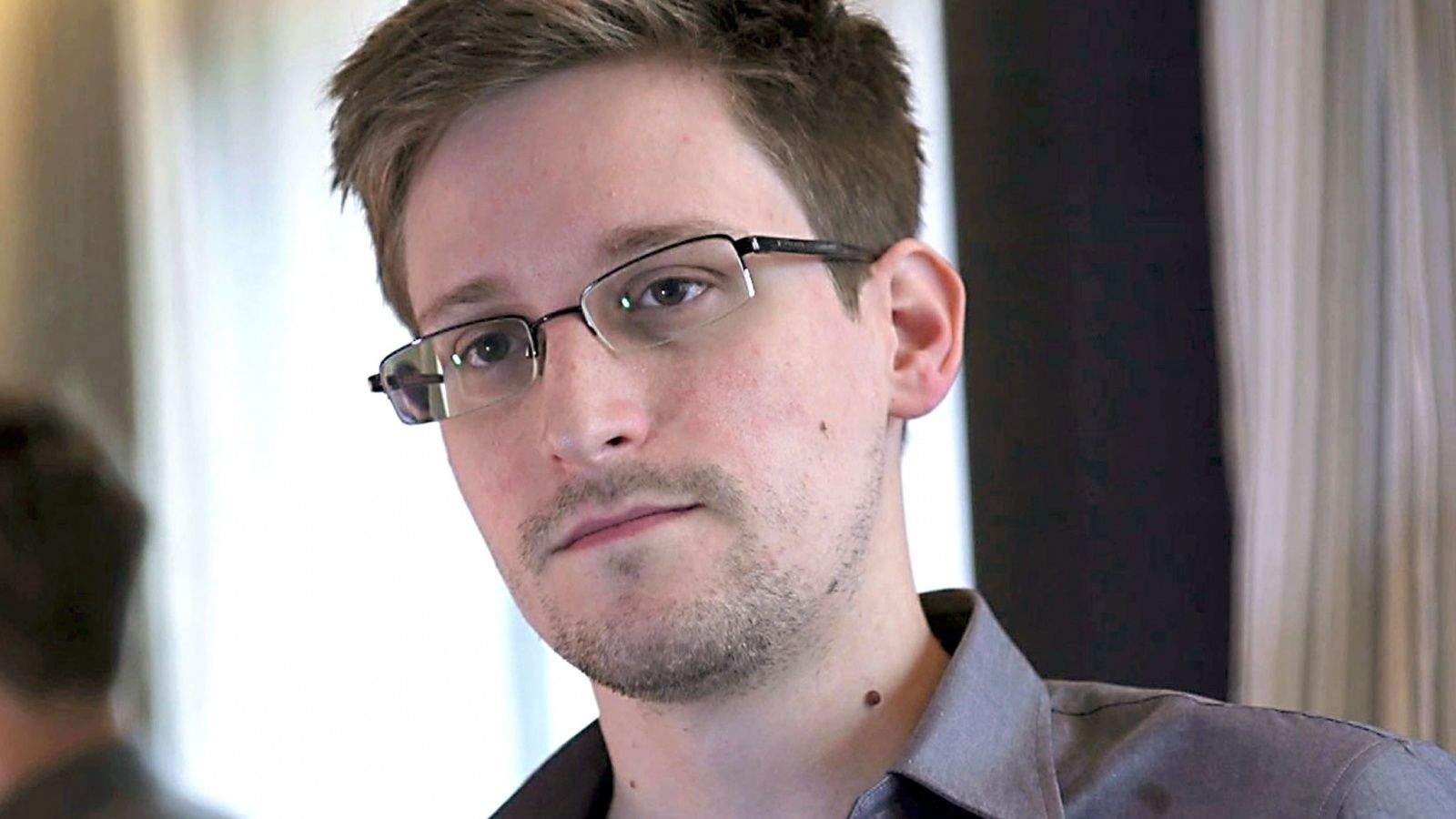
Edward Snowden recently talked to Joe Rogan for nearly three hours. Snowden has a book out (“Permanent Record“) about his life and his decision to become a whistleblower who exposed lies and crimes by the U.S. national security state. As I watched Snowden’s interview, I jotted down notes and thoughts I had. (The interview itself has more than seven million views on YouTube and rising, which is great to see.) The term in my title, “turnkey tyranny,” is taken from the interview.
My intent here is not to summarize Snowden’s entire interview. I want to focus on some points he made that I found especially revealing, pertinent, and insightful.
Without further ado, here are 12 points I took from this interview:
1. People who reach the highest levels of government do so by being risk-averse. Their goal is never to screw-up in a major way. This mentality breeds cautiousness, mediocrity, and buck-passing. (I saw the same in my 20 years in the U.S. military.)
2. The American people are no longer partners of government. We are subjects. Our rights are routinely violated even as we become accustomed (or largely oblivious) to a form of turnkey tyranny.
3. Intelligence agencies in the U.S. used 9/11 to enlarge their power. They argued that 9/11 happened because there were “too many restrictions” on them. This led to the PATRIOT Act and unconstitutional global mass surveillance, disguised as the price of being kept “safe” from terrorism. Simultaneously, America’s 17 intelligence agencies wanted most of all not to be blamed for 9/11. They wanted to ensure the buck stopped nowhere. This was a goal they achieved.
4. Every persuasive lie has a kernel of truth. Terrorism does exist — that’s the kernel of truth. Illegal mass surveillance, facilitated by nearly unlimited government power, in the cause of “keeping us safe” is the persuasive lie.
5. The government uses classification (“Top Secret” and so on) primarily to hide things from the American people, who have no “need to know” in the view of government officials. Secrecy becomes a cloak for illegality. Government becomes unaccountable; the people don’t know, therefore we are powerless to rein in government excesses or to prosecute for abuses of power.
6. Fear is the mind-killer (my expression here, quoting Frank Herbert’s Dune). Snowden spoke much about the use of fear by the government, using expressions like “they’ll be blood on your hands” and “think of the children.” Fear is the way to cloud people’s minds. As Snowden put it, you lose the ability to act because you are afraid.
7. What is true patriotism? For Snowden, it’s about a constant effort to do good for the people. It’s not loyalty to government. Loyalty, Snowden notes, is only good in the service of something good.
8. National security and public safety are not synonymous. In fact, in the name of national security, our rights are being violated. We are “sweeping up the broken glass of our lost rights” in today’s world of global mass surveillance, Snowden noted.
9. We live naked before power. Companies like Facebook and Google, together with the U.S. government, know everything about us; we know little about them. It’s supposed to be the reverse (at least in a democracy).
10. “The system is built on lies.” James Clapper, the director of national intelligence, lies under oath before Congress. And there are no consequences. He goes unpunished.
11. We own less and less of our own data. Data increasingly belongs to corporations and the government. It’s become a commodity. Which means we are the commodity. We are being exploited and manipulated, we are being sold, and it’s all legal, because the powerful make the policies and the laws, and they are unaccountable to the people.
12. Don’t wait for a hero to save you. What matters is heroic decisions. You are never more than one decision away from making the world a better place.
In 2013, Edward Snowden made a heroic decision to reveal illegal mass surveillance by the U.S. government, among other governmental crimes. He has made the world a better place, but as he himself knows, the fight has only just begun against turnkey tyranny.
From August 2014: A cartoon that perfectly captured the moment
W.J. Astore
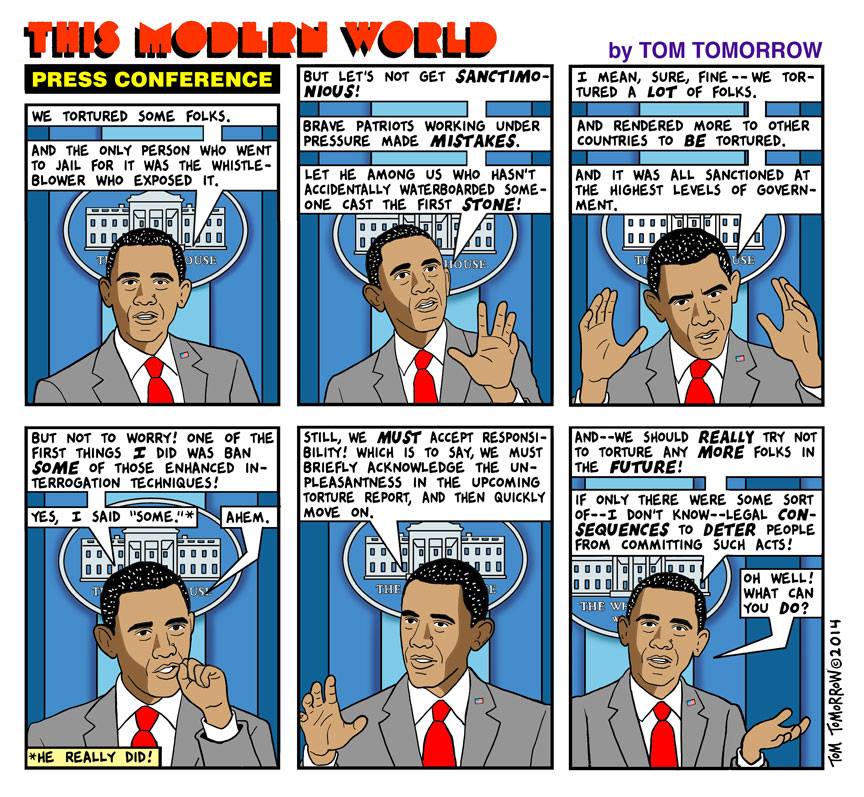
Five years ago, President Obama infamously said, “We tortured some folks.” And no one was held accountable; indeed, as Tom Tomorrow put it in a cartoon from that time, “The only government official who went to jail for it [John Kiriakou] was the whistleblower who exposed it.” In the cartoon, Tom Tomorrow has Obama say that, “Still, we must accept responsibility! Which is to say. we must briefly acknowledge the unpleasantness in the upcoming torture report, and then quickly move on.”
And that’s exactly what America did: quickly move on, without consequences (except for Kiriakou). And then candidates like Donald Trump emerged, boasting of how much he’d increase the use of torture. And thus Trump as president could pick Gina Haspel, implicated in the torture regime, as the new head of the CIA. Well done, President Obama.
Recently, one of my readers alerted me to concerted efforts to “unredact” the redacted CIA report released in December 2014, based on open source research and logical deduction by a number of British researchers, concerning extraordinary rendition and black sites. Check out this link https://twitter.com/renditionprjct for further details; the full report (403 pages) can be downloaded as a pdf file at this link:
Here’s the first paragraph of the report, and an excerpt from the executive summary:
CIA Torture Unredacted presents the findings from a four-year joint investigation by The Rendition Project and The Bureau of Investigative Journalism into the use of rendition, secret detention and torture by the Central Intelligence Agency (CIA) and its partners in the ‘War on Terror’. We have focused our efforts on understanding the evolution, scope and human impact of the CIA’s Rendition, Detention and Interrogation (RDI) programme, which operated between 2001 and 2009. During this time, the CIA established a global network of secret prisons (so-called ‘black sites’) for the purposes of detaining and interrogating terrorism suspects – in secret, indefinitely, and under the most extreme conditions. As a result, scores of men were captured, at locations around the world, and disappeared into the programme for weeks, months or years on end, whereupon they were subjected to sustained torture and other forms of cruel, inhuman and degrading treatment.
This report, and The Rendition Project’s website (www.therenditionproject.org.uk), provide, without doubt, the most detailed public account to date of CIA torture.
We are publishing here:
→ A detailed profile of the prisoners held within the torture programme, including their nationalities; capture locations and dates; detention locations, dates and treatment; and fate and whereabouts afterwards; → The identity of those prisoners held in the black sites in Thailand, Poland, Romania, Lithuania, Morocco, and Guantánamo Bay; → A detailed reconstruction of the shifting geography of secret detention operations in Afghanistan; → A granular account of the complex network of companies which provided aircraft to the CIA for rendition operations; → Extensive documentary evidence relating to over 60 rendition circuits by these aircraft, which involved over 120 individual renditions; → A detailed overview of complicity by a number of key states, including the United Kingdom and those which hosted the black sites.
CIA Torture Unredacted stands as a comprehensive public account of one of the most disturbing elements of the ‘War on Terror’: a global programme of systematic disappearance and torture, carried out by the world’s most powerful liberal democratic states. In the face of continued obstruction and denial by the governments involved, which refuse to allow for a full accounting of the crimes which took place, we hope that this report will stand as a central reference point for all those who still seek redress and reparations for the victims of CIA torture, as well as some measure of the truth for us all.
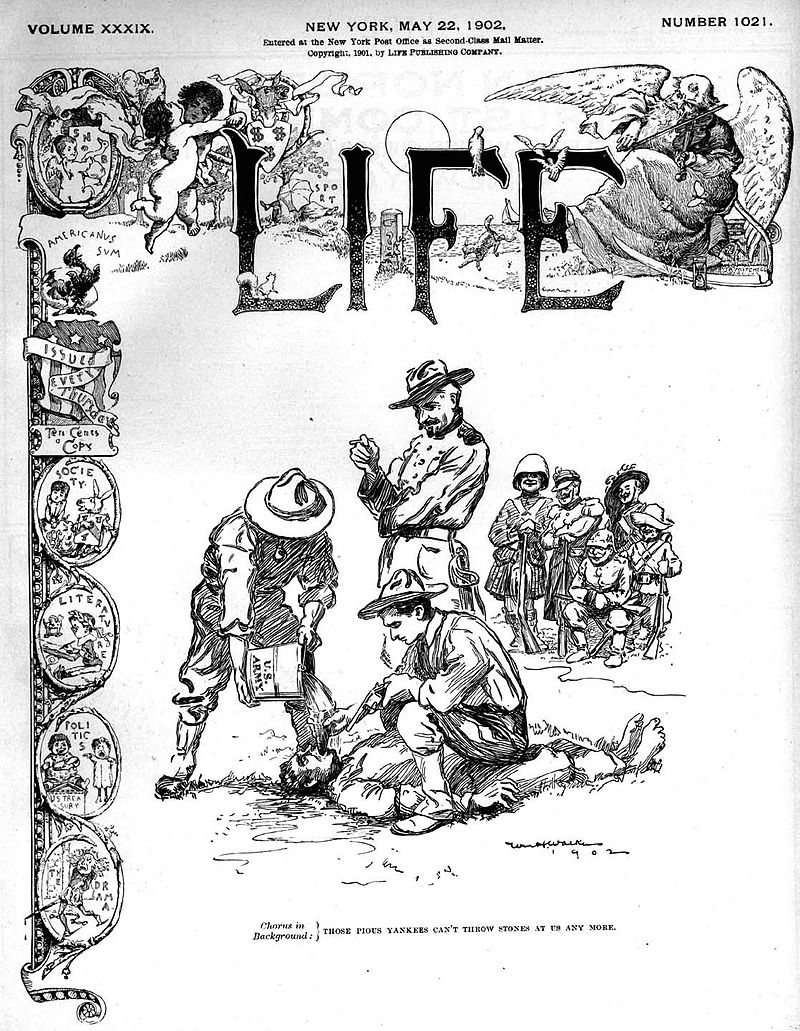
U.S. troops use the “water cure” in the Philippines, 1902
W.J. Astore
Back in 2009, I wrote a few articles on torture during the Bush/Cheney administration. With Barack Obama elected on a vague platform of hope, change, and transparency, there was a sense torture would be outlawed and torturers would be called to account. Obama did sign an executive order to outlaw torture — which really meant nothing more than that the U.S. would abide by international treaties and follow international law with respect to torture — but torturers were never called to account. The failure to do so has left us with a new president, Donald Trump, who says he supports torture (though his Defense Secretary, James Mattis, does not), and a person nominated to head the CIA who enabled torture and helped to cover it up.
Here are a few points I made back in 2009. We should consider these as Congress debates whether to place the CIA in the hands of a torturer.
Recently [2009] in the New York Times, Scott Shane and Mark Mazzetti showed that the Bush administration, the CIA, and the Senate and House Intelligence Committees failed to ask for any historical context before approving so-called “harsh interrogation techniques,” including waterboarding, in 2002. No one apparently knew, or wanted to know, that the U.S. had defined waterboarding as torture and prosecuted it as a war crime after World War II. Did our leaders think the events of 9-11 constituted an entirely new reality, one in which historical precedent was rendered nugatory?
Perhaps so, but their failure to ask historically-based questions also highlights the narrowness of their intellectual training. Like the accused Nazi judges before the bar in the movie Judgment at Nuremberg (1961), they asked themselves only what the law is (or what it became under John Ashcroft and John Yoo), not whether it is just. If a legal brief authorized brutal methods such as waterboarding, who were they to question, let alone challenge, the (freshly minted) legal opinion?
Clearly, the leaders making and implementing decisions on torture constituted a single, self-referencing, self-identified Washington elite almost entirely divorced from thinking historically, let alone tragically. And because they could think neither historically nor tragically, they found false comfort in picturing themselves as stalwart defenders of the nation, not recognizing the mesmerizing power of vengeance and hate.
Our elected officials who find history books too onerous would do well to invest three hours of their time to watch Judgment at Nuremberg. They might learn that a compromised judiciary will uphold any action — discriminatory race laws, involuntary sterilization, even mass murder — all in the name of defending the people from supposedly apocalyptic threats.
Indeed, defending the country from apocalyptic threats is a popular line for those wishing to uphold the Bush Administration’s policy on torture. After the tragedy of 9/11, and subsequent panic in the wake of Anthrax attacks, our leaders were compelled to “take the gloves off” in our defense, even compelled to exact vengeance as a way of deterring future attacks — or so these torture apologists claim.
In their haste to make America safe, Bush and Company effectively declared vengeance was theirs and not the Lord’s. But the human lust for vengeance is blinding, even more so when it’s perceived as righteous. Here our wrathful lawyers/politicians might consider the lessons of Giuseppe Verdi’s opera, Rigoletto. The hunchbacked court jester, Rigoletto, delights in other people’s misfortune, and for this he is cursed by a cuckolded husband. Soon, his own daughter, Gilda, the joy of his life, is kidnapped and despoiled, the first bitter fruits of the curse. Despite Gilda’s pleas to forgive the transgressor, Rigoletto, blinded by his own murderous desire for vengeance, sets in motion a chain of events that ends with the sacrificial death of his beloved Gilda and the annihilation of any vestige of goodness in his tortured soul.
In Rigoletto, the desire for total vengeance produces total tragedy. In Judgment at Nuremberg, man’s ability to justify the worst crimes in the name of “safeguarding the people” is memorably exposed and justly condemned.
What we need today in Washington are fewer leaders who base their decisions on vengeance empowered by legal briefs and more who are willing to embrace the toughest lessons to be gleaned from history and tragedy. What we need today as well is our own version of Judgment at Nuremberg — our own special prosecutorial court — one that is unafraid to elevate justice, truth, and the value of a single human being above all other concerns — especially political ones.
A full accounting of the torture decisions made by the Bush Administration would serve powerfully to reassure Americans that their government is, in fact, transparent and accountable to the law. Such a result would be more than advantageous: It would indirectly strengthen our national defense as well as people’s patriotism. Far easier it is to trust a government that owns up to its mistakes than one that cloaks them in bombast and bromides.
Self-serving bromides that excuse torture as the price of keeping America safe from evil-doers must be dismissed. Self-preservation is no excuse for torture or similar war crimes. It’s easier to see the truth of this when you look at the abuses committed by countries other than one’s own.
Think, for example, of Germany in the opening weeks of World War I. As John Horne and Alan Kramer have shown in German Atrocities, 1914: A History of Denial (2001), German soldiers clearly committed atrocities against Belgian civilians. But the Germans themselves refused to admit culpability. As Germany’s Chancellor, Theobald von Bethmann Hollweg, explained: “We are in a position of necessity and necessity knows no law.” The court of history, however, has rendered a far different judgment.
When the argument from necessity failed to convince, the Bush administration disputed whether waterboarding actually was torture, even though American soldiers had been punished for it during the Philippine-American War. Indeed, even in Nazi Germany, government functionaries tried to fight a rear-guard action against the Gestapo and its use of waterboarding. In a 1979 article on “The Nazi Concentration Camps,” Henry Friedlander cites a complaint made by the Reich Minister of Justice in regards to a murder in 1934 at a concentration camp in Saxony: “The nature of the assault, especially the use of water torture,” the Reich Minister noted, “reveals a brutality and cruelty on the part of the perpetrator that is alien to German sensibilities and feelings. These cruelties, reminiscent of oriental sadism, can neither be explained nor excused by even the most extreme form of hatred in battle.”
If “water torture” was so clearly illegal and so utterly reprehensible to German legal authorities in 1934, even as they battled the baneful influence of Nazism, how can its true nature remain a matter of dispute among some former Bush administration functionaries?
We fancy ourselves to be a nation of laws that apply equally to all. If our new president truly stands for hope and change, he needs to act appropriately. “Hope” in this case means full exposure of torture and appropriate punishment for those who authorized and conducted it. “Change” means accountability for all, even for (especially for) the highest ranking officials in government.
We need a “Truth Commission” to investigate torture. Efforts to suppress the truth, even seemingly innocuous ones, like looking ahead instead of back, will only make the eventual revelations that much worse. Delays in holding people accountable may even empower others to commit new war crimes in our name. Such are the perils of refusing to confront the truth.
Here, the lessons of the French in Algiers continue to resonate. Think back to the revelations of General Paul Aussaresses in 2001, which scandalized France. Aussaresses unrepentantly confessed that, in attempting to suppress terrorism in Algeria in the 1950s, detainee abuse, torture, even murder became routine, first-choice, approaches. The resort to torture simply begat more torture.
Investigators should look at whether this dynamic also applied to America in Afghanistan and Iraq. How many of our counterterrorist experts became like General Aussaresses: Self-perceived “patriots” who believed torture and even murder were justified in the name of protecting the state? After all, if the state’s essential purpose is to protect its citizens, and you’re dealing with an enemy that’s malevolently contumacious, as Al Qaeda appeared to be, what’s to stop avowed “patriots” from torturing suspects, especially when the state’s leaders have authorized harsh techniques and are pressing you for results?
In the case of the Bush administration, not only did torture apparently provide unreliable intelligence: It also abrogated America’s fidelity to international treaties that forbade torture, and compromised our own ethos of truth, justice, and the American way.
And in the case of the Obama administration, its failure to confront the legacy of torture and to prosecute those responsible helped to facilitate the rise of Trump, a man who boasts of favoring torture while nominating for high office officials who served as torture enablers and supporters.
The words “American” and “torture” are linked together. Isn’t it time we separated them?
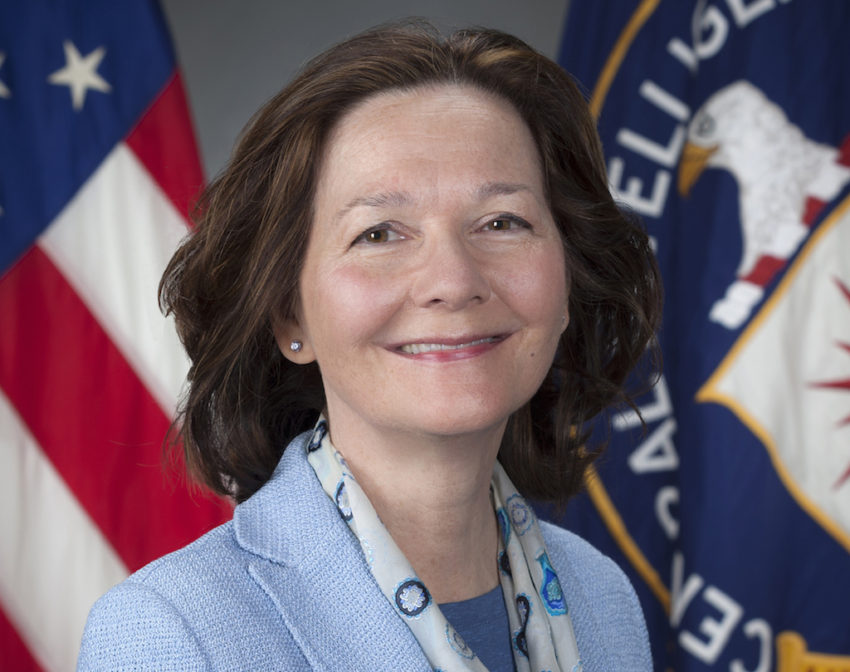
President Trump has nominated Gina Haspel to be the new director of the Central Intelligence Agency (CIA). Haspel had an important role in the torture regimen approved by the Bush/Cheney administration, and she worked to destroy videotaped evidence of the same. What does it say about the United States that Haspel is now being rewarded both for enabling torture and for covering it up?
As Peter Van Buren writes at We Meant Well, “Unless our Congress awakens to confront the nightmare and deny Gina Haspel’s nomination as Director of the CIA, torture has already transformed us and so will consume us. Gina Haspel is a torturer. We are torturers. It is as if Nuremberg never happened.”
Back in December of 2008, I wrote about torture for Nieman Watchdog. The title of my article was “Cheney says he approved waterboarding. Is that the end of the story?” The header to my article read: “The vice president gave the go-ahead for tactics commonly regarded as torture. Was that a war crime or not? William J. Astore provides some background on the issue and urges the press to show that it too can do aggressive interrogations. And do them now, without waiting for a new administration or a new Congress.”
Naturally, our Congress and the press did very little, and the Obama administration chose to ignore torture, urging America to look forward, not backwards. Hence no one was ever held accountable; indeed, it was whistle blowers who came out against torture who were punished.
Here is the rest of my article from 2008. Sadly, over the last decade nothing has changed in the U.S. Indeed, the nomination of Haspel to head the CIA proves only that it’s getting worse.
Is our sitting vice president a war criminal because he condoned torture? In an interview on ABC News on December 15th [2008], Dick Cheney coolly admitted he had approved “harsh” and “aggressive” interrogation techniques, notably waterboarding, in an attempt to extract intelligence from known or suspected terrorists, including Khalid Sheikh Mohammed. Vital intelligence gathered about Al Qaeda, Cheney claimed, vindicated his decision, though this is much disputed. Subsequently, Cheney claimed that waterboarding and other harsh techniques did not constitute torture; this categorical denial was balanced by a counterclaim that he would have been remiss had he not authorized aggressive techniques in an attempt to safeguard Americans.
For approving these techniques and for other practices, The New York Timeshas attacked Cheney, former Secretary of Defense Donald Rumsfeld, and other Bush Administration officials. Calls have been issued for war crimes investigations. Are such calls warranted? Did Cheney, Rumsfeld, and others authorize techniques that constituted torture, and, if so, are they complicit in the crime?
Here, the Holocaust survivor, Jean Améry, and the political philosopher, Hannah Arendt, offer valuable insights. Améry, himself a victim of torture, wrote about it in At the Mind’s Limits (1980). Torture, he observed, was a monstrous immorality because it violated another person’s body, reducing it to a vessel of fear and pain. Under such distress, the victim confesses to anything, even the wildest fictions and fantasies, as Améry himself did when he was tortured.
In its simulation of death by drowning, waterboarding is intended to produce great fear and psychological dislocation. It may perhaps leave no physical traces, but the mental wounds it inflicts are something else altogether. Their insidious effects on victims were captured by Améry in his conclusion on torture:
Whoever has succumbed to torture can no longer feel at home in the world. The shame of destruction cannot be erased. Trust in the world, which already collapsed in part at the first blow, but in the end, under torture, fully, will not be regained …. It is fear that henceforth reigns over him. Fear—and also what is called resentments. They remain, and have scarcely a chance to concentrate into a seething, purifying thirst for revenge.
Torture, in short, alienates its victims from humanity and generates (or strengthens) vengeful resentments. Améry carried his own resentments as a burden to remind himself—and us—of the moral enormity of any attempt to demolish another human being’s will through torture. For Améry, such attempts are both crimes and mistakes because they sow the seeds of future acts of vengeance.
A further disturbing insight comes from Hannah Arendt’s Eichmann in Jerusalem (1964). Adolf Eichmann, desk-bound executioner and “Jewish expert” for the Third Reich, oversaw the deportation of Jews to their deaths during the Final Solution. A bureaucrat who never dirtied his own hands, Eichmann therefore judged himself to be less than fully responsible for the murder of millions. On this point, the judges at Eichmann’s trial reached a far different conclusion: “the degree of responsibility increases as we draw further away from the man who uses the fatal instrument with his own hands.” In crimes against humanity, degrees of separation from the dirty work only add to the offense.
Waterboarding is torture; Cheney and Rumsfeld approved it; and Améry and Arendt’s reflections suggest the immorality of, and culpability for, the crime. What now? Whether we find this distasteful or not, the press needs to show that it too can aggressively interrogate sources. Rather than waiting a month for an Obama Justice Department or a congressional investigation, the press should challenge incoming Obama administration officials now, together with new members of Congress. Outside legal experts should also be consulted. Does Baltasar Garzón—the Spanish judge who pursued Augusto Pinochet relentlessly—have an opinion? These are obvious leads for reporters.
To strengthen America’s moral authority, we need to reject the idea that demolishing our enemies’ resistance through torture is a necessary price of our safety. Let’s not balk at an expeditious and complete accounting of our mistakes—and of crimes committed in our name.
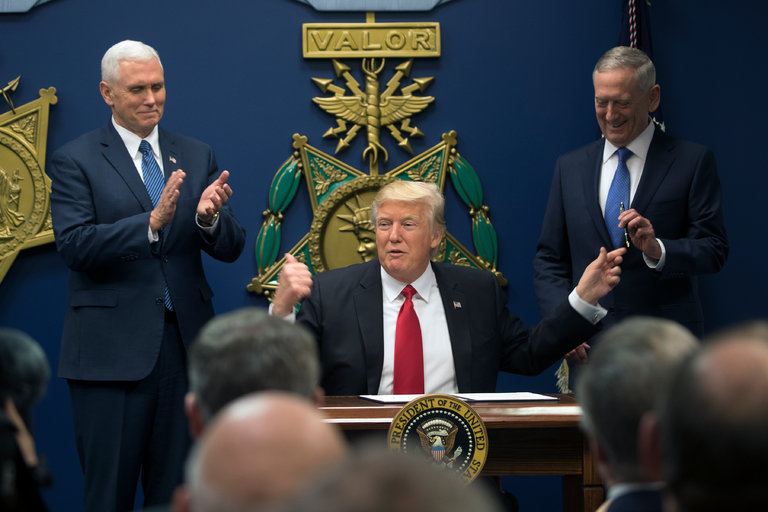
Trump has done it again. At the Pentagon, before a backdrop that honors America’s highest award for valor, the Medal of Honor, Trump signed an Executive Order on immigration. The backdrop seemed to suggest that Trump was doing something honorable and brave himself in signing yet another Executive Order. This EO, as the New York Timesreported, “suspended entry of all refugees to the United States for 120 days, barred Syrian refugees indefinitely and blocked entry for 90 days for citizens of seven predominantly Muslim countries. It also allows Christians to be granted priority over Muslims.”
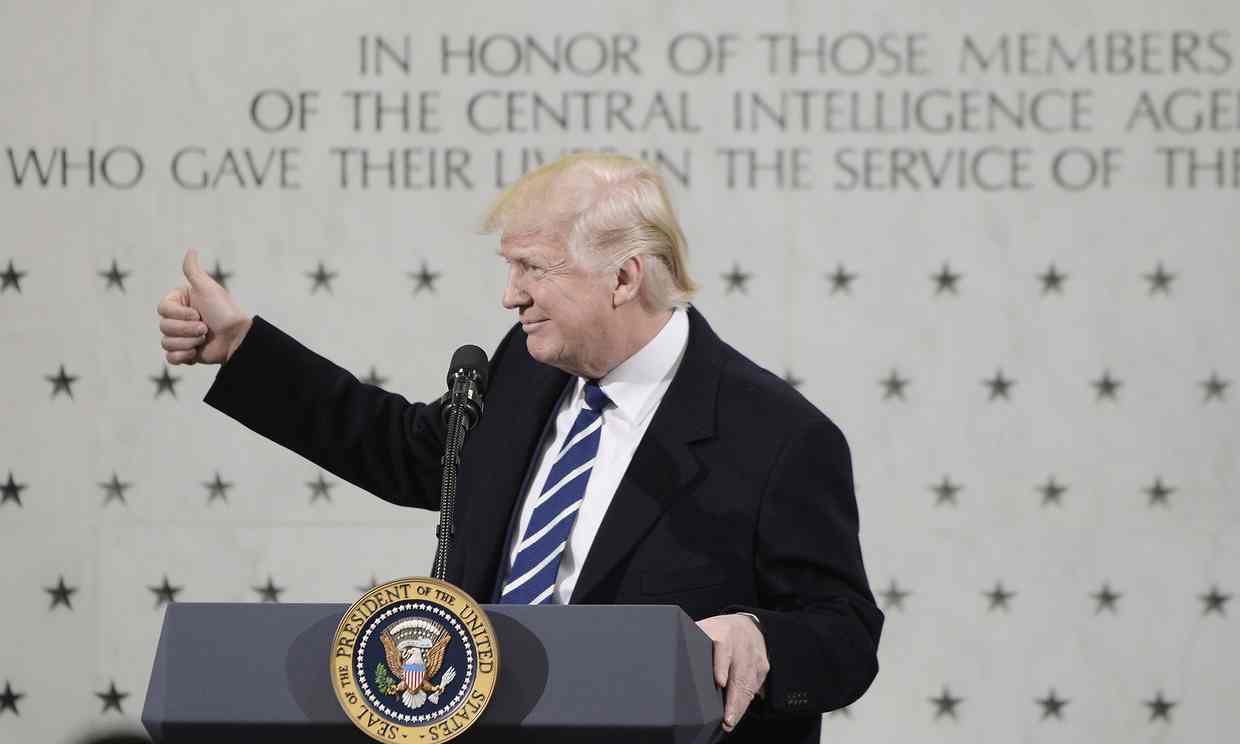
Last week, Trump appeared at the CIA, before its wall of heroes, blustering again about grabbing Iraq’s oil and boasting of the number of times he’d appeared on Time magazine (more than Patriots quarterback Tom Brady, which seemed to please him to no end).
Perhaps Trump will next appear before Christ on the cross to complain about how he (Trump) is being crucified in the press.
You’ve got to hand it to Trump: the man simply has no shame. And no taste either.
Trump’s pomposity was captured perfectly yesterday in a quip at my local bank. I was asking the teller about dollar coins (yes, we still have those), and she showed me a couple. They looked too much like quarters so I passed on getting any. The gent behind me quipped: “Just wait until Trump puts himself on the coin.” As I laughed and said words to the effect of, I can see it happening, the gent then quipped, “Trump will be on both sides!”
That about sums it up. Trump would indeed put his own mug on both sides of the coin. It would be a clear case of “heads he wins, tails we lose.”
Yesterday, I caught President Trump’s speech before the CIA. As he stood before the wall of honor, surrounded by the stars on that wall that represent those who gave their lives for their country, Trump deviated from his prepared comments to boast about how many times he’d appeared on the cover of Time magazine.
Here’s what he said: I HAVE BEEN ON THEIR COVER ABOUT 14 OR 15 TIMES. I THINK WE HAVE THE ALL-TIME RECORD IN THE HISTORY OF TIME MAGAZINE — IF TOM BRADY IS ON THE COVER, IT’S ONE TIME. I’VE BEEN ON 15 TIMES. I THINK THAT’S A RECORD THAT COULD NEVER BE BROKEN.
Really, President Trump? You’re giving a speech before members of the CIA, and what comes to mind is the number of times your own mug has appeared on a magazine cover? And you’re doing this in front of the CIA’s wall of honor, which, according to your own words, is “very special”?
Whatever one thinks of the CIA and its history, one thing is certain from this speech: America has elected an appallingly tone-deaf and callous narcissist as its 45th president.




 Bracing Views