“Whoever controls the media, controls the mind,” Jim Morrison said, and this is certainly true in America. Consider the lead stories over the July 4th weekend. The first was the threat of terror attacks against America. We were told that law enforcement officials were “in no mood for a national party” — that the threat of an ISIS-inspired terror attack was real. That no attack occurred is of no consequence. Fear was stoked, and that’s what matters. Prepare for the next terror reminder on the anniversary of 9/11, if not sooner.
The second story was shark attacks off the Carolina coast. Unusual, yes, but hardly a threat to America or to the vast majority of its people, even those who chose to go swimming in the ocean. “Shark surge!” “Fear at the beach!” “High alert!” These were common expressions in the media.
Of course, Americans were much more likely to be hurt in fireworks accidents than by terrorists or sharks, but the sensational always takes precedence over the mundane in our media. Indeed, if the goal was to safeguard ordinary Americans, we should have been told to stay off the roads this past weekend, but of course that would hurt tourism and the economy, so you weren’t about to hear that advice coming from America’s talking heads.
It seems nearly impossible to remember that one of FDR’s Four Freedoms was the freedom from fear. FDR knew the paralyzing and stultifying effects of fear, the way it erodes individual autonomy, the way it can be made to serve the powerful. Frank Herbert in Dune captured a powerful truth when he wrote that “Fear is the mind-killer.” The movie Blade Runner echoes the sentiment, with the Replicant Roy Batty (played by Rutger Hauer) explaining that to live in fear is to be a slave.
A media that spreads fear facilitates a government of wolves. Or, put slightly differently by the great Edward R. Murrow, “A nation of sheep will beget a government of wolves.”
There’s a definite method to the media madness, America.
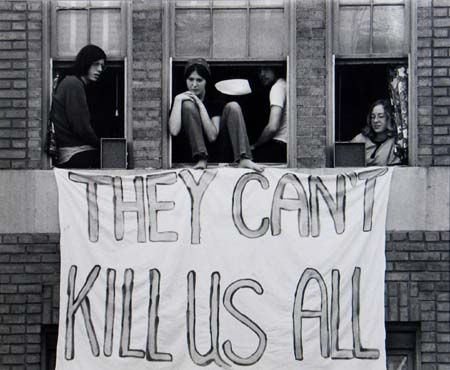
When you’re at war, even your own youth become potential enemies. A sign after the Kent State shootings (1970)
W.J. Astore
Here are a few excerpts from my latest article at TomDispatch.com. I urge you to read the entire article here. Thank you!
War on drugs. War on poverty. War in Afghanistan. War in Iraq. War on terror. The biggest mistake in American policy, foreign and domestic, is looking at everything as war. When a war mentality takes over, it chooses the weapons and tactics for you. It limits the terms of debate before you even begin. It answers questions before they’re even asked.
When you define something as war, it dictates the use of the military (or militarized police forces, prisons, and other forms of coercion) as the primary instruments of policy. Violence becomes the means of decision, total victory the goal. Anyone who suggests otherwise is labeled a dreamer, an appeaser, or even a traitor.
War, in short, is the great simplifier — and it may even work when you’re fighting existential military threats (as in World War II). But it doesn’t work when you define every problem as an existential one and then make war on complex societal problems (crime, poverty, drugs) or ideas and religious beliefs (radical Islam).
America’s Omnipresent War Ethos
Consider the Afghan War — not the one in the 1980s when Washington funneled money and arms to the fundamentalist Mujahideen to inflict on the Soviet Union a Vietnam-style quagmire, but the more recent phase that began soon after 9/11. Keep in mind that what launched it were those attacks by 19 hijackers (15 of whom were Saudi nationals) representing a modest-sized organization lacking the slightest resemblance to a nation, state, or government. There was as well, of course, the fundamentalist Taliban movement that then controlled much of Afghanistan. It had emerged from the rubble of our previous war there and had provided support and sanctuary, though somewhat grudgingly, to Osama bin Laden.
With images of those collapsing towers in New York burned into America’s collective consciousness, the idea that the U.S. might respond with an international “policing” action aimed at taking criminals off the global streets was instantly banished from discussion. What arose in the minds of the Bush administration’s top officials instead was vengeance via a full-scale, global, and generational “war on terror.” Its thoroughly militarized goal was not just to eliminate al-Qaeda but any terror outfits anywhere on Earth, even as the U.S. embarked on a full-fledged experiment in violent nation building in Afghanistan. More than 13 dismal years later, that Afghan War-cum-experiment is ongoing at staggering expense and with the most disappointing of results.
While the mindset of global war was gaining traction, the Bush administration launched its invasion of Iraq. The most technologically advanced military on Earth, one that the president termed “the greatest force for human liberation the world has ever known,” was set loose to bring “democracy” and a Pax Americana to the Middle East. Washington had, of course, been in conflict with Iraq since Operation Desert Storm in 1990-1991, but what began as the equivalent of a military coup (aka a “decapitation” operation) by an outside power, an attempt to overthrow Saddam Hussein and eliminate his armed forces and party, soon morphed into a prolonged occupation and another political and social experiment in violent nation-building. As with Afghanistan, the Iraq experiment with war is still ongoing at enormous expense and with even more disastrous results …
It’s the mindset that matters. In places like Iraq and Afghanistan, places that for most Americans exist only within a “war” matrix, the U.S. invades or attacks, gets stuck, throws resources at the problem indiscriminately, and “makes a desert and calls it ‘peace'” (to quote the Roman historian Tacitus). After which our leaders act surprised as hell when the problem only grows.
Sadly, the song remains monotonously the same in America: more wars, made worse by impatience for results driven by each new election cycle. It’s a formula in which the country is eternally fated to lose…
b. traven asked me about “First Causes” when it comes to America’s permanent war mentality. With respect to the Middle East, he mentioned the Saudis and Israelis and the extent to which the USA kowtows to each. Here is my quick response:
I’d say that our war mentality pre-dates our tango with the Saudis and Israelis. We really didn’t come to support them in a big way until the early 1970s, and by that point Korea and Vietnam and the military-industrial complex had already created a permanent war mentality.
First Cause(s): It’s so hard to say. The Cold War and anti-Communist hysteria played a powerful role. So did our culture: the John Wayne mentality. American exceptionalism and our own myths. The misreading of history: We must always resist violently or we’re risking another Munich. Capitalism and the pursuit of profit by any means, to include violence. Violence itself as a means to profit.
Many people associate the Confederate flag (the “stars and bars”) with the South and the U.S. Civil War (Whoops — I mean “The War of Northern Aggression”). For some people, it’s been a more or less vague expression of Southern heritage, or a symbol of rebellion, a sort of redneck “good ol’ boy” badge of pride. Like any symbol, it is capable of holding multiple meanings. To use academic fancy talk, its semiotics is negotiated and interrogated contextually within contingent cultural settings in which radical interpretive flexibility is possible.
Did you follow that last sentence? If you didn’t, pat yourself on the back, because it’s all BS. The “stars and bars” may have been a Confederate battle flag 150 years ago, but after the Civil War it morphed into a symbol of White supremacy, becoming a symbol of race hatred and violent resistance to integration during the Civil Rights movement.
A little honesty: The Confederate flag is hardly restricted to the South, and therefore it’s not primarily about Southern heritage. In rural Central Pennsylvania, where I recently taught for nine years, the Confederate flag was astonishingly common. It was on license plates; it flew every day at a local gas station; I saw neighbors flying it openly on their flag poles. Why, you might ask?
My wife was very good friends with a Black woman in a local town; the (White) neighbor immediately behind her openly flew a Confederate flag from his flag pole. Remember, this was Pennsylvania, Union country, not the heart of the Confederacy. There was no mistaking this man’s message — his unhappiness that a Black family lived near him, and his decision to make them uncomfortable, to make them squirm, by flying “his” flag.
Think I’m reaching here? My wife’s friend has a son who went to the prom. He complimented a (White) classmate on her prom dress, saying it looked “hot” on her. He got a visit from an off-duty State Trooper who explained to him that Black boys don’t talk to White girls like that. Not around here, son. No, this wasn’t 1963. It was 2013. A half-century after the Civil Rights movement.
It’s good to see that the Confederate flag is finally being taken down from State Capitol buildings; that merchandise featuring it is being pulled from store shelves; that politicians are finally speaking out against it, even Republican candidates for president, who equivocated in such a cowardly manner until even they could no longer resist the pull of public outrage stemming from the latest racial hate crime in Charleston.
The question is: What the hell took them (and us) so long?
The American people are being kept divided, distracted, and downtrodden. Divisions are usually based on race and class. Racial tensions and discrimination exist, of course, but they are also exploited to divide people. Just look at the current debate on the Confederate flag flying in Charleston, South Carolina, with Republican presidential candidates refusing to take a stand against it as a way of appeasing their (White) radical activist base. Class divisions are constantly exploited to turn the middle class, or those who fancy themselves to be in the middle class, against the working poor. The intent is to blame the “greedy” poor (especially those on welfare or food stamps), rather than the greedy rich, for America’s problems. That American CEOs of top companies earn 300 times more than ordinary workers scarcely draws comment, since the rich supposedly “deserve” their money. Indeed, in the prosperity Gospel favored by some Christians, lots of money is seen as a sign of God’s favor.
As people are kept divided by race, class, and other “hot button” issues (abortion and guns, for example), they are kept distracted by insatiable consumerism and incessant entertainment. People are told they can have it all, that they “deserve it” (a new car, a bigger home, and so on), that they should indulge their wants. On HGTV and similar channels, people go shopping for new homes, carrying a long list of “must haves” with them. I “must have” a three-car garage, a pool, a media room, surround sound, and so on. Just tell me what mortgage I can afford, even if it puts me deeply in debt. As consumerism runs rampant, people are kept further distracted by a mainstream media that provides info-tainment rather than news. Ultimately, the media exists to sell product; indeed, it is product itself. No news is aired that will disturb the financial bottom line, that will threaten the corporations that run the media networks, that will undermine the privileged and the powerful.
The people, kept divided and distracted, are further rendered powerless by being kept downtrodden. Education is often of poor quality and focused on reciting rote answers to standardized tests. Various forms of debt (student loan debt, credit card debt, debt from health care and prescription drugs costs, and so on) work to keep the people downtrodden. Even workers with good jobs and decent benefits are worried. Worried that if they lose their jobs, they lose their health care. So much of personal status and identity, as well as your ability to navigate American society, is based on your position. For many it’s lose your job, lose your life, as you’re consumed by debt you can’t repay.
Divided, distracted, and downtrodden: It’s a recipe for the end of democracy in America. But it also serves as a roadmap to recovery. To reinvigorate our democracy, we must fight against divisiveness, we must put distractions behind us, and we must organize to fight for the rights of the people, rights like a better education for all, less debt (a college education that’s largely free, better health care for everyone, and far less emphasis on consumerism as a sign of personal and societal health and wealth), and improved benefits for the workers of America, who form the backbone of our nation.
We can’t wait for the politicians. Most of them are already co-opted by the moneyed interests. Meaningful change will have to come from us. That is, after all, the way democracy is supposed to work.
Dan White’s article on Admiral (retired) McRaven’s new job as Chancellor of the University of Texas system provides a warning that must be heeded. There is dangerous intent behind the appointment of military flag officers and national security operatives to leading public college and university leadership positions. The political elites, who usually appoint their like-minded allies to the governing boards of these institutions, see students in these public institutions of learning as potential activists against the status quo (as they were during the Vietnam War era). The governing boards usually vet the candidates for this office and thus want the candidate to mirror their own views of “national interests.” Those “interests” don’t include critical thinking or the idea of questioning authority.
Appointing a proven supporter (like McRaven) of the elites’ view of “national interest” in times like these, when their “interest” involves issues at variance with the common good, is looked at as a judicious decision. That means putting people into these offices who support the Patriot Act and its assault on citizens’ rights of free speech and assembly. It also means appointing people who support the government in its pursuit of perpetual war.
McRaven’s appointment to the University of Texas and the ridiculous appointment of Janet Napolitano, former head of the police state agency known as “Homeland Security,” as President of the university system of California are prime examples of this tendency. These selections show absolutely no interest in education but rather in administering and enforcing a sheep-like faculty and student body in these important institutions that otherwise could and should foster the serious questioning of our government and our oligarchical elites.
The elites know that stuffed shirts like McRaven and Napolitano can be counted on to foster bland conformity and blind compliance. That’s exactly why they’re hired for these offices. They work to ensure the subservience of higher education to the national security state. California and Texas are two of the biggest public university systems in the country. Is it any accident they are controlled by Napolitano and McRaven, both former operatives and enforcers in the national security state?
Not only does the national security state conspire to control higher education but national sports as well. Consider the recent revelation of Department of Defense payments to NFL teams for on-field ceremonies in honor of the troops. These ceremonies, used for recruitment and propaganda purposes, were meant to seem free and spontaneous on the part of the participating football teams, even as behind the scenes the Department of Defense was feeding the teams taxpayer money in the millions for these ceremonies. It’s all about extending the reach of the national security state into all realms of life, to include sports. That’s the real NFL scandal of today, not Tom Brady’s “Deflategate.”
Be afraid, America, as the national security state reaches out to control the message of higher education as well as professional sports. High culture, low culture, it doesn’t matter. The power elites want to control it all.
Awaken, patriotic American citizens, and resist. Don’t let the national security state’s tentacles reach into more and more aspects of your and your children’s lives.
My wife and I always watch “A Christmas Carol” around this time, the classic version with Alastair Sim as Ebenezer Scrooge. Before his redemption, Scrooge is the ultimate miser, a mean-spirited soul who refuses to give to charity since he’s already paying taxes to support prisons and workhouses. For his fellow man Scrooge has no concern, arguing that those who can’t support themselves had best die “to decrease the surplus population.”
By all accounts, including his own, Scrooge is a successful man of business, always keeping a positive balance on his ledger sheet, even if he has to pinch pennies to do so. Generous he is not; you might say he passes nickels around as if they were manhole covers.
His partner Jacob Marley, dead for seven years, restores Scrooge’s humanity with the help of three spirits. Perhaps Marley has the best line when he screams at Scrooge: “Business! Mankind was my business!” The Spirit of Christmas Present also has a powerful scene in which he reveals two slack-eyed and wretched children under his robe, “want” and “ignorance,” and tells Scrooge to be beware of both but especially of ignorance.
So, in this season of generosity of spirit, how are we doing in the USA? Does the skinflint Scrooge rule, or does the redeemed one? Well, just one factoid. Unemployment benefits are due to run out for 1.3 million Americans on December 28th. What are the options for those in want of a job? Are there no prisons, no workhouses? Perhaps they had best die to decrease the surplus population.
Extending unemployment benefits for another year would cost roughly $25 billion. A penurious America can’t afford that, right? But the USA can afford $633 billion for the new Pentagon budget and its “overseas contingency operations” (a great euphemism for war). We’ll spend roughly as much money on these “contingency ops” ($81 billion) as we will on federal funding of education. So much for the Spirit of Christmas Present and his warning about the price of ignorance
Heck, we can even afford $355 billion over the next ten years to modernize America’s nuclear arsenal (this money is separate from the budget for the Pentagon). At the same time, more of the unemployed will see their benefits cut. According to an article at Counterpunch, “Another 1.9 million who were projected to continue benefits in 2014 will also now lose them. Emergency benefits that up to now included extended benefits from 40-73 weeks, will now revert back to only 26 weeks. This occurs at a time when 4.1 million workers are considered long term unemployed, jobless for more than 26 weeks. Knocking millions off of benefits will likely result in 2014 in even more millions of workers leaving the labor force, which will technically also reduce the unemployment rate.”
That’s one way to reduce the official unemployment rate: Leave the unemployed so disillusioned with their plight that they give up looking for jobs. When the “long-term” unemployed stop looking, the government stops counting them. Did I hear someone bark “Humbug”?
The more our country follows the benighted Scrooge — the more ungenerous we are to the unemployed even as we ladle out benefits to the rich and powerful — the more we should fear a visit from that most horrifying ghost of all: The Spirit of Christmas Future.
It’s Joe Bageant week at The Contrary Perspective. Bageant is best know for writing Deer Hunting with Jesus, but his second (and sadly his last) book, Rainbow Pie: A Redneck Memoir, is equally good. Bageant, a self-confessed “redneck,” worked his way into the middle class as an editor. But he never forgot his roots in Appalachia and the subsistence farming of his Scots-Irish family. Bageant had a brutally honest and unadorned way of speaking and writing, and also a great affection and respect for traditional communal values in America.
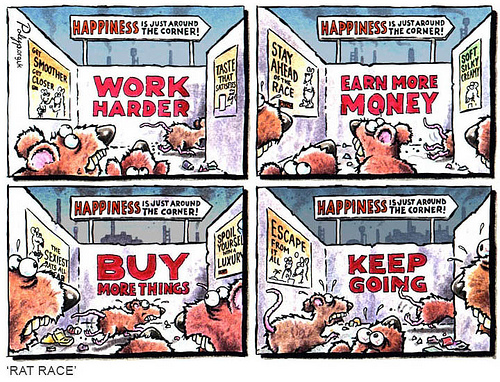
The theme of Rainbow Pie is loss: the loss of down homey (even homely) values and their replacement by a “monstrous fetish of commodities, their acquisition and their production through an insane scale of work and round-the-clock commerce and busyness” in America (Rainbow Pie, 68-69).
Joe Bageant in Belize
Here is an extended selection from Rainbow Pie, pp. 69-70. I for one have never read a better description of what ails us as a country:
Is it at all possible to regain a meaningful, positive, and satisfying expression of character while working in such a monolithic, non-human scale of “production”? Anybody else feel like America is just one big workhouse, with time off to shit, shower, and shop? Or is it just me? Must our jobs necessarily be the most important thing in our lives?
Yeah, yeah, I know, them ain’t jobs. In America we don’t have jobs–we have careers. I’ve read the national script, and am quite aware that all those human assets writing computer code and advertising copy, or staring at screen monitors in the “human services” industry, are “performing meaningful and important work in a positive workplace environment.” “Performing?” Is this brain surgery? Or a stage act? If we are performing, then for whom? Exactly who is watching?
Proof abounds of the unending joy and importance of work and production in our wealth-based economy. Just read the job-recruitment ads. Or ask any of the people clinging fearfully by their fingernails to those four remaining jobs in America. But is a job–hopefully, a good one–and workplace striving really everything? Most of us would say, “Well, of course not.” But in a nation that now sends police to break up tent camps and car camps of homeless unemployed citizens who once belonged to the middle class, it might very well be everything …
But you won’t hear anyone complaining. America doesn’t like whiners. A whiner or a cynic is about the worst thing you can be here in the land of gunpoint optimism. Foreigners often remark on the upbeat American personality. I assure them that our American corpocracy has its ways of pistol-whipping or sedating its human assets into appropriate levels of cheerfulness.
Rainbow Pie is a searing memoir on the loss of community in the U.S. and its replacement by commodities. Bageant shows how we came to embrace the lurid appeals of Pottersville at the expense of the humble values of Bedford Falls. The result: it’s no longer a wonderful life.
I have conservative friends (Yes, I do!) who express disfavor with higher education. They see higher ed as being in lockstep with liberal/leftist agendas. Things like gay marriage, aggressive feminism, multiculturalism, and diversity that focuses not on wide-ranging political views but on the politics of gender and race. They further see higher ed as being unfriendly to conservatives, hostile to organized religion (especially Christianity), and intolerant of alternative views that challenge leftist shibboleths.
There’s truth to this critique. I’ve been around enough liberal faculty members to recognize a certain collectivism, often manifested by smug superiority, in their treatment of anyone who challenges their views. So-called Birkenstock Bolsheviks are hardly immune to prejudice, including the refusal of job interviews or the denial of tenure to conservatives. Such prejudice is especially galling among faculties that pride themselves on tolerance.
But while conservatives fight loud skirmishes against conformist liberals in higher ed, they ignore real battles of enormous significance. The middle class in America continues to wither, even as the cost of higher ed spirals ever upwards (Americans now carry more student loan debt than credit card debt); financial and corporate elites continue to gain more power at the expense of the little guy, even in higher ed, which is increasingly obedient to business imperatives; the American empire continues to grow, and the individual rights of Americans continue to atrophy, even as higher ed willingly genuflects before the military-industrial-homeland security complex.
Everywhere in American society, including in higher ed, we see the exercise of power without regard to communal functions. And most liberals (and conservatives) in higher ed either kowtow to power or hunker down in their own little academic fiefs.
To liberals in higher ed, the power elites basically say: We’ll give you gay marriage, we’ll give you your left-leaning courses on feminist basket making in the Punjab. But we reserve real power, the power that translates into money and influence, for ourselves. Even liberal icons like President Obama are just the multicultural happy face on a power structure that continues to screw the little guy and gal.
Think about it. Whether you’re liberal or conservative, do you believe you have any real say in America? Any real power? Any real speech? Compared to financial and corporate elites, who are now citizens and who can outshout you with billions of dollars in political campaign “donations”?
Again, those wine-drinking and cheese-eating liberals in academe, with their smug, Prius- and Volvo-driven politics, may be annoying, but they have no real power except to annoy.
Of course, in some ways this is nothing new. President Dwight Eisenhower identified part of the problem: the growing domination of militarized corporate agendas in the name of “security.” What has made it worse is our permanent war footing, which both drives and justifies fascism-lite, and which works to break down the social contract. Even Ike couldn’t foresee the extent to which Washington and the Congress have become beholden to, and virtually owned by, major corporate and financial interests.
The character Gordon Gekko’s quote of “greed is good” from the movie Wall Street caught the Zeitgeist of the 1980s. Then in the recent sequel Gekko adds: “Now it seems it’s legal,” a statement as sardonically funny as it is indicative of America’s new 21st century Zeitgeist.
To preserve their power and perks, the rich and powerful use their usual divide and conquer strategy, in which they sic the middling orders on the welfare class. Look over there! A lazy welfare mom buying king crab legs using food stamps! Even as another CEO cashes in his golden parachute for $10 million and another luxury yacht.
The media serve power, the politicians serve money/power, and when politicians leave office, they cash in as well. It’s all a circle jerk in which the little guy gets hosed.
Colleges and universities, in the meantime, are divided or distracted by identity politics and the usual grievances and petty animosities, even as administrators increasingly align themselves with corporate types, who promise to run a tighter ship while cutting benefits (including health care) to temporary/contingent faculty.
So, my message to my conservative friends is this: Don’t worry about the leftist types in higher ed who get under your skin: they’re just parlor pinks. They have the power to annoy, and within academe they have a smidgen of authority. But they have no real power, especially when compared to our corporatist state, to multinationals, to the big banks, Wall Street, and the K Street lobbyists.
If you don’t believe me, if you continue to chew the carpet at midnight, pause for a moment and ask yourself this question: When was the last time Prius-driving liberals with their “Coexist” bumper stickers got $700 billion from American taxpayers in the TARP to bail them out?
My Mom and Dad worked in the candy factory in my hometown. They knew the demands of hard work at low pay
A friend of mine knew the big wigs at a leading manufacturer of agricultural equipment back in the late 1960s. He recalls reading an article back then in the Wall Street Journal about the company being sued for the deaths of farmers. The gas tanks on some of their tractors were exploding because they were on top of the engine and could overheat. My friend recalls walking in to the office of the chairman and CEO of the company and asking him if as a result of the case they were relocating the gas tank. The CEO replied they were not because that would be more expensive than fighting and settling the lawsuits.
That’s the logic of capitalism in a nutshell. The bottom line has no ethics. If you can save more money by settling lawsuits rather than reconfiguring an unsafe design, why not do so? A few maimed or dead farmers is a small price to pay for added profit. Right?
My father told me a similar story about the lack of empathy the rich have for the little people of the world. In the 1940s my dad worked grueling shifts in a candy factory, where conditions were as demanding as the pay was low. Several of the guys got together to demand a raise from the owners. When the time came to approach the owners, some of the guys lost their nerve, but not my dad. He told the owners that he deserved a dime per hour pay raise. The owners agreed to a nickel, followed by another nickel bump in the future. My dad agreed.
A month later one of the owners told my dad that the nickel pay raise was really stressing the company.
As my dad ruefully observed to me, all of the owners died millionaires. For my dad, the moral to the story was “That the rich have no sympathy or use for the poor.” That could stand as the moral to both of these stories.
Capitalism may be a great way for a lucky or plucky few to make lots of money, but its calculus is often bitter to those on the receiving end of its flawed products and feeble wages. And if you don’t believe me, just ask all those fast food workerslooking for a fair shake in today’s economy. Or all those minimum wage workers running hell for leather in huge fulfillment warehouses to meet the needs of Amazon.com.
The rich may have no sympathy or use for the poor, but the rest of us need to hold the big wigs to account, else the legacy of uncontrolled capitalism will continue to be bitter.
Education in my sense of liberating and strengthening (making articulate and uncompromising) the intellect is of course antithetical to much of what is going on in our schools and universities, which I would rather refer to by such terms as training, molding, socialization, mystification, memorizing of facts, obfuscation of meaning–all processes designed to produce intelligent citizens who are ready to execute jobs faithfully and not ask any questions about their meaning or purpose or value to fellow human beings.
(Christian Bay, Strategies of Political Emancipation, 1981)
Corporate society takes care of everything. And all it asks of anyone, all it’s ever asked of anyone ever, is not to interfere with management decisions.
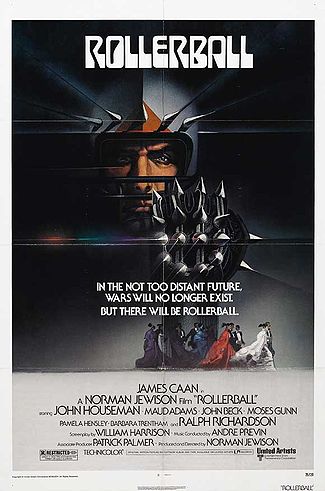
Mr. Bartholomew (played by John Houseman) in Rollerball, 1975
As a professor and lifelong learner, I see education as equal parts empowering and enlightening. Knowledge is power, as Francis Bacon said, and the lamp of learning helps to illuminate our lives.
But is education also about social control? Sadly, the answer is “yes.” Education that is simplified and standardized is often little more than indoctrination. Education that is too regimented, too centralized, too much like a factory, prepares students for a life of unquestioning obedience and unreflective conformity.
Authorities have often been keen to restrict or outlaw forms of knowledge that they see as undermining their privileges and power. Writing from Australia, Dr Teri Merlyn reminded me that:
There have been very direct, coordinated battles [against knowledge and reformers] – witness the censorship battles over Tom Paine’s ‘The Rights of Man’, when you could go to gaol for simply owning a copy, and the 19th Century ‘Church and King’ mobs sent to punish radical writers and publishers by burning down their houses … There are powerful social forces at work that have their self-interest at heart and see what they do in that context. Witness the great educator of the working class, Hannah Moore, writing to her Bishop at the turn of the 18th Century, assuring him whilst she was teaching these working class girls to read, sufficient for their service duties, they would never learn to write, for that would encourage them to aspire beyond their station.
Education today still largely teaches students to stay within their station. Today’s focus on vocational education is both salutary and one-dimensional. Students are told to get degrees as passports to a job. They’re not told to aspire to be skeptical citizens who dare to question (or even to supplant) authority.
And there’s the rub. We face difficult, seemingly intractable, problems in the world today. Global warming. Fossil fuel dependence. A widening gap between rich and poor. A military-industrial-intelligence complex that dominates our foreign policy as well as much of our domestic policy. Worrisome budget deficits. Unaffordable health care. The list goes on.
But our students are not being educated to address these challenges, at least not in any radical way, in the sense of getting to the roots of the problem.
Education, in essence, has largely become training, just another form of careerism. And the high student debt that many students incur in obtaining their “passport to success” ensures they are essentially indentured servants, forced to keep working to pay off their debt (and often to keep their health care benefits as well).
Even as students incur debt in the process of training for a career, higher education brags most loudly about its close ties to business and industry. Yet business and industry, as Teri Merlyn notes, “has effectively [outsourced] its responsibility to train its workforce, diverting that cost onto the public purse. In order to do that, it has infested educational language with its own terminology. The dominance of the Business Paradigm is now absolute.”
Just as college football is a feeder to the NFL, higher education is increasingly a feeder to business and industry. It’s a Rollerball world dominated by violent sports and corporate conglomerates.
Education, in short, has lost any sense of higher purpose. “Adapt to the world as you find it” is both the implicit and explicit message. And whatever you do, don’t rock the boat.
Part of the method is to destroy any sense of class identity among students. Today, virtually all my students self-identify as being members of the “middle class,” even though many are working class (just as I am a son of factory workers). In American society, we’ve lumped blue-collar with white-collar jobs, so that now janitors and fast-food workers (for example) think of themselves as middle class.
This is not to denigrate janitors or fast-food workers. Rather, it’s to highlight the calculated decline of class identity and solidarity in the U.S. If we’re all middle class, if we’re all bourgeois, why bother uniting in unions to fight for our rights? If we allegedly inhabit a post-class society of social mobility, education can then ignore ethical and societal questions of fairness to focus on workforce training and professional development.
As my Aussie correspondent, Dr Teri Merlyn, astutely noticed:
“That phenomenon of working class identity is a most unwilling one, so the strategy to co-opt the working class as nominal members of the owning class through the share and property markets was very successful. One might even suspect this recent ‘economic crisis’ [of 2008] as the ‘owners’ simply taking back what they see as rightfully theirs.”
Put differently, you can’t see you’re being screwed as a worker when you view yourself as an “owner” in your own right. And when you’re educated to conform, to produce the standard answer, to aspire to a respectable job (with your identity confined to that job), your consciousness will never be raised to challenge the system in any radical way.
In fact, your goal is to become the system, to reap its rewards for yourself, just as those that you now work for have done and are doing.
As we witness uprisings around the world, from Egypt to Greece to Brazil and elsewhere, we should ponder why there are not similar uprisings in the U.S. Is it because the U.S. really is, pardoning Voltaire, the best of all possible worlds? Or is it because our educational system immunizes us against any form of “socialism” (a curse word in American politics) or class consciousness?
Education, when it’s about getting the right answer that leads to the right job without ever questioning prevailing authority, becomes a status quo operation in social control.
To recognize that is not to surrender to it. Rather, it’s to begin to fight it.







 Bracing Views