
250 Years of America

What’s It All Mean?

BILL ASTORE

NOV 14, 2025

Next year we celebrate the 250th anniversary of America’s founding. There’s going to be the usual fight over what that anniversary should mean to Americans, and what lessons we should draw. For example, the Ken Burns series on “The American Revolution” starts this Sunday night on PBS. I’ll be watching it. If it comes close to his series on the U.S. Civil War, it should be interesting and informative.
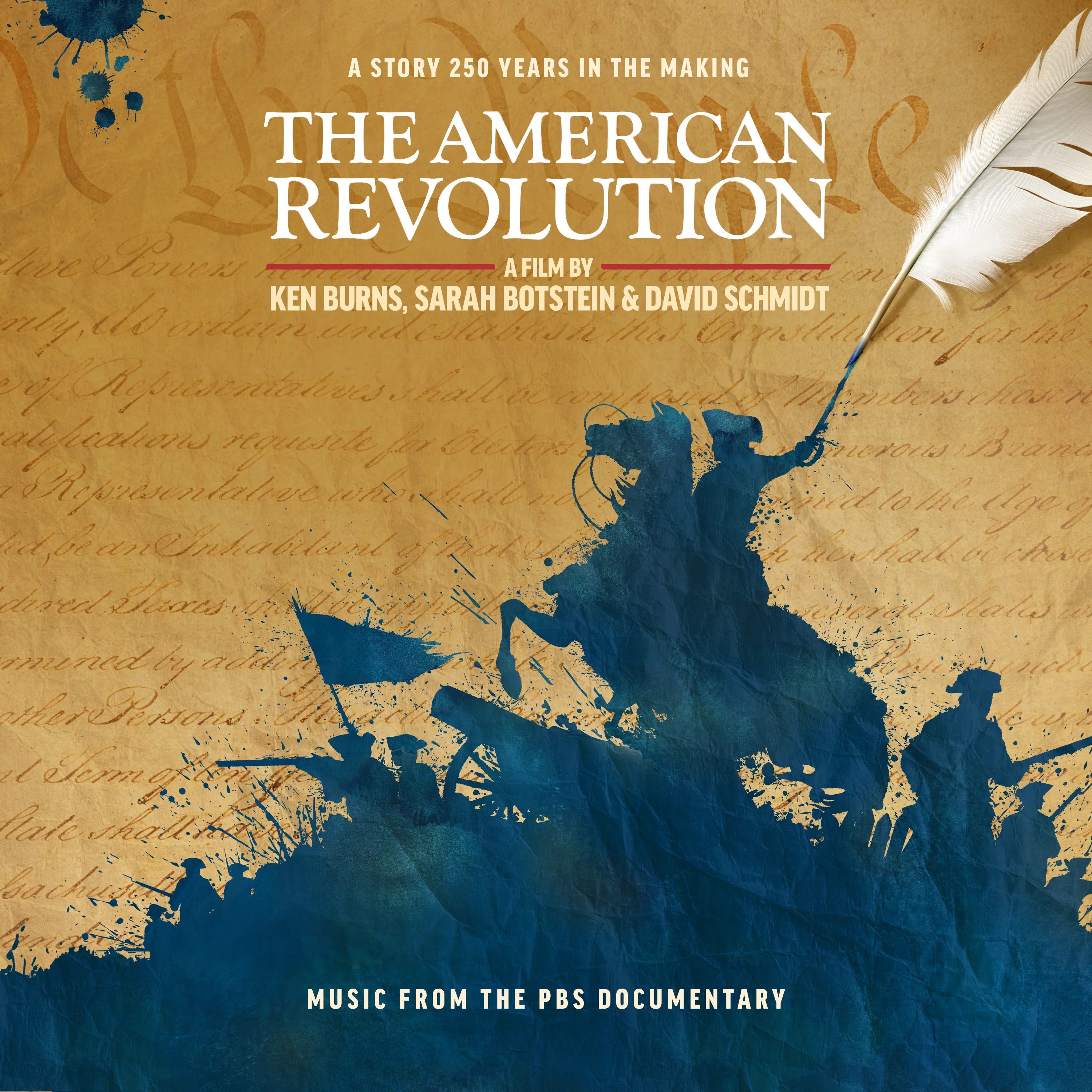
There are so many lessons we could take from the American revolution (or war of independence). Speaking as a retired military officer, I might stress the citizen-soldier tradition, the ideal of the Minuteman, the rejection of tyranny, the suspicion of large standing armies, the desire for independence and liberty, the courage to affix one’s name to a declaration that could end with your head swinging in the air.

I don’t know what lessons Trump & Crew will be selling, but something tells me they won’t be salutary. Lots of flag-waving, of course, along with American exceptionalism.

We know America was founded as an imperfect union. Life, liberty, and the pursuit of happiness wasn’t granted to slaves. Or indigenous peoples. Or women for that matter. (Let’s not forget women couldn’t vote for president until 1920.) The founders were mostly white men of property, with some holding “property” in slaves. For African-Americans, the “revolution of 1776” certainly didn’t prove revolutionary for them.

I would stress the idea of striving toward a more perfect union, recognizing the early republic was, in so many ways, imperfect. And that’s putting it gently. I’d stress as well what Benjamin Franklin said. As a form of government, a representative republic is better than most but also difficult to keep. And there’s the rub: today our representatives, our public servants, serve the owners and donors, the power brokers, rather than the people. A revival of the republic isn’t going to come from either major political party—they’re both beholden to money.

So how can we end this “tyranny” without a bloody revolution? Is a national revival possible without years and years of domestic conflict and strife? Meanwhile, can America reject its embrace of militarism and imperialism? Can it advance the rule of law as represented by the U.S. Constitution? Can we be touched, as Abraham Lincoln wrote, by the better angels of our nature?

1776-2026. 250 years of glorious imperfection. We can be better. We can do better. Let’s strive to live up to the promise of America.
The Madness of King Trump I

trump
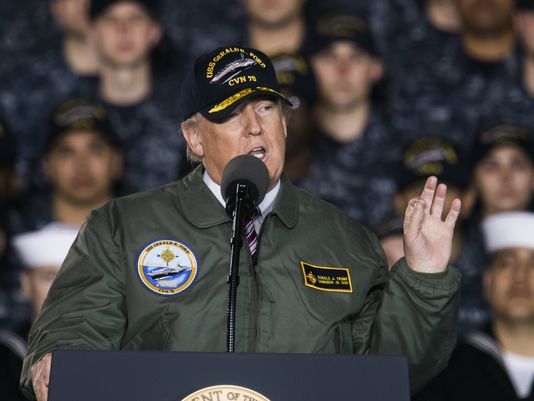
Mad King Trump, promising a new American Armada

W.J. Astore

At TomDispatch.com today, Rebecca Gordon writes about “American carnage” resulting from forever wars across the globe.  Her article references King George III, the “mad king” of Britain during the American Revolution, which raises an interesting point.  In Britain today, there’s a Royal Navy and a Royal Air Force, but there is no Royal Army.  That’s because the British acted to limit the authority of the monarchy, notably in the aftermath of the disastrous English Civil War and the rise of Cromwell in the 17th century.  Royal armies, the British learned, can be powerful forces for suppression of the rights of citizens.

In the 18th century, America’s founders tapped into a commonly held fear of royal armies to motivate fence-straddling colonists to rebel against King George III.  The colonists, as Gordon notes, accused the king in the Declaration of Independence of making “the Military independent of and superior to the Civil power.”

Thus it was when the colonists gained their independence, they acted to keep America’s standing army as small as possible while subjecting it firmly to civilian control.  America wanted no “royal” army, no class of aristocrats whose identity resided in that army, and certainly no leader who postured and posed as a military commander, as kings of that age typically did.

What America has witnessed since the end of World War II is the emergence of a large standing military that is increasingly identified with our president as a quasi-monarch “commander-in-chief.”  And like monarchs of the past, U.S. presidents now dress up in military uniforms, strutting about as if they literally are “the king” of their military.  (Trump, for example, talks of “my” generals.) Meanwhile, a U.S. president has, with the paramilitary CIA, his own private military augmented by a newly empowered military within the military, Special Operations Command, whose operations are often so highly classified as to be beyond effective civilian oversight.

America has regressed to the pre-revolutionary 17th century, when monarchs fought long wars against other monarchs, often in religious/confessional conflicts which were also motivated by money, power, resources, and similar concerns and which lasted for decades or even centuries.  These wars, often involving mercenaries and warrior-corporations, ran out of control and eventually came to bankrupt states, leading to an “enlightenment” witnessed at the creation of the United States, whose founders tried to rein in the tyranny of monarchs and their wasteful forever wars.

Sadly, America is no longer “enlightened.”  King Trump is a mix of Mad King George III and France’s imperious and vainglorious Louis XIV (“I am the state”), but without George’s or Louis’s interest in science and wider forms of knowledge.  And, much like royal courtiers of the past, King Trump’s courtiers are often “aristocratic” generals or slithering sycophants.

Consider a Trump courtier who’s been getting a lot of press lately: Sebastian Gorka.  He’s embraced the idea of a war against radical Islamic terrorism, tracing that war to jihadist flaws within Islam.  This virulent disease within Islam, Gorka and likeminded advisers to Trump argue, must and can be wiped out by American-led military action.  Much like Catholic King Philip II, who launched the Spanish Armada to extirpate the heresy of English Protestantism under Queen Elizabeth I, Trump and Gorka and Crew seek to unleash the American armada against the heresy of radical jihadist Islam.

King Trump I is about to escalate what he and his courtiers see as a religious/civilizational war.  Donning a military cap and flight jacket, Trump promises quick victories against a dastardly enemy.  Even as he pursues his wars, the U.S. military will continue to expand, as will paramilitaries and warrior-corporations.  Even as victory proves as elusive as the fighting is enervating to domestic concerns, Mad King Trump will persist.  America must win.  For he is the state.

Under Trump, as with mad King George III, big changes are ahead.  Just not the ones these monarchs imagined for themselves and their empires.