The National Security State’s Tentacles Are Strangling Our Lives

Those tentacles are reaching everywhere, America

By the Editors

Dan White’s article on Admiral (retired) McRaven’s new job as Chancellor of the University of Texas system provides a warning that must be heeded.  There is dangerous intent behind the appointment of military flag officers and national security operatives to leading public college and university leadership positions. The political elites, who usually appoint their like-minded allies to the governing boards of these institutions, see students in these public institutions of learning as potential activists against the status quo (as they were during the Vietnam War era). The governing boards usually vet the candidates for this office and thus want the candidate to mirror their own views of “national interests.” Those “interests” don’t include critical thinking or the idea of questioning authority.

Appointing a proven supporter (like McRaven) of the elites’ view of “national interest” in times like these, when their “interest” involves issues at variance with the common good, is looked at as a judicious decision. That means putting people into these offices who support the Patriot Act and its assault on citizens’ rights of free speech and assembly. It also means appointing people who support the government in its pursuit of perpetual war.

McRaven’s appointment to the University of Texas and the ridiculous appointment of Janet Napolitano, former head of the police state agency known as “Homeland Security,” as President of the university system of California are prime examples of this tendency. These selections show absolutely no interest in education but rather in administering and enforcing a sheep-like faculty and student body in these important institutions that otherwise could and should foster the serious questioning of our government and our oligarchical elites.

The elites know that stuffed shirts like McRaven and Napolitano can be counted on to foster bland conformity and blind compliance. That’s exactly why they’re hired for these offices. They work to ensure the subservience of higher education to the national security state. California and Texas are two of the biggest public university systems in the country.  Is it any accident they are controlled by Napolitano and McRaven, both former operatives and enforcers in the national security state?

Not only does the national security state conspire to control higher education but national sports as well. Consider the recent revelation of Department of Defense payments to NFL teams for on-field ceremonies in honor of the troops. These ceremonies, used for recruitment and propaganda purposes, were meant to seem free and spontaneous on the part of the participating football teams, even as behind the scenes the Department of Defense was feeding the teams taxpayer money in the millions for these ceremonies. It’s all about extending the reach of the national security state into all realms of life, to include sports.  That’s the real NFL scandal of today, not Tom Brady’s “Deflategate.”

Be afraid, America, as the national security state reaches out to control the message of higher education as well as professional sports.  High culture, low culture, it doesn’t matter.  The power elites want to control it all.

Awaken, patriotic American citizens, and resist.  Don’t let the national security state’s tentacles reach into more and more aspects of your and your children’s lives.


U.S. Foreign Policy: Too Much Captain Kirk–and William Shatner

Fire those phasers, America!

W.J. Astore

Much of our foreign policy is driven by fear–fear that if we don’t act, whether in the Middle East or Africa or elsewhere–the bad people there will thrive, after which they’ll come for us in the good old USA.  Most of us will recall George W. Bush’s saying, “We’ll fight them over there so that we don’t have to fight them here.”  But what if constantly fighting them “over there” is a guarantee of blowback right here in Homeland USA?

As one of my conservative friends (Yes – I have them!) says, “If they (the enemy) stay over there, I’ll airlift knives, forks, and condiments to them.”

Well, we’ll never know unless we try.  Call the cavalry home, America.  Send in the cutlery and condiments. And let’s see what happens.

OK, call me an isolationist.  All these American machinations in and deployments to the Middle East and Africa – paraphrasing Otto von Bismarck, to me they aren’t worth the bones of a single Pennsylvanian grenadier.  Isn’t the Middle East of today roughly the equivalent to the Balkans of c.1910?  Except for the oil, why bother with Iraq and Iran?  Radical Islam is no picnic, but a direct threat to the USA?  Come on.  If we leave, my bet is radical Islam will burn itself out.

Our constant interventions in the Middle East merely fan the flames of radicalism there, except when we throw fuel on the fire by sending lots of weapons or burning a Koran or wiping out (accidently, of course) another convoy of civilians with Hellfire missiles.  If we’re the enemy’s “Great Satan,” let’s leave and see how they do in a paradise without the US serpent in it.

The problem is that our foreign policy “experts” are subservient to national and international (corporate and financial) interests (among others), and those interests, along with their own hubris, make it impossible for them to order strategic withdrawals, much less imagine them.

Put briefly, our experts see the world as a stage (or as a staging area for military forces), upon which the USA must play the leading role.  They believe that if we don’t occupy that stage, and dominate it, some other country will, e.g. China will take over Africa.

The US military, meanwhile, favors “proactive,” forward-leaning, can-do, spirit.  The mentality is: We must act, or someone else will.  And our way of acting is necessarily a military way, since that is what our nation favors–and funds.

For my fellow “Star Trek” fans, the U.S. government is like the aggressive, action-driven Captain Kirk (even better: the bombastic, scene-hogging William Shatner), but without Mr. Spock or Dr. McCoy at his side to provide cool logic or warm compassion.  So all we get is warp drive and phasers (or lots of histrionic overacting and scene-stealing, a la Shatner).

We can do better, America.  Let’s start by calling the cavalry home.  Cutlery and condiments to the fore!

Two Afghan Stories

The three Afghan officers who went missing (Cape Cod Times)

W.J. Astore

Two Afghan stories this week suggest much about U.S. progress in winning hearts and minds there.  The first involves Hamid Karzai. Afghanistan’s departing president, the “Mayor of Kabul,” Karzai asserted that “America did not want peace for Afghanistan, because it had its own agendas and goals here.”  It’s easy to paint Karzai as a dissembling ingrate, which is exactly what the American ambassador to Afghanistan did in response. But it truly says something that Karzai, the recipient of more than $100 billion in developmental aid from the U.S. for Afghanistan (not including military aid!), portrays the U.S. as working against the interests of the Afghan people.  There’s one heart and mind the U.S. plainly didn’t win.

The second story involves three Afghan officers, one major and two captains, on a training mission at Camp Edwards in Massachusetts. The three officers, carefully vetted by U.S. Central Command, decided they had had enough of working with America. They drove to New York and attempted to enter Canada at Niagara Falls, seeking asylum, or so it seems.  There are three more hearts and minds the U.S. plainly didn’t win.

The details of this particular story are farcical.  The night before their unauthorized trip to the Canadian border, they enjoyed the pleasures of a genuine American strip club, where they were reportedly “well behaved” according to the club owner.  The next day, they were brought to an American shopping mall as part of their introduction to “the cultural aspects of American life.”  At the mall, they gave their escort the slip and headed to Canada, where they were eventually intercepted at the border crossing at Niagara Falls.  According to The Cape Cod Times, when the three Afghan officers went missing, among the first places the U.S. military looked for them was at the strip club.

Talk about an introduction to American culture!  First a strip club on Friday night, then a shopping mall on the weekend, then an unscheduled road trip to a major tourist attraction.  These Afghan officers may have absorbed too much of the American way.

In all seriousness, what does it say about the success of American efforts vis-a-vis Afghanistan when its former president denounces the U.S. and visiting Afghan officers, after sampling American fleshpots and temples to consumerism, attempt to flee to Canada?

There’s a lesson here about folly, if only we would care to draw it.

What Americans Value

There's no shortage of tanks in the USA
There’s no shortage of tanks in the USA

W.J. Astore

A sentiment attributed to Vice President Joe Biden is, Show me what’s in your budget, and I’ll tell you what you value.  These words resonate with me whenever I consider the yearly budget for the Department of Defense (DoD), Homeland Security, the Department of Energy (which handles nuclear weapons), and the various intelligence agencies (roughly 17; that’s why they form a community).

When you add up what we spend on defense, homeland security, “overseas contingency operations” (wars), nuclear weapons, and intelligence and surveillance operations, the sum approaches $750 billion dollars each and every year, consuming more than two-thirds of the federal government’s discretionary spending.

Here are some figures for Fiscal Year 2015 (FY15):

Defense: “Base” budget of $496 billion

Afghan War (not part of “defense”): $85 billion

VA: $65 billion

Homeland Security: $38 billion

Nuclear Weapons: $12 billion

FBI and Cyber Security (part of Justice Department budget): $18 billion

Total: $714 billion

Some of the budget of the State Department and for foreign aid supports weapons and training (“foreign military sales”), bringing us to roughly three-quarters of a trillion dollars, each and every year, on the military, intelligence, security, weapons, and wars.

How much do we spend at the federal level on education, interior, and transportation?  Roughly $95 billion.

When a government spends almost eight times as much on its military, security, wars, weapons, and the like as it does on educating its youth, fixing its roads and bridges and related infrastructure, and maintaining its national parks and land, is there any question what that country ultimately values?

Show me your budget and I’ll tell you what you value.  Sobering words. Sobering — and scary.

Six Patriotic Songs for Labor Day Weekend

sunset july 2014 006

W.J. Astore

(Also at Huffington Post at this link.)

This year the USA celebrates the 200th anniversary of The Star-Spangled Banner.  Francis Scott Key wrote the lyrics, inspired by the battle at Fort McHenry during the War of 1812, and it officially became the National Anthem in 1931.  Notoriously difficult to sing (my favorite rendition is Whitney Houston’s, complete with combat jets at the end), it’s a song of resolve and resilience suffused with images of battle, which only makes sense given the conditions under which it was composed.

Along with the National Anthem, the other patriotic song most commonly sung at sporting events and other official gatherings is God Bless America.  Penned by Irving Berlin in 1918 and made famous by Kate Smith’s renditions, it’s usually performed today without its placatory preamble (“While the storm clouds gather far across the sea/Let us swear allegiance to a land that’s free/Let us all be grateful for a land so fair/As we raise our voices in a solemn prayer”).  Most performances that I hear today are neither solemn nor placatory; they’re boastful in the sense of suggesting that God uniquely blesses America, that of course God blesses America.  We’re so great — how could He not?  Here I recall the saying of Abraham Lincoln that we must not presume God is on our side, but rather we must be concerned we are on His side.

A third and unofficial anthem for many Americans today is Lee Greenwood’s God Bless the USA, with its refrain “And I’m proud to be an American,” the popularity of which is consistent with the strongly affirmational qualities of the National Anthem and God Bless America.

What I miss today are three other patriotic songs from my youth: America the Beautiful, My Country, ‘Tis of Thee, and This Land Is Your Land.  Of course, these songs are still performed, but at least in my experience they are far less common than the preceding three.

Why is this?  I think it’s because these three songs are less bellicose, less boastful, and more insistent that the defining qualities of America are national beauty and brotherhood, liberty and freedom, and equality of access for all, rather than of bellicosity and boastfulness about being uniquely blessed and favored by God.

The most contrarian is Woody Guthrie’s “This Land.”  Most people have never heard the stanzas that Guthrie included in the original version that highlight inequality and suffering in the USA.  Yet even without those, Guthrie’s song stayed with me as a youth because it stressed that the land was made for you as well as me: that we share the land together as a form of commonwealth.

Here are the original stanzas to Guthrie’s song as he composed them in 1940:

This land is your land, this land is my land
From California to the New York Island,
From the Redwood Forest, to the Gulf stream waters,
This land was made for you and me.

As I went walking that ribbon of highway
And saw above me that endless skyway,
And saw below me the golden valley, I said:
This land was made for you and me.

I roamed and rambled and followed my footsteps
To the sparkling sands of her diamond deserts,
And all around me, a voice was sounding:
This land was made for you and me.

Was a high wall there that tried to stop me
A sign was painted said: Private Property,
But on the back side it didn’t say nothing —
This land was made for you and me.

When the sun come shining, then I was strolling
In wheat fields waving and dust clouds rolling;
The voice was chanting as the fog was lifting:
This land was made for you and me.

One bright sunny morning in the shadow of the steeple
By the Relief Office I saw my people —
As they stood hungry, I stood there wondering if
This land was made for you and me.

Recalling that my father and his family went hungry during the Great Depression, and remembering my father’s saying that the rich have no use or sympathy for the poor, I think he would have appreciated the honesty and integrity of Guthrie’s song.

On this Labor Day weekend, patriotic songs will be in vogue.  But let’s not sing just the first three above; let’s sing the final three, including Woody Guthrie’s.  Let’s stress, and stress again, the importance of national beauty and brotherhood, liberty and freedom, and equality of access for all.

Does Scrooge Reign in the USA Today?

Alastair Sim as Scrooge

W.J. Astore

My wife and I always watch “A Christmas Carol” around this time, the classic version with Alastair Sim as Ebenezer Scrooge.  Before his redemption, Scrooge is the ultimate miser, a mean-spirited soul who refuses to give to charity since he’s already paying taxes to support prisons and workhouses.  For his fellow man Scrooge has no concern, arguing that those who can’t support themselves had best die “to decrease the surplus population.”

By all accounts, including his own, Scrooge is a successful man of business, always keeping a positive balance on his ledger sheet, even if he has to pinch pennies to do so.  Generous he is not; you might say he passes nickels around as if they were manhole covers.

His partner Jacob Marley, dead for seven years, restores Scrooge’s humanity with the help of three spirits.  Perhaps Marley has the best line when he screams at Scrooge: “Business!  Mankind was my business!”  The Spirit of Christmas Present also has a powerful scene in which he reveals two slack-eyed and wretched children under his robe, “want” and “ignorance,” and tells Scrooge to be beware of both but especially of ignorance.

So, in this season of generosity of spirit, how are we doing in the USA?  Does the skinflint Scrooge rule, or does the redeemed one?  Well, just one factoid.  Unemployment benefits are due to run out for 1.3 million Americans on December 28th.  What are the options for those in want of a job?  Are there no prisons, no workhouses?  Perhaps they had best die to decrease the surplus population.

Extending unemployment benefits for another year would cost roughly $25 billion.  A penurious America can’t afford that, right?  But the USA can afford $633 billion for the new Pentagon budget and its “overseas contingency operations” (a great euphemism for war).  We’ll spend roughly as much money on these “contingency ops” ($81 billion) as we will on federal funding of education. So much for the Spirit of Christmas Present and his warning about the price of ignorance

Heck, we can even afford $355 billion over the next ten years to modernize America’s nuclear arsenal (this money is separate from the budget for the Pentagon). At the same time, more of the unemployed will see their benefits cut.  According to an article at Counterpunch, “Another 1.9 million who were projected to continue benefits in 2014 will also now lose them. Emergency benefits that up to now included extended benefits from 40-73 weeks, will now revert back to only 26 weeks. This occurs at a time when 4.1 million workers are considered long term unemployed, jobless for more than 26 weeks. Knocking millions off of benefits will likely result in 2014 in even more millions of workers leaving the labor force, which will technically also reduce the unemployment rate.”

That’s one way to reduce the official unemployment rate: Leave the unemployed so disillusioned with their plight that they give up looking for jobs.  When the “long-term” unemployed stop looking, the government stops counting them.  Did I hear someone bark “Humbug”?

The more our country follows the benighted Scrooge — the more ungenerous we are to the unemployed even as we ladle out benefits to the rich and powerful — the more we should fear a visit from that most horrifying ghost of all: The Spirit of Christmas Future.

A Bumper Sticker Collage

A collage of bumper stickers in Great Barrington, Mass.
A collage of bumper stickers in Great Barrington, Mass.  Photo by the author.

A sequel to our recent article, Dueling Bumper Stickers

I remember making collages in grade school; they were always good fun.  I came across this collage of bumper stickers yesterday at the Gypsy Joint Cafe in Great Barrington, Mass.  (They make scrumptious sandwiches and salads, by the way.)

It’s a representative sample of sentiments that are common to progressive places.  (But note the “Don’t mess with Texas,” which is representative of, well, Texans.)

It’s hard to argue with “Teach Peace” or “Peace Is Patriotic.”  “Folk the War” is pretty straightforward.  And I do like the idea of living the life that I love.  And I hope that the more I know, the less I need.

Now I need to find a similar collage of conservative stickers.  Will those stickers be as idealistic, as upbeat, as focused on sustainable food and education and music and peace?

I’m betting not.

W.J. Astore

Yes, Education is about Social Control

Don't ask questions. Don't seek answers. Enjoy the spectacle. (Image: Wiki)
Don’t ask questions. Don’t seek answers. Enjoy the spectacle. (Image: Wiki)

W.J. Astore

Education in my sense of liberating and strengthening (making articulate and uncompromising) the intellect is of course antithetical to much of what is going on in our schools and universities, which I would rather refer to by such terms as training, molding, socialization, mystification, memorizing of facts, obfuscation of meaning–all processes designed to produce intelligent citizens who are ready to execute jobs faithfully and not ask any questions about their meaning or purpose or value to fellow human beings.

(Christian Bay, Strategies of Political Emancipation, 1981)

Corporate society takes care of everything.  And all it asks of anyone, all it’s ever asked of anyone ever, is not to interfere with management decisions. 

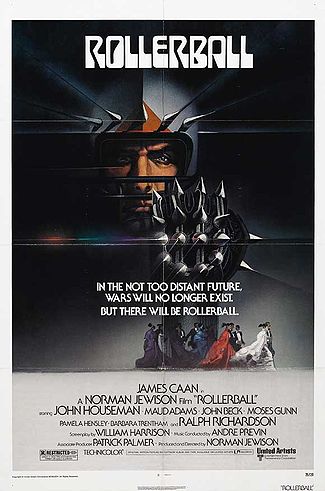
Mr. Bartholomew (played by John Houseman) in Rollerball, 1975

As a professor and lifelong learner, I see education as equal parts empowering and enlightening.  Knowledge is power, as Francis Bacon said, and the lamp of learning helps to illuminate our lives.

But is education also about social control?  Sadly, the answer is “yes.”  Education that is simplified and standardized is often little more than indoctrination.  Education that is too regimented, too centralized, too much like a factory, prepares students for a life of unquestioning obedience and unreflective conformity.

Authorities have often been keen to restrict or outlaw forms of knowledge that they see as undermining their privileges and power.  Writing from Australia, Dr Teri Merlyn reminded me that:

There have been very direct, coordinated battles [against knowledge and reformers] – witness the censorship battles over Tom Paine’s ‘The Rights of Man’, when you could go to gaol for simply owning a copy, and the 19th Century ‘Church and King’ mobs sent to punish radical writers and publishers by burning down their houses … There are powerful social forces at work that have their self-interest at heart and see what they do in that context.  Witness the great educator of the working class, Hannah Moore, writing to her Bishop at the turn of the 18th Century, assuring him whilst she was teaching these working class girls to read, sufficient for their service duties, they would never learn to write, for that would encourage them to aspire beyond their station.

Education today still largely teaches students to stay within their station.  Today’s focus on vocational education is both salutary and one-dimensional.  Students are told to get degrees as passports to a job.  They’re not told to aspire to be skeptical citizens who dare to question (or even to supplant) authority.

And there’s the rub.  We face difficult, seemingly intractable, problems in the world today.  Global warming.  Fossil fuel dependence.  A widening gap between rich and poor.  A military-industrial-intelligence complex that dominates our foreign policy as well as much of our domestic policy.  Worrisome budget deficits.  Unaffordable health care.  The list goes on.

But our students are not being educated to address these challenges, at least not in any radical way, in the sense of getting to the roots of the problem.

Education, in essence, has largely become training, just another form of careerism.  And the high student debt that many students incur in obtaining their “passport to success” ensures they are essentially indentured servants, forced to keep working to pay off their debt (and often to keep their health care benefits as well).

Even as students incur debt in the process of training for a career, higher education brags most loudly about its close ties to business and industry.  Yet business and industry, as Teri Merlyn notes, “has effectively [outsourced] its responsibility to train its workforce, diverting that cost onto the public purse.  In order to do that, it has infested educational language with its own terminology.  The dominance of the Business Paradigm is now absolute.”

Just as college football is a feeder to the NFL, higher education is increasingly a feeder to business and industry.  It’s a Rollerball world dominated by violent sports and corporate conglomerates.

Education, in short, has lost any sense of higher purpose.  “Adapt to the world as you find it” is both the implicit and explicit message. And whatever you do, don’t rock the boat.

Part of the method is to destroy any sense of class identity among students.  Today, virtually all my students self-identify as being members of the “middle class,” even though many are working class (just as I am a son of factory workers).  In American society, we’ve lumped blue-collar with white-collar jobs, so that now janitors and fast-food workers (for example) think of themselves as middle class.

This is not to denigrate janitors or fast-food workers.  Rather, it’s to highlight the calculated decline of class identity and solidarity in the U.S.  If we’re all middle class, if we’re all bourgeois, why bother uniting in unions to fight for our rights?  If we allegedly inhabit a post-class society of social mobility, education can then ignore ethical and societal questions of fairness to focus on workforce training and professional development.

As my Aussie correspondent, Dr Teri Merlyn, astutely noticed:

“That phenomenon of working class identity is a most unwilling one, so the strategy to co-opt the working class as nominal members of the owning class through the share and property markets was very successful.  One might even suspect this recent ‘economic crisis’ [of 2008] as the ‘owners’ simply taking back what they see as rightfully theirs.”

Put differently, you can’t see you’re being screwed as a worker when you view yourself as an “owner” in your own right.  And when you’re educated to conform, to produce the standard answer, to aspire to a respectable job (with your identity confined to that job), your consciousness will never be raised to challenge the system in any radical way.

In fact, your goal is to become the system, to reap its rewards for yourself, just as those that you now work for have done and are doing.

As we witness uprisings around the world, from Egypt to Greece to Brazil and elsewhere, we should ponder why there are not similar uprisings in the U.S.  Is it because the U.S. really is, pardoning Voltaire, the best of all possible worlds?  Or is it because our educational system immunizes us against any form of “socialism” (a curse word in American politics) or class consciousness?

Education, when it’s about getting the right answer that leads to the right job without ever questioning prevailing authority, becomes a status quo operation in social control.

To recognize that is not to surrender to it.  Rather, it’s to begin to fight it.

Avoiding Egocentrism and Hyper-Competitiveness

Image

One of my favorite quotations comes from the Jamaican bobsled coach.  Remember how the Jamaican bobsled team captured the world’s fancy?  A bobsled team from the Caribbean … how crazy is that?  They weren’t very good, but so what?  They gave it their all.

Anyway, here’s the quotation:

“If you’re not enough before the gold medal, you won’t be enough with it.”

As soon as I read it, I recognized the wisdom and truth of those words.

Medals, trophies, awards, titles: they won’t fill the emptiness inside.  Oh, they’ll make you feel good for a few hours or a few days, but the feeling soon wears out.

We live in a hyper-competitive society in which it’s all about “winning,” whatever that means.  So focused are we on winning — which is usually both short-term and ephemeral — that we forget what’s really important in life.  Family, friends, health, a life of meaning and service, stuff like that.  Stuff that you may not win a gold medal for, but the stuff that truly matters.

A society based on competition and consumerism always pressures us to associate winning with acquisition.  I need that gold medal for affirmation!  And if I can’t get that, at least I can buy that Lexus SUV, that Kate Spade bag, or some other shiny object that feeds my ego.

Forget about medals and ribbons and titles.  Living a life of meaning is its own reward.

W.J. Astore