More “Great Power” Competition!

Near-Peers? Peers? Competitors? Great Powers?

W.J. Astore

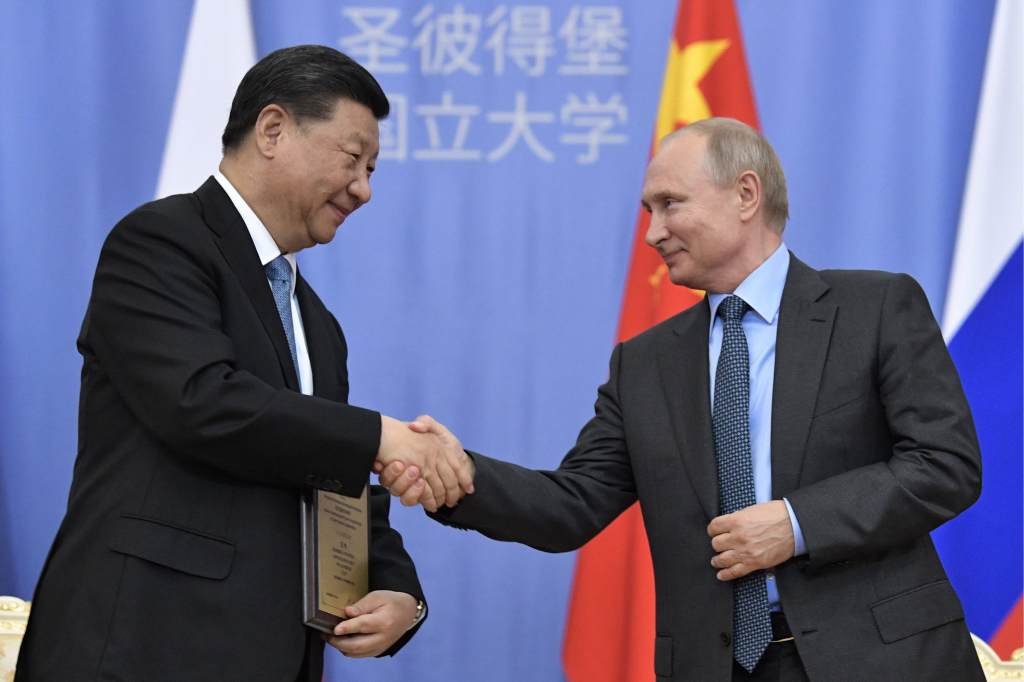
A colleague who teaches at one of America’s many war schools tells me that great power competition is trendy again, the U.S., it goes without saying, being the greatest power of all, and China and Russia being the main “near-peer” rivals to greatness.  The competition, of course, is defined primarily in military terms and is measured, at least at the Pentagon, by the amount of money Congress allocates to each year’s defense budget.  Thus the U.S. military, in (falsely) arguing that it’s falling behind the Chinese navy in ships, for example, establishes the quick-fix solution as lots more money for the U.S. Navy to build more ships.  Similarly, the Air Force wants more F-35 jet fighters, B-21 nuclear bombers, and new land-based ICBMs, also measures of “greatness,” and the Army wants 500,000 troops on active duty, presumably because it’s a nice round number, even as it’s failing miserably to meet yearly recruiting goals, forcing it to settle on a force of roughly 450,000 (more or less) effectives.

Naturally, the solution is never to downsize the mission given a somewhat smaller force; it’s to do whatever is possible to expand the pool of recruits, even if that means “fat camps” and remedial teaching to help potential soldiers reach weight goals and test scores so that they qualify for basic training.  Too fat or too dumb?  Join the pre-Army!  Lose weight fast and get smart quick so that you too can eventually enlist and be sent to foreign lands to kill people.

Recruitment shortfalls is a micro issue garnering attention in Congress even as the macro issue of China and Russia as great power competitors serves as a welcome change of subject from colossal military failures in Iraq and Afghanistan.  And there’s the rub: the U.S. military has learned nothing from those failures except, as Barack Obama might say, to look forward, not backward, and to inflate China and Russia from regional powers to near-pears or even to peers.  As my war school colleague put it to me, somewhat ambiguously, “they” have big battalions and lots of nukes and have shown the will to use them, so America must be ready to respond in kind.  Yet the only country to have used nukes against cities is the United States at Hiroshima and Nagasaki, and the U.S. continues to outspend China on weapons and war roughly by a factor of three and Russia by a factor of ten. 

So, which country is really driving all this militarized “competition” among the so-called great powers?
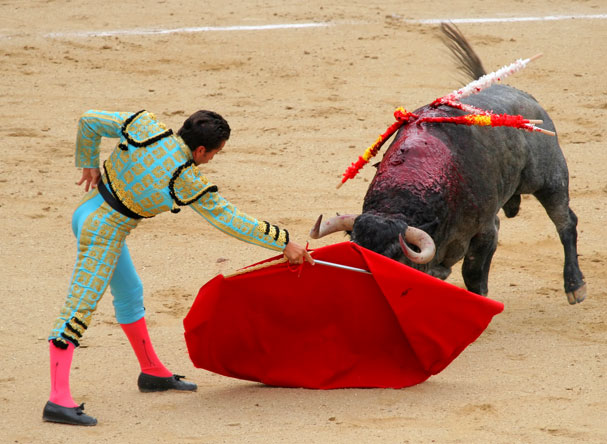
The U.S. Military as a Bull

It’s not going well for the bull

W.J. Astore

About 15 years ago, I was talking to a U.S. Army lieutenant colonel who’d served with the 101st Airborne as a battalion commander in Iraq.  He told me his troops were well trained and packed a tremendous punch.  An American platoon, given its superiority in firepower, communications, and the artillery and air support it can call on, could take on enemy units three times its size and win (easily).  Yet this tremendous advantage in firepower proved politically indecisive in Iraq as well as places like Afghanistan and Vietnam.

The typical U.S. military response is to argue for even more firepower – and to blame the rules of engagement (ROE) for not allowing them to use it indiscriminately.

The U.S. military has optimized and always seeks to optimize its hitting power at the sharp end of war.  It takes pride in its “hardness” and its “warriors.” But the skirmishes and battles it “wins” never add up to anything.  If anything, the more the U.S. military used its superior firepower in Iraq as well as places like Vietnam and Afghanistan, the more collateral damage it spread, the more people it alienated, the more the results became retrograde.

Even as U.S. leaders cited impressive (and false) metrics to show “progress” about districts “pacified,” or how many Vietnamese or Afghan or Iraqi troops were “trained” and ready to assume the roles of U.S. troops, the truth was that U.S. military units were sinking ever deeper into quagmires of their own making.  Meanwhile, elements within Vietnam or Afghanistan or Iraq, enabled by America’s own military-industrial complex, worked cleverly to extract more wealth and resources from a U.S. government that was only fooling itself and the American people with its lies about “progress.”

Let’s take a closer look at the Afghan War as an example.  The military historian Dennis Showalter put it memorably to me.  He talked of Taliban units offering “symmetry,” or fighting as American units are trained to do, only under exceptional circumstances, and typically to the Taliban’s advantage (e.g. small-unit ambushes using IEDs that drove U.S. troops to respond with massive firepower).  Since U.S. troops are adept at reacting quickly and deploying massive firepower, they believe that this is war’s cutting edge.  Find ‘em, fix ‘em, kill ‘em, is often the start and end of U.S. military strategy.

As Showalter put it: Like a bull the U.S. military rushes the Taliban cape as the sword goes into its shoulders.  If you’re the enemy, wave that cape – just be sure to sidestep the bull’s rush.

Yes, the U.S. military has impressive firepower. Yes, no one projects force like the U.S. military. Yes, the U.S. military can charge and hit with bullish impact. But for what purpose, and to what end? The bull in a bullfight, after all, doesn’t often win.

And when you move the bull from the fighting ring to a delicate situation, a more political one, one that requires subtlety and care, things go very poorly indeed, as they do when bulls find themselves in china shops.

Is Ukraine Winning?

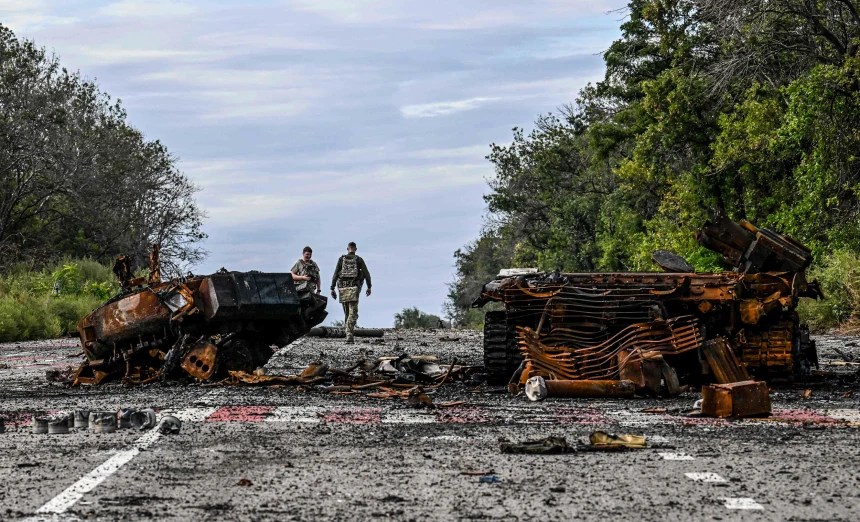
The detritus of war, but it’s Ukraine that’s bearing the brunt of war damage

W.J. Astore

At NBC News today, I saw this headline: “Ukraine’s offensive in the east surprised Russia — and it may be a turning point in the war.” Russian forces are retreating, but whether this represents a decisive turning point remains to be seen. Still, Ukraine resistance seems steady, and Russian will unsteady, at this moment in the war.

Surely, this is good news — or is it? With all the fighting taking place in Ukraine, the longer the war lasts, the worst it will likely turn out for Ukrainians. Turning points often are illusory: just ask all those U.S. generals who spoke of turning points in Afghanistan and Iraq over the last two decades. The best case scenario here is for Ukraine to use its military advantage and push for a favorable diplomatic settlement. I would hope Vladimir Putin might also see the wisdom of ending a war that has cost him more than he likely imagined when he started it earlier this year (as Andrew Bacevich explains at TomDispatch).

Too many Americans, it seems to me, are determined to see Russia suffer as much as possible. With Russia, the Pentagon’s argument goes something like this: Putin is a malevolent and irredentist dictator.  Without NATO expansion, the Baltic States would already have been reabsorbed by Russia, with Poland and other (former) eastern bloc nations next on Putin’s target list.  Putin, a “clear and present danger,” is only kept in line by U.S. and NATO military power, because his goal is a new Russian empire with borders much like those that Russia had in 1914 or, if that proves overly ambitious, 1989 before the Soviet collapse.  Only a resolute America (and now Ukraine) stands in his way, but that requires massive military spending in a renewed effort at containment, together with yet more spending on America’s nuclear triad.  “Containment” and “deterrence,” once again, are the neutral-sounding words that enable open-ended U.S. military spending against Russia (and of course Red China as well).

Truly what we don’t need is Cold War 2.0. The world barely survived the first one, and that was before climate change emerged as the serious threat that it is today.

In the 1990s, the U.S. and NATO rejected the idea that Russia maybe, just maybe, could be incorporated into the European Community in a security architecture respectful of Russian history and goals while also securing nascent democracies in former Warsaw Pact countries. Today, that rejection is complete, as Russia and Putin are dismissed as irredeemable deplorables, to borrow a phrase from Hillary Clinton.

Yet I wouldn’t underestimate Russian resilience. Just ask Hitler, Napoleon, or Charles XII about that. They all invaded Russia and got spanked. The time has come not to continue the vilification of Russia but to reach accords that Russians, Ukrainians, and other Europeans can all live with.

You wage war long, you wage it wrong, especially when it’s being waged on your turf. Short of total capitulation by either side, which is unlikely, let’s hope Zelensky and Putin can find a way to resolve their differences Let’s hope as well that the U.S. sees the wisdom of facilitating a diplomatic settlement that ends the killing.

Though President Biden previously has suggested Putin must go, I’d be very careful what he wishes for. Russia under new leaders may prove even more volatile and vengeful than U.S. leaders think it’s been under Putin.

U.S. Propaganda Gets Even Heavier

W.J. Astore

You’d think watching the U.S. Open finals in tennis would constitute a break from incessant propaganda about war, but you’d be wrong to do so.

I’m a tennis fan so I watched this weekend’s finals with interest. A Pole defeated a Tunisian in the women’s final and a Spaniard defeated a Norwegian in the men’s final, which is a fair representation of the international flavor of the field. At both trophy ceremonies, what did the U.S. Tennis Association choose to highlight? The USTA boasted of raising $2 million for Ukraine war relief while describing the Russian invasion of Ukraine as “unprovoked.”

First of all, why is Russia’s war with Ukraine being mentioned at both trophy ceremonies? What has this got to do with tennis?

Second, why is the USTA raising money for Ukraine war relief? Shouldn’t it be raising money for, well, tennis? Perhaps for scholarships for underprivileged kids around the world to play tennis? After all, the U.S. taxpayer is already on the hook for nearly $70 billion in aid to Ukraine, roughly half of it in the form of arms and armaments. Compared to this sum, $2 million is a drop in the bucket.

Third, why is Russia’s invasion always described as “unprovoked,” as if Putin and Russia simply woke up one day and decided to invade a former Soviet republic?

Let’s think back to America’s invasion of Iraq in 2003. Was that also “unprovoked”? (After all, Saddam Hussein had no WMD and nothing to do with the 9/11 attacks.) Did the USTA raise money to help Iraqi civilians recover from U.S. war damage and crimes? Not that I recall.

Earlier this year, at Wimbledon, players from Russia and Belarus were banned from the tournament. (I guess because they were waging war with their tennis rackets for Putin?) At the U.S. Open, they were allowed to play but not under the flags of their countries. Do you recall U.S. tennis players being banned because of the “unprovoked” Iraq War? Neither do I.

The U.S. mainstream managers — even tennis officials! — are so concerned to describe the Russian attack as “unprovoked” that you know that they know it was provoked — and they’re at pains to deny it, even during tennis tournaments.

The heavy hand of U.S. propaganda only gets heavier when it intrudes on what should have been an apolitical and celebratory trophy ceremony for international athletes.

Note: I am, of course, against Russia’s invasion of Ukraine. What I would like to see is the U.S. supporting diplomatic efforts to end the war as quickly as possible. Currently, we hear much of Ukrainian victories, but it’s possible the war will only grow longer and more deadly as a result of these “victories.”

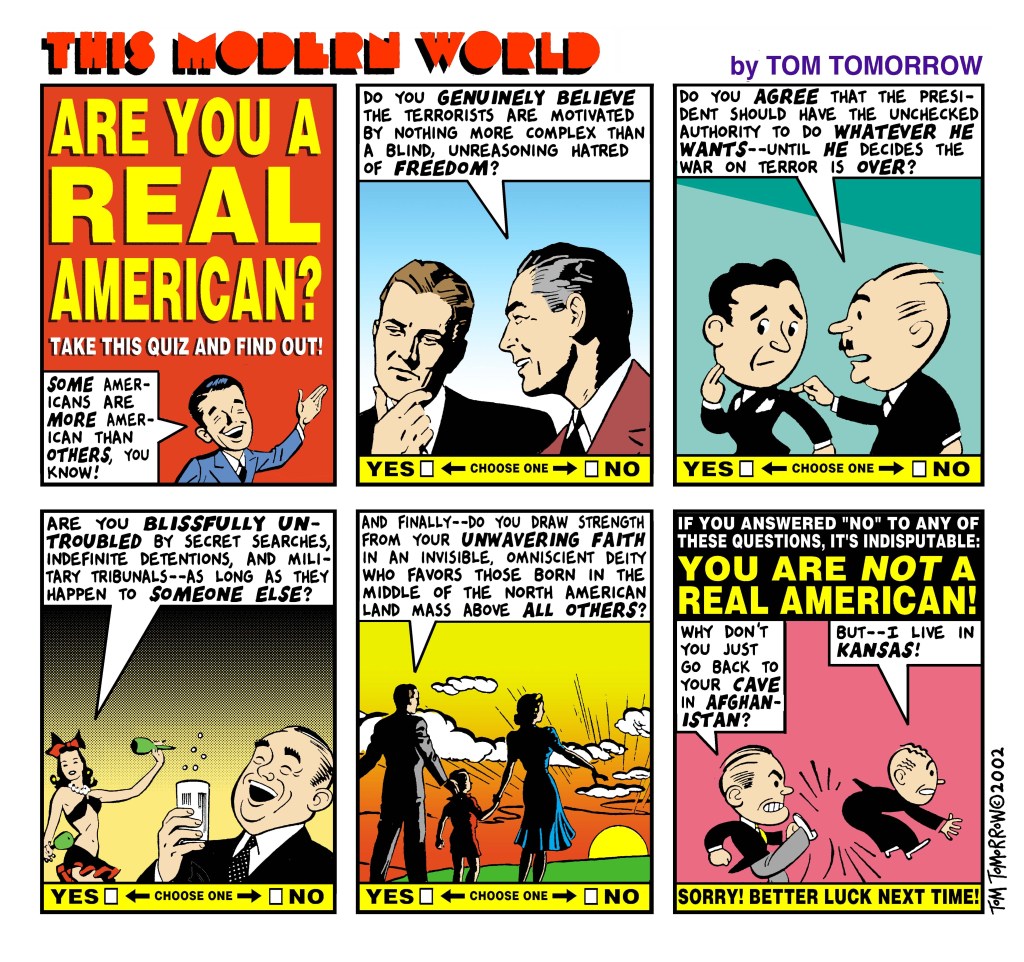
A classic “Tom Tomorrow” cartoon from 2002. Now, of course, “real Americans” must believe Russia’s invasion of Ukraine was completely unprovoked, that Ukraine deserves a blank check in U.S. taxpayer funds, and that Russian athletes should be ashamed of their own flag

Twenty Years After 9/11

We’re always told to remember 9/11, as if we might forget it. In a way, we’re also told how to remember. We’re supposed to remember the victims; the brave and selfless first responders; the idea of patriotism. We’re not supposed to reflect on a painful defeat (for that was what 9/11 was). We’re not supposed to reflect on how Bush/Cheney failed America, both before and after 9/11.

A momentous event like 9/11 requires a balanced perspective. It shouldn’t be just another day to wave the flag and remember heroes. Indeed, when we remember the heroes of that day, let their sacrifice inspire us to do better and be better, as I argue in this article from last year to mark the 20th anniversary of 9/11/01.

wjastore's avatarBracing Views

W.J. Astore

When the first hijacked plane hit the World Trade Center on 9/11/2001, I was at the Air Force Academy in Colorado Springs. I was in my car, listening to the radio, just outside the North Gate, where a B-52 sits on static display as a symbol of American power. The first reports suggested it was an accident, but it soon became apparent it was a deliberate act. As a second and then a third plane hit the WTC and the Pentagon, I remember hearing speculation that 9/11 could have a higher death toll than the Battle of Antietam, the single bloodiest day of the U.S. Civil War. It was bad enough, if not that bad.

I remember confusion and chaos in the government, and the use of the word “folks” by President George W. Bush to describe the hijackers.  Very quickly, his rhetoric changed, and soon America would…

View original post 641 more words

Joe Biden’s Failure to Raise the Federal Minimum Wage

W.J. Astore

When Joe Biden was running for president in 2020, he promised to raise the federal minimum wage for workers from $7.25, where it’s sat since 2009, to $15 an hour.  Today, despite his promise and surging inflation, the federal minimum wage remains at $7.25.

My Democratic friends tell me that Biden wants to keep his promise and that it’s not his fault that nothing has been done.  Senators Manchin and Sinema are obstructing him.  Senate parliamentary procedures are roadblocks too.  Poor Joe Biden.  He’s the “leader of the free world,” the most powerful person in America, but his powers are limited by recalcitrant members of his own party, who are blocking Lunch Bucket Joe from helping workers across America.

I’m not buying it.  Occam’s Razor applies here.  Since 2009, the Democratic Party hasn’t raised the minimum wage because the leadership hasn’t wanted to.

Sure, Democrats say they want to do it.  But I trust Americans are familiar with politicians and the sincerity of their “promises.”

Consider the promises made by Barack Obama and Joe Biden to codify Roe v. Wade into law; indeed, Obama in 2007 said it would be his top priority as president, only to backtrack when he took office.  Biden in 2020 made similar promises but accomplished nothing.  But I’m sure it’s not their fault.  They tried but something or someone was always in their way.

Sadly, Democrats like Obama and Biden are compromised, corrupt, and, with respect to helping workers, not that much better than the MAGA Republicans they profess to despise as enemies within.

Consider again the federal minimum wage, which hasn’t gone up since 2009.  Obama/Biden had nearly eight years in office to raise it above $7.25 but they never did.  When Bernie Sanders ran his insurgent campaign in 2015-16, he made a “radical” proposal to raise it immediately to $15.  Hillary Clinton countered with $12 to be phased in over time.  Under much pressure, she eventually gave unconvincing lip service to $15.  She lost the election, of course, to a trumped-up celebrity apprentice and failed casino owner.

Despite this history, my Democratic friends tell me I simply don’t understand separation of powers in the U.S. government.  Presidents Obama and now Biden truly wanted to raise the federal minimum wage but were hamstrung by Congress and members of their own political party.  Interestingly, my Democratic friends rarely mention how their party is aligned with big business and corrupted by big money (as is the Republican Party).

There’s a clear reason why the federal minimum wage remains stuck at $7.25 an hour: Establishment Democrats are simply against raising it.  Sure, they always promise to, but then something always goes wrong.  Just as Lucy always promises to hold the football so Charlie Brown can kick it, only to pull it away every time Charlie goes to kick it.  She doesn’t know why; it just happens.

Once again, the $15 football is swept away when Charlie Brown goes to kick it (Joey Waggoner)

I come back to the words of Thucydides: The strong do what they will and the weak suffer as they must.  Powerful people and institutions, either in or aligned with the Democratic Party, are against raising the federal minimum wage, including Joe Biden. My proof is the total lack of results since 2009 in raising that wage.

Few things would help women and minority workers more than a $15 minimum wage, simply because women and minorities have more of the jobs that don’t pay well.  Unfortunately for them, they can’t hire big-money lobbyists or make huge campaign donations to the Democratic Party.  In America, where money is speech, they simply don’t have the money to have their say.

Assuming Biden runs again in 2024, I’m guessing we’ll hear another promise about a $15 minimum wage.  And then, assuming he wins, we’ll hear yet more excuses about how Joe just can’t get it done because of the filibuster or whatever.  Just think Charlie Brown, the football, and the American worker landing flat on his back as promises for fairer wages yet again go unfulfilled.

Transvestism as a Cultural Phenomenon and a Political Issue

Tony Curtis with Marilyn Monroe, “Some Like It Hot”

Richard Sahn 

Discussions and readings about social deviancy are exciting in the liberal arts college classroom. One example of deviant behavior in contemporary American society I always looked forward to discussing is trans-vesting. The word means cross-dressing, intentionally wearing the garments culturally designated for the opposite sex, a taboo violation depending on where you live.

In a hypothetical society where men and women are not socially or even legally restricted in what they can wear it would be impossible to cross dress or trans vest. In most Western countries today, it is very difficult if not impossible for women to cross dress. The reason should be obvious:  it is now acceptable for females to wear clothing, such as trousers, once meant only for males. On the other hand, in a Muslim culture or community a woman can, indeed, cross dress if she wears, say, coat and tie.  Transvestites like to argue that if a woman can wear “male” clothing why can’t men wear “female” garments?

I’m not a transvestite myself so how did I become invested in the subject and, more importantly, why am I such a fan of transvestism? It all started when I asked a friend of mine who knew a transvestite from New York City to invite someone he knew to speak to my sociology class when I was covering social deviance. At the end of the class where he spoke, I interviewed him on tape. According to Michael, the guest speaker, and to subsequent research I did on the subject, there are five psychologically significant reasons why men trans vest:

  1. Auto-eroticism: When a transvestite looks at himself in the mirror, he becomes physically attracted to himself. The image in the mirror is an alter-ego. Perhaps a masturbatory fantasy.  No dating service required. And no flowers.
  2. Benign rebelliousness: Cross-dressing is a type of rebellion against mainstream society.  The transvestite is a rebel with a cause.
  3. Attracting other males (the drag queen). Most transvestites are heterosexual, but a sub-category of cross-dressers are gay males who, while in drag, want to be with other males. And there is a sub-category of this sub-category, namely, gay transvestite males who desire other males in drag.
  4. Sociological envy: Getting more respect or attention appearing as a female. The cross-dresser may feel that he lives in community that is more concerned with the rights of girls and women than with boys and men. As comedian Rodney Dangerfield always used to say as part of his stand-up act, “I get no respect.” (Perhaps Rodney shouldhave become a transvestite.) 
  5. Finally, female impersonation by a male actor on stage, such as the old Milton Berle and Flip Wilson shows or Tony Curtis and Jack Lemmon in the movie, “Some Like it Hot.”

As a straight male I welcome the cross dresser. I want to live in a society, or at least a community, where LGBTQ+ is acceptable, maybe even encouraged. Frankly, I take delight in people who exhibit forms of unconventional behavior and desires which are harmless to the public. They are a relief from those who consistently conform to conventional dress code norms.  I simply feel freer, socially and even legally, to engage in unconventional behaviors and conversations.

Spare us from the xenophobes and haters in politics who would return us to the “respectable” conformist behaviors of other eras.

Clarifying Notes

A transvestite is not a transsexual. The latter is a person who literally changes physically, and to some extent, physiologically to the opposite sex—the so-called sex change operation. The transvestite male only identifies temporarily as a female and thus usually has no problem using restrooms designated for males. (Of course, he might have a problem if he is still dressed in drag with other males thinking he is female.)

Why do some people, notably men, fear transvestites? My guess is that they see the male in drag as a threat to their masculinity or male identity, especially if they have the slightest desire (perhaps on an unconscious level) to wear female garments.

What about legal rights for trans people? My position is that in any society people should be free from the fear of being abused for appearing the way they want to appear. Anyone who abuses another person for his/her/their appearance should be subject to fines or imprisonment.

Richard Sahn, a retired sociology professor, is an occasional contributor to Bracing Views.

Unhappy Labor Day

W.J. Astore

Saw this reminder today and thought of how President Joe Biden has consistently failed to deliver to laborers across America:

President Biden campaigned on the promise of setting the federal minimum wage at $15, which some argue is long overdue and even inadequate. The current federal minimum wage is $7.25, and has been since 2009 when it was last increased. 

Biden had the opportunity, once he was elected, to act on this promise. He chose not to. As early into his administration as February, when the Senate Parliamentarian (an unelected position) ruled that raising the minimum wage to $15 could not be included in Biden’s “American Rescue Plan” bill, Biden gave up the fight. “It just doesn’t look like we can do it,” Biden said, despite the fact that his own Vice President Kamala Harris could have easily overruled the Parliamentarian. 

So I guess Biden’s new tactic is to focus on the MAGA “fascists” and distract people from issues like his failure to keep his promise on a $15 federal minimum wage.

Whether this will work remains to be seen. Supposedly, women are energized to vote because of the SCOTUS decision against abortion, but again both Biden and Barack Obama, after promising to codify Roe v. Wade into law, did nothing. So why are women energized to vote for the do-nothing Democrats?

Meanwhile, Ukraine is getting even more money for a seemingly endless war with Russia, even as America faces an impending crisis over millions of pending evictions due to failure to pay rent. There’s a trillion dollars for the Pentagon and nearly $70 billion for Ukraine but forget about rental relief for millions of Americans greatly stressed by Covid-19, inflation, and mostly flat wages.

Happy Labor Day, everyone.

My dad always said that the harder he worked physically, the less he got paid

Joe Biden’s Red-Tinged Speech

W.J. Astore

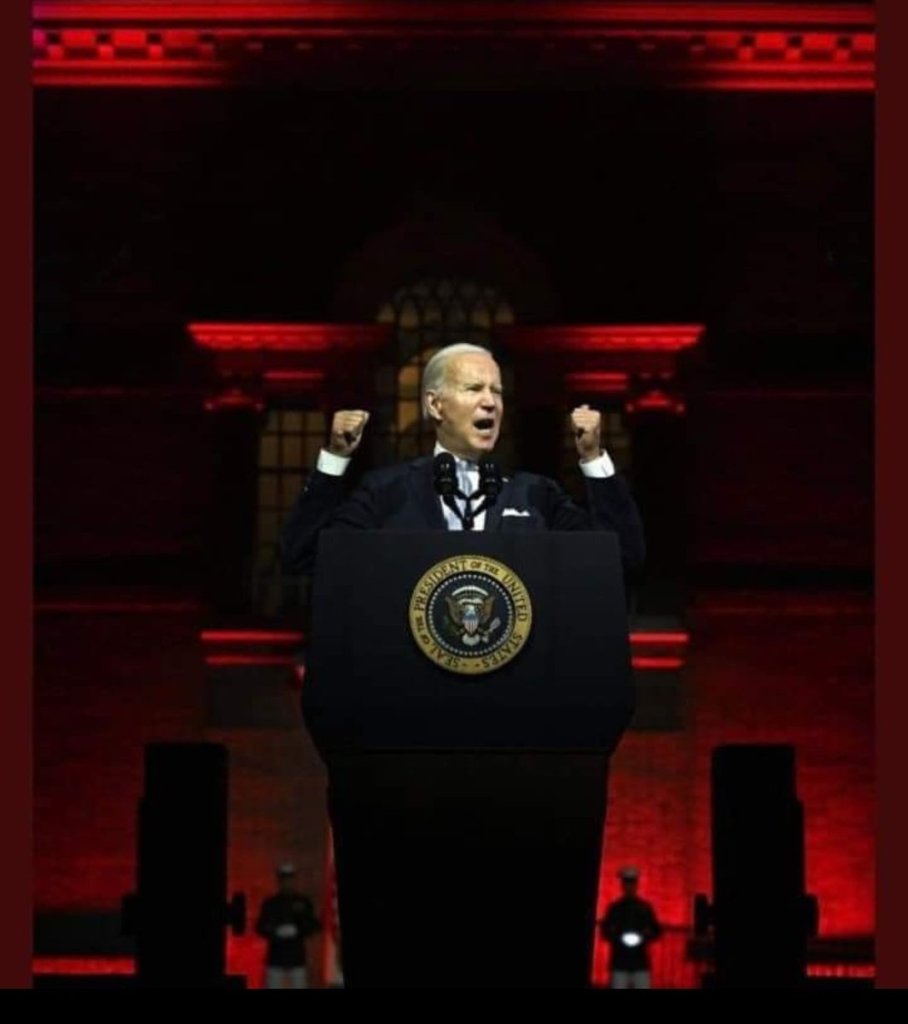
President Joe Biden denounced “extreme MAGA ideology” at a recent speech at Independence Hall in Philadelphia. I’ve been to Independence Hall, but never did I picture it like this, lit in a garish red light:

Readers here know I’m critical of Biden and Donald Trump. I don’t want either man to get a second term. And MAGA, as in make America great again, is a movement that has cult-like elements in the way it elevates Trump as some kind of leader/savior figure. Being critical of MAGA is one thing, but Biden’s speech had all the subtlety of the red-tinged image above.

Having watched too many episodes of “Star Trek,” what I think of here is Red Alert. But painting all Trump supporters with the same red brush only aggravates tension and division.

Sorry, I don’t see my MAGA neighbor as my enemy. He or she is a fellow American, probably one who’s frustrated with the system as it exists today and is seeking an alternative to politics as usual. The shameful thing is our country’s political duopoly, which offers only two choices, Biden or a Biden clone versus Trump or a Trump clone. Maybe the “enemy within” is the duopoly itself?

Biden’s speech was disheartening. The way to win people over is not to paint your rival in red. Give people hope. Give them meaningful reforms. A $15 federal minimum wage. Affordable health care. Higher education that doesn’t lead to huge personal debt. Environmental policies that preserve the earth and address climate change. An end to gargantuan military budgets and overseas wars. Heck, I’ll settle for potable drinking water in Jackson, Mississippi and Flint, Michigan.

Railing against an “enemy” is easy. Sharing the fruits of America equitably among all Americans is the real challenge. Biden pushed a big red “easy” button that placed his followers on red alert against the MAGA foe, as if they weren’t our fellow Americans but a quasi-Klingon empire of aliens out to attack and conquer. It’s a move both wrong and wrongheaded. It’s also yet one more reminder that America needs new political parties and a new direction.

“The Terminal List” and America’s Vision of the Heroic

“Trust no one” could be the motto of “The Terminal List.” And “kill all those who betray you.”

W.J. Astore

What is it about this country and guns and violence?  

The Westerns I watched as a kid (John Wayne in particular) had guns in them, of course.  Colt pistols, Winchester rifles, an occasional shotgun.  And there was no shortage of violence.

But nowadays shows/movies feature much more gunplay with military-grade weapons and armor.  The Western isn’t in vogue today.  It’s military dramas instead.  America’s overseas wars have come home for real on our streets and in mass shootings, but they’ve also come home on our screens, where SEALs are the new heroes.

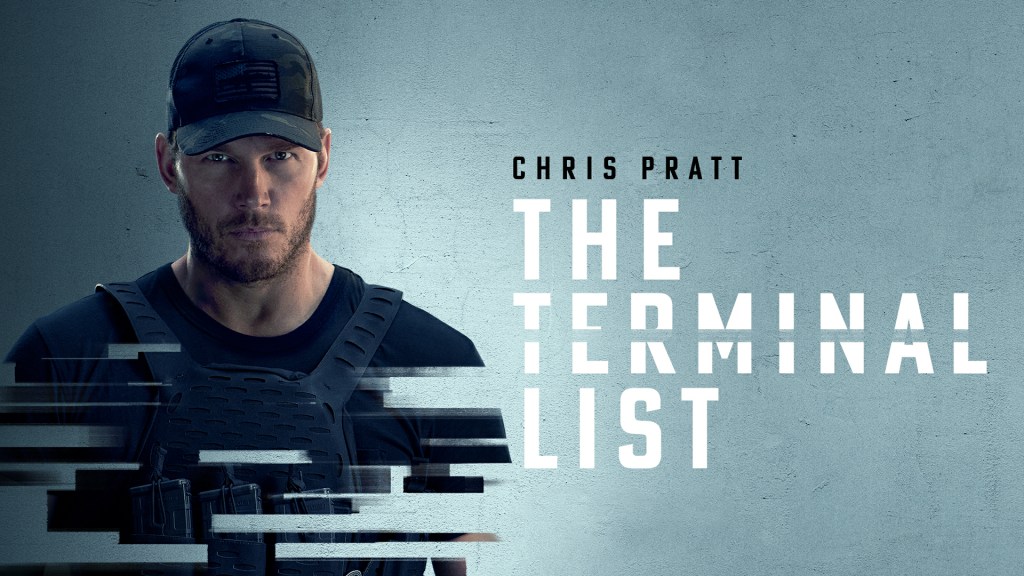
A short series I recently watched, The Terminal List, features a Navy SEAL who must “go to war” domestically because he’s been betrayed by the U.S. government, which even kills his wife and daughter.  Action scenes feature sniper rifles, assault rifles, grenades, explosions, and torture (one man is hung by his own intestines).

Torture and war, common to America’s war on terror, are now here to terrorize us, on our screens but also increasingly on our streets. Strangely, I don’t hear anyone complaining about violence on TV, as people did in the 1980s.  It’s now acceptable, par for the course.  We are inured to it.  Worse: we desire it, or at least some of us do, judging by the success of The Terminal List and similar shows.

The theme is “trust no one” and exact your revenge in the most violent way possible.  The SEAL in Terminal List keeps his own kill list: echoes of Barack Obama and his presidential kill list.  But a democracy saturated in militarized violence can’t possibly survive as a democracy.

Interestingly, today it’s the MAGA Right that distrusts government with a passion.  Fifty years ago, with the Vietnam War running down and Watergate winding up, it was the Left that distrusted government.

One of my favorite movies from the 1970s is Three Days of the Condor, which can profitably be compared to The Terminal List.  The hero in the first movie is a bookish guy who’s betrayed by the CIA.  The hero in this year’s Terminal List is a Navy SEAL and a violent man of action.  In Condor, Robert Redford’s character outthinks his opponents and goes to the New York Times with proof of governmental corruption.  The Navy SEAL simply kills all his enemies, or they kill themselves when faced with his demands for retribution, with an impressive range of deadly weapons.  (Of course, such violent fantasies of hard men meting out murderous justice are hardly new; think of Sylvester Stallone as Rambo or various Chuck Norris vehicles.)

The Terminal List is truly a series for our times.  It’s slickly done, and Chris Pratt is good in it.  What it reveals is the profound skepticism so many Americans have in their government and in corporations — and rightly so.

The problem is elevating a Navy SEAL as the principled hero. SEALs make good warriors but are they what America wants for vigilante justice?  In real life, SEALs can be loose cannons, as recent events show.

For me, real heroes are not often chiseled men of action like Chris Pratt’s Navy SEAL, with all his guns and violence.  Or for that matter Rambo. Think instead of Chelsea Manning, Daniel Hale, Edward Snowden, and Julian Assange.  They may lack bulging biceps and impressive arsenals, yet Manning and Hale went to prison to reveal war crimes, Snowden is in exile for taking on the government and telling us the truth about wars and our surveillance state, and Assange is being tortured in prison for practicing oppositional journalism, otherwise known as real reporting.

Heroes in life come in all shapes and sizes; a Navy SEAL may be among the least likely of shapes and sizes we’ll see.  They often do their best work without guns and grenades and without lengthy kill lists and torture routines.  Their strength is measured by their principles, not by their pecs.

I think even John Wayne might agree with me here.