The Russia-Ukraine War Continues

The Endgame Remains Unpredictable–Dangerously So 

BILL ASTORE

OCT 08, 2025

Since the last time (July 19th) I wrote about the Russia-Ukraine War, perhaps the biggest change has been to President Trump’s rhetoric. After being frustrated in his efforts to end the war (and perhaps win a Nobel Peace Prize to boot), Trump effectively washed his hands of the conflict. A Truth Social post was especially surprising, as the BBC reported on 9/24:

US President Donald Trump has said Kyiv can “win all of Ukraine back in its original form”, marking a major shift in his position on the war with Russia. 

In a post on his Truth Social platform, he said Ukraine could get back “the original borders from where this war started” with the support of Europe and Nato, due to pressures on Russia’s economy …

Trump has repeatedly expressed his desire to end the war, but has previously warned that process would likely involve Ukraine giving up some territory, an outcome Zelensky has consistently rejected.

In his post, Trump added Ukraine could “maybe even go further than that”, but did not specify what he was referring to.

Exactly how Ukraine is going to win back all the land captured by Russia is unclear. Also less than clear is the role of the EU and NATO in this. Trump appears to have said it’s up to the EU and NATO to support Ukraine (as if NATO is not commanded and controlled by America), with the U.S. more than willing to sell weapons to EU and NATO countries to support Ukraine’s efforts.

Trump’s gambit is this: If Ukraine wins, he takes credit for continuing to supply weaponry and for his new vote of confidence. If Ukraine loses, Trump shifts the blame to the EU and possibly to Ukraine and Zelensky too.

It’s a cynical policy—but these are cynical times.

An undeniable truth is that the war grinds on with no end in sight. U.S. aid to Ukraine will soon reach $200 billion. Meanwhile, front lines have stagnated, counteroffensives have stalled, and Ukrainians themselves have grown increasingly weary of war.

Observers in the West point to a weakening Russian economy and high battlefield losses as signs Russia itself may be nearing a tipping point that could lead to collapse and defeat. Both a heavily damaged Ukraine and a destabilized Russia might be the fruits of “victory,” leading to chaos and possible nuclear escalation.

Again, no matter what Trump says, a total victory for Ukraine looks remote. Russia controls about 20 percent of Ukrainian territory, including the industrial Donbas and much of the south. Ukraine’s economy is weakened (as is Russia’s), its army is depleted, and its demographics are unfavorable to success (millions of Ukrainians have sought sanctuary abroad).

The Media’s Role in Perpetuating Illusion

The mainstream media in the U.S. has been partisan since day one. The MSM framed the conflict as a morality play: a heroic democracy versus an evil autocrat.

Meanwhile, the MSM overhyped U.S. weapons as “decisive” and Ukrainian counteroffensives in 2023 as “war-winning.” Media hype distorted expectations and contributed to public fatigue.

Most strikingly, the press has consistently downplayed the risks of escalation with a nuclear power. Ukraine’s use of long-range Western missiles to strike inside Russia carries serious dangers. That Putin will tolerate further provocations without escalating himself is a dangerous bet.

The Case for Diplomacy

Ukraine, no matter Trump’s new faith, cannot win this war in the maximalist sense of regaining all occupied territories and forcing Russia’s surrender. The longer the war continues, the more Ukraine will suffer—physically, economically, and politically.

Wars feed autocracy. Already, Ukraine has postponed elections, banned several opposition parties, and restricted media outlets. These measures may be understandable in wartime, but they belie the notion that Ukraine is a flourishing democracy.

A negotiated settlement is not capitulation. It is recognition of limits. The alternative is indefinite conflict—one that may bleed Ukraine dry even as it edges the world closer to catastrophe.

Dangerous Assumptions

Some policymakers argue a prolonged war will weaken Russia to the point of collapse. But a weakened Russia is not necessarily a safer one. If the Russian state disintegrates, who controls its nuclear arsenal? What if chaos in Moscow produces a more radical, vengeful leader? What if a desperate Kremlin lashes out, or if fighting spills into a NATO country like Poland?

Conversely, what if Ukraine, drained by endless war and reliant on foreign arms, slides toward authoritarianism? Wars have a way of transforming republics into garrison states. The longer the conflict lasts, the greater the risk that Ukraine’s democracy will become a casualty of its own “great patriotic war.”

The Limits of Analogy

Too often, the war is discussed through lazy historical analogies. Putin is Hitler; Zelensky is Churchill; negotiations are “another Munich.” Such framing flatters Western moral vanity but obscures strategic reality. This is not 1938. Putin is not on the verge of conquering Europe, and diplomats are not appeasing him by seeking peace.

Putin may be ruthless, but he is not suicidal. He knows that attacking a NATO member would invite his own destruction. Nuclear deterrence remains real. To suggest otherwise is to indulge in a fever-dream of perpetual conflict, one that justifies limitless military spending and forecloses diplomacy.

The American Connection

For most Americans, the Russia–Ukraine War remains distant and impersonal. We are not threatened by Russian artillery; the war is thousands of miles away. Yet we are paying for it—literally. Every artillery shell, every tank, every missile financed through our taxes contributes to death and destruction abroad. Some justify this as moral duty: helping Ukraine defend freedom. But morality also demands an accounting of consequences.

How many Americans know that 69 percent of Ukrainians report being weary of the war, or that their own government has suspended elections? How many realize that each dollar spent on war is a dollar not spent on schools, infrastructure, or healthcare at home?

We are told the U.S. can afford virtually limitless weapons for Ukraine, but when it comes to social programs, we always hear the same question: How are you going to pay for that? Apparently, there’s always money for war, never for peaceful pursuits.

A Broader Reckoning

The Russia–Ukraine War has become a mirror reflecting America’s own pathologies: our addiction to militarism, our aversion to diplomacy, our willingness to spend without scrutiny when the cause is war, and our moral complacency about the human cost of conflict.

We have turned foreign policy into a morality play, where compromise is dismissed as cowardice and negotiation is treated as akin to sin. Yet history teaches the opposite: the greatest statesmen are not those who glorify war but those who end it.

The Russia–Ukraine War continues, and so does the silence around the most basic of questions: What is America’s endgame? If the answer is “as long as it takes,” we should ask: takes for what? For Ukraine’s victory—or for its ruin? For democracy’s defense—or for another endless war?

It is time to demand accountability, restraint, and above all, diplomacy. Supporting Ukraine should not mean subsidizing endless cycles of death and destruction. How many more must die before this war is finally ended?

Fat Generals Are the Problem!

Hegseth’s Absurdity Masks a Far Scarier Issue

BILL ASTORE

OCT 01, 2025

The military historian Dennis Showalter once told me that he didn’t care about the amount of fat around a general’s belly—he cared about the fat between a general’s ears. It was a telling quip, and one that highlights the shortsighted nature of Pete Hegseth’s emphasis on fitness and military bearing to the generals and admirals he assembled yesterday.

(By the way, what about Trump as commander-in-chief. Is he going to exercise and lose weight? Good luck with that one, Pomade Pete.)

Pomade Pete Hegseth, Self-declared Secretary of War

Of course, physical fitness is important in military settings, especially if you’re at the pointy end of the spear, as they say in the military. But America’s senior leaders today are not “boy generals” like George Armstrong Custer in the U.S. Civil War. They are men and women in their fifties and early sixties, presumably promoted for their integrity, knowledge, insight, skill, and experience, not because they can still run sub-six minute miles or perform 100 pushups.

(Aside: It might be time to buy stock in Ozempic and similar drugs used for weight loss.)

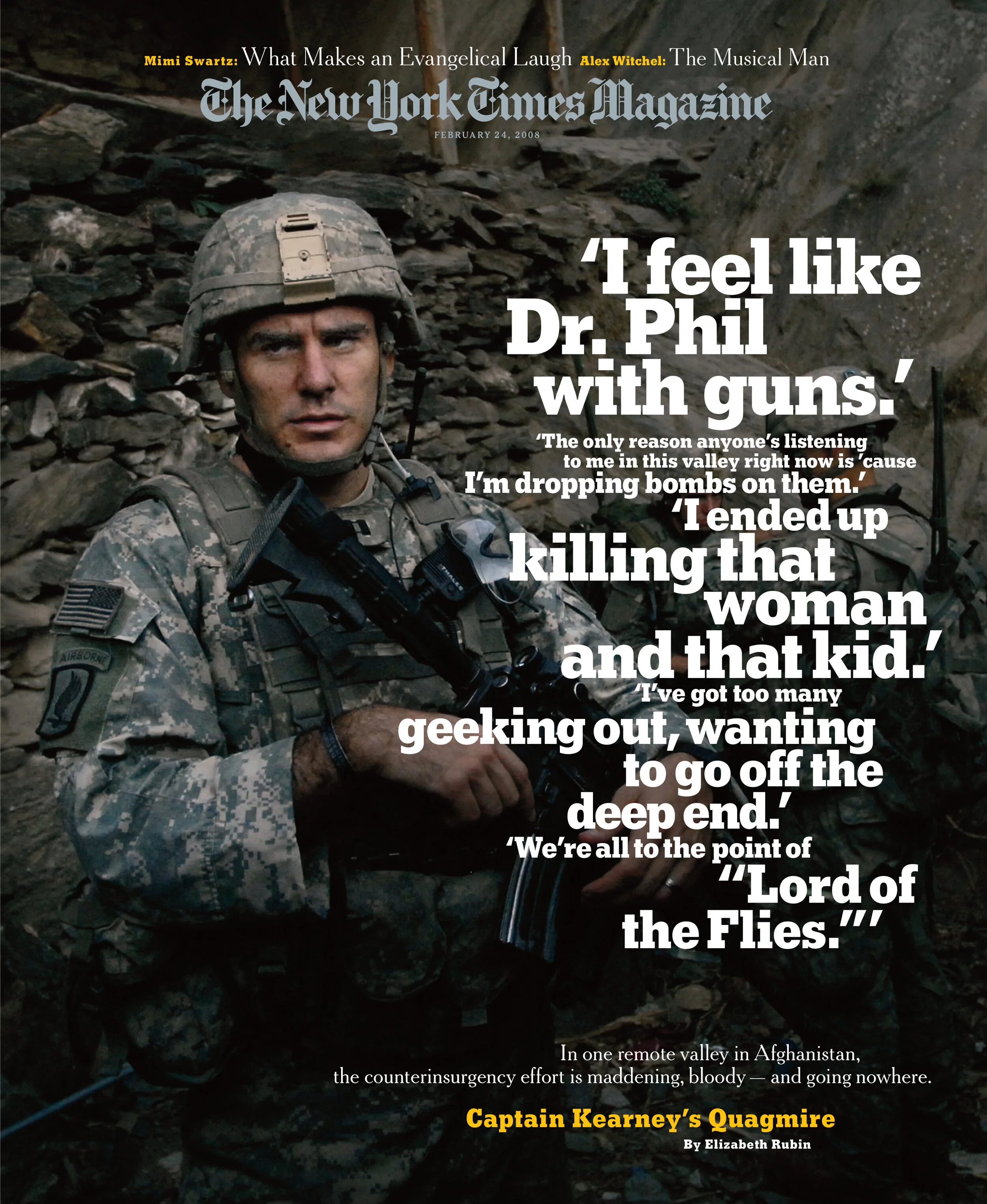
Recall all the media praise showered on William Westmoreland, David Petraeus, and Stanley McChrystal. These three generals were lauded for their physical fitness and military bearing, their “spartan” qualities as warriors. And they all demonstrated strategic mediocrity in fighting and losing the Vietnam, Afghan, and Iraq Wars. They may not have had flabby bellies, but they had flabby minds.

Hegseth is all about “warrior” image over substance. Don’t get me wrong: I think everyone should exercise if they can, and being substantially overweight isn’t healthy. When I was in my early forties and a lieutenant colonel, I ran with the troops and did pushups and sit ups. But there’s a lot more to military effectiveness than being “a lean mean fighting machine.”

But I’ll admit I’m burying the lede here. Trump and Hegseth’s message to senior leaders was far more disturbing than complaints about a fat and woke military. Here’s what I sent to a friend about this:

The “national security” state has kept our country in a state of permanent war since 1947. Trump and Hegseth are just ripping the facade of “security” away and replacing it with “war.”

“Peace” is the word that dare not speak its name. And “war,” of course, has come to the streets of America, with troops deployed to Portland next. Add that to the many police who got their initial training in the military and the rapid expansion of ICE along with detention centers and it’s obvious how the war on terror has truly become global since now the focus is on terror in America.

We are reaping what we sowed …

I was then asked for a more formal comment and came up with this:

The statements of Trump and Hegseth show that the “global” war on terror was and is truly global (as well as permanent) because that war has now come home to America’s cities. Now places like LA and Portland are to be pacified by American “warriors” and warfighters, with detention centers (concentration camps) for those who resist. President Dwight D. Eisenhower was never more right or prescient when he noted, “Only Americans can hurt America.”

Trump and Hegseth see America’s streets as a battleground for the U.S. military against “the enemy within.” The real enemy to democracy, of course, is the very deployment of troops to the streets. American colonists launched a revolution 250 years ago partly because they didn’t want the king’s troops among them as enforcers.

Anyone who doesn’t see the fundamental dangers of Trump and Hegseth’s actions to democracy and our Constitutional rights truly has some flab between their ears.

Is Israel Truly a U.S. Ally?

Evidence Suggests No

BILL ASTORE

SEP 23, 2025

Today, I was back on Judge Napolitano’s show, Judging Freedom. We talked about whether Israel is truly a U.S. ally and the increasing illegality of U.S. governmental actions under the Trump administration.

I tend to be more circumspect when I talk, more blunt when I write. The Judge asked me whether I thought the U.S. was a democracy; I suggested we were a quasi-democracy but what democracy was left was shriveling and withering under pressure from Trump and his minions.

Actually, America is an empire; we left our republic ideals behind soon after World War II, which is why President Dwight D. Eisenhower was issuing powerful warnings about the same in 1953 and 1961. America has always been a war-like nation; now we are increasingly consumed by war and its ever-present costs and burdens. I could have said more about that and wish I had.

In the rise, decline, and fall of empires, we are very much on the downslope even as leaders like Trump suggest that the way to make America great again is to win at war (no matter the morality and legality of our actions). In that sense, we have already lost—indeed, our so-called leaders wander, lost, in a grim and increasingly barbaric wilderness of their own making.

Sadly, there’s only one ship of state, and when the captain and most of his mates are lost at sea and reckless to boot, passengers like us are likely to go down with the ship with them.

If the Pentagon’s Done Nothing Wrong, It Has Nothing to Hide

BILL ASTORE

SEP 21, 2025

If there’s one thing we’ve learned (or re-learned, again and again) from the Pentagon it’s that all governments lie and that the first casualty of war is truth. From the Pentagon Papers in the Vietnam War to the Afghan War Papers and the lies about WMD in Iraq, the American people have been deliberately and maliciously lied to about America’s wars and their true causes and purposes. And you can go back further to the infamous “Remember the Maine!” cry that touched off the Spanish-American War of 1898. When it comes to war, America’s leaders have always been economical with the truth.

At the Pentagon, Pomade Pete Strikes Again!

But wait, today’s Pentagon is about to outdo that! As usual with nefarious government decisions, it was announced on Friday when people are most distracted. A short summary from NBC News:

Journalists who cover the Defense Department at the Pentagon can no longer gather or report information, even if it is unclassified, unless it’s been authorized for release by the government, defense officials announced Friday. Reporters who don’t sign a statement agreeing to the new rules will have their press credentials revoked, officials said.

Multiple press associations quickly condemned the new rules and said they will fundamentally change journalists’ ability to cover the Pentagon and the U.S. military. They called for the Trump administration to rescind the new requirements, arguing they inhibit transparency to the American people.

The National Press Club denounced the requirement as “a direct assault on independent journalism at the very place where independent scrutiny matters most: the U.S. military.”

Remember that old saw that, “If you’ve done nothing wrong, you have nothing to hide” from your friendly government surveillance program? Looks like the Pentagon has decided it’s got plenty to hide, meaning it’s done and is planning to do a lot of wrong, and thus only government-approved information will be allowed to be released.

Any journalist worth her or his salt will never agree to this. Journalists who do agree, who sign the Pentagon statement, should just become paid spokespeople for the U.S. military (as indeed many of them already essentially are).

We’ve created a monstrous military, America, one that believes it should be completely unaccountable to us even as we feed it over a trillion dollars a year. 

America, there’s only one way to rein in the military: cut the Pentagon budget in half. Show them who’s boss. Of course, Congress controls the purse strings, and Congress, as Ike noted, is intimately intertwined with the military-industrial complex, so it’s not going to be easy to do it. 

But no one ever said it’ll be easy: it’s just necessary for the survival of our country as a quasi-democracy.

The Department of War Is Back!

But Victoryless Culture Remains

Also at TomDispatch.com.

BY WILLIAM J. ASTORE

My fellow Americans, my critical voice has finally been heard inside the Oval Office. No, not my voice against the $1.7 trillion this country is planning to spend on new nuclear weapons. No, not my call to cut the Pentagon budget in half. No, not my imprecations against militarism in America. It was a quip of mine that the Department of Defense (DoD) should return to its roots as the War Department, since the U.S. hasn’t known a moment’s peace since before the 9/11 attacks, locked as it’s been into a permanent state of global war, whether against “terror” or for its imperial agendas (or both).

A rebranded Department of War, President Trump recently suggested, simply sounds tougher (and more Trumpian) than “defense.” As is his wont, he blurted out a hard truth as he stated that America must have an offensive military. There was, however, no mention of war bonds or war taxes to pay for such a military. And no mention of a wartime draft or any other meaningful sacrifice by most Americans.

Rebranding the DoD as the Department of War is, Trump suggested, a critical step in returning to a time when America was always winning. I suspect he was referring to World War II. Give him credit, though. He was certainly on target about one thing: since World War II, the United States has had a distinctly victoryless military. Quick: Name one clear triumph in a meaningful war for the United States since 1945. Korea? At best, a stalemate. Vietnam? An utter disaster, a total defeat. Iraq and Afghanistan? Quagmires, debacles that were waged dishonestly and lost for that very reason.

Even the Cold War that this country ostensibly won in 1991 with the collapse of the Soviet Union didn’t lead to the victory Americans thought was coming their way. After much hype about a “new world order” where the U.S. would cash in its peace dividends, the military-industrial-congressional complex found new wars to wage, new threats to meet, even as the events of 9/11 enabled a surge — actually, a gusher — of spending that fed militarism within American culture. The upshot of all that warmongering was a soaring national debt driven by profligate spending. After all, the Iraq and Afghan Wars alone are estimated to have cost us some $8 trillion.

Those disasters (and many more) happened, of course, under the Department of Defense. Imagine that! America was “defending” itself in Vietnam, Afghanistan, Iraq, Libya, Syria, Somalia, and elsewhere, even as those wars killed and wounded significant numbers of our troops while doing far more damage to those on the receiving end of massive American firepower. All this will, I assume, go away with a “new” Department of War. Time to win again! Except, as one Vietnam veteran reminded me, you can’t do a wrong thing the right way. You can’t win wars by fighting for unjust causes, especially in situations where military force simply can’t offer a decisive solution.

It’s going to take more than a rebranded Department of War to fix wanton immorality and strategic stupidity.

We Need a Return of the Vietnam Syndrome

Hey, I’m okay with the Pentagon’s rebranding. War, after all, is what America does. This is a country made by war, a country of macho men hitching up their big boy pants on the world stage, led by the latest (greatest?) secretary of war, “Pomade Pete”Hegseth, whose signature move has been to do pushups with the troops while extolling a “warrior ethos.” Such an ethos, of course, is more consistent with a War Department than a Defense Department, so kudos to him. Too bad it’s inconsistent with a citizen-soldier military that’s supposed to be obedient to and protective of the Constitution. But that’s just a minor detail, right?

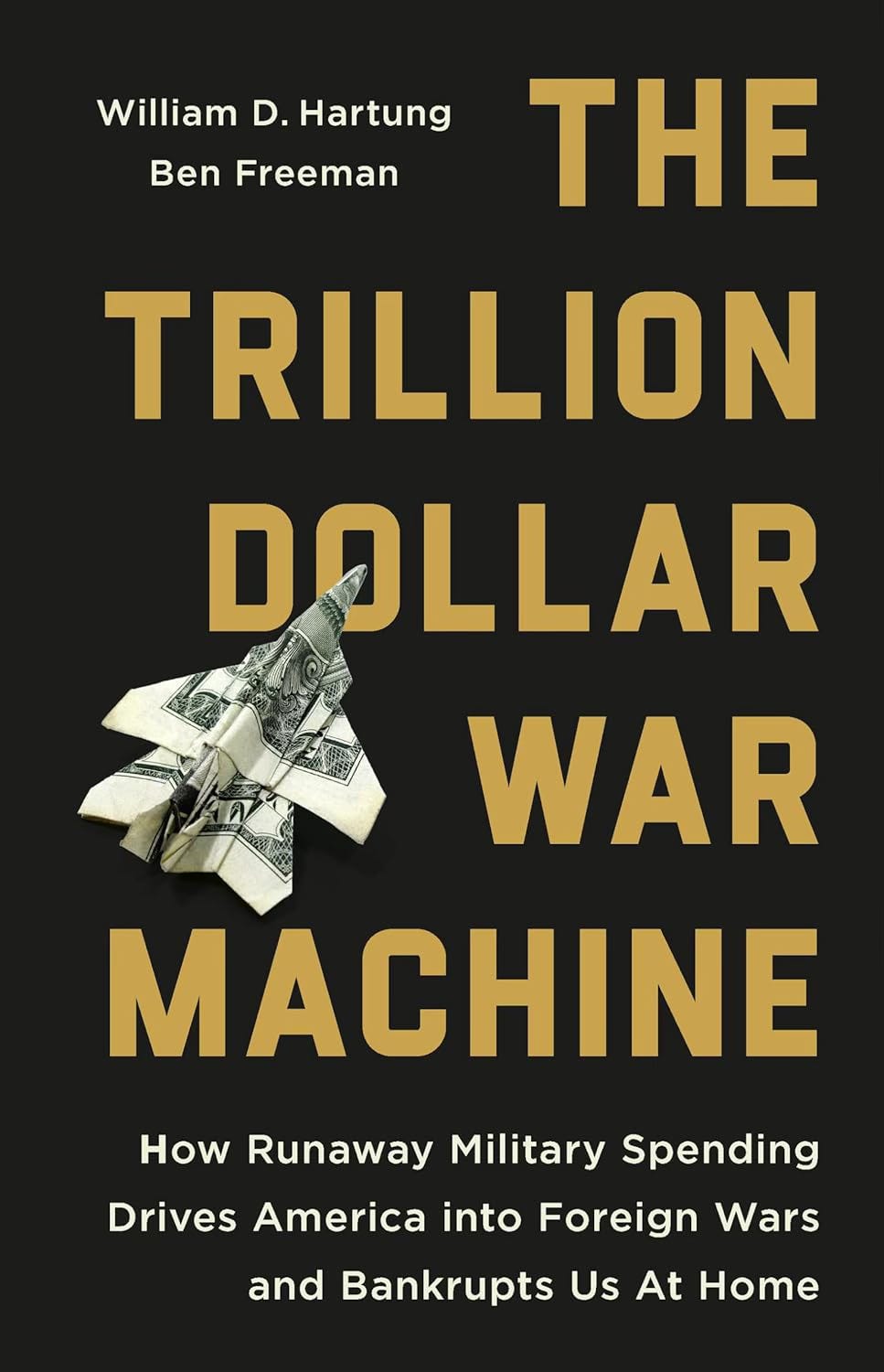
Buy the Book

Here’s the rub. As Trump and Hegseth have now tacitly admitted, the national security state has never been about “security” for Americans. Rather, it’s existed and continues to exist as a war state in a state of constant war (or preparations for the same), now stuffed to the popping point with more than a trillion dollars yearly in taxpayer funds. And the leaders of that war state — an enormous blood-sucking parasite on society — are never going to admit that it’s in any way too large or overfed, let alone so incompetent as to have been victoryless for the last 80 years of regular war-making.

And count on one grim reality: that war state will always find new enemies to attack, new rivals to deter, new weapons to buy, and a new spectrum of warfare to try to dominate. Venezuela appears to be the latest enemy, China the latest peer rival, hypersonic missiles and drone swarms the new weaponry, and artificial intelligence the new spectrum. For America’s parasitic war state, there will always be more to feed on and to attempt (never very successfully) to dominate.

Mind you, this is exactly what President Dwight D. Eisenhower warned us against in his 1961 Farewell Address. Sixty-plus years ago, Ike could already see that what he was the first to call the military-industrial complex was already too powerful (as the Vietnam War loomed). And of course, it has only grown more powerful since he left office. As Ike also wisely said, only Americans can truly hurt America — notably, I’d add, those Americans who embrace war and the supposed benefits of a warrior ethos instead of democracy and the rule of law.

Again, I’m okay with a War Department. But if we’re reviving older concepts in the name of honesty, what truly needs a new lease on life is the Vietnam Syndrome that, according to President George H.W. Bush, America allegedly got rid of once and for all with a rousing victory against Saddam Hussein’s Iraq in Operation Desert Storm in 1991 (that would prove to be anything but).

That Vietnam Syndrome, you may recall, was an allegedly paralyzing American reluctance to use military force in the aftermath of disastrous interventions in Vietnam, Laos, and Cambodia in the 1960s and early 1970s. According to that narrative, the U.S. government had become too slow, too reluctant, too scarred (or do I mean scared?) to march speedily to war. As President Richard Nixon once said, America must never resemble a “pitiful, helpless giant.” To do so, he insisted, would threaten not just our country but the entire free world (as it was known then). America had to show that, when the chips were down, our leaders were up for going all-in, no matter how bad our cards were vis-à-vis those of our opponents.

If nothing else, no country had more chips than we did when it came to sheer military firepower and a willingness to use it (or so, at least, it seemed to Nixon and crew). A skilled poker player, Nixon was blinded by the belief that the U.S. couldn’t afford to suffer a humiliating loss on the world stage (especially when he was its leader). But the tumult that resulted from the fall of Saigon to communist forces in 1975 taught Americans something, if only temporarily: that one should hasten very slowly to war, a lesson Sparta, the quintessential warrior city-state of Ancient Greece, knew to be the sign of mature wisdom.

Spartan wannabes like Pete Hegseth, with his ostentatious displays of “manliness,” however, fail to understand the warrior ethos they purport to exhibit. Wise warrior-leaders don’t wage war for war’s sake. Considering the horrific costs of war and its inherent unpredictability, sage leaders weigh their options carefully, knowing that wars are always far easier to get into than out of and that they often mutate in dangerously unpredictable ways, leaving those who have survived them to wonder what it was ever all about — why there was so much killing and dying for so little that was faintly meaningful.

What Will Trump’s “Winning” War Department Look Like?

Perhaps Americans got an initial look at Trump’s new “winning” War Department off the coast of Venezuela with what could be the start of a new “drug war” against that country. A boat carrying 11 people, allegedly with fentanyl supplies on board, was obliterated by a U.S. missile in this country’s first “drug war” strike. It was a case where President Trump decided that he was the only judge and jury around and the U.S. military was his executioner. We may never know who was actually on board that boat or what they were doing, questions that undoubtedly matter not a whit to Trump or Hegseth. What mattered to them was sending an ultimate message of toughness, regardless of its naked illegality or its patent stupidity.

Similarly, Trump has put the National Guard on the streets of Washington, D.C., deployed Marines and the National Guard to Los Angeles, and warned of yet more troop deployments to come in Chicago, New Orleans, and elsewhere. Supposedly looking to enforce “law and order,” the president is instead endangering it, while disregarding the 1878 Posse Comitatus Act that prohibits a president from deploying active-duty troops as domestic law enforcers.

If America isn’t a nation of laws, what is it? If the president is a lawbreaker instead of an upholder of those laws, what is he?

Recall that every American servicemember takes a solemn oath to support and defend the Constitution and bear true faith and allegiance to the same. Warriors are driven by something different. Historically, they often just obeyed their chieftain or warlord, killing without thought or mercy. If they were bound by law, it was most often that of the jungle.

Knowingly or unknowingly, that’s exactly the kind of military Pete Hegseth and the new Department of War (and nothing but war) are clearly seeking to create. A force where might makes right (although in our recent history, it’s almost invariably made wrong).

I must admit that, from the recent attack on that boat in the Caribbean to the sending of troops into Washington, I find I’m not faintly surprised by this developing crisis (that’s almost guaranteed to grow ever worse). Remember, after all, that Donald Trump, a distinctly lawless man, boasted during the Republican debate in the 2016 election campaign that the military would follow his orders irrespective of their legality. I wrote then that, with such a response, he had disqualified himself as a candidate for the presidency:

“Trump’s performance last night [3/3/16] reminded me of Richard Nixon’s infamous answer to David Frost about Watergate: ‘When the president does it, that means it’s not illegal.’ No, no, a thousand times no. The president has to obey the law of the land, just as everyone else has to. No person is above the law, an American ideal that Trump seems neither to understand nor to embrace. And that disqualifies him to be president and commander-in-chief.”

If only.

In retrospect, I guess Trump had it right. After all, he’s won the presidency twice, no matter that his kind of “rightness” threatens the very foundations of this country.

So, color me more than worried. In this new (yet surprisingly old) age of a War Department, I see even more possibilities for lawlessness, wanton violence, and summary executions — and, in the end, the defeat of everything that matters, all justified by that eternal cry: “We’re at war.” At which point, I return to war’s miseries and how quickly we humans forget its lessons, no matter how harsh or painful they may be.

Someday, America’s soon-to-be War Department, led by wannabe warrior chieftains Trump and Hegseth, will perhaps seem like the ultimate blowback from this country’s disastrous wars overseas since its name changed to the Defense Department in the wake of World War II. In places like Iraq and Afghanistan, this country allegedly waged war in the name of spreading democracy and freedom. That cause failed and America’s own grip on democracy and freedom only continues to loosen — perhaps fatally so.

In harkening back to a War Department, perhaps Trump is also channeling a nostalgia for the Old West, or at least the myth of it, where justice was served through personal bounties and murderous violence enforced by steely-eyed men wielding steel-blue pistols. Trump’s idea of “justice” does seem to be that of a hanging judge on a “wild” frontier facing hostile “Injuns” of various sorts. For men like Trump, those were the glory days of imperial expansion, never mind all the bodies left in the wake of America’s manifest destiny. If nothing else, that old imperial Department of War certainly knew what it was about.

Whatever else one might expect from America’s “new” Department of War, you can bet your life (or death) on a whole lot of future body bags. Warriors are, of course, okay with this as long as there are more boats to blow up, more people to bomb, and more foreign resources to steal in the pursuit of a “victory” that never actually arrives. So hitch up those big boy pants, grab a rifle or a Hellfire missile, and start killing. After all, in what might be thought of as a distinctly victoryless culture, it seems as if America is destined to be at war forever and a day.

The End Game for Gaza

Using Old Tools of War

BILL ASTORE

SEP 12, 2025

I’ve taught military history “from Plato to Nato,” as we used to joke, but my expertise focused on technology and warfare. Along with “revolutions” and “transformations” in weaponry, I probably spent too much time focusing on “decisive battles” and “great captains” in history. When you look at the course of military history, most deaths from war didn’t come in battle. They came from hunger and disease, from famine and pestilence. Sometimes, mass starvation and pandemics were unintentional byproducts of chaos and societal disruption caused by war, and sometimes starvation and disease were intentional weapons and products of war.

And behold a pale horse, and his name that sat on him was Death

You might call this apocalyptic war, from the Bible and the Four Horsemen of the Apocalypse, which included famine and pestilence among the death riders.

An apocalyptic fate seemingly awaits Palestinians in Gaza. I’ve written about Gaza as a genocide, the mass bombing by Israel, the mass killing, with the apparent goal of forcing Palestinians out of Gaza, but I haven’t given enough thought to the use of mass starvation and diseases as weapons in this genocide.

A reader, Dan White, brought this lesson home to me, and I’d like to quote his message to me at length:

I can’t think of a better word than the etiology of starvation. It hasn’t been adequately addressed by the snoozemedia. Starvation death rates have a funny shaped curve. During the first stages of starvation–can’t give any figures on a time period for this or any other part of the process/curve, due to there being varying levels of food deprivation–there are few deaths, generally (but not always) those persons with compromised health/preexisting health problems that make them more susceptible to death than others in the population. After some (varying length) period of starvation, people start to die in larger numbers, and then all of a sudden, everyone is dying, and then everyone is dead. This period of death is fairly short compared to the period of starvation. Again, due to varying levels of starvation and varying levels of preexisting health and varying levels of surplus consumable body tissue in the starved group, this period has no fixed length, but it happens all of a sudden, and it doesn’t take long for everyone to die once it starts–couple of weeks seems common.

The starving residents of Gaza haven’t reached the mass-death stage of starvation, but it could well start happening tomorrow. I can’t say because I don’t know the food reserves preexisting, the food delivery figures since the ‘war’ started, and nobody in the news biz has bothered to look for them, either. There really should have been some government or multistate agency who has looked for them and published them, but nobody has.

When the mass-death stage hits, people in Gaza will be dying by the tens of thousands a week. Stopping the mass-death by all of a sudden providing food isn’t going to work very well, on account of logistical delivery problems and the medical problems of alleviating starvation at this advanced stage–folks’ digestive tracts may well not work well enough even if they get food. That will be the real genocide, and I’d bet money it happens, and bet more money that this is the real objective of Israel’s ‘war’ in Gaza. The notion of Israel’s war objective is displacement of Gazans is an absurdity–you want someone to leave, well they have to be able to walk, right? And they have to have a place to go. Israel is counting on the rest of the world to all of a sudden do a mass-evacuation of Gazans combined with a mass feeding and mass medical intervention all at the same time in order to prevent this mass death of Gazans from occurring? NFW–Israel’s leaders have accepted mass killing as an official state policy, and have commenced doing it, and do it as we speak. And Israeli hasbara [propaganda] will blame us for it, and a whole lot of whored-out American and European politicians, as well as Israel-worshipping American Jews, will go along with it.

What Dan White posits here is horrifying—and increasingly likely. Of course, as people are weakened through starvation, they become more susceptible to various diseases associated with famine and unsanitary conditions.

These “old” weapons of war—starvation and disease—will serve as the grimmest of reapers among the Palestinians in Gaza.

The “mass-death stage” of starvation is nearing, unless the U.S. and other countries intervene to force Israel to allow adequate food and medical supplies into Gaza. A failure to act will only spur the pale horse on whose back Death sits.

The Seven Habits of a Highly Defective Country

And what to do about it

BILL ASTORE

SEP 02, 2025

Welcome back, everyone. I hope you enjoyed Labor Day Weekend.

It’s grim times in America. Perhaps grimmest of all is the U.S. government’s support of genocide through mass killing and starvation in Gaza. “Never again” was the message of the Holocaust, not “Yes, again” if it benefits Zionists in Israel. 

Americans, in the main, are against mass killing (at least, I hope we are), but what does it matter when all 100 senators take money from AIPAC and the Trump administration is rabidly pro-Israel? “Our” government isn’t ours; the man who gets what he wants with the loudest applause is Bibi Netanyahu. Talk about foreign interference in America’s elections and governance!

Courtesy of Lisa Savage at her Substack site

Why is it so hard for Americans to come together in sensible ways? A decade ago, I wrote about how we’re kept divided, distracted, and downtrodden. The letter D truly is for defective and deficient—disastrous as well—but permit me a little exercise in alliteration as I expand my D list to seven, as in the 7 habits of a highly defective country.

1. Divided: Are you Republican or Democrat? Red or Blue? MAGA or “libtard”? Woke or Anti-woke? Cis white male or BIPOC? Pro-life or Pro-choice? There are far too many labels and efforts that end in division. And we know how rulers use division to conquer.

2. Distracted: Wherever you look, Americans are bombarded with distractions, starting with the screens we carry everywhere with us. The Romans had bread and circuses; we have junk food, NASCAR, and the NFL. Curl up before that 75-inch TV and chow down.

3. Downtrodden: When you’re working 50+ hours a week, straining to make ends meet, suffering from high health care costs, student loan debt, and so on, it’s hard to pay attention to what’s going on in Washington—and even harder to act against it.

4. Discontented: Paradoxically, the discontentment so many of us feel is not resulting in significant political action. Instead, it’s being channeled in counterproductive ways. Consumer goods and drugs from big pharmaceutical companies are offered as palliatives to “cure” our discontentment. We buy more, or pop more pills, but contentment remains elusive.

5. Duopoly: Sure, Democrats and Republicans aren’t exactly the same. But when it comes to war, foreign policy, weapons sales, serving Israel, favoring billionaires, kowtowing to the big banks and Wall Street, and genuflecting to corporations, both parties are virtually indistinguishable. Both also work together to quash third parties. Small wonder that the largest voting bloc in America is Independent/Non-aligned.

6. Discouragement: Faced with that grim fact—a government completely unresponsive to ordinary people—Americans are discouraged from acting in dynamic and outspoken ways. Also serving to discourage political action is America’s increasingly militarized streets, now occupied with agents from Homeland Security and even armed members of the National Guard.

7. Despair: Remember “hope and change” Barack Obama and the surging idealism of 2008? Those were the days. Now it seems the mantra is “no hope” and change that only makes matters worse. This contributes to despair, our sense of hopelessness and helplessness before impersonal government forces—and this is deliberate. A weaponizing of despair. 

So, what is to be done? On the small scale, get involved. Get educated. Follow protesters like Lisa Savage and Clif Brown. Small acts of protest can be contagious.

Clif Brown, taking a stand and sending a message

I do my thing here on Substack and belong to organizations like the Eisenhower Media Network and Space4Peace (The Global Network Against Weapons and Nuclear Power in Space). Since 2007, I’ve written against militarism and war at TomDispatch.com and similar alternative sites. Do what you can, what matches your talents, even if it’s just talking to your family, your friends, your neighbors about your concerns. (Believe me, that isn’t always easy!)

Maybe it’s easier to say where the answer isn’t coming from. It’s not coming from Democrats or Republicans. It’s not coming from Congress. It’s not coming from the richest among us, nor from corporate and financial elites.

Fundamentally, the first big step we need to take as a country is publicly funded elections. No more lobbyists. No more “legal” bribes. That requires a reversal of the SCOTUS Citizens United Decision. It requires legislation or a Constitutional amendment.

How to force that when war and weapons are bipartisan? When the powers that be are more than happy with the status quo? Probably only through mass organizations and protest. Or perhaps the creation of a viable third party–but that will be staunchly resisted by the duopoly (the Dems and Repubs).

The short answer is we need a lot more profiles in courage to counter the profiles in pusillanimity produced and elevated within a corrupt system.

The system as it exists today seems unreformable and unstoppable, but history teaches us that sometimes a crack can widen to a fault that leads to an earthquake quickly and unpredictably. So the only recourse is to keep fighting, to keep the pressure on, hoping those cracks will indeed lead to something greater.

Apathy and surrender are not options. Discouragement and despair mustn’t be our end state. Take inspiration from people like Lisa and Clif, the writing of people like Chris Hedges, and sites like Antiwar.com.

Stay strong. As the Moody Blues once said: And keep on thinking free.

Autonomous Killer Drone Swarms

“New Forms of Domination and Oppression”

BILL ASTORE

AUG 27, 2025

Just what we need: autonomous killer drone swarms powered by algorithms and AI.

Part 3 of the excellent Al Jazeera documentary The Business of War focuses on Israel’s use of killer drones in Gaza. The trend is toward “fully autonomous weapons”—drone swarms that rely on algorithms to identify targets to hit and humans to kill. Officially, a human is still supposed to make the final decision to strike, but in some cases the operator has only 20 seconds to give a “go” or “no go.” And, let’s be honest, the system drives operators toward “go.”

The documentary is especially powerful in showing the devastation in Gaza (images of Stalingrad in World War II come to mind), the deliberate killing of journalists (a war crime), and how drones are used not just for killing but as tools of intimidation and control.

Images of AI-enabled drone swarms chasing and killing people recall scenes from the Terminator films. But as the documentary notes, the danger right now isn’t some future Skynet—it’s how these drones have already emerged as “new forms of domination and oppression.”

Almost as troubling is the military-corporate fusion as these drone swarms are supported by “cloud” resources supplied by Amazon, Google, and Microsoft. A new conceit boasts of Israel as an “AI superpower,” even as corporations make a killing in profits.

All this technology, all this high-tech prowess, is fueling a holocaust in Gaza. Eisenhower warned us in 1953 that humanity might crucify itself on a cross of iron. Looking at today’s autonomous weapons, perhaps we’ve chosen a different cross—one made of silicon.

The Business of Nuclear Weapons Is Booming

Part II of a Documentary on the Military-Industrial Complex

BILL ASTORE

AUG 20, 2025

The business of nuclear weapons is booming in the U.S., as Part II of a documentary on the military-industrial complex reveals. It’s well worth a few minutes of your time:

The documentary is especially strong in its focus on the Sentinel ICBM program, the least survivable leg of the nuclear triad. I didn’t know, for example, that Northrop Grumman has already spent $220 million lobbying for the Sentinel. Meanwhile, the projected cost of the Sentinel system, the documentary points out, has mushroomed from $78 billion to $140 billion. And I see estimates today have risen to $160 billion. All this for a system that’s not needed. Land-based ICBMs should be retired, not replaced.

Because land-based ICBMs represent a fixed target (unlike bombers and submarines, the other two legs of the triad), they are likely to be attacked first in a nuclear war, contributing to a “launch on warning (of attack)” mentality. But with warnings of nuclear attacks being both uncertain (false alarms have occurred in the past) and “time-sensitive,” i.e. urgent and pressure-packed, it’s likely a U.S. president, faced with a crisis, would only have 5-10 minutes to decide whether to launch ICBMs.

As the U.S. prepares to spend as much as $1.7 trillion on upgrading the triad, more money is also being dedicated to low-yield nuclear weapons, lowering the threshold for going nuclear. An escalatory spiral could follow from any use of nuclear weapons, but that concern doesn’t seem to trouble advocates for so-called tactical nukes.

Even as President Trump in the past has bragged about the size of his nuclear button, he does appear to view nuclear weapons as awful things, which they are. They are genocidal weapons. In essence, America is “investing” $1.7 trillion in weapons that are genocidal, indeed ecocidal, for any “general exchange” of nuclear weapons in a future war would destroy most life on earth (blast and heat, followed by radiation and nuclear winter).

As the Outlaw Josey Wales once mused, “Dyin’ ain’t much of a living.” The same applies to mass dying.

Something Is Rotten in the States of America

Look No Further than Colossal Pentagon Spending and Perpetual War

BILL ASTORE

AUG 14, 2025

Something is Rotten in the States of America.

America’s war budget now exceeds $1 trillion a year—an almost unimaginable sum.

The Pentagon plans to spend $1.7 trillion “modernizing” a nuclear triad that should instead be downsized. A proposed “Golden Dome” missile defense system may cost $500 billion while making nuclear war more likely. And a “new” Cold War with China and Russia is already underway, with threat inflation as one of its defining features.

With military spending so high—and the military so valorized—Washington offers it as the solution to nearly everything: crime in D.C., eliminating drug cartels south of the border, containing China and Russia, “winning” in Somalia, preventing Iran from acquiring nuclear weapons—the list is endless. Supporting and defending the Constitution, however, is rarely mentioned.

War has become America’s new normal. “Peace” is now a word that dare not speak its name. According to the Pentagon, the only peace worth pursuing is “peace through [military] strength.” A warrior ethos is marketed as if it were synonymous with democratic virtue.

I once called for a 10% reduction in Pentagon spending. That’s no longer enough. We need a 50% cut—we need a military dedicated to genuine national defense, not imperial dominance. Surely we can protect America for $500 billion a year rather than the $1 trillion we’re spending now.

Changing the narrative is crucial. Why do we need 750+ bases overseas? Why expand our nuclear arsenal when we already have 5,000 warheads? We don’t need these things—they are the hallmarks of wasteful militarism. They escalate tensions, endanger us, and drain the nation’s wealth.

And why do we have 17 or 18 intelligence agencies? Despite all that intelligence, we still lost in Vietnam, Iraq, and Afghanistan. Where is the accountability? Why are no generals relieved of command for such failures? In fact, they’re more likely to fail upwards.

“All governments lie,” as I.F. Stone warned. Combine that with the truth that war’s first casualty is truth itself, and you begin to see the rot in America today. Perpetual war fuels deception and government overreach. Almost anything can be justified when the cry is, “We’re at war!”—even when the reasons for going to war are false.

Consider the Gulf of Tonkin incident—revealed later as phony—and the Pentagon Papers during the Vietnam War. Consider Iraq’s mythical WMDs. Consider the lies revealed in the Afghan War Papers. Consider the weasel words of generals like David Petraeus, forever hedging “gains” as “fragile” and “reversible.” Consider the U.S. military’s record since World War II—generally ineffective because there’s been little accountability for failure. (And yes, civilian leaders share the blame.)

The military-industrial complex grows ever more powerful, sidelining the American people while democracy withers.

Something is rotten in the States of America.

Many thanks to Judge Napolitano for asking me to discuss some of these issues on his show, “Judging Freedom.”