Author’s photo, July 2014, of the American Flag at Dusk
W.J. Astore
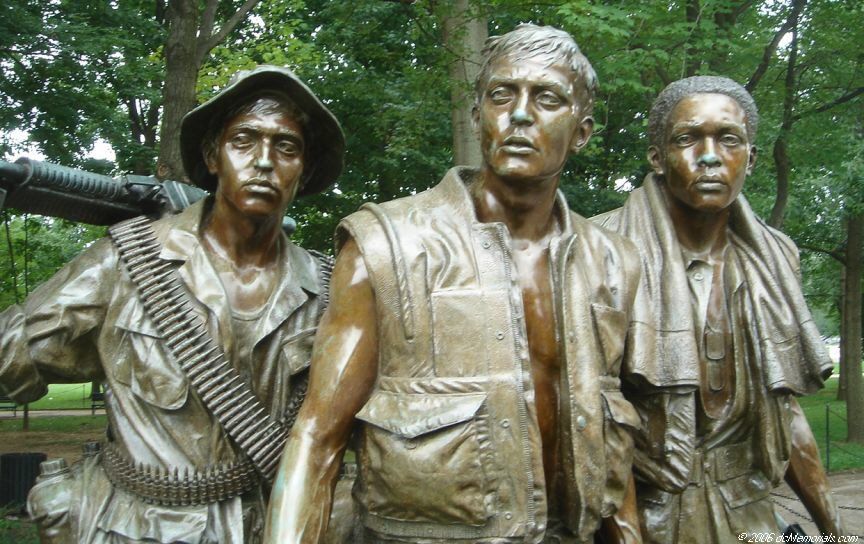
I served for twenty years in the Air Force. Service in the military involves sacrifice even when combat isn’t involved, but it also conveys privileges and provides opportunity, or at least it did so for me. I can’t recall people thanking me for my service when I wore a uniform, nor did I expect them to. I just saw myself as doing my duty to the best of my ability, and therefore deserving of no special thanks or commendation.
At TomDispatch.com, former Army Ranger Rory Fanning talks about his discomfort with the thank you parade directed at “our” troops. His honest words are a reminder that a thank you repeated again and again loses its meaning, especially when it’s appropriated by megastars and sponsored by corporations. Think, for example, of that Budweiser ad during last year’s Super Bowl that featured a returning LT. We see him greeting his pretty wife at the airport, then we cut to a surprise parade in his honor down Main Street USA complete with the Budweiser Clydesdales and teary-eyed veterans. The sentiment, however honest to many of the celebrants, is cheapened as heart strings are tugged to sell beer. Or consider those Bank of America ads for wounded warriors airing during this year’s World Series. Images of wounded troops continuing to triumph in spite of war injuries are appropriated to associate a huge bank with the sacrifices endured by ordinary GIs. Again, however well-intentioned such ads may be, heart strings are being tugged by a bank with a dubious record of sympathy for the little guy and gal.
As retired Army Colonel Andrew Bacevich has noted, elaborate thank you ceremonies can be a form of cheap grace in which Americans clap themselves on the back in spasms of feel-good celebratory pageantry. Some of these celebrations are so over the top in their flag-waving thanks that you just can’t help having darker thoughts. Is this a recruitment video? Are we even meant to think at all or just gush with pride? Are we simply meant to bask in the reflected glow of the medals on the chests of our young men and women in uniform?
We thank our troops for complicated reasons as well as simple ones. The simple are easy to write about: genuine thanks, from one person to another, no megastars, no corporations. Just a handshake and a nod or a few kind words. I’ve had people thank me in that way since I retired from service, and I appreciate it and respond graciously.
But the complicated reasons – well, these reasons are not as easy to write about. The guilt of those who avoid service. Pro forma thanks. The thanks that comes from people who believe their involvement with the military both starts and ends there. The related idea that if one thanks the troops, one has done one’s bit for the war (whichever war our president says we’re fighting today).
More disturbingly is the thanks that allows us all to deny the reality of America’s wars (the reality of all wars): the sordidness of wartime bungling and mismanagement and violence and murder. Often the latter is drowned out by the bugle calls of thanks! thanks! thanks! coming from the cheering multitudes.
My father taught me “an empty barrel makes the most noise.” I think that’s true even when the noise is presented as thanks to our troops.
President Obama’s decision to deploy 3,000 troops to Liberia in Africa to assist in efforts to contain Ebola got me to thinking about the military as white blood cells. As a military officer, I took an oath to defend the Constitution against all enemies, foreign and domestic. In a sense, I was vowing to defend the collective body politic just as white blood cells defend our individual bodies against “enemy” invaders.
But when was the last time the United States faced invaders who posed a virulent and direct threat to our existence? Invaders who directly attacked (or planned to attack) and utterly defeat our body politic? You’d have to go back to World War II and Japan’s attack at Pearl Harbor; similarly, Nazi Germany did have plans (that were never implemented) to take its world war to U.S. shores once the Soviet Union and Britain were defeated. Fortunately, our body mobilized its “white blood cells” and defeated (with lots of help from our allies) these enemies before they could afflict our vitals here at home.
Jump ahead to 2001 and the al Qaeda attacks on the Twin Towers and the Pentagon. Yes, they were serious and shocking and traumatic. But compared to the Nazis and the Japanese in World War II (true cancers), al Qaeda was the equivalent to a 24-hour “bug,” violent in the extreme, but ultimately not a serious long-term threat to the health of America.
By calling 9/11 a “bug,” I don’t mean to diminish the tragedy of 9/11 for those who lost loved ones. It’s just that repeats of 9/11-like attacks were not possible: al Qaeda simply lacked the resources to sustain them. There was no “cancer” that could metastasize. So there was no need to deploy our white blood cells (our troops) in extended wars, whether in Afghanistan or Iraq, the latter country of which had nothing whatsoever to do with 9/11.
Now we have the President referring to the Islamic State (ISIS/ISIL) as a “cancer” that must be eradicated, even though that “cancer” has no means of attacking the body that is our country. Despite this fact, the U.S. is deploying its white blood cells yet again to quash a threat that for our nation simply doesn’t exist.
From medicine, we know that overactive white blood cells can be as dangerous as underactive ones. White blood cells are part of our immune systems; when these systems are overactive, they convert non-threats into threats. Sometimes that results in violent allergic reactions that can lead to death. Other times, one’s own immune system turns on healthy tissue within one’s body. The immune system itself becomes a cancer, eating away at the body in misdirected attempts to defend it.
Whenever the U.S. faces a “threat” nowadays, our leaders treat it aggressively as a “cancer” even when the threat poses no direct peril to us. American presidents, whether they’re named Bush or Obama, eagerly deploy America’s antibodies — the military — to search and destroy bad terrorist cells. But the USA is like a patient whose antibodies have run wild, a patient whose antibodies have turned on external threats even when they’re not threats, a patient whose antibodies are now attacking healthy tissue within the American body politic.
Consider the fact that U.S. presidents commit the troops — our nation’s antibodies — to wars against “cancers” without formal declarations of war by Congress. In the name of protecting America, they violate the Constitution that our troops are sworn to uphold. They fail to recognize it’s their actions that pose the true threat to the Constitution. It’s their actions that constitute the cancer.
The invasive “cure” of continuous military action without oversight exercised by the people is truly worse than the disease, for it’s a “cure” that violates our Constitution and weakens our body politic.
And that is indeed the worst cancer of all.
—
A retired lieutenant colonel (USAF) and professor of history, William Astore edits the blog The Contrary Perspective.
In April 2009, I wrote an article for TomDispatch.com recounting Mary McCarthy’s critique of the American experience in Vietnam, and how her lessons applied to President Obama’s “surge” in Afghanistan. A central lesson cited by McCarthy was the American desire never to be labeled a loser. That desire explains, at least in part, the persistence of folly within the Obama Administration today, as Peter Van Buren explains in his latest article for TomDispatch, “Apocalypse Now, Iraq Edition: Fighting in Iraq Until Hell Freezes Over.”
Here’s what McCarthy had to say in 1968 about the American moment and the Vietnam War:
The American so-called free-enterprise system, highly competitive, investment-conscious, expansionist, repels a loser policy by instinctive defense movements centering in the ganglia of the presidency. No matter what direction the incumbent, as candidate, was pointing in, he slowly pivots once he assumes office.
Obama campaigned in 2008 as a “hope” and “change” candidate who as president would end the war in Iraq (so he could prosecute the “better” war in Afghanistan). Yet the U.S. finds itself yet again bombing widely in Iraq (and now Syria) while deploying thousands of military “advisers” (combat troops in plain speak). And after six weeks of airstrikes in Iraq against ISIS, with indecisive results, how long before those U.S. “advisers” start taking the fight directly to the enemy on the ground?
The questions I posed for President Obama back in 2009 were these:
Have you, like Vietnam-era presidents, pivoted toward yet another surge simply to avoid the label of “loser” in Afghanistan? And if the cost of victory (however defined) is hundreds, or even thousands, more American military casualties, hundreds of billions of additional dollars spent, and extensive collateral damage and blowback, will this “victory” not be a pyrrhic one, achieved at a price so dear as to be indistinguishable from defeat?
Similar questions apply to our latest military operations in Iraq and Syria. Is the U.S. surging militarily just to avoid the label of “loser”? And even if the U.S. “wins” this latest round (whatever “win” means), won’t the price paid be indistinguishable from defeat?
In his article, Van Buren offers an excellent summary of the U.S. experience in Iraq since the overthrow of Saddam in 2003. In his words:
The staggering costs of all this — $25 billion to train the Iraqi Army, $60 billion for the reconstruction-that-wasn’t, $2 trillion for the overall war, almost 4,500 Americans dead and more than 32,000 wounded, and an Iraqi death toll of more than190,000 (though some estimates go as high as a million) — can now be measured against the results. The nine-year attempt to create an American client state in Iraq failed, tragically and completely. The proof of that is on today’s front pages.
According to the crudest possible calculation, we spent blood and got no oil. Instead, America’s war of terror resulted in the dissolution of a Middle Eastern post-Cold War stasis that, curiously enough, had been held together by Iraq’s previous autocratic ruler Saddam Hussein. We released a hornet’s nest of Islamic fervor, sectarianism, fundamentalism, and pan-nationalism. Islamic terror groups grew stronger and more diffuse by the year. That horrible lightning over the Middle East that’s left American foreign policy in such an ugly glare will last into our grandchildren’s days. There should have been so many futures. Now, there will be so few as the dead accumulate in the ruins of our hubris. That is all that we won.
Under a new president, elected in 2008 in part on his promise to end American military involvement in Iraq, Washington’s strategy morphed into the more media-palatable mantra of “no boots on the ground.” Instead, backed by aggressive intel and the “surgical” application of drone strikes and other kinds of air power, U.S. covert ops were to link up with the “moderate” elements in Islamic governments or among the rebels opposing them — depending on whether Washington was opting to support a thug government or thug fighters.
The results? Chaos in Libya, highlighted by the flow of advanced weaponry from the arsenals of the dead autocrat Muammar Gaddafi across the Middle East and significant parts of Africa, chaos in Yemen, chaos in Syria, chaos in Somalia, chaos in Kenya, chaos in South Sudan, and, of course, chaos in Iraq.
And then came the Islamic State (IS) and the new “caliphate,” the child born of a neglectful occupation and an autocratic Shia government out to put the Sunnis in their place once and for all. And suddenly we were heading back into Iraq. What, in August 2014, was initially promoted as a limited humanitarian effort to save the Yazidis, a small religious sect that no one in Washington or anywhere else in this country had previously heard of, quickly morphed into those 1,600 American troops back on the ground in Iraq and American planes in the skies from Kurdistan in the north to south of Baghdad. The Yazidis were either abandoned, or saved, or just not needed anymore. Who knows and who, by then, cared? They had, after all, served their purpose handsomely as the casus belli of this war. Their agony at least had a horrific reality, unlike the supposed attack in the Gulf of Tonkin that propelled a widening war in Vietnam in 1964 or the nonexistent Iraqi WMDs that were the excuse for the invasion of 2003.
And this is how Van Buren concludes his article:
We’ve been here before, as the failures of American policy and strategy in Vietnam metastasized into war in Cambodia and Laos to deny sanctuary to North Vietnamese forces. As with ISIS, we were told that they were barbarians who sought to impose an evil philosophy across an entire region. They, too, famously needed to be fought “over there” to prevent them from attacking us here. We didn’t say “the Homeland” back then, but you get the picture.
As the similarities with Vietnam are telling, so is the difference. When the reality of America’s failure in Vietnam finally became so clear that there was no one left to lie to, America’s war there ended and the troops came home. They never went back. America is now fighting the Iraq War for the third time, somehow madly expecting different results, while guaranteeing only failure. To paraphrase a young John Kerry, himself back from Vietnam, who’ll be the last to die for that endless mistake? It seems as if it will be many years before we know.
That is indeed the question. As Mary McCarthy noted about the Vietnam War, “The more troops and matériel committed to Vietnam, the more retreat appears to be cut off — not by an enemy, but by our own numbers. To call for withdrawal in the face of that commitment… is to seem to argue not against a policy, but against facts, which by their very nature are unanswerable.”
Back to 2014 and the present moment: The more troops committed against ISIS, the more bombing raids made, the more money spent, the more prestige put on the line, the fewer the options the United States has in the Middle East. Indeed, the only option that remains is “to win,” since losing is unacceptable for the reason Mary McCarthy indicated.
But as Michael Murry, a Vietnam Veteran and regular contributor to this site, noted about Vietnam (citing Bernard Fall’s classic book, Street Without Joy), “You can’t do a wrong thing the right way,” and “We lose the day we start (these stupid imperial wars) and we win the day we stop.” Put differently, just as with Vietnam, the Middle East is not an incredibly complex puzzle for us to solve; it’s simply an impossible situation. Impossible for us. Until we admit this, the U.S. can never “win”; it can only lose.
The U.S. finally “won” in Vietnam when we admitted defeat and left. How long before we come to this realization in the Middle East? Tragically, the persistence of American hubris, amplified by resistance to the very idea of being labeled a “loser,” suggests yet another long, bloody, learning curve.
A sentiment attributed to Vice President Joe Biden is, Show me what’s in your budget, and I’ll tell you what you value. These words resonate with me whenever I consider the yearly budget for the Department of Defense (DoD), Homeland Security, the Department of Energy (which handles nuclear weapons), and the various intelligence agencies (roughly 17; that’s why they form a community).
When you add up what we spend on defense, homeland security, “overseas contingency operations” (wars), nuclear weapons, and intelligence and surveillance operations, the sum approaches $750 billion dollars each and every year, consuming more than two-thirds of the federal government’s discretionary spending.
Here are some figures for Fiscal Year 2015 (FY15):
Defense: “Base” budget of $496 billion
Afghan War (not part of “defense”): $85 billion
VA: $65 billion
Homeland Security: $38 billion
Nuclear Weapons: $12 billion
FBI and Cyber Security (part of Justice Department budget): $18 billion
Total: $714 billion
Some of the budget of the State Department and for foreign aid supports weapons and training (“foreign military sales”), bringing us to roughly three-quarters of a trillion dollars, each and every year, on the military, intelligence, security, weapons, and wars.
How much do we spend at the federal level on education, interior, and transportation? Roughly $95 billion.
When a government spends almost eight times as much on its military, security, wars, weapons, and the like as it does on educating its youth, fixing its roads and bridges and related infrastructure, and maintaining its national parks and land, is there any question what that country ultimately values?
Show me your budget and I’ll tell you what you value. Sobering words. Sobering — and scary.
Obama “consults” with Congress before ordering more bombing. Note the irony of George Washington’s portrait, the man who warned us to avoid foreign entanglements (Source: NYT)
W.J. Astore
President Obama’s speech tonight on the Islamic State (or ISIS) promises more military action. More airstrikes, more boots on the ground (mainly Special Forces), more training for the Iraqi military (who have endured more than a decade’s worth of U.S. military training, with indifferent results), and more weapons sales (which often end up in the hands of ISIS, thereby necessitating more U.S. airstrikes to destroy them).
All of this is sadly predictable. Call it the TINA militarized strategy, as in “There is no alternative” (TINA) but to call in the military.
There are three reasons for the TINA strategy. One is domestic politics. Facing elections in November, the Obama Administration and the Democrats must appear to be strong. They must take military action, at least in their eyes, else risk being painted by Republicans as terrorist-appeasers.
The second reason is also obvious: The military option is the only one the U.S. is heavily invested in; the only option we’re prepared, mentally as well as physically, to embrace. The U.S. is militarized; we see the military as offering quick results; indeed, the military promises such results; we’re impatient people; so we embrace the military.
Never mind the talk of another long war, perhaps of three years or longer. When they bother to pay attention, what most Americans see on their TV and computer screens is quick results, like the video released by Central Command showing the U.S. military blowing up ISIS equipment (often, U.S. military equipment provided to Iraq but appropriated by ISIS). And unlike those ISIS “medieval” beheadings, decapitation by laser-guided bomb is both unoffensive and justified.
And if we’re blowing things up with our 21st-century decapitation bombs, we must be winning — or, at least we’re doing something to avenge ISIS barbarism. Better to do something than nothing. Right?
The third reason is more subtle and it comes down to our embrace of “dominance” as our de facto military strategy. Allow me to explain. After World War II, the U.S. military embraced “containment” as the approach to the Soviet Union. “Parity” was the buzzword, at least in the nuclear realm, and “deterrence” was the goal. With the collapse of the Soviet Union, the U.S. did not become “a normal country in normal times,” nor did we cash in our peace dividends. Instead, the U.S. military saw a chance for “global reach, global power,” global dominance in other words. And that’s precisely the word the U.S. military uses: dominance (expanded sometimes to full spectrum dominance, as in land, sea, air, space, cyberspace, and who knows what else).
You can explain a lot of what’s happened since 9/11 with that single word: dominance. The attacks of 9/11 put the lie to U.S. efforts to dominate global security, which drove the Bush/Cheney Administration to double down on the military option as the one and only way of showing the world who’s boss. Clear failures of the military option in Iraq, Afghanistan, and elsewhere did not encourage soul-searching; rather, it simply drove Obama and his generals to promise that “this time, we’ll do it (bombing and raids and interventions) better and smarter” than the previous administration.
There’s simply no learning curve when your overall goal is to exercise dominance each and every time you’re challenged. Ask John McCain.
So as you listen to the president’s speech tonight, keep those three elements in mind: domestic politics, our enormous investment (cultural as well as financial) in the military and our preference for quick results at any price, and finally our desire to exercise dominance across the globe. It may help you to parse the president’s words more effectively. Perhaps it will also explain why our leaders never seem to learn. It’s not because they’re stupid: it’s because their careers and commitments require them not to learn.
Bombs away.
Update: There’s another aspect of our dominance that is fascinating to consider. The US sees its dominance as benevolent or benign, never as bellicose or baneful. This is reflected brilliantly in the US Navy’s current motto, “A global force for good.” Not to deny that the Navy does good work, but I’m not sure we’d applaud if F-18s were dropping laser-guided bombs on our troops. The point is that as a society we have a willed blindness to how our “dominance” plays out in the rest of the world. We only seem to care when that “dominance” comes to Main Street USA, as it did recently in Ferguson, Mo. (The ongoing militarization of police forces, and their aggressiveness toward ordinary people, are surely signs of “dominance,” but who wants to argue this is benevolent or benign in intent?)
If another country sought global reach/global power through military dominance, that country would be instantly denounced by US leaders as inherently hostile and treated as a major threat to world peace.
Update 2 (9/12/14): Dan Froomkin at The Intercepthas a stimulating round-up of criticism about Obama’s latest plans for war (courtesy of Tom Engelhardt at TomDispatch.com). A summary:
Yesterday, Dan Froomkin of the Intercept offered a fairly devastating round-up of news reports from the mainstream (finally coming in, after much deferential and semi-hysterical reportage!) suggesting just what a fool’s errand the latest expansion of the U.S. intervention in Iraq/Syria could be. (And today’s NY Times has more of the same.) Here are just some selections from his post. Tom Engelhardt
“President Obama’s plan to “degrade and destroy” the Islamic State counts on pretty much everything going right in a region of the world where pretty much anything the U.S. does always goes wrong. Our newspapers of record today finally remembered it’s their job to point stuff like that out.
“The New York Times, in particular, calls bullshit this morning — albeit without breaking from the classic detached Timesian tonelessness. Mark Mazzetti, Eric Schmitt and Mark Landler (with contributions from Matt Apuzzo and James Risen) start by pointing out the essential but often overlooked fact that ‘American intelligence agencies have concluded that [the Islamic State] poses no immediate threat to the United States.’
“And then, with the cover of ‘some officials and terrorism experts,’ they share a devastating analysis of all the coverage that has come before: ‘Some officials and terrorism experts believe that the actual danger posed by ISIS has been distorted in hours of television punditry and alarmist statements by politicians, and that there has been little substantive public debate about the unintended consequences of expanding American military action in the Middle East….’
“In the Washington Post this morning, Rajiv Chandrasekaran focuses on all the implausible things that have to go right beyond ‘U.S. bombs and missiles hitting their intended targets’: ‘In Iraq, dissolved elements of the army will have to regroup and fight with conviction. Political leaders will have to reach compromises on the allocation of power and money in ways that have eluded them for years. Disenfranchised Sunni tribesmen will have to muster the will to join the government’s battle. European and Arab allies will have to hang together, Washington will have to tolerate the resurgence of Iranian-backed Shiite militias it once fought, and U.S. commanders will have to orchestrate an air war without ground-level guidance from American combat forces…’
“The McClatchy Newspapers Washington bureau , finally no longer alone in expressing skepticism about Obama’s plans, goes all Buzzfeed with a Hannah Allam story: ‘5 potential pitfalls in Obama’s plan to combat the Islamic State’. Allam notes that Yemen and Somalia are hardly examples of success; that the new Iraqi government is hardly “inclusive”; that training of Iraqi soldiers hasn’t worked in the past; that in Syria it’s unclear which “opposition” Obama intends to support; and that it may be too late to cut off the flow of fighters and funds.”
Update 3 (9/12/14): US Army Colonel (ret.) Andrew Bacevich has a sound critique of the bankruptcy of Obama’s strategy. Here’s an excerpt:
Destroying what Obama calls the Islamic State of Iraq and the Levant won’t create an effective and legitimate Iraqi state. It won’t restore the possibility of a democratic Egypt. It won’t dissuade Saudi Arabia from funding jihadists. It won’t pull Libya back from the brink of anarchy. It won’t end the Syrian civil war. It won’t bring peace and harmony to Somalia and Yemen. It won’t persuade the Taliban to lay down their arms in Afghanistan. It won’t end the perpetual crisis of Pakistan. It certainly won’t resolve the Israeli-Palestinian conflict.
All the military power in the world won’t solve those problems. Obama knows that. Yet he is allowing himself to be drawn back into the very war that he once correctly denounced as stupid and unnecessary — mostly because he and his advisers don’t know what else to do. Bombing has become his administration’s default option.
Rudderless and without a compass, the American ship of state continues to drift, guns blazing.
Recent news that the planned Eisenhower Memorial in Washington, D.C. remains in trouble greatly saddens me. When I was young, I considered myself a moderate Republican/conservative Democrat. I recall favoring Gerald Ford over Jimmy Carter in the 1976 presidential election. My idea of a Democrat was someone like Senators Scoop Jackson and Sam Nunn, supporters of a hard line against the Soviet Union. To me, these men appeared to be pragmatic, tough-minded, and willing to put country before partisan politics — much like Ike himself.
Ike, of course, was a Republican but could have run as a Democrat. Indeed, today’s Republican Party would probably reject men like Ike and Gerald Ford. They wouldn’t pass certain litmus tests in the primaries on issues like abortion or gun rights or school prayer and the like. More’s the pity for our country.
Back in February 2012, I wrote this article (at Huff Post) on “Why I Still Like Ike.” When you read Ike’s warning below about too much money being spent on weaponry, and his prophecy about the disastrous influence of the Military-Industrial Complex, ask yourself whether any mainstream political candidate today of either party would dare to denounce major weapons makers and America’s propensity for war with such clarity and guts.
Instead, today we have Democrats wetting themselves in their eagerness to appear tough (witness Vice President Biden’s comment about confronting the Islamic State at “the gates of hell”), and Republicans eager to bomb everything in sight.
Ike wasn’t perfect, but we sure could use a person of his courage and gravitas in 2016. Chris Christie or Hillary Clinton, anyone? Forget about it.
Why I Still Like Ike (2012)
The ongoing controversy over the national memorial to President Dwight D. Eisenhower provides us with an opportunity to recall Ike’s legacy and his deeper meaning to America. Ike was of course a national hero, the supreme allied commander who led the assault at D-Day on June 6, 1944 and who later served as president during the height of the Cold War with the Soviet Union. His legacies are many and profound, from ending the Korean War to the interstate highway system that bears his name to advancing civil rights to creating the space program to the establishment of the department of health, education and welfare.
As important as Ike’s deeds were to our country, in some way his words were (and are) even more important, especially in this time of constant war and bloated budgets for “defense” and our burgeoning trade in deadly weaponry.
Ike was a citizen-soldier first and foremost, not a warrior or warfighter, and like the citizen-soldiers of World War II he came to hate war. This is not to say that Ike was a pacifist. He believed in a strong defense and intervened in countries such as Iran, Guatemala, Lebanon, Formosa, and South Vietnam, in order in his words to prevent “communist efforts to dominate” these countries. And we may certainly question the legality as well as the wisdom of these “wars in the shadows,” especially with respect to Iran and Vietnam.
But let us focus on Ike’s words — his lessons to America. Grossly underestimated by intellectuals who were deceived by his amiable public demeanor and his love of golf (with its country-club associations), Ike was a fine writer and a deep thinker who thoroughly understood the American heartland — and the American heart.
Any memorial to Ike should seek to capture the wisdom of his words and how they struck to the very core of the American (and human) experience. It should confront us with his words and encourage us to contemplate their meaning in a setting conducive to reflection and reconsideration.
First, let’s consider what Ike said about war. In a speech at the Canada Club in Ottawa on Jan. 10, 1946, Ike stated:
“I hate war as only a soldier who has lived it can, only as one who has seen its brutality, its futility, its stupidity.”
Let all Americans pause and reflect on the hard-earned wisdom of that statement before plotting our next military intervention.
Second, let’s consider what Ike said about the true cost of spending on military weaponry. In remarks prepared for the American Society of Newspaper Editors in 1953, Ike declared that:
Every gun that is made, every warship launched, every rocket fired signifies, in the final sense, a theft from those who hunger and are not fed, those who are cold and are not clothed. This world in arms is not spending money alone. It is spending the sweat of its laborers, the genius of its scientists, the hopes of its children… This is not a way of life at all, in any true sense. Under the cloud of threatening war, it is humanity hanging from a cross of iron.
Third, let’s consider Ike’s final warning upon leaving office in 1961 about the dangers of a growing “military-industrial complex” to democracy and freedom in America. In his words:
The conjunction of an immense military establishment and a large arms industry is new in the American experience. The total influence — economic, political, even spiritual — is felt in every city, every statehouse, every office of the federal government.
In the councils of government, we must guard against the acquisition of unwarranted influence, whether sought or unsought, by the military-industrial complex. The potential for the disastrous rise of misplaced power exists and will persist.
We must never let the weight of this combination endanger our liberties or democratic processes. We should take nothing for granted. Only an alert and knowledgeable citizenry can compel the proper meshing of the huge industrial and military machinery of defense with our peaceful methods and goals, so that security and liberty may prosper together.
Ike’s tersely prophetic words are rarely heard in American political discourse today. Indeed, his avowed hatred of war, his condemnation of the deadly weapons trade as contrary to human values, his warning about an emergent military-industrial complex with the power to threaten our liberties, would likely be dismissed in this year’s election season, whether by mainstream Democrats or Republicans, as the ravings of a left-wing, weak-kneed, liberal.
All the more reason why these words need to be enshrined in a national memorial to Eisenhower.
One more lesson Ike can impart to us: the virtue of humility. In spite of his immense accomplishments, Ike remained a humble man. Doubtless this humility stemmed from his upbringing, but so too did it come from his military service. As he himself wrote, “Humility must always be the portion of any man who receives acclaim earned in blood of his followers and sacrifices of his friends.”
In this age of American exceptionalism, in which our nation touts its “generation of heroes” and boasts of its unrivaled military power, Ike’s words remind us that humility is far more becoming a man and a nation.
Even the most powerful nation may fall if it loses itself in its own celebratory braggadocio. Ike knew this, and if despite his efforts such a fate had happened on his watch, he doubtless would have taken full responsibility. Consider here the words Ike prepared in case the D-Day attack had failed on June 6, 1944. This was what Ike was prepared to say:
Our landings in the Cherbourg-Havre area have failed to gain a satisfactory foothold and I have withdrawn the troops. My decision to attack at this time and place was based upon the best information available. The troops, the air and the Navy did all that Bravery and devotion to duty could do. If any blame or fault attaches to the attempt it is mine alone.
Fortunately for history, Ike never had to say those words. Left unsaid, they nevertheless live on as an example of Ike’s willingness to bear unselfishly the burden of defeat, even as he humbly bore the laurels of victory.
Whatever final form the national memorial to Ike eventually assumes, I sincerely and fervently hope it enshrines the wisdom, the courage, the humility, the humanity of Ike’s words, so desperately do we need these qualities today.
For Ike knew that America’s true strength resides not in the size of our arsenals but in the generosity of our spirit.
There you go again, President Obama, echoing a line delivered by that consummate actor, Ronald Reagan. Yes, we’re bombing Iraq again, in the name of humanitarianism. This time, we’re only getting the “bad” Iraqis, so it’s OK. Right?
The only “humanitarian” bombing I’ve ever heard of is in fiction; specifically, in Slaughter-House Five, where Kurt Vonnegut imagined a bombing raid in reverse, with bombs returning to their planes and bodies blown into pieces magically reassembling into living, breathing, human beings.
The U.S. still believes in the dream of airpower: that it’s cheap, surgical, decisive. But history has taught us otherwise, a fact I wrote about at TomDispatch.com in March of 2013. But who cares about history — it’s bunk, right?
So we persist in our “bombs away” mentality, whether it’s Iraq or Afghanistan or Pakistan or Libya or Yemen or … well, you get the picture.
Here is the article I wrote about airpower and its lessons. Consider it as you listen to media reports of how precise and decisive and “modulated” and “measured” our most current raids have been.
The lesson, I think, is simple: So many bombs; so little brains.
The Ever-Destructive Dreams of Air Power Enthusiasts
Today’s unmanned aerial vehicles, most famously Predator and Reaper drones, have been celebrated as the culmination of the longtime dreams of airpower enthusiasts, offering the possibility of victory through quick, clean, and selective destruction. Those drones, so the (very old) story goes, assure the U.S. military of command of the high ground, and so provide the royal road to a speedy and decisive triumph over helpless enemies below.
Fantasies about the certain success of air power in transforming, even ending, war as we know it arose with the plane itself. But when it comes to killing people from the skies, again and again air power has proven neither cheap nor surgical nor decisive nor in itself triumphant. Seductive and tenacious as the dreams of air supremacy continue to be, much as they automatically attach themselves to the latest machine to take to the skies, air power has not fundamentally softened the brutal face of war, nor has it made war less dirty or chaotic.
Indeed, by emboldening politicians to seek seemingly low-cost, Olympian solutions to complex human problems — like Zeus hurling thunderbolts from the sky to skewer puny mortals — it has fostered fantasies of illimitable power emboldened by contempt for human life. However, just like Zeus’s obdurate and rebellious subjects, the mortals on the receiving end of death from on high have shown surprising strength in frustrating the designs of the air power gods, whether past or present. Yet the Olympian fantasy persists, a fact that requires explanation.
The Rise of Air Power
It did not take long after the Wright Brothers first put a machine in the air for a few exhilarating moments above the sandy beaches of Kitty Hawk, North Carolina, in December of 1903, for the militaries of industrialized countries to express interest in buying and testing airplanes. Previously balloons had been used for reconnaissance, as in the Napoleonic wars and the U.S. Civil War, and so initially fledgling air branches focused on surveillance and intelligence-gathering. As early as 1911, however, Italian aircraft began dropping small bombs from open-air cockpits on the enemy — we might today call them “insurgents” — in Libya.
World War I encouraged the development of specialized aircraft, most famously the dancing bi- and tri-winged fighter planes of the dashing “knights of the air,” as well as the more ponderous, but for the future far more important, bombers. By the close of World War I in 1918, each side had developed multi-engine bombers like the German Gotha, which superseded the more vulnerable zeppelins. Their mission was to fly over the trenches where the opposing armies were stalemated and take the war to the enemy’s homeland, striking fear in his heart and compelling him to surrender. Fortunately for civilians a century ago, those bombers were too few in number, and their payloads too limited, to inflict widespread destruction, although German air attacks on England in 1917 did spread confusion and, in a few cases, panic.
Pondering the hecatombs of dead from trench warfare, air power enthusiasts of the 1920s and 1930s not surprisingly argued strongly, and sometimes insubordinately, for the decisive importance of bombing campaigns launched by independent air forces. A leading enthusiast was Italy’s Giulio Douhet. In his 1921 work Il dominio dell’aria (Command of the Air), he argued that in future wars strategic bombing attacks by heavily armed “battle-planes” (bombers) would produce rapid and decisive victories. Driven by a fascist-inspired logic of victory through preemptive attack, Douhet called for all-out air strikes to destroy the enemy’s air force and its bases, followed by hammer blows against industry and civilians using high-explosive, incendiary, and poison-gas bombs. Such blows, he predicted, would produce psychological uproar and social chaos (“shock and awe,” in modern parlance), fatally weakening the enemy’s will to resist.
As treacherous and immoral as his ideas may sound, Douhet’s intent was to shorten wars and lessen casualties — at least for his side. Better to subdue the enemy by pressing hard on select pressure points (even if the “pressing” was via high explosives and poison gas, and the “points” included concentrations of innocent civilians), rather than forcing your own army to bog down in bloody, protracted land wars.
That air power was inherently offensive and uniquely efficacious in winning cheap victories was a conclusion that found a receptive audience in Great Britain and the United States. In England, Hugh Trenchard, founding father of the Royal Air Force (RAF), embraced strategic bombing as the most direct way to degrade the enemy’s will; he boldly asserted that “the moral effect of bombing stands undoubtedly to the material effect in a proportion of twenty to one.”
Even bolder was his American counterpart, William “Billy” Mitchell, famously court-martialed and romanticized as a “martyr” to air power. (In his honor, cadets at the U.S. Air Force Academy still eat in Mitchell Hall.) At the Air Corps Tactical School in the 1930s, U.S. airmen refined Mitchell’s tenets, developing a “vital centers” theory of bombing — the idea that one could compel an enemy to surrender by identifying and destroying his vulnerable economic nodes. It therefore came as no accident that the U.S. entered World War II with the world’s best heavy bomber, the B-17 Flying Fortress, and a fervid belief that “precision bombing” would be the most direct path to victory.
World War II and After: Dehousing, Scorching, Boiling, and Baking the Enemy
In World War II, “strategic” air forces that focused on winning the war by heavy bombing reached young adulthood, with all the swagger associated with that stage of maturity. The moral outrage of Western democracies that accompanied the German bombing of civilian populations in Guernica, Spain, in 1937 or Rotterdam in 1940 was quickly forgotten once the Allies sought to open a “second front” against Hitler through the air. Four-engine strategic bombers like the B-17 and the British Lancaster flew for thousands of miles carrying bomb loads measured in tons. From 1942 to 1945 they rained two million tons of ordnance on Axis targets in Europe, but accuracy in bombing remained elusive.
While the U.S. attempted and failed at precision daylight bombing against Germany’s “vital centers,” Britain’s RAF Bomber Command began employing what was bloodlessly termed “area bombing” at night in a “dehousing” campaign led by Arthur “Bomber” Harris. What became an American/British combined bomber offensive killed 600,000 German civilians, including 120,000 children, reducing cities like Cologne (1942), Hamburg (1943), Berlin (1944-45), and Dresden (1945) to rubble.
Yet, contrary to the dreams of air power advocates, Germany’s will to resist remained unbroken. The vaunted second front of aerial battle became yet another bloody attritional brawl, with hundreds of thousands of civilians joining scores of thousands of aircrews in death.
Similarly mauled but unbroken by bombing was Japan, despite an air campaign of relentless intensity that killed hundreds of thousands of Japanese civilians. Planned and directed by Major General Curtis LeMay, new B-29 bombers loaded with incendiaries struck Tokyo, a city made largely of wood, in March 1945, creating a firestorm that in his words “scorched and boiled and baked [the Japanese] to death.” As many as 100,000 Japanese died in this attack.
Subsequently, 60 more cities were firebombed until the apotheosis of destruction came that August as atomic bombs incinerated Hiroshima and Nagasaki, killing another 200,000 people. It quickly became an article of faith among American air power enthusiasts that these bombs had driven Japan to surrender; together with this, the “decisive” air campaign against Germany became reason enough to justify an independent U.S. Air Force, which was created by the National Security Act of 1947.
In the total war against Nazi and Japanese terror, moral concerns, when expressed, came privately. General Ira Eaker worried that future generations might condemn the Allied bombing campaign against Germany for its targeting of “the man in the street.” Even LeMay, not known for introspective doubts, worried in 1945 that he and his team would likely be tried as war criminals if the U.S. failed to defeat Japan. (So Robert McNamara, then an Army Air Force officer working for LeMay, recalled in the documentaryThe Fog of War.)
But moral qualms were put aside in the post-war glow of victory and as the fear rose of future battles with communism. The Korean War (1950-1953) may have ushered in the jet age, as symbolized by the dogfights of American Sabre Jets and Soviet MiGs over the Yalu River, but it also witnessed the devastation by bombing of North Korea, even as the enemy took cover underground and refused to do what air power strategists had always assumed they would: give up.
Still, for the U.S. Air Force, the real action of that era lay largely in the realm of dystopian fantasies as it created the Strategic Air Command (SAC), which coordinated two legs of the nuclear triad, land-based intercontinental ballistic missiles in silos and nuclear-armed long-range bombers. (The third was nuclear-missile-armed submarines.) SAC kept some of those bombers carrying thermonuclear weapons in the air 24/7 as a “deterrent” to a Soviet nuclear first strike (and as a constant first strike threat of our own). “Thinking about the unthinkable” — that is, nuclear Armageddon — became all the rage, with “massive retaliation” serving as the byword for air power enthusiasts. In this way, dreams of clean victories morphed into nightmares of global thermonuclear annihilation, leaving the 1930s air power ideal of “clean” and “surgical” strikes in the dust — for the time being.
Reaping What We Sow
Despite an unimaginably powerful nuclear deterrent that essentially couldn’t be used, the U.S. Air Force had to relearn the hard way that there remained limits to the efficacy of air power, especially when applied to low-intensity, counterinsurgency wars. As in Korea in the 1950s, air power in the 1960s and 1970s failed to provide the winning edge in the Vietnam War, even as it spread wanton destruction throughout the Vietnamese countryside. But it was the arrival of “smart” bombs near that war’s end that marked the revival of the fantasies of air power enthusiasts about “precision bombing” as the path to future victory.
By the 1990s, laser- and GPS-guided bombs (known collectively as PGMs, for precision guided munitions) were relegating unguided, “dumb” bombs largely to the past. Yet like their predecessors, PGMs proved no panacea. In the opening stages of Operation Iraqi Freedom in 2003, for example, 50 precision “decapitation strikes” targeting dictator Saddam Hussein’s top leadership failed to hit any of their intended targets, while causing “dozens” of civilian deaths. That same year, air power’s inability to produce decisive results on the ground after Iraq’s descent into chaos, insurrection, and civil war served as a reminder that the vaunted success of the U.S. air campaign in the First Gulf War (1991) was a fluke, not a flowering of air power’s maturity. (Saddam Hussein made his traditionally organized military, defenseless against air power, occupy static positions after his invasion of Kuwait.)
The recent marriage of PGMs to drones, hailed as the newest “perfect weapon” in the air arsenal, has once again led to the usual fantasies about the arrival — finally, almost 100 years late — of clean, precise, and decisive war. Using drones, a military need not risk even a pilot’s life in its attacks. Yet the nature of war — its horrors, its unpredictability, its tendency to outlive its original causes — remains fundamentally unaltered by “precision” drone strikes. War’s inherent fog and friction persist. In the case of drones, that fog is often generated by faulty intelligence, the friction by malfunctioning weaponry or innocent civilians appearing just as the Hellfire missiles are unleashed. Rather than clean wars of decision, drone strikes decide nothing. Instead, they produce their share of “collateral damage” that only spawns new enemies seeking revenge.
The fantasy of air war as a realm of technical decision, as an exercise in decisively finding, fixing, and dispatching the enemy, appeals to a country like the United States that idolizes technology as a way to quick fixes. As a result, it’s hardly surprising that two administrations in Washington have ever more zealously pursued drone wars and aerial global assassination campaigns, already killing 4,700 “terrorists” and bystanders. And this has been just part of our Nobel Peace Prize-winning president’s campaign of 20,000 air strikes (only 10% of which were drone strikes) in his first term of office. Yet despite — or perhaps because of — these attacks, our global war against al-Qaeda, its affiliates, and other groups like the Taliban appears no closer to ending.
And that is, in part, because the dream of air power remains just that: a fantasy, a capricious and destructive will-o’-the-wisp. It’s a fantasy because it denies agency to enemies (and others) who invariably find ways to react, adapt, and strike back. It’s a fantasy because, however much such attacks seem both alluringly low-risk and high-reward to the U.S. military, they become a rallying cause for those on the other end of the bombs and missiles.
A much-quoted line from the movie Apocalypse Now captured the insanity of the American air war in Vietnam. “I love the smell of napalm in the morning,” says an Air Cav commander played by Robert Duvall. “Smelled like… victory.” Updated for drone warfare, this line might read: “I love the sound of drones in the morning. Sounds like… victory.” But will we say the same when armed drones are hovering, not only above our enemies’ heads but above ours, too, in fortress America, enforcing security and conformity while smiting citizens judged to be rebellious?
Something tells me this is not the dream that airpower enthusiasts had in mind.
In April of 2009, I wrote the following article for TomDispatch.com on the situation in Afghanistan. During his 2008 campaign for President, Obama had claimed that Afghanistan was the right war to be fighting, and that Bush and Company had taken their eye off the Afghan ball when they chose to invade Iraq in 2003.
Here we are in August 2014 and the news from Afghanistan is about as grim as one could expect. This week has witnessed costly “insider” attacks that killed an American major general as well as eleven Afghan police officers. Progress toward democratic reforms and political stability remains elusive. U.S. efforts to reshape and rebuild Afghanistan have cost more than $100 billion, exceeding the Marshall Plan that rebuilt Europe after World War II, but without corresponding results.
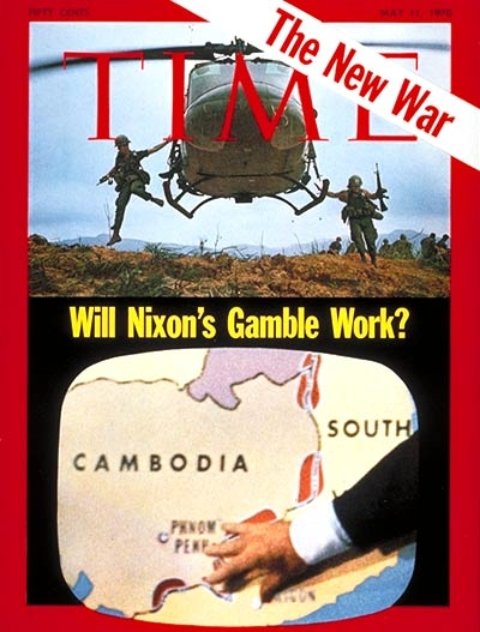
Obama appears to be channeling Richard Nixon. Publicly, he’s seeking “peace with honor” in Afghanistan. Privately, he’s seeking a “decent interval” between when the U.S. exits Afghanistan for good and when Afghanistan returns to Taliban and tribal control, i.e. chaos, or at least that’s my guess. The “fall” of Afghanistan will then become a political football, with Republicans attempting to paint Democrats as being spineless in leaving Afghanistan, whereas the Democrats will likely paint Afghan leaders as corrupt and incompetent and ungrateful. Perhaps a Democratic candidate will emerge in 2020 to explain to Americans that our failed efforts in Afghanistan were nevertheless part of a “noble cause” in the global war on terror.
What follows is my article from April of 2009. I think lesson (2) below will be especially telling in the weeks and months ahead.
Mary McCarthy in Vietnam, Barack Obama in Afghanistan
Seven Lessons and Many Questions for the President
By William Astore
In 1967, outraged by the course of the Vietnam War, as well as her country’s role in prolonging and worsening it, Mary McCarthy, novelist, memoirist, and author of the bestseller The Group, went to Saigon, then the capital of South Vietnam, to judge the situation for herself. The next year, she went to the North Vietnamese capital, Hanoi. She wrote accounts of both journeys, published originally in pamphlet format as Vietnam (1967) and Hanoi (1968), and later gathered with her other writings on Vietnam as a book, The Seventeenth Degree (1974). As pamphlets, McCarthy’s accounts sold poorly and passed into obscurity; deservedly so, some would say.
Those who’d say this, however, would be wrong. McCarthy brought a novelist’s keen eye to America’s activities and its rhetoric in Vietnam. By no means a military expert, not even an expert on Vietnam — she only made a conscious decision to study the war in Vietnam after she returned from her trip to Saigon — her impressionistic writings were nevertheless insightful precisely because she had long been a critical thinker beholden to no authority.
Her insights into our approach to war-fighting and to foreign cultures are as telling today as they were 40 years ago, so much so that President Obama and his advisors might do well to add her unconventional lessons to their all-too-conventional thinking on our spreading war in Afghanistan and Pakistan.
What were those lessons? Here are seven of them, each followed by questions that, four decades later, someone at President Obama’s next press conference should consider asking him:
1. McCarthy’s most fundamental objection was to the way, in Vietnam, the U.S. government decided to apply “technology and a superior power to a political situation that will not yield to this.” At the very least, the United States was guilty of folly, but McCarthy went further. She condemned our technocentric and hegemonic form of warfare as “wicked” because of its “absolute indifference to the cost in human lives” to the Vietnamese people.
Even in 1967, the widespread, at times indiscriminate, nature of American killing was well known. For example, U.S. planes dropped roughly 7 million tons of bombs on Vietnam and parts of Laos and Cambodia during the war, nearly five times the tonnage used against Germany during World War II. The U.S. even waged war on the Vietnamese jungle and forest, which so effectively hid Vietnamese guerrilla forces, spraying roughly 20 million gallons of toxic herbicides (including the dioxin-contaminated Agent Orange) on it.
In her outrage, McCarthy dared to compare the seeming indifference of many of her fellow citizens toward the blunt-edged sword of technological destruction we had loosed on Vietnam to the moral obtuseness of ordinary Germans under Adolf Hitler.
Questions for President Obama: Aren’t we once again relying on the destructive power of technology to “solve” complex political and religious struggles? Aren’t we yet again showing indifference to the human costs of war, especially when borne by non-Americans? Even though we’re using far fewer bombs in the Af-Pak highlands than we did in Vietnam, aren’t we still morally culpable when these “precision-guided munitions” miss their targets and instead claim innocents, or hit suspected “terrorists” who suddenly morph into wedding parties? In those cases, do we not seek false comfort in the phrase, C’est la guerre, or at least that modern equivalent: unavoidable collateral damage?
2. As Richard Nixon campaigned for the presidency in 1968 by calling for “peace with honor” in Vietnam, McCarthy offered her own warning about the dangers that arose when the office of the presidency collided with an American desire never to be labeled a loser: “The American so-called free-enterprise system, highly competitive, investment-conscious, expansionist, repels a loser policy by instinctive defense movements centering in the ganglia of the presidency. No matter what direction the incumbent, as candidate, was pointing in, he slowly pivots once he assumes office.”
Questions for President Obama: Have you, like Vietnam-era presidents, pivoted toward yet another surge simply to avoid the label of “loser” in Afghanistan? And if the cost of victory (however defined) is hundreds, or even thousands, more American military casualties, hundreds of billions of additional dollars spent, and extensive collateral damage and blowback, will this “victory” not be a pyrrhic one, achieved at a price so dear as to be indistinguishable from defeat?
3. Though critical of the U.S. military in Vietnam, McCarthy was even more critical of American civilian officials there. “On the whole,” she wrote, they “behaved like a team of promoters with a dubious ‘growth’ stock they were brokering.” At least military men were often more forthright than the civilians, if not necessarily more self-aware, McCarthy noted, because they were part of the war — the product, so to speak — not its salesmen.
Questions for President Obama: In promising to send a new “surge” of State Department personnel and other civilians into Afghanistan, are you prepared as well to parse their words? Are you braced in case they sell you a false bill of goods, even if the sellers themselves, in their eagerness to speak fairy tales to power, continually ignore the Fantasyland nature of their tale?
4.Well before Bush administration officials boasted about creating their own reality and new “facts on the ground” in Iraq, Mary McCarthy recognized the danger of another type of “fact”: “The more troops and matériel committed to Vietnam, the more retreat appears to be cut off — not by an enemy, but by our own numbers. To call for withdrawal in the face of that commitment… is to seem to argue not against a policy, but against facts, which by their very nature are unanswerable.”
Questions for President Obama: If your surge in Afghanistan fails, will you be able to de-escalate as quickly as you escalated? Or will the fact that you’ve put more troops in harm’s way (with all their equipment and all the money that will go into new base and airfield and road construction), and committed more of your prestige to prevailing, make it even harder to consider leaving?
5.A cursory reading of The Pentagon Papers, the famously secret government documents on Vietnam leaked to the New York Times by Daniel Ellsberg, reveals how skeptical America’s top officials were, early on, in pursuing a military solution to the situation in South Vietnam. Nevertheless, knowing better, the “best and brightest,” as journalist David Halberstam termed them in his famous, ironic book title, still talked themselves into it; and they did so, as McCarthy noted, because they set seemingly meaningful goals (“metrics” or “benchmarks,” we’d say today), which they then convinced themselves they were actually achieving. When you trick yourself into believing that you’re meeting your goals, as Halberstam noted, there’s no reason to reexamine your course of action.
Questions for President Obama: Much has been written about an internal struggle within your administration over the wisdom of surging in Afghanistan. Now, you, too, have called for the setting of “benchmarks” for your new strategy’s success. Are you wise enough to set them to capture the complexities of political realities on the ground rather than playing to American strengths? Are you capable of re-examining them, even when your advisors assure you that they are being achieved?
6.In her day, Mary McCarthy recognized the inequities of burden-sharing at home when it came to the war in Vietnam: “Casualty figures, still low [in 1967], seldom strike home outside rural and low-income groups — the silent part of society. The absence of sacrifices [among the privileged classes] has had its effect on the opposition [to the war], which feels no need, on the whole, to turn away from its habitual standards and practices — what for? We have not withdrawn our sympathy from American power and from the way of life that is tied to it — a connection that is more evident to a low-grade G.I. in Vietnam than to most American intellectuals.”
Questions for President Obama: Are you willing to listen to the common G.I. as well as to the generals who have your ear? Are you willing to insist on greater equity in burden-sharing, since once again most of the burden of Iraq and Afghanistan has fallen on “the silent part of society”? Are you able to recognize that the “best and brightest” in the corridors of power may not be the wisest exactly because they have so little to lose (and perhaps much to gain) from our “overseas contingency operations”?
7.McCarthy was remarkably perceptive when it came to the seductiveness of American technological prowess. Our technological superiority, she wrote, was a large part of “our willingness to get into Vietnam and stay there… The technological gap between us and the North Vietnamese constituted, we thought, an advantage which obliged us not to quit.”
Questions for President Obama: Rather than providing us with a war-winning edge, might our robot drones, satellite imagery, and all our other gadgetry of war seduce us into believing that we can “prevail” at a reasonable and sustainable cost? Indeed, do we think we should prevail precisely because our high-tech military brags of “full spectrum dominance”?
One bonus lesson from Mary McCarthy before we take our leave of her: Even now, we speak too often of “Bush’s war” or, more recently, “Obama’s war.” Before we start chattering mindlessly about Iraq and Afghanistan as American tragedies, we would do well to recall what McCarthy had to say about the war in Vietnam: “There is something distasteful,” she wrote, “in the very notion of approaching [Vietnam] as an American tragedy, whose protagonist is a great suffering Texan [President Lyndon Baines Johnson].”
Yes, there is something distasteful about a media that blithely refers to Bush’s or Obama’s war as hundreds of thousands of Iraqis and Afghans suffer. For American troops, after all, are not the only ones paying the ultimate price when the U.S. fights foreign wars for ill-considered reasons and misguided goals.
There’s a new bear in the woods and his name is Vladimir Putin. Remember that Reagan campaign ad from 1984 that showed a menacing, obviously Soviet, bear patrolling the woods, with ominous music in the background? Fast-forward thirty years and a bare-chested Putin is that new bear, marauding in the Crimea and threatening Ukraine.
Our mainstream media has entered a time warp and we’re back to 1984. No, not the 1984 of George Orwell and of constant monitoring by Big Brother – our media is not concerned by that. Instead, they’re concerned with a revived Soviet Union, a new Cold War, and the notion that America is unprepared and weak.
The big winner of this collective (and selective) exercise in time travel is obvious: the U.S. Military-Industrial Complex as well as Big Oil and Gas. We can’t make significant cuts to “defense” spending now that the Russian bear is on the loose again. Right? And the best way to neutralize the bear’s threats of cutting off gas shipments to Europe is by surging oil and gas drilling in the U.S., chiefly by hydro-fracturing or fracking. Right?
Never mind concerns about rising CO2 levels and global warming. It’s 1984 again, not 2014. We need to corral that Russian bear before he emasculates us. Deploy our military! Drill baby drill! Show the Russkies who’s boss! Before they go all “Red Dawn” on us.
And when was the cheesy “Red Dawn” originally released? You guessed it: 1984.
Like Gloria Swanson in “Sunset Boulevard,” Our Hubristic Leaders Are Always Ready for their Close-up
W.J. Astore
When Hannah Arendt, the famous German-American political philosopher, criticized American involvement in the Vietnam War, she said that our foreign policy “experts” fell prey to using excessive means to achieve minor aims in a region of marginal interest to the United States. You could say the same of most of America’s foreign interventions since 1945. We are a superpower with a boundless propensity for meddling in world affairs. We waste enormous amounts of money and resources intervening in areas that are of marginal importance to our national security.
There are many reasons for these wasteful interventions, of course. The military-industrial-Congressional complex plays its role. Presidents love to intervene as a sign of “strength.” Natural resources, especially oil, are usually in play. The usual motives, in short: profit, power, greed.
But perhaps the root cause of our mistakes can be traced to hubris, our prideful belief that we can remake other societies and peoples in our image. Our hubris leads us to undervalue legitimate cultural differences, and to underestimate the difficulties involved in bridging those distances. Because we underestimate the difficulties, we rush in with money and troops, only to find that the problems we encounter — and often exacerbate — are not amenable to being solved with money and troops. Nevertheless, once we’ve committed our prestige, we believe that we can’t withdraw without losing face. So we commit even more money and troops and prestige, until our folly can no longer be denied, even to ourselves. After which, sadly, we usually search for scapegoats.
Rarely do we stop to think that some problems simply can’t be solved with massive infusions of money and troops. Indeed, infusions of the same often exacerbate the very problems we claim we’re trying to solve.
The way out, to paraphrase Arendt, is to commit only those means necessary to secure our major aims in regions of vital interest to the U.S.
Such an approach requires humility as well as moderation. Our foreign policy types will need to stop strutting the world stage as if they own it. Our leaders will need to stop vamping like Gloria Swanson in Sunset Boulevard, declaiming “I am big. It’s the pictures that got small.” (If only they had her style.)
“Look at them in the front offices. The masterminds!” Yes, Gloria Swanson had it right. Our foreign policy “masterminds” need to learn some humility. Either that, or America will be among the smashed idols of history.