Ignorance and Dishonesty: Trump, Hillary, and Nuclear Genocide

castle-romeo-573x720
Some honesty, please!

W.J. Astore

Should the United States reject the “first use” of nuclear weapons?  That question was put to Hillary Clinton and Donald Trump during their first debate.  Colonel (retired) Andrew Bacevich asks us to take their answers seriously in his latest insightful essay at TomDispatch.com, which I urge you to read here in full.

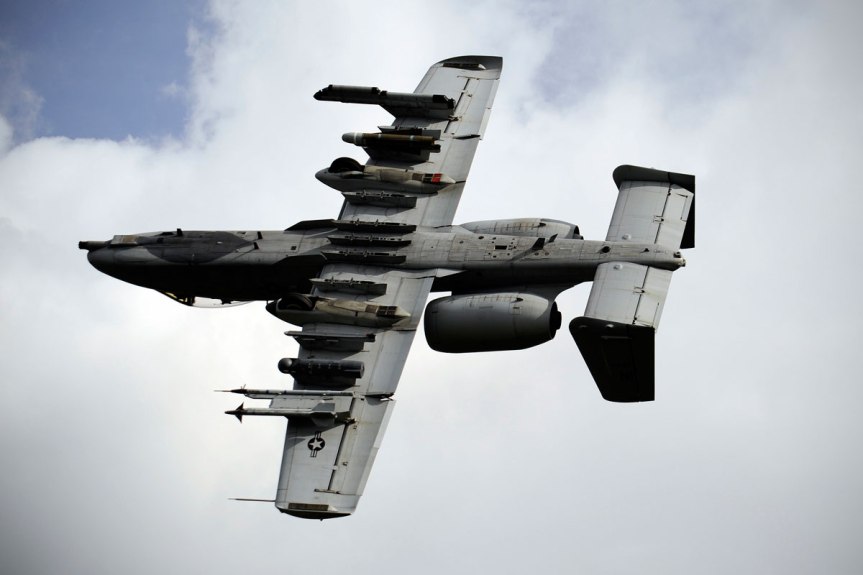
Trump was asked to respond first, and his rambling answer, I thought, showed the evidence of someone who had crammed for a test.  He was desperate to show he knew something – anything – about America’s nuclear forces (here some may recall how Trump obviously knew little about America’s nuclear triad during the Republican primary debates).  So Trump rambled on about obsolete B-52s flown by the sons and grandsons of previous pilots, a non sequitur since the B-52 has been continuously upgraded with new engines, advanced avionics, the latest in high-tech weaponry, and despite their age they’re still more than capable of doing the job.  But somebody must have told Trump to use the B-52’s age as a talking point, and he was determined to get it in.

As confused and incoherent as Trump’s reply was (read more about this at TomDispatch.com), at least he tried to grapple with the issue.  Trump did reject First Strike.  He did refer to the terror of nuclear war, even as he got lost in other talking points about North Korea, Iran, and allegations about how weak on national security Obama is.

By comparison, Clinton’s response was classic Hillary.  Avoid and evade.  Try to be all things to all voters.  Bloviate, in other words, as Warren G. Harding did in 1920.  In essence, Hillary ducked the question.  She refused to address the issue of first use of nuclear weapons; indeed, she didn’t address nuclear strategy and policy at all.  Instead, she drew a contrast between her experience and predictability versus Trump’s inexperience and unpredictability.  Her message was clear: I’m not talking about nuclear weapons or policy, except to say you shouldn’t trust Trump with the nuclear launch codes.

Who won on this question?  Bacevich is right to say neither candidate won, but it’s clear who lost: the American people.  And the world.

It’s shameful that this country hasn’t rejected the first use of nuclear weapons.  It’s also shameful that instead of working to eliminate nuclear weapons, the U.S. is actually planning to spend nearly a trillion dollars over the next 30 years to upgrade that arsenal.  For what possible strategic purpose, one must ask?  America’s current nuclear deterrent is the most powerful and survivable in the world.  No other country comes close.  There’s no rational reason to invest more money in nuclear weapons, unless you count the jobs and money related to building new nuclear submarines, weaponry, bombs, and all the other infrastructure related to America’s nuclear triad of Trident submarines, land-based bombers, and fixed missile silos.

Neither Trump nor Hillary addressed this issue.  Trump was simply ignorant.  Hillary was simply disingenuous.  Which candidate was worse?  When you’re talking about nuclear genocidal death, it surely does matter.  Ignorance is not bliss, nor is a lack of forthrightness and honesty.

Next time, Mr. Trump and Secretary Clinton, let’s have some rigor, some honesty, and some wisdom on the issue of nuclear weapons.  Not only America deserves it – the world does.

Dump Chump Trump

The Donald: Easy to make fun of ... too easy
What a chump

W.J. Astore

What kind of a presidential candidate tweets in the middle of the night about alleged sex tapes involving a former Miss Universe winner?  Indeed, what kind of a man does this?

Donald Trump is a chump.  I’d call him a chimp, except it would be an insult to chimpanzees everywhere.  The man has no discipline, no sense of decorum, and no compassion for others (let’s not forget his signature line, “You’re fired”).  Indeed, he seems to revel in humiliating others.  This was mildly amusing when he was taking on equals on the stage during the Republican primaries, but it’s disturbing in the extreme to see him bullying the little guys and gals for whom he’s supposedly a champion.

So many sane people and major newspapers have gone on record as being against Trump that there’s little I can add.  Sadly, Trump’s followers seem unperturbed and undisturbed no matter his insults and tyrannical behavior.

All I can say is this: Trump is not the kind of man my father taught me to be.  My dad, who fought forest fires in Oregon in the CCC, a veteran of an armored division in World War II, a city firefighter for more than 30 years until his retirement, treated people fairly and squarely. He was humble about himself and considerate to others.  I can’t recall him insulting others, certainly not in the intentional and hurtful way that Trump directs at others.  Trump is especially fond of attacking women or minorities or anyone he sees as vulnerable, the very opposite of my dad’s code of behavior.

Don’t get me wrong: my dad wasn’t perfect.  He had his faults.  But his faults were not directed at others; he didn’t try to demean or diminish other people, as Trump so obviously enjoys doing.  Unlike Trump, my dad wasn’t boastful; indeed, three favorite sayings of his were: “Still waters run deep,” “Don’t toot your own horn,” and “The empty barrel makes the most noise.”

You were right, Dad.  The rushing nonsense from Trump exhibits his shallowness; the man is constantly tweeting his own horn; and, like the empty vessel that he is, he makes an awful amount of noise.

Trump: Not the kind of man my father would respect; not the kind of man our country needs. Dump chump Trump.

Post-Debate: Trump the Undisciplined

gettyimages-610598222-768x491
Congratulations, Hillary!

W.J. Astore

Last night’s debate made for grim watching.  I’m a fan of neither candidate, but Hillary performed far better than Trump.  She kept her poise, she smiled, she stayed on her talking points.  She was, in a word, disciplined.  Measured.  And smart.  She admitted she was wrong about the emails, apologized, and moved on.  She projected calm.  Not surprisingly, she was well prepared and knew her stuff.

Trump was the total opposite: ill-prepared, mugging and pulling faces for the camera, angry and unsmiling, wandering from his talking points, often losing himself.  He was, in a word, undisciplined.  And Trump never admits he’s wrong, whether about the Iraq war or the birther issue or his tax returns or what have you.  Instead of calm, Trump projected anger.  Despite running for president for more than a year, he seemed ill-prepared and not in command of the narrative.

Whether any of this matters in the long run remains to be seen.  But what surprised me the most about Trump was the lack of a positive message.  Where was Reagan’s sunny optimism? Where was George W. Bush’s compassionate conservatism?  Where was the hope?  Trump just seemed angry: angry at Mexicans, angry at the Chinese, angry at corporations for taking American jobs overseas, angry at Hillary for her negative ads.  (I guess “Crooked Hillary” doesn’t count as negativity.)

Can you win a presidential campaign when your primary appeal is an angry one?  Anger that is often directed at various minority groups as well as your opponent?  I suppose we’ll find out, come this November.

Trump sniffled a lot and was perhaps suffering from a cold.  As the debate dragged on, he lost steam and grew increasingly incoherent.  You could see Hillary’s confidence grow. She’s not the best debater; she has a tendency to lecture, to drone on, to lose the attention of the audience. But his dismal performance overshadowed her occasional forays into the weeds of wonkishness.

Trump, in sum, emerged the loser, and for a self-professed “winner” like Trump, that is indeed a bitter pill to swallow.

Quick Thoughts on Hillary and Trump before the Debate

julius-caesar3
Hail Caesar!

W.J. Astore

Sorry, I have no special insight into tonight’s debate.  I’m guessing Hillary will win based on points, but that Trump will also win by being present on the same stage.  More celebrity than politician, more showman than man of substance, Trump knows how to control his own image. Hillary will command the facts; Trump will command the audience’s attention.  It’s a win-win for them but a lose-lose for America.

I had a strange dream last night.  I dreamed that Trump arrived at the debate, riding a chariot and posing as Caesar.  And the audience applauded.  I was desperate to ask a question (yes, I was in the audience, don’t ask me how), and got the chance.  I said something like this: “I was in the military for 20 years, serving my country, yet you, Donald Trump, dodged the draft during the Vietnam War.  You claim to be on the side of veterans, but you arrive here dressed as Caesar, as a conquering hero, even though you yourself never served.  Have you no sense of decency, sir?  Have you no shame?”

I swear: I rarely remember my dreams, and those that I do remember have nothing whatsoever to do with presidential politics.  In my waking hours, I don’t think of Trump as Caesar.  He’s more of a Nero, a deeply flawed narcissist who will fiddle while America burns.

Hillary raises different issues.  I keep seeing, both in print and on TV, the argument that Hillary is imperfect, secretive, compromised by special interests, a person of questionable judgment, but that we must vote for her simply because SHE’S NOT TRUMP.  Trump is so bad, such a hazard to democracy, the argument goes, that we must swallow the jagged big pill that is Hillary, no matter how painful that pill may prove, simply because the alternative is too terrible to contemplate.

It’s sad indeed that some people’s best (only?) argument for Hillary is that SHE’S NOT TRUMP. For me, I can’t get past the Democratic Party’s efforts to rig the primary process in her favor against a true populist with integrity, Bernie Sanders.  It’s Bernie, not Hillary, who should be running against Trump, but the Democratic Party establishment determined from the beginning that Hillary, not Bernie, would be its nominee.

Of course, both parties, Republican and Democrat, want to keep alternatives from us.  The shameful part of tonight’s debate is that Gary Johnson (Libertarian) and Jill Stein (Green) are excluded.  In short, there will be no “debate” tonight in any meaningful sense of that word. Instead, we will get a narrow discussion of establishment views with considerable jousting and posturing (and perhaps some mugging from Trump), generating some heat but precious little light.

Yes, I will watch the debate.  I just hope some version of my dream of Caesar’s rapturous appearance doesn’t come to pass.

America the Fearful

dad-001
My dad in the Civilian Conservation Corps in Oregon, c.1937

W.J. Astore

America.  Land of the free, home of the brave.  Right?  Peter Van Buren, who spent a career at the State Department, has a great new article at TomDispatch.com that highlights the way in which America has changed since the 9/11 attacks.  In sum: too many wars, too much security and surveillance, and far too much fear.  One passage in Van Buren’s article especially resonated with me:

Her [Van Buren’s daughter] adult life has been marked by constant war, so much so that “defeating the terrorists” is little more than a set phrase she rolls her eyes at. It’s a generational thing that’s too damn normal, like Depression-era kids still saving aluminum foil and paper bags in the basement after decades of prosperity.

Van Buren’s reference to Depression-era kids: Well, that was my dad. Born in 1917, he endured the Great Depression in a fatherless family. He really wasn’t certain where his next meal was coming from. Decades later, he still saved everything: plastic bags, twist ties, newspapers, old vacuums and toasters and other appliances (good for spare parts!), scrap wood, and so on. He wasn’t a hoarder per se; he just couldn’t throw away something that he might need if the times grew grim again.

My Dad would cook and eat broccoli rabe greens, then drink the green juice from the cooking. “Puts lead in your pencil,” he’d say.  When he ate corn on the cob, there was nothing left on the cob when he was through. He stripped it bare like those crows I watched as a kid on Saturday morning cartoons.

He came of age in a time of want and later served in an armored division in World War II. My dad’s generation knew, like FDR knew, that the only thing they truly had to fear was fear itself. He became hardened to it, but the Depression indelibly marked him as well.

How is today’s generation being marked?  Compared to the Great Depression, these are times of plenty.  Few Americans are starving.  The new normal for this generation is living in fear. Being surrounded by security guards and surveillance devices. Being immersed in celebrations of “patriotism” that involve steroidal flags and deadly military weaponry. Hearing about distant wars fought largely by the children of the working classes.

Looking overseas, they see an American foreign policy defined by perpetual war and an economy driven by perpetual weapons sales. Domestically, they see penury for social programs and profligacy for the national security state.

Is it any wonder that so many millennials seem detached or disenchanted or even defeated? They sense that America has changed, that the focus has shifted, that the American dream has darkened, that America the home of the brave has become the land of the fearful.

Fear is the mind-killer, to cite Frank Herbert.  My father’s generation knew this and overcame it.  Yet today our leaders and the media seek to generate and exploit fear. America has turned to the Dark Side, giving in to anger, fear, aggression.  Just look at our two major party candidates for the presidency.

Mister, we could use a man like FDR again.

Hillary Clinton’s Deplorables and Irredeemables

hillary

W.J. Astore

When Hillary Clinton called out half of Trump’s supporters as “deplorables,” to the point where some are “irredeemable,” I shook my head at her elitism even as I was surprised by her lack of political acumen.  Her comment lumping these “deplorables” into a “basket” came at a fundraiser on September 9th, even as her podium touted the message “stronger together.”  As I wrote in a Facebook post on September 10th, “Painting half your opponent’s supporters as [potentially] irredeemable is just bad strategy.”

But it’s worse than that.  First off, Hillary should have known better.  After all, she went aggressively after Barack Obama when in 2008 he made his comment about bitter rural folk clinging to guns and religion.  (And Obama’s comment is considerably milder than Hillary’s.) By calling out Obama for his comment, Hillary was able to win that year’s primary in Pennsylvania.  Second, for a seasoned pol Hillary showed a surprising lack of discipline.  She herself prefaced her remarks with the phrase, “to just be grossly generalistic.”  Grossly generalistic?  That’s supposed to be Trump’s sphere, not Hillary’s.

But third and finally is that word, “irredeemable.”  Having been raised Catholic and having studied evangelicalism and American religion, that word instantly caught my attention. For Christians, to suggest that someone is “irredeemable” is in itself deplorable.  It’s as if you’re limiting the agency of God.  God determines who is redeemable and who isn’t.  No sinner, i.e. human, has the probity or power to do so.

All Christians know the story of the thief on the cross next to Christ as He was crucified. Christ chose to redeem that man, saying to him that “today, you will be with me in paradise.” As I type these words, an old hymn plays in my mind: “Christ, Jesus, victor.  Christ, Jesus, ruler.  Christ, Jesus, Lord and Redeemer.”  For God, no one is “irredeemable,” nor should any person make such claims, for God’s ways are past searching out.

Mark Shields on PBS put this exceptionally well this past Friday night:

You don’t [use that word, irredeemable] — America is built on redemption. People came here because things weren’t working out.

My generation, the old, oldest fart generation, OK, 13 percent of us were in favor of same-sex marriage 15 years ago, now 41 percent. On civil rights, America has changed dramatically and profoundly. We believe in redemption, not just because you’re a liberal, because you’re an American.

And that — when you write off people and blame the customer, that is really bad.

To this, David Brooks at PBS added the following:

[The word] irredeemable is what leapt out at me.

And the person who was at the Emanuel Baptist — AME Church in Charleston, they believe the guy who shot and killed their close friends was redeemable, but she thinks millions of Americans aren’t?

And that speaks and I think it plays, because there is a brittleness there. And I don’t know if there is a brittleness within. I sort of doubt it. I think she’s probably a very good person within. But there has been a brittleness to her public persona that has been ungenerous and ungracious. And it plays a little to that and why people just don’t want to latch on [to her campaign].

If Hillary loses the election in November, it may very well come back to her “grossly generalistic” comments on September 9th, when she anointed herself as the judge of who is redeemable and who isn’t.


Take the Oil! Trump the Imperialist

trump

W.J. Astore

Last night’s “commander-in-chief” security forum that featured Hillary Clinton and Donald Trump was, not surprisingly, disappointing.  (You can read the transcript here.)  Trump recently stated he was in favor of large increases in defense spending, but he wasn’t asked about this.  He wasn’t asked about his support of torture, nor was he challenged on his remarkably dangerous statement back in March that military officers would obey his presidential decrees, even when they were unlawful.  Hillary was challenged on her email fiasco at the State Department, and rightly so, but she pretty much got a free pass on her support of the calamitous Iraq war and the chaos following the Libyan intervention.  And of course neither candidate was challenged on their blanket support of Israel.

What you got was two self-absorbed candidates, one wonkish, the other one clearly a wanker, both of them posing as warriors as long as someone else’s kids are doing the fighting.  Here’s a question for Trump and Hillary: the next time you deploy troops to Iraq or Syria or Afghanistan or wherever, will you include Ivanka or Chelsea, respectively, and put them in harm’s way?

Most interesting to me was Trump’s old-fashioned imperialism, which explains much of his appeal to the rabid right.  Here’s what Trump had to say about how the Iraq war should have turned out for the USA:

“We [the USA] go in [to Iraq in 2003], we spend $3 trillion, we lose thousands and thousands of lives, and then, Matt, what happens is, we get nothing. You know, it used to be to the victor belong the spoils. Now, there was no victor there, believe me. There was no victor. But I always said: Take the oil.”

You have to hand it to The Donald: at least he’s occasionally honest.  The Iraq war was about oil, among other things, and Trump says the USA as the “victor” should have taken it.  Why?  Because might makes right.  Because, as Thucydides said so many centuries ago, the strong do what they will and the weak suffer as they must.

Remember when George W. Bush said Iraq’s oil was the “patrimony” of the Iraqi people and that the USA wasn’t about to take it?  That the Iraq war was about freedom and democracy in the Middle East, not a naked grab for resources?  Trump is having none of that.  Any wonder that he’s so popular among Americans who are tired, as they see it, of losing?

“Take the oil!”  It’s a statement that could easily appear on the next iteration of Trump’s baseball cap.

War Pabulum: The Perils of War as a Master Narrative

IMG_0919
Photo by Paul Nadar (1891), from a French postcard

W.J. Astore

I was reading the novelist Ursula K. Le Guin and came across the following commentary by her:

“A hero whose heroism consists of killing people is uninteresting to me, and I detest the hormonal war orgies of our visual media … War as a moral metaphor is limited, limiting, and dangerous.  By reducing the choices of action to ‘a war against’ whatever-it-is, you divide the world into Me or Us (good) and Them or It (bad) and reduce the ethical complexity and moral richness of our life to Yes/No, On/Off.  This is puerile, misleading, and degrading.  In stories, it evades any solution but violence and offers the reader mere infantile reassurance.  All too often the heroes of such fantasies behave exactly as the villains do, acting with mindless violence, but the hero is on the ‘right’ side and therefore will win.”

This passage is copyrighted 2012, and surely Le Guin is commenting in part on the American political and war scene, even if these comments came as an afterword to her novel “A Wizard of Earthsea.”

The stories we tell ourselves – our driving narratives and metaphors – are very powerful.  I learned this almost three decades ago from one of my professors at Johns Hopkins.  We were talking about the scientific revolution, the label applied after the fact by historians to the era of Copernicus, Kepler, Galileo, and Newton.  Did that era truly deserve the label of a “revolution” in thought?  On one level, yes.  A heliocentric vision replaced a geocentric one.  Newtonian physics replaced Aristotelian metaphysics.  But on another level, the label was misleading.  If you view this era only through a “revolutionary” lens, everything gets magnified and refracted through it.  You’re always looking for evidence of the “revolution” that you know is there.  The revolutionary narrative/metaphor, in other words, restricts and distorts your vision.  It also tends to answer questions before they’re even asked.  Certain historical figures get labeled as “revolutionaries,” others as “reactionaries,” some as winners, others as losers, almost without having to think about it.

That’s disturbing enough for a historian dealing with the “dead” past.  Think about how that distortion, that resort to easy categorization, applies to the living, to the present, in “wartime.”  Viewing everything through a war lens both restricts and distorts our vision.  We quickly force people to take sides, or we assign them a side regardless of their complexity (“You’re either for us or against us,” as George W. Bush noted in the aftermath of 9/11).  Just as quickly, the “heroes” adopt the violent methods of the bad guys (witness the bombing, the invasions, the use of torture, performed by the U.S. in the stated cause of “liberation”).  No ethical complexity is tolerated since “our” troops are on the right side (so we think).  Even when they embrace violence and lose control, deadly mistakes and even war crimes are readily excused as aberrations that should be forgotten, rare exceptions that do nothing to besmirch America’s exceptional and heroic nature.

The power of narratives is remarkable.  The United States continues to be driven by one that’s dominated by power, violence, and war.  Is it any wonder, then, that the two major party candidates for the presidency, Hillary Clinton and Donald Trump, fit so easily and readily into this narrative?  Hillary plans to continue to wage war even more aggressively than Obama has, and Trump is all about violent solutions and an “Us” versus “Them” mentality.  (Build a wall!  Biggest, baddest military!  Make America great again!  Punch the protesters!    Extreme vetting!  Throw the illegals out!)

Until we change our national narrative from one of constant war and violence to something more pacific and modulated, our political scene will continue to be, to borrow Le Guin’s words, puerile and misleading and degrading, with candidates serving up heroic violence as pabulum, as infantile reassurance.

Talking to Trump Supporters

bageant

W.J. Astore

Is it possible to talk to working-class supporters of Donald Trump?  Of course it is.  It’s just that Democrats from Hillary Clinton’s crowd have a very difficult time reaching across the social, economic, and cultural divide that often separates them from Trump’s (often reluctant) supporters.

This lesson came home to me in Arlie Hochschild’s recent article for TomDispatch.com.  Arlie got to know Mike Schaff, a man whose home in the bayou of Louisiana was poisoned by an environmental disaster at the hands of big oil.  Despite this, Mike Schaff remains deeply skeptical of government oversight and says he wants to eliminate agencies like the EPA that help to prevent environmental damage.

Despite his bitter experience with corporate malfeasance, Schaff remains unsympathetic to the Democratic Party and its arguments for more government intervention in the name of protecting ordinary citizens from harm.  Schaff, in short, believes in individualism, hard work, and self-reliance, as well as working together with his neighbors in small communities.  He doesn’t buy the argument that big government is his friend.  He doesn’t want to be seen as dependent on welfare and other government handouts.  He mostly wants to be left alone, even as he professes belief in Trump’s sentiment that America needs to be made “great again,” in part by a government led by Trump.

I think I understand part of what drives Mike Schaff.  The “do-gooder” liberal Democrats don’t speak his language.  Their reliance on regulations, lawyers, and bureaucracy makes him feel out of sorts, inferior, even dumb.  Their talk about “victims” and government “rescuers” turns him off, even though he himself is a victim of an environmental disaster.  But the point is that he doesn’t see himself as a victim.  He sees himself as a self-reliant man, a man working through a tough time, getting by with a little help from his friends, with no need of help from the Suits in Washington.

A confession: I’m not the most mechanical guy (though I fix small stuff), but around a guy like Mike Schaff, a man who welds and spends his time constantly tinkering with machines, I’d feel a bit uncomfortable.  I’m used to slinging words, just as he’s used to working physically, with his hands.

But I could hang with him.  I did my time in the military.  I come from a working-class family.  I know guys like Mike Schaff.  I can empathize with him.  I can speak his language.

The message of politicians like Hillary Clinton will not resonate with Mike.  Guys like Mike prefer plain-speak.  Making America great again — hell ya, it’s about time!  As cynical and opportunistic as Trump may be, his message of self-reliance, his blunt talk, his braggadocio, and his calls for action (no matter how stupid) do resonate with Mike, even if his pro-corporate policies will only aggravate Mike’s situation.

What ever happened to tough democrats who could talk to guys like Mike?  Even Joe Biden, despite his hardscrabble Scranton origins, doesn’t quite fit.

Joe Bageant was great at this — his book “Deer Hunting with Jesus” told the story of a liberal gun-owning Southerner who lived the life of men (and women) like Mike Schaff.  But sadly Bageant died a few years ago.  (For some articles I’ve written about Bageant, see here and here and here.)

If Hillary Clinton loses in November, a big reason why will be that she simply couldn’t (or wouldn’t) speak the language of working-class Americans, people like Mike Schaff.

Which Hypocritical Billionaire Should Rule America?

Clinton_Paskova_0191471569795
She might meet with you — if the price is right

W.J. Astore

News about the Clinton Foundation and its finances shows the truth of that old adage, “You get what you pay for.”  In this case, giving money to the Clinton Foundation often bought access to Hillary Clinton (or her closest aides), the odds-on favorite to be America’s next president, and sometimes it helped with favors as well.  These revelations illustrate perfectly the “pay to play” nature of the American political scene: the usual influence peddling, the usual FOBH, Friends of Bill and Hillary, coming together to pull the strings while being paid handsomely for the performance.

Here’s what the Washington Post had to say about it:

A sports executive who was a major donor to the Clinton Foundation and whose firm paid Bill Clinton millions of dollars in consulting fees wanted help getting a visa for a British soccer player with a criminal past.

The crown prince of Bahrain, whose government gave more than $50,000 to the Clintons’ charity and who participated in its glitzy annual conference, wanted a last-minute meeting with Secretary of State Hillary Clinton.

U2 rocker and philanthropist Bono, also a regular at foundation events, wanted high-level help broadcasting a live link to the International Space Station during concerts.

In each case, according to emails released Monday from Hillary Clinton’s time as secretary of state, the requests were directed to Clinton’s deputy chief of staff and confidante, Huma Abedin, who engaged with other top aides and sometimes Clinton herself about how to respond.

The emails show that, in these and similar cases, the donors did not always get what they wanted, particularly when they sought anything more than a meeting.

But the exchanges, among 725 pages of correspondence from Abedin disclosed as part of a lawsuit by the conservative group Judicial Watch, illustrate the way the Clintons’ international network of friends and donors was able to get access to Hillary Clinton and her inner circle during her tenure running the State Department.

Yes, money sure does matter.  If asked why they took more the fifty grand from the prince of Bahrain, among other donors with deep pockets, I suppose Hillary and Bill might just say, “Because that’s what they offered.”  Money is the universal solvent of politics, and Hillary and Bill know this better than most.

Of course, Hillary is trying to position herself as the champion of ordinary people, even as she and her husband have amassed a foundation and position worth roughly $2 billion. Who knows?  Given the nebulous and chaotic nature of Trump’s finances, the Clintons may be richer than him.

Which brings me to this question: Which hypocritical billionaire do you want to rule America?

Update (8/24/16): The Washington Post has another story on how Hillary Clinton is raising big money through various fundraisers.  All you need is $25K or $50K and some good connections and you too might be able to meet Hillary in a semi-private setting.  You might even net a bonus like seeing Cher (in Provincetown) or hearing Aretha Franklin sing (in Birmingham, Michigan).

Remember how Bernie Sanders energized a movement, raising millions by relying on individual donations that averaged (and this is an amount he made famous) $27 per donation?

Those days are gone.  Establishment Hillary is back, and she’s raising buckets of money from the deep pockets of heavy-hitters.

But never fear!  She’s all about helping “everyday people” — a phrase her campaign used until someone noticed it was slightly condescending.

If we’re “everyday people,” who are the Clintons?  Well, I can tell you how they think of themselves by how they act: They are the higher life forms, to borrow a phrase from a friend, a retired Army major who remembers M-48 tanks because he served in one.

That’s one place we won’t see Hillary: in an Army tank.  But if we ever did, I think she’d pull it off better than Michael Dukakis did.

***Photographer
Beware of posing with tanks