Its biggest advantage is that it knows what it wants
The military-industrial-congressional complex (MICC) has a huge advantage over its critics. Its proponents are united by greed and power. They know exactly what they want. Like Johnny Rocco in “Key Largo,” they want MORE. More money. More authority. And obviously more weapons and more war.
Whereas critics of the MICC tend to approach the beast from different angles with different emphases. Tactical differences lead to fissures. Fissures prevent coalitions from forming. Unity is lacking, and not for want of trying. And so the MICC rumbles on, unchallenged by any societal force that is remotely its size.
A colleague of mine, Dennis Showalter, was fond of a saying that helps to explain the situation. Critics and intellectuals, he said, have a propensity to see the fourth side of every three-sided problem. Analysis leads to paralysis. The tyranny of small differences prevents unanimity of purpose.
Dennis Showalter, a fine historian and a better friend.
Another key strength of the MICC is reflected in an alternate acronym: the MICIMATT, which adds the intelligence “community,” the mainstream media, academe, and various think tanks to the military, industry, and Congress. To that we might also add the world of sports, entertainment (Hollywood and TV especially), and the very idea of patriotism in America with all its potent symbols. I’d even add Christianity here, the muscular version practiced in the U.S. rather than the compassionate version promulgated by Christ.
When you focus just on the MICC, you miss the wellsprings of its power. It’s not just about greed and authority, it’s about full-spectrum dominance of all aspects of American life and society.
America hasn’t won a major war since World War II, but the MICC has won the struggle for societal dominance in America. Serious challenges to it will require Americans to put aside differences in the name of a greater cause of peace and sanity. The wildcard here, of course, is the ever-present hyping of fear by the MICC.
FDR told Americans the only thing we truly needed to fear was fear itself. Fear paralyzes the mind and inhibits action. Fear is the only darkness, Master Po said in “Kung Fu.”
If we can overcome our fear and our differences to focus on building a more compassionate world, a world in harmony with nature and life, then maybe, just maybe, we can see the foolishness of funding and embracing an MICC based on an unnatural pursuit of destruction and death.
I turn 60 this year. My health is generally good, though I have aches and pains from a form of arthritis. I’m not optimistic enough to believe that the best years of my life are ahead of me, nor so pessimistic as to assume that the best years are behind me. But I do know this, however sad it may be to say: the best years of my country are behind me.
Indeed, there are all too many signs of America’s decline, ranging from mass shootings to mass incarceration to mass hysteria about voter fraud and “stolen” elections to massive Pentagon and police budgets. But let me focus on just one sign of all-American madness that speaks to me in a particularly explosive fashion: this country’s embrace of the “modernization” of its nuclear arsenal at a price tag of at least $2 trillion over the next 30 years or so — and that staggering sum pales in comparison to the price the world would pay if those “modernized” weapons were ever used.
Just over 30 years ago in 1992, a younger, still somewhat naïve version of Bill Astore visited Los Alamos National Laboratory (LANL) in New Mexico and the Trinity test site in Alamogordo where the first atomic device created at that lab, a plutonium “gadget,” was detonated in July 1945. At the time I took that trip, I was a captain in the U.S. Air Force, co-teaching a course at the Air Force Academy on — yes, would you believe it? — the making and use of the atomic bombs that devastated the Japanese cities of Hiroshima and Nagasaki to end World War II. At the time of that visit, the Soviet Union had only recently collapsed, inaugurating what some believed to be a “new world order.” No longer would this country have to focus its energy on waging a costly, risky cold war against a dangerous nuclear-armed foe. Instead, we were clearly headed for an era in which the United States could both dominate the planet andbecome “a normal country in normal times.”
I was struck, however, by the anything-but-celebratory mood at Los Alamos then, though I really shouldn’t have been surprised. After all, budget cuts loomed. With the end of the Cold War, who needed LANL to design new nuclear weapons for an enemy that no longer existed? In addition, there was already an effective START treaty in place with Russia aimed at reducing strategic nuclear weapons instead of just limiting their growth.
At the time, it even seemed possible to imagine a gradual withering away of such great-power arsenals and the coming of a world liberated from apocalyptic nightmares. Bipartisan support for nuclear disarmament would, in fact, persist into the early 2000s, when then-presidential candidate Barack Obama joined old Cold War hawks like former Secretary of State Henry Kissinger and former Senator Sam Nunn in calling for nothing less than a nuclear-weapons-free world.
An Even More Infernal Holocaust
It was, of course, not to be and today we once again find ourselves on an increasingly apocalyptic planet. To quote Pink Floyd, the child is grown and the dream is gone. All too sadly, Americans have become comfortably numb to the looming threat of a nuclear Armageddon. And yet the Bulletin of Atomic Scientist’sDoomsday Clockcontinues to tick ever closer to midnight precisely because we persist in building and deploying ever more nuclear weapons with no significant thought to either the cost or the consequences.
Over the coming decades, in fact, the U.S. military plans to deploy hundreds — yes, hundreds! — of new intercontinental ballistic missiles (ICBMs) in silos in Wyoming, Montana, North Dakota, and elsewhere; a hundred or so nuclear-capable B-21 stealth bombers; and a brand new fleet of nuclear-missile-firing submarines, all, of course, built in the name of necessity, deterrence, and keeping up with the Russians and the Chinese. Never mind that this country already has thousands of nuclear warheads, enough to comfortably destroy more than one Earth. Never mind that just a few dozen of them could tip this world of ours into a “nuclear winter,” starving to death most creatures on it, great and small. Nothing to worry about, of course, when this country must — it goes without saying — remain the number one possessor of the newest and shiniest of nuclear toys.
And so those grim times at Los Alamos when I was a “child” of 30 have once again become boom times as I turn 60. The LANL budget is slated to expand like a mushroom cloud from $3.9 billion in 2021 to $4.1 billion in 2022, $4.9 billion in 2023, and likely to well over $5 billion in 2024. That jump in funding enables “upgrades” to the plutonium infrastructure at LANL. Meanwhile, some of America’s top physicists and engineers toil away there on new designs for nuclear warheads and bombs meant for one thing only: the genocidal slaughter of millions of their fellow human beings. (And that doesn’t even include all the other life forms that would be caught in the blast radii and radiation fallout patterns of those “gadgets.”)
The very idea of building more and “better” nuclear weapons should, of course, be anathema to us all. Once upon a time, I taught courses on the Holocaust after attending a teaching seminar at the U.S. Holocaust Memorial Museum. Now, the very idea of modernizing our nuclear arsenal strikes me as the equivalent of developing upgraded gas chambers and hotter furnaces for Auschwitz. After all, that’s the infernal nature of nuclear weapons: they transform human beings into matter, into ash, killing indiscriminately and reducing us all to nothingness.
I still recall talking to an employee of Los Alamos in 1992 who assured me that, in the wake of the collapse of the Soviet Union, the lab would undoubtedly have to repurpose itself and find an entirely new mission. Perhaps, he said, LANL scientists could turn their expertise toward consumer goods and so help make America more competitive vis-à-vis Japan, which, in those days, was handing this country its lunch in the world of electronics. (Remember the Sony Walkman, the Discman, and all those Japanese-made VCRs, laser disc players, and the like?)
I nodded and left Los Alamos hopeful, thinking that the lab could indeed become a life-affirming force. I couldn’t help imagining then what this country might achieve if some of its best scientists and engineers devoted themselves to improving our lives instead of destroying them. Today, it’s hard to believe that I was ever so naïve.
“Success” at Hiroshima
My next stop on that tour was Alamogordo and the Trinity test site, then a haunted, still mildly radioactive desert landscape thanks to the world’s first atomic explosion in 1945. Yes, before America nuked Japan that August at Hiroshima and Nagasaki, we nuked ourselves. The Manhattan Project team, led by J. Robert Oppenheimer, believed a test was needed because of the complex implosion device used in the plutonium bomb. (There was no test of the uranium bomb used at Hiroshima since it employed a simpler triggering device. Its first “test” was Hiroshima itself that August 6th and the bomb indeed “worked,” as predicted.)
J. Robert Oppenheimer, the “father” of the atomic bomb
So, our scientists nuked the desert near the Jornada del Muerto, the “dead man’s journey” as the Spanish conquistadors had once named it in their own febrile quest for power. While there, Oppenheimer famously reflected that he and his fellow scientists had become nothing short of “Death, the destroyer of worlds.” In the aftermath of Hiroshima, he would, in fact, turn against the military’s pursuit of vastly more powerful hydrogen or thermonuclear, bombs. For that, in the McCarthy era, he was accused of being a Soviet agent and stripped of his security clearance.
Oppenheimer’s punishment should be a reminder of the price principled people pay when they try to stand in the way of the military-industrial complex and its pursuit of power and profit.
But what really haunts me isn’t the “tragedy” of Opie, the American Prometheus, but the words of Hans Bethe, who worked alongside him on the Manhattan Project. Jon Else’s searing documentary film, The Day After Trinity, movingly catches Bethe’s responses on hearing about the bomb’s harrowing “success” at Hiroshima.
His first reaction was one of fulfillment. The crash program to develop the bomb that he and his colleagues had devoted their lives to for nearly three years was indeed a success. His second, he said, was one of shock and awe. What have we done, he asked himself. What have we done? His final reaction: that it should never be done again, that such weaponry should never, ever, be used against our fellow humans.
And yet here we are, nearly 80 years after Trinity and our country is still devoting staggering resources and human effort to developing yet more “advanced” nuclear weapons and accompanying war plans undoubtedly aimed at China, North Korea, Russia, and who knows how many other alleged evildoers across the globe.
Fire and Fury Like the World Has Never Seen?
Perhaps now you can see why I say that the best years of my country are behind me. Thirty years ago, I caught a fleeting glimpse out of the corner of my eye (Pink Floyd again) of a better future, a better America, a better world. It was one where a sophisticated lab like Los Alamos would no longer be dedicated to developing new ways of exterminating us all. I could briefly imagine the promise of the post-Cold-War moment — that we would all get a “peace dividend” — having real meaning, but it was not to be.
And so, I face my sixtieth year on this planet with trepidation and considerable consternation. I marvel at the persuasive power of America’s military-industrial-congressional complex. In fact, consider it the ultimate Houdini act that its masters have somehow managed to turn nuclear missiles and bombs into stealth weapons — in the sense that they have largely disappeared from our collective societal radar screen. We go about our days, living and struggling as always, even as our overlords spend trillions of our tax dollars on ever more effective ways to exterminate us all. Indeed, at least some of our struggles could obviously be alleviated with an infusion of an extra $2 trillion over the coming decades from the federal government.
Instead, we face endless preparations for a planetary holocaust that would make even the Holocaust of World War II a footnote to a history that would cease to exist. The question is: What can we do to stop it?
The answer, I think, is simply to stop. Stop buying new nuclear stealth bombers, new ICBMs, and new ultra-expensive submarines. Reengage with the other nuclear powers to halt nuclear proliferation globally and reduce stockpiles of warheads. At the very least, commit to a no-first-use policy for those weapons, something our government has so far refused to do.
I’ve often heard the expression “the nuclear genie is out of the bottle,” implying that it can never be put back in again. Technology controls us, in other words.
That’s the reality we’re all supposed to accept, but don’t believe it. America’s elected leaders and its self-styled warrior-generals and admirals have chosen to build such genocidal weaponry. They seek budgetary authority and power, while the giant weapons-making corporations pursue profits galore. Congress and presidents, our civilian representatives, are corrupted or coerced by a system that ensnares their minds. Much like Gollum in The Lord of the Rings, the nuclear button becomes their “precious,” a totem of power. Consider President Trump’s boast to Kim Jong-un that “his” nuclear button was much bigger than theirs and his promise that, were the North Korean leader not to become more accommodating, his country would “face fire and fury like the world has never seen.” The result: North Korea has vastly expandedits nuclear arsenal.
It wouldn’t have to be this way. To cite Dorothy Day, the Catholic peace activist, “Our problems stem from our acceptance of this filthy, rotten system.” Don’t accept it, America. Reject it. Get out in the streets and protest as Americans did during the nuclear freeze movement of the early 1980s. Challenge your local members of Congress. Write to the president. Raise your voice against the merchants of death, as Americans proudly did (joined by Congress!) in the 1930s.
If we were to reject nuclear weapons, to demand a measure of sanity and decency from our government, then maybe, just maybe, the best years of my country would still lie ahead of me, no matter my growing aches and pains on what’s left of my life’s journey.
Not to be morbid, but I suppose we all walk our own Jornada del Muerto. I’d like what’s left of mine to remain unlit by the incendiary glare of nuclear explosions. I’d prefer that my last days weren’t spent in a hardscrabble struggle for survival in a world cast into darkness and brutality by a nuclear winter. How about you?
For various reasons, America’s ruling class has a great love of war, even as America’s non-ruling-classes have a general indifference to it, as long as its destructiveness is kept overseas and out of sight.
It’s strange indeed that we have such faith in war: such faith in destruction as being progressive. Americans are a hyper-aggressive and trigger-happy bunch, quick to anger, slow to think. Fear, anger, and pride make us a menace to various peoples on the receiving end of American firepower, yet somehow we see ourselves as reasonable peacemakers. Such a mass delusion can only be sustained through massive propaganda, a “victory culture” if you will, supported by all those Hollywood war movies, TV shows featuring SEALs and the like, military pageantry at sporting events, and so on.
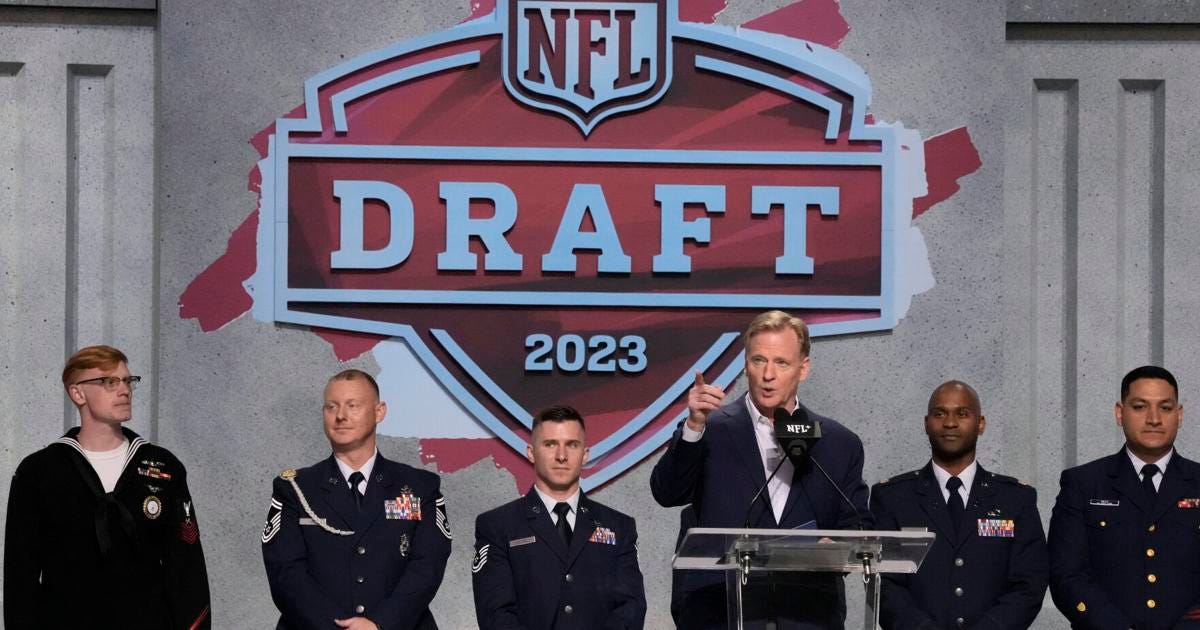
Speaking of the military and sports, day 2 of the NFL draft opened with an array of military personnel in dress uniform on the big stage in Kansas City as fans broke into “USA! USA!” chants. Yes, I understand there are a lot of football fans in the military, and I’m sure there were more than a few service members and veterans in civvies in the audience. Yet, ask yourself: What are military members in uniform doing on the stage at the NFL draft? What role are they playing?
WTF? Troops being used as props by the NFL. Cue the “USA! USA!” chants
The answer is obvious. The military uses sports to help with recruiting, and the NFL uses the military to burnish its patriotic image. It’s supposed to generate feel-good moments for the live audience there and all the millions watching at home, but it just left me shaking my head at the opportunism and cynicism of both the NFL and the Pentagon.
Speaking again of the NFL draft, it’s curious how each team has a draft room of experts that is sometimes referred to as a “war” room. The NFL loves its military metaphors and its “warrior” players featuring quarterbacks with “howitzers” for arms who throw “missiles” downfield.
I’ve never been keen on the whole “warrior” mystique because I find it in direct opposition to the citizen-soldier ideal of America’s founders. America was not supposed to have a “warrior” caste like the British had, occupied by the second sons of the aristocracy who had nothing better to do than to wage colonial and imperial wars overseas in the cause of plunder and profit. But the warrior ideal has been all the rage in the U.S. military since the collapse of the Soviet Union, and especially since 9/11.
In a recent article for TomDispatch, Joshua Frank cited just such a sentiment (from 2007) by a troop suffering from Gulf War Syndrome: “I’m a warrior, and warriors want to fulfill their mission.”
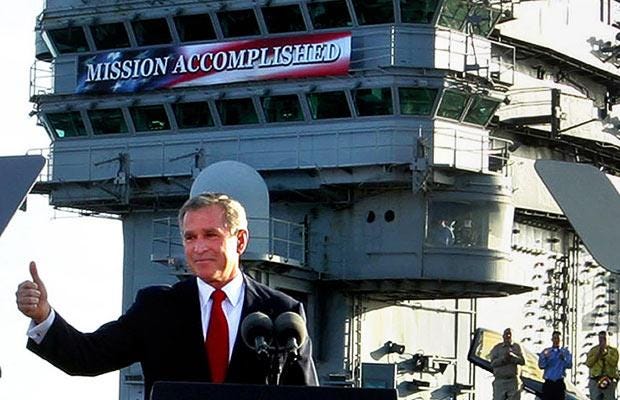
This mentality that they’re mission-driven warriors has been drilled into U.S. troops. But our troops are supposed to be loyal to the U.S. Constitution, not to the mission. If you’re simply a warrior, you exist for war, full stop. You’re no longer a citizen-soldier (or citizen-airman, etc.). You’re not really a citizen at all. Warriors are disposable, simply grunts, so who cares what happens to them? You live by the sword, you die by it, end of story.
I wish more people recognized the danger and implications of this warrior mentality.
Finally, a couple of recent articles to consider. Chris Hedges writes about the enemy within, America’s vast military-industrial complex, that is sucking the life out of what’s left of American democracy. And Caitlin Johnstone writes about how America’s aggressive and imperial presence is always advertised and disguised as “defensive” in nature. Both articles are worth reading as an antidote to all the reflexive “USA! USA!” war chants.
Would you buy a new car if its longevity was 40% of your old one?
When I was still in the Air Force, the F-35 was on the drawing boards as a fairly low cost, multi-role, fighter-bomber somewhat akin to an F-150 pickup truck. Being designed and built by Lockheed Martin and also having to meet the varying requirements of the U.S. Air Force, the Navy, and the Marine Corps, cost and complexity quickly escalated, so much so that an AF Chief of Staff recently compared it to a Ferrari rather than to a trusty and capable pickup truck.
That Ferrari comparison is apt with respect to cost, though even Ferraris may be more durable and reliable than the F-35.
How so? A friend sent along an article on the F-15EX Eagle II fighter.
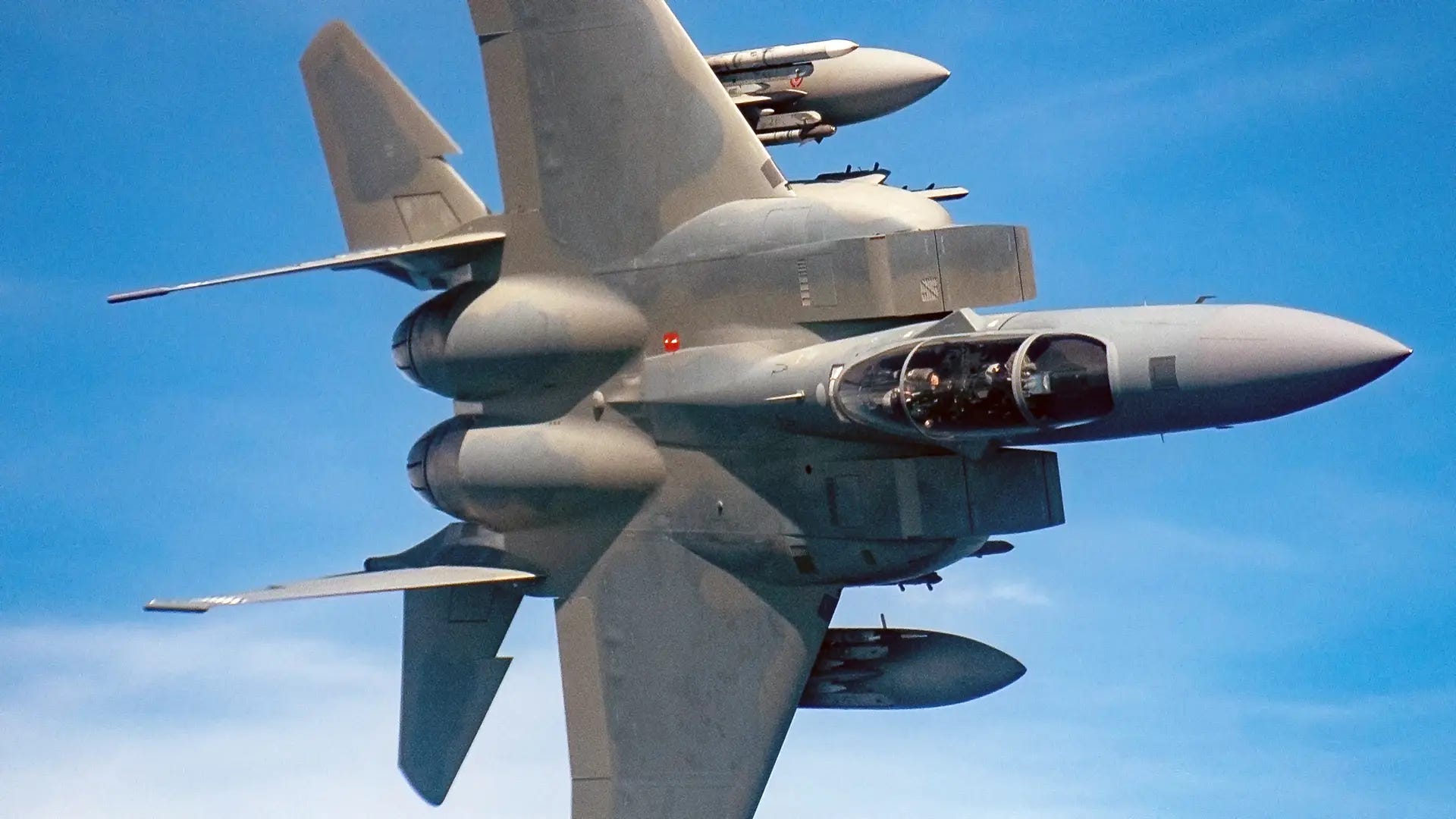
F-15EX Eagle II. Not stealthy, but its lasts 2.5 times as long as the F-35
Now, I’ve been reading about the F-15 since I was a teenager in the 1970s. It’s a proven fighter jet but it lacks the stealthy characteristics of the F-35. But here’s the section that got my attention from the article:
Remember, the F-15EX has a 20,000-hour airframe life. The F-35A has an 8,000-hour airframe life. This is one way the F-15EX gets done dirty when people make comparisons between it and the F-35, often based on unit cost alone, which is about equal. We are talking about two-and-a-half times the airframe hours out of the box with the F-15EX. That is not a knock against the F-35A at all. The F-15EX is just a very mature aircraft that has been optimized for longevity over a much younger one.
I like the way the author tries to explain away the short airframe life of the F-35. Hey, it’s a young aircraft! What can you expect except a 60% drop in longevity?
How many of us would buy a car, a truck, or any other technology if we were told the new tech would last only 40% as long as roughly comparable older tech? Would Apple advertise a new iPhone battery as lasting only four hours when the previous version lasted ten hours? How many people would rush out to buy the “new and improved” iPhone in this case?
The F-35 has many issues, which I’ve written about here and here. Add a much quicker expiration date to the mix.
I’m assuming Ferrari is none too happy with its cars being compared to the F-35!
What has America learned from the colossal failure of the Iraq War? Not what it should have learned, notes historian (and retired U.S. Army colonel) Greg Daddis at War on the Rocks. Daddis recently attended a 20-year retrospective symposium on the Iraq War, where he heard two distinctive narratives. As he put it:
Most, if not all, veterans of “Iraqi Freedom” told an inward-facing story focusing on tactical and operational “lessons” largely devoid of political context. Meanwhile, Iraqi scholars and civilians shared a vastly different tale of political and social upheaval that concentrated far more on the costs of war than on the supposed benefits of U.S. interventionism.
In short, the U.S. view of the Iraq War remains insular and narcissistic. The focus is on what U.S. troops may have gotten wrong, and how the military could perform better in the future. It’s about tactical and operational lessons. In this approach, Iraq and the Iraqi people remain a backdrop to American action on the grand stage. Put differently, the Iraqis are treated much like clay for Americans to mould or discard should they refuse to behave themselves under our hands.
So the “lessons” for America focus on how to become better, more skilled, manipulators of the “clay” at hand. Issues of right and wrong aren’t addressed. The morality or legality of war isn’t questioned. And Iraqis themselves, their suffering, their plight, even their say in determining their own futures within their country, is pretty much dismissed as irrelevant. And the same is largely true when considering the Vietnam War or the Afghan War; we matter, they don’t, even when we’re fighting in their country and spreading enormous destruction in undeclared and illegal wars.
As Mike Murry, a Vietnam veteran who comments frequently at this site, has said: you can’t do a wrong thing the right way. America’s Vietnam War was wrong; the Iraq War was wrong. There was no “right” way to do these wars. Yet, far too often, U.S. military officers and veterans, joined by far too many Americans who lack military experience, want to focus on how to wage a wrong war in a better, smarter, often more ruthless, way
Indeed, the narrative at times is reduced to “We lost because we weren’t ruthless enough, or we were about to win until the U.S. military was betrayed.” I wrote about this back in 2007 after I heard Senator John McCain speak on PBS. Basically, his point was that if America lost the Iraq War (which we already had), it wouldn’t be the U.S. military’s fault. It would be the fault of anyone who questioned the war. McCain, in other words, was spouting yet another exculpatory stab-in-the-back myth.
What can we learn from the Iraq War, then? Let’s start with these basic lessons: Don’t fight a war based on governmental lies and unfounded fears. Don’t fight illegal and immoral wars. Don’t fight undeclared wars. Don’t meddle in the societies of other people where you are seen as invaders and about which you are ignorant. Don’t wage war, period, unless the domestic security of the U.S. is truly threatened.
Those seem like the right lessons to me, not lessons about how to recognize insurgencies or how to respond more quickly to asymmetries like IEDs and ambushes.
In sum, learn this lesson: Vietnam, Iraq, Afghanistan, were and are countries with rich pasts and proud peoples who were not about to submit to American invaders and agendas, no matter how well-intentioned those invaders believed or advertised themselves to be.
The U.S. military is having a major problem recruiting new troops, notes Nan Levinson in an informative piece at TomDispatch.com. As usual, the military has tried most everything. Lowering standards, especially on the ASVAB test. Boosting bonuses and benefits. Infiltrating high school (even grade schools!) with military programs tied to recruitment like Junior ROTC. More money for ad campaigns, using celebrities and catchy slogans. Hoopla at sports stadiums. Nothing’s worked.
Even extended Hollywood commercials for the military aren’t enough to get young Mavericks to join
But, being an out-of-the-Pentagon-box thinker, I have the solution: Downsize the military!
Why does America need a large standing Army given all the force-multipliers we’re buying for hundreds of billions of dollars each year? What large-scale war is America currently fighting? We pulled out of Afghanistan, out of Iraq (mostly), and should be downsizing our imperial footprint (or bootprint, if you prefer).
I know: Russia! China! We must be prepared!
Those seeking a conventional war with either of those two land powers in their spheres of influence should surely have their sanity checked. Land war in Asia? With nuclear powers? No thank you!
Come on, America. If fewer young Americans want to join the U.S. military, take this as a sign of the wisdom of youth. Wisdom of youth — a phrase not commonly seen, but possibly of great relevance to us all, as Levinson notes in her conclusion.
Want a better military with higher-quality recruits? Simply recruit fewer of them by being more selective and by downsizing inflated recruitment numbers. In other words, change the metrics to show a recruiting victory. The U.S. military, after all, has plenty of experience doctoring metrics (Vietnam, Iraq, Afghanistan, etc.).
Lower the quotas* and declare victory! Hooah!
*Warning: lowering the quotas may result in decreased funding from Congress and increased chances of avoiding wasteful wars. May also result in fewer command billets for generals. Warrior discretion is advised.*
A friend sent along an article on Philip K. Dick, the science fiction author whose works have been turned into Hollywood films like “Blade Runner” and “Minority Report.” Dick had this to say about societal trends toward narrative construction and information control:
“We live in a society in which spurious realities are manufactured by the media, by governments, by big corporations. We are bombarded with pseudo-realities manufactured by very sophisticated people using very sophisticated electronic mechanisms. I do not distrust their motives. I distrust their power. They have a lot of it. And it is an astonishing power: that of creating whole universes, universes of the mind. I ought to know. I do the same thing.”
Dick wrote this in the 1970s. If he were writing today, I’m guessing he’d add that he distrusted their motives as well as their power.
Philip K. Dick
False narratives and pseudo-realities are everywhere. Today at TomDispatch, Noam Chomsky highlights the false narrative that global warming simply doesn’t exist, or that it does exist but that it’s a completely natural process that humans can do nothing about. This is perhaps the most dangerous false narrative we face today. That we can simply ignore humanity’s impact on nature—which is convenient for those profiting from the exploitation of the earth’s resources, such as fossil fuels.
Another pseudo-reality we face is that America’s national security is constantly threatened by “near-peer” rivals bent on our destruction. This “reality” drives colossal military spending as next year’s Pentagon budget soars toward $900 billion. A related “reality” is that the world is made safer by more thermonuclear warheads and weapons, a false narrative that the Pentagon is betting on to the tune of $2 trillion over the next thirty years.
Why generate this pseudo-reality? Because the Pentagon gains power and corporations profit greatly. Meanwhile, regular working folk, whose lives could be improved and empowered by a $2 trillion investment in their health and well-being, are left to struggle and suffer. They are, in a word, disempowered.
I remain at a loss how Joe Sixpack’s life is made better by B-21 stealth bombers, Sentinel ICBMs, and Columbia-class nuclear-missile-firing submarines.
With Donald Trump’s peccadilloes once again dominating the news cycle, essential stories about climate change and Armageddon-enabling nuclear weapons are mostly ignored. We are encouraged to take sides, for or against, an aging con man and his payola to a porn star and a Playboy bunny; we are told this is a matter of grave national concern requiring wall-to-wall media coverage, even as natural disasters exacerbated by climate change surge around us and even as nuclear war grows ever more possible.
Time to face reality, America. As Dick also wrote, “Reality is that which, when you stop believing in it, doesn’t go away.” Those nuclear weapons aren’t going away, nor is the threat of climate change.
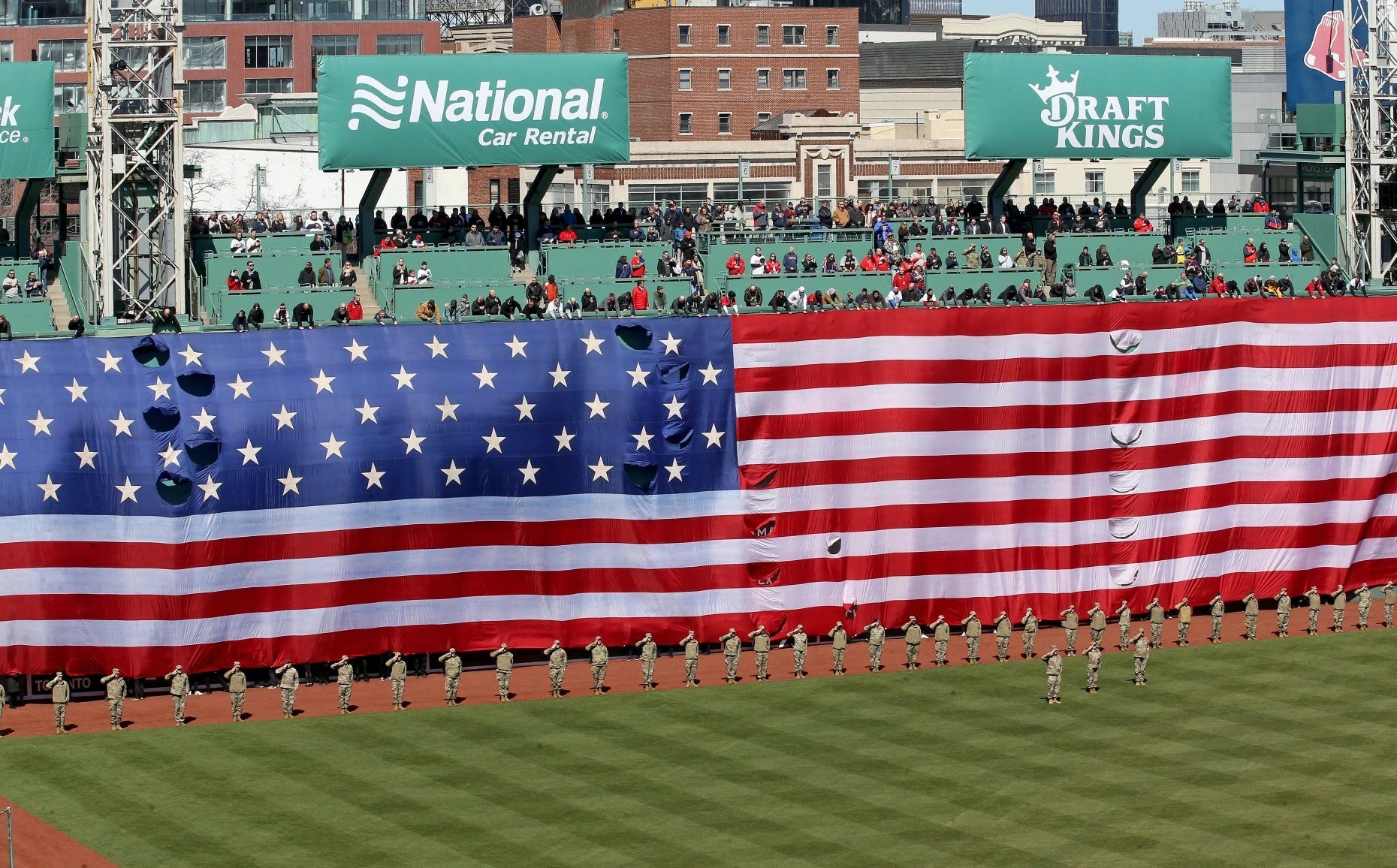
Yesterday was opening day at Fenway Park, where “my” team, the Boston Red Sox, began their 123rd season. I turned on the TV just as a humongous American flag fell across the Green Monster (the wall in left field). Standing before that wall were troops in camouflage uniforms saluting smartly as the National Anthem began. As that anthem reached its conclusion, four combat jets flew over as the crowd cheered.
And I thought to myself: When did opening day in baseball become an excuse for a military parade?
It’s a salute the troops celebration! (Matt Stone, Boston Herald, photo)
Not to be a killjoy, but I thought we were celebrating a new season of baseball. I can see an over-the-top celebration of all things military on July 4th, perhaps, but on March 30th?
Heaven knows the cost of all this military hoopla. The military doesn’t care, of course, since it has plenty of money to burn. Plus, it’s basically a huge recruitment commercial for a military that is under increasing strain to meet recruitment quotas, so it’s a win-win for the Pentagon.
As I’ve written before, we can’t seem to play ball anymore in America without the military involved in the game. But war is not a game, nor is military service.
Even as the Pentagon and the Red Sox team up to celebrate the military, giving viewers a warm patriotic fuzzy, veterans continue to suffer from the aftereffects of a generational war on terror, notes Andrea Mazzarino at TomDispatch.com. Many of these vets suffer from multiple traumas, yet as Mazzarino succinctly puts it: “America’s veterans need all the help they can get and, as yet, there’s no evidence it’s coming their way.”
As usual, the VA is underfunded even as weapons procurement is awash in funding. There are plenty of people in the VA who care, but they are swamped by the number of veterans in need of care. A good book on this is “Our Veterans: Winners, Losers, Friends, and Enemies on the New Terrain of Veterans Affairs,” by Suzanne Gordon, Steve Early, and Jasper Craven, published last year.
What we need in America are far fewer military celebrations and far more attention paid to the plight of our veterans. Meanwhile, let’s forgo the military trappings in our baseball parks and sports stadiums and let the players do what they do best: play ball.
It began in August 1914, a war in Europe that was supposed to be over by Christmas of that year. But it exploded out of control, becoming the “Great War” or “The World War” or even “The War to End All Wars.” And when it finally ended on 11/11 in 1918, something like ten million troops were dead.
We know it as World War I or the First World War because we know what came after it: yet another calamitous world war, a sequel, one that was far worse than the original. And after that war finally ended in 1945, something like 75-80 million people were dead around the world, including 25 million in the Soviet Union, six million Jews in the Holocaust, and 250,000 at Hiroshima and Nagasaki.
Hiroshima, 1945, after a “small” atomic bomb. Nuclear attacks in a “new” Cold War will be inconceivably worse
Of course, World War II also wasn’t the end of the killing. The so-called Iron Curtain descended in Europe, leading to the Cold War between the U.S. and the Soviet Union that almost ended with Armageddon in 1962 during the Cuban Missile Crisis. That Cold War came to an end in 1991 with the collapse of the Soviet Union. The U.S. celebrated its apparent victory, even calling briefly for “peace dividends” in the 1990s. It was not to be.
Thirty years after the (First) Cold War, we now hear of a “new Cold War.” We hear again that China and Russia are America’s enemies, a new “Axis of Evil,” notes Caitlin Johnstone. America is already engaged in a proxy war with Russia in Ukraine. Now America’s leaders are posturing over Taiwan and threatening war with China if the Chinese military makes aggressive moves against that country. (Of course, the Chinese consider Taiwan to be China, a “One China” policy the U.S. used to support.)
It does seem as if “my” Cold War, when I served in the U.S. military, may be remembered to history as the First Cold War, and that America has already begun a Second Cold War. And, just as World War II was far worse than World War I in casualties and destruction, Cold War II could conceivably be a LOT worse than Cold War I if we choose to continue to wage it.
Sequels, as a general rule, are usually worse, sometimes far worse, than the originals. We had better stop this nonsense of a new Cold War before we relearn this in the hardest way possible.
Names Like Minuteman, Peacekeeper, and Sentinel Are Diabolically Dishonest
Ever think about names of U.S. weapons of war? Rarely are those names honest. I do applaud the relative honesty of Predator and Reaper drones, because those names capture the often predatory nature of U.S. foreign policy and the grim reaperish means that are often employed in its execution. Most names are not so suggestive. For example, U.S. fighter planes carry noble names like Eagle, Fighting Falcon, or Raptor. Nuclear bombers are an interesting case since they can carry thermonuclear bombs and missiles to kill hundreds of thousands, possibly millions, of people. So we have the B-52 Stratofortress (a great 1950s-era name), the B-1 Lancer, the B-2 Spirit, and the new B-21 Raider (the name has historical echoes to the Doolittle Raid on Tokyo in 1942).
Reaping what we sow? Just reaping? Whatever the case, the U.S. way of war is grim
Shouldn’t these bombers carry names like Megadeath or Mass Murder?
Think too of nuclear missiles. The Air Force’s Intercontinental Ballistic Missiles (ICBMs) have had names like Titan, Minuteman, Peacekeeper, and now the new Sentinel. But since these missiles carry warheads that could easily kill millions, wouldn’t a more honest name be The Holocaust ICBM? For that’s what these missiles promise: a nuclear holocaust.
Consider too the Navy’s Ohio-class nuclear missile-firing submarines (SSBN) with their Trident missiles. (Trident—gotta hand it to the Navy.) Just one submarine can carry 20 Trident II missiles, each with up to eight warheads, each warhead being roughly equivalent to six Hiroshima bombs. Again, roughly speaking, each of these submarines carries an arsenal equivalent to one thousand Hiroshima bombs. And the U.S. has fourteen of these submarines.
Instead of the Ohio-class of submarines, shouldn’t they be called the Armageddon-class? Or the Apocalypse-class? The Genocide-class?
With a bit more honesty, perhaps it wouldn’t be so easy to sell these horrific weapons to Congress and the American people. Then again, when the bottom line is higher budgets for the Pentagon and more jobs for Congressional districts, I guess America will buy most anything. Even Holocaust missiles and Armageddon submarines. And for upwards of $2 trillion over the next 30 years as well.
If they don’t bust the budget, perhaps they’ll destroy the world.








 Bracing Views