America’s Mutant Military

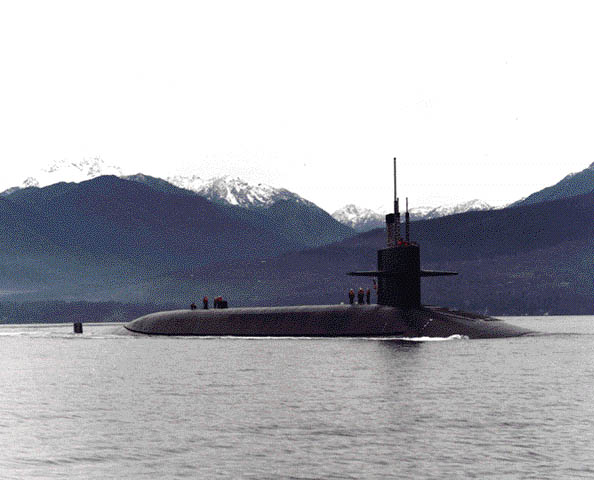
An Ohio-Class Submarine, armed with Trident nuclear missiles

W.J. Astore

I’ve been writing for TomDispatch.com and the amazing Tom Engelhardt since 2007.  When I wrote my first article, “Saving the Military from Itself: Why Medals and Metrics Mislead,” I never imagined I would come to write 37 more for Tom and his site over the next eight years.  TomDispatch has given me an opportunity to write about topics like the elimination of nuclear weapons, the rise of American militarism, the perils of calling all troops in the military “heroes,” the over-hyping of American military prowess by our leaders, and many others.  In all my articles, I hope I’ve offered a contrary perspective on the U.S. military as well as American culture, among other subjects.

My latest article, America’s mutant military, is a personal odyssey of sorts.  I reflect on how the military has changed since I entered it in 1985.  Today’s post-Cold War U.S. military is, to put it bluntly, not as I envisioned it would be as the Berlin Wall was falling and the Soviet Union was collapsing.  Today’s military still has its Cold War weaponry and mindset largely intact, even as a new “mutant” military has emerged, based on special ops and connected to corporations and intelligence agencies, a military hybrid that is often shrouded in secrecy even as it’s celebrated openly in Hollywood action films.

My essay runs 2300 words, so I encourage you to read all of it at TomDispatch.  What follows are a few excerpts from it:

It’s 1990. I’m a young captain in the U.S. Air Force.  I’ve just witnessed the fall of the Berlin Wall, something I never thought I’d see, short of a third world war.  Right now I’m witnessing the slow death of the Soviet Union, without the accompanying nuclear Armageddon so many feared.  Still, I’m slightly nervous as my military gears up for an unexpected new campaign, Operation Desert Shield/Storm, to expel Iraqi autocrat Saddam Hussein’s military from Kuwait.  It’s a confusing moment.  After all, the Soviet Union was forever (until it wasn’t) and Saddam had been a stalwart U.S. friend, his country a bulwark against the Iran of the Ayatollahs.  (For anyone who doubts that history, just check out the now-infamous 1983 photo of Donald Rumsfeld, then special envoy for President Reagan, all smiles and shaking hands with Saddam in Baghdad.)  Still, whatever my anxieties, the Soviet Union collapsed without a whimper and the campaign against Saddam’s battle-tested forces proved to be a “cakewalk,” with ground combat over in a mere 100 hours.

Think of it as the trifecta moment: Vietnam syndrome vanquished forever, Saddam’s army destroyed, and the U.S. left standing as the planet’s “sole superpower.”

Post-Desert Storm, the military of which I was a part stood triumphant on a planet that was visibly ours and ours alone.  Washington had won the Cold War.  It had won everything, in fact.  End of story.  Saddam admittedly was still in power in Baghdad, but he had been soundly spanked.  Not a single peer enemy loomed on the horizon.  It seemed as if, in the words of former U.N. ambassador and uber-conservative Jeane Kirkpatrick, the U.S. could return to being a normal country in normal times.

[But it didn’t happen.  With the Soviets gone, the U.S. military itself was now uncontained, and many hankered to use its power to achieve America’s goal of global power.]

Yet even as civilian leaders hankered to flex America’s military muscle in unpromising places like Bosnia and Somalia in the 1990s, and Afghanistan, Iraq, Libya, Pakistan, and Yemen in this century, the military itself has remained remarkably mired in Cold War thinking.  If I could transport the 1990 version of me to 2015, here’s one thing that would stun him a quarter-century after the collapse of the Soviet Union: the force structure of the U.S. military has changed remarkably little.  Its nuclear triad of land-based ICBMs, submarine-launched SLBMs, and nuclear-capable bombers remains thoroughly intact.  Indeed, it’s being updated and enhanced at mind-boggling expense (perhaps as high as a trillion dollars over the next three decades).  The U.S. Navy?  Still built around large, super-expensive, and vulnerableaircraft carrier task forces.  The U.S. Air Force?  Still pursuing new, ultra-high-tech strategic bombers and new, wildly expensive fighters and attack aircraft — first the F-22, now the F-35, both supremely disappointing.  The U.S. Army?  Still configured to fight large-scale, conventional battles, a surplus of M-1 Abrams tanks sitting in mothballs just in case they’re needed to plug the Fulda Gap in Germany against a raging Red Army.  Except it’s 2015, not 1990, and no mass of Soviet T-72 tanks remains poised to surge through that gap.

[Along with the persistence of America’s “Cold War” military, a new military emerged, especially in the aftermath of 9-11.]

In 2015, so many of America’s “trigger-pullers” overseas are no longer, strictly speaking, professional military.  They’re mercenaries, guns for hire, or CIA drone pilots (some on loan from the Air Force), or warrior corporations and intelligence contractors looking to get in on a piece of the action in a war on terror where progress is defined — official denials to the contrary — by body count, by the number of “enemy combatants” killed in drone or other strikes.

Indeed, the very persistence of traditional Cold War structures and postures within the “big” military has helped hide the full-scale emergence of a new and dangerous mutant version of our armed forces.  A bewildering mish-mash of special ops, civilian contractors (both armed and unarmed), and CIA and other intelligence operatives, all plunged into a penumbra of secrecy, all largely hidden from view (even as they’re openly celebrated in various Hollywood action movies), this mutant military is forever clamoring for a greater piece of the action.

While the old-fashioned, uniformed military guards its Cold War turf, preserved like some set of monstrous museum exhibits, the mutant military strives with great success to expand its power across the globe.  Since 9/11, it’s the mutant military that has gotten the lion’s share of the action and much of the adulation — here’s looking at you, SEAL Team 6 — along with its ultimate enabler, the civilian commander-in-chief, now acting in essence as America’s assassin-in-chief.

Think of it this way: a quarter-century after the end of the Cold War, the U.S. military is completely uncontained.

[And an uncontained military, in a country that celebrates its troops as heroes, that boasts of itself as having the best military in all of recorded history, does not bode well for America’s democratic future.]

Go to TomDispatch.com to read the entire article.  Thank you!

I Had A Base in Africa: Nick Turse on the U.S. Military and AFRICOM

turse

W.J. Astore

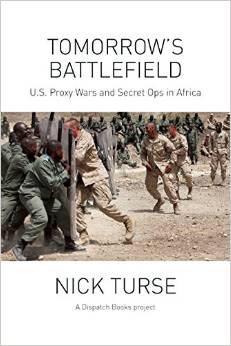
In the movie Out of Africa, Meryl Streep (playing Karen Blixen, who used the pen name of Isak Dinesen) wistfully intones, “I had a farm in Africa.” It’s a considerable understatement given her character’s ambition and energy and drive.  Rather than out of Africa, the U.S. military’s new motto is Into Africa, and like those cocky European colonialists of old, the military has plenty of ambition and energy and drive.  So notes Nick Turse in his latest book, “Tomorrow’s Battlefield: US Proxy Wars and Secret Ops in Africa.”  Turse, the prize-winning author of “Kill Anything that Moves,” a searing examination of America’s war against Vietnam, turns his sharp eye to yet another misguided U.S. military adventure, this time within and across the continent of Africa.  What he finds is disturbing.

The U.S. Army likes to talk about BLUF, or giving the bottom line up front, and Turse has a doozy on America’s militarized designs on Africa:

Over the course of the Obama presidency, American efforts on the [African] continent have become ever more militarized in terms of troops and bases, missions and money.  And yet from Libya to the Gulf of Guinea, Mali to this camp in South Sudan, the results have been dismal.  Countless military exercises, counterterrorism operations, humanitarian projects, and training missions, backed by billions of dollars of taxpayer money, have all evaporated in the face of coups, civil wars, human rights abuses, terror attacks, and poorly coordinated aid efforts.  The human toll is incalculable.  And there appears to be no end in sight.” (184)

A grim BLUF indeed.  Perhaps that explains why the U.S. military is so reluctant to give Turse any information, even seemingly innocuous data such as the number of bases the U.S. has in Africa.  Turse, who happily has a sense of humor, recounts tedious and frustrating battles with military public affairs officers as the latter employ various delaying tactics to stymie him.  Indeed, if the U.S. military was as effective at winning wars as it is at fighting reporters, we might truly have a military that’s second to none.  Turse perseveres through all this, relying on public sources, freedom of information requests, interviews, and other creative means to tease out the numerous ways AFRICOM is seeking to penetrate the continent.

(As an aside, it’s worth noting that reporters who pay fawning tribute to U.S. efforts in Africa are happily accommodated by military public affairs.  Turse, an old-school investigative reporter who’s not into fawning, gets stonewalled, his reward for having integrity.)

Though AFRICOM is eager to deny or minimize its “footprint” in Africa to Turse, the story is different when the military talks among themselves.  Turse begins by cleverly recounting a military change of command ceremony he attended in Germany in 2013.  At that ceremony, speaking freely to one another, U.S. military commanders were not reticent at all.  One military commander obsequiously praised his boss in these words: “General Linder has been saying, ‘Africa is the battlefield of tomorrow, today.’ And, sir, I couldn’t agree more.  This new battlefield is custom made for SOC [the Special Operations community], and we’ll thrive in it.  It’s exactly where we need to be today and I expect we’ll be for some time in the future.” (3)

Sir, I couldn’t agree more that Africa is already becoming a battlefield for U.S. special ops, now and in the future.  And it’s “custom made” for us — we’re going to thrive there!  Mark those words, America.  We’ve heard their like before in the jungles of Vietnam in the early 1960s, when America’s fledgling special ops community boasted then that Vietnam was tailor made for the counterinsurgency skills of U.S. elite warriors.  We were going to thrive there too.  And look where that got us!

Turse’s knowledge of Vietnam makes him sensitive to the perils of mission creep in Africa, the problems of winning hearts and minds in cultures poorly understand by American troops, the dilemma of overthrowing less-than-tractable leaders (long ago, Diem in South Vietnam; more recently, Gaddafi in Libya) and the chaos that often results when the “bad man” is gone, the proliferation of U.S. weaponry that often accelerates regional violence, and so on.  Rather than give an honest accounting of these difficulties, the U.S. military often prefers simply to declare victory, or at least to take credit for success, however partial or fleeting.  Indeed, as Turse tartly observes, when it comes to Africa and America’s military missions there, “it’s so much easier to claim success than to achieve it.” (168)

For anyone interested in the U.S. military and especially AFRICOM, Turse’s honest, no-BS account makes for cautionary reading.  It should be required reading for all U.S. military personnel assigned to Africa, who deserve to read honest criticism while being exposed to critical thinking.  It’s a helluva lot better than hearing “I couldn’t agree more, sir.”  And perhaps it’ll save the U.S. military from having to intone, tragically this time, “I had a base in Africa.”

Provoking Wars: Is that what U.S. Foreign Policy Is About?

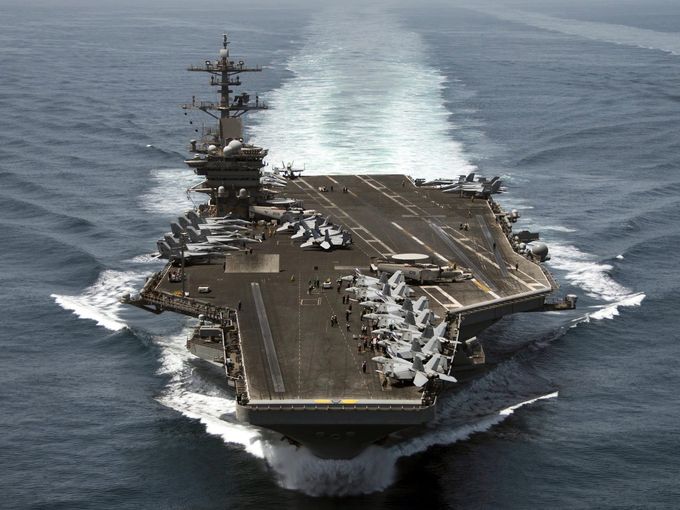
Send in the heavily-armed carriers.  It's about peace!
Send in the heavily-armed carriers. It’s about peace!

b. traven and W.J. Astore

Are America’s foreign policy leaders mad?  It’s a serious question.  Consider last week’s dispatch of 300 military trainers from the 173rd Airborne Brigade to Western Ukraine, a country involved in a contentious jousting match with Vladimir Putin’s Russia.  Or consider this week’s deployment of an aircraft carrier battle group off the coast of Yemen, ostensibly to interdict weapons shipments from Iran, shipments that may not even exist.

These moves have more serious possible repercussions than the usual stupid moves our government makes. They can lead to real war with Russia and Iran. Look at today’s headline in the New York Times: “Putin Bolsters His Forces Near Ukraine.”  Putin may be provoked into an invasion of Ukraine because U.S. meddling has been so blatant (he also knows that when it comes to war in Ukraine, NATO is largely a toothless tiger). The Iranians may renege on the nuclear agreement and deliver extensive military support to the Houthis while directly engaging the House of Saud. In both situations, it’s easy to predict what Obama will do.  Just what John McCain and the neo-cons want him to do.  Bombs away.

It’s a clear case of global reach, global power–and global stupidity.  You’d think massive bungling and endemic corruption in never-ending wars in Iraq and Afghanistan would have taught us something, but the U.S. insists on getting involved in sensitive regional conflicts that could easily spiral out of control.

And when the U.S. chooses to get involved, it’s not with diplomacy.  It’s all about military power.  Yet as much as America professes to love its military, its power is a blunt (and deadly) instrument.  It exacerbates tensions rather than alleviating them.  U.S. military meddling in Ukraine and Yemen promises more conflict, not less.

And perhaps that’s by design.  Consider the reality of America’s ever-burgeoning military budget.  As Dan Froomkin notes, that budget still exceeds the combined defense budgets of the next seven highest spenders (four of those countries—Saudi Arabia, France, the UK, and Germany—are U.S. allies; China and Russia, the only rivals on the list, spend far less than the U.S.).  As the U.S. continues to spend hog-wild on its military, small wonder it remains the go-to option for “diplomacy” around the globe.

Democratic or Republican administration, Obama or Bush, the one constant is global war.  The U.S. is already waging illegal “low intensity” war with drones and special operations across the globe.  (It’s worth pointing out that “low intensity” doesn’t feel low when Hellfire missiles are raining down on your neighborhood or when Special Forces are raiding your village and hauling away your neighbors–or you.)  So why not add another serving of war to an already full plate by meddling in Ukraine?  Sadly, the faction the U.S. seems to favor the most has its share of outright fascists.  But they’re “our” fascists, so who cares if they vote to honor Nazi collaborators and perpetrators of the Holocaust?

Russia, predictably, is antagonized by U.S. meddling.  They see it as the decades-old Anglo-British effort to encircle and isolate Russia and cut them off from their access to the Mediterranean by denying them their Black Sea Fleet base in the Crimea.  To add insult to injury, the essentially Russian population of Eastern Ukraine will be marginalized by the coup regime the U.S. helped to install.  Well, there’s nothing like a new Cold War with Russia to push “defense” spending to even higher levels.

If the U.S. fails to rouse the Soviet bear from slumber, perhaps we can provoke a war with Iran.  So let’s continue to send billions of dollars in weaponry to the Saudis so they can continue to bomb and dominate Shia factions in Yemen.  Heck, let’s send an aircraft carrier task force to show how serious we are about “peace.”  (Let’s hope the U.S. Navy doesn’t blunder and shoot down an Iranian commercial aircraft, as it did in 1988, killing 290 innocent passengers and crew.)

Provocation—that’s when U.S. leaders deploy the military to meddle in Ukraine, in Yemen, and elsewhere across the globe.  Yet men like Bush and Obama continue to sell the military, not as provocateurs, but as peace-bringers.  As diplomats in uniform.  They just happen to carry assault rifles and use Hellfire missiles rather than briefcases and pens.

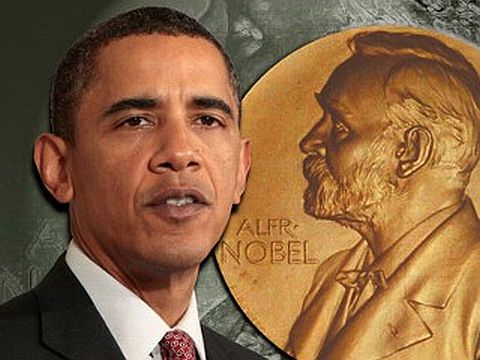
Saddest of all is that things are only going to get worse.  We’ve witnessed how America’s Nobel Peace Prize-winning President morphed into its assassin-in-chief, approving “signature strikes” to snuff out evil-doers everywhere.  Now look who’s running to replace him in 2016: Hillary the Hun on the Democratic side, and all those little chickenhawk Republicans clucking that they’re to the right of Hillary.

If you’re reading this and have money, we advise you to invest in “defense” stocks.  With all these provocations in the works, the staff here at The Contrary Perspective are bullish on prospects for more weapons–and more war.

U.S. Foreign Policy: Too Much Captain Kirk–and William Shatner

Fire those phasers, America!

W.J. Astore

Much of our foreign policy is driven by fear–fear that if we don’t act, whether in the Middle East or Africa or elsewhere–the bad people there will thrive, after which they’ll come for us in the good old USA.  Most of us will recall George W. Bush’s saying, “We’ll fight them over there so that we don’t have to fight them here.”  But what if constantly fighting them “over there” is a guarantee of blowback right here in Homeland USA?

As one of my conservative friends (Yes – I have them!) says, “If they (the enemy) stay over there, I’ll airlift knives, forks, and condiments to them.”

Well, we’ll never know unless we try.  Call the cavalry home, America.  Send in the cutlery and condiments. And let’s see what happens.

OK, call me an isolationist.  All these American machinations in and deployments to the Middle East and Africa – paraphrasing Otto von Bismarck, to me they aren’t worth the bones of a single Pennsylvanian grenadier.  Isn’t the Middle East of today roughly the equivalent to the Balkans of c.1910?  Except for the oil, why bother with Iraq and Iran?  Radical Islam is no picnic, but a direct threat to the USA?  Come on.  If we leave, my bet is radical Islam will burn itself out.

Our constant interventions in the Middle East merely fan the flames of radicalism there, except when we throw fuel on the fire by sending lots of weapons or burning a Koran or wiping out (accidently, of course) another convoy of civilians with Hellfire missiles.  If we’re the enemy’s “Great Satan,” let’s leave and see how they do in a paradise without the US serpent in it.

The problem is that our foreign policy “experts” are subservient to national and international (corporate and financial) interests (among others), and those interests, along with their own hubris, make it impossible for them to order strategic withdrawals, much less imagine them.

Put briefly, our experts see the world as a stage (or as a staging area for military forces), upon which the USA must play the leading role.  They believe that if we don’t occupy that stage, and dominate it, some other country will, e.g. China will take over Africa.

The US military, meanwhile, favors “proactive,” forward-leaning, can-do, spirit.  The mentality is: We must act, or someone else will.  And our way of acting is necessarily a military way, since that is what our nation favors–and funds.

For my fellow “Star Trek” fans, the U.S. government is like the aggressive, action-driven Captain Kirk (even better: the bombastic, scene-hogging William Shatner), but without Mr. Spock or Dr. McCoy at his side to provide cool logic or warm compassion.  So all we get is warp drive and phasers (or lots of histrionic overacting and scene-stealing, a la Shatner).

We can do better, America.  Let’s start by calling the cavalry home.  Cutlery and condiments to the fore!

Senator Tom Cotton: Bomb Iran — It’s Easy!

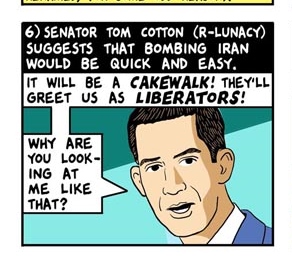
A Panel from Tom Tomorrow lampooning Tom Cotton.  Love the R-Lunacy designation!
A panel from Tom Tomorrow lampooning Tom Cotton. Love the R-Lunacy designation!

W.J. Astore

Would a war against Iran take “only a few days“?  According to Senator Tom Cotton of Arkansas, a few days of precision bombing would be enough to destroy Iran’s nuclear capability.  Oh, there might be a few (thousand) innocent Iranians killed.  And perhaps some radiation spread about.  But wouldn’t some dead and irradiated (Iranian) bodies be worth it?

Despite his military experience in Iraq and Afghanistan, Senator Cotton is a proponent of imaginary war.  You know, war like in a video game, where you drop bombs on target, witness a few explosions, and then it’s game over, with victory for Play Station America.  When you view war like this, as a game, it’s easier to think of it as “inevitable,” which is precisely the word Cotton uses: War with Iran, he says, is inevitable, so let’s flatten them now before they have nukes.

Let’s consider, for a moment, the worst-case scenario: Iran conspires successfully to gain a nuclear weapon in seven years.  What would Iran do with such a weapon?  Iran would face a regional neighbor, Israel, which possesses roughly 200 nuclear weapons. Iran would face a superpower, the United States, which has more than 2000 active nuclear warheads with another 3000 or so in reserve.  Any use of nuclear weapons by Iran would lead to overwhelming retaliation by Israel and/or the United States, so it’s extremely unlikely that Iran would ever use such weapons, unless Iran itself was faced by invasion and destruction.

And there’s the rub.  Relatively weak countries like Iran know that acquiring WMD is a potential game-changer, in the sense that such weapons can deter aggression by the United States.  An Iran with a nuclear weapon is a country that’s less easy for the U.S. to bully.  And Iran has regional rivals (India, Pakistan, and of course Israel) that already possess nuclear arsenals.

Look at what happened to Gaddafi in Libya.  He gave up his WMD (chemical weapons and nerve agents) and the next thing he knew he was being overthrown by a U.S.-led coalition.  We came, we saw, he died, cackled Hillary Clinton.  But would “we” have come if Gaddafi could have threatened a coalition with WMD?

(This is not an argument for WMD or for nuclear proliferation.  As I’ve argued elsewhere, I’d like to see the complete elimination of nuclear weapons on our planet.  They are genocidal weapons, pure and simple.)

It’s all well and good for the U.S. and its partners to work to eliminate any chance of Iran acquiring nukes, but the U.S. needs to go one giant leap further and work to eliminate all nuclear weapons everywhere.  If we did that, maybe Iran wouldn’t want one so much.

In the meantime, Senator Cotton needs to stop imagining how clean and simple it would be to destroy Iran’s nuclear program.  Dropping lots of bombs on Iran while hoping for an imaginary “happy ending” for the U.S. is more than facile thinking.  It’s lunacy.

Update (4/17/15): After I wrote this, I came across Jon Schwarz’s “Seven Things You Didn’t Know the U.S. and its Allies Did to Iran” at The Intercept.  Schwarz also makes the point about the Iranian desire for a nuke as a deterrent against U.S. aggression, and he notes other prominent American leaders who’ve threatened Iran with bombing and/or obliteration.  From his article:

U.S. leaders have repeatedly threatened to outright destroy Iran

It’s not just John McCain singing “bomb bomb bomb Iran.” Admiral William Fallon, who retired as head of CENTCOM in 2008, said about Iran: “These guys are ants. When the time comes, you crush them.” Admiral James Lyons Jr., commander of the U.S. Pacific Fleet in the 1980s, has said we were prepared to “drill them back to the fourth century.” Richard Armitage, then assistant secretary of defense, explained that we considered whether to “completely obliterate Iran.” Billionaire and GOP kingmaker Sheldon Adelson advocates an unprovoked nuclear attack on Iran — “in the middle of the desert” at first, then possibly moving on to places with more people.

Most seriously, the Obama administration’s 2010 Nuclear Posture Review declared that we will not use nuclear weapons “against non-nuclear weapons states that are party to the NPT [Nuclear Non-Proliferation Treaty] and in compliance with their nuclear non-proliferation obligations.” There’s only one non-nuclear country that’s plausibly not in this category. So we were saying we will never use nuclear weapons against any country that doesn’t have them already — with a single exception, Iran. Understandably, Iran found having a nuclear target painted on it pretty upsetting.”

Iran on the Rise, Courtesy of the United States

The Iranian Revolution

W.J. Astore

In the early 1970s, the US counted Iran as a close ally.  A big fan of warplanes and weapons, I recall the US selling the F-14 Tomcat, the plane flown by Tom Cruise in “Top Gun,” as well as HAWK surface-to-air missiles and other advanced weaponry to the Shah of Iran.  Back then, the F-14 had the most advanced avionics of any American plane, with a powerful radar linked to Phoenix air-to-air missiles.  By selling the F-14 to Iran, the US was in a sense entrusting the Iranians with some of America’s most classified military secrets.  (I later recall reading that the Iranians used F-14s as mini-AWACs planes, as in airborne warning and control, due to the power of its radar systems.)

Well, that was then, when the Shah of Iran was our ally.  Then the Iranian Revolution came, the Ayatollah Khomeini came to power, Iranians took Americans hostage in the US embassy, and Iran morphed into our “Great Satan” even as we became theirs.  (As a teenager, I wore a t-shirt with Khomeini’s profile in a sniper’s crosshairs; the t-shirt read “Put a Hola in the Ayatollah.”  It was quite popular.)

Now, of course, Iran is a nuclear bogeyman and a meddler in American designs on the Middle East.  The irony is that the USA itself has been instrumental in facilitating the rise of Iran.  This is amply documented in Peter Van Buren’s latest article for TomDispatch.com.  It seems that what ever the US attempts in the Middle East, notably the invasion and occupation of Iraq, Iran emerges as the biggest beneficiary.

Maybe we’re still allies after all, and the Iranian Revolution was just a dream, as in that old plotline on the nighttime soap opera, “Dallas”?  Heck, given the poor script being written by our foreign policy experts, anything seems possible.

But let Peter Van Buren tell it:

Iran should send America a fruit basket to thank it for setting the stage so perfectly for its ascent. As a start, in 2003 the United States eliminated Iran’s major border threats: Iraq’s Saddam Hussein to the west and the Taliban in Afghanistan to the east. (The Taliban are back of course, but diligently focused on America’s puppet Afghan government.) The long slog of Washington’s wars in both those countries dulled even the reliably bloodthirsty American public’s taste for yet more of the same, and cooled off Bush-era plans in Tel Aviv and Washington for air strikes against Iran’s nuclear facilities. (After all, if even Vice President Dick Cheney couldn’t pull the trigger on Iran before leaving office in 2008, who in 2015 America is going to do so?)

Better yet for the Iranians, when Saddam was hanged in 2006, they not only lost an enemy who had invaded their country in 1980, launching a bitter waragainst them that didn’t end for eight years, but gained an ally in the new Iraq. As U.S. influence withered away with the failure of the March 2010 Iraqi elections to produce a broadly representative government, Iran stepped in to broker a thoroughly partisan settlement leading to a sectarian Shia government in Baghdad bent on ensuring that the country’s minority Sunni population would remain out of power forever. The Obama administration seemed nearly oblivious to Iran’s gains in Iraq in 2010 — and seems so again in 2015 …

The U.S. is running around in circles in the Middle East, patching together coalitions here, acquiring strange bedfellows there, and in location after location trying to figure out who the enemy of its enemy actually is. The result is just what you’d expect: chaos further undermining whatever’s left of the nations whose frailty birthed the jihadism America is trying to squash.

And in a classic tale of unintended consequences, just about every time Washington has committed another blunder in the Middle East, Iran has stepped in to take advantage. Consider that country the rising power in the region and credit American clumsiness for the new Iranian ascendancy.”

Mission accomplished — for Iran.

A Nixon Quote Explains the Root of So Many U.S. Foreign Policy Blunders

Giving war a chance
Giving war a chance

W.J. Astore

On 30 April 1970, 45 years ago this month, President Richard M. Nixon ordered an invasion into Cambodia.  Explaining his reasoning for widening the war in Southeast Asia, Nixon declared:

If, when the chips are down, the world’s most powerful nation acts like a pitiful, helpless giant, the forces of totalitarianism and anarchy will threaten free nations and free institutions.” [Emphasis added]

So much of the U.S. foreign policy establishment, then and now, is frightfully worried about appearing weak, helpless, impotent.  The solution, then and now, is military action.  They all want to be Caesars, if only in their own besotted minds.  As Shakespeare had Cassius say about Caesar:

he doth bestride the narrow world/Like a colossus, and we petty men/Walk under his huge legs and peep about/To find ourselves dishonorable graves.

America, to its image-conscious imperators like Nixon, must bestride the world like a well-hung giant, while little foreigners gasp in awe at the shadow cast, especially when aroused.

Think about John McCain’s fervent desire to bomb Iran, as Dan White deconstructed here. Think about George W. Bush’s transparent desire to play the conquering hero in the Middle East, ending Saddam Hussein’s reign once and for all in Iraq in 2003.  Recall here the words of Henry Kissinger when he was asked about why he supported the invasion of Iraq, when it was clear that country bore no responsibility for the 9/11 attacks. “Because [attacks on] Afghanistan wasn’t enough,” Kissinger replied.  Radical Islam had humiliated the U.S. at 9/11, and now it was our turn to strike back harder and to humiliate them. That simple.

As America’s foreign policy establishment continues to struggle with radical Islam and instability in Iraq, Syria, Yemen, Libya, and elsewhere, don’t expect any strategic retreats or retrenchment.  Don’t expect wisdom.  Don’t expect a containment policy that might allow radical Islam to burn itself out.  No.  Expect more military strikes, more troops, more weapons, more impassioned speeches about holding the line against barbarians determined to end our way of life.

Why?  In part because it’s far easier for insecure men to lash out as a way of compensating for their impotence and growing irrelevance.  Acting tough is the easier path.  Having patience, demonstrating forbearance, knowing when to sheath the sword, requires a quieter strength and a more confident sense of self.

You would think the “most powerful nation on the planet” with “the world’s best military in all of history” would have such quiet strength and confidence.  But remember that Nixon quote: No matter how big and strong we are, we can’t afford to look tiny and weak.

Bombs away.

Our Foreign Policy Mantra: Troops, Weapons, Influence

Sorry, world: America prefers the sword
Sorry, world: America loves the sword

W.J. Astore

There was a time when American democracy, however imperfectly practiced, and American ideals served to inspire peoples and independence movements around the world.  Heck, even Ho Chi Minh in the 1940s confessed his admiration for Thomas Jefferson and the U.S. Declaration of Independence.  But now it seems all that really matters in our foreign policy is troops and weapons.  If we’re not basing troops or at least deploying them to a country, or if we’re not exporting arms to a country, we believe we have no influence.

Take this headline from FP: Foreign Policy.

The United States is in danger of losing its clout in Baghdad. Courage on the battlefield is how respect is won in the Middle East. The lack of U.S. presence in the fight for Tikrit is allowing Iran, whose forces are leading the charge, to gain leverage in Baghdad. FP’s Lara Jakes and Kate Brannen: “It is clear that the top U.S. priority in Iraq is to defeat the Islamic State — and deal later with Iran’s ever-growing influence in Baghdad. Yet that trade-off carries long-term consequences, and it’s not clear Washington has thought them through.”

So: Unless we’re fighting wars in Iraq (or Syria, or maybe even Iran?), the United States has no leverage.  Indeed, in Iraq the U.S. risks being emasculated by the Iranians, who are swinging their big dicks in the form of tanks, rockets, and so on.

And those primitive Iraqis: All they respect is military force, right?  If that’s so, why don’t they love America?  After all, no country has “courageously” bombed them more over the last 25 years.

Talk about projection!  Maybe it’s not the Iraqis or other unnamed Middle Easterners who are enthralled by “courage on the battlefield.”  Maybe it’s all those “American sniper” wannabees, especially in Congress.

Consistent with Members of Congress clamoring for more war, America’s real ambassadors today are special forces and the special ops “community.”  As Nick Turse noted for TomDispatch.com:

During the fiscal year that [started on October 1, 2013 and] ended on September 30, 2014, U.S. Special Operations forces (SOF) deployed to 133 countries — roughly 70% of the nations on the planet — according to Lieutenant Colonel Robert Bockholt, a public affairs officer with U.S. Special Operations Command (SOCOM).  This capped a three-year span in which the country’s most elite forces were active in more than 150 different countries around the world, conducting missions ranging from kill/capture night raids to training exercises.  And this year could be a record-breaker.  Only a day before the failed raid that ended Luke Somers life — just 66 days into fiscal 2015 — America’s most elite troops had already set foot in 105 nations, approximately 80% of 2014’s total.”

As the U.S. deploys its special ops forces around the planet, part of their mission, stated or unstated, is to encourage foreign military sales (FMS in the trade).  Naturally, in selling weapons to various “allies” around the world, the United States continues to dominate the world’s arms trade, a lead that we’re supposed to keep until the year 2021.  Think about it.  What other sector of industrial manufacturing will the U.S. dominate for the next seven years?

Here’s an excerpt from the Grimmett Report (2012) that tracks weapons sales around the globe.  Note that U.S. dominance of the global arms trade has come under a Democratic president who was awarded a Nobel Peace Prize:

Recently, from 2008 to 2011, the United States and Russia have dominated the arms market in the developing world, with both nations either ranking first or second for each of these four years in the value of arms transfer agreements. From 2008 to 2011, the United States made nearly $113 billion in such agreements, 54.5% of all these agreements (expressed in current dollars). Russia made $31.1 billion, 15% of these agreements. During this same period, collectively, the United States and Russia made 69.5% of all arms transfer agreements with developing nations, ($207.3 billion in current dollars) during this four-year period. In 2011, the United States ranked first in arms transfer agreements with developing nations with over $56.3 billion or 78.7% of these agreements, an extraordinary increase in market share from 2010, when the United States held a 43.6% market share. In second place was Russia with $4.1 billion or 5.7% of such agreements. In 2011, the United States ranked first in the value of arms deliveries to developing nations at $10.5 billion, or 37.6% of all such deliveries. Russia ranked second in these deliveries at $7.5 billion or 26.8%.”

When it comes to deploying troops to foreign countries or to selling weapons overseas, the U.S. is indeed Number One. And that is precisely the problem.  Troops and weapons do not spread freedom.  Troops are trained to fight wars; they are trained to kill. Weapons are designed to kill.  It’s a foreign policy based on a readiness — a willingness — perhaps even an eagerness — to kill.

For U.S. foreign policy, our national security state has reached one clear conclusion: the sword is mightier (and far more profitable) than the pen. Sorry, Thomas Jefferson.

Update (3/19/15): Greg Laxer makes an excellent point in the comments about how many weapons the U.S. gives away to foreign countries, i.e. bought and paid for by the American taxpayer.  Incredibly, much of this weaponry gets “lost” and is often diverted to American enemies.  The latest story out of Yemen speaks to half a billion dollars worth of weaponry getting “lost.”  Here’s the story, written by Craig Whitlock and courtesy of the Washington Post:

The Pentagon is unable to account for more than $500 million in U.S. military aid given to Yemen, amid fears that the weaponry, aircraft and equipment is at risk of being seized by Iranian-backed rebels or al-Qaeda, according to U.S. officials.With Yemen in turmoil and its government splintering, the Defense Department has lost its ability to monitor the whereabouts of small arms, ammunition, night-vision goggles, patrol boats, vehicles and other supplies donated by the United States. The situation has grown worse since the United States closed its embassy in Sanaa, the capital, last month and withdrew many of its military advisers.

In recent weeks, members of Congress have held closed-door meetings with U.S. military officials to press for an accounting of the arms and equipment. Pentagon officials have said that they have little information to go on and that there is little they can do at this point to prevent the weapons and gear from falling into the wrong hands.

“We have to assume it’s completely compromised and gone,” said a legislative aide on Capitol Hill who spoke on the condition of anonymity because of the sensitivity of the matter.

U.S. military officials declined to comment for the record. A defense official, speaking on the condition of anonymity under ground rules set by the Pentagon, said there was no hard evidence that U.S. arms or equipment had been looted or confiscated. But the official acknowledged that the Pentagon had lost track of the items.

“Even in the best-case scenario in an unstable country, we never have 100 percent accountability,” the defense official said.

Yemen’s government was toppled in January by Shiite Houthi rebels who receive support from Iran and have strongly criticized U.S. drone strikes in Yemen. The Houthis have taken over many Yemeni military bases in the northern part of the country, including some in Sanaa that were home to U.S.-trained counterterrorism units. Other bases have been overrun by fighters from al-Qaeda in the Arabian Peninsula.

As a result, the Defense Department has halted shipments to Yemen of about $125 million in military hardware that were scheduled for delivery this year, including unarmed ScanEagle drones, other types of aircraft and Jeeps. That equipment will be donated instead to other countries in the Middle East and Africa, the defense official said.

Although the loss of weapons and equipment already delivered to Yemen would be embarrassing, U.S. officials said it would be unlikely to alter the military balance of power there. Yemen is estimated to have the second-highest gun ownership rate in the world, ranking behind only the United States, and its bazaars are well stocked with heavy weaponry. Moreover, the U.S. government restricted its lethal aid to small firearms and ammunition, brushing aside Yemeni requests for fighter jets and tanks.

In Yemen and elsewhere, the Obama administration has pursued a strategy of training and equipping foreign militaries to quell insurgencies and defeat networks affiliated with al-Qaeda. That strategy has helped to avert the deployment of large numbers of U.S. forces, but it has also met with repeated challenges.

Washington spent $25 billion to re-create and arm Iraq’s security forces after the 2003 U.S.-led invasion, only to see the Iraqi army easily defeated last year by a ragtag collection of Islamic State fighters who took control of large parts of the country. Just last year, President Obama touted Yemen as a successful example of his approach to combating terrorism.

“The administration really wanted to stick with this narrative that Yemen was different from Iraq, that we were going to do it with fewer people, that we were going to do it on the cheap,” said Rep. Mac Thornberry (R-Tex.), chairman of the House Armed Services Committee. “They were trying to do with a minimalist approach because it needed to fit with this narrative . . .that we’re not going to have a repeat of Iraq.”

Washington has supplied more than $500 million in military aid to Yemen since 2007 under an array of Defense Department and State Department programs. The Pentagon and CIA have provided additional assistance through classified programs, making it difficult to know exactly how much Yemen has received in total.

U.S. government officials say al-Qaeda’s branch in Yemen poses a more direct threat to the U.S. homeland than any other terrorist group. To counter it, the Obama administration has relied on a combination of proxy forces and drone strikes launched from bases outside the country.

As part of that strategy, the U.S. military has concentrated on building an elite Yemeni special-operations force within the Republican Guard, training counterterrorism units in the Interior Ministry and upgrading Yemen’s rudimentary air force.

Making progress has been difficult. In 2011, the Obama administration suspended counterterrorism aid and withdrew its military advisers after then-President Ali Abdullah Saleh cracked down against Arab Spring demonstrators. The program resumed the next year when Saleh was replaced by his vice president, Abed Rabbo Mansour Hadi, in a deal brokered by Washington.

In a 2013 report, the U.S. Government Accountability Office found that the primary unclassified counterterrorism program in Yemen lacked oversight and that the Pentagon had been unable to assess whether it was doing any good.

Among other problems, GAO auditors found that Humvees donated to the Yemeni Interior Ministry sat idle or broken because the Defense Ministry refused to share spare parts. The two ministries also squabbled over the use of Huey II helicopters supplied by Washington, according to the report.

A senior U.S. military official who has served extensively in Yemen said that local forces embraced their training and were proficient at using U.S. firearms and gear but that their commanders, for political reasons, were reluctant to order raids against al-Qaeda.

“They could fight with it and were fairly competent, but we couldn’t get them engaged” in combat, the military official said, speaking on the condition of anonymity because he was not authorized to speak with a reporter.

All the U.S.-trained Yemeni units were commanded or overseen by close relatives of Saleh, the former president. Most were gradually removed or reassigned after Saleh was forced out in 2012. But U.S. officials acknowledged that some of the units have maintained their allegiance to Saleh and his family.

According to an investigative report released by a U.N. panel last month, the former president’s son, Ahmed Ali Saleh, looted an arsenal of weapons from the Republican Guard after he was dismissed as commander of the elite unit two years ago. The weapons were transferred to a private military base outside Sanaa that is controlled by the Saleh family, the U.N. panel found.

It is unclear whether items donated by the U.S. government were stolen, although Yemeni documents cited by the U.N. investigators alleged that the stash included thousands of M-16 rifles, which are manufactured in the United States.

The list of pilfered equipment also included dozens of Humvees, Ford vehicles and Glock pistols, all of which have been supplied in the past to Yemen by the U.S. government. Ahmed Saleh denied the looting allegations during an August 2014 meeting with the U.N. panel, according to the report.

Many U.S. and Yemeni officials have accused the Salehs of conspiring with the Houthis to bring down the government in Sanaa. At Washington’s urging, the United Nations imposed financial and travel sanctions in November against the former president, along with two Houthi leaders, as punishment for destabilizing Yemen.

Ali Abdullah Saleh has dismissed the accusations; last month, he told The Washington Post that he spends most of his time these days reading and recovering from wounds he suffered during a bombing attack on the presidential palace in 2011.

There are clear signals that Saleh and his family are angling for a formal return to power. On Friday, hundreds of people staged a rally in Sanaa to call for presidential elections and for Ahmed Saleh to run.

Although the U.S. Embassy in the capital closed last month, a handful of U.S. military advisers have remained in the southern part of the country at Yemeni bases controlled by commanders that are friendly to the United States.

 Craig Whitlock covers the Pentagon and national security. He has reported for The Washington Post since 1998.


Hillary Clinton’s Email Fiasco

Trust me!
Trust me!

W.J. Astore

Once again, Hillary Clinton is in the news for the wrong reason.  She used a private email account while she was Secretary of State, rather than an official government email account.  As a result, not all of her (unclassified) emails are part of the public record. Many may be “lost,” consigned to the dustbin of history, whether by accident or design is hard to say.  In the press conference she then gave to explain herself, she was less than forthcoming.  And it now appears that her email server wasn’t even encrypted for the first three months she served as Secretary of State, meaning her official emails were eminently hackable and readable by foreign governments.

Just another meaningless scandal, right?  No — what this reveals is the arrogance of power. Official rules may apply to “little people” like you and me, but to the Clintons, those rules can be ignored.  They think they can do whatever they want.  It’s a clear double standard, and it’s just one more reason why the prospect of Hillary Clinton as president disturbs me.

I remember when Hillary Clinton served as First Lady and worked on health care reform in the early 1990s.  Her right-hand man was Ira Magaziner.  I’d heard of Magaziner since he had served as an outside consultant to my hometown. According to Wikipedia:

“After Oxford, Magaziner and a group of former Brown students attempted to implement social democratic reforms in the city of Brockton, Massachusetts. These reforms included starting an agricultural cooperative, supporting liberal candidates for city council, strengthening the union movement, and printing a progressive town newspaper. Magaziner soon abandoned the project, after the group recognized that the effects of foreign business competition on the local manufacturing base would undercut their efforts.”

Not as I heard it.  Magaziner thought he could come to Brockton and serve as its “instant expert,” remaking the city in his image without paying much attention to the desires of the locals.  Brockton is working-class, fairly conservative, and tough-minded, proud of its championship boxers (Rocky Marciano and Marvin Hagler).  The people of Brockton were less than enamored with Magaziner and his fellow “experts” telling them what to do and how to do it.  So Magaziner withdrew, mission unaccomplished.

Magaziner then took his know-it-all approach and applied it to health care reform, working hand-in-hand with Hillary Clinton and her team.  They concocted a massive reform of the health care system with no buy-in from major stakeholders.  Arrogant policy wonks, they believed their ideas and reforms were so brilliant and compelling they’d easily win assent from Congress.  Instead, they fell flat on their faces.

Nobody likes being dictated to.  And nobody likes people who make their own rules while dancing on the heads of the little people. Hillary’s latest fiasco once again reminds us of her imperious nature, her arrogance, her lack of political deftness.

She’d make a formidable empress.  But a president?  No thanks.

The Best and the Brightest Have Become the Venal and the Vacuous

the-best-and-the-brightest

W.J. Astore

Over at TomDispatch.com, retired Army Colonel Andrew Bacevich asks a telling question: Why does Washington continue to rely on policy “experts,” the “best and brightest” as they were called during the Vietnam War, even when events prove their advice to be consistently wrong?

As Bacevich puts it (with considerable relish):

“Policy intellectuals — eggheads presuming to instruct the mere mortals who actually run for office — are a blight on the republic. Like some invasive species, they infest present-day Washington, where their presence strangles common sense and has brought to the verge of extinction the simple ability to perceive reality. A benign appearance — well-dressed types testifying before Congress, pontificating in print and on TV, or even filling key positions in the executive branch — belies a malign impact. They are like Asian carp let loose in the Great Lakes.”

One of the big drawbacks of a Hillary Clinton vs. Jeb Bush joust in 2016 is that both candidates will be relying on the same neocon “experts” who got us into Afghanistan and Iraq and the ongoing, seemingly endless, war on terror.  What Washington needs most of all is fresh blood and fresher thinking; what 2016 promises is retread candidates and recycled pundits.

The problem is that these pundits rarely admit that they’re wrong.  Even when they do, their admissions run false. They say things like: “We were wrong for the right reason [about Iraq and WMD],” a sentiment echoed by George W. Bush in his memoir that “There are things we got wrong in Iraq, but the cause is eternally right.”  So, as long as your cause is “eternally right” (fighting against Communism in Vietnam; against terror in the Middle East), it doesn’t matter how many things you get wrong (such as how many innocents you end up killing, especially if they’re foreigners).

Their mantra is something like this: Never admit your wrong.  And never apologize. Instead, double down on talking tough and committing troops.

As Bacevich notes:

The present-day successors to Bundy, Rostow, and Huntington subscribe to their own reigning verities.  Chief among them is this: that a phenomenon called terrorism or Islamic radicalism, inspired by a small group of fanatic ideologues hidden away in various quarters of the Greater Middle East, poses an existential threat not simply to America and its allies, but — yes, it’s still with us — to the very idea of freedom itself.  That assertion comes with an essential corollary dusted off and imported from the Cold War: the only hope of avoiding this cataclysmic outcome is for the United States to vigorously resist the terrorist/Islamist threat wherever it rears its ugly head….

The fact that the enterprise itself has become utterly amorphous may actually facilitate such efforts.  Once widely known as the Global War on Terror, or GWOT, it has been transformed into the War with No Name.  A little bit like the famous Supreme Court opinion on pornography: we can’t define it, we just know it when we see it, with ISIS the latest manifestation to capture Washington’s attention.

All that we can say for sure about this nameless undertaking is that it continues with no end in sight.  It has become a sort of slow-motion Vietnam, stimulating remarkably little honest reflection regarding its course thus far or prospects for the future.  If there is an actual Brains Trust at work in Washington, it operates on autopilot.  Today, the second- and third-generation bastard offspring of RAND that clutter northwest Washington — the Center for this, the Institute for that — spin their wheels debating latter day equivalents of Strategic Hamlets, with nary a thought given to more fundamental concerns.”

Tough talk by “experts” with no skin in the game has proved to be a recipe for disaster in slow-motion.  The best and the brightest have become the venal and the vacuous.  Bacevich is right: We can do better, America.