Spilling Ink and Spilling Blood

W.J. Astore (and Danny Sjursen)

Recently, I had a long conversation with Major (retired) Danny Sjursen on our responses to the Iraq and Afghan Wars. The entire conversation is at TomDispatch.com; what follows is an excerpt.

Bill (that’s me!): In the summer of 2007, I was increasingly disgusted by the way the administration of President George W. Bush and Vice President Dick Cheney was hiding behind the bemedaled chest of Iraq commander General David Petraeus. Our civilian commander-in-chief, George W., was avoiding responsibility for the disastrous Iraq War by sending Petraeus, then known as the “surge” general, before Congress to testify that some sort of victory was still possible, even as he hedged his talk of progress with words like “fragile” and “reversible.”

So I got off my butt and wrote an article that argued we needed to end the Iraq War and our folly of “spilling blood and treasure with such reckless abandon.” I submitted it to newspapers like the New York Times with no success. Fortunately, a friend told me about TomDispatch, where Tom Engelhardt had been publishing critical articles by retired Colonel Andrew Bacevich. Luckily for me, Tom liked my piece and published it as “Saving the Military from Itself” in October of that same year.

That article put me on the path of dissent from America’s forever wars, even if I wasn’t so much antiwar as anti-dumb-war then. As I asked at the time, how do you win someone else’s civil war? Being a Star Trek fan, I referred to the Kobayashi Maru, a “no-win” scenario introduced in the second Star Trek movie. I saw our troops, young lieutenants like yourself in Iraq, being stuck in a no-win situation and I was already convinced that, no matter how much Petraeus talked about “metrics” and “progress,” it wasn’t going to happen, that “winning” really meant leaving, and we haven’t won yet since, god help us, we’re still there.

Of course, the so-called surge in Iraq back then did what it was actually meant to do. It provided an illusion of progress and stability even while proving just as fragile and reversible as the weaselly Petraeus said it would be. Worse yet, the myth of that Iraqi surge would lead disastrously to the Afghan version of the same under Barack Obama and — yet again — Petraeus who would prove to be a general for all presidents.

Lucky you! You were on the ground in both surges, weren’t you?

Danny: I sure was! Believe it or not, a colonel once told me I was lucky to have done “line duty” in both of them — platoon and company command, Iraq and Afghanistan, Baghdad and Kandahar. To be honest, Bill, I knew something was fishy even before you retired or I graduated from West Point and headed for those wars.

In fact, it’s funny that you should mention Bacevich. I was first introduced to his work in the winter of 2004 as a West Point senior by then-Lieutenant Colonel Ty Seidule. Back then, for a guy like me, Bacevich had what could only be called bracing antiwar views (a wink-nod to your Bracing Views blog, Bill) for a classroom of burgeoning neocons just about certain to head for Iraq. Frankly, most of us couldn’t wait to go.

And we wouldn’t have that long to wait either. The first of our classmates to die, Emily Perez, was killed in Iraq by a roadside bomb in September 2006 within 18 months of graduation (and five more were to die in the years to come). I took a scout platoon to southeast Baghdad a month later and we didn’t leave — most of us, that is — for 15 months.
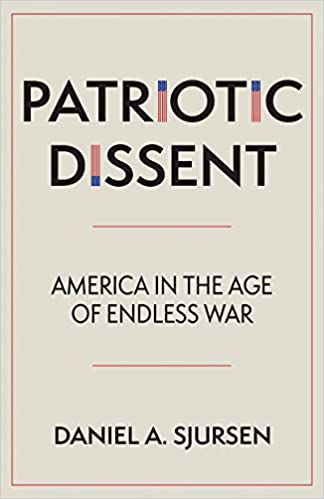
My partly Bacevich-bred sneaking suspicions about America’s no-longer distant wars were, of course, all confirmed. It turned out that policing an ethno-religious-sectarian conflict, mostly of our own country’s making, while dodging counter-counterinsurgent attacks aimed at expelling us occupiers from that country was as tough as stateside invasion opponents had predicted.

On lonely outpost mornings, I had a nasty daily habit of reading the names of our announced dead. Midway through my tour, one of those countless attacks killed 1st Lt. Andrew J. Bacevich. When I saw that name, I realized instantly that he must be the son of the man whose book I had read two years earlier, the man who is now our colleague. The moment remains painfully crystal clear in my memory.

By the way, Bill, your Iraq War take was dead on. During my own tour there, I came to the same realization. Embarrassingly enough, though, it took me seven years to say the same things publicly in my first book, fittingly subtitled “The Myth of the Surge.” By then, of course, ISIS — the Frankenstein’s monster of America’s misadventure — was already streaming across Syria’s synthetic borders and conquering swaths of northern and western Iraq, which made an anti-Iraq War screed seem quaint indeed, at least in establishment circles.

But Bill, do go on.

Bill: It was also back in 2007 when something John McCain said on PBS really ticked me off. In essence, he warned that if the U.S. military lost in Iraq, it wouldn’t be the generals’ fault. No, it would be ours, those of us who had questioned the war and its conduct and so had broken faith with that very military. In response, I wrote a piece at TomDispatch with the sarcastic title, “If We Lose Iraq, You’re to Blame,” because I already found such “stab-in-the-back” lies pernicious beyond words. As Andy Bacevich noted recently when it came to such lies about an earlier American military disaster: we didn’t lose the Vietnam War in 1975 when Saigon fell, we lost it in 1965 when President Johnson committed American troops to winning a civil war that South Vietnam had already lost.

Something similar is true for the Iraq and Afghan wars today. We won’t lose those conflicts when we finally pull all U.S. troops out and the situation goes south (as it most likely will). No, we lost the Afghan War in 2002 when we decided to turn a strike against the Taliban and al-Qaeda into an occupation of that country; and we lost the Iraq War the moment we invaded in 2003 and found none of the weapons of mass destruction that Bush and his top officials had sworn were there. Those were wars of choice, not of necessity, and we could only “win” them by finally choosing to end them. We lose them — and maybe our democracy as well — by choosing to keep on waging them in the false cause of “stability” or “counterterrorism,” or you-name-it.

Early in 2009, I had an epiphany of sorts while walking around a cemetery. With those constant deployments to Iraq, Afghanistan, and dozens of other countries globally, the U.S. military, I thought, was becoming a foreign legion, almost like the quintessential French version of the same, increasingly separated from the people, and increasingly recruited from “foreign” elements, including recent immigrants to this country looking for a fast-track to citizenship.

Danny: Bill, one of my own soldiers fit the mold you just mentioned. Private First Class Gustavo Rios-Ordonez, a married father of two and a Colombian national. Partly seeking citizenship through service, he was the last trooper to join my command just before we shipped out and the first killed when, on June 20, 2011, he stepped on an improvised explosive device within sight of the Afghan outpost I then commanded. Typing this now, I stare at a framed dusty unit guidon, the pennant that once flew over that isolated sandbagged base of ours and was gifted to me by my soldiers.

Sorry, Bill, last interruption… scout’s honor!

Surges to Nowhere

Bill: So I wrote an article that asked if our military was morphing into an imperial police force. As I put it then: “Foreign as in being constantly deployed overseas on imperial errands; foreign as in being ever more reliant on private military contractors; foreign as in being increasingly segregated from the elites that profit most from its actions, yet serve the least in its ranks.” And I added, “Now would be a good time to ask exactly why, and for whom, our troops are currently fighting and dying in the urban jungles of Iraq and the hostile hills of Afghanistan.”

A few people torched me for writing that. They thought I was saying that the troops themselves were somehow foreign, that I was attacking the rank-and-file, but my intent was to attack those who were misusing the military for their own purposes and agendas and all the other Americans who were acquiescing in the misuse of our troops. It’s a strange dynamic in this country, the way we’re cajoled into supporting our troops without ourselves having to serve or even pay attention to what they’re doing.

Indeed, under George W. Bush, we were even discouraged from commemorating the honored dead, denied seeing footage of returning flag-draped caskets. We were to celebrate our troops, while they (especially the dead and wounded) were kept out of sight — literally behind curtains, by Bush administration order — and so mostly out of mind.

I was against the Afghan surge, Danny, because I knew it would be both futile and unsustainable. In arguing that case, I reached back to the writings of two outspoken opponents of the Vietnam War, Norman Mailer and Mary McCarthy. As President Obama deliberated on whether to surge or not, I suggested that he should confer with broadminded critics outside the government, tough-minded freethinkers cut from the cloth of Mailer and McCarthy.

Mailer, for example, had argued that the Vietnamese were “faceless” to Americans (just as the Iraqis and Afghans have been all these years), that we knew little about them as a people and cared even less. He saw American intervention in “heart of darkness” terms. McCarthy was even blunter, condemning as “wicked” the government’s technocentric and hegemonic form of warfare with its “absolute indifference to the cost in human lives.” Predictably, Obama listened to conventional wisdom and surged again, first under General Stanley McChrystal and then, of course, under Petraeus.

Danny: Well, Bill, paltry as it may now sound, I truly thank you for your post-service service to sensibility and decency — even if those efforts didn’t quite spare me the displeasure of a second stint in a second theater with Petraeus as my supreme commander for a second time.

By the way, I ran into King David (as he came to be known) last year in a long line for the urinals at Newark airport. Like you, I’ve been tearing the guy’s philosophy and policies up for years. Still, I decided decorum mattered, so I introduced myself and mentioned that we’d met once at a Baghdad base in 2007. But before I could even kid him about how his staff had insisted that we stock ample kiwi slices because he loved to devour them, Petraeus suddenly walked off without even making it to the stall! I found it confusing behavior until I glimpsed myself in the mirror and remembered that I was wearing an “Iraq Veterans Against the War” t-shirt.

Okay, here’s a more instructive anecdote: Have I ever mentioned to you that my Afghan outpost, “Pashmul South” as it was then known, featured prominently in the late journalist Michael Hasting’s classic book, The Operators (which inspired the Netflix original movie War Machine)? At one point, Hastings describes how Petraeus’s predecessor in Afghanistan, Stanley McChrystal, visited an isolated base full of war-weary and war-exasperated infantrymen. In one of the resident platoons, all but seven of its 25 original members had “been killed, wounded, or lost their minds.” And yes, that was the “palace” I took over a couple of years later, an outpost the Taliban was then attacking almost daily.

By the time I took up the cause of “Enduring Freedom” (as the Afghan operation had been dubbed by the Pentagon), I had already resigned myself to being one of those foreign legionnaires you’ve talked about, if not an outright mercenary. During the Afghan surge, I fought for pay, healthcare, a future West Point faculty slot, and lack of a better alternative (or alternate identity). My principles then were simple enough: patrol as little as possible, kill as few locals as you can, and make sure that one day you’ll walk (as many of my scouts literally did) out of that valley called Arghandab.

I was in a dark headspace then. I didn’t believe a damn thing my own side said, held out not an ounce of hope for victory, and couldn’t even be bothered to hate my “enemy.” On the 10th anniversary of the 9/11 attacks, staff officers at brigade headquarters sent a Reuters reporter deep into the boonies to profile the only commander around from the New York City area and I told him just what I thought, or close enough in any case. Suffice it to say that my colonels were less than pleased when Captain Sjursen was quoted as saying that “the war was anything but personal” and that he never “thought about 9/11 at all” or when he described the Taliban this way: “It’s farm-boys picking up guns. How do you hate that?”

Rereading that article now, I feel a certain sadness for that long-gone self of mine, so lost in fatalism, hopelessness, and near-nihilism. Then I catch myself and think: imagine how the Afghans felt, especially since they didn’t have a distant home to scurry off to sooner or later.

Anyway, I never forgot that it was Obama — from whom I’d sought Iraq War salvation — who ordered my troops on that even more absurd Afghan surge to nowhere (and I’m not sure I’ve forgiven him either). Still, if there was a silver lining in all that senselessness, perhaps it was that such a bipartisan betrayal widened both the breadth and depth of my future dissent.

Please read the rest of our conversation here, and our conclusion that, when it comes to resisting America’s disastrous wars, our motto has to be: No retreat, no surrender.
Biden Rounds Up the Usual Suspects

Biden: Plenty of flags, but no change

W.J. Astore

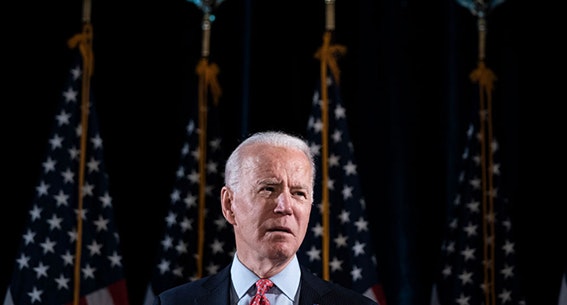
Surprise! President-elect Joe Biden isn’t listening to progressive voices in his party. Instead, he’s been rounding up the usual suspects for his cabinet and staff. Turns out, progressives, that if you give your support and vote to a Democratic establishment tool like Biden without making firm demands, you won’t get anything in return. Who knew?

Here are a few good articles on Biden’s staff and cabinet:

At TomDispatch.com, Danny Sjursen gives a sharp-eyed summary of the typical Biden operative in the realm of military and foreign affairs. Here’s what Sjursen has to say:

In fact, the national security bio of the archetypal Biden bro (or sis) would go something like this: she (he) sprang from an Ivy League school, became a congressional staffer, got appointed to a mid-tier role on Barack Obama’s national security council, consulted for WestExec Advisors (an Obama alumni-founded outfit linking tech firms and the Department of Defense), was a fellow at the Center for New American Security (CNAS), had some defense contractor ties, and married someone who’s also in the game.

It helps as well to follow the money. In other words, how did the Biden bunch make it and who pays the outfits that have been paying them in the Trump years? None of this is a secret: their two most common think-tank homes — CNAS and the Center for Strategic and International Studies (CSIS) — are the second- and sixth-highest recipients, respectively, of U.S. government and defense-contractor funding. The top donors to CNAS are Northrop Grumman, Boeing, and the Department of Defense. Most CSIS largesse comes from Northrop Grumman, Lockheed Martin, Boeing, and Raytheon. 

With the news that Tony Blinken will be Biden’s Secretary of State, Caitlin Johnstone makes the following salient point:

Blinken is a liberal interventionist who has supported all of the most disgusting acts of US mass military slaughter this millennium, including the Iraq invasion which killed over a million people and ushered in an unprecedented era of military expansionism in the Middle East. So needless to say he will fly through the confirmation process.

Meanwhile, Julia Rock and Andrew Perez note the incestuous nature of this process, or how the national security revolving door keeps spinning:

On Sunday, Bloomberg reported that Biden has chosen his longtime aide, Tony Blinken, to serve as Secretary of State and will name Jake Sullivan, his senior advisor and a former Hillary Clinton aide, national security adviser. Former Obama Defense Department official Michèle Flournoy is considered the favorite to be Secretary of Defense. 

After leaving the Obama administration, Blinken and Flournoy founded WestExec Advisors, a secretive consulting firm whose motto has been: “Bringing the Situation Room to the board room.” Flournoy and Sullivan have both held roles at think tanks raking in money from defense contractors and U.S. government intelligence and defense agencies. 

Biden has been facing calls [Ha! Ha!] from Democratic lawmakers and progressive advocacy groups to end the revolving door between government and the defense industry. One-third of the members of Biden transition’s Depart­ment of Defense agency review team were most recently employed by “orga­ni­za­tions, think tanks or com­pa­nies that either direct­ly receive mon­ey from the weapons indus­try, or are part of this indus­try,” according to reporting from In These Times.

Meanwhile, defense executives have been boasting about their close relationship with Biden and expressing confidence that there will not be much change in Pentagon policy. 

Please forgive the “Ha! Ha!” parenthetical, but all this was predictable based on Biden’s record and his statement that nothing would fundamentally change in his administration.

Progressives have essentially no power in the Democratic Party. Look at who the Speaker of the House is! Nancy Pelosi, once again, the ultimate swamp creature.

Expect no new ideas from this bunch, meaning grim times are ahead. Isn’t it high time that progressives take the plunge and start their own party? They are voiceless and powerless within the Democratic Party. Failing that, they had better discover their spines and model themselves on the Tea Party in outspokenness, else they will remain utterly irrelevant.

Bernie Sanders who? Elizabeth Warren who? Progressive reforms? Not with the usual suspects that Joe Biden is selecting and empowering.

A Typical Democratic Official on the Pentagon and War

Jeh Johnson with Biden and Obama, 2013 (White House photo)

W.J. Astore

Jeh Johnson, formerly homeland security secretary under President Obama, showed how a typical Democratic official approaches the Pentagon and war as he spoke on ABC’s This Week on Sunday (11/15).  For Johnson, the Pentagon “is typically an island of stability” in the U.S. government, but President Trump was destabilizing that island because of recent changes to Pentagon personnel.  Trump’s changes could be driven by his desire to get U.S. troops out of Afghanistan, speculated Johnson, which was not a good thing:

“If he [Trump] wants troops out of Afghanistan, as I know most Americans do, we have to do it in a way that makes sense, in an orderly manner, and that comports with battlefield reality … in trying to strike a deal, you don’t unilaterally surrender your greatest point of leverage by unilaterally withdrawing troops before the Afghan government and the Taliban have stuck a deal. So this is very concerning and if I were in the Biden transition team right now, I’d be very focused … on restoring stability in our national security.”

We can’t surrender our “leverage,” those thousands of U.S. troops that remain in harm’s way in an unnecessary war that was won and then lost almost two decades ago, because it’s that “leverage” that will compel the Taliban, who have already won the war, to strike a deal with an Afghan government that exists mainly because the U.S. government props it up.  Makes sense to me.

By the way, only “most Americans” want our troops to come home?  Where are all the other Americans who want them to stay there indefinitely?  Within the Washington Beltway, I’d wager.

The Afghan war has always struck me as nonsensical.  Yes, some kind of response to the 9/11 attacks was needed, and initial U.S. military strikes in 2001-02 succeeded in toppling the Taliban, in the sense they saw no reason to stand and fight against withering fire.  At that moment, the U.S. military should have declared victory and left.  Instead, the Bush/Cheney administration decided on its own disastrous occupation, extended another eight years by Obama/Biden, even though we knew full well the extent of the Soviet disaster in Afghanistan in the 1980s. 

The Afghan war has lasted so long that I’ve been writing articles against it for more than a decade.  You’d think any sensible and sane Democrat would love to see U.S. troops withdrawn and the war finally come to an end.  Not so.  The war must continue in the name of “leverage” and “stability.”

I like Johnson’s truly absurdist reference to “battlefield reality,” which, if we’re being real for a moment, reflects a Taliban victory.  Unless the U.S. wants to occupy Afghanistan forever, with hundreds of thousands of troops, that victory is not about to be reversed.  And what kind of “victory” would that be? 

“Stability” is not preserved by fighting unwinnable wars on the imperial periphery, unless you’re talking about the stability of Pentagon finances and corporate profits.  Johnson’s wiki bio does mention he’s on the boards of Lockheed Martin Corporation and U.S. Steel, which certainly hints at a conflict of interest when it comes to offering advice on ending wars.

In the meantime, we probably shouldn’t tell our troops, whom we’re supposed to love and support, that we’re keeping them in Afghanistan for “leverage” until the “battlefield reality” is more in our favor.  That’s truly a recipe for endless war in a place that well deserves its reputation as the graveyard of empires.

Finally, a reminder to Democrats: your Pentagon is an island of stability, and your troops are creating the leverage that allows democracy to flourish everywhere.  If this makes sense to you, and if this is the guiding philosophy of Joe Biden’s national security team, we’re truly in deep trouble.

Bonus Lesson: The Pentagon is an “island” of government only if that island is roughly the size of Pangaea.

William Astore, a retired lieutenant colonel (USAF) and history professor, is a senior fellow at the Eisenhower Media Network (EMN), an organization of critical veteran military and national security professionals.

Veterans Day Is a Time to Reflect on the Purpose of Veterans

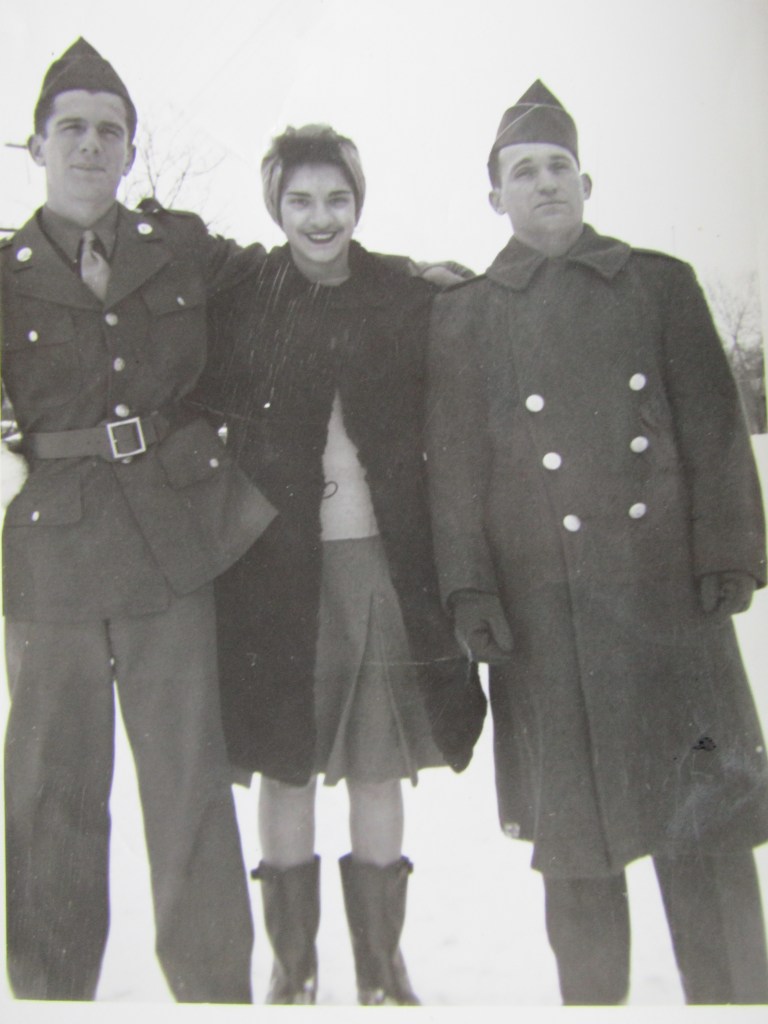
My dad (R) home on leave with his brother Gino, c. 1944

W.J. Astore

I come from a family of veterans.  My father and his two brothers served in the military during World War II.  My mother’s brother fought at Guadalcanal against the Japanese and was awarded the Bronze Star.  Later, my eldest brother enlisted in the Air Force at the tail end of the Vietnam War, which my brother-in-law had fought in as a radio operator attached to the artillery.  Their service helped to inspire my decision to become an officer in the U.S. Air Force.

Military service is honorable, not because of wars waged or lives taken, but because of its purpose: to support and defend the Constitution of the United States.  And this should be the purpose of Veterans Day: to take note of our veterans and their service in upholding the ideals of our Constitution, including freedom of speech and assembly, freedom of the press, a right to privacy, and most of all a government that is responsive to our needs and accountable to our oversight.

Yet since World War II America has fought wars without formal Congressional declarations.  The Korean War, the Vietnam War, wars in Afghanistan and Iraq and elsewhere, have lacked the wholehearted support of the American people.  They were arguably unnecessary wars in the sense these countries and peoples posed no direct threat to America and our Constitution.  Indeed, prosecuting these wars often posed more of a threat to that very Constitution.

Naturally, America associates veterans with wars and combat, and we say the dead made “the ultimate sacrifice,” which indeed they did.  But for what purpose, and to what end?  We owe it to veterans to ask these questions: for what purposes are we risking their lives, and to what end are these wars being waged?  If we can’t answer these simple questions, in terms intimately associated with our Constitution and the true needs of national defense, we should end these wars immediately.

Unending wars are the worst enemy of freedom and liberty.  This isn’t just my sentiment.  As James Madison put it, “Of all the enemies of true liberty, war is, perhaps, the most to be dreaded … No nation can preserve its freedom in the midst of continual warfare.”  America once knew this; we were once a nation that was slow to anger and with little taste for large military establishments.

A few years ago, I stumbled across old sheet music in a bookstore.  Catching my eye was the title of the song: “I Didn’t Raise My Boy to be a Soldier,” respectfully dedicated to “Every Mother – Everywhere.”  From 1915, this popular song captured American resistance to the calamitous “Great War” that we now call World War I.  Anti-war sentiment was strong that year in America, and indeed Woodrow Wilson would be reelected president in 1916 in large part because he had kept Americans out of the war.  The lyrics put it plainly: a mother who’d brought her son up “to be my pride and joy” didn’t want to see that same son having “to shoot some other mother’s darling boy.”

The contrast in these lyrics to recent U.S. military recruitment commercials couldn’t be starker.  In a new Department of Defense advertising campaign, featuring the catchphrase “Their success tomorrow begins with your support today,” mothers are shown incongruously in military settings asking their sons why they wanted to sign up.  Weapons are featured prominently in these ads, but no combat.  There’s much talk of teamwork and being part of something larger than yourself but no talk of the U.S. Constitution.  At the end of these spots, the young men depicted have convinced their mothers that it’s desirable indeed to have your boy become a soldier.

Recruitment ads, of course, have never been at pains to show the true costs of war.  When I was a teen, the Army’s motto was “Be all that you can be.”  For the Navy, service was about “adventure.”  For the Air Force, it was about “a great way of life.”  These ads, by ignoring or eliding war’s costs, have contributed to America’s tighter embrace of war on the world stage and its severe impact, not only on our veterans but on our democracy.  America’s strategy of “global reach, global power” has embroiled us in wars of choice that we increasingly choose not to end.  Surely, it’s time to chart a more pacific path.

Sometimes the best offense is a good defense.  On this Veterans Day, let’s remind ourselves that veterans exist to defend our Constitution and our country, but that endless warfare, and intensifying militarism, are in fact among the most pressing dangers to our democracy.    

William Astore, a retired lieutenant colonel (USAF) and history professor, is a senior fellow at the Eisenhower Media Network (EMN), an organization of critical veteran military and national security professionals.

Monday Musings: On Russia, Helplessness, and Polls

W.J. Astore

A few items for this Monday:

1. A strategic analyst wrote to me about how America can improve relations with Russia. The gist of my response was this:

I totally agree on ending the “new” cold war. But the military-industrial complex (MIC) seems determined to use threat inflation to justify high Pentagon budgets. Meanwhile, establishment Democrats think they can use Trump’s alleged softness toward Russia against him. Hardline policies rule the day.

What is to be done? First, I suppose, is recognizing the vital importance of domestic politics — and profit and power — vis-a-vis our foreign relations with Russia. As long as the MIC keeps exaggerating the Russian threat, and as long as the Democrats keep exaggerating the Russian threat to the election while alleging Trump is a Putin-puppet, there’s little we can do. We simply need to work to change the narrative.

2. So many Americans have a sense of learned powerlessness. We simply think there’s nothing we can do to effect change. As I wrote to a friend this weekend: Lots of people have lost faith in government. But they’ve lost faith in collective action as well. They just don’t think they can do anything to fight corruption and a rigged system.

They feel powerless — then a Messiah-like candidate comes along offering hope and change. (In a strange way, Trump is the yang to Obama’s yin.) Trump said he’d drain the swamp — but it proved fetid and fertile land for his long con. His supporters just love the guy even as he hurts them — but at least he makes them feel good, empowered, liberated from the libtards …

A true confidence man, Trump poses as a helper. He’s going to drain the swamp, make things better, make us (you) great again. Turn back the clock — when America was America, men were men, women were women.

Interestingly, Trump has no vision for the future. His vision is relentlessly retrograde. The only way we can be great “again” is by rejecting change and today’s “kids” who support BLM, LGBTQ, and so on.

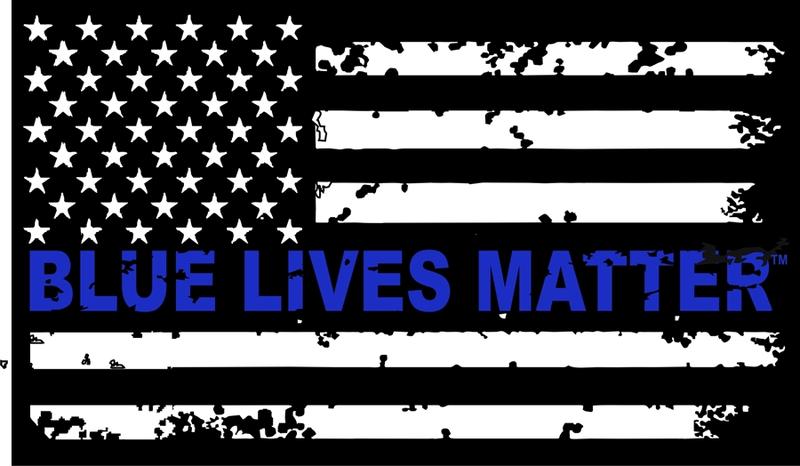
A new wrinkle is the reactionary and authoritarian “blue lives matter” narrative. Who could have guessed that American activism would culminate in societal militarization and the glorification of police forces?

I’ve seen a few of these on cars and trucks — and I live in an allegedly strong Democratic state

3. Recent polling suggests Joe Biden has a lead of up to 14%. Don’t believe it. As I wrote to a friend: My sense is that this election will be very close. Many people support Trump but they keep that support quiet. And his people show up to vote. Maybe twice if they follow Trump’s advice. Plus, of course, it’s the electoral college that matters, not the popular vote. And there’s still a lot that can happen in the next month.

Readers, what are your musings for this Monday?

Three Generals Walk Into a Bar …

W.J. Astore (and Andrew Bacevich)

Back in May of 2019, I wrote an article here on General William Westmoreland and the Vietnam War. Westmoreland was conventional in every sense of the word; it was his misfortune to be put in charge of an unconventional war in Southeast Asia, a war he didn’t understand but also one that was unnecessary for U.S. security and incredibly wasteful to boot. Relieved of command by being booted upstairs, Westmoreland went to his grave convinced that the war was winnable. If only he’d received the reinforcements he needed …

Today at TomDispatch.com, Andrew Bacevich, a retired Army colonel and author, imagines Westmoreland grousing in a bar with two other generals: George S. Patton of World War II fame, and an imaginary general of today’s wars, Victor Constant. Let’s just say General Constant does not cover himself in glory, failing to live up to his victor(ious) first name as he loses himself in vapid catchphrases he’s gleaned from PowerPoint briefings on war and its meaning. Much like today’s generals, in fact.

So, with the blessing of TomDispatch.com, here is that barroom conversation, as imagined by Colonel (ret.) Bacevich:

Patton and Westy Meet in a Bar
A Play of Many Parts in One Act
By Andrew Bacevich

It’s only mid-afternoon and Army Lieutenant General Victor Constant has already had a bad day.1 Soon after he arrived at the office at 0700, the Chief2 had called. “Come see me. We need to talk.”

The call was not unexpected. Any day now, POTUS3 will announce the next four-star to command the war effort in Afghanistan — how many have there been? — and Constant felt certain that he’d be tapped for the job. He’d certainly earned it. Multiple tours in Iraq and Afghanistan and, worse still, at the Pentagon. If anyone deserved that fourth star, he did.

Unfortunately, the Chief sees things differently. “Time’s up, Vic. I need you to retire.” Thirty-three years of service and this is what you get: your walking papers, with maybe a medal thrown in.

Constant returns to his office, then abruptly tells his staff that he needs some personal time. A 10-minute drive and he’s at the O-Club, where the bar is just opening. “Barkeep,” he growls. “Bourbon. Double. Rocks.” On the job long enough to have seen more than a few senior officers get the axe, the bartender quietly complies.

Constant has some thinking to do. For the first time in his adult life, he’s about to become unemployed. His alimony payments and college tuition bills are already killing him. When he and Sally have to move out of quarters,4 she’s going to expect that fancy house in McLean or Potomac that he had hinted at when they were dating. But where’s the money going to come from?

He needs a plan. “Barkeep. Another.” Lost in thought, Constant doesn’t notice that he’s no longer alone. Two soldiers — one boisterous, the other melancholy — have arrived and are occupying adjacent bar stools.

The first of them smells of horses. To judge by his jodhpurs and riding crop, he’s just returned from playing polo. He has thinning gray hair, small uneven teeth, a high-pitched voice, and a grin that says: I know things you never will, you dumb sonofabitch. He exudes arrogance and charisma. He is George S. Patton. He orders whiskey with a beer chaser.

The second wears Vietnam-era jungle fatigues, starched. His jump boots glisten.5 On his ballcap, which he carefully sets aside, are four embroidered silver stars. He is impeccably groomed and manicured. The nametape over his breast pocket reads: WESTMORELAND. He exudes the resentment of someone who has been treated unfairly — or thinks he has.

“Westy! Damned if you still don’t look like TIME’s Man of the Year back in ’65! Ease up, man! Have a drink. What’ll it be?”

“Just water for me, General. It’s a bit early in the day.”

“Shit. Water? You think my guys beat the Nazis by filling their canteens with water?”

Westmoreland sniffs. “Alcohol consumption does not correlate with battlefield performance — although my troops did not suffer from a shortage of drink. They never suffered from shortages of anything.”

Patton guffaws. “But you lost! That’s the point, ain’t it? You lost!”

The bickering draws Victor Constant out of his reverie. “Gentlemen, please.”

“Who are you, bucko?” asks Patton.

“I am Lieutenant General Victor Constant, U.S. Army. To my friends, I’m VC.”

“VC!” Westy nearly falls off of his stool. “My army has generals named after the Vietcong?”

Patton intervenes. “Well, VC, tell us old timers what you’re famous for and why you’re here, drinking in uniform during duty hours.

“Well, sir, first of all, I’m a warrior. I commanded a company in combat, then a battalion, then a brigade, then a division. But I’m here now because the chief just told me that I need to retire. That came as a bit of a blow. I don’t know what Sally is going to say.” He stares at his drink.

Patton snorts. “Well, my young friend, sounds like you’ve seen plenty of action. All that fighting translates into how many wins?”

“Wins?” VC doesn’t quite grasp the question.

“Wins,” Patton says again. “You know, victories. The enemy surrenders. Their flag comes down and ours goes up. The troops go home to a heroes’ welcome. Polo resumes.”

Westy interjects. “Wins? Are you that out of touch, George? The answer is: none. These so-called warriors haven’t won anything.”

“With all due respect, sir, I don’t think that’s fair. Everyone agrees that, back in ’91, Operation Desert Storm was a historic victory. I know. I was there, fresh out of West Point.”

Patton smirks. “Then why did you have to go back and do it again in 2003? And why has your army been stuck in Iraq ever since? Not to mention Syria! And don’t get me started on Afghanistan or Somalia! The truth is your record isn’t any better than Westy’s.”

“Now, see here, George. You’re being unreasonable. We never lost a fight in Vietnam.” He pauses and corrects himself. “Well, maybe not never, but very rarely.”

“Rarely lost a fight!” Patton roars. “What does that have to do with anything? That’s like you and your thing with body counts! Dammit, Westy, don’t you know anything about war?”

VC ventures an opinion. “General Westmoreland, sir, I’m going to have to agree with General Patton on this one. You picked the wrong metric to measure progress. We don’t do body counts anymore.”

“Well, what’s your metric, sonny?”

VC squirms and falls silent.

His hackles up, Westy continues. “First of all, the whole body-count business was the fault of the politicians. We knew exactly how to defeat North Vietnam. Invade the country, destroy the NVA,6 occupy Hanoi. Just like World War II: Mission accomplished. Not complicated.”

He pauses to take a breath. “But LBJ and that arrogant fool McNamara7 wouldn’t let us. They imposed limits. They wouldn’t even mobilize the reserves. They set restrictions on where we could go, what we could attack. General Patton here had none of those problems in ’44-’45. And then the press turned on us. And the smartass college kids who should have been fighting communists started protesting. Nothing like it before or since — the home front collaborating with the enemy.”

Westy changes his mind about having a drink. “Give me a gin martini,” he barks. “Straight up. Twist of lemon. And give VC here” — his voice drips with contempt — “another of whatever he’s having.”

The bartender, who has been eavesdropping while pretending to polish glassware, grabs a bottle and pours.

“Hearts and minds, Westy, hearts and minds.” Patton taunts, obviously enjoying himself.

“Yes, hearts and minds. Don’t you think, George, that we understood the importance of winning over the South Vietnamese? But after Diem’s assassination,8 the Republic of Vietnam consisted of little more than a flag. After D-Day, you didn’t need to create France. You just needed to kick out the Germans and hand matters over to De Gaulle.”9

Westmoreland is becoming increasingly animated. “And you fought alongside the Brits. We were shackled to a Vietnamese army that was miserably led and not eager to fight either.”

“Monty was a horse’s ass,”10 Patton interjects, apropos of nothing.

“The point is,” Westmoreland continues, “liberating Europe was politically simple. Defending South Vietnam came with complications you could never havedreamed of. Did the New York Times pester you about killing civilians? All you had to do to keep the press on your side was not to get caught slapping your own soldiers.”

“That was an isolated incident and I apologized,” Patton replies, with a tight smile. “But the fact is, Westy, all your talk about ‘firepower and mobility’ didn’t work. ‘Search and destroy’? Hell, you damn near destroyed the whole U.S. Army. And the war ended with the North Vietnamese sitting in Saigon.”

“Ho Chi Minh City,” Victor Constant offers by way of correction.

“Oh, shut up,” Patton and Westmoreland respond simultaneously.

Patton leans menacingly toward Victor Constant and looks him right in the eye. “Have you seen my movie, son?”11

“Yes, of course, sir. Several times.”

“Then you should understand what war is all about. You ‘hold onto him by the nose’ and you ‘kick him in the ass.’ That’s what I said in the movie. Why is that so hard to understand? How is it that my soldiers could defeat those Hun bastards and you and your crew can’t manage to take care of a few thousand ‘militants’ who don’t have tanks or an air force or even decent uniforms, for God’s sake?”

“Hearts and minds, George, hearts and minds.”

“What’s that supposed to mean, Westy?”

“Your kick-them-in-the-ass approach isn’t good enough these days. You studied Clausewitz — war is politics with guns. Now, I’ll give you this much: in Vietnam, we never got the politics right. We couldn’t solve the puzzle of making war work politically. Maybe there wasn’t a solution. Maybe the war was already lost the day I showed up. So we just killed to no purpose. That’s a failure I took to my grave.”

A bead of perspiration is forming on Westmoreland’s lip. “But these guys” — he nods toward Constant — “now, we’ve got a generation of generals who think they’ve seen a lot of war but don’t know squat about politics — and don’t even want to know. And we’ve got a generation of politicians who don’t know squat about war, but keep doling out the money. There’s no dialogue, no strategy, no connecting war and politics.”

Victor Constant is mystified. Dialogue? He rouses himself to defend his service. “Gentlemen, let me remind you that the United States Army today is far and away the world’s finest military force. No one else comes close.”

Westy just presses on. “So what has your experience in war taught you? What have you learned?”

Patton repeats the question. “What have you learned, Mr. Warrior? Tell us.”

Learned? After several drinks, Victor Constant is not at his best. “Well, I’ve learned a lot. The whole army has.”

He struggles to recall recent PowerPoint briefings that he’s dozed through. Random phrases come to mind. “Leap-ahead technology. Dominant maneuver in an ever-enlarging battlespace. Simultaneous and sequential operations. Artificial Intelligence. Quantum computing. Remote sensing. Machine learning. Big data analytics. 5G technology. High-fidelity, multi-domain training.”

However dimly, VC realizes he’s babbling. He pauses to catch his breath. “It’s all coming, if they’ll just give us the money.”

Patton stares at him silently. Victor Constant senses that it’s time to go home.

“Can I call you a taxi?” Westmoreland asks.

“No, sir, thank you.” With as much dignity as he can muster, Victor Constant straightens his tie, finds his headgear, and walks unsteadily toward the door.

What have I learned? What did they even mean? He was a general officer in the best army in the world. Maybe the best army ever. Wasn’t that enough? He needed to ask Sally.

Andrew Bacevich, a TomDispatch regular, is president of the Quincy Institute for Responsible Statecraft. His most recent book is The Age of Illusions: How America Squandered Its Cold War Victory.

Copyright 2020 Andrew Bacevich


1 Victor Constant is the name of the ski slope at the United States Military Academy, called such in memory of a cadet ski instructor killed in an accident during World War II. To my knowledge, there is no officer bearing that name in the U.S. Army. Return to story.

2 The chief of staff, U.S. Army. Return to story.

3 The president of the United States. Return to story.

4 Many of the army’s most senior officers are housed at government-owned quarters at Fort Myers, Virginia, and Fort McNair in Washington. Return to story.

5 Beginning in World War II, U.S. Army paratroopers sported a distinctive style of black leather boot, more fashionable than standard army issue. After the war, Westmoreland attended jump school and commanded the 101st Airborne Division. Return to story.

6 Shorthand for the North Vietnamese army. Return to story.

7 Lyndon Johnson served as U.S. president from November 1963 to January 1969. Robert Strange McNamara filled the post of defense secretary from 1961 to 1968. Return to story.

8 The November 1963 assassination of South Vietnamese President Ngo Dinh Diem destroyed whatever slight political legitimacy the Republic of Vietnam had possessed. Return to story.

9 Charles De Gaulle was the leader of the Free French during World War II. Return to story.

10 Field Marshal Bernard Law Montgomery, the senior British commander in the European Theater of Operations in World War II, had a low opinion of American officers from U.S. Supreme Allied Commander Dwight D. Eisenhower on down. Return to story.

11 “Patton” (1970), starring George C. Scott. Return to story.

Killing Democracy in America

W.J. Astore

While the mainstream media focuses on alleged threats from without, the most insidious dangers are those from within America, as I argue in my latest article for TomDispatch.com.  Here’s an excerpt:

Killing Democracy in America
The Military-Industrial Complex as a Cytokine Storm
By William J. Astore

The phrase “thinking about the unthinkable” has always been associated with the unthinkable cataclysm of a nuclear war, and rightly so. Lately, though, I’ve been pondering another kind of unthinkable scenario, nearly as nightmarish (at least for a democracy) as a thermonuclear Armageddon, but one that’s been rolling out in far slower motion: that America’s war on terror never ends because it’s far more convenient for America’s leaders to keep it going — until, that is, it tears apart anything we ever imagined as democracy.

I fear that it either can’t or won’t end because, as Martin Luther King, Jr., pointed out in 1967 during the Vietnam War, the United States remains the world’s greatest purveyor of violence — and nothing in this century, the one he didn’t live to see, has faintly proved him wrong. Considered another way, Washington should be classified as the planet’s most committed arsonist, regularly setting or fanning the flames of fires globally from Libya to Iraq, Somalia to Afghanistan, Syria to — dare I say it — in some quite imaginable future Iran, even as our leaders invariably boast of having the world’s greatest firefighters (also known as the U.S. military).

Scenarios of perpetual war haunt my thoughts. For a healthy democracy, there should be few things more unthinkable than never-ending conflict, that steady drip-drip of death and destruction that drives militarism, reinforces authoritarianism, and facilitates disaster capitalism. In 1795, James Madison warned Americans that war of that sort would presage the slow death of freedom and representative government. His prediction seems all too relevant in a world in which, year after year, this country continues to engage in needless wars that have nothing to do with national defense.

You Wage War Long, You Wage It Wrong

To cite one example of needless war from the last century, consider America’s horrendous years of fighting in Vietnam and a critical lesson drawn firsthand from that conflict by reporter Jonathan Schell. “In Vietnam,” he noted, “I learned about the capacity of the human mind to build a model of experience that screens out even very dramatic and obvious realities.” As a young journalist covering the war, Schell saw that the U.S. was losing, even as its military was destroying startlingly large areas of South Vietnam in the name of saving it from communism. Yet America’s leaders, the “best and brightest” of the era, almost to a man refused to see that all of what passed for realism in their world, when it came to that war, was nothing short of a first-class lie.

Why? Because believing is seeing and they desperately wanted to believe that they were the good guys, as well as the most powerful guys on the planet. America was winning, it practically went without saying, because it had to be. They were infected by their own version of an all-American victory culture, blinded by a sense of this country’s obvious destiny: to be the most exceptional and exceptionally triumphant nation on this planet.

As it happened, it was far more difficult for grunts on the ground to deny the reality of what was happening — that they were fighting and dying in a senseless war. As a result, especially after the shock of the enemy’s Tet Offensive early in 1968, escalating protests within the military (and among veterans at home) together with massive antiwar demonstrations finally helped put the brakes on that war. Not before, however, more than 58,000 American troops died, along with millions of Vietnamese, Cambodians, and Laotians.

In the end, the war in Indochina was arguably too costly, messy, and futile to continue. But never underestimate the military-industrial complex, especially when it comes to editing or denying reality, while being eternally over-funded for that very reality. It’s a trait the complex has shared with politicians of both parties. Don’t forget, for instance, the way President Ronald Reagan reedited that disastrous conflict into a “noble cause” in the 1980s. And give him credit! That was no small thing to sell to an American public that had already lived through such a war. By the way, tell me something about that Reaganesque moment doesn’t sound vaguely familiar almost four decades later when our very own “wartime president” long ago declared victory in the “war” on Covid-19, even as the death toll from that virus approaches 150,000 in the homeland.

In the meantime, the military-industrial complex has mastered the long con of the no-win forever war in a genuinely impressive fashion. Consider the war in Afghanistan. In 2021 it will enter its third decade without an end in sight. Even when President Trump makes noises about withdrawing troops from that country, Congress approves an amendment to another massive, record-setting military budget with broad bipartisan support that effectively obstructs any efforts to do so (while the Pentagon continues to bargain Trump down on the subject).

The Vietnam War, which was destroying the U.S. military, finally ended in an ignominious withdrawal. Almost two decades later, after the 2001 invasion, the war in Afghanistan can now be — the dream of the Vietnam era — fought in a “limited” fashion, at least from the point of view of Congress, the Pentagon, and most Americans (who ignore it), even if not the Afghans. The number of American troops being killed is, at this point, acceptably low, almost imperceptible in fact (even if not to Americans who have lost loved ones over there).

More and more, the U.S. military is relying on air power, unmanned drones, mercenaries, local militias, paramilitaries, and private contractors. Minimizing American casualties is an effective way of minimizing negative media coverage here; so, too, are efforts by the Trump administration to classify nearly everything related to that war while denying or downplaying “collateral damage” — that is, dead civilians — from it.

Their efforts boil down to a harsh truth: America just plain lies about its forever wars, so that it can keep on killing in lands far from home.

When we as Americans refuse to take in the destruction we cause, we come to passively accept the belief system of the ruling class that what’s still bizarrely called “defense” is a “must have” and that we collectively must spend significantly more than a trillion dollars a year on the Pentagon, the Department of Homeland Security, and a sprawling network of intelligence agencies, all justified as necessary defenders of America’s freedom. Rarely does the public put much thought into the dangers inherent in a sprawling “defense” network that increasingly invades and dominates our lives.

Meanwhile, it’s clear that low-cost wars, at least in terms of U.S. troops killed and wounded in action, can essentially be prolonged indefinitely, even when they never result in anything faintly like victory or fulfill any faintly useful American goal. The Afghan War remains the case in point. “Progress” is a concept that only ever fits the enemy — the Taliban continues to gain ground — yet, in these years, figures like retired general and former CIA director David Petraeus have continued to call for a “generational” commitment of troops and resources there, akin to U.S. support for South Korea.

Who says the Pentagon leadership learned nothing from Vietnam? They learned how to wage open-ended wars basically forever, which has proved useful indeed when it comes to justifying and sustaining epic military budgets and the political authority that goes with them. But here’s the thing: in a democracy, if you wage war long, you wage it wrong. Athens and the historian Thucydides learned this the hard way in the struggle against Sparta more than two millennia ago. Why do we insist on forgetting such an obvious lesson?

To read more of this dispatch, please click here.

First as Tragedy, then as Farce

160924185453-michelle-obama-george-w-bush-hug-sept-24-medium-plus-169

W.J. Astore

Perhaps you’ve heard the saying that history repeats itself first as tragedy and then as farce.  Karl Marx used it to describe Napoleon’s cataclysmic reign followed by the far less momentous and far more ignominious reign of his nephew, Napoleon III.

Marx’s saying applies well to two momentous events in recent U.S. history: the 9/11 attacks of 2001 and the current coronavirus pandemic.  The American response to the first was tragic; to the second, farcical.

Let me explain.  I vividly recall the aftermath to the 9/11 attacks.  The world was largely supportive of the United States.  “We are all Americans now” was a sentiment aired in many a country that didn’t necessarily love America.  And the Bush/Cheney administration proceeded to throw all that good will away in a disastrous war on terror that only made terror into a pandemic of sorts, with American troops spreading it during calamitous invasions of Afghanistan and Iraq, among other military interventions around the globe.

Again, it was tragic for America to have thrown away all that good will in the pursuit of dominance through endless military action.  A great opportunity was missed for true American leadership achieved via a more patient, far less bellicose, approach to suppressing terrorism.

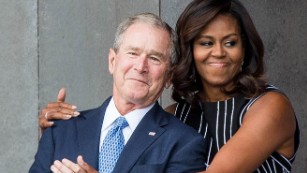
In this tragedy, the Bush/Cheney administration avoided all responsibility, first for not preventing the attacks, and second for bungling the response so terribly.  Indeed, George W. Bush was reelected in 2004 and has now been rehabilitated as a decent man and a friend by popular Democrats like Michelle Obama, who see him in a new light when compared to America’s current president.

Speaking of Donald Trump, consider his response to America’s second defining moment of the 21st century: the coronavirus pandemic.  It’s been farcical.  The one great theme that’s emerged from Trump’s 260,000 words about the pandemic is self-congratulation, notes the New York Times.  Even as America’s death toll climbs above 50,000, Trump congratulates himself on limiting the number of deaths, even as he takes pride in television ratings related to his appearances.  The farce was complete when the president unwisely decided to pose as a health authority, telling Americans to ingest or inject poisonous household disinfectants to kill the virus.

Tragedy, then farce.  But with the same repetition of a total failure to take responsibility. As Trump infamously said, “I don’t take responsibility at all” for the botched response to the pandemic.

9/11 and Covid-19 may well be the defining events of the last 20 years.  After 9/11, Bush/Cheney tragically squandered the good will of the world in rampant militarism and ceaseless wars.  Then came Covid, an even bigger calamity, and now we have our farcical president, talking about the health benefits of injecting or ingesting bleach and similar poisons.  At a time when the U.S. should lead the world in medical expertise to confront this virus, we’ve become a laughingstock instead.

What comes after farce, one wonders?  For too many Americans, the answer may well be further death and loss.

There’s No Vaccine for Stupidity

As-Trump-Rips-Deep-State-Fauci-Goes-Facepalm-Knowing-Why
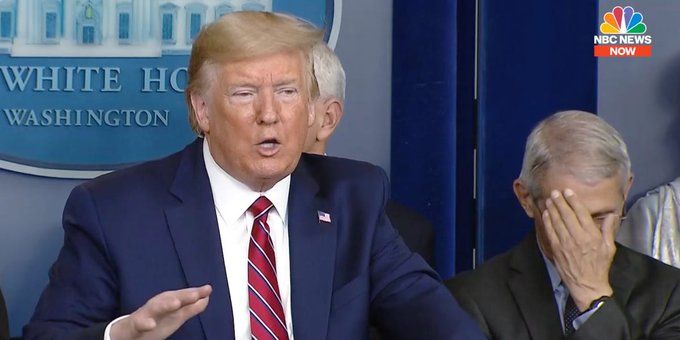
Trump gives himself an A+ and a 10/10 for his handling of the coronavirus crisis.  Not everyone agrees.

W.J. Astore

A few thoughts generated by these coronaviral times:

Perhaps in a year, we’ll have an effective vaccine against COVID-19.  But developing a vaccine against stupidity will remain elusive.

Perhaps we should redefine COVID-19 as a terrorist outfit, thereby unleashing unlimited funding from Congress to combat it.

People are stunned by this pandemic and the changes driven by it.  We’ve been knocked out of our routines and perhaps our complacency.  At least some of us are now open to new ideas.  Which is precisely why our government is rushing in with old ideas, doubling down on trickle down, telling us to remain in place, not only physically, which is necessary, but mentally.  Look at the parade of old ideas trumpeted by the president.  And for that matter Joe Biden, Nancy Pelosi, and the Democratic establishment.  Trump and Biden are literally tired old men, not in age alone, but more importantly in how they view the world.  There’s nothing fresh or original about them.  Nothing.  Whereas Bernie Sanders is fighting for health care for all, better pay for workers, and a system that puts people first instead of profits.

The courage and selflessness of doctors, nurses, first responders, and indeed all those who are risking exposure to the virus to help others has truly been inspirational.  We’re hearing a lot from the media about our doctors, nurses, etc. being “heroes,” which is encouraging.  Far too often in the U.S., and for too long, the concept of “hero” was linked to military service, with all troops being celebrated as “hometown heroes.”  Athletes, too, were called heroes for hitting homeruns or throwing touchdowns.  Our coronaviral moment is reminding us about the true nature of heroes.  As I wrote a decade ago:

Here, then, is what I mean by “hero”: someone who behaves selflessly, usually at considerable personal risk and sacrifice, to comfort or empower others and to make the world a better place.  Heroes, of course, come in all sizes, shapes, ages, and colors, most of them looking nothing like John Wayne or John Rambo or GI Joe (or Jane).

“Hero,” sadly, is now used far too cavalierly.  Sportscasters, for example, routinely refer to highly paid jocks who hit walk-off home runs or score game-winning touchdowns as heroes.  Even though I come from a family of firefighters (and one police officer), the most heroic person I’ve ever known was neither a firefighter nor a cop nor a jock: She was my mother, a homemaker who raised five kids and endured without complaint the ravages of cancer in the 1970s, with its then crude chemotherapy regimen, its painful cobalt treatments, the collateral damage of loss of hair, vitality, and lucidity.  In refusing to rail against her fate or to take her pain out on others, she set an example of selfless courage and heroism I’ll never forget.

Perhaps it takes a crisis like this for us to recognize the “ordinary” heroes among us, the ones who aren’t “top guns” flying warplanes, the ones who aren’t throwing footballs for multi-million-dollar salaries.

Remember when Trump said: “I could stand In the middle of Fifth Avenue and shoot somebody and I wouldn’t lose any voters”?  This moment is proving him right.  He has colossally mismanaged this crisis, yet his followers still place their faith in him.  For his followers, Trump is the ultimate Teflon president.  Nothing sticks to him.  Eat your heart out, Ronald Reagan!

Finally, as a pandemic rages, the Trump administration is warning of a possible sneak attack by Iran even as it deploys ships and air assets in the drug war, specifically against Venezuela.  Echoing the words of Mehdi Hasan, a journalist at The Intercept, what kind of maniac does this?  But maybe it’s not mania; after all, Iran and Venezuela have something in common: huge reserves of oil, and regimes that resist the USA.  Once again, old thinking prevails, old scores must be settled, even as a new world order takes shape because of this pandemic.

Of course, Trump has never put America first.  He’s always put himself first.  He’s given himself an A+ and a 10 out of 10 for his leadership in facing this crisis.  Sad to say, his followers believe him.  Remember when I said there’s no vaccine for stupidity?

The Nobility of Tulsi Gabbard

1st-a-gabbard-1

W.J. Astore

In the South Carolina primary won on Saturday by Joe Biden, Tulsi Gabbard earned only 1.3% of the vote.  Her poor showing was due in part to her outcast status among the Democratic establishment joined by mainstream media outlets like MSNBC and CNN.  Speaking of CNN, I caught a few minutes of coverage last night during which its commentators confessed they couldn’t understand why Tulsi was still running. (Update: See my comment below for more details on this exchange.)  One person (Anderson Cooper, the weasel) suggested she was angling for a job with Fox News.  Of course, Tulsi’s principled opposition to regime-change wars and other disastrous U.S. foreign policy decisions went unmentioned.  When her name is mentioned by the corporate-owned media, it’s usually in the context of the candidate most likely to succeed – in Russia.

By running in the election, Tulsi Gabbard continues to make an invaluable contribution: She highlights the power of the military-industrial-Congressional-media complex and its rejection of any candidate willing to challenge it.  Gabbard’s status as a major in the Hawaii Army National Guard, her service in Congress on the House Armed Services Committee, her military deployments to Iraq: all of this is downplayed or dismissed.  Meanwhile, Mayor Pete’s brief stint in Afghanistan is celebrated as the height of military service.  What’s the difference between them?  Mayor Pete plays ball with big donors and parrots talking points of the Complex – Tulsi doesn’t.

In a recent op-ed for The Hill, Tulsi yet again does America a service by calling out red baiting in America’s elections.  Here’s how her op-ed begins:

Reckless claims by anonymous intelligence officials that Russia is “helping” Sen. Bernie Sanders (I-Vt.) are deeply irresponsible. So was former New York City Mayor Michael Bloomberg’s calculated decision Tuesday to repeat this unsubstantiated accusation on the debate stage in South Carolina. Enough is enough. I am calling on all presidential candidates to stop playing these dangerous political games and immediately condemn any interference in our elections by out-of-control intelligence agencies.

A “news article” published last week in The Washington Post, which set off yet another manufactured media firestorm, alleges that the goal of Russia is to trick people into criticizing establishment Democrats. This is a laughably obvious ploy to stifle legitimate criticism and cast aspersions on Americans who are rightly skeptical of the powerful forces exerting control over the primary election process. We are told the aim of Russia is to “sow division,” but the aim of corporate media and self-serving politicians pushing this narrative is clearly to sow division of their own — by generating baseless suspicion against the Sanders campaign.

Tulsi is right here – and she’s right when she says that:

The American people have the right to know this information in order to put Russia’s alleged “interference” into proper perspective. It is a mystery why the Intelligence Community would want to hide these details from us. Instead it is relying on highly dubious and vague insinuations filtered through its preferred media outlets, which seem designed to create a panic rather than actually inform the public about a genuine threat.

All this does is undermine voters’ trust in our elections, which is what we are constantly told is the goal of Russia.

She also accurately notes how the “corporate media will do everything they can to turn the general election into a contest of who is going to be ‘tougher’ on Russia. This tactic is necessary to propagandize the American people into shelling over their hard-earned tax dollars to the Pentagon to fund the highly lucrative nuclear arms race that the military-industrial complex craves.”

Tulsi Gabbard may not be in the democratic race much longer, but that’s not because she lacks guts.  Indeed, her willingness to buck the system – and her commitment to making the world a less militaristic place – make her a notable candidate.  She’s been a noble voice crying in a corrupt and self-serving wilderness.