Dissent is fundamental to democracy. Or so we claim. Until such dissent makes us angry or uncomfortable. Then we yell at the dissenter to shut up; better yet, we denounce him or her as a traitor to … well, whatever fits.
But responsible criticism of the actions of one’s government is not disloyalty; rather, it’s often a form of higher loyalty, a loyalty to the ideal of freedom of speech as well as the ideal of organized political action. The alternative is “My government, right or wrong.” And who wants that, except for government leaders and their lackeys?
The USA and Israel claim to be democracies. Yet in difficult times, dissent is often suppressed, and dissenters painted as disloyal. Recall the aftermath of 9/11 in the USA, when those who questioned the rush to war against Iraq were painted as naive peaceniks (at best) or as dupes of Saddam Hussein or even (at worst) as supporters of Al Qaeda. That was the mentality of Bush and Company, a Manichean “you’re either for us or against us.” And look where that got us.
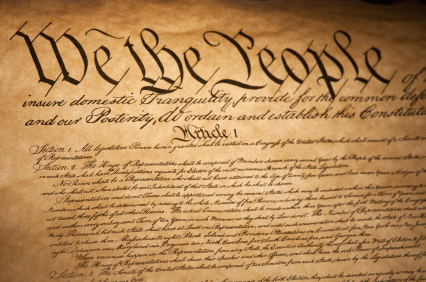
Sorry, I’m not “for” a government and its leaders. I’m “for” the US Constitution and our essential rights and liberties, including the right to dissent from my government when I believe it is wrong.
Today, the debate on Israel and Gaza is similarly heated. Those who risk expressing sympathy for the Palestinians often get painted as supporters of Hamas and terrorism. Jon Stewart showcased this mentality on The Daily Showhere. Similarly, David Harris-Gershon wrote a telling article with the meaningful title, “Empathizing with Gaza does NOT make me anti-Semitic, nor pro-Hamas or anti-Israel. It makes me human.”
It almost goes without saying that Stewart and Harris-Gershon are Jewish. Indeed, Harris-Gershon’s wife was seriously injured by a terrorist bomb in Israel, an ordeal he wrote about in his book, “What Do You Buy the Children of the Terrorist Who Tried to Kill Your Wife? A Memoir of Jerusalem.” That they have to fight against the charge of being “self-hating Jews” or enemy sympathizers says much about the suppression of dissent by authoritarian elements in Israel as well as the USA.
Look: The situation in Gaza is highly inflammatory. As an organization, Hamas is quite obviously dedicated to launching rockets against innocents and building tunnels to launch terrorist attacks. Few people can blame Israel for wanting to stop the rocket attacks and destroy the tunnels. But honest people in good faith can definitely disagree with how the Israeli government is going about it.
Let me close with a comment from a Jewish friend. He wrote to me with grave concern about Israel’s actions in Gaza. What he said resonated with me. He said that the Israeli government’s actions in Gaza were betraying a fundamental core value of Jewish identity.
That value? Compassion.
You may agree or disagree with him. But is it too much to ask that we take his concern seriously, without denouncing him as naive or misguided or calling him a self-hating Jew or even a traitor?
Update (8/4/14): Call it “dissent” or call it “gumption” (the word Andrew Bacevich uses below): We need it when the experts are marching in lockstep in the pursuit of bad policies, as they did with the Tonkin Gulf Resolution in August 1964 that enabled the disastrous escalation of the Vietnam War. But let Bacevich tell it:
“It takes gumption to question truths that everyone “knows” to be true. In the summer of 1964, gumption was in short supply. As a direct consequence, 58,000 Americans died, along with a vastly larger number of Vietnamese, Cambodians, and Laotians.
“After 9/11, similar mistakes — deference to the official line and to the conventional wisdom (“terrorism” standing in for communism) — recurred, this time with even less justification. The misbegotten Iraq war was one result. Yet even today, events in Syria, Ukraine, and elsewhere elicit an urge to ‘do something,’ accompanied by the conviction that unless troops are moving or bombs dropping the United States is somehow evading its assigned responsibilities. The question must be asked: Are Americans incapable of learning?”
We’re especially incapable of learning when those few who dare to question the wrongheaded policies of our government are painted as malcontents or traitors.
This August marks the 100th anniversary of the start of World War I. That “Great War” was many things, but it was most certainly a war of machines, of dreadnought battleships and “Big Bertha” artillery, of newfangled airplanes and tortoise-like tanks. Industrial juggernauts like Great Britain, France, and Germany succeeded more or less in mobilizing their economies fully for war; their reward was reaping the horrors of death-dealing machinery on a scale theretofore thought impossible.
In that summer of 1914, most experts expected a short war, so plans for sustaining machine-age warfare through economic mobilization were lacking. Confronted by trench warfare and stalemate on the Western Front which owed everything to modern industrialism and machinery, the “big three” antagonists strove to break that stalemate using the means that had produced it: weapons and munitions. Those empires caught up in the war that were still industrializing, e.g. Russia, Austria-Hungary, the Ottoman Empire, found themselves at a serious disadvantage.
Together, Britain and France forged an industrial alliance that proved (with help from the U.S.) to be a war-winning “arsenal of democracy.” Yet this alliance contributed to an overvaluing of machines and munitions at the soldiers’ expense. For Entente leaders — even for old-school cavalry officers like Britain’s Field Marshal Sir Douglas Haig — new artillery with massive stockpiles of shells promised to produce the elusive breakthrough and a return to mobile warfare and glorious victory.
Thus it was that at the Battle of the Somme that began on July 1, 1916, British soldiers were reduced to trained occupiers. Lengthy pre-battle artillery barrages, it was believed, would annihilate German defenders, leaving British troops to slog uncontested across no-man’s land to occupy the enemy’s shattered and empty trenches.
But those trenches were not empty. Germany’s defenses survived Britain’s storm of steel largely intact. And Britain’s soldiers paid the price of misplaced faith in machine warfare: nearly 20,000 dead on that first day, with a further 40,000 wounded.
The Somme is but one example of British and French commanders being overwhelmed by the conditions of machine warfare, so much so that they placed their faith in more machines and more munitions as the means to victory. After underestimating the impact of technology on the battlefield up to 1914, commanders quickly came to overestimate it. As a result, troops were inadequately trained and tactics inadequately developed.
As commanders consumed vast quantities of machinery and munitions, they became accustomed to expending lives on a similarly profligate scale. Bodies piled up even as more economic means were tapped. Meanwhile, the staggering sacrifices required by destructive industrialism drove nations to inflate strategic ends. Industrialized warfare that spat out lead and steel while consuming flesh and bone served only to inflame political demands, negating opportunities for compromise. Total victory became the only acceptable result for both sides.
In retrospect it’s remarkable how quickly leaders placed their faith in the machinery of war, so much so that military power revved uncontrollably, red-lined, then exploded in the faces of its creators. Industrialized destruction and mass slaughter were the predictable outcomes of a crisis whose resolution was driven by hardware — more weaponry, more machinery, more bodies. The minds of the men who drove events in that war could not sanction negotiation or compromise; those were forms of “weakness” that neither side could accept. Such murderous inflexibility was captured in the postwar observation of novelist Virginia Woolf that “It was a shock to see the faces of our rulers in the light of the shell fire. So ugly they looked — German, English, French — so stupid.” Note how she includes her own countrymen, the English, in the mix of the ugly and the stupid.
In World War I, Carl von Clausewitz’s dictum of war as an extreme form of politics became tragically twisted to war as the only means of politics, with industrialized mass destruction as the only means of war. The resulting failure to negotiate a lasting peace came as no surprise since the war had raced not only beyond politics, but beyond the minds of its military and political leaders.
The Great War had unleashed a virus, a dynamic of destruction, that would only be suppressed, and even then only imperfectly, by the wanton destruction of World War II. For what was Auschwitz but a factory of death, a center for mass destruction, a mechanized and murderous machine for efficient and impersonal slaughter, a culmination of the industrialized slaughter (to include mass gassing) of World War I?
The age of mass warfare and mass destruction was both catalyst for and byproduct of the age of machinery and mass production. Today’s age is less industrial but no less driven by machinery and mass consumption (which requires a form of mass destruction inflicted largely on the environment).
Aerial drones and cyber warfare are already providing disturbing evidence that the early 21st century may yet echo its predecessor in introducing yet another age of misplaced faith in the machinery of warfare. The commonality remains the vulnerability of human flesh to steel, as well as human minds to manipulation.
A century has passed, yet we’re still placing far too much faith in the machinery of war.
Twenty-five years ago, I wrote the following paper for a class in the history of technology. Back then, chlorofluorocarbons (CFCs) and acid rain as well as global warming were issues highlighting the drawbacks of technology. CFCs were damaging the ozone layer, acid rain was poisoning our lakes and streams and damaging trees, with the buildup of greenhouse gases looming as a future threat. The future is now, of course, since we’ve done virtually nothing to address global warming. If anything, the debate in 1989 was far more sober, since back then there were no “climate change deniers.”
Written at the tail end of the Cold War, my paper from 1989 is colored by the threat of nuclear annihilation, another threat (like acid rain and CFCs) that has abated in the last two decades. Reason for hope, perhaps?
Yet in those 25 years, technology has only proliferated even as compassion for those less fortunate has declined. I wrote this paper before there was an Internet and World Wide Web, before cell phones and smart phones became ubiquitous, before we had so much conclusive evidence of the dangers of man-accelerated global warming. I was attempting to argue that scientists and engineers had an obligation to consider the larger impact of their work, to include the moral implications of their research.
I’ve made one major change to this paper as written 25 years ago. Back then, I concluded with the idea that an ethics based on Christianity needed to inform the work of scientists and engineers. Today, this argument seems far too parochial and limiting, so I have removed it.
Technology and the Role of Scientists and Engineers in Modern Society (1989)
What is the proper role of scientists and engineers in modern society? This question is especially relevant today, as can readily be confirmed by opening the September 1989 special issue of Scientific American entitled “Managing Planet Earth.” Technology, it seems, has spawned many monsters: chlorofluorocarbons that tear holes in our protective ozone shield, factory smoke that turns our rain acidic, carbon dioxide that threatens to convert our planet into one big greenhouse. The contributors to Scientific American assert that humanity must regain control over technology before its monsters inflict irreparable damage to the earth.
Defenders of technology, not surprisingly, advance the opposite thesis. Samuel Florman, an engineer and the author of Blaming Technology, counters that “technology is still very much under society’s control, that it is in fact an expression of our very human desires, fancies, and fears.” In Florman’s opinion, engineers should dedicate themselves to doing works for the good of society, but they should not try to define what is good for society. Their mission, Florman holds, is to achieve rather than to set society’s goals.
Florman does not exonerate engineers from all responsibility, however. He asserts that engineers must be guided by their individual consciences, but he also suggests that society should not expect any “special compassion” from its engineers. In fact he implies that society must resign itself to emotionally-detached engineers: “If we accept the single-minded dedication of ballet dancers and other artists,” Florman analogizes, “we should be able to accept, however regretfully, the same characteristic in a number of scientists and engineers.”
But a serious flaw lies at the heart of Florman’s plea for the sanctity of the engineering profession. He disregards the vastly different societal roles of artists versus scientists and engineers, as well as the serious dangers of a powerful technical elite. The philosopher Hannah Arendt noted these dangers in the context of atomic experimentation:
The simple fact that physicists split the atom without any hesitations … although they realized full well the enormous destructive potentialities … demonstrates that the scientist qua scientist does not even care about the survival of the human race on earth or, for that matter, about the survival of the planet itself.
Arendt makes an important point here. Scientists and engineers sometimes pursue their interests even when they threaten the survival of humanity (or themselves for that matter). Evidence from the Manhattan Project lends credibility to this argument. Most scientists who worked on the project were too caught up in the technical challenges of building the atomic bomb to entertain moral qualms about the bomb’s purpose. Robert R. Wilson, the leader of the cyclotron group during the Project, observed that he never considered quitting:
We were the heroes of our epic, and there was no turning back. We were working on a problem to which we were completely committed; there was little time to re-examine our moral position from day to day.
The atomic bomb was the grail for these knights of science; they focused on their pursuit and little else. Perhaps they believed they could wash their hands clean of the stains of Hiroshima and Nagasaki, for they neither made the decision to drop the bombs nor did they pilot the planes. Yet they could not deny that it was their expertise that brought humanity to the brink of its own destruction during the Cold War.
So what does our nuclear heritage teach us? It teaches us that humanity needs a more humane technology and more humane engineers. In sum, we need a new purpose for technology, one that is inspired by social and humanitarian concerns.
Jules Verne captured the risk of failing to do so. “If men go on inventing machinery, they’ll end by being swallowed up by their own inventions,” Verne prophesized. There are still some people, however, who continue to believe that technological advances themselves will eliminate technology’s harms. Charles F. Kettering, a remarkably inventive General Motor’s executive and a quintessential company man, captured this idea. In Paul de Kruif’s words, Kettering felt that
You cannot put the brakes on any discovery … you’ve got to go on with it even if we’re all blown to hell with it. What you should do is step up the study of human nature, you may even find a chemical, a vitamin, a hormone, a simple pill to take the devil out of human nature….
Here one cannot help but be reminded of Aldous Huxley’s Brave New World, where another automotive engineer, Henry Ford, was god, morality was but a faint memory, and drugs were the panacea for human ills.
Elting Morison, in Men, Machines, and Modern Times (1984), suggests that since technology forces humanity into its categories, humanity has no choice but to create a new culture to accommodate it. He proposes that a series of small experiments be performed world-wide, with “man as the great criterion” (or, perhaps more accurately, the great guinea pig). Apparently, a successful experiment will be one in which humans thrive, while an unsuccessful one will be one where humans “break down.” Rather oddly, Morison believes the military provides us with the paradigm of how to proceed. In his words:
They [the military] have the nuclear weapon that has fulfilled the exaggerated extreme toward which the system always tends … But for practical purposes they have created around this extreme a whole arsenal of carefully graded instruments of limited destruction – old-fashioned armaments of lesser power and new weapons of modulated nuclear energy.
It’s shocking how Morison waxes nostalgic over those “old-fashioned” weapons, and his addition of “modulation” to atomic bombs makes them seem downright cozy. As George Orwell observed in his famous 1946 essay entitled Politics and the English Language, “such phraseology is needed if one wants to name things without calling up mental pictures of them.” Thus cluster bombs that send shrieking hunks of shrapnel through the air, napalm that sears lungs and burns human skin, and atomic artillery shells that annihilate armies (but not cities, we hope) become, for Morison, “modest examples of how to begin to proceed.”
A more pessimistic prospectus for the future of technology is held by Arnold Pacey in The Maze of Ingenuity (1980). For Pacey, history reveals that technology cannot “easily accommodate the broad aims and the mixture of human and technical factors which a socially-orientated direction of progress in technology … require[s]. Thus the efforts made to encourage a more directly social form of technical progress … have been relatively ineffective.”
Pacey attributes this failure to the dominance of the mechanical world view. Beginning with Galileo, Pacey maintains, scientists and engineers restricted their own view of the world, blinding themselves to the larger purposes of technology.
Pacey does more than lament, though. He offers several potential solutions, all of which seem flawed. He assumes that new, less destructive, technologies are needed to meet human needs, or to ease poverty, yet the world currently has enough resources to end poverty, and present technology could doubtless be used more constructively. Pacey also unconsciously undermines his argument by citing education and medical care as “examples of how continuous improvement is possible without any large accompanying drain on material resources.” Unfortunately for Pacey, both education and medical care are currently (and rightly) under siege in this country. Despite large sums of money spent and countless reform proposals, education remains mediocre, while medical care remains compassionless and costly.
No wonder Pacey despairs. He half-heartedly mentions other potential balms, e.g. critical science, which pursues “careful, rigorous researches into the relationship between technical innovation, nature and society,” and general systems theory, yet it is unclear from reading Pacey how critical science differs from general systems theory. In the end, Pacey supplies the reader with little in the way of hope, for he despondently observes that systems theory is corruptible.
In the end, we’re left with today’s dehumanizing technological imperative, as noted by Carlo Cipolla, a noted historian of technology, in this passage:
Each new machine … creates new needs, besides satisfying existing ones, and breeds newer machines. The new contrivances modify and shape our lives and our thoughts; they affect the arts and philosophy, and they intrude even into our spare time.
To prevent this dominance of the machine, science and technology need to serve social and humanitarian needs more directly. In “Thinking about Human Extinction,” George Kateb holds that individuals must attach themselves first and foremost to existence. This attachment “cannot be cultivated by way of a theology that bestows [from the outside] meaning or worth on existence,” and it must be able to withstand “all temptations to go along with policies that may lead to human and natural extinction.”
Existence is justified by a sense of beauty; specifically, Martin Heidegger’s wonderment at the very indefiniteness of existence. For Kateb, “because there could have been earthly nothingness … one must finally attach oneself to earthly existence, whatever it is, and act to preserve it … [To this end] persons must be schooled in beauty to acquire the disposition to sustain wonder that there is earthly existence rather than none.” In sum, we must learn to revel in the very fact of humanity’s existence against the longest of cosmic odds.
In a world that grows ever more fragile with each passing day, an appreciation for the fragility of our existence, as well as an abiding compassion for humanity, is exactly what we need from our scientists and engineers.
________________________
Sources in order of citation
Samuel C. Florman, Blaming Technology: The Irrational Search for Scapegoats (New York: St. Martin’s Press, 1981).
Hannah Arendt, “A Symposium on Space: Has Man’s Conquest of Space Increased or Diminished his Stature?”, The Great Ideas Today 1963 (Chicago: Encyclopedia Britannica, Inc., 1963).
Robert R. Wilson, “The Scientists who Made the Atom Bomb,” Science, Conflict and Society (San Francisco: W.H. Freeman, 1969).
Jules Verne, Five Weeks in a Balloon (1862), quoted in James R. Newman, “The History and Present State of Science Fiction,” Science, Conflict and Society (San Francisco: W.H. Freeman, 1969).
Paul de Kruif, Life Among the Doctors (New York: Harcourt, Brace, 1949), p. 445, quoted in William Leslie, Boss Kettering (New York: Columbia University Press, 1983).
Elting E. Morison, Men, Machines, and Modern Times (Cambridge, Mass: MIT Press, 1966, 1984).
Arnold Pacey, The Maze of Ingenuity: Ideas and Idealism in the Development of Technology (New York: Holmes/Meier, 1974, 1980).
Carlo M. Cipolla, Clocks and Culture 1300-1700 (New York: W.W. Norton & Co., 1978).
George Kateb, “Thinking about Human Extinction: (I) Nietzsche and Heidegger,” Raritan (Fall 1986), pp. 1-28.
It’s good to have a day like the Fourth of July, a day to celebrate the promise of our country, and a day to reflect on our blessings. It should be an apolitical day, a day to be with loved ones, and a day to remember how lucky we are, even if it’s not always good times for everyone.
I took a few photos at dusk the other day on Cape Cod. They’re a reminder to me of the blessings of nature, and also that we share our land in common: that this land is your land, my land, for you and me. Let’s share it together.
Sunset near Keveney Bridge
I hope you enjoy these photos. Happy Fourth!
Calm and SereneA path to the salt marshAnother shot of Old Glory — from sea to shining sea
I spent four college years in the Reserve Officers’ Training Corps (ROTC) and then served 20 years in the U.S. Air Force. In the military, especially in basic training, you have no privacy. The government owns you. You’re “government issue,” just another G.I., a number on a dogtag that has your blood type and religion in case you need a transfusion or last rites. You get used to it. That sacrifice of individual privacy and personal autonomy is the price you pay for joining the military. Heck, I got a good career and a pension out of it, so don’t cry for me, America.
But this country has changed a lot since I joined ROTC in 1981, was fingerprinted, typed for blood, and otherwise poked and prodded. (I needed a medical waiver for myopia.) Nowadays, in Fortress America, every one of us is, in some sense, government issue in a surveillance state gone mad.
Unlike the recruiting poster of old, Uncle Sam doesn’t want you anymore — he already has you. You’ve been drafted into the American national security state. That much is evident from Edward Snowden’s revelations. Your email? It can be read. Your phone calls? Metadata about them is being gathered. Your smartphone? It’s a perfect tracking device if the government needs to find you. Your computer? Hackable and trackable. Your server? It’s at their service, not yours.
Many of the college students I’ve taught recently take such a loss of privacyfor granted. They have no idea what’s gone missing from their lives and so don’t value what they’ve lost or, if they fret about it at all, console themselves with magical thinking — incantations like “I’ve done nothing wrong, so I’ve got nothing to hide.” They have little sense of how capricious governments can be about the definition of “wrong.”
Consider us all recruits, more or less, in the new version of Fortress America, of an ever more militarized, securitized country. Renting a movie? Why not opt for the first Captain America and watch him vanquish the Nazis yet again, a reminder of the last war we truly won? Did you head for a baseball park on Memorial Day? What could be more American or more innocent? So I hope you paid no attention to all those camouflaged caps and uniforms your favorite players were wearing in just another of an endless stream of tributes to our troops and veterans.
Let’s hear no whining about militarized uniforms on America’s playing fields. After all, don’t you know that America’s real pastime these last years has been war and lots of it?
Be a Good Trooper
Think of the irony. The Vietnam War generated an unruly citizen’s army that reflected an unruly and increasingly rebellious citizenry. That proved more than the U.S. military and our ruling elites could take. So President Nixon ended the draft in 1973 and made America’s citizen-soldier ideal, an ideal that had persisted for two centuries, a thing of the past. The “all-volunteer military,” the professionals, were recruited or otherwise enticed to do the job for us. No muss, no fuss, and it’s been that way ever since. Plenty of war, but no need to be a “warrior,” unless you sign on the dotted line. It’s the new American way.
But it turned out that there was a fair amount of fine print in the agreement that freed Americans from those involuntary military obligations. Part of the bargain was to “support the pros” (or rather “our troops”) unstintingly and the rest involved being pacified, keeping your peace, being a happy warrior in the new national security state that, particularly in the wake of 9/11, grew to enormous proportions on the taxpayer dollar. Whether you like it or not, you’ve been drafted into that role, so join the line of recruits and take your proper place in the garrison state.
If you’re bold, gaze out across the increasingly fortified and monitoredborders we share with Canada and Mexico. (Remember when you could cross those borders with no hassle, not even a passport or ID card? I do.) Watch for those drones, home from the wars and already hovering in or soon to arrive in your local skies — ostensibly to fight crime. Pay due respect to your increasingly up-armored police forces with their automatic weapons, their special SWAT teams, and their converted MRAPs (mine-resistant ambush protected vehicles). These vintage Iraqi Freedom vehicles are now military surplus given away or sold on the cheap to local police departments. Be careful to observe their draconian orders for prison-like “lockdowns” of your neighborhood or city, essentially temporary declarations of martial law, all for your safety and security.
Be a good trooper and do what you’re told. Stay out of public areas when you’re ordered to do so. Learn to salute smartly. (It’s one of the first lessons I was taught as a military recruit.) No, not that middle-finger salute, you aging hippie. Render a proper one to those in authority. You had best learn how.
Or perhaps you don’t even have to, since so much that we now do automatically is structured to render that salute for us. Repeated singings of “God Bless America” at sporting events. Repeated viewings of movies that glorify the military. (Special Operations forces are a hot topic in American multiplexes these days from Act of Valor to Lone Survivor.) Why not answer the call of duty by playing militarized video games like Call of Duty? Indeed, when you do think of war, be sure to treat it as a sport, a movie, a game.
Surging in America
I’ve been out of the military for nearly a decade, and yet I feel more militarized today than when I wore a uniform. That feeling first came over me in 2007, during what was called the “Iraqi surge” — the sending of another 30,000 U.S. troops into the quagmire that was our occupation of that country. It prompted my first article for TomDispatch. I was appalled by the way our civilian commander-in-chief, George W. Bush, hid behind the beribboned chest of his appointed surge commander, General David Petraeus, to justify his administration’s devolving war of choice in Iraq. It seemed like the eerie visual equivalent of turning traditional American military-civilian relationships upside down, of a president who had gone over to the military. And it worked. A cowed Congress meekly submitted to “King David” Petraeus and rushed to cheer his testimony in support of further American escalation in Iraq.
Since then, it’s become a sartorial necessity for our presidents to donmilitary flight jackets whenever they address our “warfighters” as a sign both of their “support” and of the militarization of the imperial presidency. (For comparison, try to imagine Matthew Brady taking a photo of “honest Abe” in the Civil War equivalent of a flight jacket!) It is now de rigueur for presidents to praise American troops as “the finest military in world history” or, as President Obama typically said to NBC’s Brian Williams in aninterview from Normandy last week, “the greatest military in the world.” Even more hyperbolically, these same troops are celebrated across the country in the most vocal way possible as hardened “warriors” andbenevolent freedom-bringers, simultaneously the goodest and the baddest of anyone on the planet — and all without including any of the ugly, as in the ugliness of war and killing. Perhaps that explains why I’ve seen military recruitment vans (sporting video game consoles) at the Little League World Series in Williamsport, Pennsylvania. Given that military service is so beneficent, why not get the country’s 12-year-old prospects hopped up on the prospect of joining the ranks?
Too few Americans see any problems in any of this, which shouldn’t surprise us. After all, they’re already recruits themselves. And if the prospect of all this does appall you, you can’t even burn your draft card in protest, so better to salute smartly and obey. A good conduct medal will undoubtedly be coming your way soon.
It wasn’t always so. I remember walking the streets of Worcester, Massachusetts, in my freshly pressed ROTC uniform in 1981. It was just six years after the Vietnam War ended in defeat and antiwar movies likeComing Home, The Deer Hunter, and Apocalypse Now were still fresh in people’s minds. (First Blood and the Rambo “stab-in-the-back” myth wouldn’t come along for another year.) I was aware of people looking at me not with hostility, but with a certain indifference mixed occasionally with barely disguised disdain. It bothered me slightly, but even then I knew that a healthy distrust of large standing militaries was in the American grain.
No longer. Today, service members, when appearing in uniform, are universally applauded and repetitiously lauded as heroes.
I’m not saying we should treat our troops with disdain, but as our history has shown us, genuflecting before them is not a healthy sign of respect. Consider it a sign as well that we really are all government issue now.
Shedding a Militarized Mindset
If you think that’s an exaggeration, consider an old military officer’s manual I still have in my possession. It’s vintage 1950, approved by that great American, General George C. Marshall, Jr., the man most responsible for our country’s victory in World War II. It began with this reminder to the newly commissioned officer: “[O]n becoming an officer a man does not renounce any part of his fundamental character as an American citizen. He has simply signed on for the post-graduate course where one learns how to exercise authority in accordance with the spirit of liberty.” That may not be an easy thing to do, but the manual’s aim was to highlight the salutary tension between military authority and personal liberty that was the essence of the old citizen’s army.
It also reminded new officers that they were trustees of America’s liberty, quoting an unnamed admiral’s words on the subject: “The American philosophy places the individual above the state. It distrusts personal power and coercion. It denies the existence of indispensable men. It asserts the supremacy of principle.”
Those words were a sound antidote to government-issue authoritarianism and militarism — and they still are. Together we all need to do our bit, not as G.I. Joes and Janes, but as Citizen Joes and Janes, to put personal liberty and constitutional principles first. In the spirit of Ronald Reagan, who toldSoviet leader Mikhail Gorbachev to “tear down this [Berlin] wall,” isn’t it time to begin to tear down the walls of Fortress America and shed our militarized mindsets? Future generations of citizens will thank us, if we have the courage to do so.
In Iraq, Afghanistan, and elsewhere, the U.S. military is fairly good at projecting power. Indeed, the military prides itself on “global reach, global power,” achieved through a worldwide system of bases and funded by enormous amounts of “defense” spending. What the U.S. military is not so good at is understanding foreign cultures. Often, it seems the number one goal of military interventions is selling weapons to armies in the countries in which the U.S. military intervenes, so-called foreign military sales or FMS for short. This is true of Iraq, Afghanistan, and now many countries in Africa, as Nick Turse has shown in several groundbreaking articles at TomDispatch.com.
The U.S. military is “can-do” when it comes to projecting power, and “can-do” when it comes to building host nation armies (of course, the reliability of those armies, such as the Afghan National Army, is often highly suspect, even after a decade of training and billions of dollars in weapons and related equipment). But what the military always gives short-shrift to is cultural understanding. Cultural gaps are either ignored or dismissed as irrelevant (“Grab them by the balls and their hearts and minds will follow”) or bridged in ways that ultimately reveal how little we know about the foreign peoples on the receiving end of American largesse.
I learned this firsthand about ten years ago when I was at the Defense Language Institute (DLI) in Monterey, California. Of all things my lesson came as the result of a Peter, Paul, and Mary song. While I was the Associate Provost at DLI, the school received an urgent request from a U.S. official working with Iraqi schools. The official wanted help translating the song, “Don’t Laugh At Me,” from English to Arabic. The song, which appears on the Peter, Paul, and Mary CD Songs of Conscience & Concern, is used in U.S. elementary schools to promote tolerance. Its first lines are “I’m a little boy with glasses/The one they call a geek/A little girl who never smiles/’Cause I have braces on my teeth.” The refrain urges: “Don’t laugh at me/Don’t call me names/Don’t get your pleasure from my pain/In God’s eyes we’re all the same.” Rather safe and innocuous lyrics, one might think.
Yet, translating this feel-good song of tolerance into Arabic was neither safe nor easy. After gathering our best Arabic translators, we quickly learned that even the simplest lyrics posed problems of translation. What about that geeky American boy with glasses, the one being taunted for being bookish? Our translators, many of whom hailed from Middle Eastern countries, explained that in Iraq he would most likely be admired and praised for his smarts. How about that American girl with braces, so reluctant to smile? Well, most Iraqi kids would be fortunate indeed to have access to orthodontia. In an Iraqi cultural context, laughing at geeks with glasses or girls with braces just didn’t translate.
And if such seemingly simple lines as these were untranslatable due to the culture gap, what about lines like “I’m gay, I’m lesbian, I’m American Indian,” or even more treacherously, “A single teenage mother/Tryin’ to overcome my past”? Best not go there, we concluded.
I learned a lot from this experience. If we can’t translate seemingly harmless song lyrics to promote diversity and tolerance, how do we expect to “translate” democracy?
It seems the military’s answer to this is to focus on what needs no translation: violence. So the goal is to build host armies and police forces and to sell them weapons while building fortress-like American embassies (in Iraq and Afghanistan) or American bases (which are mini-fortresses) to watch over the benighted buggers of the world.
Some might say that warm guns serve as universal translators. But a harsher conclusion is this: That we are indeed translating our culture overseas: a culture built less on tolerance than it is on violence.
In this papyrus, Jesus mentions “my wife” and suggests she is his disciple
W.J. Astore
Did Jesus have a wife? Or, if not a wife, did his mention of “wife” symbolize a greater role for women as disciples? I’ve always wondered about the proudly patriarchal Catholic church and its marginalization of women. WWJD? Would would Jesus do about a church that is so male-dominated? So proud of its prejudices and biases vis-a-vis women and their reputed weaknesses? I’m thinking Jesus would not have approved of official church teachings on women.
The papyrus in which Jesus mentions a wife is suggestive but not conclusive. Nevertheless, it should spur the church to reexamine its teachings on the proper roles for women within the church.
Women should not be segregated in separate and unequal communities. They should be incorporated in the church as disciples every bit as equal and whole as male disciples. They should be able to become priests and to administer the sacraments. No more Adam’s rib and weaker vessel nonsense, Catholics.
It seems a radical concept to a church burdened with two thousand years of woman-marginalizing tradition. But Jesus came to forge a new covenant, a new world order. It’s time for the church, at least partially, to fulfill His vision.
Open your hearts, Catholics, to the equality of women within the church. By doing so, you’ll be following Jesus more nearly. Or so I believe.
Like Gloria Swanson in “Sunset Boulevard,” Our Hubristic Leaders Are Always Ready for their Close-up
W.J. Astore
When Hannah Arendt, the famous German-American political philosopher, criticized American involvement in the Vietnam War, she said that our foreign policy “experts” fell prey to using excessive means to achieve minor aims in a region of marginal interest to the United States. You could say the same of most of America’s foreign interventions since 1945. We are a superpower with a boundless propensity for meddling in world affairs. We waste enormous amounts of money and resources intervening in areas that are of marginal importance to our national security.
There are many reasons for these wasteful interventions, of course. The military-industrial-Congressional complex plays its role. Presidents love to intervene as a sign of “strength.” Natural resources, especially oil, are usually in play. The usual motives, in short: profit, power, greed.
But perhaps the root cause of our mistakes can be traced to hubris, our prideful belief that we can remake other societies and peoples in our image. Our hubris leads us to undervalue legitimate cultural differences, and to underestimate the difficulties involved in bridging those distances. Because we underestimate the difficulties, we rush in with money and troops, only to find that the problems we encounter — and often exacerbate — are not amenable to being solved with money and troops. Nevertheless, once we’ve committed our prestige, we believe that we can’t withdraw without losing face. So we commit even more money and troops and prestige, until our folly can no longer be denied, even to ourselves. After which, sadly, we usually search for scapegoats.
Rarely do we stop to think that some problems simply can’t be solved with massive infusions of money and troops. Indeed, infusions of the same often exacerbate the very problems we claim we’re trying to solve.
The way out, to paraphrase Arendt, is to commit only those means necessary to secure our major aims in regions of vital interest to the U.S.
Such an approach requires humility as well as moderation. Our foreign policy types will need to stop strutting the world stage as if they own it. Our leaders will need to stop vamping like Gloria Swanson in Sunset Boulevard, declaiming “I am big. It’s the pictures that got small.” (If only they had her style.)
“Look at them in the front offices. The masterminds!” Yes, Gloria Swanson had it right. Our foreign policy “masterminds” need to learn some humility. Either that, or America will be among the smashed idols of history.
A grieving Laura Christian (far right) appeals to GM and America for justice (J. Scott Applewhite/AP)
W.J. Astore
Truthout has a powerful story on the GM ignition switch design flaw, the one that killed at least thirteen people, and possibly as many as 29 (or more). If many are so eager to support capital punishment for mass murderers, why not the death penalty for GM? GM knew about the problem with their switch, but apparently decided it was more cost effective not to engage in a recall that would cost the company roughly $1.5 million, or 57 cents per car.
As Truthout suggests, the big problem is no one is held responsible for corporate murder. Some money washes hands in various lawsuits, perhaps a big fine will be levied by the government, but no one goes to jail, no specific person is punished.
This sad and tragic fact put me to mind (once again) of Don Henley’s song, “If Dirt Were Dollars,” in which he sings:
“These days the buck stops nowhere/no one takes the blame/but evil is still evil/in anybody’s name.”
If corporations are people, as the U.S. Supreme Court decided, and as Mitt Romney reminded us while he campaigned for president, can’t we punish them as people?
The death penalty is popular in many places in America — it allegedly deters the worst crimes, its supporters claim. Isn’t it time for an ignition kill switch to be activated against GM? That would certainly deter future companies from valuing their bottom lines more than the lives of their customers.
But I’m dreaming, of course. Corporations are citizens, my friends, except they are much more equal as citizens than you and me. How can we measure their value? Look again to their financial bottom lines, and how much “free” speech that allows them to exercise in the halls of power.
And so it goes in the land that equates speech and honor with money and power.
My Dad, Julius Anthony Astore, was a child of the Great Depression. Born in 1917, he had to quit high school in 1933 to help support his family. In 1935 he joined the Civilian Conservation Corps, or CCC, working in forestry and as a firefighter in Oregon until he left in 1937.
Finding a job after he left the CCC was tough, but eventually Dad got one working at F.B. Washburn’s Candy Company during the Christmas rush.
Here’s how Dad described his job:
I was hired for a five week job starting at 6:00PM and my night shift would be over 6:00AM the next morning. I would have Saturdays and Sundays off. My work hours would add up to sixty hours a week and I would get twenty cents an hour. Total twelve dollars a week. Those days there wasn’t any time-and-a-half after forty hours. It was quite a grind. I had to sugar hard candy that was shaped like a small peach stone. I won’t go into detail but it was a very tiring job.
From my life’s experience I’ve found that the harder I worked physically the less money I made.
Time goes by and I thought I was going to be laid off at the end of five weeks [but] I was put to work on the day shift permanently. That was in 1938, four years before I was drafted into the Army and introduced to World War II.
At Washburn’s candy factory, Dad operated a lollipop machine, candy cookers, and he mixed sugar. His starting salary was $9 a week (working forty-five hours). By 1942 he was making $17 a week. As with most factory jobs, the work was tedious, physically demanding, and unrewarding. Writing ruefully to his brother Gino in 1938, and comparing factory work to his time spent in the CCC, Dad wrote “The CCCs are a helluva lot better than that place [Washburn’s].”
When Dad was drafted into the Army in February 1942, he took a major cut in salary. From making roughly $70 a month at Washburn’s Candy Factory, his salary dropped to $21 a month as an Army private (which was still $9 less than what he had earned in the CCC in 1935!). When he was discharged from the Army in January 1946 as a corporal technician, he was finally making what he had earned at Washburn’s, about $69 a month.
Although it’s true that the American soldier was paid better than his British counterpart, it’s still shocking to hear that U.S. privates were fighting and dying in Europe and the Pacific for less than $30 a month basic pay.
The truth is simply this: Even the richest, most prosperous country in the world grossly underpaid its frontline troops. While contractors got rich on the homefront, never risking a hair on their precious necks, young Americans fought and died for peanuts.
Hasn’t it always been this way? Today, Americans are uncomfortable calling attention to pay discrepancies and exploitation because it smacks of Marxism and class warfare. Yes, some of the worst abuses of workers have been curbed since my Dad suffered through the Great Depression, but today’s workers are simply scared: scared that their jobs will be outsourced, scared that they’ll be “downsized” (i.e., fired); scared that they’ll be replaced by robots. Thus they put up and shut up.
For all the rhetoric about the dignity of work in the USA, Dad’s words still ring true: so-called unskilled labor, or demanding physical work, is still undervalued and disrespected in our country. And for all the talk of “supporting our troops,” those young men and women sent into harm’s way are still paid little when you consider they’re risking their necks.
Which makes me think of another one of my Dad’s sayings: “the more things change, the more they remain the same.” Especially if we don’t work to change them.












 Bracing Views