“America’s children are unwell.” From the New York Times this morning:
Nearly one in four 17-year-old boys in the United States has attention deficit hyperactivity disorder. In the early 1980s, a diagnosis of autism was delivered to one child in 2,500. That figure is now one in 31. Almost 32 percent of adolescents have at some point been given a diagnosis of anxiety. More than one in 10 have experienced a major depressive disorder, my colleague Jia Lynn Yang reports.
And the number of mental health conditions is expanding. A child might be tagged with oppositional defiance disorder or pathological avoidance disorder. “The track has become narrower and narrower, so a greater range of people don’t fit that track anymore,” an academic who studies children and education told Jia Lynn. “And the result is, we want to call it a disorder.”
Why did this happen? A lot of reasons. Kids spend hours on screens, cutting into their sleep, exercise and socializing — activities that can ward off anxiety and depression. Mental health screenings have improved.
And then there’s school itself: a cause of stress for many children and the very place that sends them toward a diagnosis.
I can’t read the main article since it’s behind a paywall. The gist of the article is that American schooling is hyper competitive, constricting, perhaps too demanding, and therefore a big part of the problem.
Maybe. Schools are also chronically underfunded. Teaching remains an underpaid profession. Classrooms can be overcrowded. Standards vary widely. And parents are stressed as they try to get their kids into the “right” schools. It’s not hard to see how that educational ecosystem might amplify distress.
But the explosion in ADHD diagnoses, autism, and anxiety is surely also driven by Big Pharma.* “We’ve got a drug for that” should be the motto of these companies. Americans are bombarded every day with drug ads promising to change our lives. I’m not a parent myself, but if my kid had trouble focusing or otherwise had behavioral issues, I’d explore medication as an option. I’m guessing it’s easier to get a prescription for Adderall or Ritalin than for kids to get wise treatment and sustained counseling from a psychiatrist or other mental health specialist.
Not just “mother’s little helper”
Some parents may even feel that particular diagnoses confer a kind of status— confirmation that their child is not merely struggling but exceptional in some “high-functioning” or creatively gifted way. That, too, reflects broader cultural forces.(“Annie is autistic and really too intelligent/creative/artistic/sensitive for this world.”)
But beyond parental dysfunction, omnipresent screens, school pressures, and pharmaceutical marketing, there’s a deeper question: Are our kids simply mirroring the broader dysfunction of American society? We live in a culture marked by relentless competition, materialism, polarization, and chronic stress. There’s little about our adult world that could be described as calm or balanced. If our society itself is unwell, why would we expect our kids to feel—or behave—otherwise?
I know it’s not easy, but surely kids need to unplug more (especially from social media, with all its pressures). They need to get outside more. They need to play more—they need more unstructured time. They probably need less stimulation—and arguably more time to be, in a word, bored. To find their own way to play, their own hobbies and interests to pursue, their own path in life.
A dysfunctional society produces dysfunctional kids. If that’s true, how do we make a society that better serves everyone? If American society and culture is uniquely disorienting and destabilizing, can’t we change that? Can’t we make a better saner world for our kids?
Grim factoid: In 2008, Americans consumed 80% of the world’s opioid supply. Though that percentage has dropped to roughly 40% today, what is it about American life that is so painful? Why are we so addicted to (legal and illegal) drugs? And now our kids too?
Readers, what do you make of all this?
*By no means am I dismissing mental illness; my brother Stevie had his first schizophrenic episode when he was sixteen in 1973 and never fully recovered from it. I have friends with a daughter with severe Asperger’s syndrome. My concern here is the vast increase in ADHD, autism, and similar diagnoses and the potential reasons for this.
AI, of course, stands for artificial intelligence, and I’ve played with it here at Bracing Views. I’ve used ChatGPT and DeepSeek to write critical essays on the military-industrial complex, critiquing the results in my posts. Overall, I was impressed—and glad that I no longer have to wade through student essays completed outside of class.
I stopped teaching eleven years ago, before AI was available. Of course, the Internet was, and I did have students who cut and paste from sources online. Usually, I could tell; I would do a search using a “student” passage that just sounded a bit too good, and often whole paragraphs would come up that the student lazily cut and pasted into an assignment as their own work. Those were easy papers to grade. F!
Today’s AI programs make this more difficult. If I were teaching today, I’d assign fewer essays outside of class, and I’d probably bow to reality and allow students to use AI to help clarify their arguments.
The challenge remains: In this new world of AI, how do you evaluate student performance in a humanities course where research and writing skills are important, along with some command of the facts and an ability to think critically about them?
I’d likely employ a mix of the old and new. Standard exams—the usual multiple choice, short answer, written essay, all completed in the classroom—still have a role. But I’d incorporate AI too, especially for class discussion.
Consider, for example, debating the merits (and demerits) of the military-industrial complex. AI can easily write short essays both in favor and against (or even an essay that examines the pros and cons of the MIC). Those essays could then be used in class to tease out the complexities of the MIC, and how evidence can be used (manipulated?) to tell vastly different stories.
Another example: Should atomic bombs have been used at Hiroshima and Nagasaki? Again, AI can easily write essays in favor, or against, or “neutral” (pros and cons again). Those short essays could then form the basis for class discussion and further debate.
In a way, AI is a selective manifestation of evidence that is already out there. And there’s the rub. Who’s doing the selecting? Who’s writing the algorithms? Which evidence is being favored and which is being suppressed or disregarded?
AI, as I understand it, uses algorithms that favor certain kinds of evidence over other kinds. Generally speaking, AI favors “official” sources, e.g. government documents, mainstream media reporting, scholarly think tanks with credentials, and so on.
Alternatively, it’s possible AI could gather information from less than reputable sources. Again, what algorithms are being used? What are the agendas of those behind the AI in question?
To students, AI is something of a black box. It spits out answers without a lot of sourcing (unless you specifically ask for it). Students in a hurry may not care—they just want answers. But as Tom Cruise demands In A Few Good Men: “I want the truth.” What happens when AI Colonel Jessup decides, “You can’t handle the truth” and feeds us convenient half-truths and propaganda. Will students even care? Will they have the skills to recognize they’re being misled? Or that they’re not getting the full story?
That’s what I worry about. Students who simply accept what AI has to say. Not that they learned nothing—but that they learned exactly what they were programmed to learn. Strangely, in this scenario, the students themselves are reduced to automatons. And I don’t think most students want to be unthinking robots for the Man.
Or do they?
Postscript: Over at his new Substack site, Mike Neiberg is tackling AI and the humanities. Check it out at michaelneiberg.substack.com.
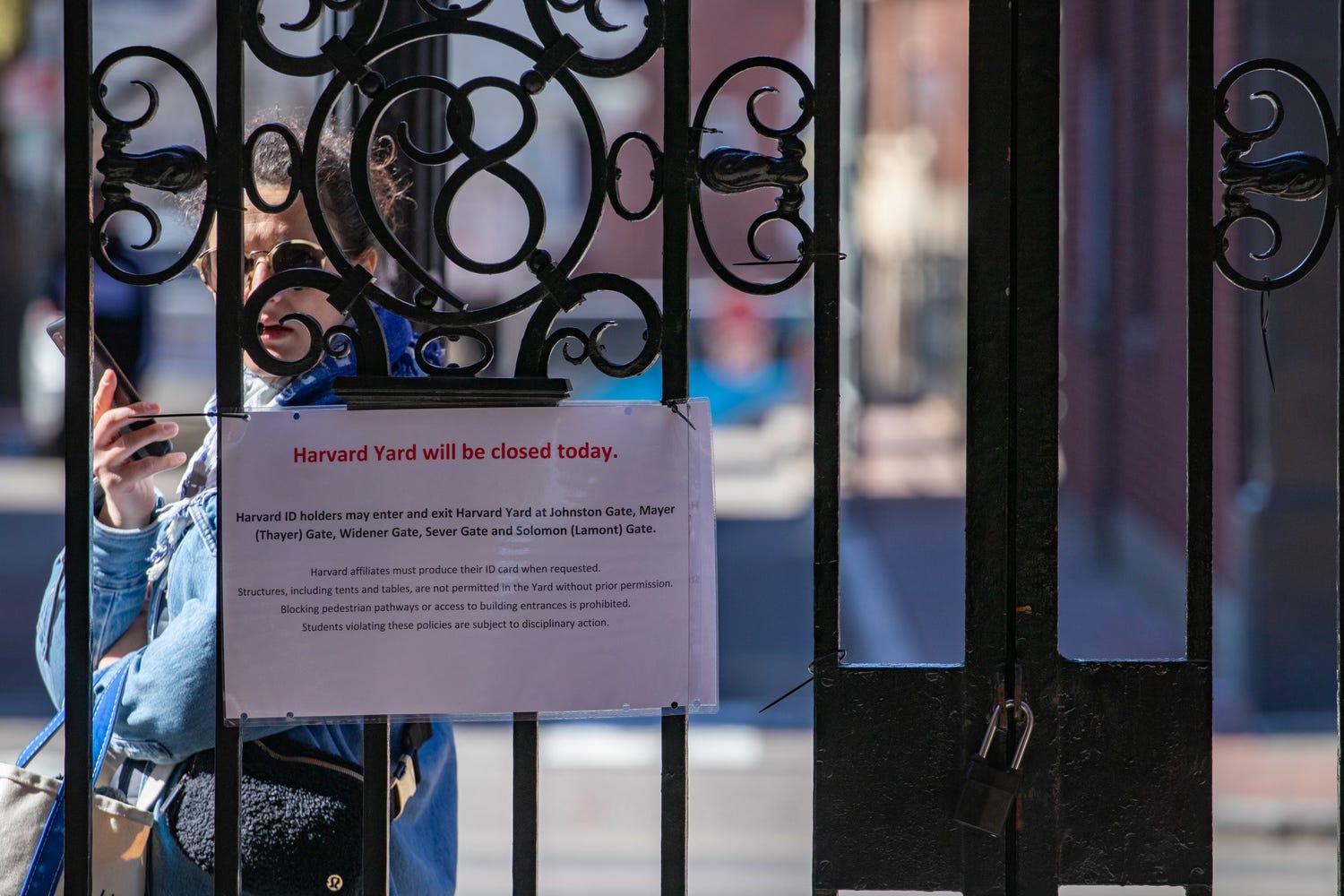
As a retired military officer and also as a longtime student and professor, I’ve come to recognize the increasing resemblance of “civilian” campuses to military academies, especially in light of recent student protests against genocide in Gaza. Controlled gates, armed guards, military-grade weaponry, even men and women in uniform, marching in formation and shouting. The message is clear: Welcome to Sparta University, land of brave warriors, but not of free thought
The famous gate to Harvard, locked for your security.
Once again, America’s imperial wars have come home to inflict their violence on us. In a saying attributed (falsely?) to Leon Trotsky, you may not be interested in war, but war is interested in you, especially if you’re a young person protesting against it. And America’s warfare state is not about to allow you to meddle in its affairs or mess with its profits.
U.S. campuses may espouse liberal Athenian values or look blissfully Arcadian, but behind the facade is billions of dollars of research money funneled to them by the Department of Defense, Homeland Security, and similar Spartan agencies. Whether students know it or not (and they’ve been getting a better idea of it lately), their campuses are already militarized, though that militarization is often carefully camouflaged.
It’s sad, of course, and detrimental to democracy. Campuses, after all, are supposed to be sanctuaries for free thought and expression, not battlegrounds where students are suppressed by warrior-cops using military tactics, even military-grade weaponry.
Campuses, especially rich ones, are often authoritarian, corporate, and increasingly instruments of empire. Just think of the Harvard “Corporation,” for example. Corporations are citizens too, as Mitt Romney reminded us, and the Harvard version is a very rich citizen indeed, as well as being quite jealous of its power and profits, earned often enough through imperial exploitation.
Students are certainly learning disturbing lessons from all this. It’s not exactly what they paid six-figure tuition bills for, but who said learning was free?
This brings me to the article that inspired these thoughts, “Repress U,” at TomDispatch yesterday. Its author, Michael Gould-Wartofsky, explains how colleges and universities are becoming adjunct agents of America’s Homeland Security Complex. He’s got a nice seven-step plan of how it’s being done, from repressing students and faculty to dominating the narrative with information warfare. Check it out. It may just make you look at that leafy green campus nearest you in a new Army olive-drab light.
Bonus Lesson: Speaking of “brave” Harvard, they released a statement yesterday saying they will no longer issue official statements on anything other than their “core” functions.
This from The Boston Globe: Harvard University said Tuesday that its leaders would no longer issue official statements about public matters that “do not directly affect the university’s core function.”
Genocide? What genocide? Not our core function to comment on that!
Protesting genocide in Gaza gets you punished as layoffs and job losses loom for teachers
Two stories landed in my email inbox this morning that tell us something about the state of education in America. The first from The Boston Globe shows how students are being punished for protesting against genocide in Gaza:
Suspended MIT and Harvard protesters barred from graduation, evicted from campus housing
Dan Zeno’s suspension from the Massachusetts Institute of Technology for participating in an encampment protesting the war in Gaza had a swift impact on his family’s life. The graduate student has not only been barred from classes, he was also evicted from campus housing, along with his wife and 5-year-old daughter, with just one week to find another place to live.
He is among the MIT students who won’t be graduating as planned or have lost income by having their fellowships canceled or have had their research projects halted.
And on Friday, Harvard University began suspending protesters. They were told they can’t sit for exams or participate in commencement or other school activities, and will be evicted from student housing.
That’s the way you handle “rebellious” students: make them homeless and perhaps even degree-less. Want to protest mass murder and famine? Prepare to be evicted and probably suspended, if not prosecuted. And this is happening in the “liberal” state of Massachusetts at “liberal-leftist” Harvard.
Schools like MIT and Harvard, having intimate connections to Israel and the military-industrial complex, as well as huge endowments, are corporations rather than schools of higher learning. And, as we learned from “Rollerball,” you are not to interfere with management decisions. Corporate boards at MIT and Harvard are pro-Israel, and so must you be, else keep your mouth shut and maybe we’ll let you graduate. Open your mouth and we’ll shut it for you.
The second story involves teacher and staff layoffs as federal subsidies related to COVID are set to expire at the end of September. A quick summary from CNN:
Schools across the country are announcing teacher and staff layoffs as districts brace for the end of a pandemic aid package that delivered the largest one-time federal investment in K-12 education. The money must be used by the end of September, creating a sharp funding cliff.
Too bad we don’t have any money after September for those teachers and staff. I guess we sent all the money to Ukraine and Israel. Priorities, people.
For a bit of inspiration, consider this student from the University of Chicago, who explains why stopping mass murder is more important than his career prospects:
He gets it right. I wonder how he’ll be punished? “Criminal trespass”? Suspension? Expulsion? Imprisonment?
Someone should compare the funding of police forces, with all their riot gear and weaponry, to the funding of teachers and staff in K-12 schools across America. I’m sure America’s politicians, if pressed to make a choice, will fund the police first and to the max. Teachers? Who needs them. Our students are learning invaluable lessons from the police, who are “teaching” them about Tasers, rubber bullets, tear gas, and other instruments of “higher” learning.
High school students shouldn’t be wearing military uniforms
I entered the Air Force through ROTC and served for 20 years, retiring as a lieutenant colonel. I also taught for 15 years at both military and civilian colleges. As a retired military officer and as an educator, perhaps I have some standing on the issue of Junior ROTC in our nation’s high schools. So, to put it bluntly:
High school students, in my opinion, are too young to decide to wear a military uniform. In short, I believe JROTC is inappropriate.
Many veterans involved in JROTC in our nation’s schools lack experience and qualifications in education.
The U.S. military is already glorified in our culture and society. Its dominance of American institutions is undeniable. That dominance should not extend into America’s high schools.
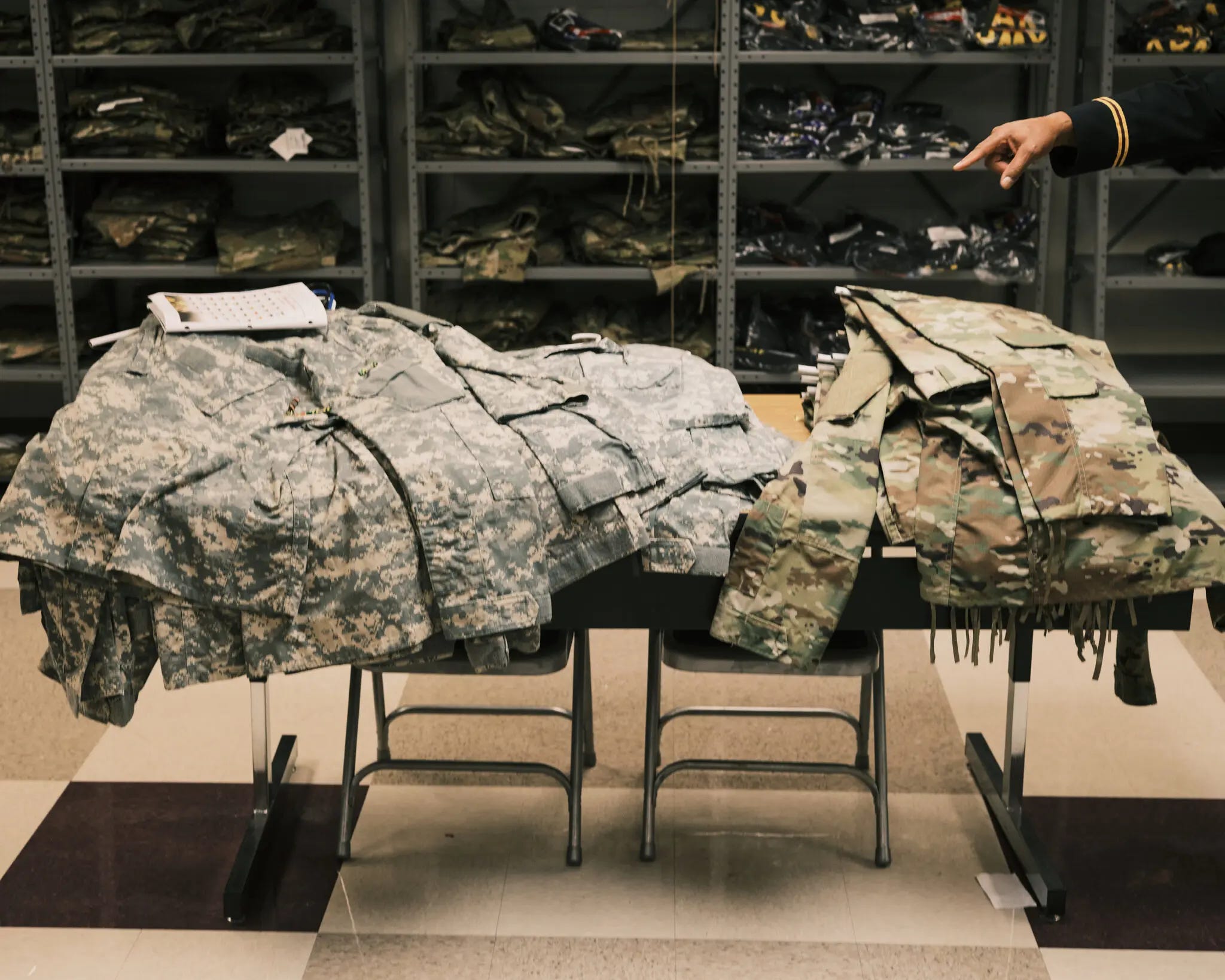
Combat uniforms wait patiently for fresh high school bodies (Zack Wittman for the NYT)
A friend with experience in JROTC alerted me to notable shifts in the program’s mission and organization, especially since the 9/11 attacks. In the past, JROTC had focused on leadership and civics while being overseen by civilian directors. In the 1990s, the director of JROTC for the Air Force was a civilian with a doctorate in education. The current director of AF JROTC is an active-duty colonel with no experience in education, though he has an MBA and a master’s in strategic studies. (His deputy is a retired colonel who similarly lacks credentials in education.)
Over the past 20 years or so, JROTC has increasingly been militarized and used as a feeder for military recruitment, despite disclaimers that it is “not an accessions program.” High schools are enticed to support JROTC with financial incentives such as subsidized (read: low-cost) instructors, veterans who often lack teaching credentials but who are willing to do grunt work at schools (monitoring lunchrooms, school exits, and the like). In return, the military gets access to young, impressionable students, the ultimate goal being recruitment of the same into the ranks.
JROTC, in sum, is now militarized. It’s more of a pipeline to military service as a “warrior” than a civics program that develops alert and knowledgeable citizens who may then decide freely to enlist as citizen-soldiers. Consider this change as yet another example of creeping fascism in America.
Put uncharitably, JROTC is preying on America’s youth.
Incredibly, students in some high schools today are being assigned automatically and involuntarily to JROTC classes, notes the New York Times. In a sense, 14- and 15-year-olds are being drafted into JROTC and trained by gung-ho veterans with virtually no experience in education.
And people say the draft died fifty years ago!
JROTC is in 3500 high schools across the nation, and, as the New York Times notes, has its highest enrollment numbers in areas where there’s “a large proportion of nonwhite students and those from low-income households.” To such students the military promises opportunity, an identity, and of course financial aid for college, enticing inducements indeed.
Again, students in JROTC don’t have to join the military upon graduation. They’re not dragooned into the ranks. But they are gradually enticed and subtly pressured into joining. The military doesn’t run JROTC programs for purely altruistic reasons.
Imagine, for a moment, the elimination of those 3500 JROTC programs. Or, better yet, a re-imagining and re-purposing of them. Why not make a true national service corps of teenagers in which military service is only one option among many? A national service corps that fosters civilian conservation, that offers options for fostering peace, that is focused on service within communal settings that is unrelated to wielding weapons while wearing battle dress uniforms. There are many ways, after all, to serve one’s community and country, ones that don’t involve military discipline and exposure to what concerned parents term “indoctrination.”
Speaking for myself, I wasn’t ready to wear a military uniform when I was 14. When I was 18 and enlisted in ROTC, I’d graduated from high school. I (sort of) knew what I was doing and the true seriousness of the choice I had made.
Military service is far too serious to be inflicted on impressionable young teenagers. Let’s give our kids time to grow and mature before we start issuing them uniforms for battle. Better yet, let’s work to create a more peaceful world where there’s far less call for militaries, period.
(For more information on JROTC, see this recent panel discussion sponsored by Massachusetts Peace Action.)
At long last, the Biden administration has taken a modest step on student debt relief. Biden announced yesterday a plan to forgive up to $10K in student debt (assuming you make less than $125K) and up to $20K if you received a Pell grant. It’s a start, right? Naturally, Republicans framed it as yet another government giveaway to the undeserving, which makes me think more highly of Biden, at least for a moment.
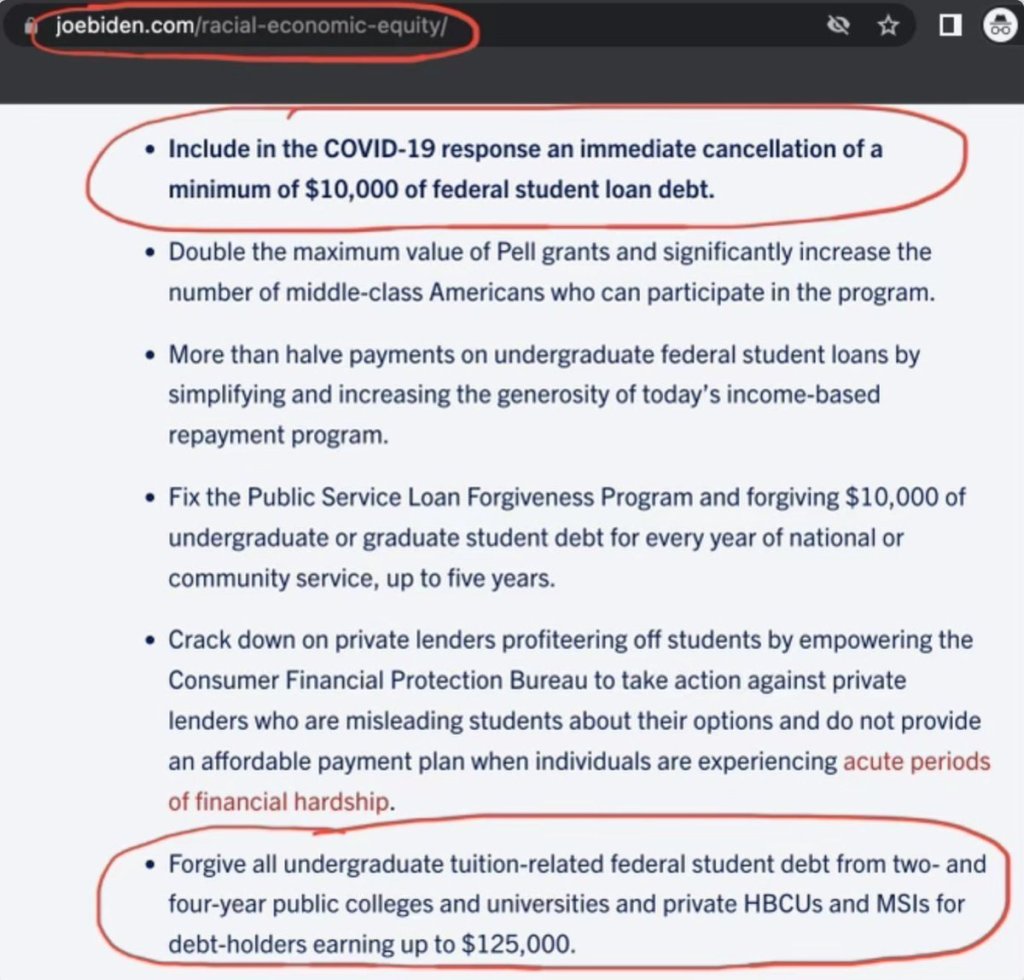
Why am I disappointed in Biden’s action? Let’s take a look at his own website and its promises on student debt relief:
So, Biden had promised “immediate cancellation” of a minimum of $10K, with no preconditions and no need to jump through paperwork hoops. That “immediate cancellation” still hasn’t come (you must still apply and wait for “relief”), and “immediate” took 18+ months, timed so as to win some positive feeling in this fall’s election cycle. So be it. Something is better than nothing, right?
But look at Biden’s second big promise. He was going to forgive all tuition-related student debt for many students, especially minority students. I’ll repeat that: all student debt. His latest announcement doesn’t come close to his own stated goal.
What people tell me is this: Too bad. The Republicans wouldn’t give students any relief whatsoever, so the Democrats deserve your vote because they gave $10K in relief. Be happy with that, shut up, and vote blue no matter who.
Color me unconvinced. Student debt in America sits at $1.7 to $1.9 trillion. Biden just canceled about $200 billion of that debt, or just over 10% of it. As I said, it’s a start, but it represents a half-measure at best when you compare it to Biden’s own stated promises and goals.
In the past, Senator Joe Biden helped to secure legislation that prevented student debt from being discharged during personal bankruptcies. So even if you go bankrupt (and the leading cause of bankruptcy in America is medical bills), you still owe all the money on your student debt. As far as I know, that hasn’t changed. Thanks for that too, Joe.
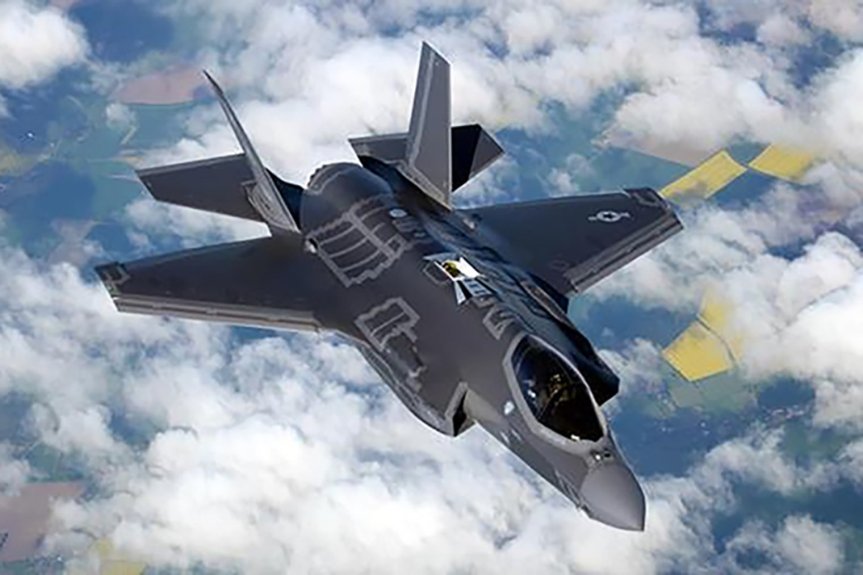
For the cost of the F-35 jet fighter over its lifetime, Joe Biden could cancel all student debt in America. Instead, he chose to nibble at the edges, canceling about 10% of it, while fully funding the F-35, new nuclear weapons, and announcing yet more military “aid” for Ukraine.
Is this really the best the Democrats can do on student debt relief? Is this the best our country can do? Say it ain’t so, Joe.
For the lifetime cost of this warplane, you could cancel all student debt in America.
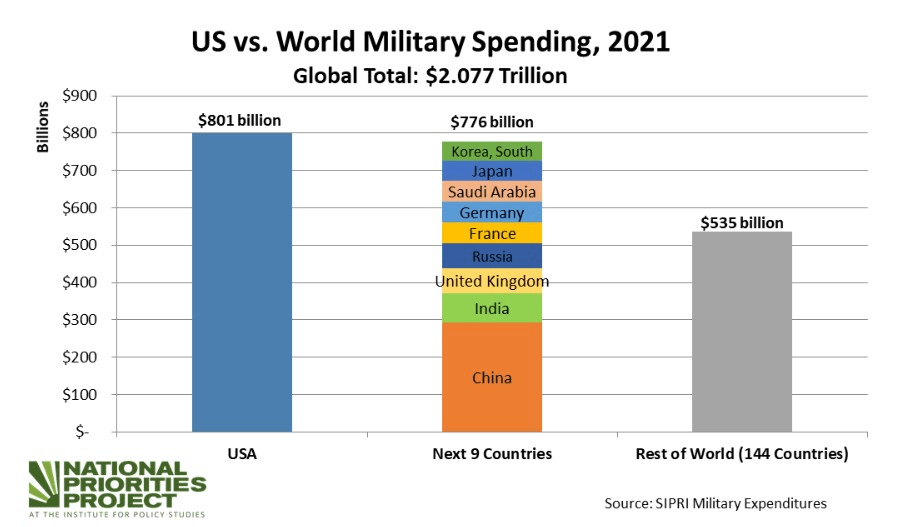
Two images of American exceptionalism to mull over today. The first shows how exceptional the U.S. is with its military spending:
Of course, U.S. military spending is projected to rise in FY 2023 to $840 billion or so. Note how most of the countries that spend significant sums on their military are U.S. allies, such as Germany, the U.K., Japan, and South Korea. Russia is weakening due to its war with Ukraine, yet U.S. military spending continues to soar because of alleged threats from Russia and China.
The second image is a spoof sent by a friend, but it wouldn’t entirely surprise me if it did become the official seal of the Department of Education:
Jesus riding a dinosaur: Why not? We have serious museums for creationists in the U.S., where dinosaurs wear saddles and Adam and Eve are depicted as cavorting with creatures dating to the Jurassic and Cretaceous eras. I’m not sure how they all fit on Noah’s ark, but the Lord does work in mysterious ways.
Given the emphasis on gun rights, babies, and Jesus in America, perhaps the bald eagle isn’t our best national symbol. Perhaps it should be the Baby Jesus holding an assault rifle. It certainly would give new meaning to “love God” and “love thy neighbor.”
American schools are soft, you say? I know what you mean. I taught college for 15 years, so I’ve dealt with my share of still-teenagers fresh out of high school. Many of them inspired me, but some had clearly earned high marks too easily and needed remedial help in math, English, or other subjects. School discipline had been too lax perhaps and standards too slack, because Johnny and Janey often couldn’t or wouldn’t read a book, though they sure could text, tweet, take selfies, and make videos.
Oh, wait a sec, that’s not what you meant by “soft,” is it? You meant soft as in “soft target” in the context of mass school shootings, the most recent being in Uvalde, Texas. Prominent Republicans like Senators Lindsey Graham and Ted Cruz have highlighted the supposed softness of American schools, their vulnerability to shooters armed with military-style assault rifles and intent on mass murder.
That “softness” diagnosis leads to a seemingly logical quick fix: “harden” the schools, of course! Make them into “targets” too intimidating to approach thanks to, among other security measures, surveillance cameras, metal detectors, bulletproof doors and windows, reinforced fences, armed guards, and even armed teachers.
Here’s the simple formula for it all: no more limpness, America, it’s time to get hard. Johnny and Janey may still find it challenging to read books or balance a checkbook (or even know what a checkbook is), but, hey, there must be an app for that, right? At least they’ll stay alive in our newly hardened schools. Or so we hope. There’s no app, after all, for reviving our kids after they’ve been shot and shredded by some assault-rifle-wielding maniac.
As a retired military officer and professor, and a former gun owner, the latest chapter in this country’s gun mania, the Republican urge to keep all those assault weapons circulating and still protect our children, strikes me not just all too strangely, but all too familiarly as well. Those voices calling for billions of dollars to “harden” schools reflect, of course, the imagery of a sexualized hyper-masculinity, but something else as well: a fetish for military-speak. In my service, the Air Force, we regularly spoke of “hardening” targets or “neutralizing” them.
In essence, politicians like Graham and Cruz seem way too eager to turn our schools into some combination of fortresses and bomb shelters, baby versions of the massive nuclear shelter I occupied in the 1980s during my first tour of duty in the Air Force (on which more in a moment). Button up and hunker down, America — not from the long-gone “red” enemy without, armed with nuclear missiles, but from the red-hot (as in murderously hateful) enemy within. These days, that increasingly means a school-age shooter or shooters armed with military-grade weaponry, usually acquired all too legally. Sound the klaxons! Lock and (especially) load! It’s time to go to DEFCON 1 (maximum military readiness, as in war) not in nuclear shelters but in America’s schools.
Speaking of my Cold War nuclear-bunker days in the 1980s, when I was stationed at Cheyenne Mountain, America’s command center for its nuclear defense in Colorado, a few things stood out then. Security guards, for one. Locking cipher doors, for another. Security ID badges. Razor wire. Video monitors. Blast doors. I was in the ultimate lockdown fortress. But tell me the truth: Is this truly what we want our schools to look like — pseudo-military bunkers for the (hot) war increasingly blazing in our society?
In fact, the whole “hardening” idea represents not a defense against, but a surrender to the notion of schools as potential sites of gun combat and mass death. To submit to such a scenario is, in the view of this retired military officer and educator, a thoroughly defeatist approach to both safety and education. It’s tantamount to admitting that violence and fear not only rule our lives but will continue to do so in ever more horrific ways and that the only solution is to go hard with even more “security” and even more guns. Hardening our schools implies hardening our hearts and minds, while we cede yet more power to security experts and police forces. And that may be precisely why so many authority figures so lustily advocate for the “hard” way. It is, in the end, the easy path to disaster.
The Hard Way as the Easy Way Out
Though six of my college-teaching years were at a military academy, where I wore a uniform and my students saluted me as class began, it never occurred to me to carry a loaded gun (even concealed). For the remaining nine years, I taught at a conservative college in rural Pennsylvania where, you may be surprised to learn, guns were then forbidden on campus. But that, of course, was in another age. Only at the tail end of my college teaching career were lockable doors installed and voluntary lockdown drills instituted.
I never ran such a drill myself.
Why not? Because I refused to inject more fear into the minds of my students. In truth, given the unimaginably violent chaos of a school shooting, you’d almost automatically know what to do: lock the door(s) to try to keep the shooter out, call 911, and duck and cover (which will sound familiar to veterans of early Cold War era schooling). If cornered and as a last resort, perhaps you’d even rush the shooter. My students, who were young adults, could have plausibly done this. Children in the third and fourth grades, as in the Uvalde slaughter, have no such option.
That mass shooting took place at a hardened school with locking doors, one that ran lockdown and evacuation drills regularly, and had fences. And yet, of course, none of that, including 911 calls from the students, prevented mass death. Not even the presence of dozens of heavily armed police inside and outside the school mattered because the commander at the scene misread the situation and refused to act. Well-trained “good guys with guns” proved remarkably useless against the bad guy with a gun because the “good guys” backed off, waited, and then waited some more, more than an hour in all, an excruciating and unconscionable delay that cost lives.
But combat can be like that. It’s chaotic. It’s confusing. People freeze or act too quickly. It’s not hard to make bad decisions under deadly pressure. At Uvalde, the police disregarded standard operating procedure that directs the immediate engagement of the shooter until he’s “neutralized.” But we shouldn’t be surprised. Fear and uncertainty cloud the judgment even of all-too-hardened professionals, which should teach us something about the limitations of the hard option.
A related hardening measure that’s been proposed repeatedly, including by former President Trump, is to arm and train teachers to confront shooters. It’s a comforting fantasy, imagining teachers as Dirty Harry-like figures, blowing away bad guys with poise and precision. Sadly, it’s just that, a fantasy. Imagine teachers with guns, caught by surprise, panicking as their students are shot before their eyes. How likely are they to respond calmly with deadly accuracy against school shooter(s) who, the odds are, will outgun them? “Friendly fire” incidents happen all too frequently even in combat featuring highly trained and experienced soldiers. Armed teachers could end up accidentally shooting one or more of their students as they tried to engage the shooter(s). How could we possibly ask teachers to bear such a burden?
Let’s also think about the kind of teacher who wants to carry a weapon in a classroom. My brother was a security policeman in the Air Force, and he understands all too well the allure of weaponry to certain types of people. As he put it to me recently, “A gun is power. To some, even the psychologically relatively stable among us, carrying a gun is indeed like having a permanent hard-on. You have the power of life and death as well. It can be a pure ego-driven power trip, sexual, every time you get to pull the trigger. You give a guy a gun and strange things can happen.”
Think of your least favorite teacher in your K-12 experience, perhaps the one who intimidated you the most. Now, think of that very teacher “hardened” with a gun in class. Sounds like a good idea, right?
Arming Lady Liberty (to the Teeth)
Arming teachers is a measure of our collective confusion and desperation, though some politicians like Donald Trump are sure to continue to press for it. Again, if I’m an armed teacher, perhaps with a concealed 9mm pistol, I’d have virtually no chance against a shooter or shooters with AR-15s and body armor. Does that mean I need an AR-15 and body armor, too? Who needs an arms race with the Russians or Chinese when we can have one in every school in America?
What, then, of hardening schools? We’re back to locking security doors, reinforced fences around campus, cameras everywhere, metal detectors at each entrance, and of course more armed police (or “school resource officers,” known as SROs) in the hallways. We’re talking about untold scores of billions of dollars spent to turn every American school into a fortress/bunker, a place to hunker down and ride out a violent weapons-of-mass-destruction storm of our own making.
And mind you, of all the things we don’t know, one thing we do: this hunkering down, this fear will be indelibly etched into the minds of our kids as they navigate our ever more hardened, over-armed schools. It won’t be healthy, that’s for sure. In seeking to reduce and eliminate school shootings in America, we should be guided by the goal of not making matters worse for our children.
As horrific as they are, headline-grabbing school shootings are rare indeed compared to the number of schools across America. Indeed, given the violence of this society and the extreme violence we routinely export to other countries across the globe, it’s surprising we don’t have more school shootings. Their relative rarity should reassure us that all is not lost. Not yet, anyway.
I get it. We all want to feel safe and, above all, we want our kids to be safe. But buying them bulletproof backpacks or hardening their schools is the wrong approach. Besides, if we spend massively on school security, what’s to stop a shooter determined to kill children from going elsewhere to find them? It’s horrifyingly grim logic, but he’d likely go to a playground, or the movies, or a dance recital, or any other “soft” place where children might gather. And what then? I for one don’t want to live in fortress America, surrounded by armed and armored police and intrusive security gadgetry “for my protection.”
Admittedly, in a country in which Republicans and Democrats can’t seem to agree on anything but the most modest gun reforms (forget banning military-style weapons or even restrictingtheir sale to people 21 and older), the hardening of schools is an easy target (so to speak). As gun enthusiasts like to say: don’t focus on the weapons, focus on the shooters.
Guns don’t kill people; people kill people, right? As best we can, we must identify those crazed enough to want to murder innocent kids and get them the help they need before they start squeezing triggers. We should deny unstable people the ability to own and wield weapons of mass destruction — that is, assault rifles (and preferably simply ban such weaponry period). We must do everything possible to reform our blood-drenched society with all its weapons-porn. One thing is guaranteed, as a “solution” to the gun problem, adding more of them and other forms of “hardness” into an already deadly mix will only worsen matters.
Quick fixes are tempting, but school-hardening measures and even more “good guys with guns” aren’t the answer. If they were, those 19 children and two adults in Uvalde might still be alive. An exercise in over-the-top security, meanwhile, is guaranteed to do one thing — and that is, of course, starve schools of the funds they need to… well, teach our kids. You know, subjects like math and science and English and history. We’re trending toward graduating a generation of young people who may have trouble reading and writing and adding but will be experts at ducking and covering behind hardened backpacks.
Going hard isn’t the answer, America. Unless the “hard” you’re talking about is the hard I grew up with, meaning high academic standards instilled by demanding and dedicated teachers. If, however, we continue to harden and militarize everything, especially our schools and the mindsets of our children, we shouldn’t be at all surprised when this country becomes a bastion bristling with weapons, one where Lady Liberty has relinquished her torch and crown for an AR-15 and a ballistic helmet from the local armory.
Did you know Vice President Kamala Harris is Chairwoman of the National Space Council? I didn’t — until a friend notified me of a feel-good video featuring Harris and a few earnest and photogenic kids on YouTube. The kids were decidedly diverse: boys and girls, black and brown and white, but they all had something in common. No, it wasn’t their enthusiasm for space — it’s that they were all paid actors.
As my wife and I watched the video, my better half turned to me and said, “stagey” and “fake.”
I had to laugh as Kamala Harris tried to wow the kids about seeing craters on the moon. My goodness — on a clear night you can see craters with the naked eye. A decent pair of binoculars (I have 10×50 Tasco binoculars) will reveal plenty of gorgeous detail. You don’t exactly have to visit the Naval Observatory to see moon craters.
Even through my relatively cheap $200 camera, I can see plenty of detail. Here’s a photo I took of the moon, a handheld shot done quickly and inexpertly:
The Moon by me. Look at the craters!
I have some experience talking to real kids about astronomy. Elementary school kids can be fun. One class I talked to wanted to know all about UFOs. Another wiseguy kid asked about Uranus, pronouncing it “your anus,” of course. I smiled, quietly corrected his pronunciation, and answered his question. We both had a laugh.
Yet apparently Kamala Harris is not to be trusted talking to real kids who might go off-script. Perish the thought of a kid who might make a joke about Uranus. The horror! It doesn’t inspire confidence that she’s only a heartbeat away from the presidency, as the saying goes.
If and when the space aliens come for me, I know what I’m saying: Take me to your leader — mine is lost in space.
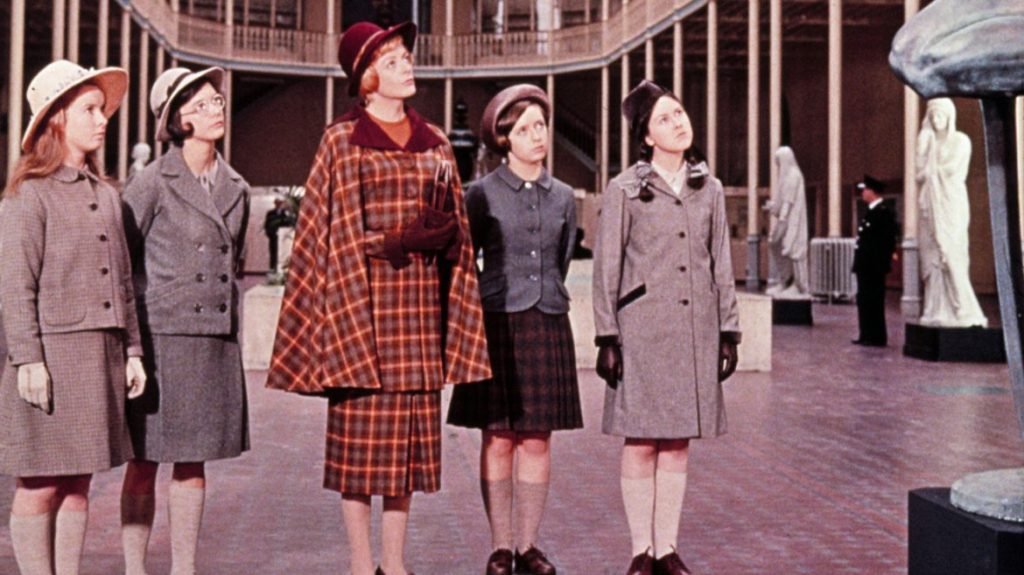
“The Prime of Miss Jean Brodie” (1969) starring Maggie Smith, who won the academy award for best actress that year, challenges, at least for a moment, pedagogical orthodoxy. In this fictitious story Jean Brodie is a teacher in a private secondary school for girls in 1932 Edinburgh. From the beginning it is obvious she is the most popular as well as the most controversial teacher in the school. The rigorously traditional head mistress regards Miss Brodie as a maverick who has consistently demonstrated that her methods over the years of her tenure are starkly incompatible with the goals and values of the school. Jean nurtures a romantic attraction to social, political, and military upheavals. In her classes she avoids talking about the political and moral ramifications of historical events, seeing them as obstacles to her view of history as drama. Showing her students projected slides of classical architectural structures and paintings to engage their capacity for aesthetic appreciation is also a major feature of Miss Brodie’s classes. Engaging her students’ emotions is more important to Jean than detailed historical facts.
In first day of class for the new semester Miss Brodie describes an imaginary scene of a former lover dying on the battlefield in World War I. She seems to delight in exposing her girls (her students are “my girls”) to the emotional realities of war by providing them with the opportunity to romanticize death. Listening to the description of the former lover’s death in battle one of her students bursts into tears. At that moment, the head mistress enters the classroom to see how the first day is going. She is perplexed by the student crying, declaring: “You shouldn’t cry during a history lesson.”
“Truth and beauty” is what Jean Brodie claims she is teaching her students. To challenge her students to appreciate the romantic qualities of even ghastly historical events seems to be a goal. But what she means by “truth” is not necessarily empirical facts. Beauty is truth, Miss Brodie adamantly believes. Even war is an aspect of “beauty” because people die heroically. It doesn’t matter what the reason or cause is as long as passionate feelings can be engaged in the presentation of the lesson.
At one point in the film Jean is called to the head mistress’s office to explain her teaching methods. The head mistress suspects—and rightly so—that Jean is not giving her students the standard information regarding the subject matter. Miss Brodie argues that the meaning of education comes from the Latin word “e-ducare” which means to lead out of. Her job, she believes, is to elicit her students’ inherent love of learning. She seeks to stimulate her students’ inherent capacity to see macro and micro events, especially of war, as an art form. A scene on the battlefield in Spain is to be admired as one appreciates a Giotto painting.
Throughout the movie Jean keeps telling her students they are the “crème de la crème.” When she asks Mary, a new student at the beginning of the semester what her interests are the student says she doesn’t have any. Miss Brodie promptly tells her she will give her interests. Later in the school year that same student goes off to fight for Franco in the Spanish Civil War after Jean had told the class that one is not fully living until one is engaged in major social and political events, events which elicit passionate responses. The student drops out of school and join’s Franco’s fascist army. She gets killed before the school year is over. (Jean has obviously omitted discussing with her students the moral purpose of the war in the first place.)
So, what can educators learn from the character of Miss Jean Brodie? Jean’s teaching style—you have to see the movie to really appreciate it–surely leaves something to be desired. But Miss Brodie’s love of teaching itself and her desire to engage her students’ emotions in the learning process is to be taken seriously. After all, her students love and respect her highly, as almost every scene in the film demonstrates. But Jean’s failure to acknowledge important facts in favor of the aesthetic and the romantic aspects of political events—Mussolini is a beautiful leader, she proclaims–is what brings her down. She is ultimately dismissed from her teaching post.
The film raises an important question in liberal arts education, both on secondary and post-secondary levels. Do teachers and professors need to engage students’ capacity to become emotional, even passionate, about the subject matter? Should the role of the educator be to provide students with interests, as Jean insists her purpose is, at the expense of factual information? Put simply, does the story of Miss Jean Brodie have something significant to offer educators despite Jean’s playing fast and loose with empirical reality?
For myself—I’ve been a professor of sociology for decades–the importance of emotive anecdotal examples throughout the teaching process when the subject matter pertains particularly to human behavior and socio-historical events can’t be overstated. The teacher of social sciences and history as artist and poet is a very plausible mixture. At any rate I felt very much inspired by the Jean Brodie character. She genuinely wanted to reach her students to inspire them to live passionately.
Yet, as the movie suggests, passions unguided by a sound moral compass may prove deadly.
Richard Sahn is a sociology professor who challenged and inspired his students to think differently in and out of the classroom for more than four decades.





 Bracing Views