Peaceful Sightseers at the Capitol!

W.J. Astore

The Fight Over the January 6th Riots

Yoda, the Jedi Master, once told Luke Skywalker that the future is difficult to see because it’s always in motion.

So too is the past. Always in motion it is. Its meaning. We can’t and don’t remember everything even as we construct narratives of meaning out of those things we can or choose to remember.

William Faulkner famously said the past isn’t dead — it’s not even past. That’s most certainly true of the now-infamous Capitol riot in the aftermath of Donald Trump’s defeat in November 2020.

America is yet again fighting for control over the past with respect to the January 6th riot in 2021. This week at Fox News, Tucker Carlson suggested the rioters were mostly peaceful respectful sightseers. They revered the Capitol! They took cheerful selfies! They even queued in neat little lines! 

Insurrectionist goons, or peaceful protesters who revere the Capitol?

Even Republicans like Mitch McConnell have gone on record to denounce Carlson’s cherrypicking of the video evidence. Here’s what McConnell had to say: “It was a mistake, in my view, for Fox News to depict this in a way that’s completely at variance with what our chief law enforcement official here at the Capitol thinks.” McConnell cited a letter by the US Capitol Police that described Carlson’s program as being “filled with offensive and misleading conclusions about the January 6th attack.”

To state the obvious: On controversial and politicized issues like this, the past doesn’t speak with one voice. Opportunists seek to polarize the past. To exploit it for their own purposes. This is true of Tucker Carlson and Donald Trump. It’s also true of many Democrats.

The January 6th riots were not an insurrection. They were not a coup. They were akin to mob violence. They most definitely were a collective temper tantrum incited by Trump that led to considerable chaos and violence. The person most responsible for them should be punished. That person, Donald Trump, walked away scot-free. 

My immediate reaction to the Capitol riots (written on January 7th) still holds true, I think:

Once again, America will likely take the wrong lessons from these riots. The Capitol police will likely call for more money, more resources, more officers, more guns, more security cameras, more barricades, etc. There are already calls for more Internet censorship. Homeland Security funding will surely get a boost. And certain people will dismiss too easily the alienation and indignation of Trump supporters.

What I mean is this: Americans are upset. Angry. Alienated. Confused. And rightly so. And until our government serves the people instead of corporate, financial, and similar lobbyists and special interests, the potential for future mobs will remain. Donald Trump is a total buffoon, a shell of a man, a narcissist with ambitions centered always on himself and his self-image. But imagine a more skilled manipulator, one less narrowly focused on himself, one with a stronger work ethic, one with boundless ambition for power. Such a person could truly lead an insurrection or coup, and yesterday’s scenes suggest such a takeover would be easier than we think.

Predictably, in the aftermath of the riots, the Capitol police did indeed get more money and resources, with House Democrats approving $1.9 billion for added security. Democrats under Joe Biden now sell themselves as the party of law and order, of expanded police forces (along with exploding Pentagon budgets and unanimous support of war-related aid to Ukraine in excess of $100 billion). They paint Republicans as dangerous, as undemocratic, even as an enemy within. Trump, most recently at CPAC, gleefully returns the favor, using similar inflammatory rhetoric.

Meanwhile, as Trump angles and preens for another presidential run, supporters of his who bought the big lie of a stolen election and protested at the Capitol on January 6th are being hounded by prosecutors. Yes, some of the rioters were violent, broke laws, and merit prosecution and punishment. But in many cases the federal pursuit and prosecution of these “deplorables” has been over-the-top, notes Chris Hedges. Their punishment has been grossly disproportionate to their crimes.

This may help the Democrats politically, but it is unhealthy for our democracy, notes Hedges:

The cheerleading, or at best indifference, by Democratic Party supporters and much of the left to these show trials will come back to haunt them. We are exacerbating the growing tribalism and political antagonisms that will increasingly express themselves through violence. We are complicit, once again, of using the courts to carry out vendettas. We are corroding democratic institutions. We are hardening the ideology and rage of the far-right. We are turning those being hounded to prison into political prisoners and martyrs. We are moving ever closer towards tyranny.

Hedges is right here. The Democrats and Republicans have been twisting, manipulating, and polarizing the past for their own purposes. Two diametrically opposed versions of the January 6th riots have been presented to the American people, and they are both self-serving and dishonest.

Clearly, Trump was the inciter-in-chief of mob violence from which he casually walked away. The Congress impeached him but otherwise refused to act. The Capitol police profited from its ineptitude even as the “deplorables,” Trump’s foot-soldiers, paid the price for his lies and tantrums. And so the past is warped and twisted, bludgeoned and misused, to serve the needs of the already powerful.

Against the Dark Side of American politics and “justice,” even Yoda might lose hope.
Junior ROTC Shouldn’t Exist

W.J. Astore

High school students shouldn’t be wearing military uniforms

I entered the Air Force through ROTC and served for 20 years, retiring as a lieutenant colonel.  I also taught for 15 years at both military and civilian colleges.  As a retired military officer and as an educator, perhaps I have some standing on the issue of Junior ROTC in our nation’s high schools. So, to put it bluntly:

  • High school students, in my opinion, are too young to decide to wear a military uniform.  In short, I believe JROTC is inappropriate.
  • Many veterans involved in JROTC in our nation’s schools lack experience and qualifications in education.
  • The U.S. military is already glorified in our culture and society.  Its dominance of American institutions is undeniable.  That dominance should not extend into America’s high schools.
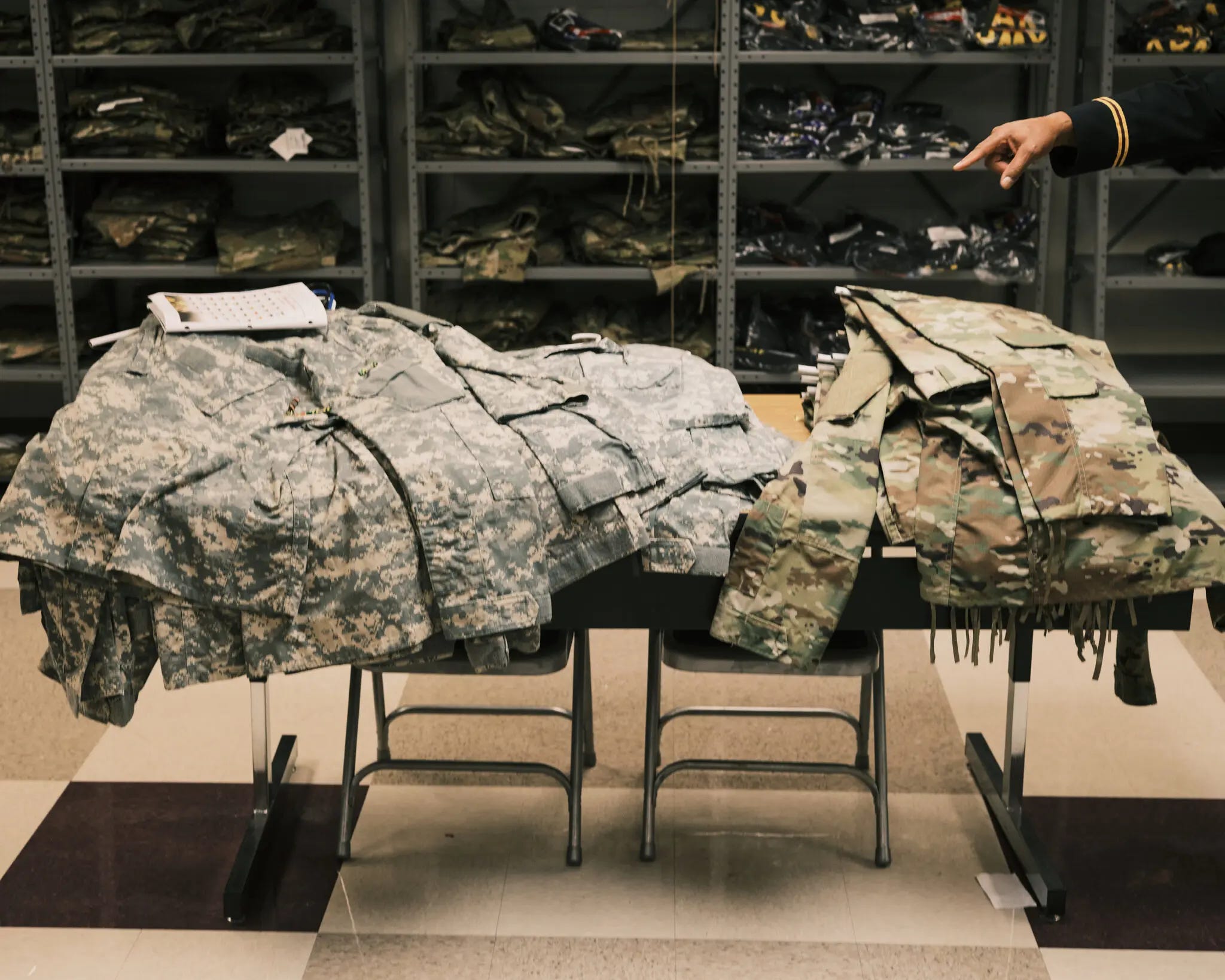
Combat uniforms wait patiently for fresh high school bodies (Zack Wittman for the NYT) 

A friend with experience in JROTC alerted me to notable shifts in the program’s mission and organization, especially since the 9/11 attacks. In the past, JROTC had focused on leadership and civics while being overseen by civilian directors. In the 1990s, the director of JROTC for the Air Force was a civilian with a doctorate in education. The current director of AF JROTC is an active-duty colonel with no experience in education, though he has an MBA and a master’s in strategic studies. (His deputy is a retired colonel who similarly lacks credentials in education.)

Over the past 20 years or so, JROTC has increasingly been militarized and used as a feeder for military recruitment, despite disclaimers that it is “not an accessions program.” High schools are enticed to support JROTC with financial incentives such as subsidized (read: low-cost) instructors, veterans who often lack teaching credentials but who are willing to do grunt work at schools (monitoring lunchrooms, school exits, and the like). In return, the military gets access to young, impressionable students, the ultimate goal being recruitment of the same into the ranks.

JROTC, in sum, is now militarized. It’s more of a pipeline to military service as a “warrior” than a civics program that develops alert and knowledgeable citizens who may then decide freely to enlist as citizen-soldiers. Consider this change as yet another example of creeping fascism in America.

Put uncharitably, JROTC is preying on America’s youth.

Incredibly, students in some high schools today are being assigned automatically and involuntarily to JROTC classes, notes the New York Times. In a sense, 14- and 15-year-olds are being drafted into JROTC and trained by gung-ho veterans with virtually no experience in education.

And people say the draft died fifty years ago!

JROTC is in 3500 high schools across the nation, and, as the New York Times notes, has its highest enrollment numbers in areas where there’s “a large proportion of nonwhite students and those from low-income households.” To such students the military promises opportunity, an identity, and of course financial aid for college, enticing inducements indeed.

Again, students in JROTC don’t have to join the military upon graduation. They’re not dragooned into the ranks. But they are gradually enticed and subtly pressured into joining. The military doesn’t run JROTC programs for purely altruistic reasons.

Imagine, for a moment, the elimination of those 3500 JROTC programs. Or, better yet, a re-imagining and re-purposing of them. Why not make a true national service corps of teenagers in which military service is only one option among many? A national service corps that fosters civilian conservation, that offers options for fostering peace, that is focused on service within communal settings that is unrelated to wielding weapons while wearing battle dress uniforms. There are many ways, after all, to serve one’s community and country, ones that don’t involve military discipline and exposure to what concerned parents term “indoctrination.” 

Speaking for myself, I wasn’t ready to wear a military uniform when I was 14. When I was 18 and enlisted in ROTC, I’d graduated from high school. I (sort of) knew what I was doing and the true seriousness of the choice I had made.

Military service is far too serious to be inflicted on impressionable young teenagers. Let’s give our kids time to grow and mature before we start issuing them uniforms for battle. Better yet, let’s work to create a more peaceful world where there’s far less call for militaries, period.

(For more information on JROTC, see this recent panel discussion sponsored by Massachusetts Peace Action.)

Daniel Ellsberg and the Madness of Nuclear Weapons

W.J. Astore

Honoring the wisdom of an anti-war hero

I woke this morning to the sad news that Daniel Ellsberg has pancreatic cancer and has been given only a few months to live. Ellsberg has lived a long and heroic life; he famously leaked the Pentagon papers, risking lifelong imprisonment to put a stop to America’s calamitous and atrocious war against Vietnam.

Five years ago, I read Ellsberg’s book on his years as a nuclear war theorist for the U.S. government. I was so impressed (and so alarmed) that I immediately wrote my own review of it, which I’m reposting today in Ellsberg’s honor.

Ellsberg is one of the giants of recent American history. He has lived a life of great value. Perhaps the best way to honor him is to read him, listen to him, and act to put a stop to our collective nuclear madness.

The Doomsday Machine: The Madness of America’s Nuclear Weapons

41zhRYUMyYL

(Originally posted 12/28/17)

I just finished Daniel Ellsberg’s new book, The Doomsday Machine: Confessions of a Nuclear War Planner.  Talk about hair-raising!  Ellsberg, of course, is famous for leaking the Pentagon papers, which helped to end the Vietnam war and the presidency of Richard Nixon as well.  But before Ellsberg worked as a senior adviser on the Vietnam war, he helped to formulate U.S. nuclear policy in the late 1950s and early 1960s.  His book is a shattering portrayal of the genocidal nature of U.S. nuclear planning during the Cold War — and that threat of worldwide genocide (or omnicide, a word Ellsberg uses to describe the death of nearly everything from a nuclear exchange that would generate disastrous cooling due to nuclear winter) persists to this day.

Rather than writing a traditional book review, I want to list some memorable facts and lessons I took from the book, lessons that should lead us to question the very sanity of America’s leaders.  To wit:

  1. U.S. nuclear war plans circa 1960 envisioned a simultaneous attack on the USSR and China that would generate 600 million deaths after six months.  As Ellsberg notes, that is 100 Holocausts.  This plan was to be used even if China hadn’t directly attacked the U.S., i.e. the USSR and China were lumped together as communist bad guys who had to be eliminated together in a general nuclear war.  Only one U.S. general present at the briefing objected to this idea: David M. Shoup, a Marine general and Medal of Honor winner, who also later objected to the Vietnam War.
  2. The U.S. military consistently overestimated the Soviet nuclear threat, envisioning missile and bomber gaps that didn’t exist.  In the nuclear arms race, the U.S. was often racing itself in the fielding of more and more nuclear weapons.
  3. General Curtis LeMay, the famous commander of Strategic Air Command (SAC) and later AF Chief of Staff, said that once war started, politicians like the president had no role to play in decision-making.
  4. When the atomic bomb was first tested in 1945, there were fears among the scientists involved that the atmosphere could be ignited, ending all life on earth.  The chance was considered remote (perhaps 3 in a million), so the scientists pressed ahead.
  5. The Cuban Missile Crisis of 1962 came much closer to nuclear war than most people recognize.  Soviet submarines in the area, attacked by mock U.S. depth charges, were prepared to launch nuclear torpedoes against U.S. ships.  Fidel Castro’s air defenses were also preparing to shoot down American planes, which may have ended in U.S. air attacks and an invasion in which Soviet troops on Cuba may have used nuclear weapons to defend themselves.
  6. The U.S. military was (and probably still is) extremely reluctant to reveal nuclear secrets to senior American civilian leaders, including even the President himself.  Ellsberg, possessing the highest security clearances and acting with presidential authority, had to pry answers from military officers who refused to provide detailed and complete information.
  7. The U.S. has always refused, and continues to refuse, to pledge to a “no first use” policy for nuclear weapons.
  8. The U.S. remains the only country to have used nuclear weapons (Hiroshima and Nagasaki).  Yet, as Ellsberg notes, the U.S. uses nuclear weapons all the time — by threatening their use, as President Eisenhower did during the Korean War, as President Nixon did during the Vietnam War, and as President Trump is doing today, promising “fire and fury” against North Korea.  The U.S. uses nuclear weapons like a loaded gun — holding it to an enemy’s head and threatening to pull the trigger, Ellsberg notes.  In short, there’s nothing exceptional about Trump and his nuclear threats.  All U.S. presidents have refused to take nuclear attacks “off the table” of options for U.S. action.
  9. Interservice rivalry has always been a driver of U.S. nuclear force structure and strategy.  The Navy (with its nuclear submarine programs, Polaris followed by Trident) and especially the Air Force (with its ICBMs and bombers) jealously guard their nuclear forces and the prestige/power/budgetary authority they convey.
  10. President Eisenhower’s emphasis on massive retaliation (as represented by SAC and its war plan, the SIOP) was a way for him to limit the power of the military-industrial complex (MIC).  But once Ike was gone, so too was the idea of using the nuclear deterrent as a way of restricting U.S. expenditures on conventional weaponry and U.S. adventurism in foreign wars, e.g. Vietnam.  (It should be said that Ike’s exercise at limiting the MIC in America held the world as a nuclear hostage.)
  11. Ellsberg shows convincingly that control over U.S. nuclear weapons was decentralized and delegated to much lower levels than most Americans know.  It’s not the case that only the president can launch a nuclear war.  Especially in the late 1950s and early 1960s, Ellsberg shows how it was possible that field-grade officers (majors and colonels) could have made decisions in the heat of battle to release nuclear weapons without direct orders from the president.
  12. Most Americans, Ellsberg notes, still don’t understand the huge quantitative and qualitative differences between atomic bombs and hydrogen (thermonuclear) weapons.  Hydrogen bombs are measured in megatons in equivalent TNT yield; atomic bombs are in kilotons.  In short, hydrogen bombs are a thousand times more destructive than atomic ones.  And this is just their explosive yield.  Radioactive fallout and massive fires are even bigger threats to life on earth.
  13. Most Americans still don’t understand that even a smallish nuclear exchange involving a few dozen hydrogen bombs could very well lead to nuclear winter and the deaths of billions of people on the earth (due to the widespread death of crops and resulting famine and disease).
  14. Despite the genocidal threat of nuclear weapons, the U.S. is persisting in plans to modernize its arsenal over the next 30 years at a cost of $1 trillion.

Ellsberg sees this all as a form of collective madness, and it’s hard to disagree.  He quotes Nietzsche to the effect that madness in individuals is rare, but that it’s common among bureaucracies and nations.  The tremendous overkill inherent to U.S. nuclear weapons — its threat of worldwide destruction — is truly a form of madness.  For how do you protect a nation or uphold its ideals by launching a nuclear war that would kill nearly everyone on earth?  How does that make any sense?  How is that not mad?

Ellsberg ends his “confessions” with many sane proposals for downsizing nuclear arsenals across the world.  But is anyone in power listening?  Certainly not U.S. presidents like Trump or Obama, who both signed on to that trillion dollar modernization program for U.S. nuclear weapons.

Ellsberg shows us there have been many chair-bound paper-pushers in the U.S. government who’ve drawn up plans to murder hundreds of millions of people — to unleash doomsday — all in the name of protecting America.  He also shows how close they’ve come to doing just that, especially during the Cuban Missile Crisis, but during other crises as well.

Nuclear brinksmanship, threats of nuclear war, and similar uses of nuclear weapons to intimidate hold the potential for catastrophe.  Miscalculations, mishaps, mistakes, are more than possible in an atmosphere of mistrust, when words and actions can be misinterpreted.

Ellsberg’s recommendations for changes point the way to a better world, a world where the threat of nuclear doomsday could be much reduced, perhaps eliminated completely.  The question remains: Is anyone in power listening?

The Military-Industrial Complex and American Fascism

W.J. Astore

Since Ike’s warning more than 60 years ago, the MIC has only grown stronger and more anti-democratic

President Dwight D. Eisenhower (Ike) had it right.  The military-industrial complex (MIC) is fundamentally anti-democratic.  The national security state has become the fourth branch of government and arguably the most powerful one.  It gets the most money, more than half of the federal discretionary budget, even as the military remains America’s most trusted institution, despite a woeful record in wars since 1945.

A colleague, Christian Sorensen, says that when we look closely at the MIC we see something akin to American fascism. As he put it to me: “Our fascism certainly doesn’t look like past European movements, but it is far more durable, has killed millions and millions (SE Asia, Indonesia, Central America, Middle East), and has manifold expressions: wars abroad, wars at home, surveillance state, digital border, militarized law enforcement, economic warfare in the form of sanctions, militarization of space.”

It’s hard not to agree with him, not in the sense of Hitler’s Germany or Mussolini’s Italy but in the sense of concentrated government/corporate power that draws sustenance from nationalism at home and imperialism abroad. It’s true that America doesn’t have goose-stepping soldiers in the street. There are no big military parades (though Donald Trump once wanted one). It still seems like we have contending political parties. But when we look deeper, a militant nationalism and aggressive imperialism powered by corporations and enforced by government, including notably the Supreme Court, is the salient feature of this American moment.

Consider the classic symbol of the fasces, from which the word fascism is drawn. It’s a bundle of rods bound tightly together — the idea being that while one rod may be bent or broken, a bundle of them becomes far more resistant to bending or breaking.  For me, this image conjures the MICIMATT.  Bundle the military with industry, add Congress, roughly 17 intelligence agencies, the media, academe, and various think tanks, then bind them with nearly a trillion dollars and enormous political and cultural authority and you create a structure that is far stronger, insidiously so, than the sum of its individual parts.

Fasces, or rods bundled and bound together, sometimes with an axe head. A decent symbol for the MICIMATT

This is exactly what the MICIMATT constitutes: an imperial bundling and binding of powerful interests that possesses and commands enormous resources, including most importantly mental and emotional ones, like appeals to patriotism and the flag. Consider the mainstream media (MSM), which nowadays is pro-war, pro-military, and therefore highly critical of anti-war protests. Indeed, the MSM today in the U.S. employs retired generals, admirals, and ex-CIA and ex-FBI officials to support the establishment and attack and dismiss critics of the same as naive (at best) or as dupes or puppets of various enemies (most often of Russia).

Consider, for example, the smear in 2020 of Democratic Congresswoman Tulsi Gabbard, a veteran of the Iraq War who continues to serve in the Army National Guard. NBC News, together with prominent establishment figures like Hillary Clinton, portrayed Gabbard as a potential Russian asset and the favorite candidate of the Kremlin. Gabbard’s “crime” was her criticism of disastrous regime-change wars (such as Iraq) that Clinton had enthusiastically supported, along with Gabbard’s statements that echoed Ike in their criticism of the MIC.

Influential critics of war and the MIC are neutralized. For its prescient criticism of the Iraq War, Phil Donahue’s show was cancelled. Reporter Ashleigh Banfield, who critiqued Iraq War coverage, was demoted. Former Governor Jesse Ventura was hired to a lucrative three-year contract, then put on ice when MSNBC discovered he was against the Iraq War. Worse is the punishment allotted to those who truly embarrass the MIC, such as Chelsea Manning and Daniel Hale. Both were imprisoned for showing the American people the ugly face of the MIC’s wars. Worst of all is the persecution of Julian Assange, an Australian citizen who the U.S. government is seeking to prosecute and jail under laws passed during World War I to deter internal dissent within America. Edward Snowden, meanwhile, remains exiled in Russia, perhaps permanently, since to allow him to return might inspire other patriotic whistleblowers to come forward—and we can’t have that in the land of the free. 

But I can write my blog so I’m free, right? The MIC is not worried by my critique. If it can survive and flourish despite Ike’s warning, it can certainly ignore me.  We the people have no real power unless we too can combine. Sadly, a weakness of antiwar forces in America is internal disagreements and bickering, as witnessed recently before the Rage Against the War Machine Rally in DC. The MIC, in contrast, is tightly bound by greed and power.

Bending or breaking the MICIMATT seems well-nigh impossible. It could be weakened by making substantial cuts to its budget, but Congress insists on feeding it more money, not less, despite enormous waste and five failed audits in a row for the Pentagon.

If bending and breaking it is impossible, can we light it on fire? To do that would require a powerful incendiary movement, a concentrated blast as if from a flamethrower, yet the MICIMATT is wrapped in a fire-resistant coating of patriotic cant, so even incendiary ideas and actions have their limits.

Returning to Ike, I continue to find it painfully ironic (and tragic) that his warning about the MIC has been buried even at the Eisenhower Memorial in Washington, D.C. Not only buried: Ike’s warning has been downgraded to a caution and interpreted by a narrator sponsored by Boeing, a leading merchant of death in the MIC.

So, despite an article I wrote ten years ago, critiquing the idea of American fascism, I find myself coming to accept it, especially as Democrats try to outdo Republicans in embracing war, militarism, and weapons sales as the health of the state. With so-called progressives voting for massive war budgets, where is the hope and change?

I know progressives make noises about cutting the war budget, thus Barbara Lee and Mark Pocan are yet again sponsoring legislation to cut that budget by $100 billion. It’s pretty much a scam, notes David Swanson. They are allowed to do this because the MIC knows their initiative stands no hope of passing. Meanwhile, Republicans like Matt Gaetz have their own effort to cut Ukraine war funding, an effort also doomed to fail. What America truly needs is a bipartisan effort against the war machine, but instead it’s the MIC that continues to enjoy strong bipartisan support. The MIC is bound together (thus its strength); its opponents are both too disputatious and too few.

Which brings me to a sentiment attributed to Sinclair Lewis (though he didn’t use these exact words): If fascism comes to America, it will be wrapped in the flag and carrying a cross. Certainly, the MIC is wrapped in the flag. Remarkable too is how U.S. militarism is embraced as a form of muscular Christianity, a sign of America’s righteousness, with might making right. Across Christianity in America today, one hears remarkably little criticism of war, killing, and genocidal nuclear weapons. The vision of Christ as a peacemaker was long ago replaced by “Peacekeeper” nuclear missiles. Meanwhile, new nuclear ICBMs, bombers, and submarines are under construction today, increasing the chances of apocalyptic war (while guaranteeing large profits for the MIC).

Again, Ike warned us that the MIC is fundamentally anti-democratic. And, whatever else it is, the MIC is certainly not communist or leftist. Is it America’s version of fascism? That conclusion may seem shrilly alarmist, but that is arguably what we need: a shrill alarm to awaken us from our slumber.