Telling War Stories

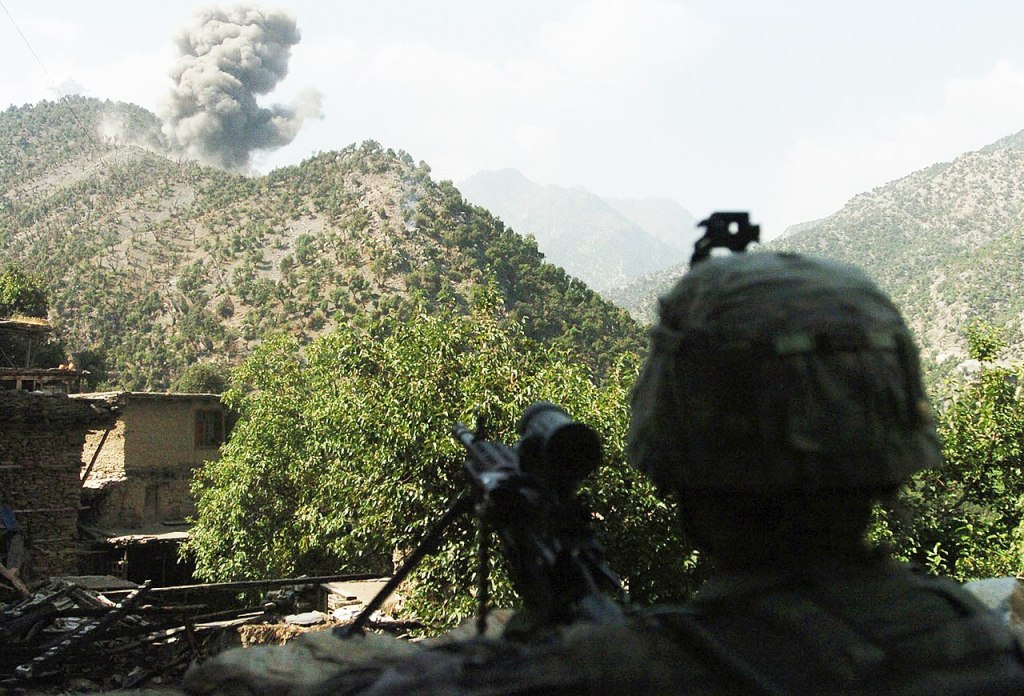
There I wasn’t: The Korengal Valley, Afghanistan, August 2009 (Wikipedia)

W.J. Astore

Combat myths matter to more than just military members. So do their ramifications.

I don’t have any personal war stories to tell.  In my twenty years in the U.S. Air Force, I never saw combat.  I started as a developmental engineer, working mainly on computer software, and morphed into a historian of science and technology who taught for six years at the USAF Academy.  I worked on software projects that helped pilots plan their missions and helped the world to keep track of objects in Earth orbit.  I taught military cadets who did see combat and served as the dean of students at the Defense Language Institute at the Presidio of Monterey, where I saw plenty of young troops cross the graduation stage with language skills in Arabic and Pashto and other languages as they prepared to deploy to Iraq, Afghanistan, and elsewhere.  But no combat for me.

I got lucky.  As one friend, an Army colonel, told me: any day you’re not being shot at is a good day in the Army.  The result, however, is that I can’t tell exciting war stories that begin: “There I was” in Baghdad, or Kandahar, or Fallujah, or the Korengal Valley.

But I was involved in computer simulations (“war games”) at Cheyenne Mountain in Colorado near the end of the Cold War.  The one I remember most vividly ended with a Soviet nuclear missile strike on the United States.  As I watched the (simulated) missile tracks emerge from Soviet territory, cross the Arctic circle, and terminate in American cities, I had a momentary glimpse of nuclear terror.  What if I ‘d just witnessed the death of millions of Americans on a monochrome computer screen?  That’s a “war story” that’s stayed with me, and so I’m a firm supporter of eliminating all nuclear weapons everywhere.

That’s my “there I sorta was” story.  Yet, whether you’ve served in the military or not, all Americans tell themselves war stories, or rather stories about America’s wars.  The basic story most tell themselves goes something like this:

America is a good and decent country, our troops are heroes, that we wage wars reluctantly and for noble causes, and that our wars are almost exclusively defensive or preventive.  We tell ourselves we don’t want to be bombing and killing in Afghanistan and Iraq and Somalia and Yemen and elsewhere, but we have to be.  Bad people are doing bad things, and we need to fight them over there else we’ll have to fight them right here.

Yet what if the stories we tell ourselves are all wrong?  What if we are the bad people, or at least the ones doing much of the bad things?  And, even if those stories aren’t always wrong and we aren’t always bad, what are the costs of permanent war – all those “bad things” associated with war – to our democracy, what’s left of it, that is? 

A book I return to is Every Man in this Village is a Liar: An Education in War, by Megan Stack.  Stack was a war correspondent who witnessed the effects of war in places like Iraq and Afghanistan.  She focuses not on strategy or tactics or weaponry or combat but on the impact of war on people.  And in her chapter on “Terrorism and Other Stories,” she reaches this powerful conclusion:

It matters, what you do at war.  It matters more than you ever want to know.  Because countries, like people, have collective consciences and memories and souls, and the violence we deliver in the name of our nation is pooled like sickly tar at the bottom of who we are.  The soldiers who don’t die for us come home again.  They bring with them the killers they became on our national behalf… 

We may wish it were not so, but action amounts to identity.  We become what we do.  You can tell yourself all the stories you want, but you can’t leave your actions over there … All of that poison seeps back into our soil.

Nothing has changed since Stack’s book was published a decade ago.  U.S. forces remain in Iraq and Afghanistan, still fighting that word, terrorism, even as there’s renewed talk within the Pentagon of a new cold war against Russia and China.  A reboot of that Cold War I thought I’d witnessed the end of thirty years ago.  (I even got a certificate signed by President George H.W. Bush thanking me for helping to win that war.) Could it be that real enemy doesn’t reside in Moscow or Beijing, but in us?  As Stack continued:

And it makes us lie to ourselves, precisely because we want to believe that we are good … we Americans tell ourselves that we are fighting tyranny and toppling dictators.  And we say this word, terrorism, because it has become the best excuse of all.  We push into other lands, we chase the ghosts of a concept, because it is too hard to admit that evil is already in our own hearts and blood is on our hands.

As Americans we need to stop telling ourselves self-serving war stories and start telling much tougher ones about working for peace.  We need to stop telling (and selling) stories about a new cold war and stop “investing” a trillion dollars in new nuclear bombers, missiles, and submarines.  I’ve seen those simulated nuclear missile tracks crossing the pole and ending in American cities; that was scary enough. The real thing would be unimaginably terrifying and would likely end life on our planet.

What mad story can we possibly tell ourselves to justify the continued building of more ecocidal and genocidal weapons?

We humans are great storytellers but we’re not smart ones.  Perhaps it’s the power of our stories that has led us to be the dominant and most destructive species on this planet.  The problem is that we still tell far too many war stories and value them far too highly.  Peace, meanwhile, if mentioned at all, is dismissed as fantasy, a tale to be told to children alongside stories of unicorns and fairies—which, to the first generation of voting age adults never to have known it, it sort of is.

Unless we smarten up and grow as a species, our collective war stories will likely be the death of us.

William Astore, a retired lieutenant colonel (USAF) and history professor, is a senior fellow at the Eisenhower Media Network (EMN), an organization of critical veteran military and national security professionals.

The Storming of the Capitol!

Let freedom ring!

W.J. Astore

It wasn’t exactly the storming of the Bastille or the sack of Rome, but yesterday’s scenes from the Capitol were disturbing enough to the self-avowed “most exceptional nation.”

If only the mob of protesters had shouted “We want affordable health care for all!” or “Racial equality!” or “Peace now!” or “Money for the poor!” instead of “USA! USA!” and “Trump! Trump!” as they marched through the Capitol on Wednesday.

But I suppose protesters who shout for health care, racial equity, and peace get clubbed and gassed, whereas Trump supporters by comparison get handled with kid gloves.

Trump, the law and order man, has always been unlawful, a man of disorder. As I wrote early in 2016, Trump disqualified himself from the presidency with his empty and dictatorial boasting. That he would incite a mob to gather at the Capitol to contest the election result was hardly surprising. What is surprising is how the Trump mob so easily breached the Capitol’s defenses, such as they were. In at least one case, it appears the police removed a barricade and let the pro-Trumpers in. Someone should be fired for this national humiliation.

It’s a small miracle that only one person was killed, an Air Force veteran who was reportedly shot in the neck as she tried to break into an inner chamber room. An avid Trump supporter who’d traveled from California, she’d be alive today if not for Trump’s selfish and reckless call for a protest at the Capitol.

Of course, predictable calls for Trump’s impeachment are coming from Squad members like AOC and Rashida Tlaib. Really. In two weeks, Trump leaves office. And you want to squander energy and time in yet another unsuccessful attempt to impeach him. At the same time, you won’t even fight for a vote on Medicare for all.

Once again, America will likely take the wrong lessons from these riots. The Capitol police will likely call for more money, more resources, more officers, more guns, more security cameras, more barricades, etc. There are already calls for more Internet censorship. Homeland Security funding will surely get a boost. And certain people will dismiss too easily the alienation and indignation of Trump supporters.

What I mean is this: Americans are upset. Angry. Alienated. Confused. And rightly so. And until our government serves the people instead of corporate, financial, and similar lobbyists and special interests, the potential for future mobs will remain. Donald Trump is a total buffoon, a shell of a man, a narcissist with ambitions centered always on himself and his self-image. But imagine a more skilled manipulator, one less narrowly focused on himself, one with a stronger work ethic, one with boundless ambition for power. Such a person could truly lead an insurrection or coup, and yesterday’s scenes suggest such a takeover would be easier than we think.

The answer is not more guns, more security, more police, nor is it impeachment. The answer is a government accountable to the people and for the people. If we don’t want our government to perish from this earth, it needs to be of the people, by the people, for the people. But it’s not, and until it is, a repeat of yesterday’s scenes, but on a much larger and more violent scale, will remain a possibility.

Who wouldn’t want a “Speaker of the House” podium?

Democrats Win in Georgia — Now What?

Photo by Thomas Cizauskas

W.J. Astore

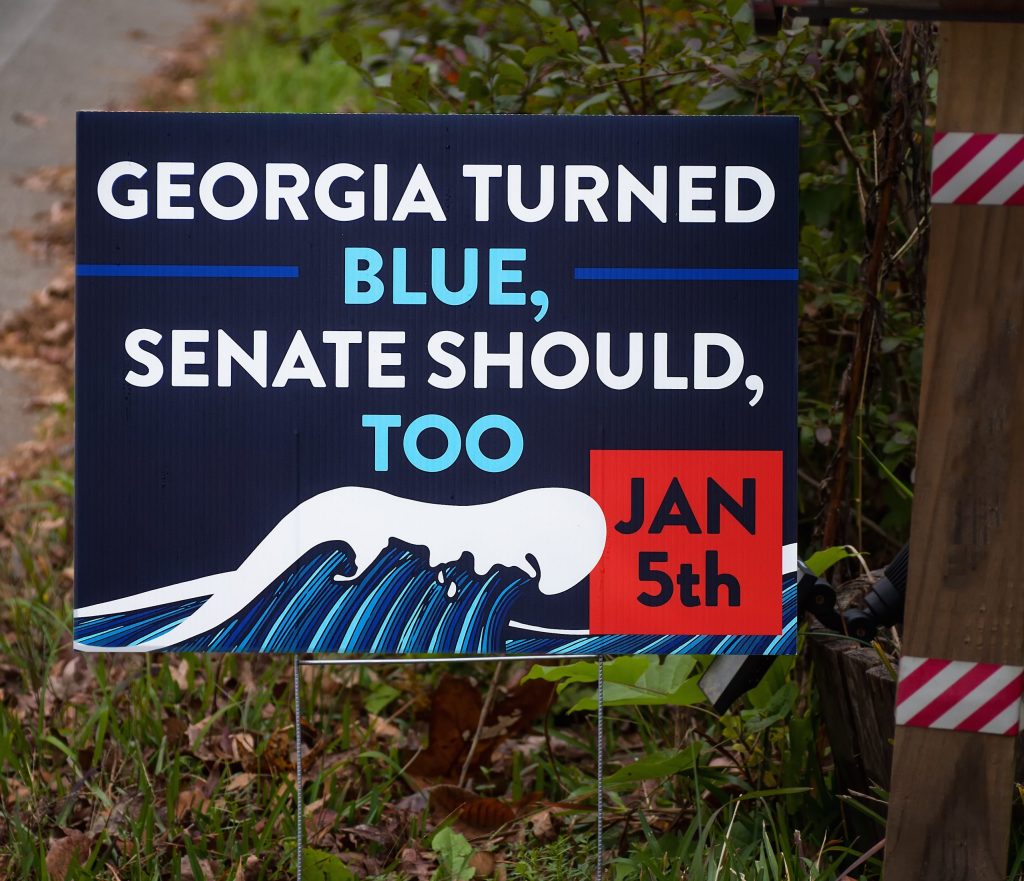
The Democrats have carried both Senate seats in Georgia, meaning the Senate is now effectively tied at 50-50, eliminating Mitch McConnell as Senate majority leader and leaving it to Vice President-elect Kamala Harris to be the Senate’s tiebreaking vote.

The question is: What will Democrats do with this (very weak) majority? Or, as Greg Laxer put it here, “BUT…do the Dems have sufficient internal discipline to pass any legislation remotely progressive or to seat a SCOTUS nominee deemed controversial?” Good question.

Of course, it’s not just about “internal discipline.” Joe Biden, a mealy-mouthed corporatist, is on the record as saying that nothing will fundamentally change under his administration. I don’t see him or Nancy Pelosi or Chuck Schumer pushing for a progressive agenda. These “leaders” are DINOs, Democrats in name only, and it will be interesting to see if Biden & Co. even come through on their promise to elevate relief checks from $600 to $2000.

I’m glad Democrats won in Georgia, but not because I expect great things and transformative change from them now. Just look at what Obama/Biden produced in 2009 with a “supermajority” in Congress: a bailout for banks and corporations and Romneycare without a public option, later rebranded as Obamacare. Obama/Biden also saw the failed Afghan surge, the Libyan disaster, and a major escalation in drone strikes, among other warmongering acts.

So, why am I glad about Georgia? Because now Biden and Pelosi and Co. can’t blame Mitch McConnell for blocking all their “noble” efforts in the Senate. Now we’ll really see the priorities of Biden/Pelosi laid bare. And they both have very long and strong records of serving elite interests at the expense of regular people.

It’s good to see awful Republican candidates lose in Georgia; even better to see Mitch McConnell removed from his position of power and obstruction. Now what, Democrats? Care to help the poor while ending war? Or will you continue to serve the rich while making war?

These next two years will be interesting indeed. If Democrats don’t go big, they will go home, as in losing both houses of Congress in 2022. If past performance is indicative of future gains and losses, I’m not bullish on Biden/Pelosi producing big gains for Main Street USA. But I’d be happy to be proven wrong.

Early Returns on 2021

No bread? Let them eat ice cream!

W.J. Astore

So far, 2021 is looking much like 2020. Nancy Pelosi is once again Speaker of the House, with progressive leaders like AOC extracting no meaningful concessions for their votes. Jimmy Dore had suggested progressives could use their leverage over Pelosi to force a vote in the House on Medicare for All, but of course the progressives caved and cravenly supported Pelosi, who like Joe Biden is against Medicare for All.

America, you will never get a single-payer, publicly-funded, health care system. If you can’t even get a vote on one during a pandemic that will soon kill 400,000 Americans, you will never get a vote. America’s health care system is a wealth-extraction system that profits off the sick and dying. That system simply will not change because politicians like Pelosi and Biden are bought and paid for. Short of a revolution or a truly progressive third party, Americans will continue to suffer bankruptcy and death due to our for-profit wealth-care system that puts profit before patients.

Trump, meanwhile, is conspiring along with a dozen or so sycophantic senators to contest the election he lost. Trump, who has the virtue of saying the quiet part out loud, pressured the Georgia secretary of state to “find” about 12,000 votes for him so that he could be declared the winner. This circus is the lead story in U.S. media today, as if Trump has finally put his foot in it. But he’ll soon pardon himself, I’d wager, and even if he doesn’t the incoming Biden administration won’t do anything to prosecute him on any charge.

In other news, Americans will have to be satisfied with means-tested $600 checks (don’t spend that all in one place), instead of the $2000 checks that Trump advocated for. Interesting, that princess of virtue, Nancy Pelosi, was perfectly satisfied with $600 checks until Trump demanded $2000. Only then did Pelosi mount a weak effort for the higher figure, which was quickly killed by Scrooge himself, Mitch McConnell. Suck on that, America.

Speaking of Trump failures and revealing moments in Congress, Trump’s veto of the NDAA (the Pentagon budget) was easily overturned, as America’s representatives professed their bipartisan support of “our” troops. I’ll believe in that “support” when Congress finally acts to end America’s disastrous wars overseas. Perhaps on the twelfth of never?

Finally, it was good to hear that Julian Assange will not be extradited to the U.S., though the judge’s ruling in the UK was made on the narrow grounds that the U.S. prison system is so oppressive that Assange would likely commit suicide here, given his current mental state. Of course, the U.S. government doesn’t care that much about prosecuting and imprisoning Assange. Assange, like Chelsea Manning, Reality Winner, and other whistleblowers, has been made an example of. This is all about intimidation of journalists and other potential whistleblowers, and it’s working.

Readers, what’s caught your eye in the opening week of 2021?