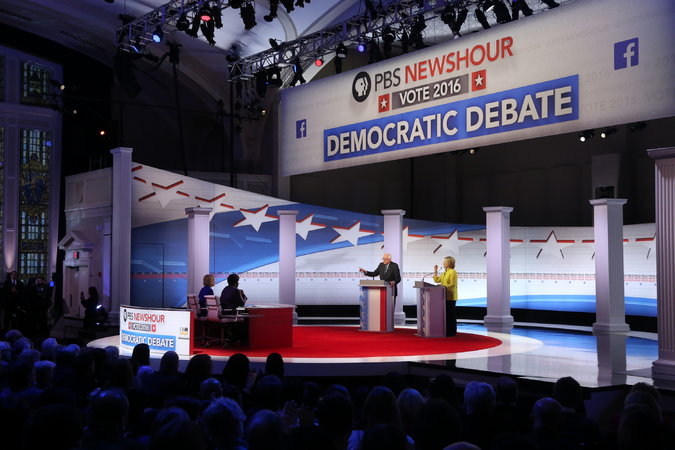
Last Night’s Nasty Republican Debate

debate
Southern charm did not rub off on these candidates

W.J. Astore

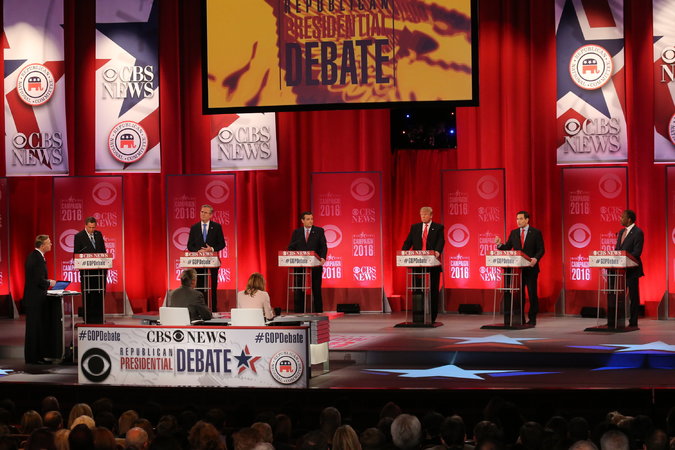
One word describes last night’s Republican debate from South Carolina: nasty. That’s the word Donald Trump used to describe Ted Cruz (transcript here), and that’s the word that best describes the tone of most of the debate.  Ben Carson and John Kasich, as usual, tried to take the high road, but Marco Rubio and Jeb Bush joined Trump and Cruz in the mud-slinging, tossing accusations about who’s lying and who isn’t, who’s insulting whose family, ad nauseam. (According to the LA Times, the candidates together made 22 accusations of lying; all that was missing was the old expression we used as kids, “Liar! Liar! Pants on fire!”)

As far as content, there wasn’t much new.  The death of Supreme Court Justice Antonin Scalia touched off a dishonest discussion as to what President Obama should do about his empty seat.  Pretty much all the candidates suggested the “lame duck” president should not nominate a replacement for Scalia (thereby abdicating his Constitutional duties). According to them, Obama is such a polarizing figure, and so untrustworthy, that he should leave to the next president the duty of nominating a new justice.  It was all nonsense, but it illustrated the patent dishonesty of politics as practiced in America today.

As I listened to the debate, the content and tone reminded me of the mean and miserly Ebenezer Scrooge before his conversion.  Again, there was much talk of deporting illegal immigrants, of blowing away our enemies (especially the Islamic State), of protecting gun rights, of ending Obamacare, of lowering taxes on the rich, all to be done in the name of our Lord.

Some media headlines from the debate coverage: “Jeb Bush attacks Donald Trump” (New York Times); “Sparks Fly at Rowdy Republican Debate” (NBC News); “The Gloves Come Off” (CBS News).  Yes, much heat was generated, but precious little light.  A dispiriting exercise, the debate illustrated the bad faith of the leading Republican candidates, as well as the rot within and across our entire political system.

If you missed the debate, consider yourself fortunate.
Spoiling the Pentagon

Pentagon
Spoiled?

W.J. Astore

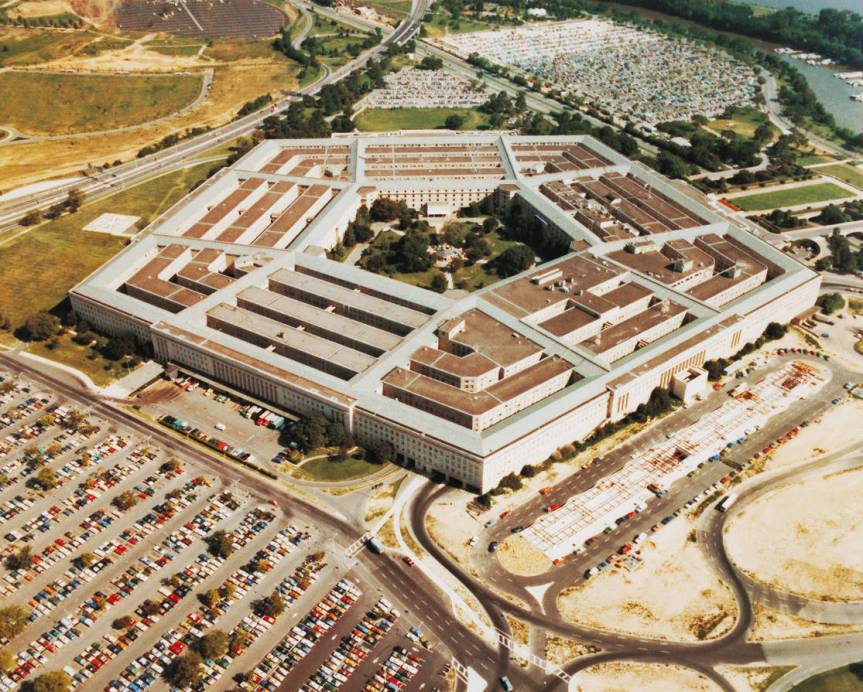
In my latest article for TomDispatch.com, I compare the Pentagon and the Department of Defense to Ethan Couch, the Texas teenager said to be suffering from “affluenza.”  Like Couch, the Pentagon has been showered with money and praise, yet despite all the preferential treatment, the Pentagon is never called to account for its mistakes and its crimes.  You can read the entire article here; what follows is an excerpt.

A Spoiled Pentagon Means Never Having to Say You’re Sorry

To complete our affluenza diagnosis, let’s add one more factor to boundless praise and a bountiful allowance: a total inability to take responsibility for one’s actions. This is, of course, the most repellent part of the Ethan Couch affluenza defense: the idea that he shouldn’t be held responsible precisely because he was so favored.

Think, then, of the Pentagon and the military as Couch writ large. No matter their mistakes, profligate expenditures, even crimes, neither institution is held accountable for anything.

Consider these facts: Iraq, Afghanistan, and Libya are quagmires. The Islamic State is spreading. Foreign armies, trained and equipped at enormous expense by the U.S. military, continue to evaporate. A hospital, clearly identifiable as such, is destroyed “by accident.” Wedding parties are wiped out “by mistake.” Torture (a war crime) is committed in the field. Detainees are abused. And which senior leaders have been held accountable for any of this in any way? With the notable exception of Brigadier General Janis Karpinskiof Abu Ghraib infamy, not a one.

After lengthy investigations, the Pentagon will occasionally hold accountable a few individuals who pulled the triggers or dropped the bombs or abused the prisoners. Meanwhile, the generals and the top civilians in the Pentagon who made it all possible are immunized from either responsibility or penalty of any sort. This is precisely why Lieutenant Colonel Paul Yingling memorably wrote in 2007 that, in the U.S. military, “a private who loses a rifle suffers far greater consequences than a general who loses a war.” In fact, no matter what that military doesn’t accomplish, no matter how lacking its ultimate performance in the field, it keeps getting more money, resources, praise.

When it comes to such subjects, consider the Republican presidential debate in Iowa on January 28th. Jeb Bush led the rhetorical charge by claiming that President Obama was “gutting” the military. Ted Cruz and Marco Rubio eagerly agreed, insisting that a “dramatically degraded” military had to be rebuilt. All the Republican candidates (Rand Paul excepted) piled on, calling for major increases in defense spending as well as looser “rules of engagement” in the field to empower local commanders to take the fight to the enemy. America’s “warfighters,” more than one candidate claimed, are fighting with one arm tied behind their backs, thanks to knots tightened by government lawyers. The final twist that supposedly tied the military up in a giant knot was, so they claim, applied by that lawyer-in-chief, Barack Obama himself.

Interestingly, there has been no talk of our burgeoning national debt, which former chairman of the Joint Chiefs of Staff Admiral Mike Mullen once identified as the biggest threat facing America. When asked during the debate which specific federal programs he would cut to reduce the deficit, Chris Christie came up with only one, Planned Parenthood, which at $500 million a year is the equivalent of two F-35 jet fighters. (The military wants to buy more than 2,000 of them.)

Throwing yet more money at a spoiled military is precisely the worst thing we as “parents” can do. In this, we should resort to the fiscal wisdom of Army Major General Gerald Sajer, the son of a Pennsylvania coal miner killed in the mines, a Korean War veteran and former Adjutant General of Pennsylvania. When his senior commanders pleaded for more money (during the leaner budget years before 9/11) to accomplish the tasks he had assigned them, General Sajer’s retort was simple: “We’re out of money; now we have to think.”

Accountability Is Everything

It’s high time to force the Pentagon to think. Yet when it comes to our relationship with the military, too many of us have acted like Ethan Couch’s mother. Out of a twisted sense of love or loyalty, she sought to shelter her son from his day of reckoning. But we know better. We know her son has to face the music.

Something similar is true of our relationship to the U.S. military. An institutional report card with so many deficits and failures, a record of deportment that has led to death and mayhem, should not be ignored. The military must be called to account.

How? By cutting its allowance. (That should make the brass sit up and take notice, perhaps even think.) By holding senior leaders accountable for mistakes. And by cutting the easy praise. Our military commanders know that they are not leading the finest fighting force since the dawn of history and it’s time our political leaders and the rest of us acknowledged that as well.

Hillary Clinton’s “Low Blow”

joust
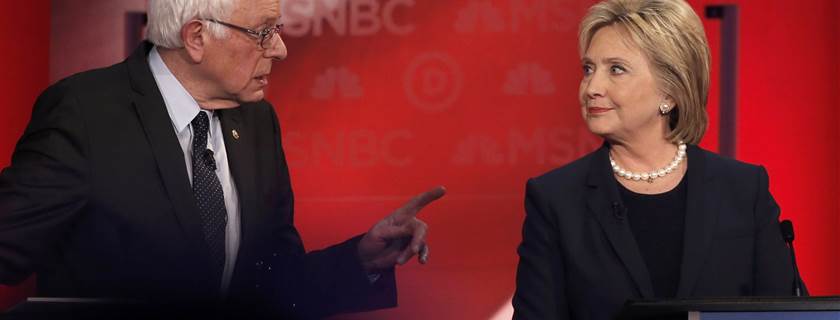
Bernie and Hillary at last night’s debate (Source: NYT)

W.J. Astore

Last night’s Democratic debate between Hillary Clinton and Bernie Sanders in Milwaukee hit the usual notes for these two candidates (the transcript is here). Clinton is all about competence and being ready on “day one” in the Oval office, whereas Bernie seeks a political revolution to galvanize the people. But a few telling items came up, mostly toward the end of the debate.

1.  Hillary accused Bernie of being too critical of President Obama, of not supporting him, of suggesting he was “weak,” and of not respecting Obama’s legacy of results, especially the Affordable Care Act.  This was a “low blow” for Bernie, who explained that he fully supported Obama, considered him to be a friend, and that he did indeed respect the president’s accomplishments.  Besides that, Bernie noted, “one of us ran against Barack Obama [in 2008]. I was not that candidate.”

2. Bernie actually dared to suggest the Defense Department’s budget had to be given careful scrutiny, noting that the DoD has yet to pass an audit.  In these days of issuing blank checks to the Pentagon, it was a significant moment.

3.  Bernie took Hillary to task, successfully I believe, for her cozy relationship with Henry Kissinger.  In my view, this was the most important moment of the night. With respect to U.S. foreign policy, Hillary promises continuity with neo-conservative principles of American interventionism and preemptive war.  Bernie, even as he promises to crush the Islamic State, is far less enamored with neo-con agendas and peace through aggression.

Here is what Bernie had to say about Kissinger:

“I happen to believe that Henry Kissinger was one of the most destructive secretaries of state in the modern history of this country.  I am proud to say that Henry Kissinger is not my friend. I will not take advice from Henry Kissinger. And in fact, Kissinger’s actions in Cambodia, when the United States bombed that country, overthrew Prince Sihanouk, created the instability for Pol Pot and the Khmer Rouge to come in, who then butchered some 3 million innocent people, one of the worst genocides in the history of the world. So count me in as somebody who will not be listening to Henry Kissinger…”

“Kissinger was one of those people during the Vietnam era who talked about the domino theory. Not everybody remembers that. You do. I do. The domino theory, you know, if Vietnam goes, China, da, da, da, da, da, da, da.  That’s what he talked about, the great threat of China.”

“And then, after the war, this is the guy who, in fact, yes, you’re right, he opened up relations with China, and now pushed various type of trade agreements, resulting in American workers losing their jobs as corporations moved to China.”

“The terrible, authoritarian, Communist dictatorship he warned us about, now he’s urging companies to shut down and move to China. Not my kind of guy.”

Hillary defended her relationship with Kissinger, just as she defended herself from suggestions she’d be influenced by big money donors. In both cases, she came across as the establishment candidate, one who is most comfortable in the corridors of power, schmoozing with other power brokers and players.

In sum, even as Hillary attempts to appropriate some of Bernie’s anti-establishment rhetoric, her actions demonstrate how much she’s ensconced within the establishment camp, especially when it comes to U.S. foreign policy.

For voters looking for change in November, Hillary promises only an amped up version of more of the same.


A Message of Uplift Won New Hampshire

SUB-TRUMP2-videoSixteenByNine1050
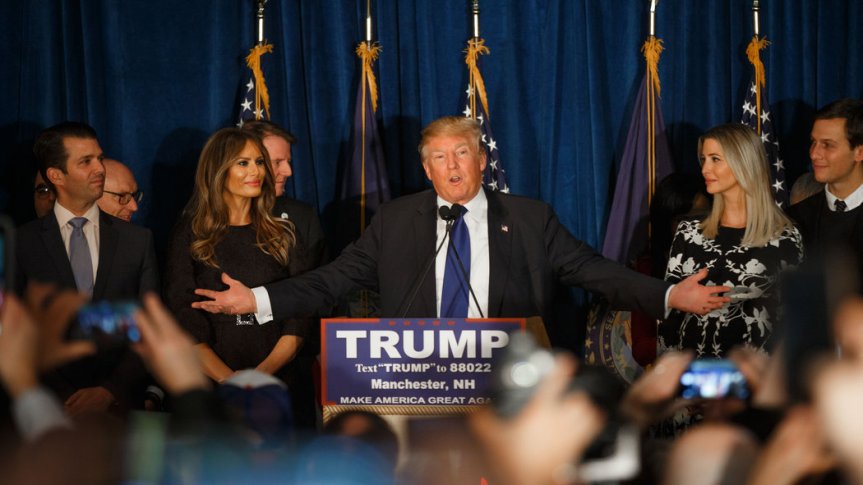
He’ll make America great again — it says so on his podium!

W.J. Astore

My wife and I watched the results come in last night on MSNBC and the four speeches by Hillary Clinton, Bernie Sanders, Donald Trump, and John Kasich.  Surprisingly, the best speech of the bunch was by Kasich, but more on that in a moment.

Hillary charged ahead with a concession speech that was basically a recycled stump speech.  It looked like she was using teleprompters.  She offered the obligatory thanks to her supporters, to New Hampshire, and so on, but you could tell she just wanted to move on from her crushing defeat.  She has real difficulty connecting with an audience, and her campaign’s message that she’s the most competent candidate, the one best able to step into the Oval Office on day one, simply isn’t resonating with voters who are fed up with establishment politics.

Bernie went next and also gave a modified version of his stump speech.  He spoke too long, but I’m guessing he was doing his best to exploit his “prime time” moment.  He offered kind words for Clinton but then proceeded to attack the politics as usual that she represents.  What got me most was the genuine excitement in the room for Bernie.  The people cheering behind him were an especially eclectic and vibrant mix (I know the “optics” are usually managed, but still).  There was a young black guy wearing a hat and a Bernie t-shirt who was simply a riot.  (He was standing behind and to Bernie’s left.)  My wife and I looked at each other and said: “He should be Bernie’s Vice President.”

Trump came on the heels of Bernie, and the shift in tone was immediate.  With Bernie, it’s all about the movement.  With Trump, it’s all about Trump.  Flanked by his photogenic family, Trump once again told Americans how he is going to make America “great” again, how America is going to win again — at negotiating treaties, with the economy, with wars — heck, I guess we’re going to win at EVERYTHING with Trump in command.  Again he boasted how he’s going to make the U.S. military so big and so strong that no one will dare attack us.  In a word, he bloviated.  But Trump should never be dismissed lightly, certainly not after his decisive victory in New Hampshire.

Kasich came next after Trump, and again the tone shifted.  Coming in a strong second in NH, Kasich talked about listening to the American people, and how the 100+ “town halls” he had done had changed him as a candidate and as a person.  He told personal stories and connected with the audience; he closed on a note of compassion, asking Americans to decompress, to take time to listen to one another, to find time for reflection.  His speech was the most personal and heartfelt of the four that I heard, and I found myself hoping that Kasich’s message would ultimately triumph over the bellicosity of Trump, Cruz, Rubio, and the rest of the Republicans.

Overall, last night was a night of surprises, with two unconventional candidates, Sanders and Trump, winning convincingly.  Their messages, of course, are polar opposites. Bernie wants a better future for all Americans, especially for the disadvantaged, whereas Trump is all about making America big and strong, a “winner.”  Put differently, Sanders sees a lot of ordinary Americans who are losing in today’s “rigged” economy, and he wants to lift them up.  Trump sees America writ large as losing, even some of the wealthiest, vis-a-vis foreign competitors like China, and he says he’ll lift all of America up.

It’s that message of uplift, expressed so differently by Sanders and Trump, that resonated so powerfully in New Hampshire.


Republicans Are Scaring Me Again

debate
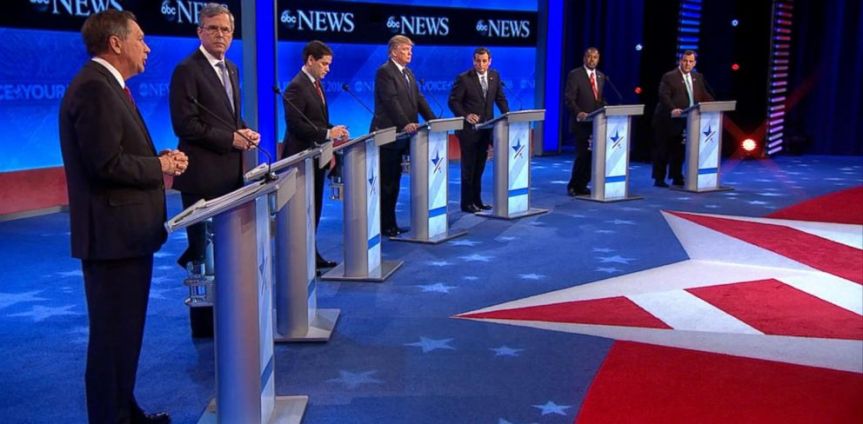
Kasich, Bush, Rubio, Trump, Cruz, Carson, Christie (left to right)

W.J. Astore

I watched last night’s Republican Presidential Debate from New Hampshire.  And then I slept poorly.  John Kasich and a subdued Ben Carson excepted, all of the candidates were determined to frighten me and mine.  As they shouted and gesticulated, I wrote down some of their words and some of the thoughts and feelings they generated.  It went something like this:

We’re in danger!  Obama’s gutting our military!  Muslims are shouting “death to America”!  China!  America is weak!  We must build a HUGE WALL to keep out illegals! Abortion is murder!  Take their oil!  Chopping heads!  Dying in the street! Waterboarding isn’t torture, which doesn’t matter, because we need more torture!  Respect the police! People need to fear us again!  We don’t win — we need to win again!  Iranian and North Korean nukes!  America must get back in the game and be strong!  Tough!  Win!

Well, you get the picture.  The prize for most obscene statement of the night (among a wealth of obscene statements) was Ted Cruz’s claim that America’s possession of overwhelming airpower — its ability to carpet bomb enemies into oblivion — is a blessing.  A blessing — I’m assuming he meant from God, not the Dark One, but who knows?

My wife’s impression?  She said the candidates reminded her of low-blow fighters, or teenage boys in high school.

It’s simple, really: If you want more bombing, more killing, more war, more torture, more police, more walls, and lower taxes on corporations (yes — that came up too), vote Republican in November.

My nightmare scenario: this is exactly the vision Marco Rubio had in mind when he repeatedly called America “the single greatest nation in the history of the world.”


Hillary to Bernie: You Smear Me When You Tell the Truth

bernie

W.J. Astore

I watched yet another Democratic debate last night, this one moderated by MSNBC in a more traditional format instead of the previous version’s “town hall.”  Much was repeated: Bernie Sanders wants a “revolution” to overthrow a rigged economy and to enact campaign finance reform, Hillary Clinton says she’s a progressive who can get things done and who will build on the legacy of President Obama.

For me, the big moment came when Hillary tried to change the narrative on her taking millions of dollars from banks, investment houses, and Wall Street in the form of speaking fees and money from Super PACs.  She accused Bernie of a “smear” campaign when he “insinuated” she might be influenced by all this money.  She said other progressives (she cited Obama, for example) took money from Wall Street yet still allegedly held the big money boys to account.

Another moment, not as big but also telling, was when Bernie painted Hillary as an “establishment” candidate.  Talk about stating the obvious!  But Hillary rejected this by playing the gender card.  How can I be an establishment candidate for president, Hillary asked, when if elected I’d be the first woman president?  This is total nonsense, of course. She is an establishment candidate who just happens to be a woman.  But I suppose she and her team had no other response to the truth Bernie was bringing.

Speaking of the establishment, after claiming she wasn’t part of it, Hillary cited Henry Kissinger’s praise of her, saying Kissinger had applauded her for running a tight ship at the State Department.  Praise from Caesar …

But back to the “smear” campaign.  Obviously, Hillary and her team are hoping the media will focus on the smoke and mirrors generated by that loaded term, while neglecting the reality of Bernie’s truth-telling.  Given the craven nature of the mainstream media, her cynical gambit may even work.

When the big money boys give millions to candidates, any candidate, they’re not usually so blatant (or stupid) as to be buying votes.  They’re not going to get caught telling a candidate, vote yes on this, no on that.  What they’re buying is access.  They’re gaining the candidate’s ear. They want to be the last “person” to whisper in the candidate’s ear before she or he makes a decision.

I’m sure Hillary believes she’s her own woman.  But she knows how the system works, and so does Bernie.  If you accept big money, you know it always comes with strings attached.  The more big money you accept, the more strings, until no matter how much you resist, you end up dancing like a puppet on those strings.  That’s basically Bernie’s point, and it’s not a smear. It’s the truth.

An interesting question came up about whether Hillary would be willing to share transcripts of all her speeches before the big money boys.  She said she’d look into it.  If she’s the “progressive” she claims to be, she should be willing to share those transcripts immediately as a matter of public record.  Something tells me we either won’t see these transcripts, or they’ll be released months from now, after the primary race is decided.


Bernie Sanders Won Last Night’s Democratic Debate

bernie
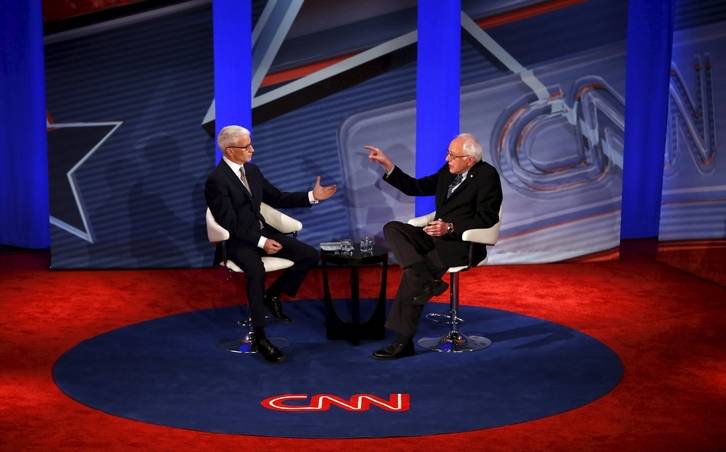
Bernie Sanders makes a point to Anderson Cooper during last night’s debate

W.J. Astore

Last night, Bernie Sanders and Hillary Clinton separately took questions from a “town hall” in Derry, New Hampshire with Anderson Cooper moderating.  Overall, both candidates did well, though I give the edge to Sanders (more on why in a moment).

Sanders came across as passionate on the issues and concerned for ordinary Americans.  He continues to speak of a political revolution, which to him doesn’t mean tumbrels to the guillotine.  It means getting more people involved in the political process, especially youth and the disadvantaged.  He spoke eloquently of helping others.  Memorable to me was his work to desegregate housing owned by the University of Chicago when Sanders was a student.  When asked why he fought against racist policies, Sanders said he’s always hated a bully – and always fought for fairness and equality.  He came across, in short, as an honest and decent man, a man of integrity, which is the word his wife used to describe him (she was sitting in the audience, and was asked to describe her husband with a single word).

Hillary came across as determined and competent and informed.  She tended to meander during her answers, coming across as somewhat of a policy wonk or a technocrat.  She rejected Sanders’ talk of a revolution, preferring to build on President Obama’s (and her own) legacy.  For example, she wants to put the finishing touches to Obamacare, rather than going for Sanders’ idea of a single-payer, “Medicare for all” system.  She spoke briefly of breaking the ultimate glass ceiling for women – her gaining the office of the presidency – and how that would inspire women of all ages.  She took her usual hardline on U.S. foreign policy, making no promises that she would reduce wars or for that matter spending on defense.

In sum, if you’re happy with the status quo, you’ll get plenty of that with Clinton.  If you want change, if you’re tired of a “rigged” economy and a corrupt political process, Sanders is far more likely to act in your favor.

Where I thought Hillary fell down was in her posturing as a progressive.  The millions of dollars she has accepted in speaking fees from banks and investment houses, she suggested, would have no impact on her policy decisions, which is simply implausible.  Powerful organizations don’t give political candidates big money without strings attached to it, and of course Clinton knows this.  It also seemed implausible when Clinton suggested she had not decided to run for president when she accepted those speaking fees.  As if her “doubts” about running absolved her of responsibility for taking big money from Wall Street.  It was all frankly unconvincing.

Hillary Clinton is a fighter.  She came across best when she spoke of the Republican right-wing attacks she’d had to endure over the last 25 years, and what they’d taught her about the political process.  Her footing was less secure when she had to relate to other people.  For example, a man suffering from advanced-stage cancer asked her about dying with dignity.  Bill Clinton, the “natural” as Hillary called him, would have turned this into an empathetic “I feel your pain” moment.  But Hillary got lost in the details, saying she would have to study up on the ethics of terminal care, the laws, the role of medical professionals, what other countries are doing (she mentioned The Netherlands), and so on.  As she tackled the problem in a wonkish way, she seemed to forget the person standing in front her.

In sum, Bernie Sanders is driving the narrative, not Hillary Clinton.  It’s Bernie who’s been talking about a rigged system, about economic fairness, about working for unions, about justice and prison reform, and it’s Hillary who’s been put on the defensive.  So lately Hillary’s been borrowing liberally from Bernie’s script.  She’s now talking about “the deck being stacked” against ordinary people, and how she’s going to fight for workers, and how much Wall Street is supposedly against her candidacy.

As Bernie has gained in the polls, as his message has begun to resonate, Hillary has responded by trying to be more like Bernie.  And it just doesn’t ring true, at least for me.  Advantage, Bernie.


Where’s the Anti-War Movement?

antiwar_peace_rally03_618
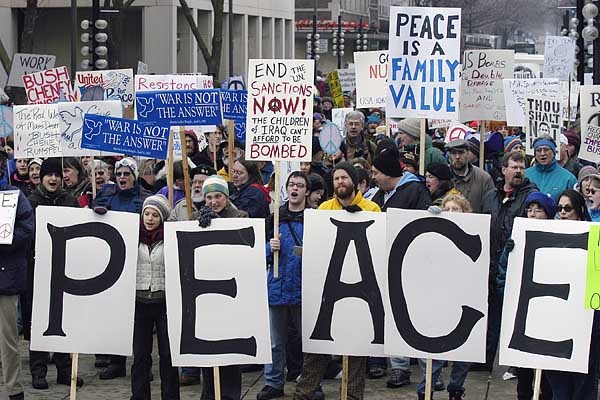
Thousands of people with signs of peace gather on Library Mall for the start of an anti-war rally protesting a potential United States-led war against Iraq. Protesters later marched up State Street to the Wisconsin State Capitol Building. ©UW-Madison University Communications 608/262-0067 Photo by: Jeff Miller

W.J. Astore

Yesterday, Ira Chernus had a stimulating article at TomDispatch.com in which he noted the present lack of an American anti-war movement.  When it comes to war and foreign policy, Americans face a Hobson’s choice: the Democrats with drones and Special Ops and bombing against evildoers, or the Republicans with even more drones and Special Ops and bombing against even more evildoers.  The American master narrative, Chernus noted, is essentially all war.

He’s right about this, and I think it’s mainly for five reasons:

  1. The military draft is gone, so our youth can safely (they think) ignore America’s never-ending wars. In Vietnam, with the draft, most of our youth didn’t have the luxury of apathy.  Today, our youth have little personal incentive (as yet) to push back against the prevailing war narrative.
  2. Militarism.  Creeping militarism has shifted the American narrative rightwards.  In the Vietnam period, General Curtis LeMay’s “bomb them back to the stone age” was a fringe opinion; now it’s mainstream with “carpet bombing” Cruz and Trump and Rubio, the “top three” Republican presidential contenders after the Iowa caucuses.
  3. The Democrats have also shifted rightwards, so much so that now both major political parties embrace endless war. War, in short, has been normalized and removed from partisan politics.  As Chernus documents, you simply can’t get an alternative narrative from the U.S. political mainstream.  For that, you have to look to much smaller political parties, e.g. the Green Party.
  4. The U.S. mainstream media has been thoroughly co-opted by corporations that profit from war.  Anti-war ideas simply don’t get published; or, if they do, they’re dismissed as unserious.  I simply can’t imagine any of today’s TV talking heads coming out against the war on terror like Walter Cronkite came out in the 1960s against Vietnam. There is simply no push back from the U.S. media.
  5. Finally, a nebulous factor that’s always lurking: FEAR.  The popular narrative today is that terrorists may kill you at any time right here in America.  So you must be ready to “lockdown“; you must be ready to “shelter in place.”  You must always defer to the police and military to keep you safe.  You must fully fund the military or YOU WILL DIE. Repeated incantations of fear reinforce the master narrative of war.

Chernus makes many good points about how America’s constant warring in the Middle East only feeds radical Islam.  In short, it’s vital to develop a new narrative, not only because the current one feeds war and death, but also because it’s fated to fail.

I doubt pacifism will fly in warrior corp USA.  But why not containment?  Containment worked against the Soviet Union, or so most Americans believe.  If it worked against the far greater threat posed by the USSR, why shouldn’t it work against radical Islam?

Containment suggests several concrete actions: American troops should pull out of the Middle East.  Bombing and drone strikes should stop.  Establish a cordon sanitaire around the area.  Lead a diplomatic effort to resolve the conflicts.  And recognize that violent civil and ideological wars within Islam may need to burn themselves out.

One thing is certain: Because violent U.S. actions are most likely to act as accelerants to radical Islam, we need to stop attacking.  Now.

Yes, the U.S. has a responsibility to help the peoples of the region.  American actions helped to create the mess.  But you don’t “solve” the mess by blowing more people and things to smithereens.

Containment, diplomacy, humanitarian aid.  Not a chest-thumping course of action celebrated by the likes of Trump or Cruz or Clinton, but a new master narrative that would be more likely to spare lives and reduce the chaos in the Middle East.

A Surefire Recipe for the End of Democracy

cheerleader camo
Camo-clad NFL Cheerleaders “Salute” the Troops

W.J. Astore

I’ve written several articles about the United States and creeping militarism (see here and here, for example).  This should be obvious, but I’ll say it again: Calling attention to the militarization of American society is pro-democracy, not anti-military.  Indeed, back in the citizen-soldier era of my father, being “gung ho” for the military wasn’t even applauded within the military!

As one veteran wrote to me:

When I was in the military, being “gung ho” was not considered a compliment by most of my friends… Of course we were not professional military types, just taking our turns to do our duty. We remembered the American soldier epitomized by Bill Mauldin as “Willie” and “Joe” who fought successfully against the German Army and the Japanese fanatics…The popular war movies of WWII after the war usually pitted the austere, indoctrinated Nazis fighting to demonstrate the Nazi superiority against the average American citizen soldier. Remember the movie “Battleground”? Today the images of our Army uncomfortably remind me of the way the German superman was portrayed that we overcame. 

As America today celebrates its “superman” warriors (one soldier recently called this “the age of the commando”), our country neglects these same men and women when they leave the military, often with crippling physical and psychological wounds.

As another veteran wrote to me:

[There is a] disjunction between the cult of military hero-worship in American society and American ignorance of veterans’ problems.  I am continually disgusted with those who are pimping off the mystique [surrounding our troops] who don’t deserve any special regard for their military service.  And a final but important point: many combat vets, knowing full well the realities of combat and its effects on combatants, do not want to be thanked at all [by the public].

America’s militarism both feeds and draws support from our endless wars.  The war on terror has been ongoing since 2001.  So too the war in Afghanistan.  Iraq keeps getting more chaotic.  Miscalculation in Syria could lead to World War III.

Speaking of future wars, just look at the rhetoric of our more popular political candidates for president, to include Donald “bomb those suckers” Trump and Ted “carpet bomb” Cruz.  Chickenhawk politicians are nothing but opportunists.  They may be leading the war charge, but they know they’re backed by a society in thrall to military spectacle (as represented, for example, by pom-pom shaking cheerleaders in skimpy camouflage outfits).

Unstinting praise of America’s “warriors” and “heroes” is reinforced by feel-good corporate/military advertising.  Recall Budweiser’s “welcome home” party for an Army lieutenant that aired during the Super Bowl a couple of years back.  Or red-white-and-blue Budweiser cans to “honor” the troops on July 4th.  “Saluting” the troops with colorful beer cans – really?

Signs of militarism USA are everywhere.  Police forces with MRAPs and similar tank-like vehicles.  Colleges and universities jostling for “defense” funding (even bucolic campuses want those war bucks).  Popular games that glorify military mayhem, such as the “Call of Duty” video games.  Even mundane items like camouflage headsets for NFL coaches.

It’s time to end the madness.  Paraphrasing Dwight Eisenhower, only Americans can defeat America.  Constant celebration of all things military is not a recipe for victory.  But it is a surefire recipe for the end of democracy.