

W.J. Astore
Time to Put Away Our Toy Soldiers
Since 2007, I’ve been writing for TomDispatch.com. Recently, Tom Engelhardt and I got to talking about war, American-style. I mentioned to Tom that I thought America’s presidents were appeasers, not in the Neville Chamberlain at Munich sense, but in the sense of kowtowing to the military-industrial-congressional complex and favoring more weapons and always more war. It got me thinking as well about our mutual affection for toy soldiers, how we as kids so innocently (and foolishly) played at war. Combining that with recent events in the Middle East led to this piece posted today at TomDispatch.
Like many American boys of the baby-boomer generation, I played “war” with those old, olive-drab, plastic toy soldiers meant to evoke our great victory over the Nazis and “the Japs” during World War II. At age 10, I also kept a scrapbook of the 1973 Yom Kippur War between Israel and its various Arab enemies in the Middle East. It was, I suppose, an early sign that I would make both the military and the study of history into careers.
I recall rooting for the Israelis, advertised then as crucial American allies, against Egypt, Syria, and other regional enemies at least ostensibly allied with the Soviet Union in that Cold War era. I bought the prevailing narrative of a David-versus-Goliath struggle. I even got a book on the Yom Kippur War that captivated me by displaying all the weaponry the U.S. military had rushed to Israel to turn the tide there, including F-4 Phantom jets and M-60 main battle tanks. (David’s high-tech slingshots, if you will.) Little did I know that, in the next 50 years of my life, I would witness increasingly destructive U.S. military attacks in the Middle East, especially after the oil cartel OPEC (largely Middle Eastern then) hit back hard with an embargo in 1973 that sent our petroleum-based economy into a tailspin.

As one jokester quipped: Who put America’s oil under the sands of all those ungrateful Muslim countries in the Middle East? With declarations like the Carter Doctrine in 1980, the U.S. was obviously ready to show the world just how eagerly it would defend its “vital interests” (meaning fossil fuels, of course) in that region. And even today, as we watch the latest round in this country’s painfully consistent record of attempting to pound various countries and entities there into submission, mainly via repetitive air strikes, we should never forget the importance of oil, and lots of it, to keep the engines of industry and war churning along in a devastating fashion.
Right now, of course, the world is witnessing yet another U.S. bombing campaign, the latest in a series that seems all too predictable (and futile), meant to teach the restless rebels of Iraq, Syria, Yemen, and possibly even Iran a lesson when it comes to messing with the United States of America. As the recently deceased country singer Toby Keith put it: Mess with this country and “We’ll put a boot (think: bomb) in your ass.” You kill three soldiers of ours and we’ll kill scores, if not hundreds, if not thousands of yours (and it doesn’t really matter if they’re soldiers or not), because… well, because we damn well can!
America’s leaders, possessing a peerless Air Force, regularly exhibit a visceral willingness to use it to bomb and missile perceived enemies into submission or, if need be, nothingness. And don’t for a second think that they’re going to be stopped by international law, humanitarian concerns, well-meaning protesters, or indeed any force on this planet. America bombs because it can, because it believes in the efficacy of violence, and because it’s run by appeasers.
Yes, America’s presidents, its bombers-in-chief, are indeed appeasers. Of course, they think they’re being strong when they’re blowing distant people to bits, but their actions invariably showcase a distinctive kind of weakness. They eternally seek to appease the military-industrial-congressional complex, aka the national (in)security state, a complex state-within-a-state with an unappeasable hunger for power, profit, and ever more destruction. They fail and fail and fail again in the Middle East, yet they’re incapable of not ordering more bombing, more droning, more killing there. Think of them as being possessed by a monomania for war akin to my urge to play with toy soldiers. The key difference? When I played at war, I was a wet-behind-the-ears 10 year old.
The Rockets’ Red Glare, the Bombs Bursting in Air
No technology may be more all-American than bombs and bombers and no military doctrine more American than the urge to attain “peace” through massive firepower. In World War II and subsequent wars, the essential U.S. approach could be summarized in five words: mass production enabling mass destruction.
No other country in the world has dedicated such vast resources as mine has to mass destruction through air power. Think of the full-scale bombing of cities in Nazi Germany and Imperial Japan in World War II, ending in the atomic destruction of Hiroshima and Nagasaki. Think of the flattening of North Korea during the Korean War of the early 1950s or the staggering bombing campaigns in Vietnam, Laos, and Cambodia in the 1960s and early 1970s. Or consider the massive use of air power in Desert Shield against Iraq in the early 1990s followed by the air campaigns that accompanied the invasions of Afghanistan and Iraq in 2003 (and never quite seemed to stop thereafter). The butcher’s bill for such bombing has indeed been high, quite literally millions of non-combatants killed by America’s self-styled “arsenal of democracy.”
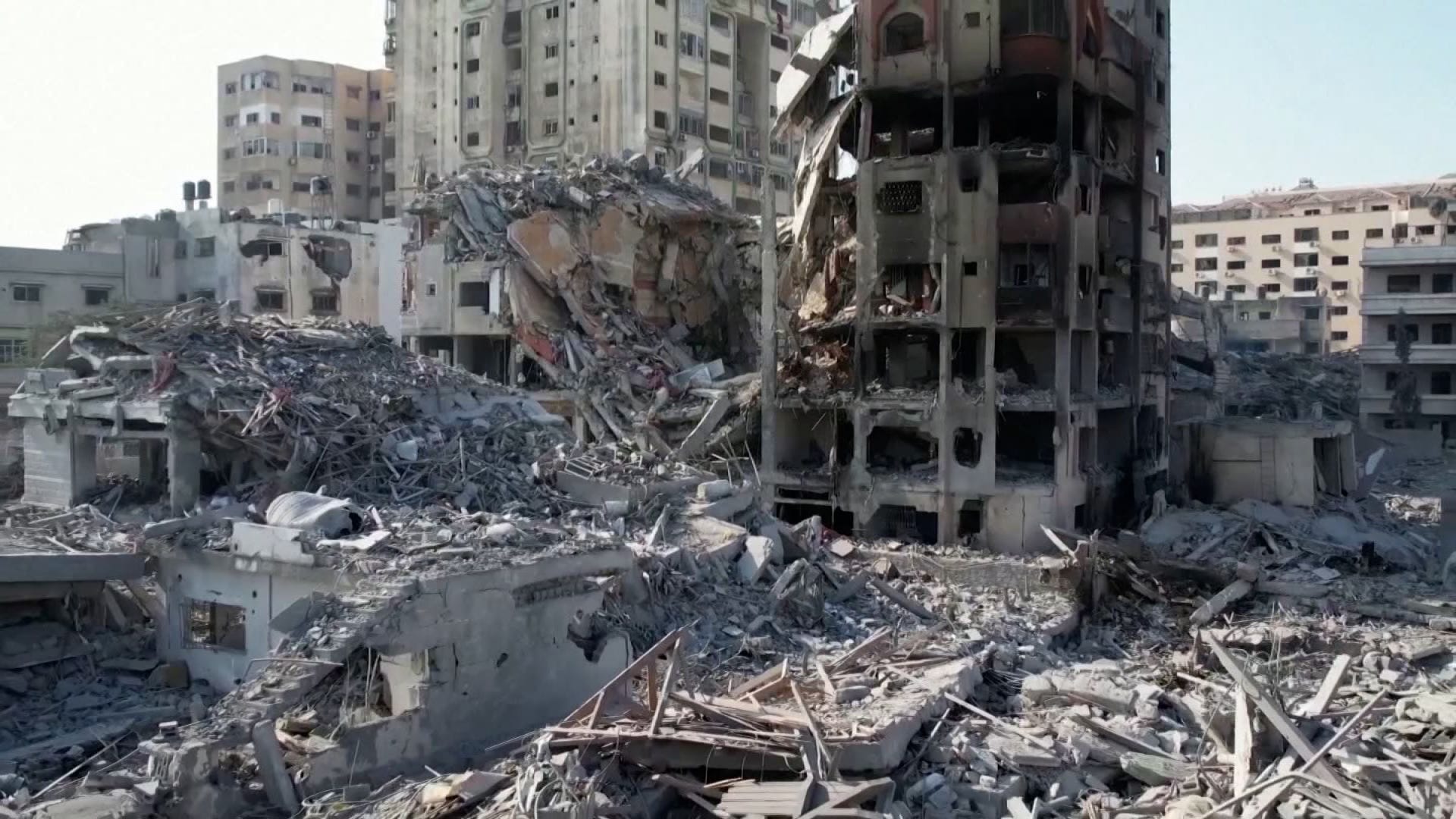
And indeed, as you read this, another country is now faithfully following America’s example. Israel is systematically destroying Gaza, rendering it essentially uninhabitable for those Palestinians who survive the ongoing rampage. In fact, early in its war of annihilation, Israeli leaders cited the Allied destruction of the German city of Dresden in 1945 in support of their own atrocious air and ground campaign against the Palestinians.
Looking at this dispassionately as a military historian, the Dresden reference makes a certain twisted sense. In World War II, the Americans and their British allies in their “combined bomber offensive” destroyed German cities indiscriminately, seeing all Germans as essentially Nazis, complicit in the crimes of their government, and so legitimate targets. Something similar is true of the right-wing Israeli government today. It sees all Palestinians as essentially members of Hamas and thus complicit in last year’s brutal October 7th attacks on Israel, making them legitimate targets of war, Israeli- (and American-) style. Just like the United States, Israel claims to be “defending democracy” whatever it does. Little wonder, then, that Washington has been so willing to send bombs and bullets to its protégé as it seeks “peace” through massive firepower and genocidal destruction.
Indeed, of late, there has been considerable debate about whether Israel is engaged in acts of genocide, with the International Court of Justice ruling that the present government should strive to prevent just such acts in Gaza. Putting that issue aside, it’s undeniable that Israel has been using indiscriminate bombing attacks and a devastating invasion in a near-total war against Palestinians living on that 25-mile-long strip of land, an approach that calls to mind the harrowing catchphrase “Exterminate all the brutes!” from Joseph Conrad’s novel Heart of Darkness.
In a sense, there’s nothing new under the sun. Certainly, the Old Testament itself provides examples of exterminatory campaigns (cited by Bibi Netanyahu as Israel first moved against the Palestinians in Gaza). He might as well have cited a catchphrase heard during America’s war in Vietnam, but rooted in the medieval crusades: “Kill them all and let God sort them out.”
America’s Unrelenting Crusade in the Middle East
In the immediate aftermath of the 9/11 attacks, President George W. Bush got into trouble almost instantly when he referred to the “war on terror” he had launched as a “crusade.” Yet, as impolitic as that word might have seemed, how better to explain U.S. actions in the Middle East and Afghanistan? Just consider our faith in the goodness and efficacy of “our” military and that all-American urge to bring “democracy” to the world, despite the destruction visited upon Iraq, Libya, Syria, and Yemen over the last several decades. Or go back to 1953 and the role the CIA played in the overthrow of Iran’s legitimate democratic ruler and his replacement by the brutally repressive regime of the Shah.
Try to imagine such events from the perspective of a historian writing in the year 2200. Might that future scribe not refer to repeated U.S. invasions of, incursions into, and bombing campaigns across the Middle East as a bloody crusade, launched under the (false) banner of democracy with righteous vengeance, if not godly purpose, in mind? Might that historian not suggest that such a “crusade” was ultimately more about power and profit, domination and control than (as advertised) “freedom”? And might that historian not be impressed (if not depressed) by the remarkable way the U.S. brought seemingly unending chaos and death to the region over such a broad span of time?
Consider these facts. More than 22 years after the 9/11 attacks, the U.S. still has at least 30,000 troops scattered across the Middle East. At least one Navy carrier strike group, and often two, dominate the regional waters, while striking numbers of military bases (“Little Americas”) are still sprinkled across countries ranging from Kuwait to Bahrain, from Qatar to the United Arab Emirates and beyond. So many years later, about 900 U.S. troops still illegally occupy part of Syria (not coincidentally, where that country produces most of its oil) and 2,500 more remain in Iraq, even though the government there would like them to depart.
Yankee Go Home? Apparently Not in My Lifetime
Meanwhile, American military aid, mostly in the form of deadly weaponry, flows not only to Israel but to other countries in the region like Egypt and Jordan. Direct U.S. military support facilitated Saudi Arabia’s long, destructive, and unsuccessful war against the Houthis in Yemen, a conflict Washington is now conducting on its own with repeated air strikes. And of course, the entire region has, for more than two decades now, been under constant U.S. military pressure in that war on terror, which all too quickly became a war of terror (and of torture).
Recall that the U.S. invasion of Iraq in 2003 led to the death of roughly a millionIraqis and the displacement of millions more as refugees. How could that not be considered part of a “crusade,” even if a fitful and failing one? Yet, here’s the rub: just as those Catholic crusades of the Middle Ages weren’t entirely or even primarily about religion, so today’s American version isn’t motivated primarily by an anti-Muslim animus. Of course, there is indeed an inescapably religious aspect to such never-ending American war-making, but what drives those wars is largely naked greed, vengeance, and an all-American urge both to appease and amplify the military-industrial-congressional complex.
Of course, as was true in the years after 9/11 and is still true today, Americans are generally encouraged to see their country’s imperial and crusading acts as purely defensive in nature, the righteous responses of freedom-bringers. Admittedly, it’s a strange kind of freedom this country brings at the tip of a sword — or on the nosecone of a Hellfire missile. Even so, in such an otherwise thoroughly contentious Congress, it should be striking how few members have challenged the latest bombing version of this country’s enduring war in the Middle East.
Forget the Constitution. No Congressional declaration of war is believed necessary for any of this, nor has it mattered much (so far) that the American public has grown increasingly skeptical of those wars and the acts of destruction that go with them. As it happens, however, the crusade, such as it is, has proven remarkably sustainable without much public crusading zeal. For most Americans, those acts remain distinctly off-stage and largely out of mind, except at moments like the present one where the deaths of three American soldiers give the administration all the excuse it needs for repetitive acts of retaliation.
No, we the people exercise remarkably little control over the war-making that the military-industrial-congressional complex has engaged in for decades or the costs that go with them. Indeed, the dollar costs are largely deferred to future generations as America’s national debt climbs even faster than the Pentagon war budget.
America, so we were told by President George W. Bush, is hated for its freedoms. Yet the “freedoms” we’re allegedly hated for aren’t those delineated in the Constitution and its Bill of Rights. Rather, it’s America’s “freedom” to build military bases across the globe and bomb everywhere, a “freedom” to sell such bellicose activity as lawful and even admirable, a “freedom” to engage in a hyperviolent style of play, treating “our” troops and so many foreigners as toy soldiers and expendable props for Washington’s games.
It’s something I captured unintentionally five decades ago with those toy soldiers of mine from an imagined glorious military past. But after a time (too long, perhaps) I learned to recognize them as the childish things they were and put them away. They’re now long gone, lost to time and maturity, as is the illusion that my country pursues freedom and democracy in the Middle East through ceaseless acts of extreme violence, which just seem to drone on and on and on.


 Bracing Views