“Generation Warfighter” Needs to End

W.J. Astore

Empty Boasts of Having the “World’s Best” Military Hide Rot, Waste, and Stupidity

Sixteen years ago, I made a plea to my fellow citizens to banish the word “warfighter” from our vocabulary. I asked that we stop referring to the U.S. military as the “world’s best,” an empty boast then and, after twin disasters in Iraq and Afghanistan, an emptier one today. (If something can indeed be “emptier,” it’s certainly bellicose boasts of alleged military brilliance.) Today’s military is overstretched, busy guaranteeing Israel’s security as the Israeli Defense Forces demolish and depopulate Gaza. Facing recruiting shortfalls, open-ended imperial commitments across the globe, and fears of hostilities with Russia, China, Iran, or an almost unimaginable and certainly unbeatable combination of the three, the U.S. military faces grim times.  If leaders like President Biden truly want to protect “our” troops, they should look not to God but in the mirror. They should pursue peace through diplomacy while downsizing an unsustainable empire. Isn’t it finally time for “Generation Warfighter” to come to an end before the U.S. military is utterly hollowed out — and America with it?

Having the “Best Military” Is Not Always a Good Thing 
Reclaiming Our Citizen-Soldier Heritage 

By William J. Astore

[Originally posted at TomDispatch in July of 2008]

When did American troops become “warfighters” — members of “Generation Kill” — instead of citizen-soldiers? And when did we become so proud of declaring our military to be “the world’s best”? These are neither frivolous nor rhetorical questions. Open up any national defense publication today and you can’t miss the ads from defense contractors, all eagerly touting the ways they “serve” America’s “warfighters.” Listen to the politicians, and you’ll hear the obligatory incantation about our military being “the world’s best.”

All this is, by now, so often repeated — so eagerly accepted — that few of us seem to recall how against the American grain it really is. If anything — and I saw this in studying German military history — it’s far more in keeping with the bellicose traditions and bumptious rhetoric of Imperial Germany under Kaiser Wilhelm II than of an American republic that began its march to independence with patriotic Minutemen in revolt against King George.

So consider this a modest proposal from a retired citizen-airman: A small but meaningful act against the creeping militarism of the Bush years would be to collectively repudiate our “world’s best warfighter” rhetoric and re-embrace instead a tradition of reluctant but resolute citizen-soldiers.

Becoming Warfighters

I first noticed the term “warfighter” in 2002. Like many a field-grade staff officer, I spent a lot of time crafting PowerPoint briefings, trying to sell senior officers and the Pentagon on my particular unit’s importance to the President’s new Global War on Terrorism. The more briefings I saw, the more often I came across references to “serving the warfighter.” It was, I suppose, an obvious selling point, once we were at war in Afghanistan and gearing up for “regime-change” in Iraq. And I was probably typical in that I, too, grabbed the term for my briefings. After all, who wants to be left behind when it comes to supporting the troops “at the pointy end of the spear” (to borrow another military trope)?

But I wasn’t comfortable with the term then, and today it tastes bitter in my mouth. Until recent times, the American military was justly proud of being a force of citizen-soldiers. It didn’t matter whether you were talking about those famed Revolutionary War Minutemen, courageous Civil War volunteers, or the “Greatest Generation” conscripts of World War II. After all, Americans had a long tradition of being distrustful of the very idea of a large, permanent army, as well as of giving potentially disruptive authority to generals.

Our tradition of citizen-soldiery was (and could still be) one of the great strengths of this country. Let me give you two examples of such citizen-soldiers, well known within military circles because they wrote especially powerful memoirs. Eugene B. Sledge served in the U.S. Marines during World War II, surviving two unimaginably brutal campaigns on the islands of Peleliu and Okinawa. His memoir With the Old Breed is arguably the best account of ground warfare in the Pacific. After three years of selfless, heroic service to his country, Sledge gladly returned to civilian life, eventually becoming a professor of biology. His conclusion — that “war is brutish, inglorious, and a terrible waste” — is one seconded by many a combat veteran.

Richard (Dick) Winters is better known because his exploits were captured in the HBO series Band of Brothers. He rose from platoon commander to battalion commander, serving in the elite 101st Airborne Division during World War II. A hero beloved by his men, Winters wanted nothing more than to quit the military and return to the civilian world. After the war, he lived a quiet life as a businessman in Pennsylvania, rarely mentioning his service and refusing to use his military rank for personal gratification. In Beyond Band of Brothers, he recounts both his service and his ideas on leadership. It’s a book to put in the hands of any young American who wishes to understand the noble ideas of service and sacrifice.

Sledge and Winters were regular guys who answered their country’s call. What comes across in their memoirs, as well as in the many letters I’ve read from World War II soldiers, was the desire of the average dogface to win the war, return home, hang up the uniform, and never again fire a shot in anger. These men were war-enders, not warfighters. Indeed, they would’ve been sickened by the very idea of being “warfighters.”

The term “warfighter” — a combination, I suppose, of “warrior” and “war fighting” — suggests a person who lives for war, who spoils for a fight. Certainly, the United States has fought its share of ruthless wars. But traditionally our soldiers have thought of themselves as civilians first, soldiers second. Equally as important, the American people thought of their troops that way.

Why are we now, with so little debate, casting aside an ethos that served us well for two centuries for one that straightforwardly embraces war and killing? Possibly because we’ve invented a distinctly American product: sanitized militarism. I bumped into it last week at a most unlikely place.

Visiting Gettysburg

Last week, I finally made it to Gettysburg, site of the great three-day battle between Union and Confederate forces in July 1863 that ended with the defeat of General Robert E. Lee’s army. Walking the battlefield was a sobering experience. I found myself on Little Round Top at 5:00 PM, just about the time of day that Union generals rushed men to reinforce the hill against a determined Confederate assault at the close of the battle’s second day. Earlier, I was at the Angle, just when, almost a century and a half ago, Pickett’s Charge failed to pierce the Union center, sealing Lee’s fate on the third day.

The Devil’s Den at Gettysburg

As these events played through my mind, I marveled that I had the battlefield largely to myself. Not that I was alone, mind you. Tour buses circled; cars, trucks, and SUVs whizzed about, but many, perhaps most, Americans who visit Gettysburg get surprisingly little tactile or sensory experience of its difficult topography. Yes, a few kids (and fewer adults) joined me in clambering about the huge, claustrophobically placed boulders of Devil’s Den, and I did spy a couple of guided tour groups on foot. But at the site of a bloodcurdling, distinctly septic nineteenth century battle, most visitors were clearly having a distinctly bloodless, even antiseptic, twenty-first century experience.

That day, I learned a lot about Gettysburg the battle — and maybe a little about us as well. As surely as my fellow tourists were staying in their cars and buses, we, as a people, are distancing ourselves from the realities of war. As we seal ourselves away from war’s horrors, we’re correspondingly finding it easier to speak of “warfighters” and to boast of having the world’s best military.

As we catch a glimpse, from the comfort of our living rooms, of a suicide bombing in Iraq or an American outpost attacked, then abandoned, in Afghanistan, are we not like those tourists in buses at Gettysburg, listening to sanitized recordings telling us what to see and think about the (expurgated) reality in front of us? And who dares challenge the “expert” commentary? Who dares turn off the canned talking heads and stare into the face of war?

But if we are to end our militaristic, yet curiously sanitized, “warfighter” moment, if we are ever to return to our citizen-soldier ethos and heritage, this is just what we must do.

After all, it’s later than you think. Our military now relies not only on a volunteer (if, at times, “stop-lossed”) Army, but increasingly on tens of thousands of hired guns, consultants, interrogators, interpreters, and other paramilitary camp followers. Private, for-profit “security contractors” — companies like Blackwater and Triple Canopy — give a disturbing new meaning to our “warfighter” terminology and the rhetoric that marches in step with it. As even casual students of history will recall, a clear sign of the Roman Empire’s decline was its shift from citizen-soldiers motivated by duty to mercenaries motivated by profit.

Replacing “warfighters” with true citizen-soldiers in the mold of Sledge and Winters would hardly be a solve-all solution at this late date, but it might be a step in the right direction — however unlikely it is to happen. For when we look at our troops, if we don’t see ourselves, then we see aliens or, worse yet, superiors (“warfighters”) in need of “support.” And that’s a clear sign of trouble for the republic.

Want to Be in the “World’s Best Military”? Ask German Veterans

It may come as a shock to some, but the American army wasn’t the best in the field in World War I, or World War II either. And thank heavens for that.

The distinction falls to the Kaiser Wilhelm’s army in 1914, and to Hitler’s Wehrmacht in 1941. Even toward the end of World War II, the American army was still often outmaneuvered and outclassed by its German foe. Because victory has a way of papering over faults and altering memories, few but professional historians today recall the many shortcomings of our military in both world wars.

But that’s precisely the point: The American military made mistakes because it was often ill-trained, rushed into combat too quickly, and handled by officers lacking in experience. Put simply, in both World Wars it lacked the tactical virtuosity of its German counterpart.

But here’s the question to ponder: At what price virtuosity? In World War I and World War II, the Germans were the best soldiers because they had trained and fought the most, because their societies were geared, mentally and in most other ways, for war, because they celebrated and valued feats of arms above all other contributions one could make to society and culture.

Being “the best soldiers” meant that senior German leaders — whether the Kaiser, Field Marshal Paul von Hindenburg, that Teutonic titan of World War I, or Hitler — always expected them to prevail. The mentality was: “We’re number one. How can we possibly lose unless we quit — or those [fill in your civilian quislings of choice] stab us in the back?”

If this mentality sounds increasingly familiar, it’s because it’s the one we ourselves have internalized in these last years. German warfighters and their leaders knew no limitations until it was too late for them to recover from ceaseless combat, imperial overstretch, and economic collapse.

Today, the U.S. military, and by extension American culture, is caught in a similar bind. After all, if we truly believe ours to be “the world’s best military” (and, judging by how often the claim is repeated in the echo chamber of our media, we evidently do), how can we possibly be losing in Iraq or Afghanistan? And, if the “impossible” somehow happens, how can our military be to blame? If our “warfighters” are indeed “the best,” someone else must have betrayed them — appeasing politicians, lily-livered liberals, duplicitous and weak-willed allies like the increasingly recalcitrant Iraqis, you name it.

Today, our military is arguably the world’s best. Certainly, it’s the world’s most powerful in its advanced armaments and its ability to destroy. But what does it say about our leaders that they are so taken with this form of power? And why exactly is it so good to be the “best” at this? Just ask a German military veteran — among the few who survived, that is — in a warrior-state that went berserk in a febrile quest for “full spectrum dominance.”

Fighting to End Wars

Words matter. Let’s start by banishing the word “warfighter,” and, while we’re at it, let’s toss out that “world’s best” boast as well. Boasting about military prowess is more Spartan than Athenian, more Second and Third Reich Germany than republican and democratic America.

Indeed, imagine, for a moment, a world in which the U.S. is no longer “number one” in military might (and, at the same time, no longer fighting endless wars in the Middle East and Central Asia). Would we then be weak and vulnerable? Or would we become stronger precisely because we stopped boasting about our ability as “warfighters” to dominate far from our shores and instead redirected our resources to developing alternative energy, bolstering our education system, reviving American industry, and focusing on other “soft power” alternatives to weapons and warriors? In other words, alternatives we can actually boast about with the pride of accomplishment.

Think about it: Must our military forever remain “second to none” for you to feel safe? Our national traditions suggest otherwise. In fact, if we no longer had the world’s strongest military, perhaps we would be more reluctant to tap its strength — and more hesitant to send our citizen-soldiers into harm’s way. And while we’re at it, perhaps we’d also learn to boast about a new kind of “warfighter” — not one who fights our wars, but one who fights against them.

Copyright 2008 William Astore.
Reading Defense Contractor Ads

W.J. Astore

I subscribe to a news feed called “Breaking Defense” (the name may be more ironic than the site creators intended). I saw this advertisement today, which sums up much of what is common in America, where jargon substitutes for thought:

Kratos’ next generation unmanned aerial target drones and their capabilities continue to evolve to represent ever changing, evolving threats from near-peer adversaries to best prepare the American warfighter while keeping costs down for the American taxpayer

I know nothing about the company (Kratos), but it does appear to have a good command of Pentagon jargon. Those “near-peer adversaries” (meaning China and Russia, mainly). Those “ever changing, evolving threats.” And of course the almost obligatory appeal to the “warfighter.”

From this ad (and others like it), it’s simply assumed that America will always be at war. There’s also an assumption that Americans fall into two basic categories: warfighters and taxpayers. Warfighters are the doers, the hard men and women on the front lines, deserving of everlasting support and praise, and the taxpayers are there to fund it all and cheer along. Naturally, there’s no mention of “peacemakers.”

If we truly want to keep costs down for the American taxpayer, maybe we shouldn’t buy any of these target drones?

In the same email send-out, here’s a sample of the articles at “Breaking Defense”:


For Space Force, it’s acquisition, acquisition, acquisition: 2022 Preview 

In 2022, the Pentagon will need to see real movement on acquisition reform to reduce long understood vulnerabilities that have been essentially ignored for many years.

The Pentagon’s new strategy might already be behind the times: 2022 Preview 

A Russian invasion of Ukraine could derail the Defense Department’s planning. 

For the Army, looming budgets and multi-domain everything: 2022 Preview 

Here’s the key Army storylines we’ll be tracking at Breaking Defense next year. 

Seems like the “Space Force” will be spending lots of money in 2022 due to “vulnerabilities.” Meanwhile, a Russian invasion of Ukraine might “derail” the DoD’s “new strategy.” And the Army is looking at “multi-domains,” which I assume is a smart way for the Army to expand its budgetary reach in the new year.

Nice to know the Pentagon has a new strategy, but how could a Russian incursion into Ukraine derail it? If the U.S. invaded Mexico, would that derail Russia’s defense planning? Or China’s?

Here’s another ad from a different “Breaking Defense” send-out.

Systel’s fully rugged computing solutions are purpose-built for the most demanding environments and workloads. High performance, SWaP-optimized, single LRU solutions supporting edge AI and force-protection missions. MOSA/CMOA, SAVE, and GCIA-compliant. Fully rugged, configurable, and modular. Centralized sensor ingest and data fusion support.

Ah, the good old days of military acronyms! Again, I know nothing about Systel, but the company has a solid command of opaque acronyms. Even the ad has redundancy in the sense that it mentions “fully rugged” twice! Note the mission of “force-protection,” as in keeping U.S. “warfighters” safe while in harm’s way.

Maybe we should keep our troops safe by not putting them in harm’s way, unless the defense of America truly requires it?

There’s nothing special about these ads or stories, which is why I cite them here. Just another day in the American empire of warfighters buying weapons systems to force-protect and confront near-peer threats out to exploit our vulnerabilities across multiple domains. Or, put simply, multi-domain everything!

Happy New Year, everyone.

The Truth Needs Its Own Channel

POW_MIA_LOGO_FOR_TRIAD_400x

W.J. Astore

Today’s article is a potluck of observations.  Please fire away in the comments section if I stimulate some thoughts!

  1. My wife today noticed how the weather is now militarized.  An “arctic invasion” of cold air is coming our way, or so the Weather Channel warned.  Do we need a new “Weather Force” to meet this “invasion”?
  2. The other day at the gym, I was watching the impeachment drama on two TVs tuned to Fox News and MSNBC.  For Fox News and its parade of Republican guests, the impeachment was a “hoax.”  For MSNBC, it was a foregone conclusion Trump is as guilty as sin.  I mentioned this to my wife and she had the perfect comment: “The truth needs its own channel.”
  3. A reader wrote to me about a piece I wrote in 2008 about all the “warrior” and “warfighter” talk used by the U.S. military today.  It got me to thinking yet again about the rhetoric of war.  Back in World War II, when we fought real wars and won them, we had a Department of War to which citizen-soldiers were drafted.  After World War II, we renamed it the Department of Defense, and after Vietnam we eliminated the draft, after which you began to hear much talk of warriors and warfighters.  In the 75 years since 1945, America has fought many wars, none of them formally declared by Congress, and none of them “defensive” in any way.  The longest of those wars (Vietnam, Afghanistan, Iraq) have been utter disasters.  Which is not surprising, since wars based on lies and fought for non-compelling reasons usually are losers.  So, how do you buck up the morale of all those volunteer troops while encouraging them not to think about the losing causes they’re engaged in?  Get them to focus on their warfighter identities, their warrior “cred,” as if it’s a great thing for democracies to fight constant wars.
  4. The New York Times endorsed Elizabeth Warren and Amy Klobuchar today as the Democrats best prepared to serve as president.  Looks like Jimmy Dore is right: establishment Democrats would rather lose to Trump than win with a true progressive like Bernie Sanders.
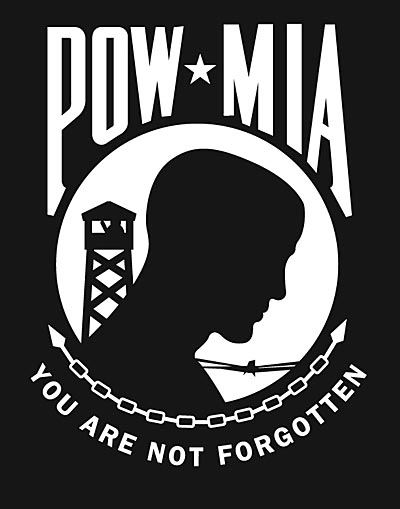
  5. The other day, I went to my local post office and saw the POW/MIA flag flying.  It got me to thinking: Who are the POWs/MIAs we need to remember today?  Don’t get me wrong.  As a retired military officer, I think we should remember America’s POWs and MIAs.  But I see no reason to fly flags everywhere to remind us of those veterans who were prisoners of war or missing in action.  Sadly, the POW/MIA flag is associated with conservative activism and reactionary views; it also can serve as a distraction from the enormous damage inflicted overseas by the U.S. military.  As Americans, we are constantly told by our leaders to focus on American victims of war; rarely if ever are we encouraged to think of war itself as a disaster, or to think of the victims on the receiving end of American firepower.

More on the POW/MIA issue: In the early 1990s, when I was a young captain, there were persistent rumors of American POWs who’d been deliberately left behind by our government.  These rumors were strong, so strong that the George H.W. Bush administration had to issue denials.

What are we to make of this?  One thing strikes me immediately: an often profound mistrust of our government exists within the military.  Our government has lied to us so often that some of my fellow officers believed it was lying again when it said there were no POWs remaining in Southeast Asia.  We just assumed our government was so wretched and dishonest that it would abandon our troops to their fate.

This is nearly 30 years ago but it’s stayed in my memory — the suspicion back then that those commie bastards still held U.S. troops and our own government was part of the cover-up.  (All those Chuck Norris and Rambo movies didn’t help matters.)

For more on this: The POW/MIA issue is still very much alive and is discussed by H. Bruce Franklin in his article,  “Missing in Action in the 21st Century,” available at hbrucefranklin.com.  As Franklin noted recently to me, “What we now think of as the Trump base was organized originally in this [POW/MIA] movement.”  Now that’s a fascinating comment.

What say you, readers?

Ending America’s Cult of the Warrior-Hero

IMG_1656
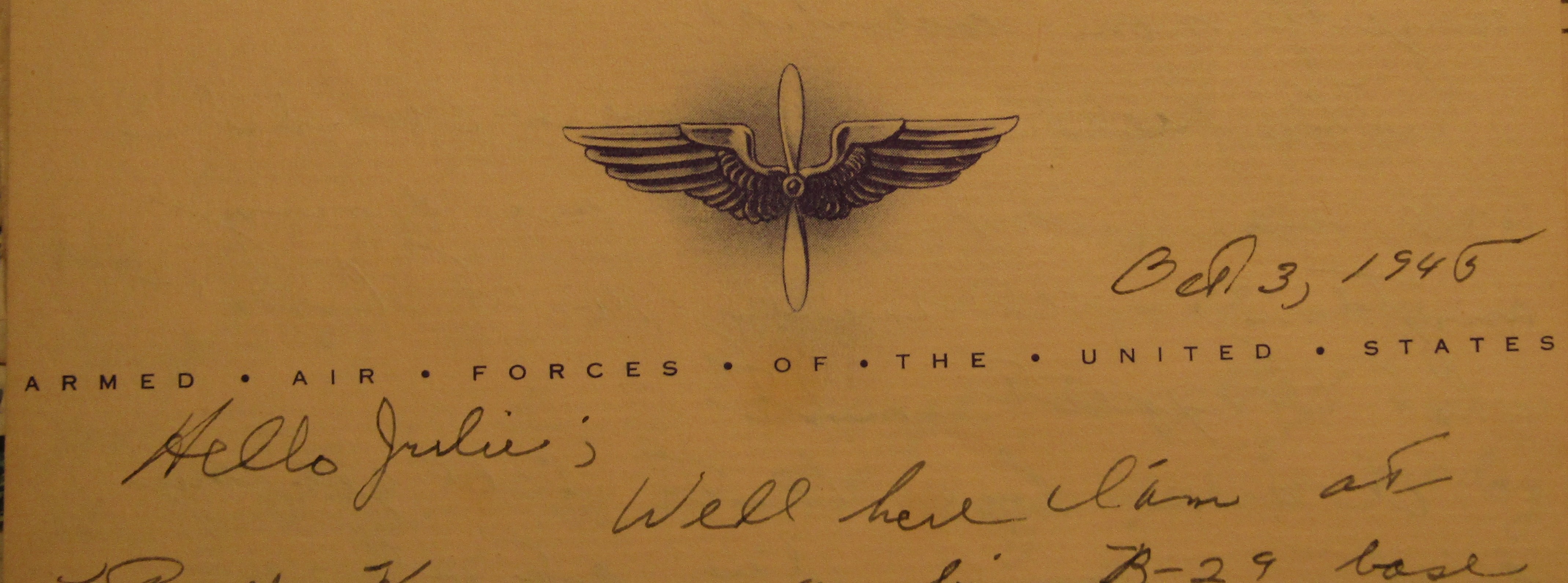
A letter to my dad from 1945

W.J. Astore

Every now and again I look over my dad’s letters from World War II.  He was attached to an armored headquarters company that didn’t go overseas, but he had friends who did serve in Europe during and after the Battle of the Bulge in late 1944.  Also, he had two brothers, one who served in Europe attached to a quartermaster (logistics) company in the Army, the other who served in the Pacific as a Marine.

Reading my dad’s letters and those from his friends and brothers, you get a sense of the costs of war.  They mention friends who’ve been killed or wounded in action; for example, a soldier who lost both his legs when his tank ran over a mine.  (His fellow soldiers took up a collection for him.)  They talk about strange things they’ve seen overseas, e.g. German buzz bombs or V-1 rockets, a crude version of today’s cruise missiles.  They look forward to furloughs and trips to cities such as Paris.  They talk about bad weather: cold, snow, mud.  They talk about women (my dad’s brother, Gino, met a Belgian girl that he wanted to marry, but it was not to be).  But perhaps most of all, they look forward to the war’s end and express a universal desire to ditch the military for civilian life.

All of my dad’s friends wanted to get out of the military and restart their civilian lives.  They didn’t want a military career — not surprising for draftees who thought of themselves as citizen-soldiers (emphasis on the citizen).  In their letters, they never refer to themselves as “warriors” or “warfighters” or “heroes,” as our society is wont to do today when talking about the troops.  War sucked, and they wanted no part of it.  One guy was happy, as he put it, that the Germans were getting the shit kicked out of them, and another guy was proud his armored unit had a “take no prisoners” approach to war, but this animus against the enemy was motivated by a desire to end the war as quickly as possible.

Reading these letters written by citizen-soldiers of the “greatest generation” reminds me of how much we’ve lost since the end of the Vietnam War and the rise of the “all volunteer” military.  Since the 9/11 attacks in particular, we’ve witnessed the rise of a warrior/warfighter ideal in the U.S. military, together with an ethos that celebrates all troops as “heroes” merely for the act of enlisting and putting on a uniform.  My dad and his friends would have scoffed at this ethos — this idolization of “warriors” and “heroes” — as being foreign to a citizen-soldier military.  Back then, the country that boasted most of warriors and heroes was not the USA: it was Nazi Germany.

Discarding the citizen-soldier ideal for a warrior ethos has been and remains a major flaw of America’s post-Vietnam military.  It has exacerbated America’s transition from a republic to an empire, even as America’s very own wannabe Roman emperor, Donald Trump, tweets while America burns.

Men (and women) of the greatest generation served proudly if reluctantly during World War II.  They fought to end the war as quickly as possible, and they succeeded.  America’s endless wars today and our nation’s rampant militarization dishonor them and their sacrifices.  If we wish to honor their service and sacrifice, we should bring our troops home, downsize our empire and our military budget, and end our wars.

Militarism USA

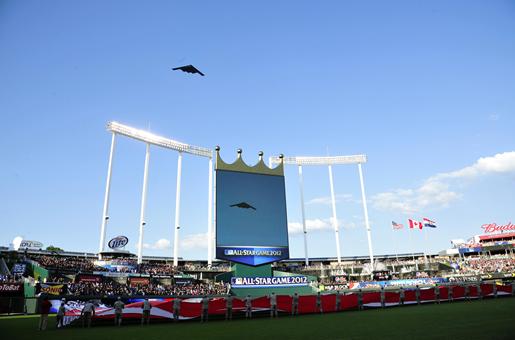
A nuclear-capable B-2 Stealth Bomber flies over a gigantic flag at the 2012 Baseball All-Star Game

W.J. Astore

As Veterans Day approaches, I thought I’d revive a column I wrote for TomDispatch.com back in 2009.  I continue to marvel at the militarism of the USA, and the way in which the troops are defined as “warriors” and “warfighters” who increasingly see themselves as being divorced from, and superior to, “civilians” in the USA.  Of course, there was a time in America when our troops were proud to define themselves as citizen-soldiers, with the emphasis on citizen.  Not anymore.  The ethos has changed, pushed toward a “professional” military that sees itself as a breed apart.  And that’s not good for democracy.

I still recall the example set by Major Dick Winters, memorialized in the “Band of Brothers” series on HBO.  Dick Winters swore that when the war was over against Nazi Germany and Imperial Japan, he’d return to his farm in Pennsylvania and leave soldiering and war behind.  And that’s exactly what he did. No “warrior” nonsense for him.

Anyway, here’s the article I wrote five years ago.  Sadly, its theme is more relevant today than it was in 2009.

What Ever Happened to Gary Cooper? A Seven-Step Program to Return America to a Quieter, Less Muscular, Patriotism
By William Astore

I have a few confessions to make: After almost eight years of off-and-on war in Afghanistan and after more than six years of mayhem and death since “Mission Accomplished” was declared in Operation Iraqi Freedom, I’m tired of seeing simpleminded magnetic ribbons on vehicles telling me, a 20-year military veteran, to support or pray for our troops. As a Christian, I find it presumptuous to see ribbons shaped like fish, with an American flag as a tail, informing me that God blesses our troops. I’m underwhelmed by gigantic American flags — up to 100 feet by 300 feet — repeatedly being unfurled in our sports arenas, as if our love of country is greater when our flags are bigger. I’m disturbed by nuclear-strike bombers soaring over stadiums filled with children, as one did in July just as the National Anthem ended during this year’s Major League Baseball All Star game. Instead of oohing and aahing at our destructive might, I was quietly horrified at its looming presence during a family event.

We’ve recently come through the steroid era in baseball with all those muscled up players and jacked up stats. Now that players are tested randomly, home runs are down and muscles don’t stretch uniforms quite as tightly. Yet while ending the steroid era in baseball proved reasonably straightforward once the will to act was present, we as a country have yet to face, no less curtail, our ongoing steroidal celebrations of pumped-up patriotism.

It’s high time we ended the post-Vietnam obsession with Rambo’s rippling pecs as well as the jaw-dropping technological firepower of the recent cinematic version of G.I. Joe and return to the resolute, undemonstrative strength that Gary Cooper showed in movies like High Noon.

In the HBO series The Sopranos, Tony (played by James Gandolfini) struggles with his own vulnerability — panic attacks caused by stress that his Mafia rivals would interpret as fatal signs of weakness. Lamenting his emotional frailty, Tony asks, “What ever happened to Gary Cooper?” What ever happened, in other words, to quiet, unemotive Americans who went about their business without fanfare, without swagger, but with firmness and no lack of controlled anger at the right time?

Tony’s question is a good one, but I’d like to spin it differently: Why did we allow lanky American citizen-soldiers and true heroes like World War I Sergeant Alvin York (played, at York’s insistence, by Gary Cooper) and World War II Sergeant (later, first lieutenant) Audie Murphy (played in the film To Hell and Back, famously, by himself) to be replaced by all those post-Vietnam pumped up Hollywood “warriors,” with Sylvester Stallone and Arnold Schwarzenegger-style abs and egos to match?

And far more important than how we got here, how can we end our enduring fascination with a puffed up, comic-book-style militarism that seems to have stepped directly out of screen fantasy and into our all-too-real lives?

A Seven-Step Recovery Program

As a society, we’ve become so addicted to militarism that we don’t even notice the way it surrounds us or the spasms of societal ‘roid rage that go with it. The fact is, we need a detox program. At the risk of incurring some of that ‘roid rage myself, let me suggest a seven-step program that could help return us to the saner days of Gary Cooper:

1. Baseball players on steroids swing for the fences. So does a steroidal country. When you have an immense military establishment, your answer to trouble is likely to be overwhelming force, including sending troops into harm’s way. To rein in our steroidal version of militarism, we should stop bulking up our military ranks, as is now happening, and shrink them instead. Our military needs not more muscle supplements (or the budgetary version of the same), but far fewer.

2. It’s time to stop deferring to our generals, and even to their commander-in-chief. They’re ours, after all; we’re not theirs. When President Obama says Afghanistan is not a war of choice but of necessity, we shouldn’t hesitate to point out that the emperor has no clothes. Yet when it comes to tough questioning of the president’s generals, Congress now seems eternally supine. Senators and representatives are invariably too busy falling all over themselves praising our troops and their commanders, too worried that “tough” questioning will appear unpatriotic to the folks back home, or too connected to military contractors in their districts, or some combination of the three.

Here’s something we should all keep in mind: generals have no monopoly on military insight. What they have a monopoly on is a no-lose situation. If things go well, they get credit; if they go badly, we do. Retired five-star general Omar Bradley was typical when he visited Vietnam in 1967 and declared: “I am convinced that this is a war at the right place, at the right time and with the right enemy — the Communists.” North Vietnam’s only hope for victory, he insisted, was “to hang on in the expectation that the American public, inadequately informed about the true situation and sickened by the loss in lives and money, will force the United States to give up and pull out.”

There we have it: A classic statement of the belief that when our military loses a war, it’s always the fault of “we the people.” Paradoxically, such insidious myths gain credibility not because we the people are too forceful in our criticism of the military, but because we are too deferential.

3. It’s time to redefine what “support our troops” really means. We console ourselves with the belief that all our troops are volunteers, who freely signed on for repeated tours of duty in forever wars. But are our troops truly volunteers? Didn’t we recruit them using multi-million dollar ad campaigns and lures of every sort? Are we not, in effect, running a poverty and recession draft? Isolated in middle- or upper-class comfort, detached from our wars and their burdens, have we not, in a sense, recruited a “foreign legion” to do our bidding?

If you’re looking for a clear sign of a militarized society — which few Americans are — a good place to start is with troop veneration. The cult of the soldier often covers up a variety of sins. It helps, among other things, hide the true costs of, and often the futility of, the wars being fought. At an extreme, as the war began to turn dramatically against Nazi Germany in 1943, Germans who attempted to protest Hitler’s failed strategy and the catastrophic costs of his war were accused of (and usually executed for) betraying the troops at the front.

The United States is not a totalitarian state, so surely we can hazard criticisms of our wars and even occasionally of the behavior of some of our troops, without facing charges of stabbing our troops in the back and aiding the enemy. Or can we?

4. Let’s see the military for what it is: a blunt instrument of force. It’s neither surgical nor precise nor predictable. What Shakespeare wrote 400 years ago remains true: when wars start, havoc is unleashed, and the dogs of war run wild — in our case, not just the professional but the “mercenary” dogs of war, those private contractors to the Pentagon that thrive on the rich spoils of modern warfare in distant lands. It’s time to recognize that we rely ever more massively to prosecute our wars on companies that profit ever more handsomely the longer they last.

5. Let’s not blindly venerate the serving soldier, while forgetting our veterans when they doff their spiffy uniforms for the last time. It’s easy to celebrate our clean-cut men and women in uniform when they’re thousands of miles from home, far tougher to lend a hand to scruffier, embittered veterans suffering from the physical and emotional trauma of the battle zones to which they were consigned, usually for multiple tours of duty.

6. I like air shows, but how about — as a first tiny step toward demilitarizing civilian life — banning all flyovers of sporting events by modern combat aircraft? War is not a sport, and it shouldn’t be a thrill.

7. I love our flag. I keep my father’s casket flag in a special display case next to the very desk on which I’m writing this piece. It reminds me of his decades of service as a soldier and firefighter. But I don’t need humongous stadium flags or, for that matter, tiny flag lapel pins to prove my patriotism — and neither should you. In fact, doesn’t the endless post-9/11 public proliferation of flags in every size imaginable suggest a certain fanaticism bordering on desperation? If we saw such displays in other countries, our descriptions wouldn’t be kindly.

Of course, none of this is likely to be easy as long as this country garrisons the planet and fights open-ended wars on its global frontiers. The largest step, the eighth one, would be to begin seriously downsizing that mission. In the meantime, we shouldn’t need reminding that this country was originally founded as a civilian society, not a militarized one. Indeed, the revolt of the 13 colonies against the King of England was sparked, in part, by the perceived tyranny of forced quartering of British troops in colonial homes, the heavy hand of an “occupation” army, and taxation that we were told went for our own defense, whether we wanted to be defended or not.

If Americans are going to continue to hold so-called tea parties, shouldn’t some of them be directed against the militarization of our country and an enormous tax burden fed in part by our wasteful, trillion-dollar wars?

Modest as it may seem, my seven-step recovery program won’t be easy for many of us to follow. After all, let’s face it, we’ve come to enjoy our peculiar brand of muscular patriotism and the macho militarism that goes with it. In fact, we revel in it. Outwardly, the result is quite an impressive show. We look confident and ripped and strong. But it’s increasingly clear that our outward swagger conceals an inner desperation. If we’re so strong, one might ask, why do we need so much steroidal piety, so many in-your-face patriotic props, and so much parade-ground conformity?

Forget Rambo and action-picture G.I. Joes: Give me the steady hand, the undemonstrative strength, and the quiet humility of Alvin York, Audie Murphy — and Gary Cooper.

Copyright 2009 William J. Astore