Top Dove: Peacenik

W.J. Astore

I’m still waiting for the blockbuster Hollywood production that celebrates peace

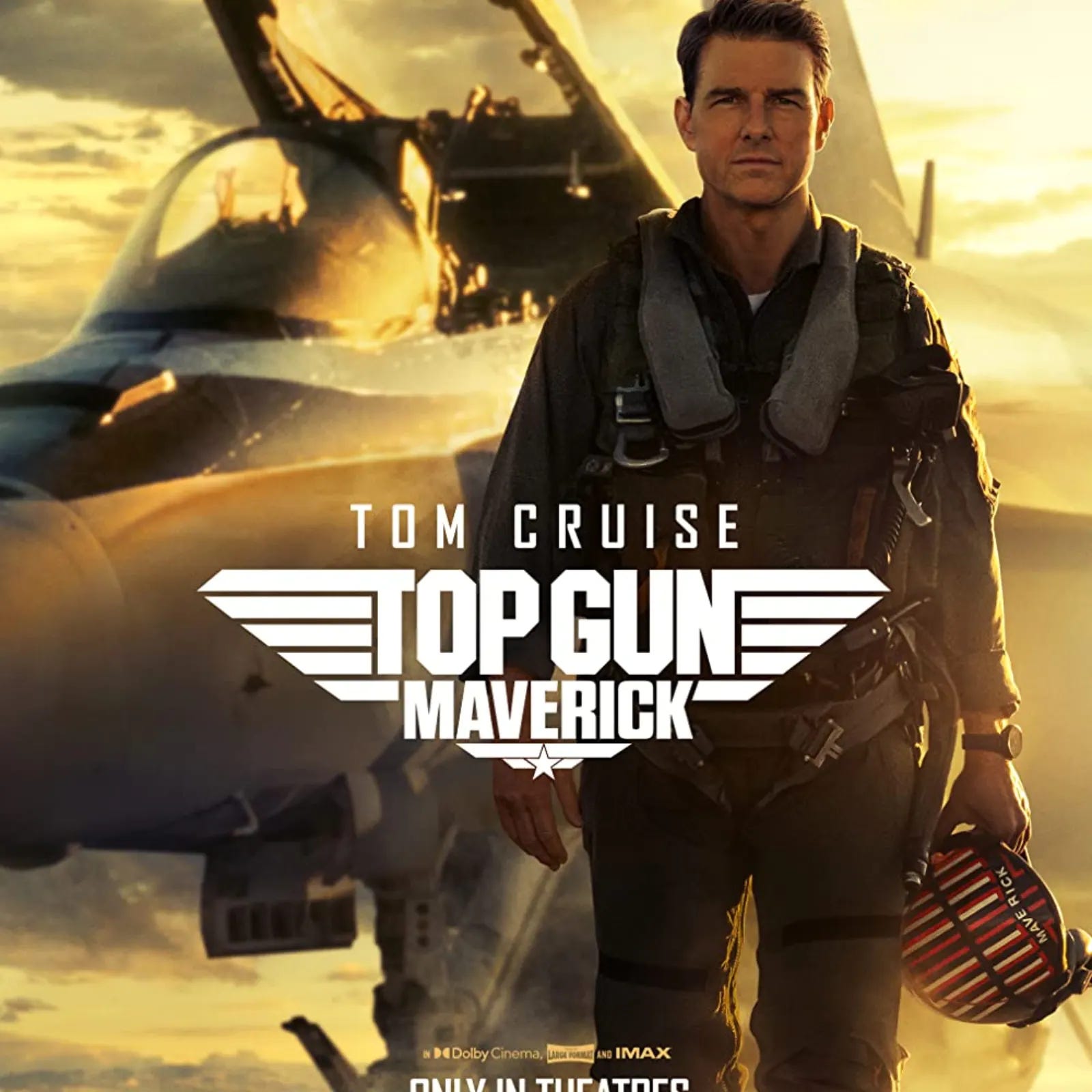
Last year, “Top Gun: Maverick” was all the rage. It was a silly war flick with a plot ripped from the original “Star Wars” movie featuring plenty of bloodless, high octane action sequences. I enjoyed it in the way I occasionally indulge in unhealthy fast food. The movie was instantly forgettable except for one scene where hotshot pilot Maverick, played of course by Tom Cruise, meets his old rival Iceman, played by Val Kilmer. In real life, Kilmer suffers from throat cancer, and his condition is not hidden in the movie, where Kilmer is now an admiral who still believes in his old friend, Captain Pete “Maverick” Mitchell.

Naturally, Maverick saves the day, pummeling a nameless enemy (most likely Iran) with bombs because that country is developing nuclear weapons. Nothing, of course, is said of the thousands of nuclear warheads and bombs in America’s arsenal, or that the USA is the only country to have used atomic bombs in war (Hiroshima, Nagasaki). But I digress.

Hollywood loves war movies. They sell well. Yet I still await “Top Dove: Peacenik,” in which an intrepid, brave, determined, and charismatic person stops a war without bombing or killing anyone. What a breath of fresh air that would be!

Exactly ten years ago, I posted the article below at Bracing Views. We need peacemakers now more than ever. Sadly, they are still very much forgotten, or ignored, or dismissed as unserious or even delusional.

Forgotten Are the Peacemakers (2013)

Monument to Elihu Burritt in New Marlboro, Mass. (author's photo)
Monument to Elihu Burritt in New Marlboro, Mass. (author’s photo)
The Plaque in Honor of Burritt
The Plaque in Honor of Burritt (author’s photo)

Being Catholic, I’m a big fan of the Sermon on the Mount and Christ’s teaching that “blessed are the peacemakers.”  Yet in American history it seems that “forgotten are the peacemakers” would be a more accurate lesson.  We’re much more likely to remember “great” generals, even vainglorious ones like George S. Patton or Douglas MacArthur, than to recognize those who’ve fought hard against long odds for peace.

Elihu Burritt was one such peacemaker.  Known in his day as “The Learned Blacksmith,” Burritt fought for peace and against slavery in the decades before the Civil War in the United States.  He rose from humble roots to international significance, presiding over The League of Universal Brotherhood  in the 1840s and 1850s while authoring many books on humanitarian subjects.

Interestingly, peacemakers like Burritt were often motivated by evangelical Christianity.  They saw murder as a sin and murderous warfare as an especially grievous manifestation of man’s sinfulness.  Many evangelicals of his day were also inspired by their religious beliefs to oppose slavery as a vile and reprehensible practice.

Christian peacemakers like Burritt may not have had much success, but they deserve to be remembered and honored as much as our nation’s most accomplished generals.  That we neglect to honor men and women like Burritt says much about America’s character.

For if we truly are a peace-loving people, why do we fail to honor our most accomplished advocates for peace?
The U.S. Military’s Recruitment Problem, Solved!

W.J. Astore

It’s easy, really

The U.S. military is having a major problem recruiting new troops, notes Nan Levinson in an informative piece at TomDispatch.com. As usual, the military has tried most everything. Lowering standards, especially on the ASVAB test. Boosting bonuses and benefits. Infiltrating high school (even grade schools!) with military programs tied to recruitment like Junior ROTC. More money for ad campaigns, using celebrities and catchy slogans. Hoopla at sports stadiums. Nothing’s worked.

Even extended Hollywood commercials for the military aren’t enough to get young Mavericks to join

But, being an out-of-the-Pentagon-box thinker, I have the solution: Downsize the military!

Why does America need a large standing Army given all the force-multipliers we’re buying for hundreds of billions of dollars each year? What large-scale war is America currently fighting? We pulled out of Afghanistan, out of Iraq (mostly), and should be downsizing our imperial footprint (or bootprint, if you prefer).

I know: Russia! China! We must be prepared!

Those seeking a conventional war with either of those two land powers in their spheres of influence should surely have their sanity checked. Land war in Asia? With nuclear powers? No thank you!

Come on, America. If fewer young Americans want to join the U.S. military, take this as a sign of the wisdom of youth. Wisdom of youth — a phrase not commonly seen, but possibly of great relevance to us all, as Levinson notes in her conclusion.

Want a better military with higher-quality recruits? Simply recruit fewer of them by being more selective and by downsizing inflated recruitment numbers. In other words, change the metrics to show a recruiting victory. The U.S. military, after all, has plenty of experience doctoring metrics (Vietnam, Iraq, Afghanistan, etc.). 

Lower the quotas* and declare victory! Hooah!

*Warning: lowering the quotas may result in decreased funding from Congress and increased chances of avoiding wasteful wars. May also result in fewer command billets for generals. Warrior discretion is advised.*

Send in the B-52s

Usaf.Boeing_B-52
Sixty Years of B-52s (U.S. Air Force photo)

W.J. Astore

Perhaps there should be a “new rule” on the American military scene: When the B-52s are called out (Vietnam, Iraq, Afghanistan), it means America has well and truly lost.

Unbeknownst to most Americans, since April of this year, B-52s flying out of “Al Udeid airbase in Qatar … have conducted more than 325 strikes in almost 270 sorties, using over 1,300 weapons” against ISIS and now in Afghanistan, notes Paul Rogers at Open Democracy.

For those of you unfamiliar with B-52s, they are huge long-range bombers, originally deployed in the 1950s to carry nuclear weapons against the Soviet Union.  In the 1960s and early 1970s, they were called upon to carry conventional bomb loads during the Vietnam War.  Their enormous bomb tonnages did not serve to win that war, however, nor has the subsequent use of B-52s in places like Iraq and Afghanistan served to win those wars.  They have become a sort of stop-gap weapon system, their ordnance called upon to stem the tide of American military reversals even as their presence is supposed to demonstrate American resolve.

In a way, America’s B-52s are like the Imperial Star Destroyers of the “Star Wars” universe.

ImperialstarDestroyer480ppx
An imperial star destroyer loses yet another chase

Big, lumbering ships that never seem to provide a winning edge vis-a-vis the smaller, “rebel” forces against which they’re deployed.  But the empire, which never seems to learn, keeps using them, even as it seeks even bigger, “Death Star” weaponry with which to annihilate the resistance.

Of course, when Americans think about air power, they don’t think of “Star Wars” battles or B-52s on bombing runs.  They think of audacious and cocky fighter pilots, like Tom Cruise’s “Maverick” in the highly popular movie, “Top Gun.” For me, the most telling scene in that movie is when the flashy, undisciplined, and self-centered Maverick puts his F-14 Tomcat jet into an irrecoverable flat spin. That wouldn’t be so bad, except Maverick has a backseater, “Goose,” who dies during the ejection.  Maverick, of course, ejects safely and lives to fight another day.

goose
It’s too late for Goose, but Tom Cruise lives on to make more bad movies

Again, most people probably remember the cheesy ending to this movie where Cruise is shooting down MiG after MiG.  But take another look at the flat spin scene.  America, like Maverick and Goose’s jet, is dropping from the sky, spinning wildly and uncontrollably all the way.  And while a few Mavericks may be lucky enough to get away unscathed, many Gooses in the process are going to end up dead.

Goose didn’t deserve to die in “Top Gun,” and neither do the many “gooses” around the world caught in the violent and all-too-real backwash of America’s jet-fueled wars.

The Persistence of War

A young Tom Cruise loving his machine gun in "Taps"
A young Tom Cruise loving his machine gun in “Taps”

W.J. Astore

“[W]ar is a distressing, ghastly, harrowing, horrific, fearsome and deplorable business.  How can its actual awfulness be described to anyone?”  Stuart Hills, By Tank Into Normandy, p. 244

“[E]very generation is doomed to fight its war, to endure the same old experiences, suffer the loss of the same old illusions, and learn the same old lessons on its own.”  Philip Caputo, A Rumor of War, p. 81

The persistence of war is a remarkable thing.  Two of the better books about war and its persistence are J. Glenn Gray’s “The Warriors” and Chris Hedges “War Is a Force that Gives Us Meaning.”   Hedges, for example, writes about “the plague of nationalism,” our willingness to subsume our own identities in the service of an abstract “state” as well as our eagerness to serve that state by killing “them,” some “other” group that the state has vilified.

In warning us about the perils of nationalism, Hedges quotes Primo Levi’s words: “I cannot tolerate the fact that a man should be judged not for what he is but because of the group to which he belongs.”  Levi’s lack of tolerance stems from the hardest of personal experiences: surviving Auschwitz as an Italian Jew during the Holocaust.

Gray takes this analysis in a different direction when he notes that those who most eagerly and bloodthirstily denounce “them,” the enemy, are typically far behind the battle lines or even safely at home.  The troops who fight on the front lines more commonly feel a sort of grudging respect for the enemy, even a sense of kinship that comes with sharing danger in common.

Part of the persistence of war, in other words, stems from the ignorant passions of those who most eagerly seek it and trumpet its heroic wonders even as they stand (and strive to remain) safely on the sidelines.

Both Hedges and Gray also speak to the dangerous allure of war, its spectacle, its excitement, its awesomeness.  Even the most visceral and “realistic” war films, like the first thirty minutes of “Saving Private Ryan,” represent war as a dramatic spectacle.  War films tend to glamorize combat (think of “Apocalypse Now,” for example), which is why they do so little to put an end to war.

One of the best films to capture the dangerous allure of war to youth is “Taps.”  I recall seeing it in 1981 at the impressionable age of eighteen.  There’s a tiny gem of a scene near the end of the film when the gung ho honor guard commander, played by Tom Cruise before he was TOM CRUISE, mans a machine gun.  He’s firing against American troops sent to put down a revolt at a military academy, but Cruise’s character doesn’t care who he’s firing at.  He’s caught in the rapture of destruction.

He shouts, “It’s beautiful, man.  Beautiful.”  And then he himself is shot dead.

This small scene with Cruise going wild with the machine gun captures the adrenaline rush, that berserker capacity latent in us, which acts as an accelerant to the flames of war.

War continues to fascinate us, excite us.  It taps primal roots of power and fear and ecstasy all balled together.  It masters us, hence its persistence.

If and when we master ourselves, perhaps then we’ll finally put an end to war.