A Pilot in the Cockpit Is a Major Win for My Old Service
Recent Air Force projects have not been entirely successful, to put it gently. The F-22 Raptor was never built in the quantities the Air Force desired, nor was the B-2 stealth bomber. The F-35 has proven to be a disappointment, an overpriced “Ferrari” by the Air Force’s own admission that spends too much time in the shop even as its price over time continues to soar. The less said about the KC-46 tanker the better, as its future remains very much up in the air (or stuck on the ground, leaking fuel).
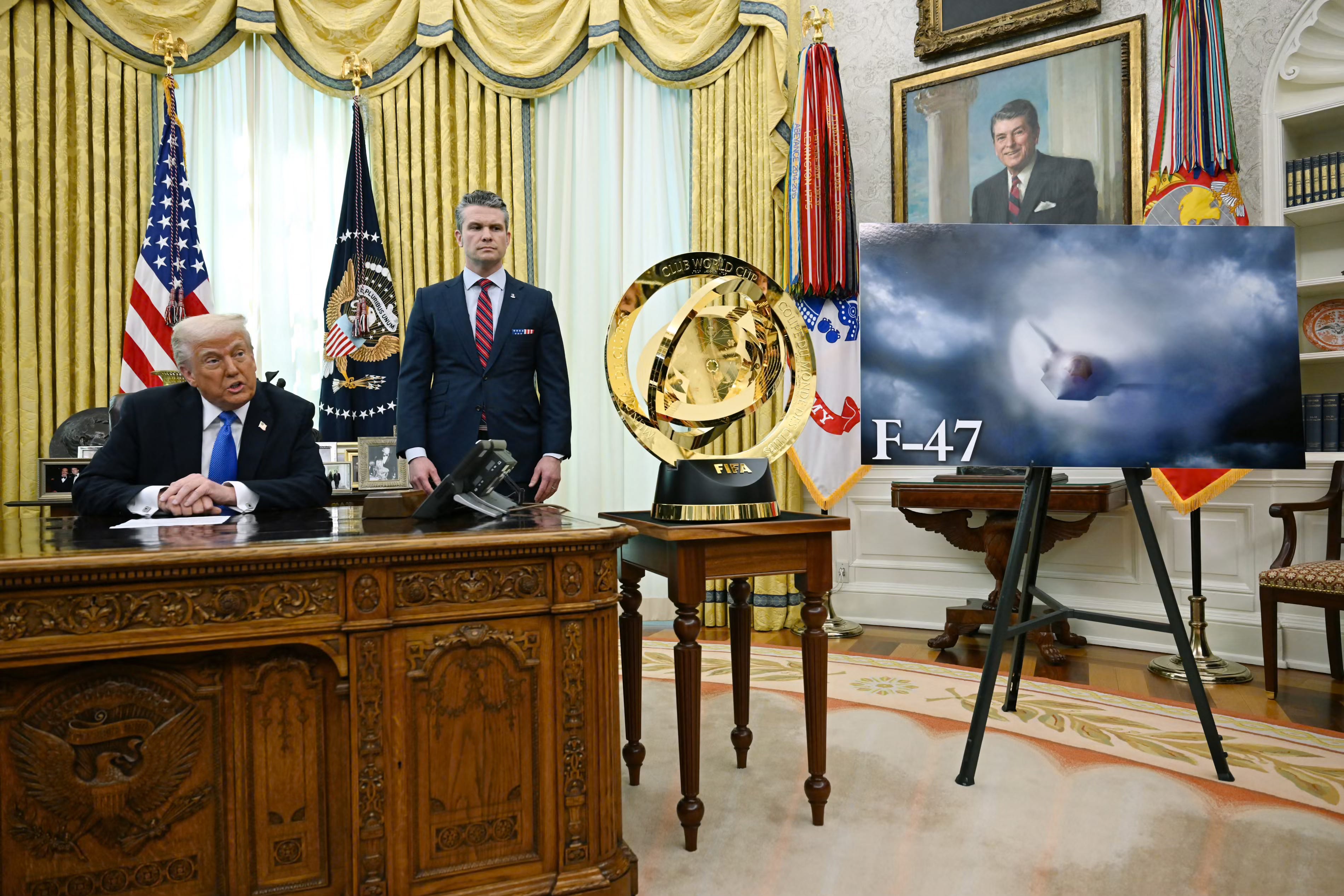
No worries. The Air Force and Boeing have been rewarded for their stellar performance with a new jet announced by President Trump yesterday, the F-47. (I don’t know what happened to the F-36 through 46 models.)
Look how badass that F-47 “bird” looks in that artist’s depiction!
Its key attribute, besides the usual hype about stealth and ultra-powerful engines and super-sensors and the like, is that it’s got a human pilot in the cockpit. This wasn’t a foregone conclusion, given Elon Musk’s belief in drones, whether fully automated or flown by pilots on the ground, at a distance. Keeping men and women in the cockpit was, is, and will always remain the most important goal of the Air Force, built as it is around the allure of pilots as masters of the air.
An interesting feature of this “6th generation” program is that the pilot will allegedly be able to control autonomous drones acting as “loyal wingmen” to the piloted F-47. That complexity should add scores of billions to the eventual price tag.
Trump always likes to boast that stealth planes like the proposed F-47, which have a low RCS, or radar cross section, will literally be invisible. The enemy will never see the F-47 coming, Trump said, jumping on board the hype train. Meanwhile, Boeing, the main contractor for the F-47, is already reaping rewards as its stock price has climbed at Mach 2 in the aftermath of Trump’s announcement.
The initial budget request of $20 billion will soon rocket skyward as the usual cost overruns kick in their afterburners. The Air Force promises the F-47 will cost less than the F-22 per unit, but if you believe that, take a look at the rising costs of the B-2, or the F-35, or the KC-46.
America may be a shitstorm today, but no other country burns through money for needless warplanes than the great USA. You may have stellar bullet trains, China, but do you have invisible 6th generation air supremacy jets? I thought not. USA! USA!
In a new article for TomDispatch.com. I tackle the Air Force’s latest stealth bomber, the B-21 Raider. The project will likely cost $100 billion, and possibly much more than this over its lifetime. Is this truly what we need for our national “defense”?
By their nature, bombers are not defensive weapons. They’re designed to take the fight to the enemy with overwhelming destructive force. In other words, the B-21, strictly speaking, is not for national defense: it’s for national offense. That’s why the U.S. Air Force speaks so proudly of “global strike” against “any target.” It’s the empowerment as well as the enshrinement of a vision of violent and disruptive action by the U.S. military anytime, anywhere, on the planet. If we weren’t Americans, we’d recognize this vision for what it really is: a form of militarism gone mad.
Here is an excerpt from my article at TomDispatch.
The Air Force’s Strange Love for the New B-21 Bomber The Military-Industrial Complex Strikes (Out) Again
By William J. Astore
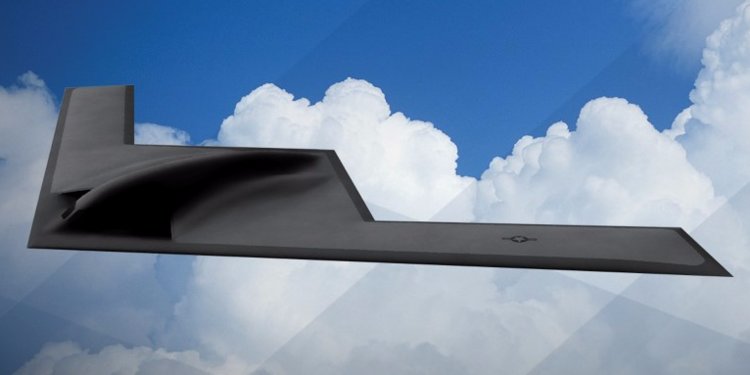
Did you know the U.S. Air Force is working on a new stealth bomber? Don’t blame yourself if you didn’t, since the project is so secret that most members of Congress aren’t privy to the details. (Talk about stealthy!) Known as the B-21 Raider, after General Doolittle’s Raiders of World War II fame, it’s designed to carry thermonuclear weapons as well as conventional missiles and bombs. In conceptual drawings, it looks much like its predecessor, the B-2 Spirit stealth bomber, all wing and no fuselage, a shape that should help it to penetrate and survive the most hostile air defense systems on Earth for the purposes of a “global strike.” (Think: nuclear Armageddon.)
As the Air Force acquires those future B-21s, the B-2s will be retired along with the older B-1B bomber, although the venerable B-52 (of the Cold War era), much modified, will remain in service for the foreseeable future. At $550 million per plane (before the inevitable cost overruns even kick in), the Air Force plans to buy as many as 200 B-21s. That’s more than $100 billion in procurement costs alone, a boon for Northrop Grumman, the plane’s primary contractor.
If history is any judge, however, a boon for Northrop Grumman is likely to prove a bust for the American taxpayer. As a start, the United States has no real need for a new, stealthy, super-expensive, nuclear-capable, deep-penetrating strategic bomber for use against “peer” rivals China and Russia …
Here’s the nightmarish reality of actually bringing such weapons systems online: when the U.S. military develops a capability, it seeks to use it, even in cases where it’s wildly inappropriate. (Again, think of the massive B-52 bombings in Vietnam, Laos, and Cambodia in a counterinsurgency campaign classically meant to win “hearts and minds.”) Fielding a new strategic bomber for global strike, including potential thermonuclear attacks, will not so much enhance national security as potentially embolden future presidents to strike whenever and wherever they want in a fashion devastating to human life. The B-21 isn’t a force-multiplier. It’s an Armageddon-enabler.
Flying High in our B-21s
Having marketed himself as a savvy military critic, is there any possibility that Donald Trump will have the smarts of Jimmy Carter when it comes to the B-21 program? Will he save America at least $100 billion (and probably far more) while eliminating yet another redundant weapons system within the Department of Defense? Fat chance. Even if he wanted to, The Donald doesn’t stand a chance against the Pentagon these days.
Flush with billions and billions of new taxpayer dollars, including funds for those F-35s and for new nukes from a bipartisan coalition in an otherwise riven Congress, America’s military services will fight for any and all major weapons systems, the B-21 included. So, too, will Congress, especially if Northrop Grumman follows the production strategy first employed by Rockwell International with the B-1: spreading the plane’s subcontractors and parts suppliers to as many states and Congressional districts as possible. This would, of course, ensure that cuts to the B-21 program would impact jobs and so drive votes in Congress in its favor. After all, what congressional representative would be willing to vote against high-paying jobs in his or her own state or district in the name of American security?
So here’s my advice to young model-builders everywhere: don’t blow up your B-21s anytime soon. Rest assured that the real thing is coming. If the Air Force wants to ensure that it has a new bomber, in the name of blasting America’s enemies to oblivion, so be it. It worked (partially and at tremendous cost) in 1943 in the flak- and fighter-filled skies of Nazi Germany, so why shouldn’t it work in 2043 over the skies of who-knows-where-istan?
Why does “your” Air Force think this way? Not just because it loves big bombers, but also because its biggest rivals aren’t in Russia or China or some “rogue” state like Iran. They’re right here in “the homeland.” I’m talking, of course, about the other military services. Yes, interservice rivalries remain alive and well at the Pentagon. If the U.S. Navy can continue to build breathtakingly expensive nuclear-powered aircraft carriers (like the much-troubled USS Gerald R. Ford) and submarines, and if the Army can have all its tanks, helicopters, and associated toys, then, dammit, the Air Force can have what truly makes it special and unique: a new stealthy strategic bomber escorted by an even newer long-range stealthy fighter.
And don’t just blame the Air Force for such retrograde thinking. Its leaders know what’s easiest to sell Congress: big, splashy projects that entail decades of funding and create tens of thousands of jobs. As congressional representatives line up to push for their pieces of the action, military contractors are only too happy to oblige. As the lead contractor for the B-21, Northrop Grumman of Falls Church, Virginia, has the most to gain, but other winners will include United Technologies of East Hartford, Connecticut; BAE Systems of Nashua, New Hampshire; Spirit Aerosystems of Wichita, Kansas; Orbital ATK of Clearfield, Utah, and Dayton, Ohio; Rockwell Collins of Cedar Rapids, Iowa; GKN Aerospace of St Louis, Missouri; and Janicki Industries of Sedro-Woolley, Washington. And these are just the major suppliers for that aircraft; dozens of other parts suppliers will be needed, and they’ll be carefully allocated to as many Congressional districts as possible. Final assembly of the plane will likely take place in Palmdale, California, integrating components supplied from sea to shining sea. Who says America’s coastal enclaves can’t join with the heartland to get things done?
Even if President Trump wanted to cancel the B-21 — and given his recent speech to graduates of the Naval Academy, the odds are that there isn’t a weapons system anywhere he doesn’t want to bring to fruition — chances are that in today’s climate of militarism he would face enormous push-back. As a colleague who’s still on active duty in the Air Force puts it, “What makes today worse than the Carter days is our flag-humping, military-slobbering culture. We can’t even have a discussion of what the country’s needs are for fear of ‘offending’ or ‘disrespecting’ the troops. Today, Carter would be painted as disloyal to those troops he was consigning to an early death because every procurement decision centers on a ‘grave’ or ‘existential’ threat to national security with immediate and deadly consequences.”
And so the Air Force and its flyboy generals will win the fight for the B-21 and take the American taxpayer along for the ride — unless, that is, we somehow have the courage to pry the control sticks from the cold, dead hands of hidebound military tradition and lobbying firepower. Until we do, it’s off we go (yet again), into the wild blue yonder, flying high in our B-21s.


 Bracing Views