It’s been a busy week of news. Here are four items that stood out.
A group of Democratic members of Congress released a short video addressed to the U.S. military, reminding service members that they may refuse unlawful orders. President Trump denounced the video as “seditious behavior” and said such behavior was “punishable by death,” even resharing posts calling for the lawmakers to be hanged. The Democratic message itself was partisan and thin on specifics, but Trump’s response was far more troubling. U.S. troops already know they can and should refuse unlawful orders—though determining what is lawful in practice is rarely simple. What struck me most was the timing: Democrats issued this warning to the troops in response to Trump, but I don’t recall a similar concern when President Biden continued military support to Israel amid mounting accusations from human-rights bodies of grave—indeed, genocidal—violations in Gaza.
In sum, Congress should confront questionable executive actions directly rather than shifting responsibility to Lieutenant Smith or Corporal Jones.
The Trump administration has floated a 28-point plan to end the Russia-Ukraine War. Reports indicate the plan involved Russian input but did not include Ukraine or key European partners. Unsurprisingly, many provisions cross Ukraine’s stated red lines. Diplomacy is still preferable to endless war—jaw-jaw over war-war is a sound motto—but it’s hard to see this plan gaining real traction, especially when it seems designed more to satisfy Washington and Moscow than Kyiv.
One thing is certain: Ukraine is learning that when you dance with elephants, you’re likely to get trampled.
Marjorie Taylor Greene has announced her resignation from Congress, effective January 5, 2026. This surprised me. I read her resignation letter and, despite disagreeing with much of her politics, I respected her consistent opposition to regime-change wars and her outspoken criticism of Israel’s genocidal effort in Gaza and of the undue influence of AIPAC and similar lobbies. She is also right to highlight how far our government has drifted from serving America’s working and middle classes.
MTG, as unlikely as it sounds, is a viable candidate for the Republican nomination for President in 2028, assuming Trump obeys the Constitution and steps aside.
The UN Security Council has approved a U.S.-sponsored Gaza resolution, with Russia and China abstaining. Their decision not to veto suggests a calculation: let Washington bear responsibility for the consequences of its own neocolonial proposal. The plan itself looks like a thinly veiled endorsement of a murderous status quo—one that provides political cover as Gaza remains strangled and devastated. If the United States is now the guarantor of this “peace,” then it also owns the moral and political fallout. If anything, this “peace” plan will only provide cover for Israel’s ongoing genocide in slow motion.
Which brings me back to unlawful orders. Any U.S. service member asked to support actions that clearly violate international law has a duty to refuse. Yet the Democrats who admonished troops about unlawful orders seemed focused only on hypothetical abuses under Trump, not on real-world concerns about U.S. support for Israel’s genocidal operations in Gaza. For too many in Washington, unwavering support for Israel overrides legal, moral, and humanitarian considerations.
Readers, what did you make of this week’s events? One thing seems certain: we continue to live in “interesting times.”
Last week, I talked to Judge Napolitano about the Russia-Ukraine War, the Trump administration’s designs on Venezuela, and the rule of law in America.
A point I could have made more clearly involves casualty figures in the Russia-Ukraine War. There are no official figures that are trustworthy; each side is exaggerating the casualties of the other, which is unsurprising, since the first casualty of war is truth.
Figures that I’ve seen suggest that Ukraine has suffered over 100,000 killed and another 400,000 wounded/missing/captured. Russian figures may be double those of Ukraine but I honestly don’t know. My guess is that Russian casualty figures are higher because they have been on the offensive more and Ukrainian defenses have generally been robust and the troops increasingly skilled. Added to these battlefield casualties are the more than 30,000 Ukrainian citizens killed in the war, plus another six to seven million Ukrainians who have fled the country.
My point here isn’t to celebrate one side as “winning” or “losing.” To my mind, both sides are losing as they wage this devastating war, a war that will enter its fourth year next February. While some commentators see this war as a necessary one for Ukraine, a war for high ideals like democracy and freedom, I see a country that has lost roughly 20% of its territory, a country that suffers because the war is being fought largely on Ukrainian land, a country where roughly 7 in 10 people seek an end to this costly struggle.
A common narrative in the West is that Putin must not be allowed to profit from war, and if he does, the Russian military will next be on the march against NATO countries. This narrative suggests war and more war until either Putin is defeated or Ukraine collapses under the strain.
I would prefer to see negotiations to end the killing, the suffering, and the destruction, allowing Ukraine to recover, even if Ukraine must give up its desire to join NATO. I remain concerned that this war could expand further, as lengthy wars tend to do, becoming a wider regional war that could conceivably escalate toward nuclear weapons.
Since the last time (July 19th) I wrote about the Russia-Ukraine War, perhaps the biggest change has been to President Trump’s rhetoric. After being frustrated in his efforts to end the war (and perhaps win a Nobel Peace Prize to boot), Trump effectively washed his hands of the conflict. A Truth Social post was especially surprising, as the BBC reported on 9/24:
US President Donald Trump has said Kyiv can “win all of Ukraine back in its original form”, marking a major shift in his position on the war with Russia.
In a post on his Truth Social platform, he said Ukraine could get back “the original borders from where this war started” with the support of Europe and Nato, due to pressures on Russia’s economy …
Trump has repeatedly expressed his desire to end the war, but has previously warned that process would likely involve Ukraine giving up some territory, an outcome Zelensky hasconsistently rejected.
In his post, Trump added Ukraine could “maybe even go further than that”, but did not specify what he was referring to.
Exactly how Ukraine is going to win back all the land captured by Russia is unclear. Also less than clear is the role of the EU and NATO in this. Trump appears to have said it’s up to the EU and NATO to support Ukraine (as if NATO is not commanded and controlled by America), with the U.S. more than willing to sell weapons to EU and NATO countries to support Ukraine’s efforts.
Trump’s gambit is this: If Ukraine wins, he takes credit for continuing to supply weaponry and for his new vote of confidence. If Ukraine loses, Trump shifts the blame to the EU and possibly to Ukraine and Zelensky too.
It’s a cynical policy—but these are cynical times.
An undeniable truth is that the war grinds on with no end in sight. U.S. aid to Ukraine will soon reach $200 billion. Meanwhile, front lines have stagnated, counteroffensives have stalled, and Ukrainians themselves have grown increasingly weary of war.
Observers in the West point to a weakening Russian economy and high battlefield losses as signs Russia itself may be nearing a tipping point that could lead to collapse and defeat. Both a heavily damaged Ukraine and a destabilized Russia might be the fruits of “victory,” leading to chaos and possible nuclear escalation.
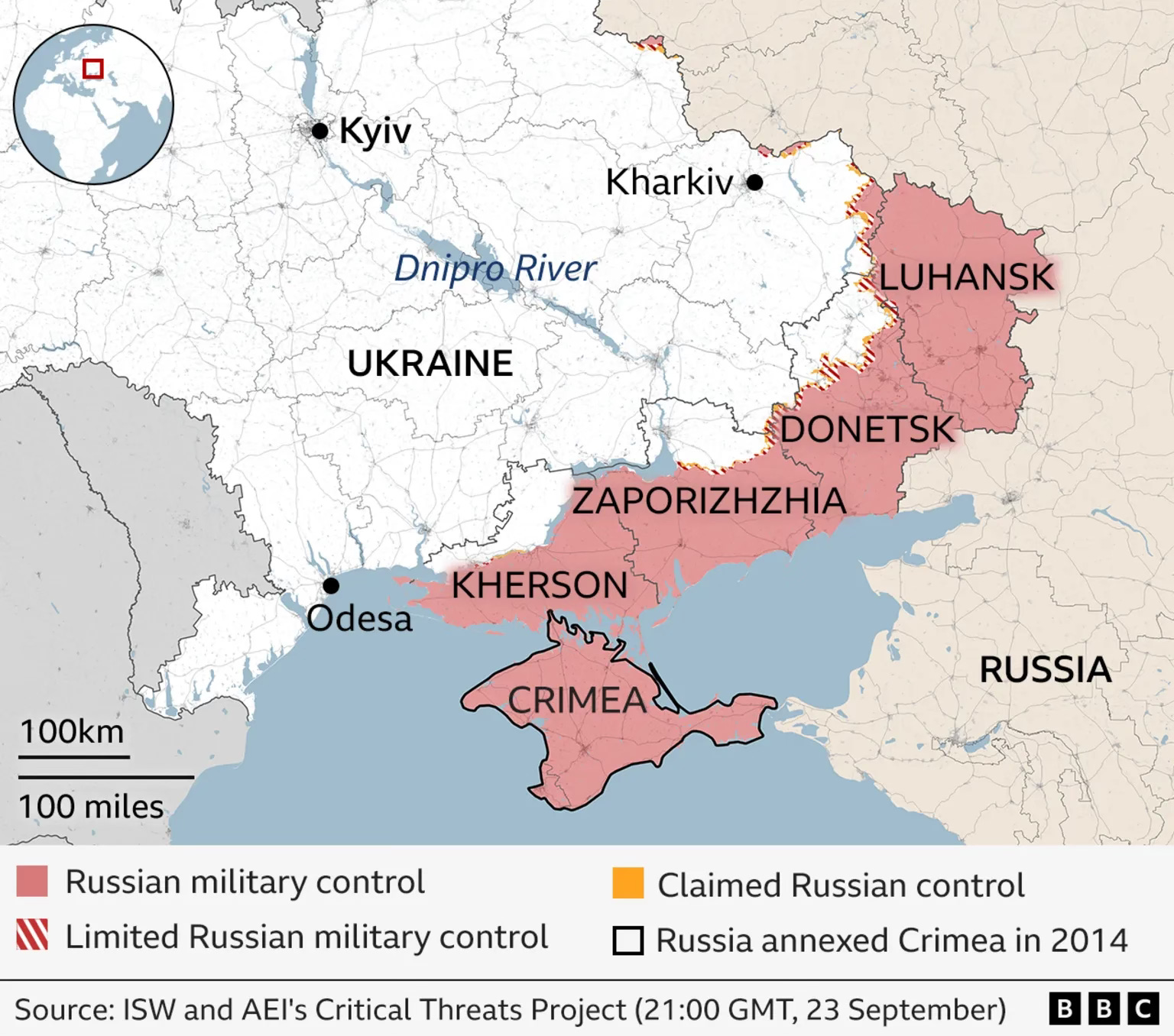
Again, no matter what Trump says, a total victory for Ukraine looks remote. Russia controls about 20 percent of Ukrainian territory, including the industrial Donbas and much of the south. Ukraine’s economy is weakened (as is Russia’s), its army is depleted, and its demographics are unfavorable to success (millions of Ukrainians have sought sanctuary abroad).
The Media’s Role in Perpetuating Illusion
The mainstream media in the U.S. has been partisan since day one. The MSM framed the conflict as a morality play: a heroic democracy versus an evil autocrat.
Meanwhile, the MSM overhyped U.S. weapons as “decisive” and Ukrainian counteroffensives in 2023 as “war-winning.” Media hype distorted expectations and contributed to public fatigue.
Most strikingly, the press has consistently downplayed the risks of escalation with a nuclear power. Ukraine’s use of long-range Western missiles to strike inside Russia carries serious dangers. That Putin will tolerate further provocations without escalating himself is a dangerous bet.
The Case for Diplomacy
Ukraine, no matter Trump’s new faith, cannot win this war in the maximalist sense of regaining all occupied territories and forcing Russia’s surrender. The longer the war continues, the more Ukraine will suffer—physically, economically, and politically.
Wars feed autocracy. Already, Ukraine has postponed elections, banned several opposition parties, and restricted media outlets. These measures may be understandable in wartime, but they belie the notion that Ukraine is a flourishing democracy.
A negotiated settlement is not capitulation. It is recognition of limits. The alternative is indefinite conflict—one that may bleed Ukraine dry even as it edges the world closer to catastrophe.
Dangerous Assumptions
Some policymakers argue a prolonged war will weaken Russia to the point of collapse. But a weakened Russia is not necessarily a safer one. If the Russian state disintegrates, who controls its nuclear arsenal? What if chaos in Moscow produces a more radical, vengeful leader? What if a desperate Kremlin lashes out, or if fighting spills into a NATO country like Poland?
Conversely, what if Ukraine, drained by endless war and reliant on foreign arms, slides toward authoritarianism? Wars have a way of transforming republics into garrison states. The longer the conflict lasts, the greater the risk that Ukraine’s democracy will become a casualty of its own “great patriotic war.”
The Limits of Analogy
Too often, the war is discussed through lazy historical analogies. Putin is Hitler; Zelensky is Churchill; negotiations are “another Munich.” Such framing flatters Western moral vanity but obscures strategic reality. This is not 1938. Putin is not on the verge of conquering Europe, and diplomats are not appeasing him by seeking peace.
Putin may be ruthless, but he is not suicidal. He knows that attacking a NATO member would invite his own destruction. Nuclear deterrence remains real. To suggest otherwise is to indulge in a fever-dream of perpetual conflict, one that justifies limitless military spending and forecloses diplomacy.
The American Connection
For most Americans, the Russia–Ukraine War remains distant and impersonal. We are not threatened by Russian artillery; the war is thousands of miles away. Yet we are paying for it—literally. Every artillery shell, every tank, every missile financed through our taxes contributes to death and destruction abroad. Some justify this as moral duty: helping Ukraine defend freedom. But morality also demands an accounting of consequences.
How many Americans know that 69 percent of Ukrainians report being weary of the war, or that their own government has suspended elections? How many realize that each dollar spent on war is a dollar not spent on schools, infrastructure, or healthcare at home?
We are told the U.S. can afford virtually limitless weapons for Ukraine, but when it comes to social programs, we always hear the same question: How are you going to pay for that? Apparently, there’s always money for war, never for peaceful pursuits.
A Broader Reckoning
The Russia–Ukraine War has become a mirror reflecting America’s own pathologies: our addiction to militarism, our aversion to diplomacy, our willingness to spend without scrutiny when the cause is war, and our moral complacency about the human cost of conflict.
We have turned foreign policy into a morality play, where compromise is dismissed as cowardice and negotiation is treated as akin to sin. Yet history teaches the opposite: the greatest statesmen are not those who glorify war but those who end it.
The Russia–Ukraine War continues, and so does the silence around the most basic of questions: What is America’s endgame? If the answer is “as long as it takes,” we should ask: takes for what? For Ukraine’s victory—or for its ruin? For democracy’s defense—or for another endless war?
It is time to demand accountability, restraint, and above all, diplomacy. Supporting Ukraine should not mean subsidizing endless cycles of death and destruction. How many more must die before this war is finally ended?
Roughly three and a half years have passed since Russia’s invasion of Ukraine in February 2022 and the war shows little sign of ending. President Trump has gone from boasting he could end the war in a day to following the policy of the Biden administration in providing weapons and aid to Ukraine. To most Americans, the war has become background noise, barely perceptible. Most Ukrainian flags have been put away or deleted from Facebook and similar social media sites.
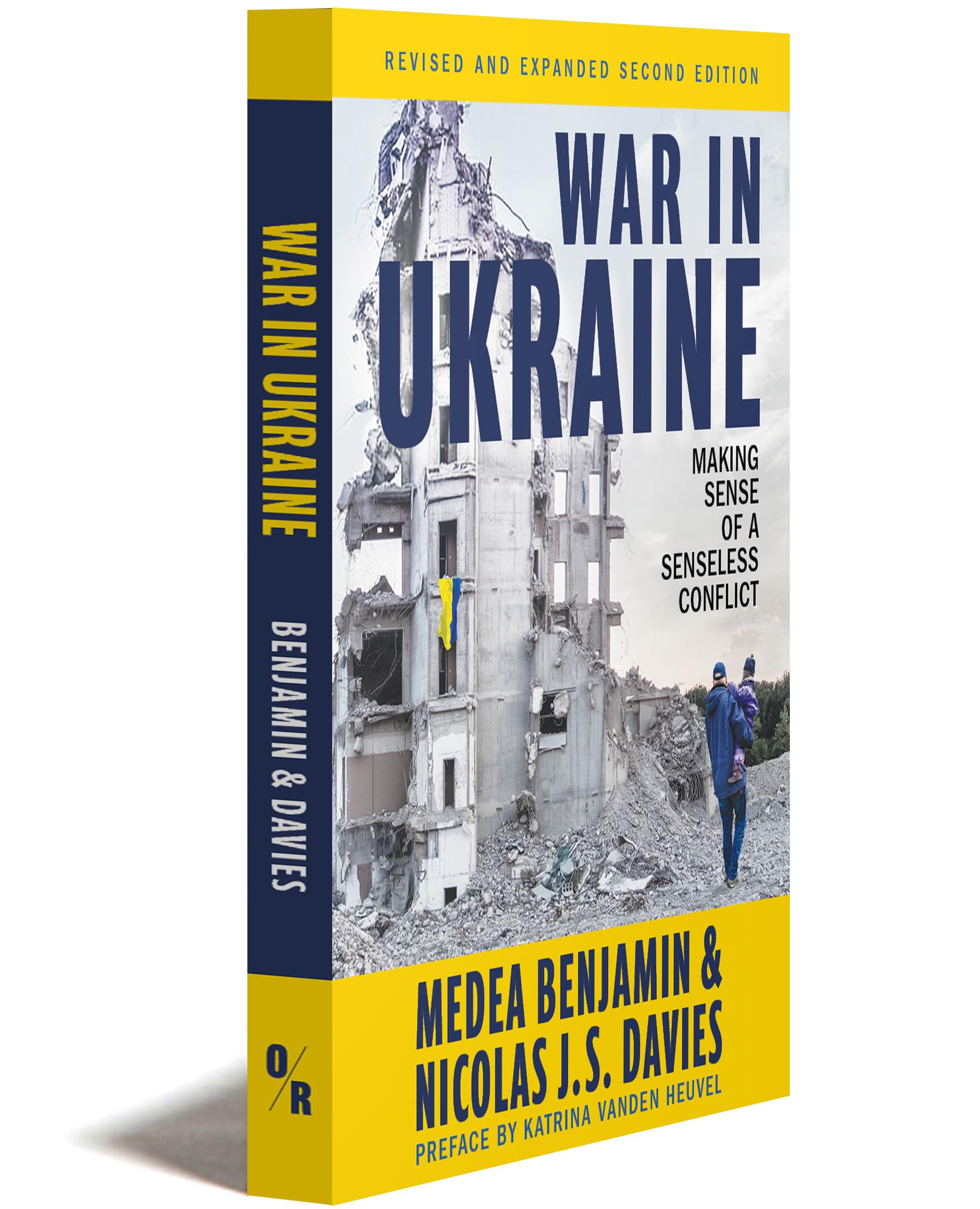
If you’re looking for a primer on the war that’s both critical and balanced, check out Medea Benjamin and Nicolas J.S. Davies’ book, “War in Ukraine: Making Sense of a Senseless Conflict,” now available in a revised and expanded second edition. ($20 paperback; $10 ebook, from OR Books.)
Benjamin and Davies recognize the war didn’t erupt out of nowhere in February 2022 nor was it completely “unprovoked.” As much as they deplore and denounce Vladimir Putin’s decision to invade, they recognize Putin had his reasons. Putin is more rational actor than a power-hungry dictator, and he’s arguably driven more by securing Russia’s position (and regional dominance) than recreating a Tsarist Russian or Soviet empire. Unlike most American commentators, Benjamin and Davies favor a diplomatic solution that would end mass killing on both sides. Not surprisingly, their views have gained little traction in the pro-war, anti-Putin mainstream media.
Speaking of the U.S. mainstream media, NBC News posted an article yesterday citing Condoleezza Rice, former Secretary of State under President George W. Bush. An unrepentant neocon, Rice is happy that Trump is sending more weapons to Ukraine while threatening more sanctions as well. In short, Trump is following a traditional neocon script while also keeping weapons factories in the U.S. going full blast. Rice approves!
What I found most staggering from Rice was this claim cited by NBC:
Rice also criticized the Biden administration for, in her view, having taken its time to get desperately needed weapons to Ukraine from the outset. “If you had given them everything at the beginning of the war,” she said, when “the Russians were on their back foot, [Ukraine] could’ve won this war outright.”
Excuse me, but WTF? What does giving Ukraine “everything” at the beginning of the war in 2022 mean? Fighter jets, main battle tanks, long-range missiles, nuclear weapons? Ukraine wasn’t even an ally of the U.S., nor was it ever a part of NATO. And would Ukraine really have won the war against Russia with “everything”? What about the risk that Russia would have escalated as well, perhaps calling on its arsenal of 6000 or so nuclear weapons?
Rice’s call for more smoking guns to have been sent to Ukraine early in 2022 almost certainly would have ended in a mushroom cloud or two. But I suppose that’s OK with her as long as the mushroom clouds were limited to Ukraine.
Remember 2023 and the failure of the much-hyped Ukrainian counteroffensive? I do. Remember all the hype about U.S., German, and British wonder weapons like Abrams, Leopard, and Challenger tanks? I do.
Let’s hope that Trump’s gambit to push Putin to some kind of compromise settlement bears fruit. No war should go on forever. Haven’t enough people died on both sides?
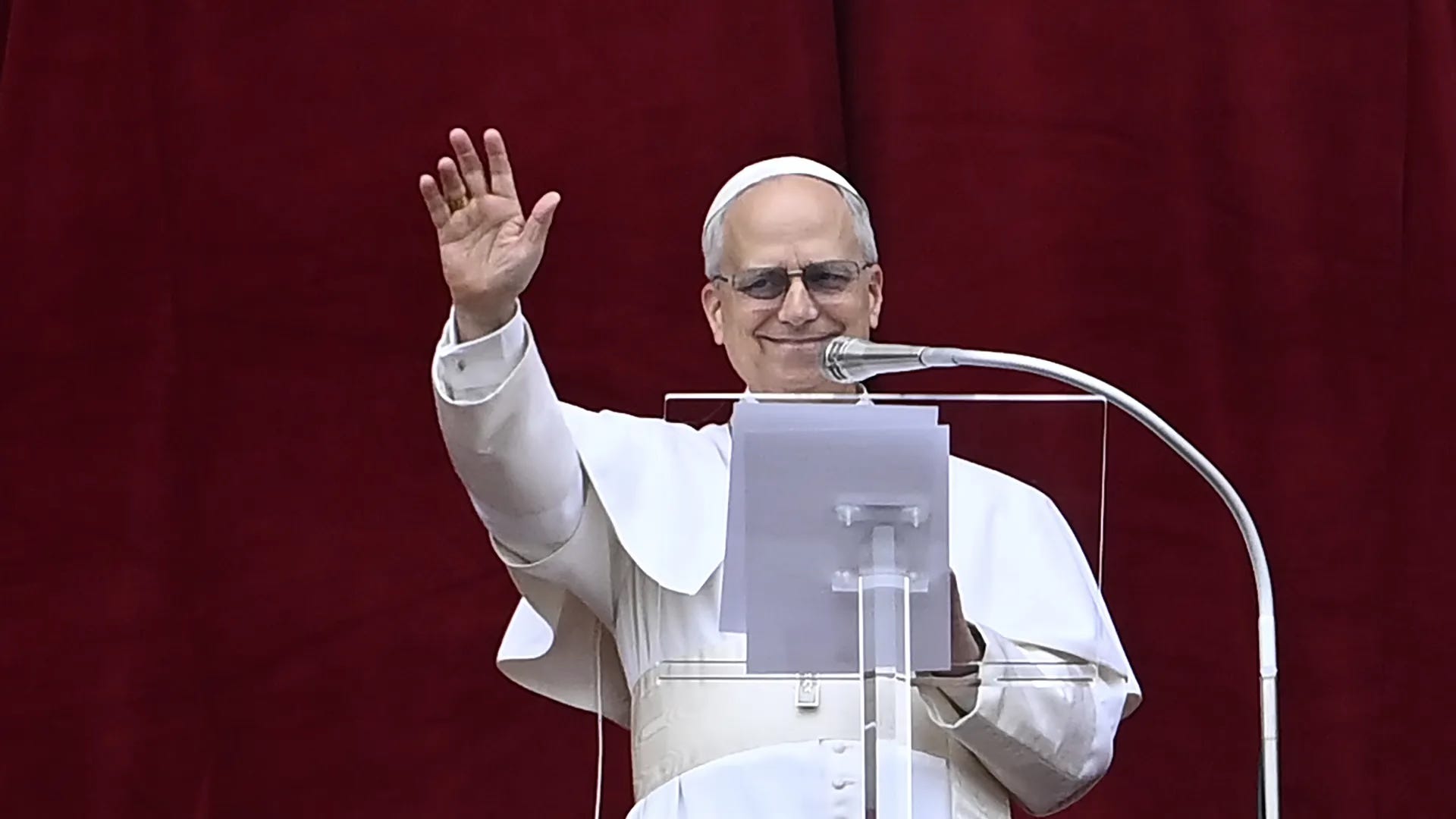
The new pope, Leo XIV, is off to an encouraging start as he calls for peace (from CNN):
Pontiff calls for ‘authentic, just and lasting peace’ Pope Leo XIV delivered his first Sunday blessing from the balcony of St. Peter’s Basilica on Sunday and used the address to pray for peace. “In today’s dramatic scenario of a third world war being fought piecemeal, as Pope Francis said, I too turn to the world’s leaders with an ever timely appeal: never again war!”
Pope Leo XIV at the central Loggia of St. Peter’s Basilica (Photo: Isabella Bonotto/Anadolu via Getty Images)
Sadly for the pope, U.S. leaders believe that peace is achieved through military strength and total dominance, unleashing “warriors” across the world. It doesn’t matter who the president is or which political party is putatively in charge. The Imperial State insists on colossal spending on wars and preparations for the same.
With respect to Gaza and the ongoing death and destruction there, Leo XIV had this to say:
“I am deeply pained by what is happening. Let the fighting cease immediately, let humanitarian aid be provided to the exhausted civilian population, and may all hostages be released.”
Sensible words. But it will take far more than words to stop Israel from its destruction of Gaza and its evisceration and evacuation of the Palestinians there.
Leo XIV also called for a just and lasting peace in Ukraine while highlighting the suffering of the Ukrainian people.
The word “peace” has almost disappeared from American discourse. Leo is helping to reinvigorate it. U.S. leaders are doing their best to sabotage it with war budgets that approach and exceed a trillion dollars yearly (this coming from a Christian nation, at least according to its leaders).
Leo is pointing the way. It’s time all those self-confessed Christians in America start following the Prince of Peace rather than the god of war.
Forget about peace or reductions to military spending
According to an NBC News poll, America is rooting for Ukraine but Trump prefers Russia. Seriously. That’s the gist of the headline.
The intent of this poll wasn’t to analyze how Americans think about the Russia-Ukraine War or Trump or military strength. It was to control how they think by giving them only the most constrained choices.
Let’s take a close look at the results and the NBC headline. According to NBC News:
When asked where they believe Trump’s sympathies are, 49% choose Russia, 40% say they think Trump favors neither side, and 8% choose Ukraine. Another 3% say they are not sure.
So, a majority of Americans, 51%, believe Trump is either carefully neutral on the war, a Ukraine supporter, or they don’t know. A minority (49%) believes he sympathizes with Russia. But the headline says Americans believe “Trump prefers Russia.”
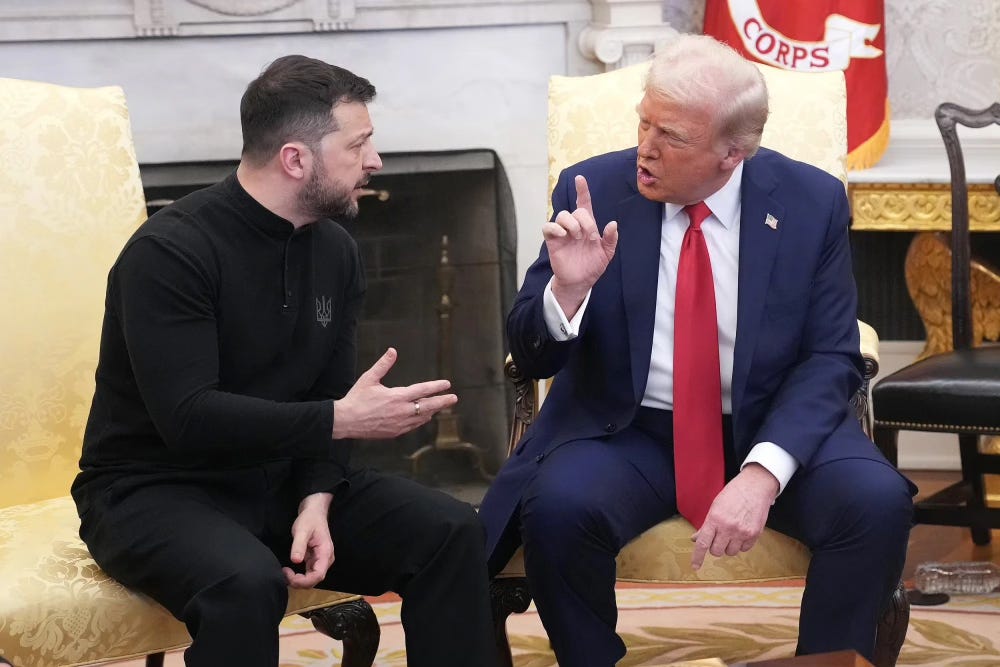
The photo that accompanies the NBC article shows Trump lecturing Zelensky.
Interestingly, I see no question about whether the Russia-Ukraine War should end after three long and bloody years so that lives are saved, or whether the U.S. should stop sending billions in weaponry to Ukraine with virtually no oversight as to where the weapons end up.
Further on, Americans are asked whether we should focus more on domestic affairs or whether we haven’t been strong enough globally. A majority of Americans believe we should focus on domestic affairs. But note how there’s no choice given for opposing war and preferring peace. Americans aren’t asked if they think the government is relying too much on military force. You have only two options: focus more at home, or strengthen the U.S. position abroad.
Interestingly, it’s Democrats who are most concerned with strengthening America’s position abroad, with nearly six out of ten taking this position, whereas six out of ten Republicans want to focus on domestic affairs. That is a remarkable result, as Democrats have supplanted Republicans as the party of military interventionism and “strength.”
Again, NBC didn’t bother to ask directly whether Americans would prefer peace and substantial reductions to military spending. You are not supposed to have those preferences, so you’re not asked about them.
The bottom line of this poll and article is simple: Real Americans support Ukraine. Only 2% of Americans support Russia. Trump is overly sympathetic to Russia.
Apparently, real Americans can’t support peace nor are they allowed to consider significant reductions to spending on wars and weapons. To do so would be un-American, or so NBC News seems to suggest.
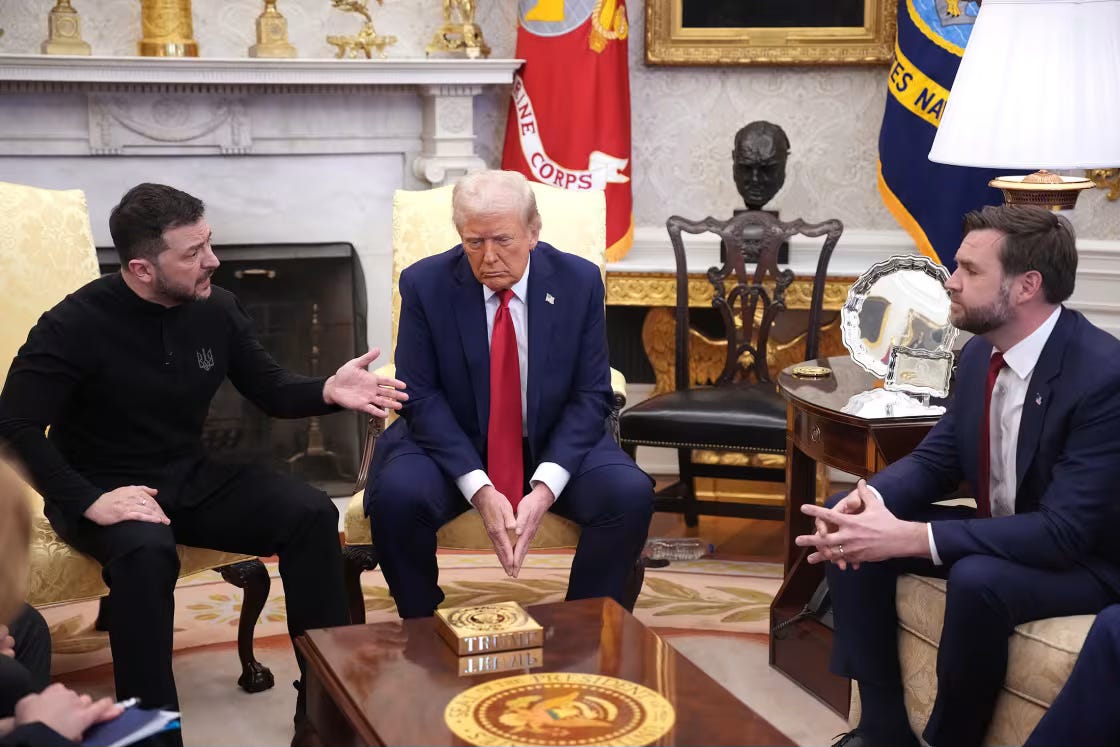
The Disastrous Oval Office Meeting Between Trump and Zelensky
It’s never a good idea to bite the hand that feeds you. In effect, that’s what President Zelensky did yesterday in a contentious meeting with President Trump and Vice President Vance.
Bloodbath? Showdown? Blow-up? Or a rare example of backroom brawling in plain sight?
My email this morning featured many takes on the meeting from the media. Here are a few choice words: Showdown. Dispute. Debacle. Blow-up. Botched visit. Bloodbath. Feud.
It must have been strange for Zelensky. He’s used to coming to DC and getting his way. Of being feted and fawned over. Who does he think he is, Bibi Netanyahu? Bibi has AIPAC and Congress behind him, and lord knows who and what else. Zelensky, to borrow from Trump, doesn’t have those cards. His hand is weaker and he didn’t play it well.
Matt Taibbi has an article on the meeting with a full (if imperfect) transcript. Check it out here. Taibbi is generally critical of Zelensky; the historian Timothy Snyder is critical of the “inhospitable” and “indecent” Trump/Vance. Check out Snyder’s video here.
As I watched the video from the Oval Office, and heard Zelensky’s complaints, I almost thought he was going to break out his rendition of the Streisand/Diamond duet, “You don’t bring me flowers anymore,” except with new lyrics:
You don’t send me weapons anymore.
Joking aside, it’s rare when you see backroom brawling in the open. These meetings before the press are usually so staged, so vapid, and often so dishonest that it was refreshing to see something unscripted, spontaneous, and impassioned.
Here, I recall Winston Churchill’s quip that “There is only one thing worse than fighting with allies, and that is fighting without them.” Zelensky may find that he’s lost his most powerful ally; then again, perhaps he believed he’d already lost Trump/Vance, thus he seized his chance to be defiant and to go out strong.
I don’t know. It takes a clever man to play a weak hand well and a lucky one to win with it. And I don’t think Zelensky is either clever or lucky enough here.
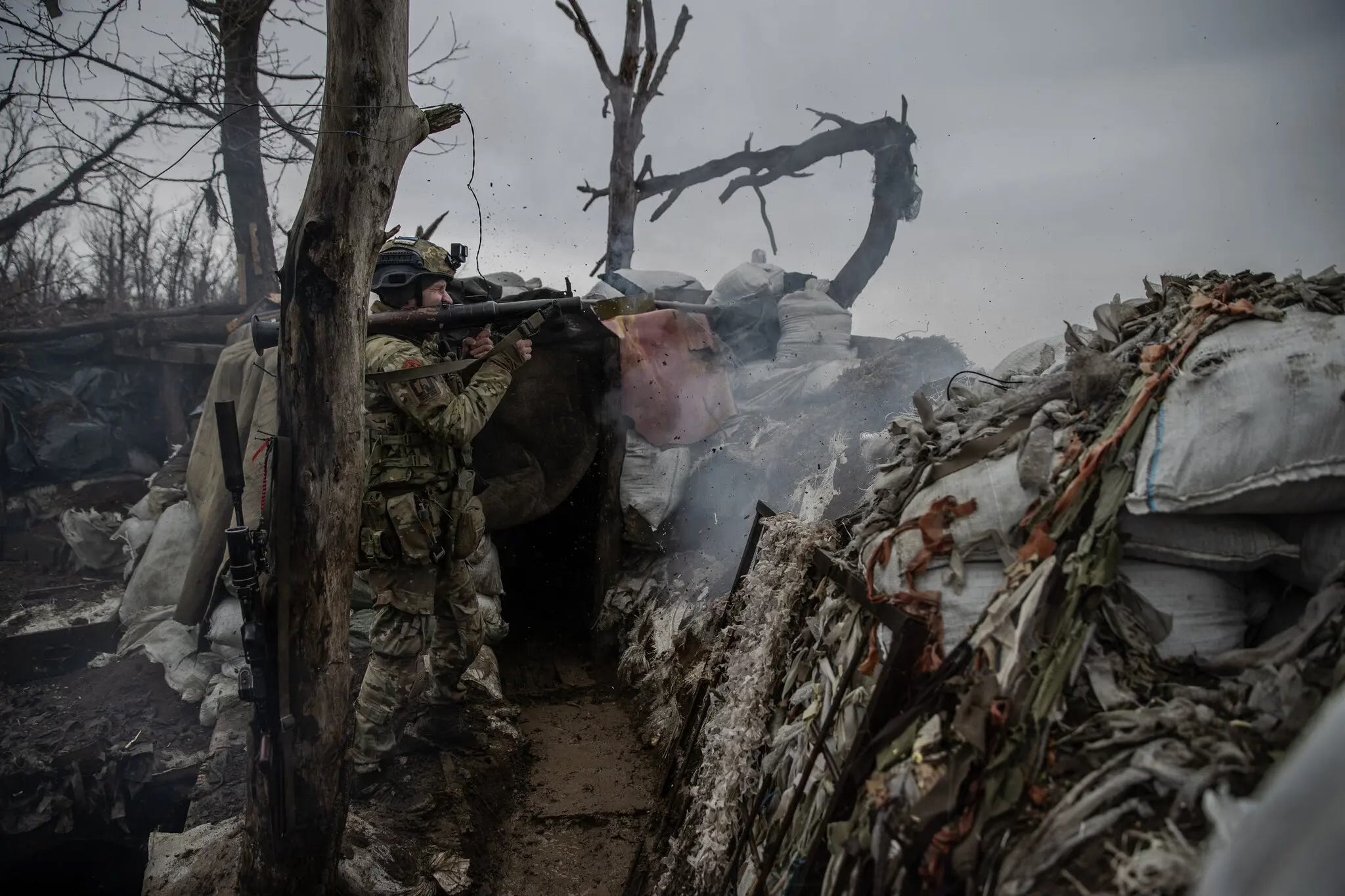
I recently read the book, “Generals Die in Bed,” a classic account of World War I. In terms of combat between Ukraine and Russia, there are serious echoes of WW1 with trench warfare and needless death on a massive scale.
There are few things dumber and more wasteful than trench warfare (Ukraine, from the New York Times)
Far too often, war is glorified when it is really colossal waste. As Dwight D. Eisenhower said, war is to be hated. So, short of abject capitulation to a tyrant, I support efforts to end wars. Stop the waste. Stop the hate. Find a way to live together in peace. The alternative, perpetual war, is too terrible to contemplate.
Diplomacy can be pursued without abandoning Ukraine or betraying NATO. Certainly, Ukraine should be a party to the negotiations. The war is being fought on their turf. They have bled, as has Russia.
But: All wars must end. The trick is ending them in a way that doesn’t generate future wars. That was the greatest tragedy of World War I: that its ending and the botched settlement led almost inexorably to World War II and an even greater bloodletting.
Here’s the rub: Ever since 9/11, indeed ever since World War II, almost without exception, America has ALWAYS been at war. And it hasn’t gone well, has it? (Except for the arms makers and the Cheney neocon crowd.) Isn’t it time we worked for peace?
Far too often, America’s worst enemy hasn’t been Putin or China or some other bogeyman. It’s been the enemy within. And I don’t mean the “red menace” or the “woke” crowd. I mean the enemy that is threat inflation. The enemy that is incessant warfare in unnecessary wars of choice, which drives deficit spending, and which is reinforced by lies.
How many times have we heard of bomber gaps, missile gaps, falling dominoes in Asia, WMD in Iraq, etc., that turned out not to be true, but which were used to justify massive military spending and (especially in Southeast Asia) drove horrendous casualties? Yes, the MICIMATT is powerful, but why are Americans so easy to scare? Why are we so fearful when this country’s geographic position is so enviably strong and defensible? It’s not like Putin’s on our northern border: friendly Canadians are there! (Even if they boo our National Anthem at hockey games.)
The world is becoming multipolar again, which doesn’t mean it has to be a scarier place. A multipolar world could be a more stable one if U.S. leaders could just back off on their goal of dominating everything everywhere all at once.
The idea of full-spectrum dominance and America as a global hegemon at any price must give way to an irenic and ecumenical view of the world. The American religion of violent militarism and prideful exceptionalism is simply too expensive to sustain.
When the ship of state is slowly slipping under the waves, it’s not wise to steer closer to more icebergs. Let’s work to save our ship of state first.
When I was a kid, at the height of the U.S. space program and the Apollo missions to the moon, I was an avid consumer of space food sticks and Tang. They were “cool,” or so it seemed to me, because the astronauts (and product advertisers) said so. Of course, space food sticks tasted something like cardboard and Tang was a poor imitation of orange juice, but the power of image and advertising sold them to me, at least for a time. Then I smartened up and returned to Charleston Chews and real OJ. Breakfast of champions!
It’s truly amazing what the powers that be can sell to Americans. Lately, we’ve been sold a series of wars based on lies, most recently Iraq and Afghanistan and Ukraine. We’ve even been sold a genocide in Gaza, billed as a defensive operation for America’s guiltless and democratic ally, Israel, which only wants to assert its “right to exist.” Whether we’ll ever smarten up about these “products” we’re being sold remains to be seen.
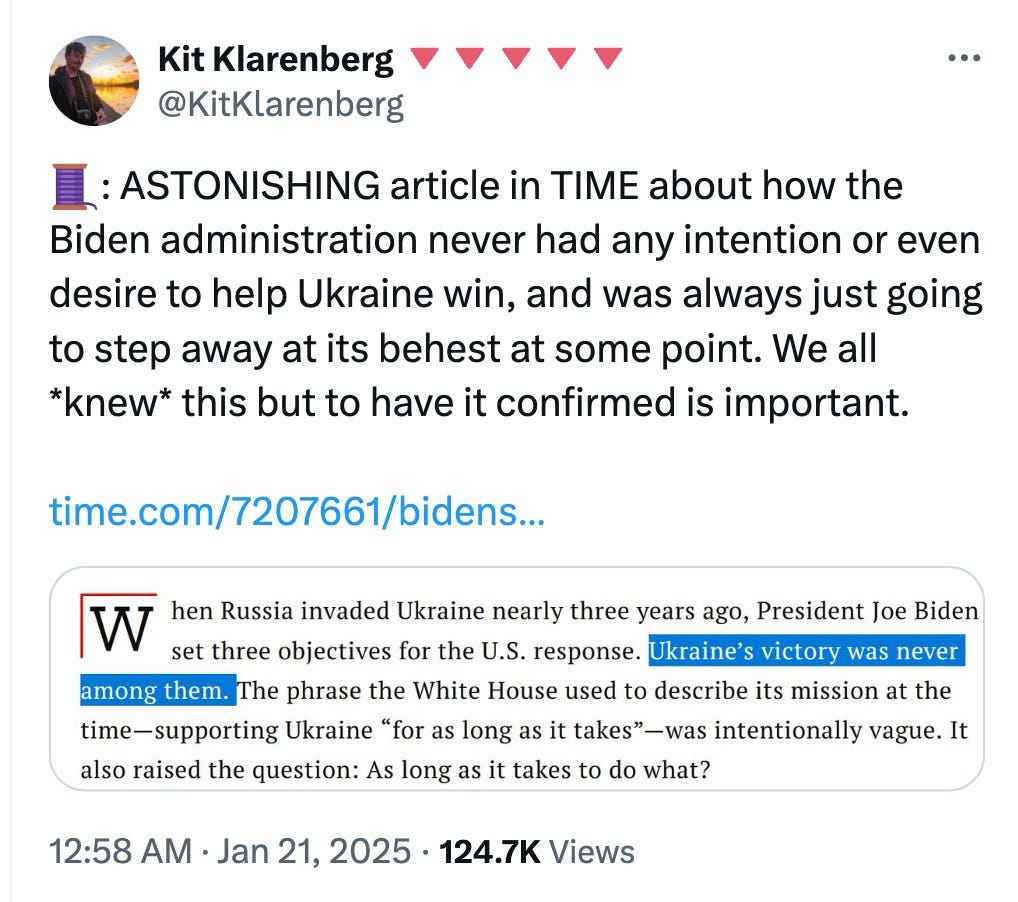
These thoughts were on my mind as I read Caitlin Johnstone’s recent article where she mentions the Russia-Ukraine War. She references Time Magazine, the mainstream media in a nutshell, and a telling admission that U.S. support of Ukraine has been all about weakening Russia and Putin, with no thought given to military victory or the cost of that war to Ukraine.
Not that there haven’t been plenty of mask-off moments during the dementia-muddled chaos of the Biden administration as well. A new article in Time titled “Why Biden’s Ukraine Win Was Zelensky’s Loss” is a good example of this; the report cites a former member of Biden’s National Security Council saying that victory for Ukraine was never part of the Biden administration’s plan.
The opening paragraph reads as follows:
“When Russia invaded Ukraine nearly three years ago, President Joe Biden set three objectives for the U.S. response. Ukraine’s victory was never among them. The phrase the White House used to describe its mission at the time — supporting Ukraine ‘for as long as it takes’ — was intentionally vague. It also raised the question: As long as it takes to do what?”
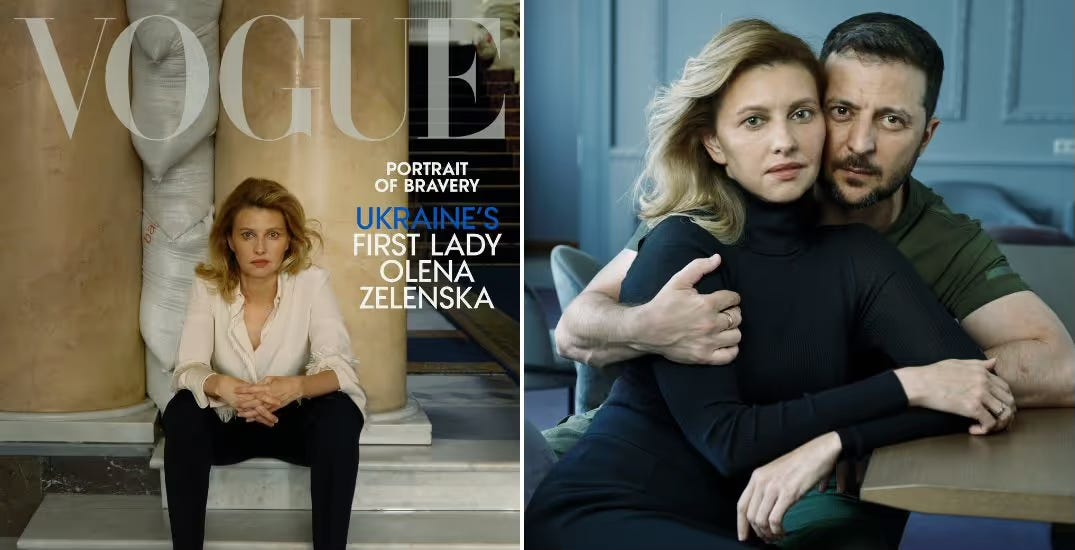
Well, at least Zelensky and his wife enjoyed the Vogue treatment:
America, a good motto to keep in mind is this one:
I’m Already Against the Next War
Don’t let them sell a new war to you, no matter how many crummy commercials they use to convince you that space food sticks, Tang—heck, even genocide and war—are great.
What is the point of playing Russian roulette—with Russia?
As the Biden administration fades into oblivion, among its last decisions has been to allow Ukraine to strike deep into Russia with U.S.-made ATACMS, a missile with a range of 300 kilometers (190 miles). Ukraine’s recent use of these missiles brought a worrisome response from Russia: hypersonic intermediate-range missiles. If Ukraine persists in striking deeper into Russia with U.S., British, and French missiles, the Russian response will be proportionately greater, and possibly escalatory against NATO.
Here’s the thing: These missiles are too few in number to have a decisive impact on the course of the war. Ukraine isn’t going to “win” by launching ATACMS and similar tactical missiles. Yes, they can inflict more pain on Russia, hitting targets like ammunition dumps, military bases, and the like. But nobody is pretending these are war-winning weapons. All they promise is more dead bodies on both sides.
In World War I, new weapons were often introduced because it was believed they would prove decisive on the battlefield, weapons such as poison gas (1915) and tanks (1916). Of course, the other side adapted fairly quickly and the war dragged on, but at least there was a sincere belief that new weapons might break the awful stalemate of trench warfare.
There is no such sincere belief today. The main objective seems to be to complicate matters for the incoming Trump administration and its stated goal to end the Russia-Ukraine War. To that end, the Biden administration is using all means at its disposal to send the remaining $6 billion or so in weapons and related aid to Ukraine before Trump’s inauguration in January. Even anti-personnel mines are included in the mix.
Here’s how Antony Blinken put it:
President Biden is committed to making sure that every dollar we have at our disposal will be pushed out the door between now and January 20.
We’re making sure that Ukraine has the air defenses it needs, that it has the artillery it needs, that it has the armored vehicles it needs.
If only the Biden administration had been so committed to helping Americans in need.
In playing Russian roulette with Russia, Biden and Blinken have demonstrated unconscionable levels of recklessness and stupidity.



 Bracing Views