RFK Faces the Nation and Questions Its Conscience

W.J. Astore

The Moral Question of America’s Wars

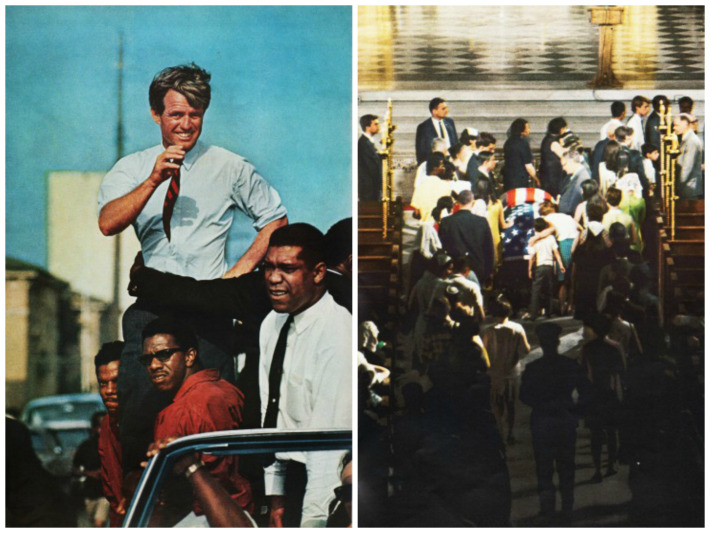
It was November 1967. The Vietnam War was at its height. His brother, the President, had been shot and killed in Dallas four years earlier. He himself would die of an assassin’s bullet within the next year. It was time for Robert F. Kennedy Sr. to “Face the Nation.”

TV was more serious back then, and very few politicians today, certainly not Donald Trump and Joe Biden, could speak with RFK’s clarity and eloquence.

It’s worth listening to Bobby Kennedy’s interview from 1967, but especially the last six minutes (beginning at the 18-minute mark) as he attempts to explicate his moral reservations and objections to America’s war against Vietnam. Such moral objections to war are rarely if ever heard today from Democrats and Republicans in DC. Bobby Kennedy wasn’t just saying the Vietnam War was dumb, that the U.S. military was employing bad strategy, that the war was too expensive, that it was a distraction from pressing domestic concerns, and so on.

Near the end of this interview, Bobby Kennedy called for serious and deep moral reflection on the use of U.S. military power overseas.  He asked Americans to examine their consciences and cited the tens of thousands of civilians killed and wounded (not just U.S. troops).  He said America was losing its moral position in the world due to the war. He was right.  

RFK wasn’t anti-war. He recognized war was occasionally unavoidable. Yet he was willing to articulate war’s horrors. The deaths of tens of thousands of innocent women and children from wanton American firepower and especially napalm. The creation of millions of war refugees. The harsh realities of war should trouble Americans, Kennedy said, especially when its awful costs are justified on dubious grounds. Was it truly the case, Kennedy asked, that America had to fight communism over there so that we didn’t have to fight it over here? Did the U.S. have the moral right to wage a ghastly war against North Vietnam on the off-chance that a communist victory there might eventually pose a threat to America?

What I heard here from Bobby Kennedy was a dramatic appeal to conscience.  An appeal to Americans to look within themselves and to stop needless violence, not only in Vietnam but also here at home in America’s streets.

In November 1967, Bobby Kennedy said something truly vital. Appealing to moral conscience, he recognized we are all human.  That all lives matter, not only those of U.S. troops in Vietnam. And that far too often the decision makers in Washington had forgotten this most basic of moral facts.

I can’t say what Bobby would have achieved, killed as he was by an assassin’s bullet.  But I think he was a healer, a man who had matured much since the death of his brother, a man of compassion and conscience, a man willing to reject the notion that might makes right and that million of “others” can and should be killed, wounded, or made refugees simply because it could be justified in terms of “protecting America.”

Do we have that right? Bobby asks. Plainly, he believed we didn’t.

What a shame he didn’t live to become president.
Bobby Kennedy and the Critical Realignment that Didn’t Happen

kennedy-rfk

M. Davout

Watching a documentary commemorating the fiftieth anniversary year of Robert Kennedy’s (RFK) tragic run for the Democratic presidential nomination in 1968, I couldn’t help thinking back to a venerable (if also somewhat moth-eaten) political science theory of critical realignment. This theory refers to a national election that radically and durably alters the balance of power in our two party system.

According to one iteration of that theory, these elections tend to occur on an approximately 36 year cycle of presidential elections and manifest in one of three ways: a new party displaces one of the two major parties (as when the Lincoln Republicans, calling for the containment of slavery, completed the dissolution of the Whig Party in 1860); a major party reinvigorates its dominance by mobilizing new and existing constituents around a fresh set of policy issues (as when the Republican Party ushered in a new period of electoral success with the 1896 election of the industrial protectionist McKinley); and when dominance switches between the two major parties (as when Franklin D. Roosevelt won overwhelmingly the first of his four presidential terms in 1932).

Key features of critical realignments include a crystallizing issue, heavy voter turnout, and major and durable shifts in voter allegiance. Political scientists have noted that this phenomenon seems to have petered out with the fracturing of FDR’s coalition in the Sixties. The election of 1968 did not see the emergence of a dominant new party (George Wallace’s success as a third party candidate that year was fleeting), nor did it witness either a renewal of Democratic dominance or a switch to long-term Republican Party dominance (control of the White House and Congress has instead oscillated between the two major parties).

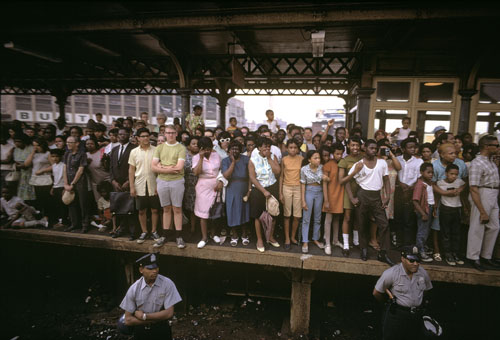
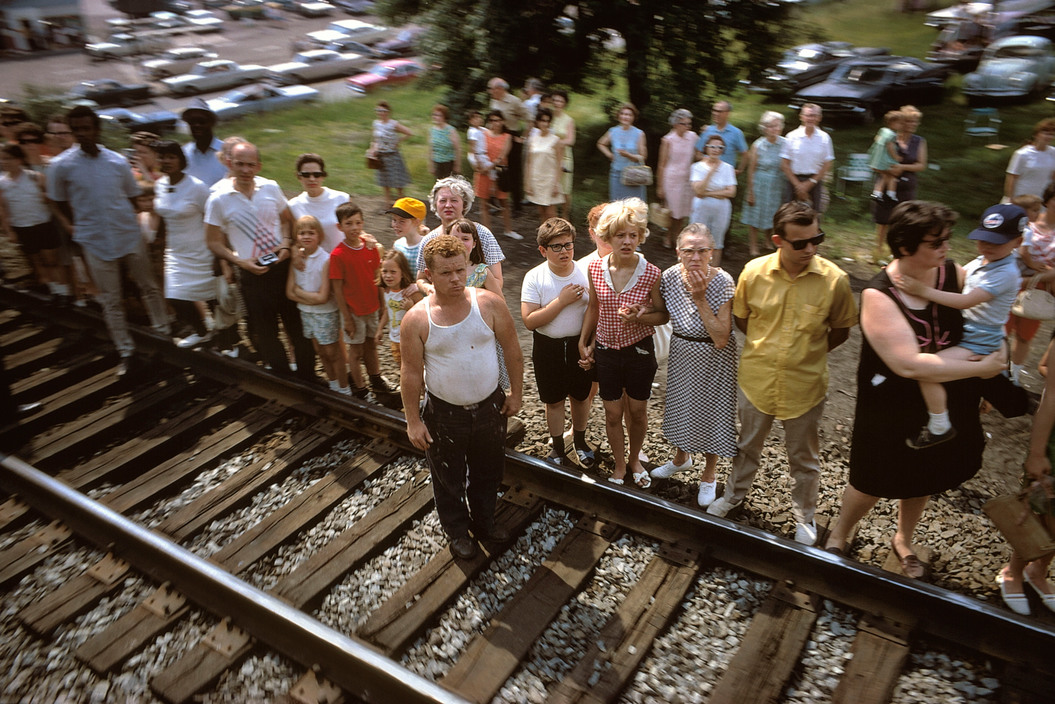
Would the U.S. party system have experienced a critical realignment had Bobby Kennedy avoided assassination and won election as the thirty-seventh president of the United States? It is a question that occurred to me as I watched video footage taken from Kennedy’s funeral train of the people spontaneously gathered along the rail lines in big cities and small hamlets to pay last respects to their martyred candidate.

USA. 1968. Robert Kennedy funeral train.
Mourners await the RFK funeral train (1968)

As one of the Kennedy family friends riding that train noted, those forlorn folks represented Kennedy’s base—Catholics, people of color, blue collar workers, the poor.

Had he lived and gone on to run in the general election, he would have added to these groups the students and liberals who had flocked to Senator Eugene McCarthy’s antiwar candidacy, as well as the party bosses who were supporting the sitting vice-president Hubert Humphrey. And had he won the presidency in 1968 and made significant progress in achieving his stated goals—ending US military involvement in Vietnam, retooling LBJ’s efforts at poverty reduction, fostering a sense of solidarity among racial and generational groups—would that have been enough durably to boost voter turnout and cement loyalty to a more social justice-oriented Democratic Party for decades?

USA. 1968.  Robert KENNEDY funeral train.
Mourners await the RFK funeral train (1968)

A lot of “what ifs,” I know. But watching the stasis of American politics over the last decades in the face of mounting crises on both the domestic and international fronts, it is consoling to think of a possibility (however remote) of the critical realignment that could have been.

M. Davout, an occasional contributor to Bracing Views, teaches political science in the American South.