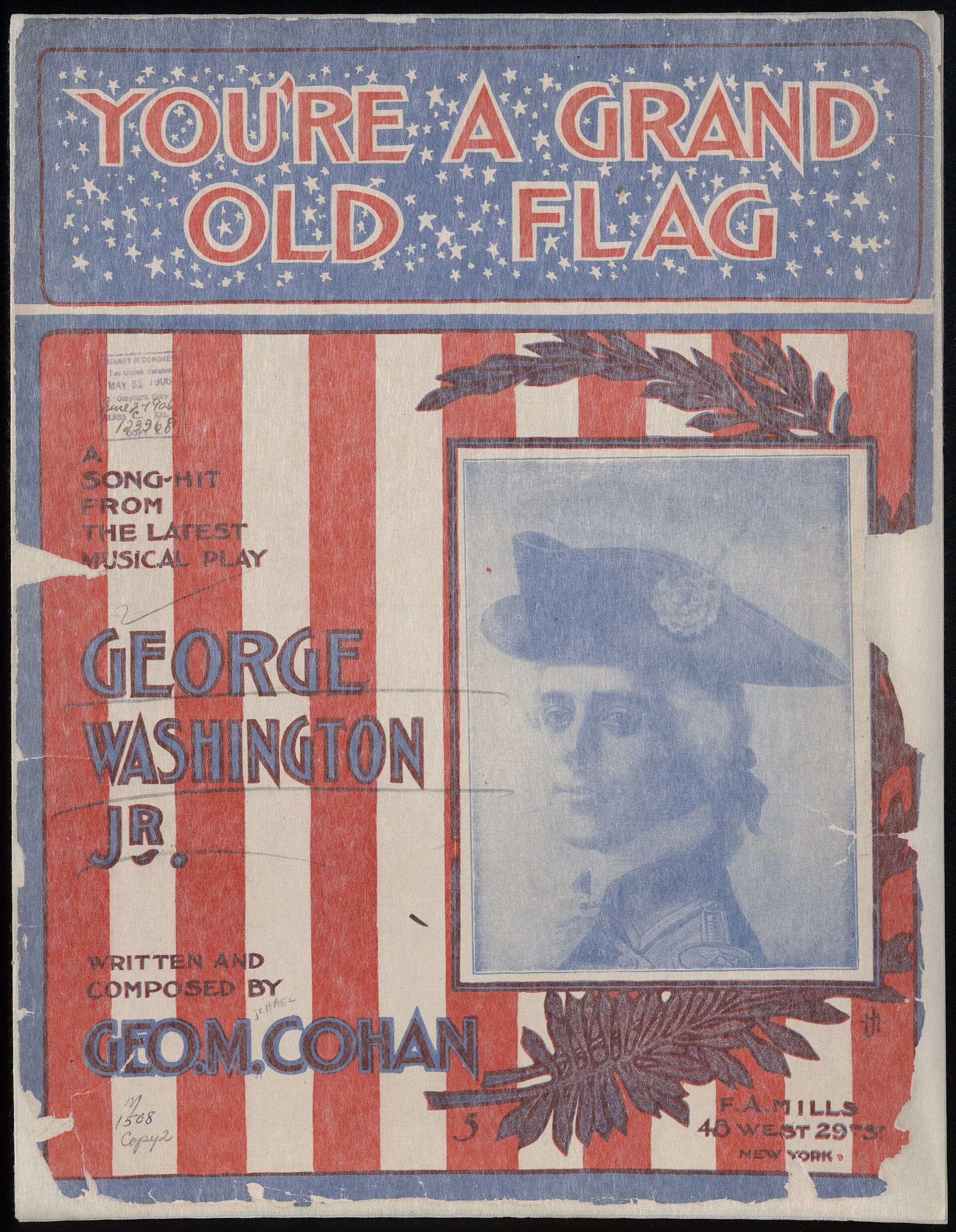
A patriotic song I was taught in my youth was “You’re A Grand Old Flag,” written by George M. Cohan in 1906. It’s been a long time since I’ve heard it, but it flashed into my mind the other day because of its lyrics, especially the refrain:
You’re a grand old flag, You’re a high-flying flag, And forever in peace may you wave. You’re the emblem of the land I love, The home of the free and the brave. Ev’ry heart beats true ‘Neath the Red, White and Blue, Where there’s never a boast or brag. But should auld acquaintance be forgot, Keep your eye on the grand old flag.
Forever in peace? I second that sentiment, except America is constantly at war or preparing for war. An America that doesn’t boast or brag? Amen to that, except presidents from Bush to Obama to Biden to Trump boast and brag about America having the world’s best and strongest military, with Obama adding that America has the best military in all human history. How’s that for a boast?
Cohan’s song, of course, is nakedly patriotic, with its references to marches and pride. Yet even this stanza is more resonant of democracy than America’s actions today:
Here’s a land with a million soldiers, That’s if we should need ’em, We’ll fight for freedom!
The song speaks of U.S. military potential (“a million soldiers”) but adds only if we should need them, in which case they’ll fight for freedom.
When was the last time the U.S. military truly fought for freedom? World War II, I reckon.
This song’s references to peace, to humility, and to fighting only if we should need to in the defense of freedom, mark it as a true museum piece. How do we recover that version of America?
It’s convention week for the Democrats, which brings me to concerns expressed by a couple of loyal readers. They tell me I’m being too hard on Kamala Harris and the Democrats. They say I’m missing a much bigger picture when I criticize them. That bigger picture is the threat of another Donald Trump victory, which very well could end elections in America, or at the very least produce a much more conservative and reactionary judiciary than the one we already have. They point to Project 2025 and challenge me to write about it and denounce it.
Together with this is one reader’s optimism for a Harris presidency. She may not be the best choice, this reader admits, but she’s shown some progressive chops. And strong support for her within the party has grown organically as she’s raised over $200 million from mostly smaller donors, money that could help her to move away from corporate agendas and in progressive directions.
And that’s all OK with me. I’m willing to hear criticism of my positions and priorities. Indeed, that’s a big reason why I started Bracing Views, not only to air my thoughts but to hear responses from others.
As I thought about this feedback, I saw this headline and story at the New York Timesthis morning:
Harris’s Muscular Patriotism: At her first rally with Tim Walz, Kamala Harris delivered a riff about their quintessentially American backgrounds. She grew up in Oakland, Calif., raised by a working mother, while he grew up on the Nebraska plains, she explained. They were “two middle-class kids,” she said, now trying to make it to the White House together.
“Only in America,” Harris said, as the Philadelphia crowd burst into a chant of “U.S.A.! U.S.A.!”
This sort of unabashed patriotism doesn’t always come naturally to today’s Democratic Party. But it has been central to Harris’s presidential campaign. In her ads and speeches, she portrays herself as a tough, populist, progressive patriot.
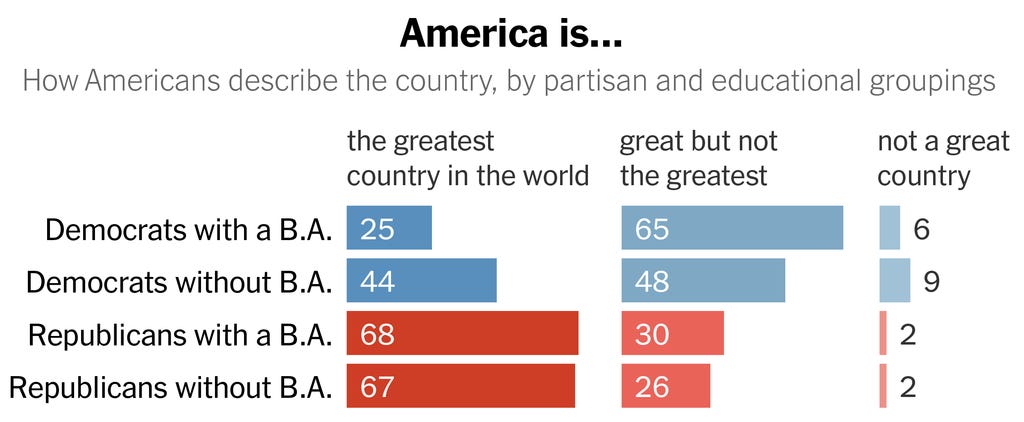
Source: New York Times/Siena College poll, Sept. 2022 | By The New York Times
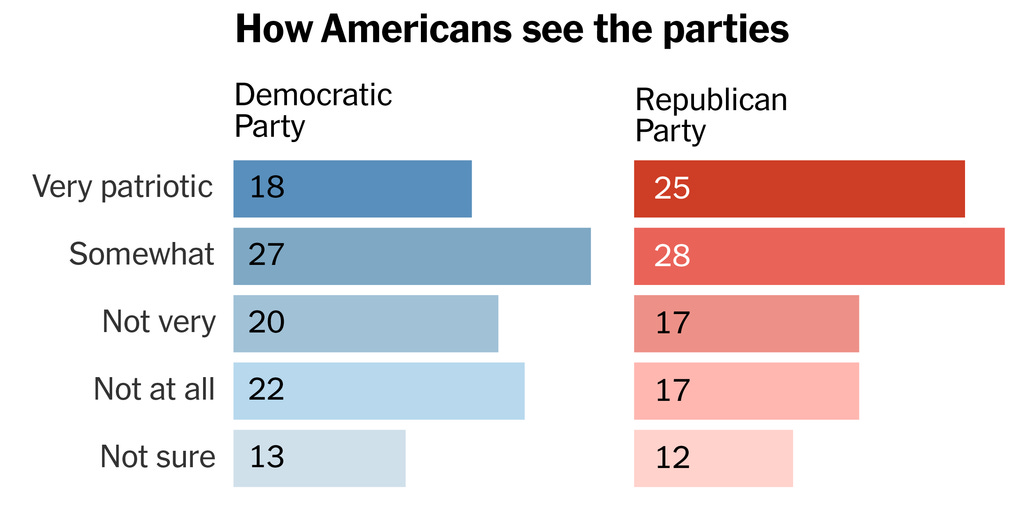
Given all this, it’s not surprising that most voters consider the Republican Party to be the more patriotic one:
Source: YouGov April 2024 poll | By The New York Times
The far left plays a role here. Parts of it — think of Noam Chomsky— can be disdainful of the U.S., describing it as a fundamentally oppressive country. Liberals, not conservatives, tend to argue that immigrants are forced to move here because of the consequences of American imperialism. Liberals are more likely to have qualms about national institutions like Thanksgiving, the military or the flag.
The most prominent left-wing movement of the past year — the Gaza protests — is a case study. The movement has not merely called attention to the high civilian death toll in Gaza; it sometimes portrays the war as an extension of U.S. immorality. Protesters have pulled down American flags and defaced a statue of George Washington with the word “genocidal.”
The America-skeptical left isn’t the Democratic Party, of course. But the left does exacerbate many swing voters’ concerns about the party — namely, that it isn’t cleareyed about a dangerous world. These same swing voters generally don’t like Trump, but they do appreciate his apparent toughness on trade, immigration, crime and more.
Harris combines patriotism with muscular promises to defend the interests of ordinary Americans. “Being president is about who you fight for, and she’s fighting for people like you,” the narrator in a campaign ad says. Her ads explain that as a prosecutor, she took on murderers, child abusers, drug cartels, big banks and big drug companies.
Harris’s flip-flop on immigration embodies both the toughness and patriotism themes. As a presidential candidate in 2019 — when the left was more influential in the Democratic Party — she favored decriminalizing border crossings. Today, she promises to protect Americans from gangs and fentanyl flowing across the border, and she criticizes Trump for blocking a border-security bill.
The image that accompanied this story showed a person wearing a Kamala Harris t-shirt in which she’s depicted as Captain America.
Given this article and many others like it, I don’t think my two readers have to worry about Kamala Harris being treated unfairly by the corporate-owned news (the CON)!
According to the New York Times, Harris is going to outmuscle Trump for who can be tougher on crime, drugs, and illegal immigrants. As Captain America, she’s going to be even more muscularly patriotic (or blindly nationalistic, my wife quipped) than Trump. The only concern is killjoys on the “far left,” who think mass destruction and genocide in Gaza is wrong. They don’t think America is the greatest, goodest, bestest country in the world. But Kamala does!
Sadly, Bracing Views doesn’t have quite the same market penetration as the New York Times, so my critique of Harris and the Democrats will hardly make a dent in all the partying and enthusiasm for Kamala this week. It does seem to me, however, that the tactics being used here are yet another case of the Democrats faking left and running right.
Anyhow, here’s a reply I sent to a loyal reader and friend about my approach to Kamala and the Democrats:
I’m not anti-Harris per se. She has such a thin record that who knows how she’d make decisions.
I am against how Harris is being shoved down our throats as an almost savior-like figure. I am against the Democratic party, which is why I left it and am now an independent.
I am also against Trump and the MAGA crowd. I wrote article after article denouncing them from 2016 to 2021. Do I have to repeat all that again so that I can be “fair and balanced”?
I get that you see Trump and MAGA as major threats, much more so than the Democrats. I see a different threat, I suppose, a uniparty that embraces empire, militarism, colossal spending on wars and weapons, and a foreign policy agenda that may yet produce World War III, whether the figurehead at the top is Trump or Harris.
I was hoping the Democrats would offer a REAL alternative to Trump with respect to the issues I cited above, but Harris is a lightweight in foreign policy whose description of the Russia-Ukraine War should really scare you for its ignorance and vapidness. She, like Trump, will spend $2 trillion on new nukes. She, like Trump, will brag that the U.S. military is the finest in the world, thus the Pentagon budget will continue to soar toward $1 trillion as the Pentagon continues to flunk audit after audit. She, like Trump, will keep the weapons flowing to Israel so that Gaza can be made Palestinian-free, giving more living space to Israel and Bibi.
Will Harris be more populist at home? I guess. Will she be friendlier to LGBTQ+ and pro-choice movements? Definitely. Is that enough to vote for her? That’s up to the voters to decide.
Harris is basically trying to play from the Obama book, “Yes, we Kam,” supported by big-money donors who expect a big return on their “investments.” Again, maybe she won’t be as bad as Trump domestically, but, as they say, the lesser of two evils is still evil. How long must we wait for a non-evil candidate?
If we don’t push the Democratic party to offer something other than corporate tools, we’ll keep getting corporate tools like I believe Harris to be.
I stand by that response. For many Americans, the Kamala/Walz ticket is attractive, but I will continue to criticize it, as I will Trump and the MAGA crowd. For I think neither party, and certainly neither candidate, is the last best hope of America.
Readers, what do you think? Should we be enthused by the Harris/Walz ticket? Is it time to embrace the politics of joy? Should we not criticize the Democrats because the MAGA Republicans are worse? Should I write more articles that are critical of Trump, because there are not enough of those already in the CON? Fire away!
Fourteen years ago, I wrote the following article for TomDispatch. A colleague wrote to me today saying he had saved the article, had re-read it, and still found it useful, which is just about the highest compliment you can pay an author. I continue to believe, as I wrote in 2009, that America is experiencing a form of militarism on steroids. It’s a peculiar form of militarism, since the Pentagon works hard to obscure the costs and realities of war (see the recent book by Norman Solomon, War Made Invisible), but camouflaged or not, it persists.
Gary Cooper in “High Noon”
[Written in August 2009]
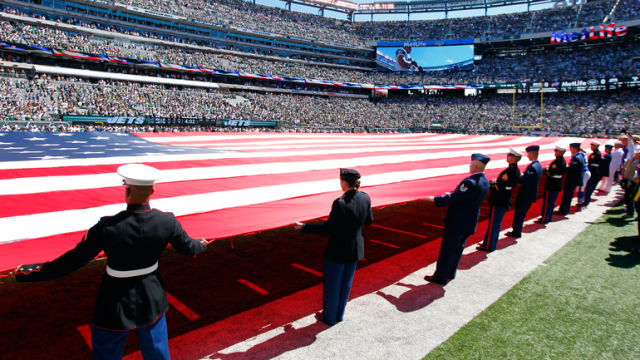
I have a few confessions to make: After almost eight years of off-and-on war in Afghanistan and after more than six years of mayhem and death since “Mission Accomplished” was declared in Operation Iraqi Freedom, I’m tired of seeing simple-minded magnetic ribbons on vehicles telling me, a 20-year military veteran, to support or pray for our troops. As a Christian, I find it presumptuous to see ribbons shaped like fish, with an American flag as a tail, informing me that God blesses our troops. I’m underwhelmed by gigantic American flags — up to 100 feet by 300 feet — repeatedly being unfurled in our sports arenas, as if our love of country is greater when our flags are bigger. I’m disturbed by nuclear-strike bombers soaring over stadiums filled with children, as one did in July just as the National Anthem ended during this year’s Major League Baseball All Star game. Instead of oohing and aahing at our destructive might, I was quietly horrified at its looming presence during a family event.
We’ve recently come through the steroid era in baseball with all those muscled-up players and jacked-up stats. Now that players are tested randomly, home runs are down and muscles don’t stretch uniforms quite as tightly. Yet while ending the steroid era in baseball proved reasonably straightforward once the will to act was present, we as a country have yet to face, no less curtail, our ongoing steroidal celebrations of pumped-up patriotism.
It’s high time we ended the post-Vietnam obsession with Rambo’s rippling pecs as well as the jaw-dropping technological firepower of the recent cinematic version of G.I. Joe and return to the resolute, undemonstrative strength that Gary Cooper showed in movies like High Noon.
In the HBO series “The Sopranos,” Tony (played by James Gandolfini) struggles with his own vulnerability — panic attacks caused by stress that his Mafia rivals would interpret as fatal signs of weakness. Lamenting his emotional frailty, Tony asks, “What ever happened to Gary Cooper?” What ever happened, in other words, to quiet, unemotive Americans who went about their business without fanfare, without swagger, but with firmness and no lack of controlled anger at the right time?
Tony’s question is a good one, but I’d like to spin it differently: Why did we allow lanky American citizen-soldiers and true heroes like World War I Sgt. Alvin York(played, at York’s insistence, by Gary Cooper) and World War II Sgt. (later, 1st Lt.) Audie Murphy(played in the film “To Hell and Back,” famously, by himself) to be replaced by all those post-Vietnam pumped-up Hollywood “warriors,” with Sylvester Stallone and Arnold Schwarzenegger-style abs and egos to match?
And far more important than how we got here, how can we end our enduring fascination with a puffed-up, comic book-style militarism that seems to have stepped directly out of screen fantasy and into our all-too-real lives?
A seven-step recovery program
As a society, we’ve become so addicted to militarism that we don’t even notice the way it surrounds us or the spasms of societal ‘roid rage that go with it. The fact is, we need a detox program. At the risk of incurring some of that ‘roid rage myself, let me suggest a seven-step program that could help return us to the saner days of Gary Cooper:
1. Baseball players on steroids swing for the fences. So does a steroidal country. When you have an immense military establishment, your answer to trouble is likely to be overwhelming force, including sending troops into harm’s way. To rein in our steroidal version of militarism, we should stop bulking up our military ranks, as is now happening, and shrink them instead. Our military needs not more muscle supplements (or the budgetary version of the same), but far fewer.
2. It’s time to stop deferring to our generals, and even to their commander in chief. They’re ours, after all; we’re not theirs. When President Obama says Afghanistan is not a war of choice but of necessity, we shouldn’t hesitate to point out that the emperor has no clothes. Yet when it comes to tough questioning of the president’s generals, Congress now seems eternally supine. Senators and representatives are invariably too busy falling all over themselves praising our troops and their commanders, too worried that “tough” questioning will appear unpatriotic to the folks back home, or too connected to military contractors in their districts, or some combination of the three.
Here’s something we should all keep in mind: Generals have no monopoly on military insight. What they have a monopoly on is a no-lose situation. If things go well, they get credit; if they go badly, we do. Retired five-star Gen. Omar Bradley was typical when he visited Vietnam in 1967 and declared: “I am convinced that this is a war at the right place, at the right time and with the right enemy — the Communists.” North Vietnam’s only hope for victory, he insisted, was “to hang on in the expectation that the American public, inadequately informed about the true situation and sickened by the loss in lives and money, will force the United States to give up and pull out.”
There we have it: A classic statement of the belief that when our military loses a war, it’s always the fault of “we the people.” Paradoxically, such insidious myths gain credibility not because we the people are too forceful in our criticism of the military, but because we are too deferential.
3. It’s time to redefine what “support our troops” really means. We console ourselves with the belief that all our troops are volunteers, who freely signed on for repeated tours of duty in forever wars. But are our troops truly volunteers? Didn’t we recruit them using multimillion-dollar ad campaigns and lures of every sort? Are we not, in effect, running a poverty and recession draft? Isolated in middle- or upper-class comfort, detached from our wars and their burdens, have we not, in a sense, recruited a “foreign legion” to do our bidding?
If you’re looking for a clear sign of a militarized society — which few Americans are — a good place to start is with troop veneration. The cult of the soldier often covers up a variety of sins. It helps, among other things, hide the true costs of, and often the futility of, the wars being fought. At an extreme, as the war began to turn dramatically against Nazi Germany in 1943, Germans who attempted to protest Hitler’s failed strategy and the catastrophic costs of his war were accused of (and usually executed for) betraying the troops at the front.
The United States is not a totalitarian state, so surely we can hazard criticisms of our wars and even occasionally of the behavior of some of our troops, without facing charges of stabbing our troops in the back and aiding the enemy. Or can we?
4. Let’s see the military for what it is: a blunt instrument of force. It’s neither surgical nor precise nor predictable. What Shakespeare wrote 400 years ago remains true: when wars start, havoc is unleashed, and the dogs of war run wild — in our case, not just the professional but the “mercenary” dogs of war, those private contractors to the Pentagon that thrive on the rich spoils of modern warfare in distant lands. It’s time to recognize that we rely ever more massively to prosecute our wars on companies that profit ever more handsomely the longer they last.
5. Let’s not blindly venerate the serving soldier, while forgetting our veterans when they doff their spiffy uniforms for the last time. It’s easy to celebrate our clean-cut men and women in uniform when they’re thousands of miles from home, far tougher to lend a hand to scruffier, embittered veterans suffering from the physical and emotional trauma of the battle zones to which they were consigned, usually for multiple tours of duty.
6. I like air shows, but how about — as a first tiny step toward demilitarizing civilian life — banning all flyovers of sporting events by modern combat aircraft? War is not a sport, and it shouldn’t be a thrill.
7. I love our flag. I keep my father’s casket flag in a special display case next to the very desk on which I’m writing this piece. It reminds me of his decades of service as a soldier and firefighter. But I don’t need humongous stadium flags or, for that matter, tiny flag lapel pins to prove my patriotism — and neither should you. In fact, doesn’t the endless post-9/11 public proliferation of flags in every size imaginable suggest a certain fanaticism bordering on desperation? If we saw such displays in other countries, our descriptions wouldn’t be kindly.
Of course, none of this is likely to be easy as long as this country garrisons the planet and fights open-ended wars on its global frontiers. The largest step, the eighth one, would be to begin seriously downsizing that mission. In the meantime, we shouldn’t need reminding that this country was originally founded as a civilian society, not a militarized one. Indeed, the revolt of the 13 colonies against the King of England was sparked, in part, by the perceived tyranny of forced quartering of British troops in colonial homes, the heavy hand of an “occupation” army, and taxation that we were told went for our own defense, whether we wanted to be defended or not.
If Americans are going to continue to hold so-called tea parties, shouldn’t some of them be directed against the militarization of our country and an enormous tax burden fed in part by our wasteful, trillion-dollar wars?
Modest as it may seem, my seven-step recovery program won’t be easy for many of us to follow. After all, let’s face it, we’ve come to enjoy our peculiar brand of muscular patriotism and the macho militarism that goes with it. In fact, we revel in it. Outwardly, the result is quite an impressive show. We look confident and ripped and strong. But it’s increasingly clear that our outward swagger conceals an inner desperation. If we’re so strong, one might ask, why do we need so much steroidal piety, so many in-your-face patriotic props, and so much parade-ground conformity?
Forget Rambo and action-picture G.I. Joes: Give me the steady hand, the undemonstrative strength, and the quiet humility of Alvin York, Audie Murphy — and Gary Cooper.
As I mentioned in a previous Bracing View, I was invited to participate in a forum to generate new ideas to tackle the military-industrial complex (MIC) that President Dwight D. Eisenhower warned us about in 1961. Here are a few more thoughts in response to this stimulating collaboration:
When I was a college student in the early 1980s, and in Air Force ROTC, I wrote critically of the Reagan defense buildup. Caspar Weinberger, he of the “Cap the knife” handle for cost-cutting, became “Cap the ladle” as Reagan’s Secretary of Defense, ladling money in huge amounts to the Pentagon. History is repeating itself again as the Biden administration prepares to ladle $813 billion (and more) to the Pentagon.
How do we stop this? Of course, we must recognize (as I’m sure we all do) what we’re up against. Both political parties are pro-military and, in the main, pro-war. Our economy is based on a militarized Keynesianism and our culture is increasingly militarized. Mainstream Democrats, seemingly forever afraid of being labeled “weak” on defense, are at pains to be more pro-military than the Republicans. Biden, in Poland, echoed the words of Obama and other past presidents, declaring the U.S. military to be “the finest fighting force” in history. Think about that boast. Think about how Biden added that the nation owes the troops big. This is a sign of a sick culture.
Ike gave his MIC speech in 1961, and for 61 years the MIC has been winning. Even after the collapse of the Soviet Union in the early ‘90s, the MIC held its own; after 9/11, it went into warp speed and is accelerating. To cite Scotty from Star Trek: “And at Warp 10, we’re going nowhere mighty fast.”
We need a reformation of our institutions; we need a restoration of our democracy; we need a reaffirmation of the U.S. Constitution; we need to remember who we are, or perhaps who we want to be, as a people.
Do we really want to be the world’s largest dealer of arms? Do we really want to spend a trillion or more dollars, each and every year, on wars and weapons, more than the next dozen or so countries combined, most of which are allies of ours? (“Yes” is seemingly the answer here, for both Democrats and Republicans.) Is that really the best way to serve the American people? Humanity itself?
Consider plans to “invest” in “modernizing” America’s nuclear triad. (Notice the words used here by the MIC.) What does this really mean? To me, it means we plan on spending nearly $2 trillion over the next 30 years to replace an older suicide vest with a newer one, except this suicide vest will take out humanity itself, as well as most other life forms on our planet. To channel Greta Thunberg’s righteous anger, “How dare you!” https://www.youtube.com/watch?v=xVlRompc1yE
Or, as Ike said in 1953, “This is not a way of life at all … it is humanity hanging from a cross of iron.”
We will need the broadest possible coalition to tackle this outrage against civilization and humanity. That’s why I applaud these efforts to tackle the MIC, even as I encourage all of us to enlist and recruit more people to join our ranks.
My father enlisted in the Civilian Conservation Corps in 1935 to do his bit for his family and his nation. He fought forest fires in Oregon and later became a firefighter after serving in the Army during World War II. That was the last formally declared war that America fought. It was arguably the last morally justifiable war this country has fought, waged by citizens who donned a uniform, not “warriors” who are told that the nation owes them big.
In “It’s A Wonderful Life,” Jimmy Stewart, a true war hero, played a man who never fought in World War II, who stayed at home and helped ordinary people even as his younger brother Harry went off to war and earned the Medal of Honor. Yet the movie doesn’t celebrate Harry’s war heroism; it celebrates the nobility, decency, and humility of George Bailey.
How do we get back to that America? The America from before the MIC, that celebrated decency and kindness and humanitarianism?
Yes, I know. It’s just a Frank Capra movie, and America has never been a perfect shining city. All I’m saying is we need more of that spirit, and more of the righteous anger of Greta Thunberg, if we are to prevail.
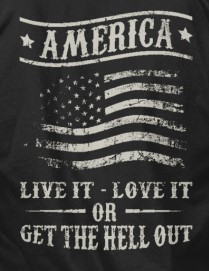
I’m always baffled when I get a message from a reader that accuses me or my site as being “America haters.” Of course, I shouldn’t be. There’s always a strong element of “America: love it or leave it” in our popular discourse. It’s an element the government actively encourages.
There was a time I identified with the U.S. government because I was part of it. Having served in the US Air Force for twenty years — having worn this nation’s uniform with pride — I can understand those who think that the government and its actions represent them, or that patriotism somehow requires deference toward our elected representatives or government employees.
But this is indeed a dangerous attitude to have. It’s not we who are supposed to serve the government: it’s the government that is supposed to serve us. Even when I was in the military, I took an oath to defend the Constitution, not the government.
Governments are human constructions composed of imperfect humans. They are vested with power, which feeds corruption. So governments must always be kept in check. They must always be viewed critically. “Question authority” should be the byword of all true patriots.
Government is supposed to represent us. When it fails to do so, we should elect new leaders who will do their jobs as public servants. And if that fails, people need to organize and protest. Sometimes, direct political action is all that works to right wrongs. Think of union strikes; think of the civil rights movement; think of antiwar protests, as in the Vietnam War.
Government requires constant criticism. That is the very reason why we have rights such as freedom of speech, of assembly, of the press. It doesn’t help when people reject criticism as unpatriotic. Indeed, it just empowers the worst elements within government.
I know all of this is obvious to my readers, else they wouldn’t be here. Suffice to say our incredibly powerful government, which is increasingly shrouded in secrecy and therefore often unaccountable to the people, needs a lot more criticism.
Don’t confuse criticism with hate. In fact, criticism may indeed be driven by a kind of love.
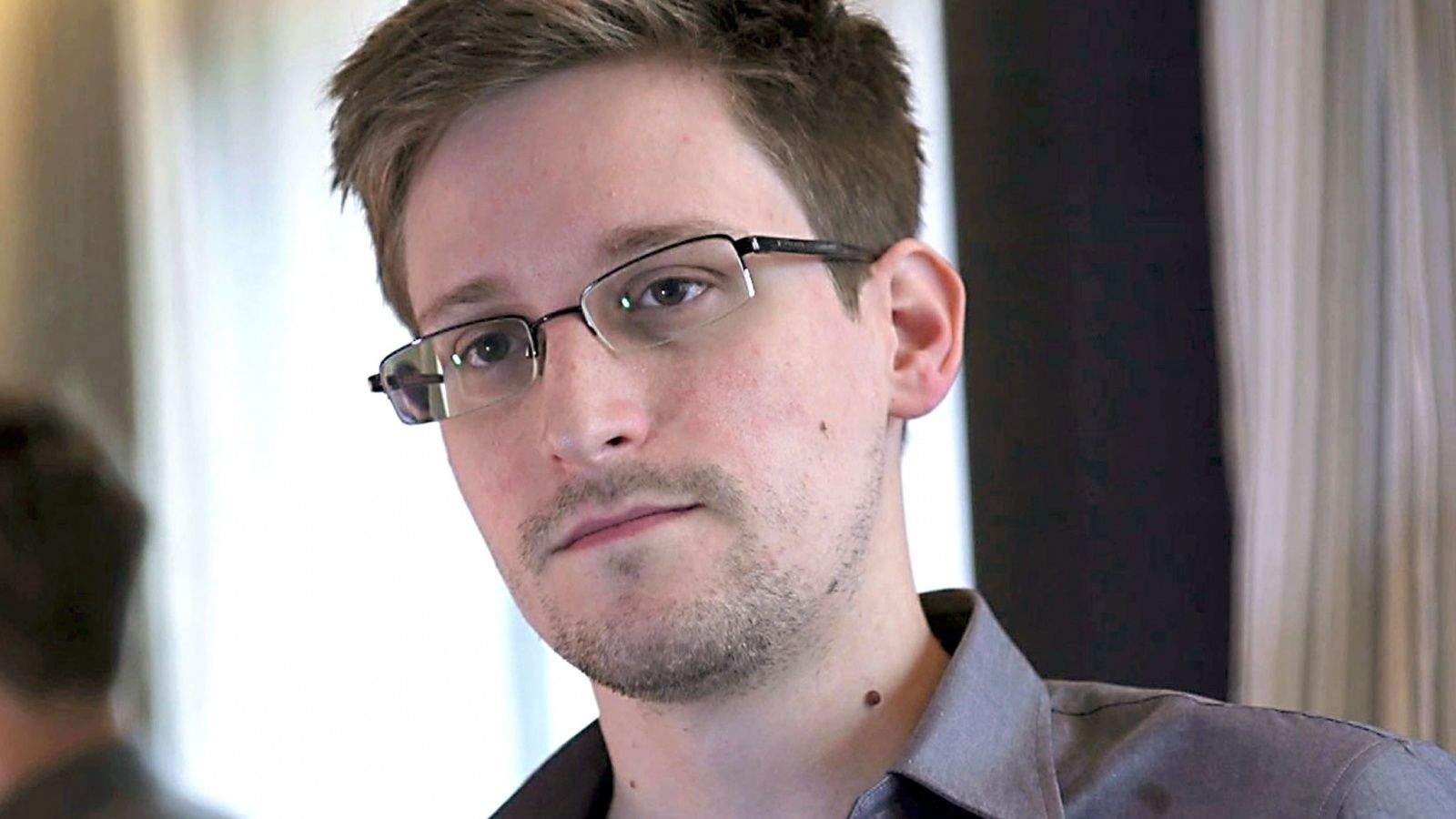
Edward Snowden recently talked to Joe Rogan for nearly three hours. Snowden has a book out (“Permanent Record“) about his life and his decision to become a whistleblower who exposed lies and crimes by the U.S. national security state. As I watched Snowden’s interview, I jotted down notes and thoughts I had. (The interview itself has more than seven million views on YouTube and rising, which is great to see.) The term in my title, “turnkey tyranny,” is taken from the interview.
My intent here is not to summarize Snowden’s entire interview. I want to focus on some points he made that I found especially revealing, pertinent, and insightful.
Without further ado, here are 12 points I took from this interview:
1. People who reach the highest levels of government do so by being risk-averse. Their goal is never to screw-up in a major way. This mentality breeds cautiousness, mediocrity, and buck-passing. (I saw the same in my 20 years in the U.S. military.)
2. The American people are no longer partners of government. We are subjects. Our rights are routinely violated even as we become accustomed (or largely oblivious) to a form of turnkey tyranny.
3. Intelligence agencies in the U.S. used 9/11 to enlarge their power. They argued that 9/11 happened because there were “too many restrictions” on them. This led to the PATRIOT Act and unconstitutional global mass surveillance, disguised as the price of being kept “safe” from terrorism. Simultaneously, America’s 17 intelligence agencies wanted most of all not to be blamed for 9/11. They wanted to ensure the buck stopped nowhere. This was a goal they achieved.
4. Every persuasive lie has a kernel of truth. Terrorism does exist — that’s the kernel of truth. Illegal mass surveillance, facilitated by nearly unlimited government power, in the cause of “keeping us safe” is the persuasive lie.
5. The government uses classification (“Top Secret” and so on) primarily to hide things from the American people, who have no “need to know” in the view of government officials. Secrecy becomes a cloak for illegality. Government becomes unaccountable; the people don’t know, therefore we are powerless to rein in government excesses or to prosecute for abuses of power.
6. Fear is the mind-killer (my expression here, quoting Frank Herbert’s Dune). Snowden spoke much about the use of fear by the government, using expressions like “they’ll be blood on your hands” and “think of the children.” Fear is the way to cloud people’s minds. As Snowden put it, you lose the ability to act because you are afraid.
7. What is true patriotism? For Snowden, it’s about a constant effort to do good for the people. It’s not loyalty to government. Loyalty, Snowden notes, is only good in the service of something good.
8. National security and public safety are not synonymous. In fact, in the name of national security, our rights are being violated. We are “sweeping up the broken glass of our lost rights” in today’s world of global mass surveillance, Snowden noted.
9. We live naked before power. Companies like Facebook and Google, together with the U.S. government, know everything about us; we know little about them. It’s supposed to be the reverse (at least in a democracy).
10. “The system is built on lies.” James Clapper, the director of national intelligence, lies under oath before Congress. And there are no consequences. He goes unpunished.
11. We own less and less of our own data. Data increasingly belongs to corporations and the government. It’s become a commodity. Which means we are the commodity. We are being exploited and manipulated, we are being sold, and it’s all legal, because the powerful make the policies and the laws, and they are unaccountable to the people.
12. Don’t wait for a hero to save you. What matters is heroic decisions. You are never more than one decision away from making the world a better place.
In 2013, Edward Snowden made a heroic decision to reveal illegal mass surveillance by the U.S. government, among other governmental crimes. He has made the world a better place, but as he himself knows, the fight has only just begun against turnkey tyranny.
For most Americans, patriotism means love of country. But I’d like to suggest this “love” is misplaced for three reasons. First, I’d like to suggest that “country” is an imaginary construct. Two, I’d like to show how patriotism is misused and abused by the powerful, most infamously by President Donald Trump. And three, I’d like to suggest a new form of patriotism, the love of the tangible, and by this I mean our fellow human beings.
“Country” as an imaginary construct
“Imagine there’s no countries,” John Lennon wrote nearly fifty years ago. Generally, citizens of a given country insist they love their nation. But can one truly “love America,” or any other country or nation? For that matter can you love any state, city, town, or sports team?
In general semantics, a branch of linguistics which is itself a branch of philosophy, the word is not the thing, the map is not the territory. Canada, France, the Red Sox are only names, concepts, phenomena of consciousness. Or a neurological system in the brain if you adhere to the Western materialist worldview.
Think about it: You can’t see, touch, feel, hear, or taste “France.” But you can taste a French pastry made in “France” and see and touch the Eiffel Tower. ”Vive La France” does not mean that French people collectively are going to live a long life. In fact, the concept of France vanishes if there are no longer any human beings left after, say, France is devastated by a massive nuclear attack.
Now, one can literally love the beauty of the land that comprises the legal territory of a given country. I love the mountains and the deserts of the Western U.S., the woods of northern Maine, the seacoasts of California. I love Fourth of July celebrations, the fireworks and cookouts. I even love the old Frank Sinatra song, “The House I Live In” because it names things in America that you can put your hands on, such as the line “the ‘howdy’ and the handshake.” And then the concluding lyric, “that’s America to me.” (Notice there is no insinuation there is an America out there, only the symbolic meaning of the phrase.)
Love of country, in short, is nonsensical because a country, a nation, is an abstraction, a conceptual phenomenon, a byproduct of mental processes, that has no existence in the material universe. Perhaps Lennon’s dream of “imagine there’s no countries” will only become reality when we no longer perceive people as enemies or opponents merely because they live elsewhere or look different.
The misuse and abuse of patriotism
Politicians and journalists tend to affirm, for obvious reasons, that it’s important to state how much you love America. Not to do so could easily result in your career or ambitions heading south. Still, proclaiming your love of country, whatever country that is, all too often has undesirable and destructive consequences. For instance, it becomes easier to support a government taking the country to war. Or colossal military budgets in the name of “defending” the “country.”
To an unreflective patriot the country is not seen as the sum of its parts but as a reality sui generis, perhaps symbolized by a father figure like Uncle Sam.
You know Uncle Sam isn’t real, right?
If I can make a sweeping generalization, among rural chauvinists “country” is part of the “God, Country, and Guns” trinity. This idea is well captured by the Merle Haggard song from 1970 that “When they’re runnin’ down our country, man/They’re walkin’ on the fightin’ side of me.”
President Trump’s recent call for members of the so-called squad, the four progressive Congresswomen of color, to “go back” to where they came from (a takeoff of “love it or leave it”) is one step away from “I will hurt you if I see you again.” Obviously, there is no place natural-born U.S. citizens can go back to. And even if they were not citizens by birth, why should they have to leave after having become U.S. citizens? Trump’s “patriotism” is racist nationalism – and shamelessly so.
Patriotism, in the narrow Trumpian usage of that word, demands opponents, sides, an “us versus them” mentality. And that’s a mentality calculated for division, distraction, and destruction.
Real patriotism
We humans can’t see national borders from space, but we do see our planet. Our real “homeland.” Nevertheless, the false choice of “America: love it or leave it” has recently been revived from the days when protesters against the Vietnam War were denounced as unpatriotic. In truth, they were performing the most patriotic act imaginable, if patriotism is properly defined as love of one’s fellow human beings. In that sense, real patriotism is humanitarianism. It’s focused on humans and the home where we live, not on constructs that are insensible.
False patriotism may remain “the last refuge of a scoundrel,” as Samuel Johnson, the 18th century British social philosopher, observed. Even so, a literal belief in “my country, right or wrong” could still do us all in some sunny day. A dangerous myth, indeed.
Richard Sahn is a retired professor of sociology. You may also wish to read his article on sports and reification.
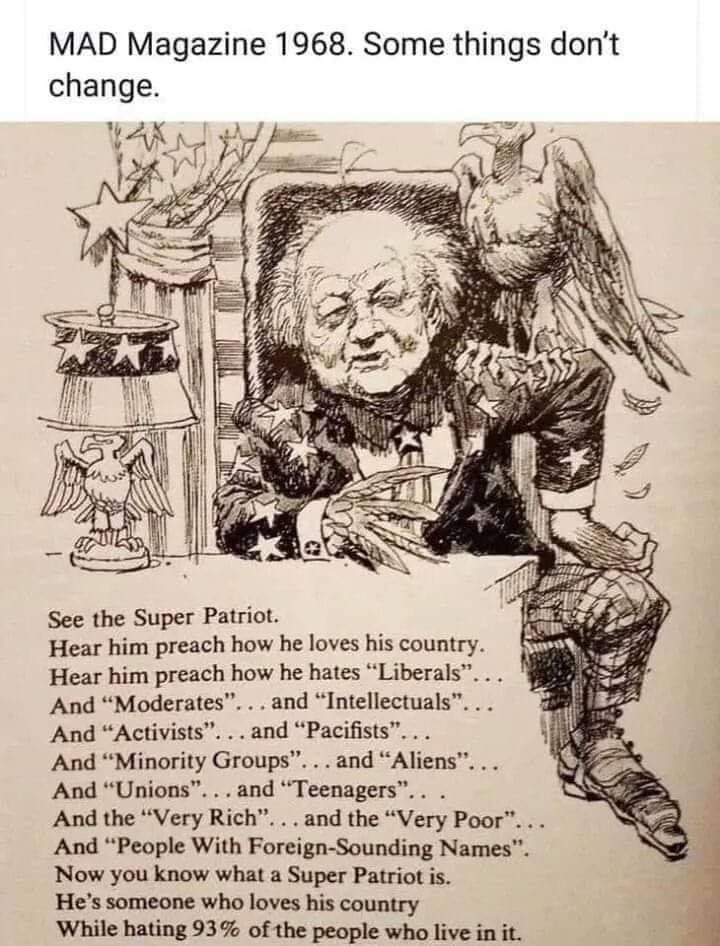
This week a good friend sent me the image below from Mad Magazine.
Coincidentally, I’ve been reading Senator J.W. Fulbright’s book, “The Pentagon Propaganda Machine” (1970) and came across this footnote on page 57:
“Promotion of the display of the National Flag is one of the Navy’s service-wide public affairs projects. It is laudable enough if it remains unconnected with the current campaign of superpatriots that equates the display of flag decals on automobile windows with love of country and unlimited support for the war in Vietnam.”
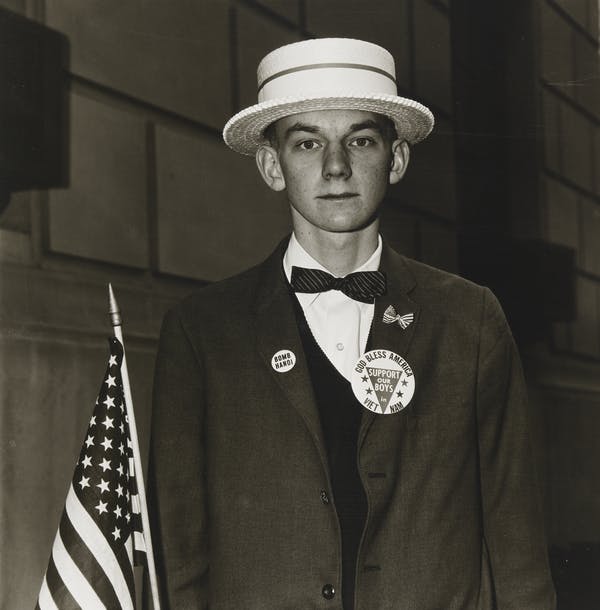
And then I came across a photograph by Diane Arbus, “Boy with a Straw Hat Waiting to March in a Pro-War Parade, NYC, 1967.”
It’s a fascinating photo. “Support Our Boys” is now rendered as “Support Our Troops.” Also, today’s flags are a lot bigger. The “Bomb Hanoi” pin speaks for itself.
All of this got me thinking about how “super” patriotism is linked to fanatical support for war, which draws from hatred of “the other,” whether that “other” is foreigners or various alleged enemies within (like those “liberals” and “pacifists” mentioned in the Mad Magazine cartoon).
As the Trump administration appears to promise more wars in the future (consider Mike Pence’s recent bellicose speech at West Point), perhaps in Venezuela or Iran, we need to be on guard against this idea that supporting wars is patriotic. Indeed, the opposite is usually true. “I’m already against the next war” is a good rule of thumb to live by.
How did “super” patriotism become synonymous with blanket support for destructive wars? One thing is certain: it’s nothing new in America.
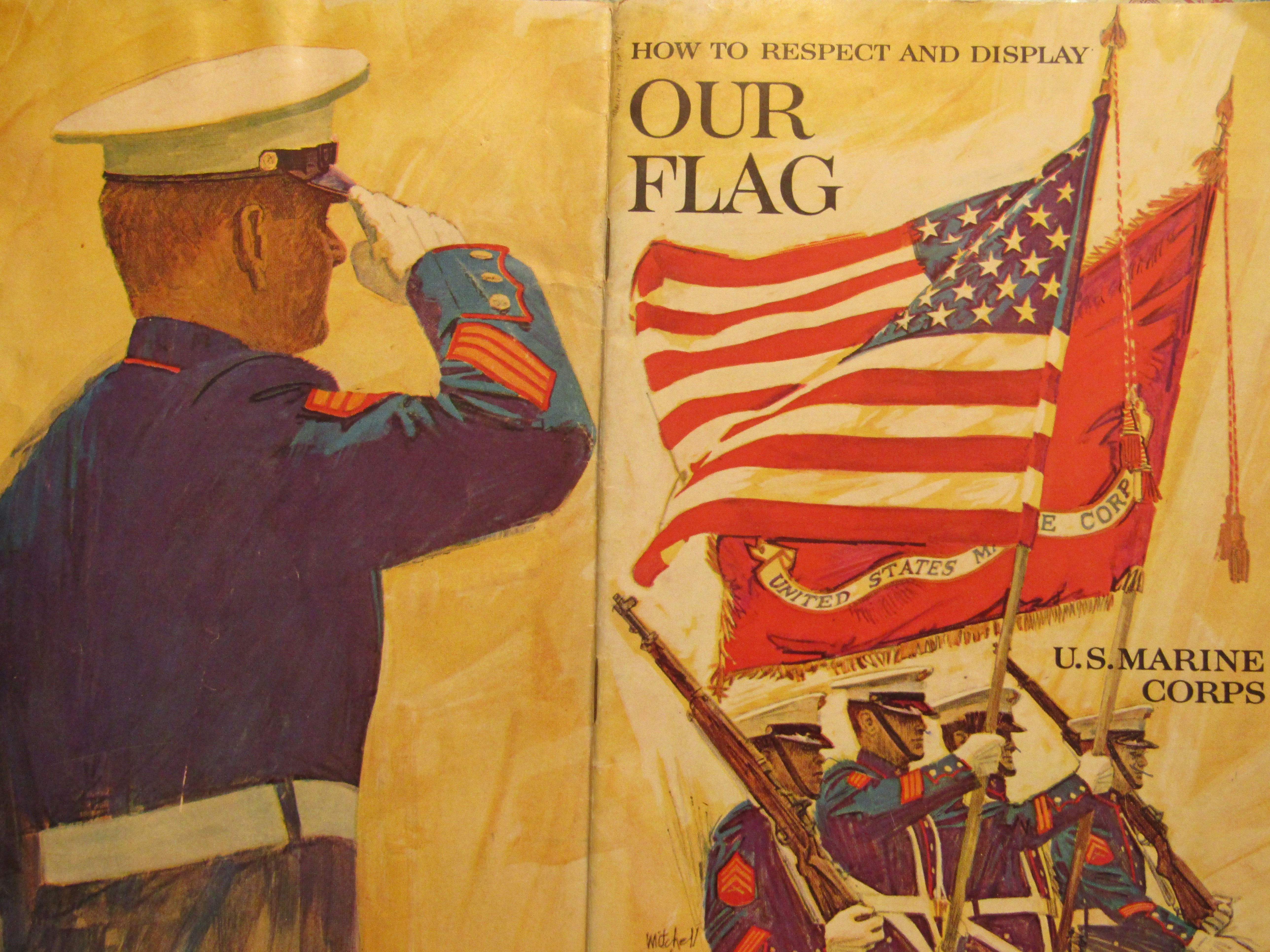
When I was young, I kept a pamphlet in my room: “How to Respect and Display Our Flag.” It was from the U.S. Marine Corps, dated March 1968. I still have that pamphlet; here’s a photo of it:
Some of its guidance is now (it saddens me to say) obsolete. Consider the following: “Do not use the flag as a portion of a costume or athletic uniform. Do not embroider it upon cushions or handkerchiefs nor print it on paper napkins or boxes.”
Nowadays, flags are everywhere. They are on football helmets and baseball caps. They are on bathing suits (!) and shirts, jackets and tops. I once bought an ice cream cone at a baseball game in a paper wrapper decorated by the American flag.
Fifty years ago, there was a sense our flag was special, meaning you didn’t put one everywhere and on everything. All these representations of the flag that you see today, especially those flag lapel pins most often seen on sportscasters and politicians, strike me as opportunistic and self-celebratory rather than respectable tributes to Old Glory.
My flag handbook also says, “When carried, the flag should always be aloft and free–never flat or horizontal.” I suppose they couldn’t imagine in 1968 flags so gigantic that they could only be carried flat or horizontal.
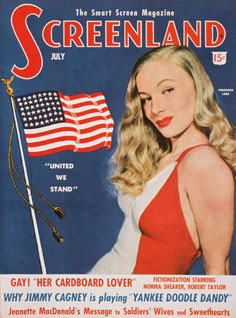
A book of more recent vintage (2001), “United We Stand,” celebrates efforts during World War II to bring the nation together by marking the Fourth of July in 1942 with images of the flag on magazines. One of my favorites from that time showcased Veronica Lake:
From this book, I was reminded of the original “Pledge of Allegiance”:
I pledge allegiance to my Flag
and the Republic for which it stands,
one nation indivisible,
with liberty and justice for all.
The phrase “under God” was only added in 1954 at the height of McCarthyism.
I favor the original pledge. If it was good enough for the “Greatest Generation” who fought and won World War II, it should be good enough for these times.
I was also reminded of a song that I rarely hear nowadays: “You’re a Grand Old Flag” by George M. Cohan (played, of course, by Jimmy Cagney in “Yankee Doodle Dandy,” as mentioned on the cover above). Remember the opening stanza of that song?
You’re a grand old flag.
You’re a high-flying flag
and forever in Peace may you wave.
“Forever in peace may you wave” — how come we don’t hear that sentiment today?
The National Anthem and flags are everywhere in America
Richard Sahn
Editor’s Intro: The first time I went to a movie on a military base, I was surprised when the national anthem began to play, and everyone stood up. It seemed so incongruous. My buddy who came with me refused to stand at first, but after catching grief from a fellow movie-goer, he reluctantly stood. I stood too, of course, but I felt silly doing so. The whole practice just seemed to cheapen the anthem.
Nowadays, the anthem and similar patriotic songs are everywhere, especially “God Bless America” and “God Bless the USA,” with its refrain about being “Proud to be an American.” Watching NFL football this past weekend, I noticed every announcer on CBS during halftime wore flag lapel wins. Easy gestures of patriotism are everywhere in my country, even at classical concerts, notes my good friend and fellow contrarian, Richard Sahn. But are they not patronizing to the audience? W.J. Astore
I recently attended a classical music concert in the town where I live. The orchestra began by playing the national anthem. Many in the audience sang the words. I felt like I was at a baseball game or a military parade or the moment before the fireworks at a July 4th celebration. I stood up, of course, for my own survival in the rural and conservative community where I live.
But I couldn’t help but engage in some critical thinking. What is the connection between this perfunctory display of patriotic observance and enjoying the music, I kept asking myself. I couldn’t conjure up a rational relationship. If there was a global anthem–perhaps honoring the potential of great music to bring the people of the world together–singing such an anthem would have been appropriate. Come to think of it, great artistic works and performers have the very potential to do just that, unite humanity. Yet all national anthems of developed countries when performed in public forums only enhance the capacity to see the social world in terms of us versus them. Depending on the government in power this division can have moral or immoral consequences if we define “immoral” as decision-making that promotes unnecessary death and suffering.
So, why play a national anthem before a classical concert featuring international music, and why stand up for it? I’ve come up with several possible reasons:
One reason people rise for the national anthem is because they don’t want to stand out in the crowd and endure negative reactions. (My reason.)
Another reason seems to be pure habit, which is the result of socializing and conditioning throughout one’s life.
Pride in nation as such, which would apply to people of any specific nationality. This is pure love of country, an easy form of patriotism with no cost to the individual.
The belief, undoubtedly a “true belief” as author Eric Hoffer would argue (“The True Believer”) that one is truly honoring those who sacrificed themselves in a nation’s wars, that one is somehow expressing thanks to the dead and their families. Or, that the nation itself is alive or conscious. Therefore, one is thanking the nation for winning its wars.
Obedience to the norm of standing up for national anthem, thinking that it is an obligation to society, perhaps authority figures in general, to respect the national anthem.
Finally, a cynical explanation for the musical director of the orchestra beginning a concert with the national anthem is pleasing or obeying members of the board of the orchestra who contribute financially, and who insist on the observation of “patriotic” norms.
Now, don’t get me wrong. I believe in honoring or supporting courageous individuals who have fought in wars or sacrificed themselves for what they believed was necessary for freedom and survival. Not just war heroes but moral heroes, men and women like Martin Luther King Jr. and Dorothy Day.
But I oppose national anthems because they feed nationalism which is conducive to unnecessary death and torture. I am also opposed to national anthems because there is no such thing as a country or nation; there are only people, laws, culture (material and non-material).
Countries exist in consciousness. They are abstract ideas, political constructs. Believing they exist as if they were a reality sui generis, as if they were an actual person or even a thing, is reification. The word is not the thing, the map is not the territory.
Instead of rising for jingoistic national anthems, people should instead rise to applaud a moving performance by the musicians and conductor after listening to, say, Mozart’s Jupiter symphony. Music is real in a way that nations are not.
Musical concerts should provide a haven for celebrating the human condition, not for anthem-singing that divides humanity. My protest that night was a silent one, but internally I raged against the conflation of the state with the arts when the national anthem began to play.
Richard Sahn is a sociology professor and independent thinker.




 Bracing Views