Last night was Obama night at the DNC as both Barack and Michelle Obama spoke to endorse Kamala Harris while denouncing Donald Trump. Perusing my various media streams this AM suggests they did a bang up job of it. Perhaps a few sobering reminders are in order:
Obama promised in 2007 he’d codify Roe v. Wade into law as his top priority. Once he won the election, he did nothing; in fact, he said it wasn’t among his top priorities.
Obama himself admitted that his administration, politically speaking, could best be described as moderate Republican. Here he was honest, for Obama was pro-corporate, pro-banks, pro-war, pro-Big Pharma, and pro-Wall Street.
Obama gave us a corporate-friendly health care plan without a single payer option. Thus, Americans continue to pay more than double what people in countries like Germany and France pay for their health care.
Obama “surged” in Afghanistan with military forces, prolonging a lost war in that country.
Obama, with Hillary Clinton by his side, overthrew Libya, leaving that a country a wreck. Open slave markets, anyone?
Obama, by his own admission, became very good at killing people, especially via drone assassinations.
Obama, after winning a Nobel Peace Prize for not being George W. Bush, promised a muscular U.S. foreign policy supported by military operations to protect vital U.S. (corporate) interests.
Obama bailed out the banks while allowing them to foreclose on millions of homeowners.
Obama admitted “We tortured some folks” and then held no one accountable except for the brave whistleblower, John Kiriakou, who helped to expose the torture regimen (and regime).
Obama said we had to look forward, not backward, so no one was held accountable for the disastrous Iraq War.
That’s just ten reminders, off the top of my head, so I wouldn’t get too excited by soaring rhetoric from the Obamas about saving democracy.
The main point here isn’t to bash the Democrats or to rain on their parade. It’s to realize where the corporate-aligned Democratic Party really stands on issues like war and economic fairness, to take that knowledge in fully, and then to use it to change the Party.
And the time to do that is now, when Harris/Walz need your vote. It’s too late to wait until after the election, which Harris just may win (a big reason why, I think, is Trump fatigue, as Americans ponder what another four years of the Trump circus may be like).
A Sign You Didn’t See Inside the Convention Hall
Democrats tell me not to attack or criticize Harris because when I do I’m helping Trump. But not to criticize politicians, not to make demands of them, is tantamount to surrendering to authoritarianism even before it’s taken hold. No one is helped in America by surrendering to a politics of joy or for that matter the MAGA crowd.
For I guarantee you, the corporate Democrats will tell you the time is NEVER right to challenge their power and agendas. The time is wrong now because of Trump. The time will be wrong in 2025 because Harris/Walz deserve a honeymoon. The time will be wrong in 2026 because of Congressional midterms. The time will be wrong in 2027-28 because of the threat of a “new” Trump (Ron DeSantis? Tom Cotton?).
One example from the Obama years. My friend and colleague, Matt Hoh, resigned from the State Department to protest the Afghan War surge. He came to Congress and spoke to Democrats. He persuaded many to take action. And then House Speaker Nancy Pelosi stood up. Literally. She said Democrats had to support Obama’s expansion of the war because of a bigger fight, Obama’s fight for the Affordable Care Act.
That’s right: the time was wrong to save American and Afghan lives in a lost war because Pelosi said Obama couldn’t afford dissension within the ranks as he “fought” for the corporate-friendly ACA, most commonly known as Obamacare.
The corporate Democrats will persist in telling you the TIME IS ALWAYS WRONG to challenge them because of Trump, new Trump, some legislative priority, perhaps a foreign leader like Putin, etc. It’s total BS. The best and only time you can push them is when you have real leverage, and that’s now, before you give them your money and votes.
After all, if you don’t speak up, it’s guaranteed no one will hear you. Dare to speak up, Democrats, for what you believe in. For that is what Democracy truly is about.
Tacking to starboard, stuck in place, the USS America under Joe Biden is groaning in protest
In America’s two-color political universe, by which I mean blue versus red, whenever I criticize the blue team, I get accused of supporting the red team. But I believe in a multi-color world, not a bicolor one. Even green is an acceptable color! So, as I critique Joe Biden today, rest assured I never have voted, and never will vote, for the red guy, Donald Trump. I’m going green in 2024 with Cornel West.
With that longwinded prologue, I’d like to announce the Biden/Harris unofficial campaign slogan for 2024: No, we can’t.
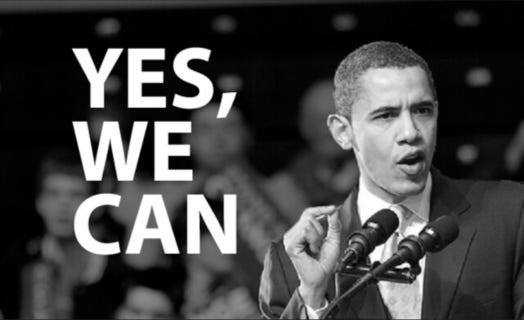
It may sound familiar. Fifteen years ago, Barack Obama embraced the energy and optimism of “Yes, we can.” He also promoted “hope” and “change.” After eight years of Bush/Cheney, those simple slogans resonated with Americans, and Obama/Biden rode to victory in 2008 exuding confidence and a can-do spirit. (Of course, the results in office were, shall I say, disappointing.)
The good old days that never quite were.
But that was then, this is now, and when you go to JoeBiden.com, you get a message that suggests we reelect Joe to “finish the job.” Which job needs to be finished is unspecified. Vague words about protecting freedom and democracy and feel-good imagery is about all you get. Add it up and you get a de facto message of little hope and no change—just more of the same.
The Democrats think that a bland message of normalcy will be enough to prevail against Trump, who seems to be indicted now almost daily. Again, I’m no fan of Trump and won’t be voting for him. But why should I vote for Biden? What compelling reason or even message is there to convince me?
I haven’t heard one other than “Trump is very bad.”
A friend tells me Biden’s record as president is respectable and that he’s tilted left of center. I’m baffled by this claim. Biden/Harris have told me we can’t get Medicare for All; indeed, we can’t even get a public option. We can’t get significant student debt relief. We can’t get a $15 federal minimum wage. We can’t reduce the Pentagon budget and spending on wars and weapons. We can’t stop building more nuclear weapons. We can’t stop drilling in sensitive areas such as pristine wildernesses and offshore waters.
You see where I’m going here. When it comes to progressive agendas, “No, we can’t” is the true motto of Biden/Harris. Corporate Joe and his VP sidekick appear to have little empathy for the working classes and the hurting. Imagine a president coming back from vacation, as Biden recently did, and being asked about deadly wildfires in Hawaii and declaring that he had “no comment.” How hard is it for a president to muster words of sympathy for the suffering people of Hawaii while promising speedy federal aid?
For some reason I’m in a nautical frame of mind (forgive me, my Navy brethren).* As the USS Trump takes on water from multiple torpedo hits (indictments), the USS Biden sits dead in the water, having run aground on the shoals of incompetence and indifference. There is no Bernie Sanders this time around to rally the youthful crew to rock and re-float the boat. Perhaps Americans should search for a new ship to board?
A favorite book is “The Caine Mutiny” (please read it if you haven’t; it’s thrilling as well as hilarious in spots). The Caine was a tired old ship headed for the scrap heap after World War II and its commander, Queeg, was addled and (much worse) cowardly. The ship nearly sinks during a powerful storm that paralyzes Queeg; only a mutiny by its crew prevents disaster. America, our ship of state, faces storms of its own. Do we have confidence in captains like Trump or Biden to lead us through the tempest to calmer waters? Maybe it’s time we mutiny?
My friend believes Biden is a competent captain who’s making good headway even as he tacks to port. I see an increasingly tired and confused commander who’s furiously tacking to starboard even as the ship of state groans, making no progress as it’s battered on those aforementioned shoals.
*Feel free, Navy brethren, to offer your own nautical metaphors, which I’m betting will be better than mine.
Jeh Johnson with Biden and Obama, 2013 (White House photo)
W.J. Astore
Jeh Johnson, formerly homeland security secretary under President Obama, showed how a typical Democratic official approaches the Pentagon and war as he spoke on ABC’s This Week on Sunday (11/15). For Johnson, the Pentagon “is typically an island of stability” in the U.S. government, but President Trump was destabilizing that island because of recent changes to Pentagon personnel. Trump’s changes could be driven by his desire to get U.S. troops out of Afghanistan, speculated Johnson, which was not a good thing:
“If he [Trump] wants troops out of Afghanistan, as I know most Americans do, we have to do it in a way that makes sense, in an orderly manner, and that comports with battlefield reality … in trying to strike a deal, you don’t unilaterally surrender your greatest point of leverage by unilaterally withdrawing troops before the Afghan government and the Taliban have stuck a deal. So this is very concerning and if I were in the Biden transition team right now, I’d be very focused … on restoring stability in our national security.”
We can’t surrender our “leverage,” those thousands of U.S. troops that remain in harm’s way in an unnecessary war that was won and then lost almost two decades ago, because it’s that “leverage” that will compel the Taliban, who have already won the war, to strike a deal with an Afghan government that exists mainly because the U.S. government props it up. Makes sense to me.
By the way, only “most Americans” want our troops to come home? Where are all the other Americans who want them to stay there indefinitely? Within the Washington Beltway, I’d wager.
The Afghan war has always struck me as nonsensical. Yes, some kind of response to the 9/11 attacks was needed, and initial U.S. military strikes in 2001-02 succeeded in toppling the Taliban, in the sense they saw no reason to stand and fight against withering fire. At that moment, the U.S. military should have declared victory and left. Instead, the Bush/Cheney administration decided on its own disastrous occupation, extended another eight years by Obama/Biden, even though we knew full well the extent of the Soviet disaster in Afghanistan in the 1980s.
The Afghan war has lasted so long that I’ve been writing articles against it for more than a decade. You’d think any sensible and sane Democrat would love to see U.S. troops withdrawn and the war finally come to an end. Not so. The war must continue in the name of “leverage” and “stability.”
I like Johnson’s truly absurdist reference to “battlefield reality,” which, if we’re being real for a moment, reflects a Taliban victory. Unless the U.S. wants to occupy Afghanistan forever, with hundreds of thousands of troops, that victory is not about to be reversed. And what kind of “victory” would that be?
“Stability” is not preserved by fighting unwinnable wars on the imperial periphery, unless you’re talking about the stability of Pentagon finances and corporate profits. Johnson’s wiki bio does mention he’s on the boards of Lockheed Martin Corporation and U.S. Steel, which certainly hints at a conflict of interest when it comes to offering advice on ending wars.
In the meantime, we probably shouldn’t tell our troops, whom we’re supposed to love and support, that we’re keeping them in Afghanistan for “leverage” until the “battlefield reality” is more in our favor. That’s truly a recipe for endless war in a place that well deserves its reputation as the graveyard of empires.
Finally, a reminder to Democrats: your Pentagon is an island of stability, and your troops are creating the leverage that allows democracy to flourish everywhere. If this makes sense to you, and if this is the guiding philosophy of Joe Biden’s national security team, we’re truly in deep trouble.
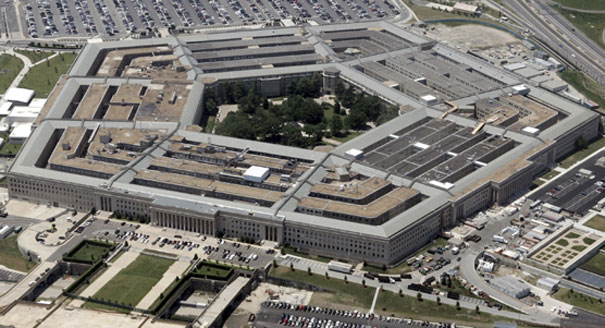
Bonus Lesson: The Pentagon is an “island” of government only if that island is roughly the size of Pangaea.
William Astore, a retired lieutenant colonel (USAF) and history professor, is a senior fellow at the Eisenhower Media Network (EMN), an organization of critical veteran military and national security professionals.
Can we get 10-20 million Americans to settle here?
W.J. Astore
I was jesting with a friend the other day about how the U.S. could win the Afghan War. There were two ways, I suggested. The first is to relocate about 10 or 20 million Americans to Afghanistan and declare it the 51st state. Then wait a generation or two. The second was to withdraw all American forces and declare “mission accomplished.” Half-measures that fall in between these options are doomed to fail, which is what we’ve been witnessing since the fall of 2001.
In Afghanistan today, the Taliban controls more territory than ever, the drug trade is flourishing, government corruption is endemic, yet the U.S. military/government continues to speak of progress. This “spin it to win it” approach to the Afghan War is nothing new, of course, which is why the following article that I wrote in 2010 is still relevant.
President Trump had a sound instinct in seeking to end the Afghan War. He was talked out of it by the military. For all his faults, Trump knows a loser policy when he sees it. Will he have the moxie to withdraw U.S. forces from Afghanistan?
No More Afghanistans (originally posted in 2010)
In grappling with Afghanistan, President Obama and his team of national security advisors reveal a tendency all too common within the Washington beltway: privileging fleeting and reversible signs of local success while downplaying endemic difficulties and larger patterns of strategic failure. Our latest intelligence estimates, we are told, show signs of progress. But of what sort? The Taliban appears to be extending its hold in the countryside, corruption continues to spread in the Karzai government, and the Afghan National Army remains unreliable, all despite (or rather because of) prodigious infusions of cash courtesy of the American taxpayer.
The president and his advisors would do well to toss aside the latest “feel good” intel and pick up a good book on war. I’d recommend Summons of the Trumpet: U.S.-Vietnam in Perspective, by Colonel (later, Lieutenant General) Dave Richard Palmer. “One of the essential ingredients of [national] preparedness,” wrote then-Colonel Palmer in 1978, “is a diligent and honest study of the past, an intellectual examination of historical successes and failures.” True to his word, Palmer quoted Major G.P. Baldwin, who wrote in 1928 of the Russo-Japanese War that:
The [Russian] government, the press, and the people as a whole had no enthusiasm for the war, indeed failed to understand what the nation was fighting about … Such support is necessary in any war … Unless the people are enthusiastic about war, unless they have a strong will to win it, they will become discouraged by repeated [setbacks] … no government can go to war with hope of success unless it is assured that the people as a whole know what the war is about, that they believe in their cause, are enthusiastic for it, and possess a determination to win. If these conditions are not present the government should take steps to create them or keep the peace.
Palmer cited these words at the end of his probing account of America’s defeat in Vietnam. Though I don’t agree with all of Palmer’s conclusions, his book is stimulating, incisive, and compelling in its concluding vow: “There must be no more Vietnams.”
Let’s consider the points that Baldwin and Palmer raise in light of today’s situation in Afghanistan. Are the American people enthusiastic for this war? Do they have a strong will to win it (assuming the war is winnable on terms consistent with our interests)? Do they know what the war is about (this seems unlikely, since nine out of ten Americans can’t seem to locate Afghanistan on a map)?
If the answer to these fundamental questions is “no,” and I believe it is, shouldn’t our government and our troops be withdrawing now? Because I don’t see that our government will seek to mobilize the people, mobilize our national will, tell us clearly what our cause is and why it is just, and persist in that cause until it is either won or lost. And if I’m right about this, our government had best work to “keep the peace.”
Some of the reasons Palmer cites for why Vietnam was such an “incomprehensible war” for the United States bear careful consideration for President Obama’s policy review. These reasons include that few Americans knew exactly why we were fighting in Vietnam; that it was a “limited war” during which most Americans “sensed no feeling of immediate danger and certainly no spirit of total involvement”; that no “unifying element” was at work to suppress internal doubt and dissent, common elements in all wars; that the struggle was not only (or even primarily) a military one but one in which economic, political, and psychological factors often intruded; and that a cultural gap of great perplexity separated us from both our in-country allies and our enemy, a gap that “foment[ed] mistrust and misunderstanding.”
In light of these points, Afghanistan may qualify as a new “incomprehensible war.” Let’s not be distracted by the minutia of the latest intelligence reports and their uncertain metrics of “success.” Unless we can give convincing answers to General Palmer’s questions and points – and unless we can wage a war that doesn’t entail destroying the Afghan village in order to save it – our only sound course is expedient withdrawal, followed by a renewed vow: There must be no more Vietnams – or Afghanistans.
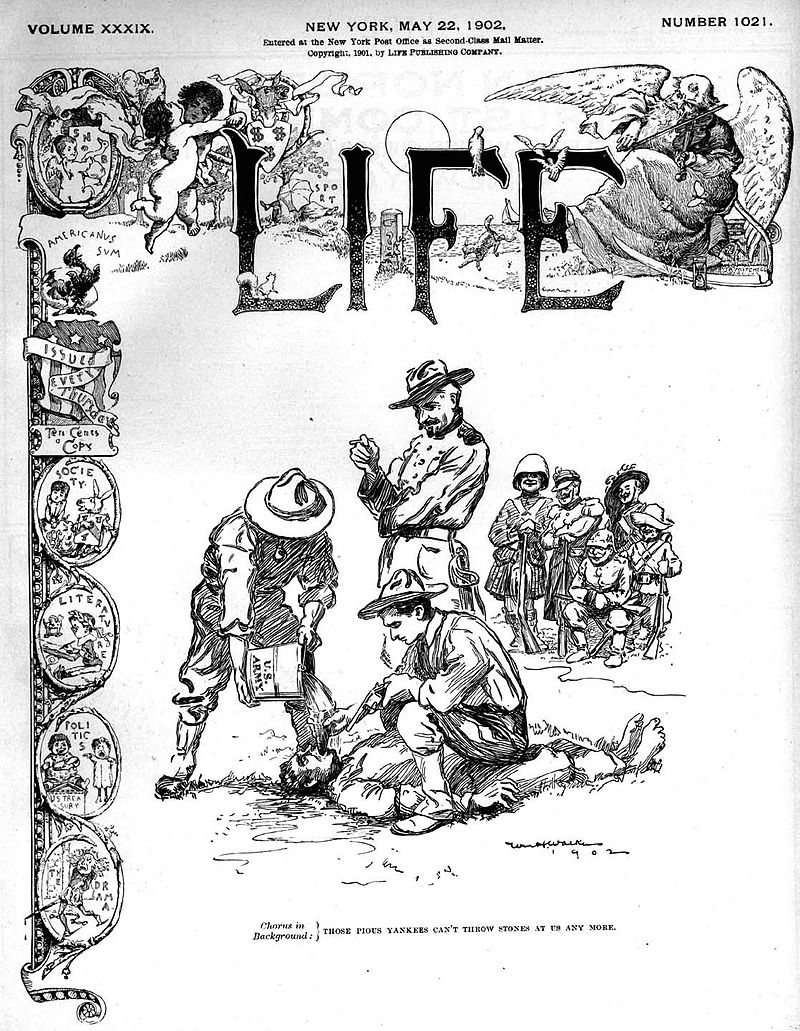
U.S. troops use the “water cure” in the Philippines, 1902
W.J. Astore
Back in 2009, I wrote a few articles on torture during the Bush/Cheney administration. With Barack Obama elected on a vague platform of hope, change, and transparency, there was a sense torture would be outlawed and torturers would be called to account. Obama did sign an executive order to outlaw torture — which really meant nothing more than that the U.S. would abide by international treaties and follow international law with respect to torture — but torturers were never called to account. The failure to do so has left us with a new president, Donald Trump, who says he supports torture (though his Defense Secretary, James Mattis, does not), and a person nominated to head the CIA who enabled torture and helped to cover it up.
Here are a few points I made back in 2009. We should consider these as Congress debates whether to place the CIA in the hands of a torturer.
Recently [2009] in the New York Times, Scott Shane and Mark Mazzetti showed that the Bush administration, the CIA, and the Senate and House Intelligence Committees failed to ask for any historical context before approving so-called “harsh interrogation techniques,” including waterboarding, in 2002. No one apparently knew, or wanted to know, that the U.S. had defined waterboarding as torture and prosecuted it as a war crime after World War II. Did our leaders think the events of 9-11 constituted an entirely new reality, one in which historical precedent was rendered nugatory?
Perhaps so, but their failure to ask historically-based questions also highlights the narrowness of their intellectual training. Like the accused Nazi judges before the bar in the movie Judgment at Nuremberg (1961), they asked themselves only what the law is (or what it became under John Ashcroft and John Yoo), not whether it is just. If a legal brief authorized brutal methods such as waterboarding, who were they to question, let alone challenge, the (freshly minted) legal opinion?
Clearly, the leaders making and implementing decisions on torture constituted a single, self-referencing, self-identified Washington elite almost entirely divorced from thinking historically, let alone tragically. And because they could think neither historically nor tragically, they found false comfort in picturing themselves as stalwart defenders of the nation, not recognizing the mesmerizing power of vengeance and hate.
Our elected officials who find history books too onerous would do well to invest three hours of their time to watch Judgment at Nuremberg. They might learn that a compromised judiciary will uphold any action — discriminatory race laws, involuntary sterilization, even mass murder — all in the name of defending the people from supposedly apocalyptic threats.
Indeed, defending the country from apocalyptic threats is a popular line for those wishing to uphold the Bush Administration’s policy on torture. After the tragedy of 9/11, and subsequent panic in the wake of Anthrax attacks, our leaders were compelled to “take the gloves off” in our defense, even compelled to exact vengeance as a way of deterring future attacks — or so these torture apologists claim.
In their haste to make America safe, Bush and Company effectively declared vengeance was theirs and not the Lord’s. But the human lust for vengeance is blinding, even more so when it’s perceived as righteous. Here our wrathful lawyers/politicians might consider the lessons of Giuseppe Verdi’s opera, Rigoletto. The hunchbacked court jester, Rigoletto, delights in other people’s misfortune, and for this he is cursed by a cuckolded husband. Soon, his own daughter, Gilda, the joy of his life, is kidnapped and despoiled, the first bitter fruits of the curse. Despite Gilda’s pleas to forgive the transgressor, Rigoletto, blinded by his own murderous desire for vengeance, sets in motion a chain of events that ends with the sacrificial death of his beloved Gilda and the annihilation of any vestige of goodness in his tortured soul.
In Rigoletto, the desire for total vengeance produces total tragedy. In Judgment at Nuremberg, man’s ability to justify the worst crimes in the name of “safeguarding the people” is memorably exposed and justly condemned.
What we need today in Washington are fewer leaders who base their decisions on vengeance empowered by legal briefs and more who are willing to embrace the toughest lessons to be gleaned from history and tragedy. What we need today as well is our own version of Judgment at Nuremberg — our own special prosecutorial court — one that is unafraid to elevate justice, truth, and the value of a single human being above all other concerns — especially political ones.
A full accounting of the torture decisions made by the Bush Administration would serve powerfully to reassure Americans that their government is, in fact, transparent and accountable to the law. Such a result would be more than advantageous: It would indirectly strengthen our national defense as well as people’s patriotism. Far easier it is to trust a government that owns up to its mistakes than one that cloaks them in bombast and bromides.
Self-serving bromides that excuse torture as the price of keeping America safe from evil-doers must be dismissed. Self-preservation is no excuse for torture or similar war crimes. It’s easier to see the truth of this when you look at the abuses committed by countries other than one’s own.
Think, for example, of Germany in the opening weeks of World War I. As John Horne and Alan Kramer have shown in German Atrocities, 1914: A History of Denial (2001), German soldiers clearly committed atrocities against Belgian civilians. But the Germans themselves refused to admit culpability. As Germany’s Chancellor, Theobald von Bethmann Hollweg, explained: “We are in a position of necessity and necessity knows no law.” The court of history, however, has rendered a far different judgment.
When the argument from necessity failed to convince, the Bush administration disputed whether waterboarding actually was torture, even though American soldiers had been punished for it during the Philippine-American War. Indeed, even in Nazi Germany, government functionaries tried to fight a rear-guard action against the Gestapo and its use of waterboarding. In a 1979 article on “The Nazi Concentration Camps,” Henry Friedlander cites a complaint made by the Reich Minister of Justice in regards to a murder in 1934 at a concentration camp in Saxony: “The nature of the assault, especially the use of water torture,” the Reich Minister noted, “reveals a brutality and cruelty on the part of the perpetrator that is alien to German sensibilities and feelings. These cruelties, reminiscent of oriental sadism, can neither be explained nor excused by even the most extreme form of hatred in battle.”
If “water torture” was so clearly illegal and so utterly reprehensible to German legal authorities in 1934, even as they battled the baneful influence of Nazism, how can its true nature remain a matter of dispute among some former Bush administration functionaries?
We fancy ourselves to be a nation of laws that apply equally to all. If our new president truly stands for hope and change, he needs to act appropriately. “Hope” in this case means full exposure of torture and appropriate punishment for those who authorized and conducted it. “Change” means accountability for all, even for (especially for) the highest ranking officials in government.
We need a “Truth Commission” to investigate torture. Efforts to suppress the truth, even seemingly innocuous ones, like looking ahead instead of back, will only make the eventual revelations that much worse. Delays in holding people accountable may even empower others to commit new war crimes in our name. Such are the perils of refusing to confront the truth.
Here, the lessons of the French in Algiers continue to resonate. Think back to the revelations of General Paul Aussaresses in 2001, which scandalized France. Aussaresses unrepentantly confessed that, in attempting to suppress terrorism in Algeria in the 1950s, detainee abuse, torture, even murder became routine, first-choice, approaches. The resort to torture simply begat more torture.
Investigators should look at whether this dynamic also applied to America in Afghanistan and Iraq. How many of our counterterrorist experts became like General Aussaresses: Self-perceived “patriots” who believed torture and even murder were justified in the name of protecting the state? After all, if the state’s essential purpose is to protect its citizens, and you’re dealing with an enemy that’s malevolently contumacious, as Al Qaeda appeared to be, what’s to stop avowed “patriots” from torturing suspects, especially when the state’s leaders have authorized harsh techniques and are pressing you for results?
In the case of the Bush administration, not only did torture apparently provide unreliable intelligence: It also abrogated America’s fidelity to international treaties that forbade torture, and compromised our own ethos of truth, justice, and the American way.
And in the case of the Obama administration, its failure to confront the legacy of torture and to prosecute those responsible helped to facilitate the rise of Trump, a man who boasts of favoring torture while nominating for high office officials who served as torture enablers and supporters.
The words “American” and “torture” are linked together. Isn’t it time we separated them?
Donald Trump’s cabinet choices form an anti-government of sorts. A climate change skeptic as head of the EPA who’s involved in suing the EPA. A head of the Energy department who previously said he wanted to eliminate that department. A head of Education who’s a fervid proponent of charter schools and further privatization. A head of housing and urban development with no background in government and no apparent sympathy for the poor. A head of Labor who’s a fast-food mogul, an opponent of a higher minimum wage, and a proponent of robots replacing humans because the former don’t get sick or need health care or strike for higher pay. And, let’s not forget, a gaggle of retired generals in civilian security positions at the Pentagon and within the White House.
You have to hand it to Trump and the Republicans: when they select cabinet members, they’re not trying to triangulate; they’re not trying to reach out to the Democrats or rule in a bipartisan fashion. Their attitude is “We won — and we’re taking no prisoners.”
Remember how newly elected President Obama triangulated in 2008? He kept on Republican Bob Gates as Secretary of Defense. He selected retired Marine Corps General James Jones to be his National Security Adviser, which drew high praise from John McCain. He appointed Tim Geithner at Treasury, a former member of the Kissinger Associates and advocate of the TARP (the Wall Street bailout). He tried to appoint other Republicans to his cabinet, such as Judd Gregg at Commerce. Despite Obama’s huge mandate and his message of “change,” most of his cabinet appointees were conventional Washington insiders, more than acceptable to Republicans.
Of course, this is just further proof (if more is needed) that Democrats like Obama and the Clintons are just another business party, a Republican-lite party. I’d say establishment Democrats don’t have the courage of their convictions, except I’m not sure they have convictions.
Well, Trump has convictions. And he’s unafraid to act on them with his cabinet choices. You think the Democrats might learn something from this?
At Informed Comment, Juan Cole has an excellent column on this whole issue, “Why do GOP Presidents get to go Hard Right, and Dems are just GOP Lite?” Here’s how Cole begins his column:
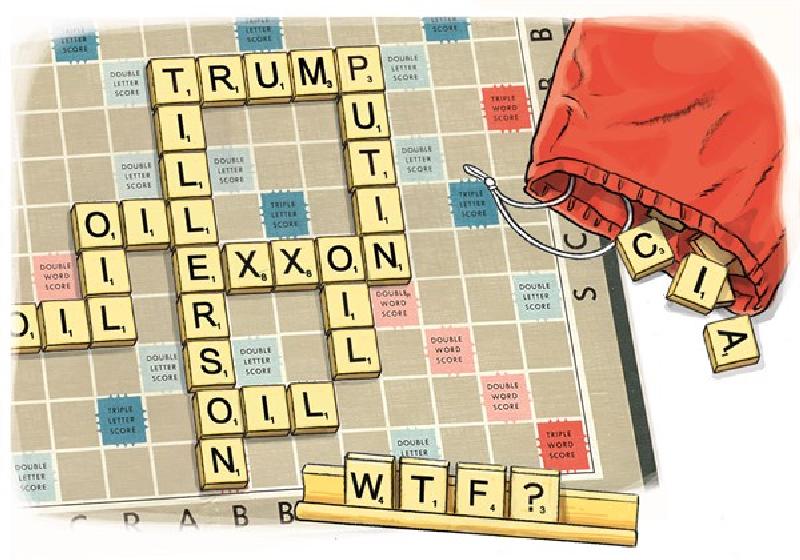
After it was confirmed that Donald J. Trump will appoint former Exxon Mobil CEO Rex Tillerson Secretary of State, the shape of the Trump cabinet and team has become clear. Neofascist Steve Bannon is White House Strategist. Openly racist Jeff Sessions is Attorney General (guess how many civil rights actions he is going to initiate). General James “Mad Dog” Mattis is Secretary of War (call it what it is). Notorious Islamophobe and conspiracy theorist, who denies that Islam is a religion, Lt. Gen. Michael Flynn is National Security adviser.
But Bill Clinton and Barack Obama, when they came to power (and both were very popular and had real mandates) did not go left in the way that George W. Bush and now Trump have gone right.
In fact, the anecdote is told that in 1993 Clinton and his cabinet looked around the room at each other and observed, “Here we are, Eisenhower Republicans.” Why?
Why, indeed? Just imagine if a true liberal Democrat won the White House. And let’s imagine he or she is casting about for a suitable Secretary of Defense, someone who thinks outside of the pentagonal box. How about Ralph Nader or Noam Chomsky? (Cole mentions Frida Berrigan, another provocative choice.)
Call it spine, call it stones, call it sand, call it whatever you want, but Trump’s Republicans have it and the spineless Democrats don’t. Just wait until January, when we start to hear about a few Democrats crossing the aisle to work with Trump in the spirit of “bipartisanship” and “putting government back to work.” It makes me think of another saying of my parents: Trump and his cabinet of billionaires and millionaires “will be laughing all the way to the bank.” The rest of us? We may be laughing, but only to hide the tears.
Note: Revised on 12/19 to add retired Marine Corps General Jones as another example of Obama’s ill-fated effort to “move to the center” and to appease Republicans.
With Trump’s election, it’s a bull market at the Pentagon
W.J. Astore
In two recent speeches, President Obama has repeated the conceit that the United States is “the indispensable nation.” Apparently, that means the U.S. must lead “the free world,” with a none-too-subtle corollary that other “free” nations must follow. Yet the conceit of indispensability gets the U.S. into serious trouble. It facilitates interventionism and meddling, and when the U.S. intervenes and meddles, it’s almost always in military ways, often disastrously (Afghanistan, Iraq, Libya are just three recent examples).
This is hardly surprising. The U.S. military has roughly 800 bases worldwide. Its aircraft carriers are essentially mobile American bases, bristling with weapons and munitions. The U.S. spends roughly $600 billion a year maintaining this military and empire, even as it continues to dominate the world’s arms trade. This heavy investment in weaponry and war-making, abetted by a mentality that celebrates “global reach, global power,” is a strange way to define your nation as being “indispensable.”
How did America come to invest so much of itself in military weaponry and incessant wars? One reason is the quest for total safety. As one of my friends put it:
It [the notion of total safety] must be a post-1941 thing [after the shocking sneak attack on Pearl Harbor]. I think in both cases (1917 [U.S. entry into World War I] and 1941 and maybe 2001) the question Americans have asked is how to keep an evil “over there” somehow from affecting us. In all three cases, I think the answer was neutrality until neutrality no longer seemed to offer safety. My guess is that the idea that total safety required global involvement comes from c.1948, fears of the USSR’s globalism, atomic paranoia, and the desire to protect and preserve the new American affluence. Thus NSC-68 gets passed with nary a whisper of opposition.
What is NSC-68? We must turn the clock back to 1950, the Cold War, and the Truman Administration, as detailed here by The History Channel:
According to the [National Security Council’s] report, the United States should vigorously pursue a policy of “containing” Soviet expansion. NSC-68 recommended that the United States embark on rapid military expansion of conventional forces and the nuclear arsenal, including the development of the new hydrogen bomb. In addition, massive increases in military aid to U.S. allies were necessary as well as more effective use of “covert” means to achieve U.S. goals. The price of these measures was estimated to be about $50 billion; at the time the report was issued, America was spending just $13 billion on defense.
Under President Trump, we’re likely to see a new version of NSC-68, another expansion of the U.S. military (and U.S. militarism), along with covert action by a newly empowered CIA, this time in the name of containing and defeating radical Islam rather than godless communism.
Defense company stocks are already soaring at the prospect of much higher military spending under Trump, notes William Hartung today at TomDispatch.com. Trump is difficult to predict, so Hartung takes him at his word in this passage:
A window into Trump’s thinking [on defense] can be found in a speech he gave in Philadelphia in early September. Drawing heavily on a military spending blueprint created by Washington’s right-wing Heritage Foundation, Trump called for tens of thousands of additional troops, a Navy of 350 ships (the current goal is 308), a significantly larger Air Force, an anti-missile, space-based Star Wars-style program of Reaganesque proportions, and an acceleration of the Pentagon’s $1 trillion “modernization” program for the nuclear arsenal (now considered a three-decade-long project).
Todd Harrison of the Center for Strategic and International Studies estimates that, if Trump faithfully follows the Heritage Foundation’s proposal, he could add more than $900 billion to the Pentagon’s budget over the next decade.
In other words, Obama’s America, the “indispensable nation,” is likely under Trump to channel enormous resources into more weapons even as Trump’s military advisers, men like retired general Mike Flynn, posture for a no-holds-barred crusade against “the cancer” of radical Islam around the globe.
Here’s a harsh truth: America has allowed its arsenal of democracy of World War II fame to become simply an arsenal. A nation that fought in the name of democracy in two world wars has become one that wages endless wars driven by a crusader’s righteousness.
In President Obama’s drone wars, how many innocent civilians have been killed? An official U.S. government report will suggest that roughly 100 civilians have been killed since 2009 in drone strikes, a surprisingly small number. According to NBC News:
The Long War Journal, a project of the right-leaning Foundation for Defense of Democracies think tank whose numbers tend to be the most favorable for U.S. policy-makers, tallied 207 civilian casualties since 2009 in 492 strikes in Pakistan and Yemen. That does not include strikes in Somalia and Libya, which the Obama administration includes in its count of around 100 [civilians killed].
New America, a left-leaning Washington think tank, counted between 244 and 294 civilians killed in 547 attacks in Pakistan, Yemen and Somalia.
The Bureau of Investigative Journalism estimates that as many as 1068 civilians were killed in Pakistan, Yemen and Somalia, the vast majority since 2009.
So it’s unclear whether the Obama administration’s drone strikes have killed 100 innocents, 300 innocents, or over 1000 innocents. Part of the discrepancy involves who is a “militant” and who is an innocent civilian. The U.S. government tends to count all military-age males killed in drone strikes as “militants,” effectively changing the meaning of civilian to “women and children.”
In one respect, this body count doesn’t matter. Dead is dead, whether you’re talking about 100 people or 1000. And isn’t the death of 100 innocents enough to provoke protest if not outrage? Think of the reaction in the U.S. to the killing of 49 innocent civilians in Orlando. Better yet, think if a foreign government was flying drones over our skies, taking out American “terrorists” while killing a few innocent civilians now and again. Would we dismiss 100 dead American civilians as “collateral damage,” regrettable but necessary in this foreign power’s war on terror?
Of course not. Americans would memorialize the dead, honor them, and make them a cause for vengeance.
For all the people the U.S. government is killing overseas in hundreds of deadly drone strikes, it’s not obvious that any progress is being made in the war on terror. The wars continue, with the Taliban gaining strength in Afghanistan. ISIS is on the wane, until it rebounds or morphs into another form. What is essentially terror bombing as a weapon against terror has little chance of ending a war on terror. Meanwhile, hammer blows from the sky against fractured societies only serve to propagate the fractures, creating new fault lines and divisions that are exploitable by the determined and the fanatical.
Indeed, we really have no clear idea whether these multi-billion dollar air campaigns are making any progress in war. Much of the data and results of these campaigns are both classified and open to bias, with reports of casualties being manipulated or “spun” by all sides. All we really know is that innocents are killed (whether 100 or 1000) as the wars persist with no end in sight.
Meanwhile, American exceptionalism rules. As Tom Engelhardt noted back in May of 2015:
In his public apology for deaths [of innocents by drones] that were clearly embarrassing to him, President Obama managed to fall back on a trope that has become ever more politically commonplace in these years. Even in the context of a situation in which two innocent hostages had been killed, he congratulated himself and all Americans for the exceptional nature of this country. “It is a cruel and bitter truth,” he said, “that in the fog of war generally and our fight against terrorists specifically, mistakes — sometimes deadly mistakes — can occur. But one of the things that sets America apart from many other nations, one of the things that makes us exceptional is our willingness to confront squarely our imperfections and to learn from our mistakes.”
Whatever our missteps, in other words, we Americans are exceptional killers in a world of ordinary ones. This attitude has infused Obama’s global assassination program and the White House “kill list” that goes with it and that the president has personally overseen.
Drone strikes are a method of war, but they’ve become the American strategy. The strategy, so it seems, is to keep killing bad guys until the rest give up and go home. But the deaths of innocents, whether 100 or 1000, serve to perpetuate cycles of violence and revenge.
We have, in essence, created a perpetual killing machine.
Update (7/2/2016): Well, the Obama administration has done it again, releasing its report on drone casualties on the afternoon of Friday, July 1st, just before the long Independence Day weekend, ensuring minimal media coverage. The report excludes “active” war zones such as Iraq, Afghanistan, and Syria, a convenient definition that serves to lower the death toll.
According to the report, U.S. drone strikes in places like Yemen, Libya, tribal Pakistan, and Somalia have accounted for about 2500 “terrorists” while killing 64 to 116 civilian bystanders. The tacit message: We’re killing 25 times (or perhaps 40 times) as many “terrorists” as we are innocent civilians, a very effective (even humane?) kill ratio.
Talk about an exercise in cynical bookkeeping! One can guess what happened here. Someone high up in the government began with the civilian body count judged acceptable: I’m guessing that figure was roughly 100. Then, they worked backwards from that. How do we get 100? Well, if we exclude “active” war zones such as Iraq, Afghanistan, and Syria, and if we squint sideways …
Well, you probably know the saying: the very first casualty in war is truth. Followed by an honest accounting of civilian casualties, as this latest report from the Obama administration shows.
At Salon.com, Patrick Smith has a telling article on the Obama administration’s foreign policy. He details the way in which style has triumphed over substance, and how tightly the Obama administration controls the narrative in the mainstream media. Essentially, Smith provides more evidence of the way in which reporters and journalists serve as stenographers to the powerful.
Many journalists, notes Smith, are twenty-somethings who attempt to provide coverage of foreign affairs from inside the Washington Beltway. Under such conditions, even a diligent reporter has to rely far too heavily on official mouthpieces at the Pentagon, State Department, and similar governmental agencies. Those reporters who buck the system risk losing access; in short, they risk losing their privileges — and their jobs. Most end up conforming.
This is nothing new to anyone familiar with Stephen Colbert’s famous take-down of insider journalists at the Washington Correspondents’ Dinner in 2006. As Colbert said a decade ago:
But, listen, let’s review the rules. Here’s how it works. The President makes decisions. He’s the decider. The press secretary announces those decisions, and you people of the press type those decisions down. Make, announce, type. Just put ’em through a spell check and go home. Get to know your family again. Make love to your wife. Write that novel you got kicking around in your head. You know, the one about the intrepid Washington reporter with the courage to stand up to the administration? You know, fiction!
Along with that critique, Smith is excellent on critiquing the fundamental unoriginality, the militarized banality, of much of Obama’s foreign policy. As Smith notes:
There can be no radical shift in American conduct abroad, of course, until goals and purposes are addressed very forthrightly. This means taking on, in explicit fashion, our inherited tropes—our claims to exceptionalism and universalism—as well as the hegemonic ambitions the Pentagon shares with American corporations. It is a question, as noted in a previous column, of techne and telos, two words from ancient Greek. You can change the former—your method, your means—all you like, but it will matter little until you alter your telos, your aims, the ideal you strive for …
What is the new [Obama administration] narrative, then? May we know, please? I address the question to Ben Rhodes, David Samuels and Samuels’ editors at the Times Magazine. All this palaver about a brilliant foreign policy innovator and not one word about his masterstroke innovation, a reimagined frame for American conduct abroad?
The lapse is a symptom of the above-noted problem: style without substance, form without content. We cannot count even the openings to Iran and Cuba as any great departures, given Washington’s behavior since. There is no new narrative, only a new way of telling the old narrative.
Just so. Consider recent events. More U.S. “advisers” (troops) to Iraq. More foreign weapons sales. The commitment of ABM missiles to Romania. Sending B-52s (a symbol of the Cold War) to strike at ISIS. More talk of the dangers of a resurgent Russia. And (of course) more talk of enlarging the Pentagon and feeding it more money.
Yes, the Obama administration has been more reluctant than Bush/Cheney to commit big battalions of the regular army to overseas invasions and wars, but otherwise the foreign policy song has remained pretty much the same. Obama just prefers a smaller stage presence or “footprint,” as defined by Washington as drones and special ops, together with privatized militaries and extensive weapons sales, rather than big battalions.
That’s hardly a new narrative in U.S. foreign policy — precisely the point of Smith’s telling critique.
In April 2009, I wrote an article for TomDispatch.com recounting Mary McCarthy’s critique of the American experience in Vietnam, and how her lessons applied to President Obama’s “surge” in Afghanistan. A central lesson cited by McCarthy was the American desire never to be labeled a loser. That desire explains, at least in part, the persistence of folly within the Obama Administration today, as Peter Van Buren explains in his latest article for TomDispatch, “Apocalypse Now, Iraq Edition: Fighting in Iraq Until Hell Freezes Over.”
Here’s what McCarthy had to say in 1968 about the American moment and the Vietnam War:
The American so-called free-enterprise system, highly competitive, investment-conscious, expansionist, repels a loser policy by instinctive defense movements centering in the ganglia of the presidency. No matter what direction the incumbent, as candidate, was pointing in, he slowly pivots once he assumes office.
Obama campaigned in 2008 as a “hope” and “change” candidate who as president would end the war in Iraq (so he could prosecute the “better” war in Afghanistan). Yet the U.S. finds itself yet again bombing widely in Iraq (and now Syria) while deploying thousands of military “advisers” (combat troops in plain speak). And after six weeks of airstrikes in Iraq against ISIS, with indecisive results, how long before those U.S. “advisers” start taking the fight directly to the enemy on the ground?
The questions I posed for President Obama back in 2009 were these:
Have you, like Vietnam-era presidents, pivoted toward yet another surge simply to avoid the label of “loser” in Afghanistan? And if the cost of victory (however defined) is hundreds, or even thousands, more American military casualties, hundreds of billions of additional dollars spent, and extensive collateral damage and blowback, will this “victory” not be a pyrrhic one, achieved at a price so dear as to be indistinguishable from defeat?
Similar questions apply to our latest military operations in Iraq and Syria. Is the U.S. surging militarily just to avoid the label of “loser”? And even if the U.S. “wins” this latest round (whatever “win” means), won’t the price paid be indistinguishable from defeat?
In his article, Van Buren offers an excellent summary of the U.S. experience in Iraq since the overthrow of Saddam in 2003. In his words:
The staggering costs of all this — $25 billion to train the Iraqi Army, $60 billion for the reconstruction-that-wasn’t, $2 trillion for the overall war, almost 4,500 Americans dead and more than 32,000 wounded, and an Iraqi death toll of more than190,000 (though some estimates go as high as a million) — can now be measured against the results. The nine-year attempt to create an American client state in Iraq failed, tragically and completely. The proof of that is on today’s front pages.
According to the crudest possible calculation, we spent blood and got no oil. Instead, America’s war of terror resulted in the dissolution of a Middle Eastern post-Cold War stasis that, curiously enough, had been held together by Iraq’s previous autocratic ruler Saddam Hussein. We released a hornet’s nest of Islamic fervor, sectarianism, fundamentalism, and pan-nationalism. Islamic terror groups grew stronger and more diffuse by the year. That horrible lightning over the Middle East that’s left American foreign policy in such an ugly glare will last into our grandchildren’s days. There should have been so many futures. Now, there will be so few as the dead accumulate in the ruins of our hubris. That is all that we won.
Under a new president, elected in 2008 in part on his promise to end American military involvement in Iraq, Washington’s strategy morphed into the more media-palatable mantra of “no boots on the ground.” Instead, backed by aggressive intel and the “surgical” application of drone strikes and other kinds of air power, U.S. covert ops were to link up with the “moderate” elements in Islamic governments or among the rebels opposing them — depending on whether Washington was opting to support a thug government or thug fighters.
The results? Chaos in Libya, highlighted by the flow of advanced weaponry from the arsenals of the dead autocrat Muammar Gaddafi across the Middle East and significant parts of Africa, chaos in Yemen, chaos in Syria, chaos in Somalia, chaos in Kenya, chaos in South Sudan, and, of course, chaos in Iraq.
And then came the Islamic State (IS) and the new “caliphate,” the child born of a neglectful occupation and an autocratic Shia government out to put the Sunnis in their place once and for all. And suddenly we were heading back into Iraq. What, in August 2014, was initially promoted as a limited humanitarian effort to save the Yazidis, a small religious sect that no one in Washington or anywhere else in this country had previously heard of, quickly morphed into those 1,600 American troops back on the ground in Iraq and American planes in the skies from Kurdistan in the north to south of Baghdad. The Yazidis were either abandoned, or saved, or just not needed anymore. Who knows and who, by then, cared? They had, after all, served their purpose handsomely as the casus belli of this war. Their agony at least had a horrific reality, unlike the supposed attack in the Gulf of Tonkin that propelled a widening war in Vietnam in 1964 or the nonexistent Iraqi WMDs that were the excuse for the invasion of 2003.
And this is how Van Buren concludes his article:
We’ve been here before, as the failures of American policy and strategy in Vietnam metastasized into war in Cambodia and Laos to deny sanctuary to North Vietnamese forces. As with ISIS, we were told that they were barbarians who sought to impose an evil philosophy across an entire region. They, too, famously needed to be fought “over there” to prevent them from attacking us here. We didn’t say “the Homeland” back then, but you get the picture.
As the similarities with Vietnam are telling, so is the difference. When the reality of America’s failure in Vietnam finally became so clear that there was no one left to lie to, America’s war there ended and the troops came home. They never went back. America is now fighting the Iraq War for the third time, somehow madly expecting different results, while guaranteeing only failure. To paraphrase a young John Kerry, himself back from Vietnam, who’ll be the last to die for that endless mistake? It seems as if it will be many years before we know.
That is indeed the question. As Mary McCarthy noted about the Vietnam War, “The more troops and matériel committed to Vietnam, the more retreat appears to be cut off — not by an enemy, but by our own numbers. To call for withdrawal in the face of that commitment… is to seem to argue not against a policy, but against facts, which by their very nature are unanswerable.”
Back to 2014 and the present moment: The more troops committed against ISIS, the more bombing raids made, the more money spent, the more prestige put on the line, the fewer the options the United States has in the Middle East. Indeed, the only option that remains is “to win,” since losing is unacceptable for the reason Mary McCarthy indicated.
But as Michael Murry, a Vietnam Veteran and regular contributor to this site, noted about Vietnam (citing Bernard Fall’s classic book, Street Without Joy), “You can’t do a wrong thing the right way,” and “We lose the day we start (these stupid imperial wars) and we win the day we stop.” Put differently, just as with Vietnam, the Middle East is not an incredibly complex puzzle for us to solve; it’s simply an impossible situation. Impossible for us. Until we admit this, the U.S. can never “win”; it can only lose.
The U.S. finally “won” in Vietnam when we admitted defeat and left. How long before we come to this realization in the Middle East? Tragically, the persistence of American hubris, amplified by resistance to the very idea of being labeled a “loser,” suggests yet another long, bloody, learning curve.






 Bracing Views