What Gaza Needs Now Is Mercy

W.J. Astore

A grim historical lesson taught by Thucydides, who wrote on the Peloponnesian War more than two millennia ago, is that the strong do what they will while the weak suffer what they must. Historically, the Jewish people have often been weak. Weak in the sense they had no homeland. They had no army. They were, in a word, vulnerable.

Compounding this vulnerability was prejudice. People who are vilified, who are dismissed as untrustworthy, who are defined as “other,” even as “human animals,” are especially vulnerable to the strong because the vilified rarely attract staunch champions or even sympathetic helpers.

Today, the Jewish people remember and commemorate those who helped them, who stood for justice, who were “righteous gentiles,” at places like Yad Vashem.
A person in a bow tie

Description automatically generated
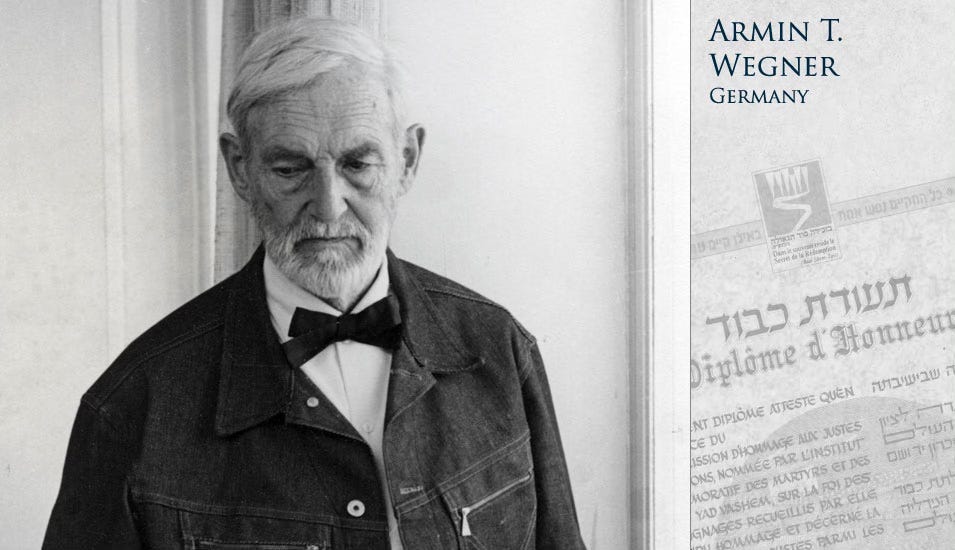
Armin Wegner, a German who spoke out against the Nazi persecution of Jews, was jailed and tortured. He is counted among the righteous at Yad Vashem.

There’s a famous saying, the gist of which is that all it takes for evil to triumph is for good people to do nothing. During the Holocaust, far too many people did nothing when confronted by the evils of Nazism, and millions died as a result.

Today, the Jewish people are no longer weak. In Israel they have a homeland protected by powerful armed forces. They have staunch allies, including the world’s premier “superpower,” along with nuclear weapons, perhaps 200 of them, enough to wipe out the nations and peoples in their immediate vicinity.

Again, Israel today is strong. Thus it faces the ethical dilemma of the strong: the ability to kill on a mass scale, an ability too easily justified in the name of “defense.”  Will Israel illustrate Thucydides’ maxim of the strong doing what they will and the weak—in this case, the Palestinians—suffering as they must?

The hardline Israeli government appears to see mass violence, mass death, and mass expulsion as the only solution in Gaza.

History is replete with examples of the strong doing what they will while the weak suffer. Yet Israel is exercising overwhelming power against weak and vulnerable people in ways well known to Jews who’ve suffered greatly themselves in a long and tortured past.

Palestinians in Gaza are not collectively guilty of crimes committed by Hamas. They are an entrapped and desperate people.  What is to become of them?

Israel knows the value of righteousness, of justice for all, of an abiding love for all life, as reflected in the moral exemplars honored at Yad Vashem.

What Israel needs now is moral heroism. What Gaza needs now is mercy.
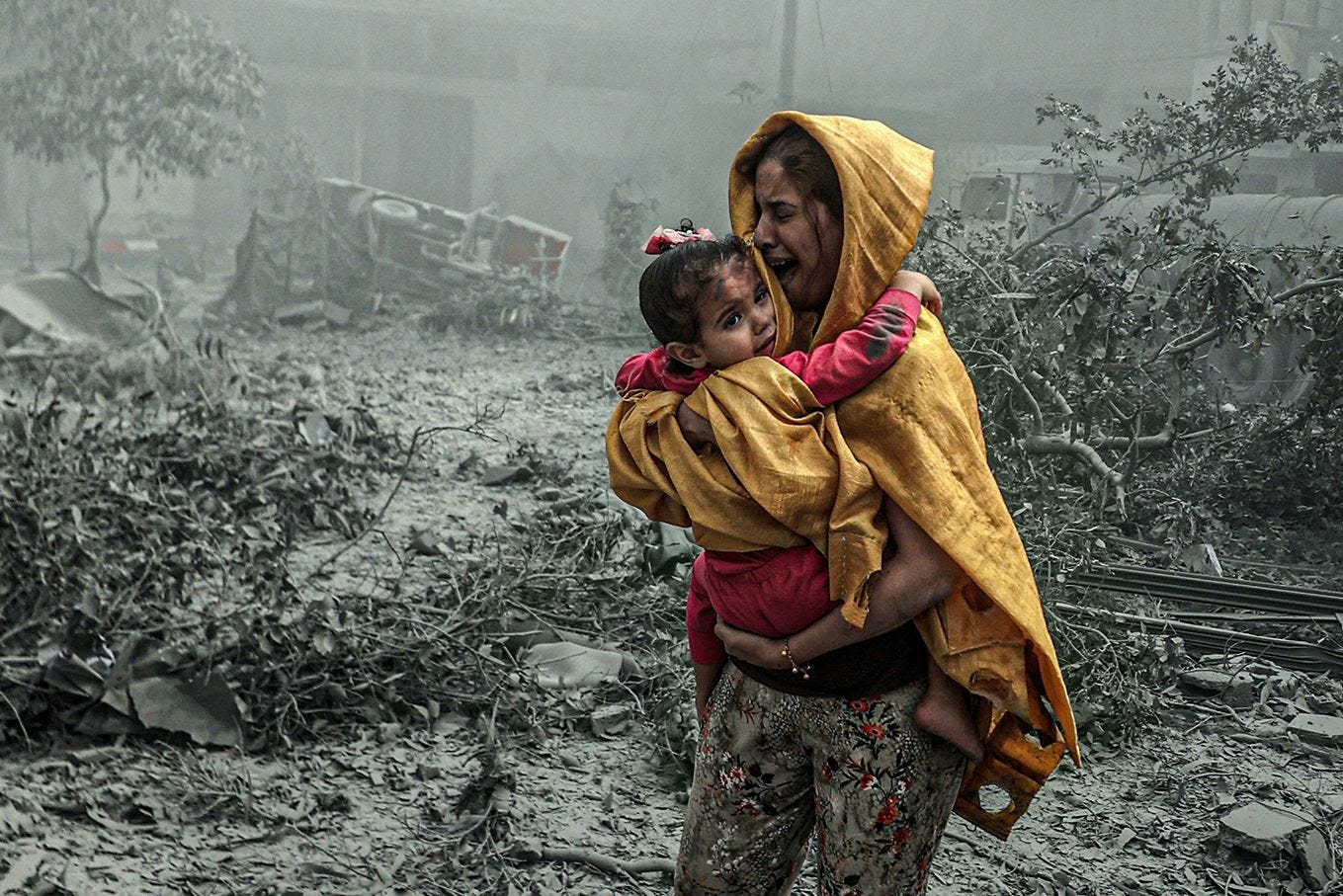
Photo by Ali Jadallah in Gaza (anadolu agency via getty images)

On Mercy

gollum
Gollum/Smeagol, at war with himself, consumed by desire for the Ring

W.J. Astore

Mercy has been on my mind since re-watching “The Lord of the Rings” trilogy.  There’s a nasty little character known as Gollum.  Before he was seduced by Sauron’s ring (the one ring of power), Gollum was known as Smeagol.  Twisted and consumed by the Dark Lord’s ring, Smeagol becomes a shadow of himself, eventually forgetting his real name and becoming Gollum, a name related to the guttural coughs and sounds he makes.

Gollum loses the Ring to Bilbo Baggins, a Hobbit of the Shire.  The Ring extends Bilbo’s life but also begins to twist him as well.  As Sauron returns to power in Mordor, he needs only to regain the Ring to defeat the combined might of the peoples of Middle Earth.  Bilbo passes the Ring to his much younger cousin, Frodo, who together with a Fellowship consisting of representatives drawn from men, elves, dwarfs, and hobbits as well as the wizard Gandalf, journeys to Mordor to destroy the Ring and vanquish Sauron.

Early in his journey to Mordor, Frodo says he wishes Bilbo had killed Gollum when he’d had the opportunity.  (Gollum, drawn by the Ring, is shadowing the Fellowship on its journey.)  Gandalf sagely advises Frodo that Gollum may yet play an important role, and that mercy is not a quality to disparage.  As the Fellowship is separated and Frodo has to journey to Mordor with only his faithful friend Sam beside him, Gollum soon becomes their indispensable guide, and Frodo begins to pity him.  Frodo, by showing Gollum mercy, reawakens the good within him, calling him Smeagol and preventing Sam from hurting him.

But the corrupting power of the Ring overtakes Smeagol again, and Gollum reemerges.  Even so, without Gollum’s help, Frodo and Sam would never have made it to Mordor and the fires of Mount Doom.  On the brink of destroying the Ring, Frodo too becomes consumed by its power, choosing to use it instead of casting it into the fire.  Here again, Gollum emerges as an instrumental character.  He fights Frodo for the Ring, gains it, but loses his footing and falls into the fires of Mount Doom, destroying himself as well as the Ring and saving Middle Earth.

It was Bilbo and Frodo’s mercy that spared the life of Gollum, setting the stage for Gollum’s actions that ultimately save Frodo and the rest of Middle Earth from Sauron’s dominance.  Without Gollum’s help, Frodo and Sam would never have made it to Mount Doom; or, if by some miracle they had, Frodo in donning the Ring would have been ensnared by Sauron’s power and executed by him.  If Frodo is the hero of the tale, Gollum is the anti-hero, as indispensable to Middle Earth’s salvation as Frodo and the Fellowship.

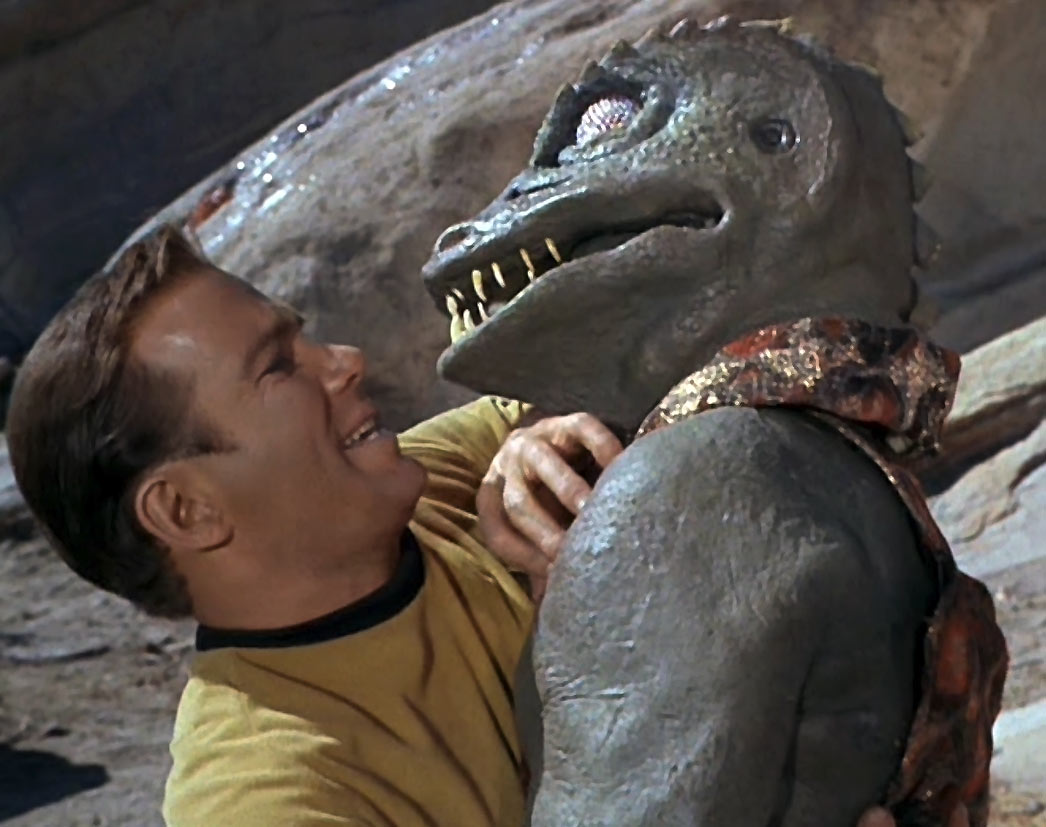
Another story about the role of mercy came in one of my favorite “Star Trek” episodes, “Arena.”  In this episode, Captain Kirk has to fight a duel with an enemy captain of a lizard-like species known as the Gorn.  It’s supposed to be a fight to the death, overseen by a much superior species known as the Metrons.  When Kirk succeeds in besting the Gorn captain, however, he refuses to kill the Gorn, saying that perhaps the Gorn had a legitimate reason for attacking a Federation outpost.  A Metron spokesperson appears and is impressed by Kirk, saying that he has demonstrated the advanced trait of mercy, something the Metrons hardly suspected “savage” humans were capable of showing.

download
Capt Kirk fights the Gorn captain in “Arena”

Perhaps war between the Federation and the Gorn is not inevitable, this episode suggests.  Diplomacy may yet resolve a territorial dispute without more blood being shed, all because Kirk had the courage to show mercy to his opponent: an opponent who wouldn’t have shown mercy to him if their fates had been reversed.

Mercy, nowadays, is not in vogue in the USA.  America’s enemies must always be smited, preferably killed, in the name of righteous vengeance.  Only weak people show mercy, or so our national narrative appears to suggest.  But recall the saying that in insisting on an eye for an eye, soon we’ll all be blind.

The desire for murderous vengeance is making us blind.  The cycle of violence continues with no end in sight.  Savagery begets more savagery.  It’s as if we’ve put on Sauron’s ring and become consumed by it.

Do we have the courage of Bilbo and Frodo Baggins, and even of that man of action, Captain Kirk?  Can our toughness be informed by and infused with mercy?