If you’re a U.S. reporter, anything but rabidly pro-Israel coverage is dangerous to your career

W.J. Astore

Learning from Ashleigh Banfield’s Landon Lecture of April 2003

Early in 2003, Ashleigh Banfield was a star in the making. A rising journalist at MSNBC, she covered the opening stages of the Iraq War. Before that, she’d made a name for herself covering the 9/11 attacks and their aftermath. Smart, pretty, highly skilled, she was heading nowhere but up. Until she gave an honest lecture on her experiences in Iraq and the Middle East on April 24, 2003.

I’ve written before about Banfield’s honest and heartfelt critique of Iraq war coverage in the U.S. mainstream media, which won her no friends at NBC News. In fact, the NBC brass sidelined and essentially exiled her. I recently reread her Landon Lecture at Kansas State University and realized NBC wasn’t just angry about her critique of mainstream media war coverage: they were likely even more incensed at how she humanized and empathized with Palestinians and other Middle Eastern peoples and groups, including organizations like Hezbollah.

Here’s some of what she had to say back then in 2003:

But it’s interesting to be able to cover this [Israel and Palestine]. There’s nothing in the world like being able to cross a green line whenever you want and speak to both sides of a conflict. I can’t tell you how horrible and wonderful it is at the same time in the West Bank and Gaza and Israel. There are very few people in this world who can march right across guarded check points, closed military zones, and talk to Palestinians in the same day that they almost embedded with Israeli troops, and that’s something that we get to do on a regular basis.

And I just wish that the leadership of all these different entities, ours included, could do the same thing, because they would have an eye opening experience, horrible and wonderful, all at the same time, and it would give a lot of insight as to how messages are heard and how you can negotiate. Because you cannot negotiate when someone can’t hear you or refuses to hear you or can’t even understand your language, and that’s clearly what’s happening in a lot of places in the world right now, the West Bank, Gaza and Israel, not the least of which there’s very little listening and understanding going on. Our language is entirely different than theirs, and I don’t just mean the words. When you hear the word Hezbollah you probably think evil, danger, terror right away. If I could just see a show of hands. Who thinks that Hezbollah is a bad word? Show of hands. Usually connotes fear, terror, some kind of suicide bombing. If you live in the Arab world, Hezbollah means Shriner. Hezbollah means charity, Hezbollah means hospitals, Hezbollah means welfare and jobs.

These are not the same organizations we’re dealing with. How can you negotiate when you’ re talking about two entirely different meanings? And until we understand — we don’t have to like Hizbullah, we don’t have to like their militancy, we don’t have to like what they do on the side, but we have to understand that they like it, that they like the good things about Hizbullah, and that you can’t just paint it with a blanket statement that it’s a terrorist organization, because even when it comes to the militancy these people believe that militancy is simply freedom fighting and resistance. You can’t argue with that. You can try to negotiate, but you can’t say it’s wrong flat out.

And that’s some of the problems we have in dealing in this war in terror. As a journalist I’m often ostracized just for saying these messages, just for going on television and saying, “Here’s what the leaders of Hezbullah are telling me and here’s what the Lebanese are telling me and here’s what the Syrians have said about Hezbullah. Here’s what they have to say about the Golan Heights.” Like it or lump it, don’t shoot the messenger, but invariably the messenger gets shot.

We hired somebody on MSNBC recently named Michael Savage. Some of you may know his name already from his radio program. He was so taken aback by my dare to speak with Al-Aqsa Martyrs Brigade about why they do what they do, why they’re prepared to sacrifice themselves for what they call a freedom fight and we call terrorism. He was so taken aback that he chose to label me as a slut on the air. And that’s not all, as a porn star. And that’s not all, as an accomplice to the murder of Jewish children. So these are the ramifications for simply being the messenger in the Arab world.

Emphasis added. Original spelling retained. You can watch her speech here

Banfield tried to be a real journalist for MSNBC. She tried to understand and report the Israeli perspective but also the perspectives of groups like Hezbollah, and for that she was severely punished.

For Hezbollah, you could say something similar of Hamas today. As Banfield says, you don’t have to praise groups like Hamas (or, for that matter, Israel). But what you should try to do as a journalist is to understand them and to report on them as clearly and honestly as possible. As she says, her reward was to be defamed and dismissed as a slut by a fellow reporter, even called an accomplice to murder, after which her bosses at NBC punished and demoted her!

It’s no wonder that mainstream media coverage by most reporters today is so slavishly pro-Israel. Who wants to be slut-shamed and demoted? Who wants their career ruined just because they sought to understand more than one side (the Israeli/U.S. one) of complex situations in the Middle East?

My brother once quipped: “We learn, good.” MSM reporters in America “learned good” that being rabidly pro-Israel (and, of course, pro-U.S. government and pro-war) is always the safest bet to accolades and promotions from their corporate overlords.

With admirable honesty, Banfield spoke of the horrific face of war at Kansas State Univ. in 2003. Soon after her speech, she was demoted (Image courtesy of KSU)

And, as I wrote in my previous piece on Banfield: Any young journalist with smarts recognizes the way to get ahead is to be a cheerleader for U.S. military action, a stenographer to the powerful. Being a critic leads to getting fired (like Phil Donahue); demoted and exiled (like Banfield); and, in Jesse Ventura’s case, if you can’t be fired or demoted or otherwise punished, you can simply be denied air time.

Banfield tried to tell us there’s a difference between journalism and coverage; that far too many voices of dissent had been silenced in America before and during the opening stages of the Iraq War; that war coverage was (and is) far too often both one-sided and sanitized.

Again, it’s worth a few minutes of your time to listen to her lecture and reflect on her honesty and integrity—and how she was punished for it.

After watching this, you’ll understand why the reporters you see today on U.S. TV and cable networks are nothing like Ashleigh Banfield.

“War is ugly and it’s dangerous” and it fuels hatred. Yes it is and yes it does, Ms. Banfield. Thank you for your honesty, your integrity, and your courage.
America, Land of Discontent

W.J. Astore

Binary logic is common in America. Us versus them. Republican versus Democrat. BLM versus BLM (that’s Black lives versus blue lives). Love it or leave it.

I remember as a teenager reading a coda to that saying: Or change it. If you don’t “love” America, you shouldn’t have to leave it. Indeed, if you truly “love” America, you’d want to change it to make it even better.

This idea was on my mind as a I watched a couple of videos on YouTube by Americans who’ve been living overseas for many years, only to return recently and reflect on how life in America seemed to them after being away for so long. Here are a few notes I jotted down:

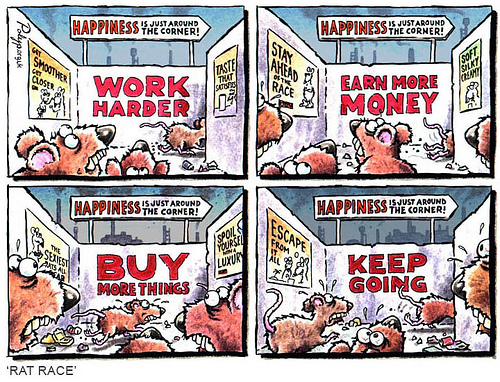
Features of America: Consumerism. Materialism. Advertising everywhere, especially for prescription drugs. Fast pace of life and a stress on competition. A mainstream media that’s propagandistic — and that pushes fear and outrage. Only two major political parties that stifle debate and change. Constant divisiveness.

Features of Americans: Stress on individualism and ethnocentrism. Empathy and our common humanity is downplayed. Sense of entitlement. Lack of curiosity about the wider world. A lack of purpose in the sense of living a life of meaning. Lack of integrity, especially at the higher levels of government and the corporate world.

These observations reminded me of Michael Moore’s “Where to Invade Next” (2015). Moore goes to various countries (Germany, France, Italy, and so on), looking for ideas Americans can steal as they “invade.” I recall German workers who only had to work one job to make ends meet (roughly 37 hours a week, if memory serves), and also German workers who served by law on the board of major companies like Mercedes; I recall school lunches made for French kids by chefs using local ingredients (the contrast with American school lunches was stomach-turning); I recall Italian workers with six weeks of paid vacation per year, as opposed to American workers who are lucky to get two weeks. Why can’t America change to be more worker- and kid-and family-friendly?

The female leaders of Iceland, if memory serves, put it well near the end of Moore’s excursions. They said America is a me-me-me society, whereas Iceland prefers “we” to “me.”

I’ve written before about how Americans are kept divided, distracted, and downtrodden as a way of preventing meaningful, organized, societal change. Another “d” word related to this is discontent. Americans are often discontented in ways that inhibit change. It’s something Tana French touched on in her novel, “The Likeness,” from 2008. Here’s an excerpt:

Our entire society’s based on discontent: people wanting more and more and more, being constantly dissatisfied with their homes, their bodies, their décor, their clothes, everything.  Taking it for granted that that’s the whole point of life, never to be satisfied.  If you’re perfectly happy with what you’ve got—specially if what you’ve got isn’t even all that spectacular—then you’re dangerous.  You’re breaking all the rules, you’re undermining the sacred economy, you’re challenging every assumption that society’s built on. By being content, you become a subversive.  A traitor.

To which another character replies: “I think you’ve got something there.  Not jealousy, after all: fear… Throughout history—even a hundred years ago, even fifty—it was discontent that was considered the threat to society, the defiance of natural law, the danger that had to be exterminated at all costs.  Now it’s contentment.”

There’s a potential paradox here. Won’t the discontented favor positive change, whereas the contented will favor the status quo?

But French’s insight suggests otherwise. The discontented are so busy trying to become contented, most often through a me-first consumerism and materialism, that they can’t come together and mobilize for change. Fear drives them to pursue what their “betters” have, and to admire those people as well. It’s the contented who are dangerous, the ones who’ve left consumerism and materialism behind, the ones with the confidence, time, and independence of thought to contemplate a changed world, a better world. Perhaps even a better America.

The Failure of Our “Free” Press

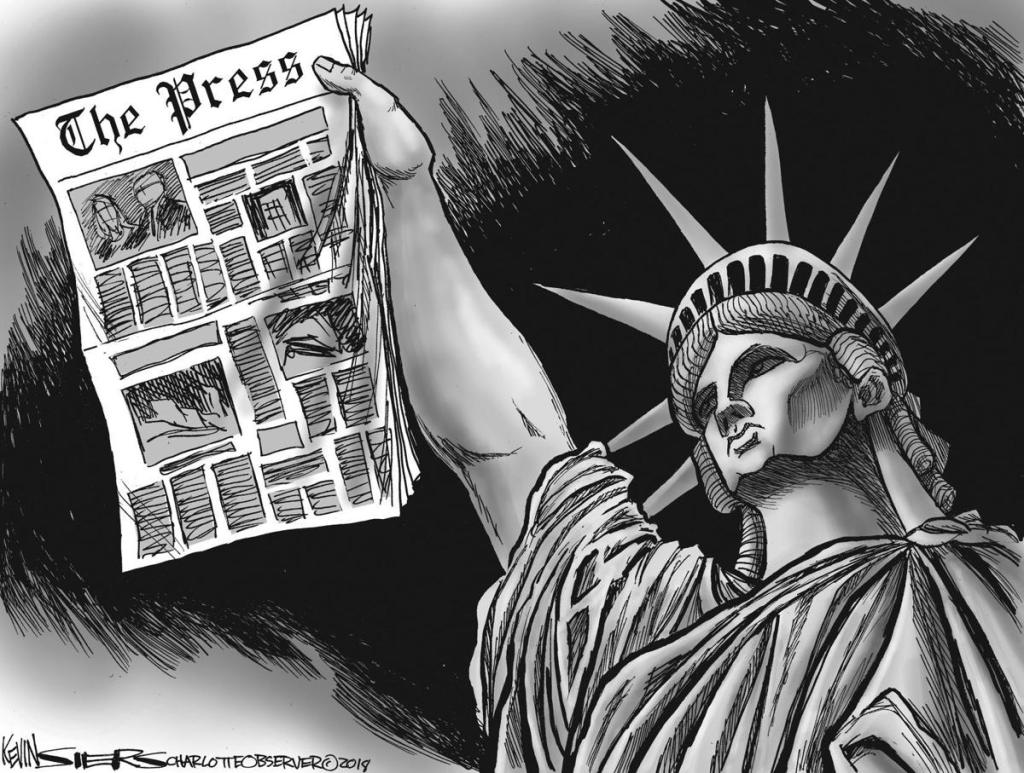
For all the talk of a “free” press that has the guts to tackle the powerful, the truth is our press is mainly a for-profit operation that is largely owned by the powerful. We get a lapdog press instead of a watchdog; we certainly don’t get an attack dog. I wrote about this in January of 2012; what I didn’t foresee is how that press would facilitate the rise of a petty demagogue like Donald Trump, mainly because he’s good for ratings and serves the needs of the powerful, but also because so many Americans have lost faith in the media, so much so that they buy the lies of a con man and serial liar like Trump. In short, if you’re tired of the corporate-friendly lies at CNN, why not turn to the entertaining conspiracy theories and lies of a manipulator like Trump?

If America truly had a watchdog press that protected the people, a serial liar like Trump should never have gained such a powerful purchase on our national narrative. Even now, as Trump continues to endanger our national health during a pandemic, the press largely treats him as a “normal” president.

The Failure of Our “Free” Press

01/13/2012

W,J. Astore

Do we have a truly free press, one that is willing to challenge the powerful and to serve the people?

A recent editorial by Arthur S. Brisbane at the New York Times suggests that our press is more lapdog than watchdog.

A truly free press needs guts. It needs to be willing to say, “I accuse.” Yet as Glenn Greenwald points out, our mainstream media today willingly acts as “stenographers” to the high and mighty, as if established elites need more support and more privileges.

The other day I ran across a passage in Arthur Schopenhauer’s Essays and Aphorisms that has much to say about freedom of the press as well as the perils of source anonymity. In full it reads:

“Freedom of the press is to the machinery of the state what the safety-valve is to the steam engine: every discontent is by means of it immediately relieved in words—indeed, unless this discontent is very considerable, it exhausts itself in this way. If, however, it is very considerable, it is as well to know of it in time, so as to redress it. — On the other hand, however, freedom of the press must be regarded as a permit to sell poison: poison of the mind and poison of the heart. For what cannot be put into the heads of the ignorant and credulous masses? — especially if you hold before them the prospect of gain and advantages. And of what misdeeds is man not capable once something has been put into his head? I very much fear, therefore, that the dangers of press freedom outweigh its usefulness, especially where there are legal remedies available for all grievances. In any event, however, freedom of the press should be conditional upon the strictest prohibition of any kind of anonymity.”

That last statement is the kicker. The media’s stenographer-types market the “poison” of the elites, whether governmental or corporate, and they often do so under the cover of source anonymity. As a result, the “credulous” masses have no way to track the poisoners, and few avenues to find an antidote.

Schopenhauer’s statement also condemns our press for its failure to serve as a “safety-valve” for democracy. Indeed, because our mainstream press is so sycophantic, it fails in its democratic duty to relieve the people’s discontent, notably in its failure to empower the people to redress the abuses of power by established elites.

When our “free” press agonizes over whether it should challenge the “facts” of societal elites, is it any wonder why so many people have lost faith in it?

Hence the rise of the various “occupy” movements. They know that the mainstream press is in thrall to power and is therefore compromised, thus they’re seeking a new path to redress their grievances — and new antidotes to the poison spread by the powerful to intoxicate the minds and hearts of the powerless.

Our press, as Schopenhauer notes, has much power to spread poison, but it also has the ability to serve as an antidote to the poison spread by others.

The ideal of freedom of the press, so crucial to democracy, is upheld only when its practitioners willingly challenge the so-called “facts” of the powerful.

Give us a watchdog press willing to bite the hand that feeds it, not a lapdog that snaps up all the little treats fed to it by its masters.

Professor Astore writes regularly for TomDispatch.com and can be reached at wjastore@gmail.com.

Trump and the Media

He’s everywhere.  Trump as Agent Smith in “The Matrix” movies

W.J. Astore

Donald Trump is exploiting a weakness in our media — its quest for eyeballs at any cost. Trump is best at gluing eyeballs to the screen — he inflames his supporters and infuriates his detractors. Meanwhile, he oversees a train wreck of an administration that dominates headlines. “If it bleeds, it leads” — and our country is bleeding under his leadership.

Media owners seem to see synergy here: empower Trump with free and sweeping coverage and watch ratings and profits soar. But Trump is a parasite. He’s drawing strength from the media even as he sucks its power and influence dry. But the biggest loser is democracy, since the Trump-media nexus is degrading (and perhaps destroying) fact-based decision-making.

These thoughts came to mind as I read Tom Engelhardt’s latest article at TomDispatch.com. Trump, Engelhardt notes, has the unique and ultimately pernicious ability to drive — and often to dominate — discourse:

Never, not ever, has a single human being been so inescapable. You can’t turn on the TV news, read a newspaper, listen to the radio, wander on social media, or do much of anything else without almost instantly bumping into or tripping over… him, attacking them, praising himself, telling you how wonderful or terrible he feels and how much he loves or loathes… well, whatever happens to be ever so briefly on his mind that very moment.

Engelhardt highlights an important truth later in his piece: Trump’s true “base” is the very “fake news” media he’s so happy to attack.

Of course, Trump has always been a relentless, even ruthless, self-promoter.  Now that he’s president, the media can’t exactly ignore him (or can they?).  But what’s truly shocking is how the mainstream media is so  supinely subservient to him.  How unwilling they are to call him a liar when he lies; and how unwilling they are to critique their own obsequious coverage in a way that would lead to meaningful changes.

The media can’t get enough of Trump.  Knowing this dependency, Trump exploits it, relentlessly.  He reminds me of Agent Smith in “The Matrix” movies. He’s a rapidly-replicating virus that, if left unchecked, will destroy the matrix of American democracy . The question is: How is Trump to be neutralized, or at least contained, when the media keeps feeding him?

Breaking News: Jim Acosta got his press pass back.  Big deal.  Now Trump can score more points off of CNN and its “fake news” machine.

The Right Approach to Terrorism

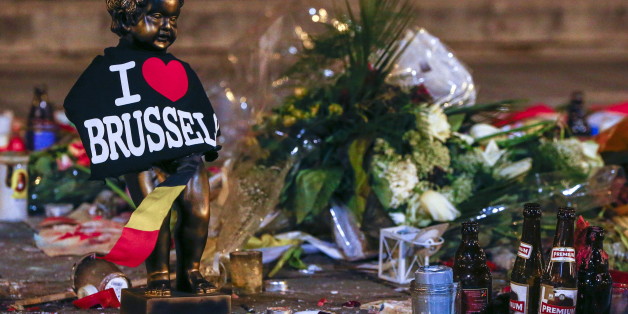
A replica of the Manneken-Pis statue, a major Brussels tourist attraction, is seen among flowers at a memorial for the victims of bomb attacks in Brussels metro and Brussels international airport of Zaventem, in Brussels
Replica of the Manneken-Pis statue, a major Brussels attraction, among flowers at a memorial for the victims of bomb attacks in Brussels. REUTERS/Yves Herman

W.J. Astore

I grew up during the Cold War when America’s rivalry with the Soviet Union posed a clear and present danger to our country’s very existence.  Since the collapse of the USSR, or in other words the last 25 years, the U.S. has not faced an existential threat.  Of course, the terrorist attacks on 9/11 were shocking and devastating, as were recent attacks in Paris and Brussels.  But terrorism was and is nothing new.  We faced it in the 1970s and 1980s, and indeed we will probably always face it.  The question is how best to face it.

Stoking fear among the people is the wrong way to face it.  Restricting liberty is the wrong way.  An overly kinetic approach (i.e. lots of bombs and bullets) is the wrong way.  Invading the Middle East (yet again) is the wrong way.  Most of counter-terrorism, it seems to me, is an exercise in intelligence and policing (national and international).  Yet we seem always to turn to our military to solve problems.  The emphasis is relentlessly tactical/operational, stressing how many terrorists we kill in drone strikes and special ops raids (a version of the old “body count” from the Vietnam War era).

Military strikes and raids generate collateral damage and blowback, arguably creating more enemies than they kill.  We’re helping to sustain a perpetual killing machine, a feedback loop.  The more we “hit” various enemies while playing up the dangers of terrorism, especially in the media, the more they prosper in regards to attention (and recruits) they garner.

One of the first Rand primers I read as young Air Force lieutenant was “International Terrorism: The Other World War,” written by Brian M. Jenkins in 1985.  Jenkins made many excellent points: that terrorists seek to instill fear, that their acts are mainly “aimed at the people watching,” that terrorism can’t be defeated like traditional (uniformed) enemies, that terrorists commit crimes for a larger political purpose (“causing widespread disorder, demoralizing society, and breaking down existing social and political order”), that terrorism is a form of political theater.  As Jenkins notes:

“Terrorism attracts intense interest but produces little understanding.  News coverage focuses on action not words.  Terrorist incidents attract the media because they are genuine human dramas, different from ordinary murder and therefore newsworthy. “

Furthermore, “terrorists provide few lucrative targets for conventional military attack,” though this may be less true of state-sponsored terrorism.

What can we learn from Jenkins’s primer on terrorism?  Three big lessons:

  1. Deny the terrorists their victory by refusing to succumb to fear. In short, don’t panic.  And don’t exaggerate the threat.
  2. Don’t sensationalize the feats of terrorists in 24/7 media coverage of their attacks. That’s what the terrorists want.  They want extensive media coverage, not only to shift public opinion and to spread fear, but also to recruit new members.
  3. Finally, don’t change your way of life, your political system, your liberties, in response to terrorism. Abridging freedoms or marginalizing people (e.g. American Muslims) in the name of attacking terrorism is exactly what the terrorists want.  They want to turn people against one another.  To divide is to conquer.

The question is, when will Americans recognize the complexity of the terrorist threat while minimizing fear and over-reaction?

Terrorists need to be stopped, and that requires robust intelligence gathering, strong policing, and selective military action.  But threat inflation, media hysteria, and militarized over-reaction simply play into the terrorists’ hands.  Fear is the mind-killer, as Frank Herbert wrote.  Let us always remember this as we face the terrorist threat with firmness and resolve.