The Maniacal Purposes of Loyalty Oaths

W.J. Astore

Matt Taibbi and Walter Kirn on “Catch-22” and Bureaucratic Madness

I wanted to share with you a conversation between Matt Taibbi and Walter Kirn on Joseph Heller’s classic satire, “Catch-22,” that focuses on the idea of loyalty oaths but that has much broader implications for our society today. Their entire conversation is well worth reading, but this passage is especially penetrating and important.
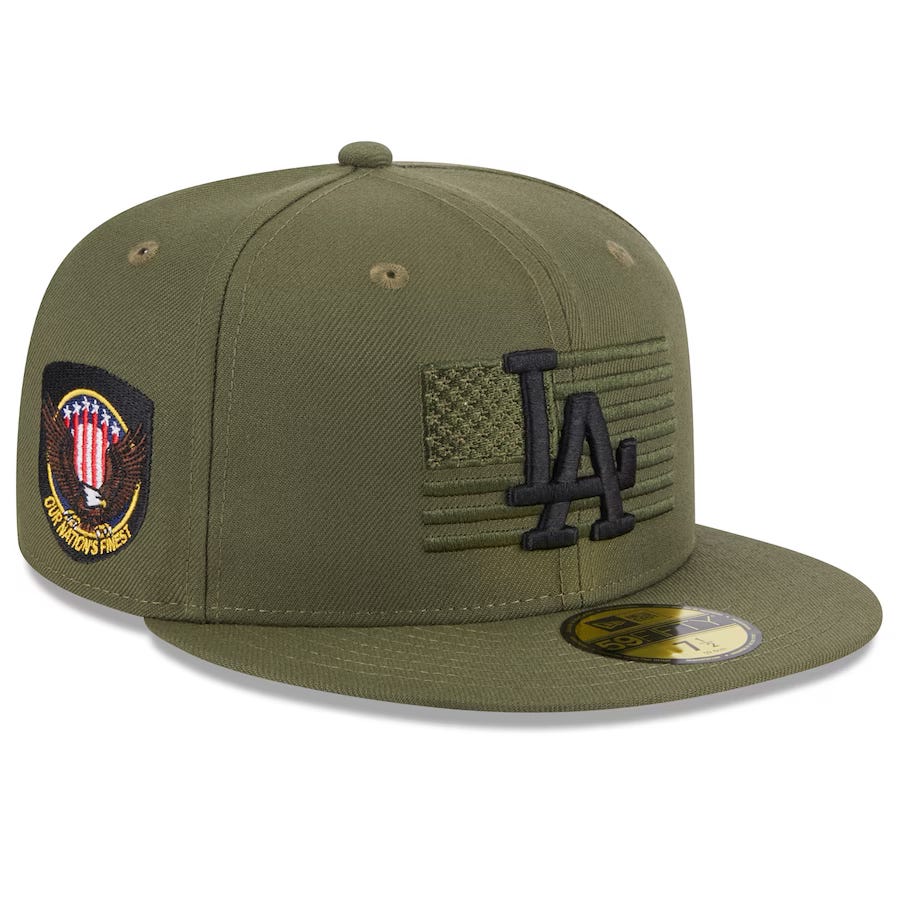
Profess your loyalty with a baseball cap for Armed Forces Day. $50 or less. Buy them for everyone in your family. You can’t be too patriotic — or too careful.

Matt Taibbi: That seems like a good place to segue into the story from this week.

On Joseph Heller’s “Catch-22,” in particular, “The Great Loyalty Oath Crusade.”

Walter Kirn: So we don’t end up being polite and going, no, you do it. No, you do it. It’s Chapter 11 of Catch-22 entitled “Captain Black.” Some people know it as the chapter called “The Great Loyalty Oath Crusade.” It tells a very simple story. There’s an officer on the air base where Catch-22 is set, and he’s been passed over for promotion. His name’s Captain Black, and he lost out when another officer was killed in battle, he thought he would succeed to his post, but he didn’t. Another guy, Major Major, got the job. So how is he going to take his revenge? How is he going to become important on the base? He comes up with the notion that he will start forcing all the troops and all the bombers and the crews of the different aircraft to take a “loyalty oath”, which he has to authorize before they can do anything.

And not just one loyalty oath, because they easily pass that test. They do it, but it’s two, three, four, until the point where the entire air base and its missions are paralyzed by the need to recite these oaths. If you want to get your plane off the ground, if you want to fuel your plane, if you want to eat lunch, you have to recite one of these oaths. And finally, the bureaucratic necessity of reciting oaths completely paralyzes the entire operation such that Heller says they were no longer able to even respond to emergencies. They were no longer able to respond to reality, because almost all they were doing was reciting these oaths over and over and over.

And it was assumed that if you had recited one oath and a minute had passed before you had recited the next one, that you might have become disloyal in the meantime. I guess what this all is a metaphor for is the notion that requiring loyalty of people is a bottomless request, which finally becomes an end in itself. Just as we saw at the hearing yesterday, let’s not get to the substance of what you’re alleging here. Let’s have you recite the oath first and did you recite it correctly and could you recite it again, and do you agree that it’s necessary? So by a Zeno’s arrow thing, you never get to the issue of anything because loyalty must always be the primary question and it is always doubted.

Matt Taibbi: Heller has this great line about the doctrine of “continual reaffirmation” that Captain Black originated. And the quote is,

A doctrine designed to trap all those men who had become disloyal since the last time they had signed a loyalty oath the day before.

Nobody has the authority to stop this thing. Even the colonel in the group, Colonel Korn, he’s complaining: “It’s that idiot Black off on a patriotism binge.”

But when they’re deciding what to do about it, he just says:

Well, this will probably run its course soon. I think the best thing now is to send Captain Black a letter of total support and hope he drops dead before he does too much damage.

In other words, even the people who have authority, once one of these things gets going, nobody wants to get in front of this buzz saw. And if they do, they get cut down.

Walter Kirn: You can’t stop it because as is the abiding theme of Catch-22, you can never get off the hook with a bureaucracy that wants everything. You can never pass the loyalty oath because the one you took was a minute ago, are you taking one now? The perfect loyalty oath, in other words from a bureaucratic point of view, is one that no one can ever pass. One that never ends.

The perfect accusation in a witch trial is one that you can never be innocent of. And I wrote, “The more absurd loyalty oath, and the more often it is required, the better.” Anyone can repeat a loyalty oath that’s true and it is offered only once, but only the truly submissive will repeat it over and over until it loses all meaning. Because finally, what bureaucracy wants of you is humiliation and submission. It doesn’t want an answer. It doesn’t want to give you a pass and say, “You are free to go now. You may enter, you may run your mission. You’ve got your credential.” It wants total power. And total power can only be had if you are never declared loyal.

Matt Taibbi: The only people who succeed in this system are complete sociopaths with no shame. I think that’s one of the great things about this chapter is the way he starts off, Heller — one of the great things about this book in general is his ability to make snap characterizations. I mean, it takes even very skilled authors a paragraph to capture the personality of a person, but he’s able to do it in a sentence or two over and over again.

With Captain Black at the very start of this chapter, he gets a phone call that the unit is going to have to attack Bologna, which is heavily guarded and is going to involve a tremendous number of casualties. There’s a scene:

Captain Black brightened immediately. Bologna, he exclaimed with delight. Well, I’ll be damned.” He broke into loud laughter, “Bologna?” He laughed again and shook his head in pleasant amazement. “Boy, I can’t wait to see those bastards’ faces when they find out they’re going to Bologna.”

And then he goes down again and keeps repeating this.

”That’s right, you bastards, Bologna.” He kept repeating to all the bombardier who inquired incredulously if they were really going to Bologna. “Ha, ha, ha! Eat your livers, you bastards.”

He’s a total sadist. The only thing that has any meaning in his life is that as you said, he was passed over for this promotion when somebody else got killed. The person who stepped in his place was Major Major, a hilarious character to whom all kinds of things happen. Among his distinctive qualities is that he looks like Henry Fonda. When the officers are talking about this, this is where the idea for the loyalty oath comes:

Captain Black asserted that Major Major really was Henry Fonda. And when they remarked it Major Major was somewhat odd. Captain Black announced that he was a communist.

“They’re taking over everything.” He would declare rebelliously. “Well, you fellows can stand around and let them if you want to, but I’m not going to. I’m doing something about it. From now on I’m going to make every son of a bitch who comes to my intelligence tent sign a loyalty oath.”

There’s a great line. “He had really hit on something.” That’s when it starts this whole description of how you have to sign an oath to go to the PX to buy anything, to get your hair cut, to get paid, to do anything. This idiotic, insipid character, who has no positive qualities and is a pure careerist, for whom even the death of other people is totally meaningless, he’s exactly the person who succeeds in this bureaucracy, because bureaucracies are designed to elevate such people.

Walter Kirn: This is why literature is a superior form of analysis for the human condition over politics. Politics has us believe that the content of our arguments matter, that the positions and ideas we’re arguing about matter, but literature suggests that rituals are rituals and human passions are human passions. And that sweep aside what people are talking about and what people are saying and focus on what they’re actually doing. And in this case, we have Black proclaiming Major Major a communist, and the suspicion of communism among the troops becomes the basis for the Great Loyalty Oath. But it could just as well be that he could have accused them of being MAGA or fascists, because loyalty oaths are the same no matter what the occasion for their administration. They are rituals of dominance and submission, they are ritualistic affirmations of the bureaucracy’s preeminence. [Emphasis added.]

We constantly are amazed by the fact that the same machinations that the anti-communist McCarthyite put into place in the fifties are now being used by the liberal party against the presumably patriotic side. In other words, we now have not communist-hunting but MAGA-hunting. And we think that something has changed because politics makes us think it’s all about the ideas. It’s not. It’s all about the whatand who sits above, and who sits below; who administers the oath and who has to take it. Who has the power to come up with an oath, and who is so unfortunate that they have to recite them?

What we’re seeing in American politics is a recapitulation in terms of structure and form of an old drama. But the words have changed, and the names for evil have swapped. And in some ways the D or the R on the desk, the Democrat or Republican plaque, has changed sides, but we’re seeing the same thing. What Heller’s showing in this novel is that bureaucracy itself serves its own interests over and above any particular problem that it’s there to solve.

These people are there to win a war. The great irony of Catch-22 is that this intense deadly war that’s going on in the background, is, actually in the background. What people are really concerned about are their promotions, whether they’ve filled out forms correctly, have they won the esteem of their superior? Have they triumphed over their inferior? And meanwhile, people are dying, thousands of people are being bombed and planes are going down. But that hardly matters when there are new stripes to be won for your uniform, or an extra lunch to be had at the commissary, or whatever. So the book’s continuing comedy is the inversion of values in which the institution is all important, and the purposes are forgotten. [Emphasis added]

END OF EXCERPT

OK, I’m back. I hope you enjoyed reading that passage. It helps to explain why the Pentagon/MICC continues to grow in power even as it’s lost every major war since World War II (ironically the historical setting for Heller’s brilliant satire).

Believe me, I’ve met my share of officers in the U.S. military who weren’t concerned with the mission or higher ideals like their oath to the Constitution. They were concerned about getting promoted and enlarging their own personal rice bowl (an image used often when I was on active duty).

How to stop a runaway bureaucracy that insists on your loyalty and obedience, repeated ad infinitum, is one of the great issues of this moment. With military propaganda in full swing this weekend (It’s Armed Forces Day!), you had best salute the troops smartly and show your loyalty, as baseball players are, by wearing special olive drab military-themed caps to celebrate “our nation’s finest.” Available for less that $50 each at MLB!

If you miss this weekend (Are you sure you’re a real American?), there’ll be themed caps for Memorial Day and July 4th. And if you’re not a baseball fan, the NFL will get you in the fall at all its “Salute to Service” celebrations.

Just remember to be loyal — very loyal.
With the Twitter Files, Democrats Support Government Censorship of Lawful Speech

W.J. Astore

Welcome to the era of state-sponsored thought police

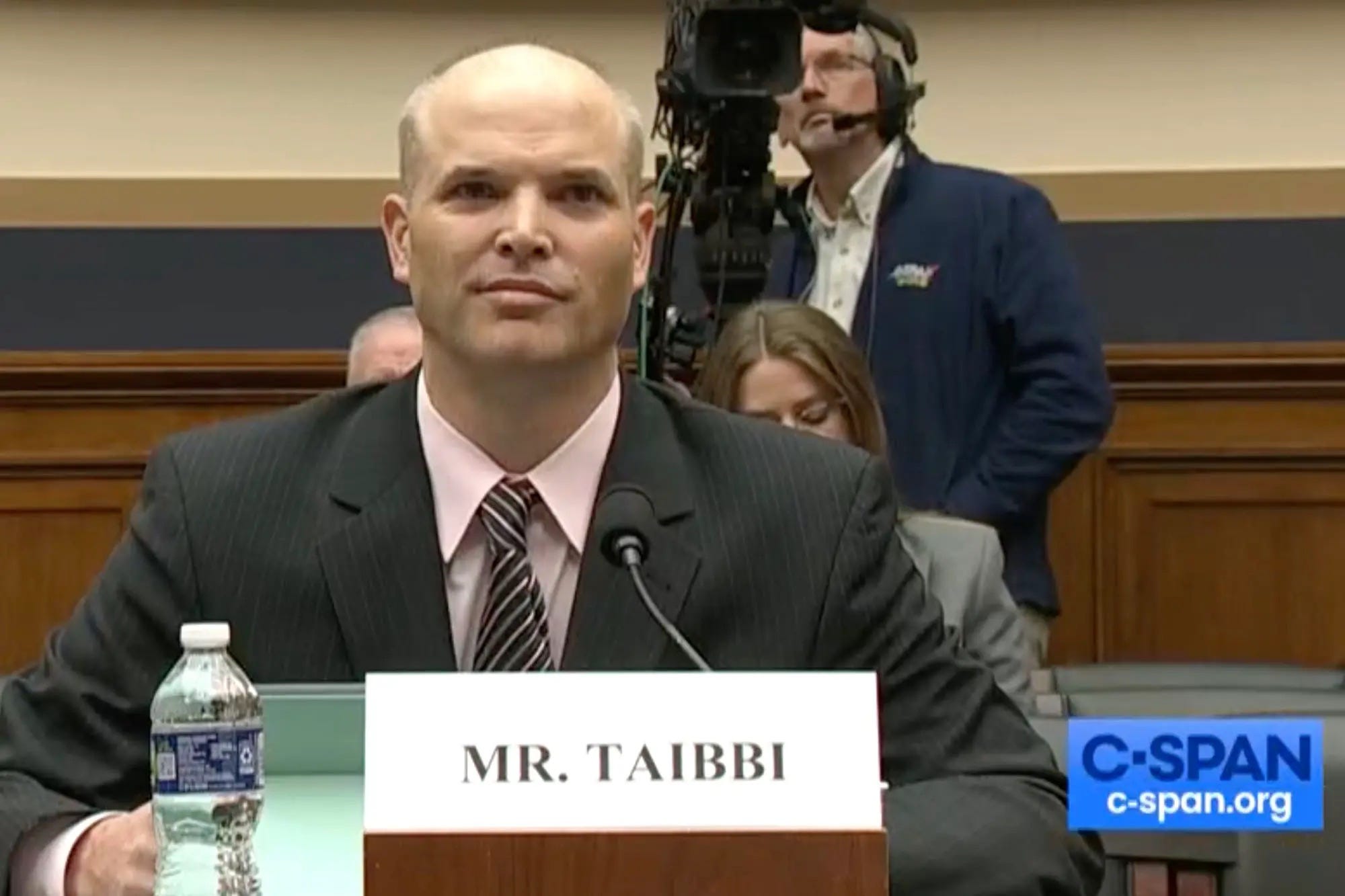
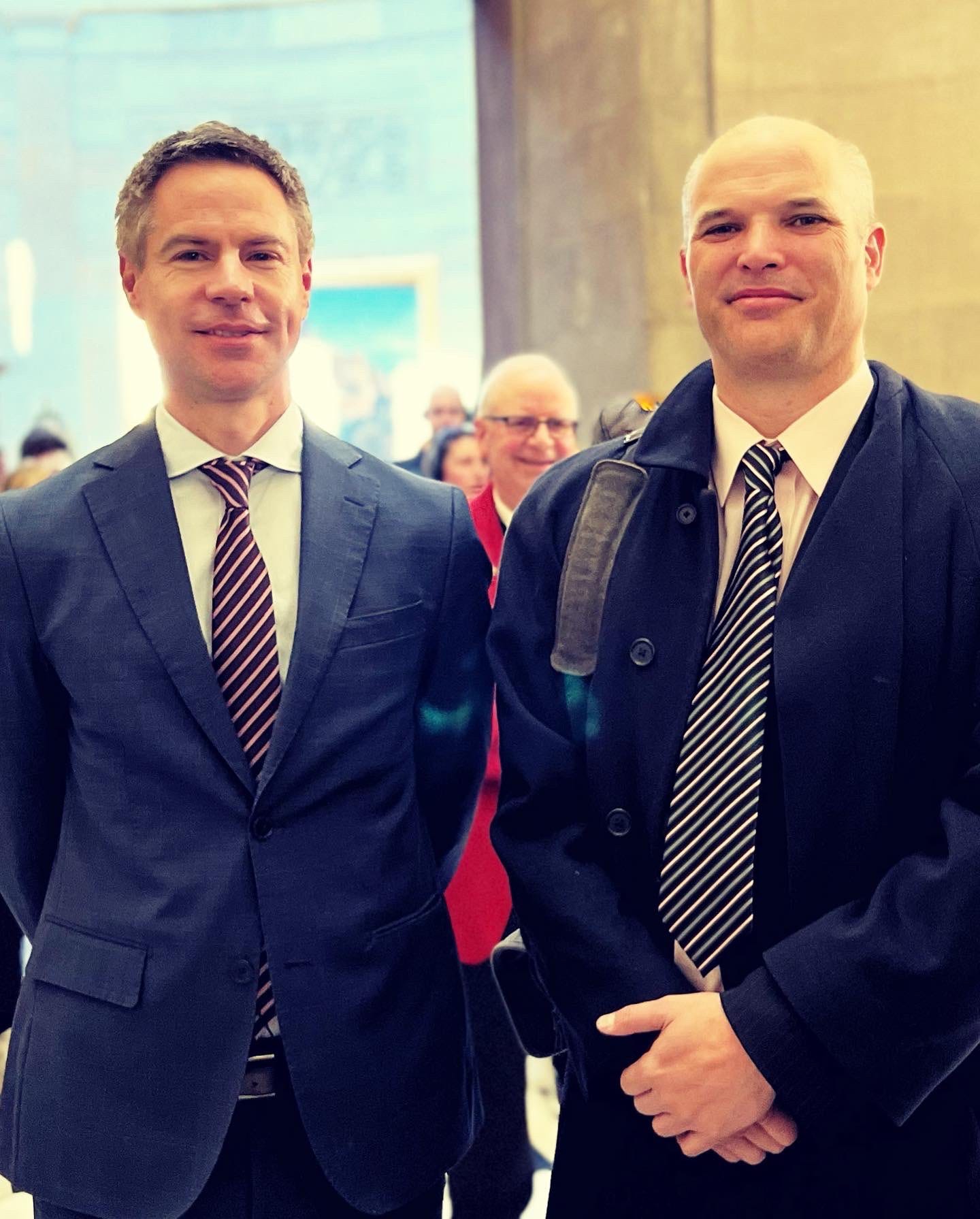
Yesterday, journalists Matt Taibbi and Michael Shellenberger testified before the House Select Subcommittee on the Weaponization of the Federal Government. Their testimony, and the risible reactions of Democrats on the subcommittee, are well worth watching; I watched the entire hearing, which lasted 140 minutes. Kim Iverson has an excellent summary here which lasts about 23 minutes. As Iverson notes, the Democrats on the subcommittee demonized the journalists while supporting censorship of ordinary Americans for political advantage, a clear violation of freedom of speech and the First Amendment to the U.S. Constitution.

Shellenberger and Taibbi, “so-called” journalists according to Democrats

Clearly, the Twitter Files have revealed government-directed censorship of lawful speech. The reactions and strategy of the Democrats on the subcommittee were as follows:

  1. To smear the two journalists who volunteered to appear before Congress as “so-called” journalists; as being biased witnesses in favor of the right (even though Shellenberger testified he’d voted for Biden, and Taibbi described himself as a traditional ACLU liberal); as having the basest of motives, such as taking payments and otherwise profiting from their journalism; and of being willing or unwilling dupes of Elon Musk.
  2. To repeat, again and again, that Russia massively interfered in the 2016 and 2020 elections, therefore government-directed efforts to suppress “foreign interference” in U.S. elections was both legitimate and praiseworthy.
  3. To associate Elon Musk with Qatar, Saudi Arabia, Russia, China, and other alleged bad actors, thereby suggesting that the Twitter Files are tainted and compromised by foreign information ops and influence.
  4. To defend the FBI and other government agencies like the DHS and CIA as trustworthy and reliable defenders of truth as well as upholders of the First Amendment.
  5. To suggest that the journalists involved posed a “direct threat,” e.g. to workers at Twitter, not the federal government or powerful corporations like Twitter itself or Facebook.
  6. To imply the subcommittee’s purpose wasn’t about free speech at all; that its purpose was purely political and intended to advance right-wing agendas.
  7. Specific to the Hunter Biden laptop story, one Democrat implied the hard drive could have been altered, thus calling into question the validity of emails and other data on that drive.
  8. To change the subject by accusing Republicans of being worse offenders since they’re trying to ban books; also that Donald Trump is worse because he jailed one of his opponents.

Not one Democrat on the subcommittee expressed concern about the peril of state-sponsored censorship and suppression of free expression. Indeed, the Democrats took pains to portray the journalists in front of them as the real peril, along with Russia, Elon Musk, Republican book-banners, and other bad actors.

It was all rather amazing, a “shit storm” to quote Kim Iverson.

Matt Taibbi, award-winning journalist with 30 years’ experience, dismissed as an Elon Musk tool by Democrats

So many important points made by Taibbi and Shellenberger could easily get lost in this political shit storm, which I suppose was the Democrats’ strategy. Here’s a short list of those points:

  1. As Taibbi said, state-directed censorship on Twitter didn’t just affect the right but also people on the left and publications like Consortium News and Truthout.
  2. We’re looking at an emerging censorship-industrial complex, an unholy alliance between government and private corporations to filter, constrain, and otherwise control information sources. A form of “digital McCarthyism.”
  3. Ordinary Americans are being deprived of their free speech rights without due process. Not only that: some are de-platformed and then denied access to pay sources (like PayPal) as punishment. So, not only can’t you speak freely: you also can’t support yourself financially.
  4. Government calls (in this case by the FTC) to investigate the backgrounds of Taibbi, Shellenberger, and other journalists involved in the Twitter Files creates a chilling effect on journalism. As Shellenberger noted, it’s reminiscent of the Stasi (secret police) in East Germany.

Democrats on the subcommittee had no interest in any of this. Their strategy was to dismiss the hearing as politically motivated and the journalists involved as greedy opportunists handpicked by Elon Musk (whom, you might recall, was associated with Qatar, Saudi Arabia, Russia, China, and perhaps Hitler, Stalin, and Darth Vader).

Interestingly, I learned a new word in the hearings: “pre-bunking.” Apparently, the Democrats in 2020 knew the Republicans had Hunter Biden’s laptop, so they engaged in an exercise to “pre-bunk” the release of embarrassing details from that computer. To wit, mainstream media “journalists” were encouraged not to follow the “Pentagon Papers” model of publishing leaked and legitimate material quickly. Rather, they were primed not to cover such a story, or to cover it as a case of Russian disinformation.

And that’s exactly what the mainstream media did in October 2020: as a group, they wrongly dismissed the Hunter Biden laptop revelations as Russian disinformation as the government worked hand-in-glove with Twitter, Facebook, and others to suppress the story as malicious and false. As we now know (and as was known then), the Hunter Biden laptop story was well-sourced and accurate. There was no Russian connection whatsoever. (Kudos to the Democrats for their dirty tricks here; even Richard Nixon couldn’t have done it better.)

Again, Democrats on the subcommittee showed no interest in or concern about an emerging censorship-industrial complex and its suppression of free speech rights. They painted the journalists before them as bad or sketchy actors and the FBI and other government agencies like DHS and the CIA as the good guys, working selflessly and without bias to protect us all from the “dangerous” ideas of our fellow citizens.

Welcome to the era of state-sponsored thought police, brought to you by your Democratic friends in Congress.

Addendum (3/11): All those Democrats so eager to pillory Taibbi and Shellenberger: they all took an oath to support and uphold the Constitution.

I’m not sure there’s any more fundamental right to that oath than freedom of speech.

If you take your oath seriously as a Member of Congress, your focus at the hearing should — must — have been on upholding that fundamental right against government-directed interference and censorship.

Yet none of them mentioned this or their oath — their sworn duty — to the Constitution.

This is worse than mendacity; they are derelict in their duties as representatives and public servants.

The Russia-Ukraine War as a World War

W.J. Astore

I haven’t written much about the progress of the Russia-Ukraine War. I have no special insight into what’s going on in Ukraine, or in Putin’s head, but I think I know something about the USA and its leadership.

The war itself: Russia and Ukraine are both losing. Russia is losing men and materiel; Ukraine is losing land and suffering all the destruction of a war fought on their turf. Many Americans seem to be cheering Ukraine and its resolute resistance, but at what cost, and for what purpose?

Historical analogies: American commentators like to refer to 1938 and Munich. Putin, naturally, is Hitler, and the world must stand up to him since Ukraine is only the first country on his list of potential conquests. If Putin wins in Ukraine, Poland would be next. Or the Baltic States. Because Putin wants to re-create the Soviet empire. Or the Russia of the Tsars.

But I think it’s much more like 1914. A regional conflict that may spin wildly out of control as more and more countries get swept into its escalatory spiral. Russian threats and nuclear red lines are more than worrisome. After all, wars are inherently chaotic and unpredictable, often creating their own bizarre logic of what’s right and wrong, what’s rational and irrational. Anyone who thinks they know how this war is going to end is overestimating the predictability of war. We’re all engaged in guess-work, and where nuclear threats are involved, guess-work is less than reassuring.

The Russia-Ukraine War could escalate to a world war: Already we’ve seen major economic sanctions involving the US, NATO countries, and Russia. Already we’ve seen Russia working with China and other countries to sell its fuel and other products as it seeks to evade those sanctions. Already we’ve seen inflation and recession in the US economy that can be tied back to those sanctions. Meanwhile, the US and NATO have sent tens of billions in weaponry to Ukraine to wage its war, which, to be blunt, is a form of proxy war for the US and NATO. The US president has called for regime change in Russia, declaring that Putin must go. Both Nord Stream pipelines have been attacked. This is not a simple regional war between Russia and Ukraine. It’s already a war with global implications openly funded by the US with the explicit goal of weakening Russia and removing Putin from power.

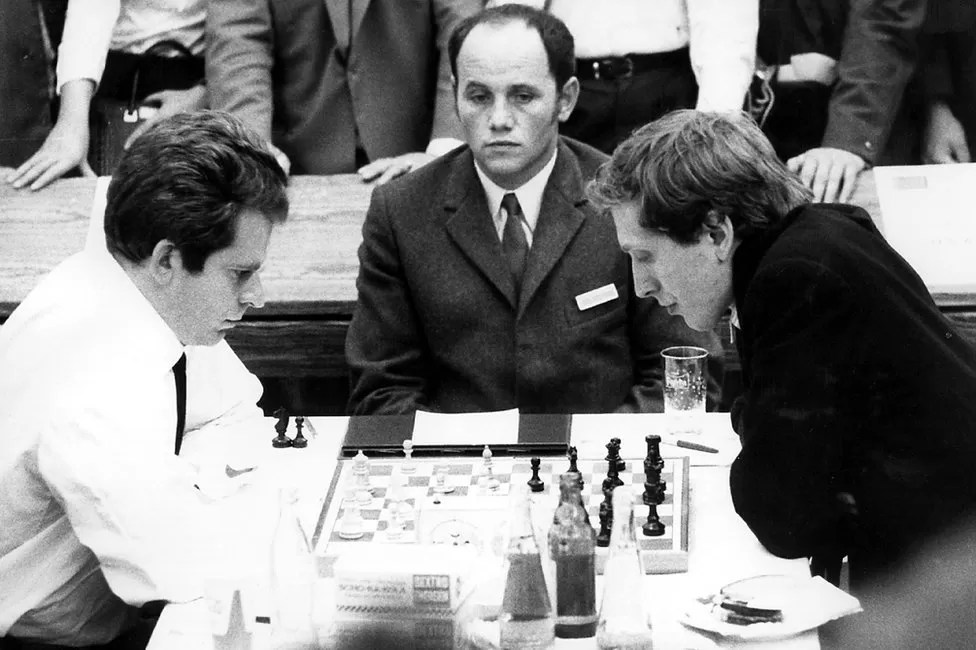
Boris Spassky versus Bobby Fischer: the good old days

To use chess terminology, the war still appears to be in its opening stages. Perhaps the middle game has begun; what’s certain is the end game is nowhere in sight. As Matt Taibbi recently noted, the Washington Post observed that “recent events have only added to the sense that the war will be a long slog,” and “all of this adds up to a war that looks increasingly open-ended.” Even worse, the paper noted:

Privately, U.S. officials say neither Russia nor Ukraine is capable of winning the war outright, but they have ruled out the idea of pushing or even nudging Ukraine to the negotiating table. They say they do not know what the end of the war looks like, or how it might end or when, insisting that is up to Kyiv.

Taibbi’s response is telling: “What??? If the White House doesn’t think the war can be won, but also refuses to negotiate itself, or ‘nudge’ others to do it for them, what exactly is its end strategy? Waiting for things to get worse and then reassessing?”

To return to chess: In games involving highly skilled players, often draws are agreed upon early in the middle game, as both players realize they have no prospects for victory and that further play will merely prolong the inevitable. It’s time for the major players in this conflict to agree to some version of a draw, a negotiated settlement, an end to conflict. Chess, after all, is just a game. The players don’t have to worry about dying in a nuclear cataclysm. We do.

Those Pesky Hunter Biden Emails

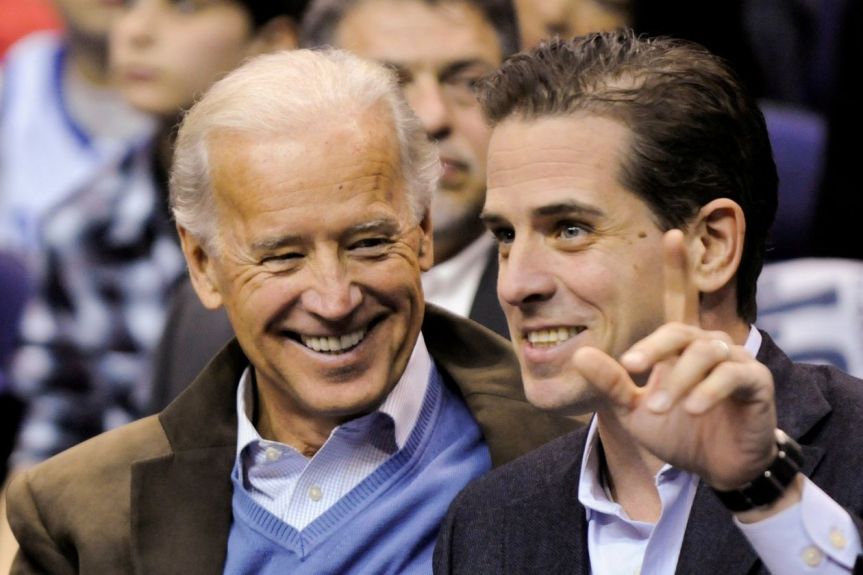
Joe and Hunter Biden in 2010

W.J. Astore

In trying to cover the Hunter Biden email story with his usual zest, honesty, and outspokenness, Glenn Greenwald ran afoul of the bosses at The Intercept and issued his resignation. Matt Taibbi covers Greenwald’s resignation here, and Greenwald himself has posted the article that got him into trouble here. At her own site, Caitlin Johnstone cites Greenwald’s resignation as exposing the rot in mainstream media outlets. As Johnstone puts it:

I don’t know that the Hunter Biden October surprise shows anything more scandalous than you’d expect for any major US presidential nominee. I do know that the uniform conspiracy of silence and obfuscation from the mass media about it is uniquely scandalous and says bad things about the future of journalism in western news media.

The Bidens have yet to deny the authenticity of these emails. Even so, the mainstream media, joined by digital powerhouses like Facebook and Twitter, have worked to minimize the story. In some cases, not just minimize but to misdirect, as in suggesting the emails are part of a Russian disinformation campaign in favor of Trump, even though there’s no evidence of this.

As one Washington Post article bizarrely put it: “We must treat the Hunter Biden leaks as if they were a foreign intelligence operation — even if they probably aren’t.” [emphasis added]

Come again? Obviously no Vulcans work at the Post, since there’s a complete lack of logic in that statement.

I think what’s going on here is obvious. For the mainstream media, it’s payback time for Donald Trump. Trump has described journalists as “the enemy of the people,” and don’t think that scarily intimidating statement has been forgotten by the press. Also, there is a modicum of guilt within the media, I think, for their role in facilitating Trump’s rise in 2015-16. They never took him seriously in the sense of believing he could win, but they did love all the high ratings (and money!) he generated.

Readers here know that I reject both Trump and Biden as viable presidential candidates. Trump is a narcissist, a liar, and an incompetent leader; Biden is a fading bureaucrat who’s thoroughly compromised by his business, industry, and banking ties. Arguably, Biden is the lesser of two evils, but that certainly shouldn’t mean that the media should protect him from Hunter’s sad record of influence-peddling in the Biden name.

More so than most people, I imagine, journalists are tired of Trump. They want things to go back to “normal.” But censorship in the cause of normalcy is too high a price to pay, especially for the lesser of two evils.

Whose Law, Whose Order?

bible
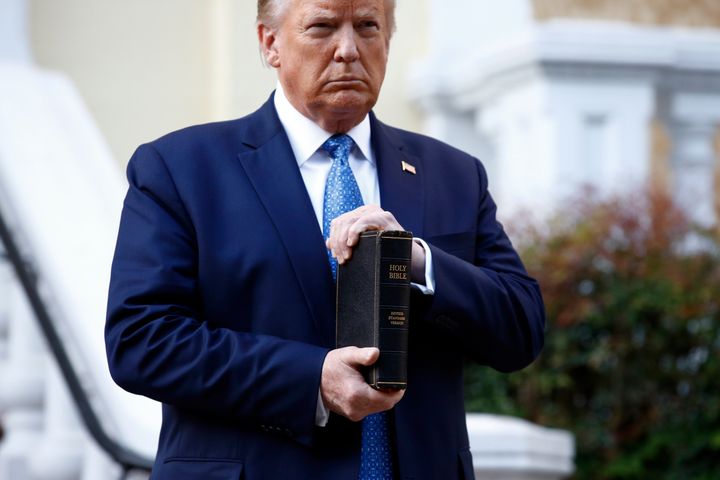
The face of lawlessness and disorder in America

W.J. Astore

Along with being a self-styled wartime president (in a totally incompetent attempt to contain COVID-19 that has cost tens of thousands of American lives), Donald Trump now claims to be the “LAW & ORDER” president (the all-caps echoes his tweet on the subject).

But whose law and whose order?

Trump is lawless.  He had peaceful protesters gassed, including Episcopal clergy, just so he could pose with a bible in front of a church.  And, by the way, mixing religious law with civil law is a practice the radical right allegedly condemns (they always cite Sharia law here), but not when the holy book is their bible.  By the way, what was the Democratic response to Trump’s shameless bible stunt?  Nancy Pelosi got out a bible, only she read from hers.  Great “opposition,” Pelosi.

Again, whose law and whose order.  Order imposed by violence and weaponry, non-lethal or otherwise, isn’t order.  It’s tyranny.  And the law in America seems to be what the rich and powerful say it is.

I come back to a crucial point made by Matt Taibbi:

You don’t elect politicians to commit crimes; you elect politicians to make your crimes legal. That is the whole purpose of the racket of government.

So, what is the law in America?  That which has been defined as legal by politicians who are bought — who follow the orders of their paymasters.

That’s the kind of “law and order” Trump is talking about.  The law of the already privileged and the order of the fist.  And it’s also why so many people are fed up, so many people are protesting, and so many people want real change.

What Do Leading Democrats Believe In?

pelosi
Would you buy a used car from them?

W.J. Astore

Give me five minutes, and I can tell you exactly what Bernie Sanders believes in.  Single-payer health care for all.  A $15 minimum wage.  Higher taxes on the richest Americans.  College education that doesn’t bankrupt families and leave students with crushing debt.  Criminal justice reform.  Investment in infrastructure and renewable energy.  He gives specifics, and he’s walked a principled walk for decades.

But what does the Democratic Partly leadership believe in?  As this article at Truthdig put it, “Nancy Pelosi Believes In Nothing.”  Of course, she does believe in something: her own power and privilege, which she seeks to maintain and expand.  But principles like those held by Bernie Sanders?  Forget about it.

I’ve been reading Matt Taibbi’s “The Great Derangement,” a terrific book that came out in 2008, and Taibbi nails it in this passage (pages 243-4):

The Democrats’ error was in believing that people wouldn’t notice this basic truth [that the party’s ideology is driven by power and nothing more] about their priorities. They were wrong on that score. In fact, a Quinnipiac poll taken around that time [2007] found the approval rating of Congress had fallen to 23 percent. Other polls saw the number plummet to the teens. The rating of the Democratic Congress was even lower than [George W.] Bush’s, and it was not hard to see why. Bush was wrong and insane, but he stood for something. It was a fucked-up something, but it was something. The Democrats stood for nothing; they viewed their own constituents as problems to be handled, and even casual voters were beginning to see this.

If you substitute Trump’s name for Bush’s in the above quotation, it makes even more sense.  “[Trump] was wrong and insane, but he stood for something. It was a fucked-up something, but it was something.”

This is the biggest issue for corporate Democrats: What do you stand for?  For so many in the establishment, what they stand for is themselves.  The perpetuation of their own power and privilege.  This is the biggest reason why Hillary Clinton lost in 2016.  It was always all about her.

Another quotation from Matt Taibbi made me laugh out loud even as I winced at the harsh truth of it (page 190):

You don’t elect politicians to commit crimes; you elect politicians to make your crimes legal. That is the whole purpose of the racket of government.

In this case, the “you” in question are all the banks, corporations, and other vested interests that essentially buy our politicians.  Until we get big money out of politics, this corruption will persist.

Bernie Sanders doesn’t take corporate money.  Neither does Tulsi Gabbard.  But most of the current batch of Democratic candidates for president in 2020 do take money from big corporate and financial donors.  And that should tell you what they believe in: their own power and privilege, and little else.

Speaking of Bernie Sanders, I recently read a depressing article in the Nation by Eric Alterman who argued Bernie can’t win in 2020.  Why?  Supposedly because Americans won’t elect a socialist, and also because Trump and the Republican attack machine will convince Americans he’s simply too radical.

WTF?  Americans are desperate for leaders who believe in something rather than nothing.  That’s why Trump won in 2016.  Again, in the spirit of Taibbi, Trump may be batshit crazy, but he does take a stand, e.g. “Build the wall.”  The best way to defeat Trump in 2020 is to go bold: to nominate a candidate with strong core beliefs.  A candidate who connects with young and old and who inspires enthusiastic participation.  That’s Bernie.

But perhaps Jimmy Dore, the comedian/political commentator, is right: establishment Democrats like Pelosi would rather defeat Progressives like Bernie Sanders than win the presidential election against Trump in 2020.  Because if Trump wins, they can continue to serve (and profit from) corporate interests while posing as being anti-Trump, i.e. they can continue life as they know it, with all the power and privilege that comes with it.

As my wife quipped today, “They don’t let their beliefs get in their way, do they?”  Which is another way of saying they really have no beliefs at all.