
Biden Kicks Off His Campaign Echoing Washington at Valley Forge

W.J. Astore

Trump is on the ballot!

Yesterday, Joe Biden kicked off his reelection campaign by visiting Valley Forge and echoing the dark times of George Washington in 1777-78 during the American Revolutionary War. In a campaign speech that lasted about 30 minutes, Biden declared that “Democracy is on the ballot,” by which he meant Trump is on the ballot. Biden denounced Trump and his MAGA supporters for the “insurrection” they launched on January 6, 2021, when “hell was unleashed” at the Capitol. We nearly lost America on that date, Biden opined, due to the Trump-inspired “violent assault” on democracy.
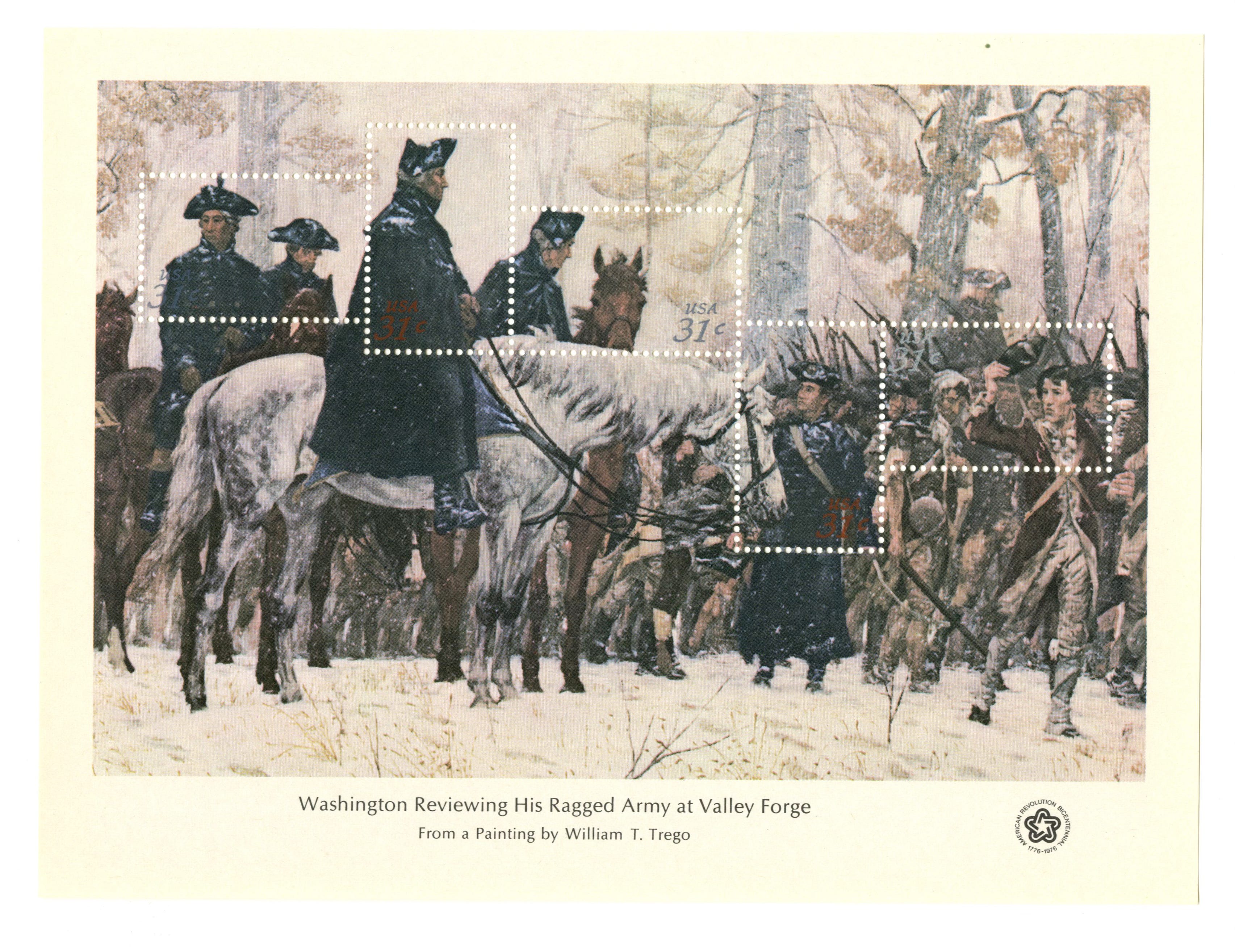
As a teenager, I loved to collect stamps, just like FDR did

Going further, Biden described Trump as “sick” and “despicable” and noted how recent language about “vermin” and “poison” echoed that of Nazi Germany. Trump and MAGA, Biden said, seek to “bury history” (or “steal” it) and “ban books,” with Trump himself being a sore loser who refused to admit defeat. Biden reminded the audience that being president is about duty and service to your country, including the willingness to walk away peacefully, relinquishing power gracefully when you lose.

All in all, it was a coherent speech that Biden read competently from the teleprompter. He occasionally came across as angry, especially when shouting for emphasis, but overall Biden, though he looked his age, appeared to be committed and engaged.

To me, the main problem with Biden’s speech was that it focused almost entirely on Trump. The essence was “Trump bad,” therefore vote for me, Joe Biden, to secure America’s future, with that “future” left entirely unspecified. The Trump future would be violent, racist, and divisive, marked by vitriol and vengeance, so Biden claimed. A Biden future wouldn’t be that, apparently, but no other details were offered. Biden offered no positive vision.

Biden closed his speech with the usual boilerplate: that America is “the greatest nation on the face of the earth” and “the greatest nation in the history of the world.” Biden said “We know America is winning,” but what exactly we’re winning was left unspecified. Rhetorically, Biden asked “Who are we?” then enjoined us “Just remember who we are.” Huh? Then he said we’re the people who emerge stronger after every crisis. Does that mean we should wish for another Trump crisis so we can emerge stronger still?

Finally, Biden used a phrase that Hillary used to use for us commoners: “everyday people.” Remember when presidents used to say, my fellow Americans, when addressing us? Now we’re “everyday people” as opposed to what, exactly? Someday people? In Washington, I gather there are special people, the elites, the best and brightest, like Joe Biden, and then there are the masses, the everyday people, like you and me.

And I think that’s a big problem for the Beltway crowd: the “everyday people” might just prefer Trump and the chaos he represents. Come November, we’ll find out.
Is Real Change Possible in America?

W.J. Astore

Speaking Truth to Power Isn’t Enough

I was reading R.F. Kuang’s fine novel, Babel, or the Necessity of Violence, and came across this passage:

Power did not lie in the tip of a pen. Power did not work against its own interests. Power could only be brought to heel by acts of defiance it could not ignore. With brute, unflinching force. With violence. (p. 432)

It’s hard to disagree with that, especially within imperial settings in countries dominated by rich and powerful interests. Kuang’s novel is set in the British Empire during the 1830s and 1840s, as Britain was ramping up its first opium war against China. Her quote readily applies to the U.S. empire today and its various global wars of dominance.

I’ve been thinking a lot about the so-called Capitol Insurrection on January 6th and the heavy-handed response to it, especially the long-term prison sentences being handed out. Too much attention is being paid to punishing Trump’s so-called coup supporters and not enough to how Washington, D.C., is increasingly fortifying itself against potential protests. Recall, for example, those Democrats who said they wanted to “defund” the police even as they voted for an expansion of the Capitol police force.

As my wife and I watched the January 6th “coup,” we both had the same thought: What if those protesters hadn’t been so misguided? What if they were truly protesting and “breaching” the Capitol for meaningful change? What if they had been advocating for universal health care, higher wages, an end to expensive and unnecessary wars? Would they ever had gained access to the Capitol? Would members of the Capitol police have moved the barricades, or posed for selfies, with the protesters? I highly doubt it.

America today has a rigged political system that is thoroughly captured by the moneyed interests. You don’t change that by speaking truth to power because the powerful already know the truth. Indeed, they create the truth. The golden rule is that he who has the gold makes the rules. And that’s what America means when it talks about a rules-based order. The wealthiest, most powerful, nations and people have the gold, want to keep and expand it, so they make the rules with that goal in mind.

How to effect meaningful change in a rigged system without violence is one of the huge questions of our age or any age. In her novel, Kuang suggests that powerful interests only respond to the demands of the less powerful when they are forced to “by acts of defiance” they can’t ignore. She may well be right.

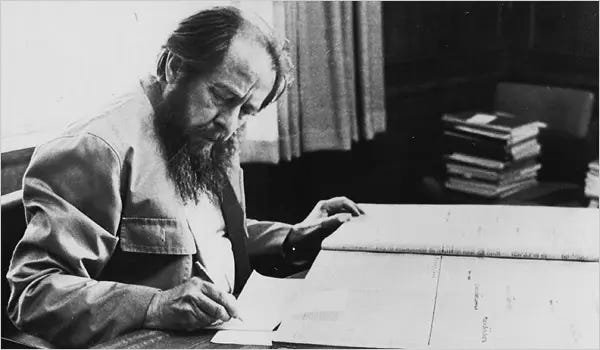
The problem, of course, is that violence that drives change doesn’t always make things better. The French Revolution produced a Reign of Terror followed by the Napoleonic Wars. The Russian Revolution produced Lenin, Stalin, gulags, and ruthless five-year plans. Here I recall an Alexander Solzhenitsyn quote: “All revolutions unleash the most elemental barbarism.”

Alexander Solzhenitsyn

Yet, if America’s so-called elites continue to close all legitimate avenues to meaningful change, they may be making elemental barbarism inevitable. And I’m not sure they care, in the sense they believe they will always come out on top, that they will, in a word, win, because the masses can always be manipulated or bullied into compliance.

Peaceful Sightseers at the Capitol!

W.J. Astore

The Fight Over the January 6th Riots

Yoda, the Jedi Master, once told Luke Skywalker that the future is difficult to see because it’s always in motion.

So too is the past. Always in motion it is. Its meaning. We can’t and don’t remember everything even as we construct narratives of meaning out of those things we can or choose to remember.

William Faulkner famously said the past isn’t dead — it’s not even past. That’s most certainly true of the now-infamous Capitol riot in the aftermath of Donald Trump’s defeat in November 2020.

America is yet again fighting for control over the past with respect to the January 6th riot in 2021. This week at Fox News, Tucker Carlson suggested the rioters were mostly peaceful respectful sightseers. They revered the Capitol! They took cheerful selfies! They even queued in neat little lines! 

Insurrectionist goons, or peaceful protesters who revere the Capitol?

Even Republicans like Mitch McConnell have gone on record to denounce Carlson’s cherrypicking of the video evidence. Here’s what McConnell had to say: “It was a mistake, in my view, for Fox News to depict this in a way that’s completely at variance with what our chief law enforcement official here at the Capitol thinks.” McConnell cited a letter by the US Capitol Police that described Carlson’s program as being “filled with offensive and misleading conclusions about the January 6th attack.”

To state the obvious: On controversial and politicized issues like this, the past doesn’t speak with one voice. Opportunists seek to polarize the past. To exploit it for their own purposes. This is true of Tucker Carlson and Donald Trump. It’s also true of many Democrats.

The January 6th riots were not an insurrection. They were not a coup. They were akin to mob violence. They most definitely were a collective temper tantrum incited by Trump that led to considerable chaos and violence. The person most responsible for them should be punished. That person, Donald Trump, walked away scot-free. 

My immediate reaction to the Capitol riots (written on January 7th) still holds true, I think:

Once again, America will likely take the wrong lessons from these riots. The Capitol police will likely call for more money, more resources, more officers, more guns, more security cameras, more barricades, etc. There are already calls for more Internet censorship. Homeland Security funding will surely get a boost. And certain people will dismiss too easily the alienation and indignation of Trump supporters.

What I mean is this: Americans are upset. Angry. Alienated. Confused. And rightly so. And until our government serves the people instead of corporate, financial, and similar lobbyists and special interests, the potential for future mobs will remain. Donald Trump is a total buffoon, a shell of a man, a narcissist with ambitions centered always on himself and his self-image. But imagine a more skilled manipulator, one less narrowly focused on himself, one with a stronger work ethic, one with boundless ambition for power. Such a person could truly lead an insurrection or coup, and yesterday’s scenes suggest such a takeover would be easier than we think.

Predictably, in the aftermath of the riots, the Capitol police did indeed get more money and resources, with House Democrats approving $1.9 billion for added security. Democrats under Joe Biden now sell themselves as the party of law and order, of expanded police forces (along with exploding Pentagon budgets and unanimous support of war-related aid to Ukraine in excess of $100 billion). They paint Republicans as dangerous, as undemocratic, even as an enemy within. Trump, most recently at CPAC, gleefully returns the favor, using similar inflammatory rhetoric.

Meanwhile, as Trump angles and preens for another presidential run, supporters of his who bought the big lie of a stolen election and protested at the Capitol on January 6th are being hounded by prosecutors. Yes, some of the rioters were violent, broke laws, and merit prosecution and punishment. But in many cases the federal pursuit and prosecution of these “deplorables” has been over-the-top, notes Chris Hedges. Their punishment has been grossly disproportionate to their crimes.

This may help the Democrats politically, but it is unhealthy for our democracy, notes Hedges:

The cheerleading, or at best indifference, by Democratic Party supporters and much of the left to these show trials will come back to haunt them. We are exacerbating the growing tribalism and political antagonisms that will increasingly express themselves through violence. We are complicit, once again, of using the courts to carry out vendettas. We are corroding democratic institutions. We are hardening the ideology and rage of the far-right. We are turning those being hounded to prison into political prisoners and martyrs. We are moving ever closer towards tyranny.

Hedges is right here. The Democrats and Republicans have been twisting, manipulating, and polarizing the past for their own purposes. Two diametrically opposed versions of the January 6th riots have been presented to the American people, and they are both self-serving and dishonest.

Clearly, Trump was the inciter-in-chief of mob violence from which he casually walked away. The Congress impeached him but otherwise refused to act. The Capitol police profited from its ineptitude even as the “deplorables,” Trump’s foot-soldiers, paid the price for his lies and tantrums. And so the past is warped and twisted, bludgeoned and misused, to serve the needs of the already powerful.

Against the Dark Side of American politics and “justice,” even Yoda might lose hope.