
America’s Twin Pandemics of Covid and Agency Panic

M. Davout

Agency and autonomy are fundamental to democracy. Panic is fundamental to fear and chaos.  Preserving personal agency while avoiding panicked reactions is one of the great challenges ahead of us. While the Covid pandemic will burn itself out, America’s pandemic of panic–manifested in the rise of wild and often evidence-free conspiracies–continues to accelerate. How much misinformation and mistrust can America tolerate before democracy itself crashes around us? Our very own M. Davout, who teaches political science, introduces the concept of “agency panic” and challenges us to take the red pill of uncomfortable truths.  W.J. Astore

America’s Twin Pandemics of Covid and Agency Panic

M. Davout

America is awash in conspiracy thinking and it is doing terrible damage to the country. However, the solution is not to dismiss conspiracy thinking altogether but to distinguish fake conspiracies from real ones.

Consider the many theories afloat about Covid-19.  Scrolling through the Facebook posts of anti-maskers and anti-vaxxers curated on the Herman Cain Award subreddit, one is struck by the sheer quantity of conspiratorial memes circulating among networks of likeminded Facebook friends. The Covid pandemic is variously presented as the product of a nefarious plot enacted by the Chinese government or by the US government or by the Centers for Disease Control or…the list goes on. Public health measures that have been recommended or mandated at the federal, state or local levels such as quarantining, masking, and vaccinating are similarly condemned as elements of the conspiratorial machinations of Anthony Fauci or Bill Gates (or both of them working in cahoots), of profiteering Big Pharma, of collectivizing communists, of Medicare-For-All socialists, and so on.

As Richard Hofstadter demonstrated in his famous essay, “The Paranoid Style in American Politics,” the United States has from very early in its history provided fertile ground for the organized circulation of political rhetoric warning in shrill tones about the impending takeover of the political system. Alleged nefarious groups named in these conspiracy theories included the Illuminati, the Freemasons, papists, Jesuits, anarchists, Jews, international financiers, and communists. 

While the anti-mask and anti-vax conspiracies circulating on Facebook today manifest the characteristics of “heated exaggeration, suspiciousness, and conspiratorial fantasy” which Hofstadter identified as typical of the paranoid style, the sense of what is at stake has changed. It is no longer just constitutional government that seems to be at risk. When you read the conspiratorial warnings available across the ideological spectrum—from QAnon enthusiasts or Trumpist dead-enders or health purists or anti-corporate populists, among others—you get the sense that people feel their very identities to be under threat. Has a threshold been passed that separates the conspiracy-mongers of today from their anti-papist, anti-Masonic forebearers?   

In his book, Empire of Conspiracy: The Culture of Paranoia in Postwar America (2000), Timothy Melley argued that conspiracy thinking fundamentally changed after World War II with the rise of the “information age.” Consumers of electronic mass media became susceptible to what he characterized as a state of “agency panic,” an “intense anxiety about an apparent loss of autonomy or self-control” in the face of pernicious systems of social control acting with a singular will. Notions of secret plots hatched by bands of conspirators aiming at the conquest of political power were increasingly replaced by visions of “whole populations being openly manipulated without their knowledge” through the effects of advertising, schooling, fluoridation, and so on. The USA was ground zero for this new form of conspiratorial thinking because the American embrace of the idea of rugged individualism was so at odds with the reality of an increasingly interdependent society in which self-sufficient farmers were a dying breed.
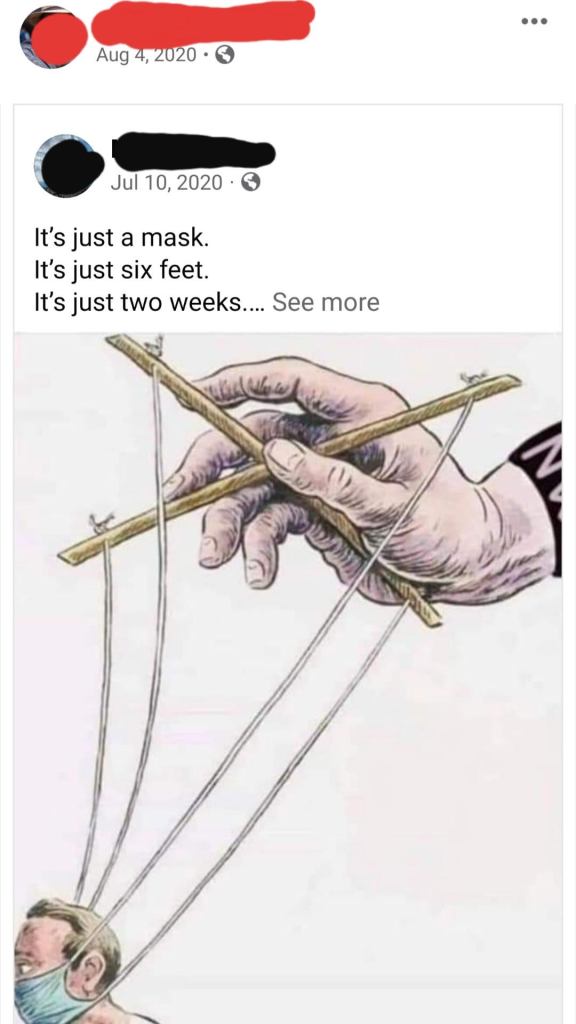
Empire of Conspiracy was published at the dawn of the surveillance economy ushered in by Google and Facebook. This economy has at the same time systematically perfected the relentless tracking of individual activities and facilitated the exchange of conspiratorial memes and messages lamenting the threats to individual integrity and freedom. Paranoid messages that are likely to attract eyes are moved algorithmically to the top of search results or share lists. The Covid pandemic has only supercharged these developments by boosting mass dependence on the internet and amplifying mass grievance against infringements on individual freedoms. 

The easy response to this internet-fueled conspiratorial dynamic would be to dismiss conspiracy thinking as the paranoid raving of the uneducated and ignorant if it weren’t for the fact that real conspiracies are continually afoot in our political system. One has only to take note of the ever-accelerating revolving door between public officialdom and the lobbying-industrial complex or to monitor the ever-greater lobbying and campaign expenditures of major industries such as Big Pharma or Big Coal or Big Tech to know that well-paid influencers are working diligently with corrupted politicians to poach the common good.

Yet the rising tide of agency panic-driven conspiratorial thinking continually diverts Americans from the true causes of their collective misery into attacks on those few public measures that are in our collective interest. 

It truly is a choice between taking the red pill or the blue pill, as The Matrix meme circulated by so many of the Covid conspiracy Facebook posters suggests. But, against their expectation, taking the red pill would lead to a clear-eyed understanding of how corporate influence peddling diminishes our lives rather than to a revelation that supposed college roommates Bill Gates and Anthony Fauci hatched a conspiracy against our freedoms fifty years ago.

M. Davout, an occasional contributor to Bracing Views, teaches political science at the collegiate level.
The Herman Cain Award Subreddit and What It Says about America’s Political Crisis

Deaths from Covid-19 in the U.S. recently passed 800,000 with no signs of abating. The blame game is also not abating. Are corrupt elites exacerbating and exploiting a crisis for their own interests? Are “irrational” elements at lower levels exhibiting mass resentments at being bossed around? Why does everything seem polarized in America, even “common sense” steps to save lives during a raging pandemic? M. Davout uses the lens of the “Herman Cain Award” to take a closer look at America’s Covid dilemma. He reaches a conclusion that will challenge many. W.J. Astore

Learning from the Herman Cain Award

M. Davout

As America undergoes a series of overlapping domestic political crises—notably among them, determined attacks on democratic election processes, fierce resistance to public health responses during a deadly pandemic, reckless brinkmanship over federal government budgeting and debt payment—commentators often resort to the notion of political polarization as an explanation of our problems. A recent case in point is the disapproving mainstream media response to the Herman Cain Award (HCA) subreddit, which is devoted to showcasing the social media posts of anti-maskers and anti-vaxxers who get sick with Covid-19 and end up in hospital ICUs in need of breathing assistance.

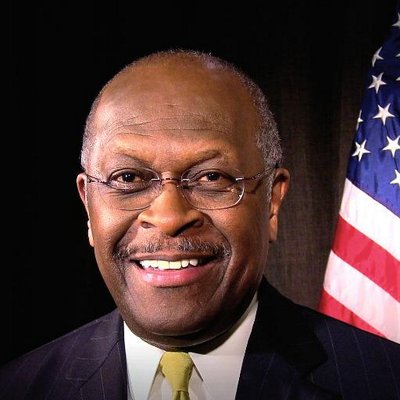
Herman Cain, you might remember, was a failed candidate for the 2012 GOP presidential nomination.  He attended a Trump reelection campaign rally in Tulsa, posted a photo of himself and his entourage at the rally unmasked while belittling concerns about Covid, and then died of the disease six weeks later.

Herman Cain

For any given recipient of the Herman Cain Award, the presentation of captured social media posts follows a typical arc. The early posts feature memes and images disparaging Fauci, Biden, the medical establishment, mRNA vaccines, and masked and vaccinated Americans (“sheep”), intermixed with memes and images exalting Trump, the healing powers of Jesus, the adequacy of their own unvaccinated immune systems, and their independent and courageous selves (“lions”). Then comes a series of posts notifying followers of their falling ill with Covid and their shock at the severity of the symptoms, their eventual hospitalization and need for prayers. Finally, posting duties fall to a relative or friend of the afflicted, who reports on the increasingly more radical medical procedures undergone, the almost inevitable decline in organ health, and eventual death. GoFundMe appeals for donations to cover the obscenely high medical expenses round out many of the HCA posts.

Many of the comment threads for each post could fairly be characterized as largely (though not exclusively) being exercises in schadenfreude. Some posters belittle the pleas for aid from “prayer warriors” and the all-caps invocations of divine intervention to heal failing organs. Self-proclaimed liberal commentators sarcastically express their “dismay” at being “owned” by conservatives who have scored ideological points at the cost of their lives. Accusations are often lodged against rightwing media celebrities and GOP politicians who amplify the conspiratorial memes which appear again and again on the social media accounts of the HCA recipients.

Occasional critical reference is made to the facilitating roles played by foreign disinformation campaigns in broadcasting lies and to Big Tech in channeling lies to those most susceptible to believing them. But, by and large, the commentators are unrelentingly hostile to the HCA recipients themselves for “shitposting” the lies to their family, friends, and other social media followers, and leaving family members bereft and financially devastated when they die.  

In a recent New York Times article, an academic psychologist is paraphrased as arguing that “these websites are an outgrowth of the nation’s extreme polarization.”

To my mind, application of the notion of polarization to a political crisis or conflict encourages one to withhold judgment about the truth claims and reasonability of each of the two sides to a dispute. Particularly in the case of the HCA, polarization is too simplistic a way of understanding the fierceness of the social media pushback against vaccine denial and the avoidable deaths such denial causes. For me, the HCA posts are better understood in the context of a perennial question in my academic field about political dysfunction: is political crisis more a product of the pursuit of unaccountable power by corrupt elites or is it more a product of mass resentments which often find expression in campaigns of scapegoating and demonizing people?

Political theorist Michael Rogin usefully framed this issue within a longstanding debate between “realist” scholars who frame historical episodes of political dysfunction (e.g., McCarthyism) as products of elite-driven programs of political repression serving the interests of capitalism, the state apparatus or other powerful institutions, and “symbolist” scholars, who emphasize the dangers of popular indulgence in conspiratorial thinking and paranoid fears of racial, ethnic, religious or cultural “others.”

In response to the needless prolongation of the Covid pandemic, many of the HCA commentators seem to have taken the symbolist position, blaming rightwing members of the polity for indulging and promoting paranoia (e.g., drawing parallels between public health measures against Covid and Nazi genocide) and conspiratorial thinking (e.g., the offer of free vaccines as a Trojan horse for socialized medicine). To be sure, there are voices among them that take the realist position of blaming rightwing political and media elites for instrumentalizing populist anxieties for their own power interests.

So rather than characterize HCA commentary simply as “cruel sentiment,” I see much of that commentary as lodging symbolist (and, in some cases, realist) critiques of a deadly form of political dysfunction afflicting our public life, namely the perverse resistance of an irrational minority to reasonable and time-tested public health measures aimed at protecting all of us from exposure to a disease that kills far too many and disables many more.

M. Davout is a professor of political science and an occasional contributor to Bracing Views.