
War Is the True Enemy

W.J. Astore

America’s Revival Will Begin When It Finally Embraces Peace

Arguably the biggest problem in America today is that the government remains on a wartime footing. The possibility of America being a normal country in normal times, at peace, is simply never mentioned. In current politics and in the mainstream media, there is no vision of America being at peace with the world. Ever.

There is always an enemy, usually plural. Russia. China. Iran. North Korea. The inchoate threat of terror and terrorists. Islamist extremism. All these and more are cited by the “experts” in the “national security state” as requiring a military response. If some kind of peace deal is orchestrated for the Russia-Ukraine War, America and its war machine will immediately pivot to Asia. Or the Middle East. Or perhaps Africa. Or all three.

I’m amazed when friends tell me they’re concerned about U.S. isolationism. Usually this concern is couched in America’s alleged withdrawal from (or even betrayal of) Europe in light of the Russia-Ukraine War. Their message to me is simple: America must keep sending weapons and intel to Ukraine until Russia and Putin are defeated, “as long as it takes.” The “it” is left undefined, but apparently “it” refers to an unqualified Ukrainian victory over Russia, followed by Ukraine’s eventual admission into NATO. Whether that “it” is even possible—whether that “it” could well lead to a nuclear exchange—doesn’t seem to matter because “We’re at war.”

I don’t know how anyone can think America will return to isolationism when the U.S. has 800 military bases globally and a vision of global reach, global power, and total dominance everywhere. And when America spends more on its military than the next ten countries combined (and most of those are U.S. allies). Dominating the globe isn’t exactly consistent with isolationism.

The problem with all the war rhetoric, the war narrative, the war framing, the warrior and lethality talk, is what it enables and facilitates, which is atrocity. Waste. Destruction. War is no way of life at all. As Ike said, the persistence of war is humanity crucifying itself on a cross of iron.

War is immensely corrosive to democracy. It is the enemy of freedom. Just listen to James Madison:
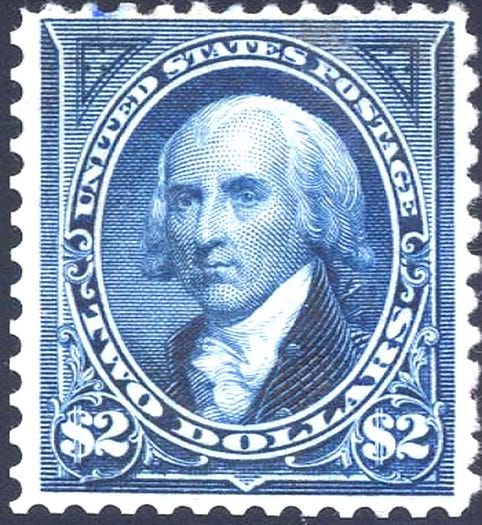
James Madison

Of all the enemies of true liberty, war is, perhaps, the most to be dreaded, because it comprises and develops the germ of every other. War is the parent of armies; from these proceed debt and taxes; and armies, and debts, and taxes are the known instruments for bringing the many under the domination of the few. In war, too, the discretionary power of the Executive is extended; its influence in dealing out offices, honors and emoluments is multiplied; and all the means of seducing the minds, are added to those of subduing the force, of the people. The same malignant aspect in republicanism may be traced in the inequality of fortunes, and the opportunities of fraud, growing out of a state of war, and in the degeneracy of manner and of morals, engendered in both. No nation can preserve its freedom in the midst of continual warfare …

*****

If you’re concerned about authoritarianism, if you’re concerned about maintaining and strengthening freedom, if you’re concerned about combatting corruption and waste, if you’re concerned about America’s huge deficits, stopping war should be your number one concern.

War is a terrible thing, and a state of war enables all kinds of butchery. Just ask the indigenous peoples of America, or the peoples of Palestine today. Even genocide can be disguised as a wartime exigency, a wartime necessity. How many times throughout history has the declaration, “We’re at war!” been used to justify the most heinous crimes against humanity? Even the Nazis hid behind wartime exigency to justify the mass euthanasia of the old, the mentally ill, and other forms of “life unworthy of life” as part of the T4 program (which anticipated the Holocaust).

The true revival of America will begin when this country declares itself to be at peace with the world. Until then, precipitous decline will continue for as long as our government remains at (and continues to celebrate) war.
In A Functioning Democracy, What Would War Look Like?

W.J. Astore

In a functioning democracy, which the USA decidedly isn’t, what would be the features of a necessary war, as in a war fought for defensive (and for defensible) reasons and purposes? Here are ten features that occur to me:

  1. A necessary war would readily gain the approval of Congress, and indeed there would be a formal declaration of war issued by Congress.
  2. National mobilization would be required to win as swiftly as possible.
  3. All Americans could clearly state the reasons for the war and the end goals.
  4. Americans would reject, as much as possible, a long and open-ended war, knowing that long wars are the enemy of democracy.
  5. Nearly all sectors of society would share the war’s burdens. (Think here of celebrities like Jimmy Stewart and sports stars like Ted Williams, among so many others, doing their bit for the war effort in World War II.)
  6. Sacrifices would be made on a national scale, including rationing of materials needed for the war effort.
  7. Taxes would go up to pay for the war effort. War bonds might be sold as well. Deficit spending wouldn’t be used to hide the costs of the war.
  8. Civilian leaders would be in control of the war effort. Military leaders who failed to produce results would be reassigned, demoted, or fired.
  9. As much as possible, freedom of the press would be encouraged so that Americans knew the true course and costs of war.
  10. When the war ended, again as quickly as possible, the nation would return to its default state of peace; military establishments bolstered during wartime would be demobilized.

Now let’s consider every U.S. war since World War II. Let’s focus especially on Iraq and Afghanistan. How many of these ten features would apply to these wars?

I’d argue that none of them apply.

That’s how you know these wars are not in the service of democracy, whether at home or overseas. They are also not defensive wars, nor are they defensible in ways that pass rigorous and honest debate among the people. (This is precisely why none of them came with Congressional declarations of war.)

I know my “top ten” list isn’t all-inclusive, but I think it’s a reasonable guide to whether the next war (and I’m sure more are coming) will be necessary and justifiable. It’s a safe bet it won’t be.

Readers, can you think of other ways we can tell whether war is truly justifiable? History teaches us that most wars are unjustifiable, offensive in nature, and therefore crimes against humanity.

In fact, since 1945 it’s often been America’s putative “enemies” who are more likely to be fighting a necessary war — it’s perhaps the chief reason why they so often win.

In sum, war is the enemy of democracy. You wage war long, you wage it wrong, assuming you want to keep a democracy. That so many American “thought-leaders” are still advocating for more war in Afghanistan is a clear sign that our country’s operating system is infected by malware that promotes militarism and war.

James Madison: No nation can preserve its freedom in the midst of continual warfare

Democracy and War

300px-James_Madison_1894_Issue-2$
James Madison knew that endless war is the harshest enemy of liberty

W.J. Astore

Democracies should be slow to start wars and quick to end them.  James Madison taught us that.  Why is America today the very opposite of this?

I thought of this as I read Danny Sjursen’s fine article at TomDispatch.com.  Sjursen, a retired Army major, is a strong critic of America’s forever wars.  He served in Iraq and Afghanistan and lost soldiers under his command.  He knows the bitter cost of war and expresses it well in his article, which I encourage you to read.  Here’s an excerpt:

Recently, my mother asked me what I thought my former students [West Point cadets] were now doing or would be doing after graduation. I was taken aback and didn’t quite know how to answer.

Wasting their time and their lives was, I suppose, what I wanted to say. But a more serious analysis, based on a survey of U.S. Army missions in 2019 and bolstered by my communications with peers still in the service, leaves me with an even more disturbing answer. A new generation of West Point educated officers, graduating a decade and a half after me, faces potential tours of duty in… hmm, Afghanistan, Iraq, or other countries involved in the never-ending American war on terror, missions that will not make this country any safer or lead to “victory” of any sort, no matter how defined.

Repetition.  Endless repetition.  That is the theme of America’s wars today.

Remember the movie “Groundhog Day,” with Bill Murray?  Murray’s character repeats the same day, over and over again.  He’s stuck in an infinite loop from which he can’t escape.  Much like America’s wars today, with one exception: Murray’s character actually learns some humility from the repetition.  He shows a capacity for growth and change.  And that’s how he escapes his loop.  He changes.  He grows.  The U.S. military’s leadership?  Not so much.

But I don’t just blame the senior leaders of the U.S. military.  They’re not that dumb.  It’s the system of greed-war they and we inhabit.  Why change endless war when certain powerful forces are endlessly profiting from it?  War, after all, is a racket, as General Smedley Butler knew.  It’s a racket that’s contrary to democracy; one that buttresses authoritarianism and even kleptocracy, since you can justify all kinds of theft in the cause of “keeping us safe” and “supporting our troops.”

Danny Sjursen, a true citizen-soldier, remembers that war is supposed to be waged in accordance with the Constitution and only to protect our country against enemies.  But being a citizen-soldier has gone out of style in today’s military.  Everyone is supposed to identify as a warrior/warfighter, which has the added benefit of suppressing thought about why we fight.

Eager to fight, slow to think, might be the new motto of America’s military.  Such a motto,  consistent with forever war, is inconsistent with democracy.