
Integrity Last

W.J. Astore

The Most Fundamental Problem with the U.S. Military

“Integrity First” is the fundamental core value of the U.S. Air Force. Two other core values speak to “service before self” and “excellence in all we do.” But integrity remains the wellspring, and it’s the U.S. military’s stunning lack of integrity that has cost the American people and indeed the world so dearly over the last half-century.

Tonkin Gulf. My Lai. The Pentagon Papers. WMD in Iraq. Abu Ghraib. The Afghan War Papers. So many instances of “official” lies and distortions. So many lost wars where no senior officers were ever held accountable. Put up, shut up, fuck up, cover up, move up, seems to be the operating manual for success.

Last September, I wrote an article for TomDispatch: “Something is rotten in the U.S. military.” I suggested that integrity was now optional in that military, that lies and dishonor plagued America’s war machine. Evidently, those lies, that dishonor, is working just fine for the Pentagon as its budget continues to soar.

These thoughts occurred to me yet again as I read Seymour Hersh’s retrospective account of Major General Antonio (Tony) Taguba’s withering investigation of torture of prisoners at Abu Ghraib in Iraq. Taguba, a man of integrity, conducted an official—and honest—investigation of torture and mistreatment at Abu Ghraib; his reward for his honesty, his service, his excellence was not a commendation and promotion but threats, ostracism, and the death of his career as an Army officer.
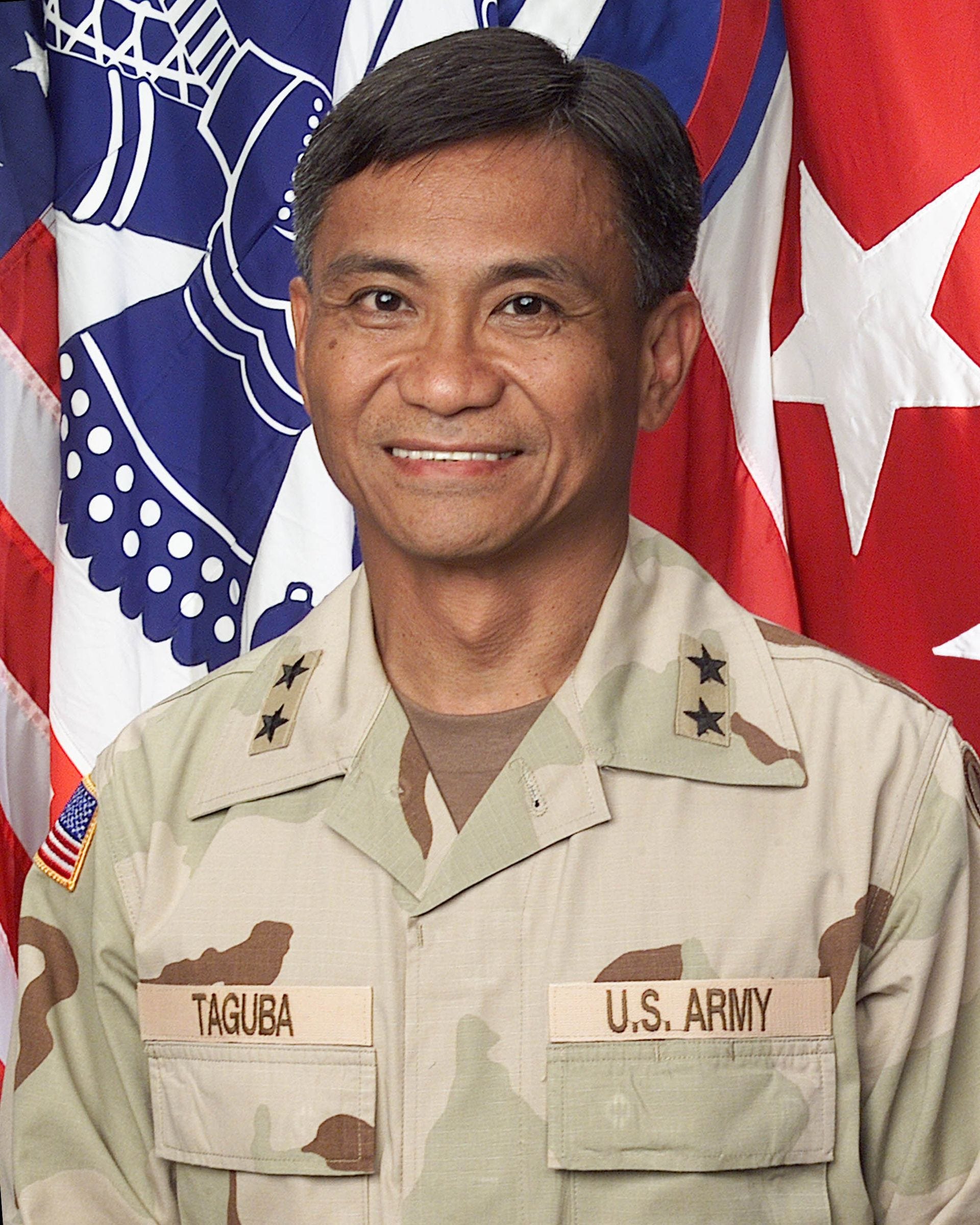
General Antonio Taguba, man of integrity, service, and excellence

Sy Hersh’s article captures the rot at the core of the Pentagon and the U.S. government. Here Hersh speaks recently to Taguba:

[Taguba] “I was not a whistleblower. I knew I was in trouble when I was given the assignment [to investigate abuse at Abu Ghraib], but when you see those photos what can you do? I was a dead man walking.

“The kids were trained as traffic cops and then were told to transport [Iraqi] detainees. That’s how they got to Abu Ghraib. They weren’t trained for that but they had vehicles and rifles, just undisciplined kids with incompetent leadership and they were on the list to go home. They had all their equipment packed in Kuwait and ready to be shipped. And then they were told to stay behind.”

I [Hersh] asked: Would he do it again? “Sure,” Tony [Taguba] said, “I was hamstrung by the thirty days I had to investigate. I do not think I fulfilled my mission. [Secretary of Defense Donald] Rumsfeld was blaming the soldiers, but underneath they had no operational plan” for dealing with the prisoners.

“In hindsight, there was nothing I did to compromise my integrity. But integrity in the military and elsewhere is a bumper sticker. There is no reward for telling the truth.” [Emphasis added]

“There is no reward for telling the truth” in the U.S. military. That statement by retired General Taguba should move all Americans to take action against a military that has so clearly and tragically lost its way.

One suggestion: Cut the Pentagon budget in half and insist that it must pass a financial audit else forfeit all taxpayer funding. That might wake up a few generals and admirals.
Air Force Core Values

W.J. Astore

I was thinking today about my old service branch’s core values. No — not “more fighters, more bombers, more missiles” or “put bombs on target” or “jet noise is the sound of freedom” or “show me the money!” or that old Strategic Air Command classic, “peace is our profession.” No — the core values all airmen are supposed to uphold — integrity first, service before self, and excellence in all we do, in that order, sometimes abbreviated as integrity, service, excellence. How’s the Air Force doing here?

Not well, I’m afraid. Think of “integrity,” which I think of as truth-telling. Over the last 20 years, and indeed over the life of the service, going back to 1947 and before, the Air Force has consistently overestimated the accuracy of its bombing and consistently underestimated the number of civilians and non-combatants killed by that bombing. And that’s putting it charitably. In reality, the Air Force has conspired to advance an image of airpower as surgical and precise when it clearly isn’t, and indeed never has been. My old service branch advances this image because it’s good for the Air Force. It’s really that simple. Such image-making, i.e. lying, may be good for the Air Force budget, but it isn’t good for integrity. Nor is it good for America or those unfortunates on the receiving end of U.S. munitions.

Turning to “service before self,” I think of a system that when I served often stressed and rewarded self before service. For example, the promotion system in the military was structured to reward the hard-chargers, the overachievers, Type-A personalities, the thrusters and the true believers. Perhaps this is true of most bureaucracies, but the emphasis on ticket-punching and hoop-jumping in the Air Force was conducive to a narrow form of achievement in which “service” played second fiddle, when it played at all. Another way of putting it is that a certain kind of personal selfishness is more than acceptable as long as it advances institutional goals and agendas — a quite narrow form of service, if one is again being charitable.

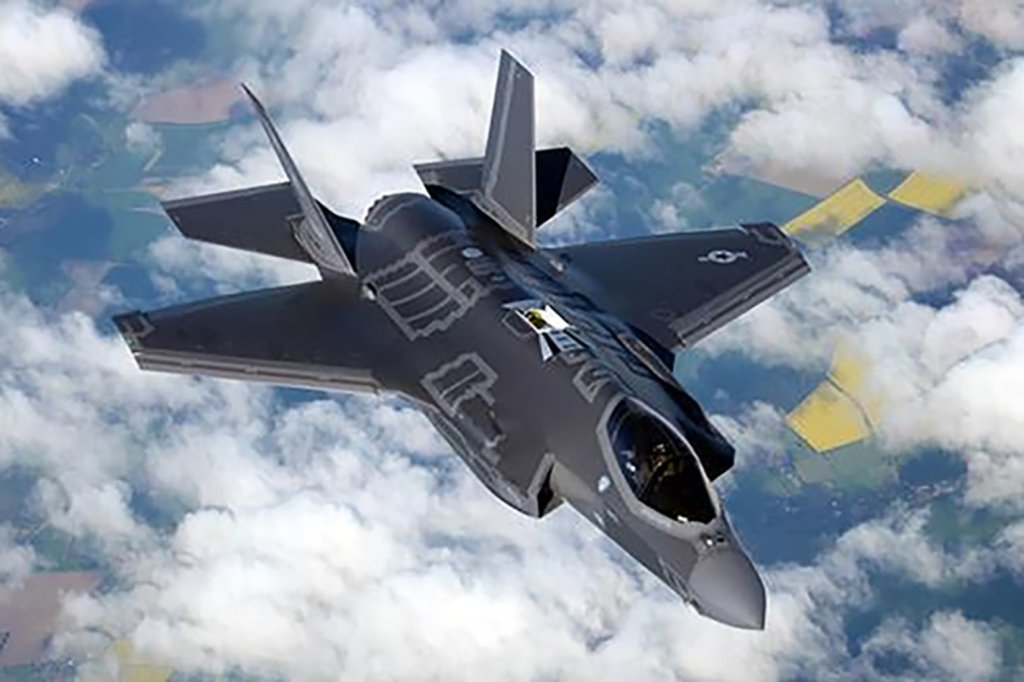
And now we come to “excellence in all we do,” which brings to mind all kinds of disasters, such as drone strikes that kill innocents, or wayward generals, or cheating nuclear missile crews, and so on. But I’d like to focus on recent procurement practices, such as the lamentable F-35 jet fighter, which was supposed to be a fairly low-cost, high-availability fighter but which even the Air Force Chief of Staff now compares to a Ferrari, i.e. super-expensive and often in the shop. From tankers that can’t refuel to fighter planes that can’t shoot straight to nuclear bombers and missiles that the country (and, for that matter, humanity) simply doesn’t need, the Air Force’s record of excellence is spotty indeed.

What are we to do with a service that is so unwilling or unable to live up to its core values? Well, as usual, accountability and punishment are out of the question. I guess we’ll just have to give the Air Force more money while hoping it’ll reform itself, because you know that strategy always works.

The F-35 “Ferrari”: It costs a lot and is often in the shop, but it looks kinda sexy. Too bad the F-35 was supposed to be a reliable workhorse, not a temperamental stallion. Interestingly, the inspiration for the Ferrari symbol of a prancing horse came from an Italian fighter pilot during World War I.