Even Visceral War Movies Are Often Pro-War

W.J. Astore

Three anti-war movies worth watching

FEB 07, 2025

I was reading a memoir by a combat veteran today who served in Afghanistan and he had this to say:

“I remember watching the movie Saving Private Ryan with him [my dad] and all I wanted after that was to be a soldier.”

Perhaps you’ve seen Saving Private Ryan. The opening sequence is harrowing–a visceral depiction of war (the bloody U.S. landing at Omaha Beach on D-Day, June 6, 1944)–followed by a “feel-good” Spielberg gloss that follows a band of heroes that “rescues” Private Ryan.

This is the problem with war films, even visceral ones. Boys and teenagers watch them and think they’re cool; they seek the deadliest of challenges, even war, guided and motivated as they are by BS pro-war government/Hollywood propaganda.

It’s very difficult to depict war without valorizing it. The director Samuel Fuller, who served in World War II and made the movie The Big Red One, noted how movies don’t depict combat realistically, even ones like Saving Private Ryan. In his words: “You can’t see anything in actual combat. To do it right, you’d have to blind the [movie] audience with smoke, deafen them with noise, then shoot one of them in the shoulder to scare the rest to death. That would give the idea [of real war], but then not many people would come to the movies.”*

I love that description of a “real” immersive war movie. Now, who wants to volunteer to be the one who gets shot in the shoulder?

Obviously, you’ll rarely see “real” war in the mainstream media or in Hollywood movies because ratings and profits matter. Those movies that truly show the very worst aspects of war, without glorifying war in any way, are rare indeed. Perhaps one of these is Johnny Got His Gun (1971).

The scene featuring Donald Sutherland as Jesus Christ—his howl at the end on the train of death—is unforgettable.

Another incredibly harrowing war film that I’ve never forgotten is Come and See (1985). Set on the Russian Front during World War II, it is a shattering depiction of the utter brutality of war.

One more war film that is perhaps prettier than it should be but which captures the sadness and loss of innocence of the World War I generation is Testament of Youth (2014). The scene near the end where Alicia Vikander calls for an end to killing—an end to war—is heartrending.

Readers, what “war” movies have you seen that truly made you want to reject war in all its sheer bloody awfulness and waste?

*Quoted in “Reel War vs Real War,” article by Peter Maslowski, MHQ: Military History Quarterly, Summer 1998 issue.

Superman

W.J. Astore

Truth, Justice, and the American Way

The new “Superman” movie trailer has dropped, and it hit me in the feels.

I grew up watching reruns of those old “Adventures of Superman” episodes starring George Reeves. Then Christopher Reeve came along and embodied the character to perfection in the 1978 film. (To me, Reeve will always be the definitive Superman, just as Sean Connery is the definitive James Bond.) I’ve seen other Superman movies and shows; my wife and I enjoyed watching “Smallville,” a coming-of-age story for the character that was generally thoughtful and interesting. More recently, Henry Cavill made a compelling Superman, though he lacked the easy charm of Christopher Reeve.

I don’t know what it is about Superman—he’s always been my favorite superhero. I think it’s his nobility, his grace, his compassion for the weakest among us. The new trailer shows a flicker of a scene where Superman rescues a young girl from certain death. That, in a flash, is Superman.

There’s one scene in “Superman” with Christopher Reeve that stays with me: when he tells Lois Lane (played with a perfect mix of wide-eyed wonder and hardboiled cynicism by Margot Kidder) that he’s come to fight for “truth, justice, and the American way” and Lane laughs, telling him he’s going to end up fighting every elected official in the country. In a post-Watergate climate, that line resonated with me then; it hits home even more so today.

As a teenager in the 1970s, I had hopes America stood for something, even after the disastrous wars in Southeast Asia, the crimes of Nixon and Kissinger, and all the rest. I thought my country aspired to be something better than what it was.

It’s exceedingly hard to entertain such notions in 2024. America’s war budget just hit nearly $900 billion as Biden/Trump and the Congress continue to support mass murder in Gaza.

I wish a real Superman existed to step in front of all the missiles and bombs we send to Israel that are being used to kill young girls and boys. Better yet, why can’t we be our own Superman and stop the flow of these awful weapons that enable the worst atrocities? Why don’t we act?

Truth, justice, and the American way: words that used to mean something to me. Words that can mean something again, if only we could channel some of the heart, the goodness, and the strength of will of a comic book character known as Superman.

Hollywood, the Oscars, and America

W.J. Astore

I finally watched the Oscars last night. Of course, I’d heard about Will Smith slapping comedian Chris Rock because of a joke Smith’s wife didn’t like. It was an ugly incident, but fortunately Chris Rock kept his cool. Hollywood loves itself, much like America loves itself, and an A-list actor like Will Smith can pretty much get away with anything, including assaulting one of the hosts for a joke that, though apparently well-intended, obviously miscarried. Smith never apologized during the show, though he finally issued a pro forma apology yesterday once he figured out that public opinion was against him.

I’m a movie buff, and I’ve always enjoyed watching the Oscars, but each year the shows get tackier, sleazier, and more morally repugnant. As my wife said this morning, you see a lot of sick people at the Oscars with no morals and apparently no souls.

I did want to mention one oversight at the Oscars. Now, I have to admit I didn’t listen to every word of every acceptance speech, but those I did hear all had one glaring omission: None of the Oscar winners thanked the fans, the movie-goers, the ones who truly pay them and support them. Instead, the winners thanked the usual suspects: agents, mentors, producers, big companies like Apple and Disney and Netflix, with occasional references to parents and to God. After slapping Chris Rock, Will Smith blubbered on about how he was all about serving God and love, apparently seeing no contradiction between his words and his deeds.

Of course, the Oscars are always a self-indulgent spectacle, always an exercise in narcissism and self-promotion. But would it really hurt the Oscar winners to take a few moments to thank their fans and movie-goers, especially when going to the movies was a bit risky given the Covid-19 pandemic? Instead, I heard talk of how brave they all were for continuing to make movies during the pandemic.

Again, I’m a big movie fan, and I don’t dismiss their artistry and often their cultural significance. At their best, movies can truly inspire us; they can help to open doors to new worlds; they are truly part of the human experience. What’s truly sad is how the Oscars and Hollywood’s yearly celebration of itself actually diminishes the movies rather than showcasing and enhancing them.

The Oscars should go the way of the Emmy Awards — they should simply disappear, having outlived their usefulness and having become something of an embarrassment.

A rare moment of grace at the Oscars, as Lady Gaga helps Liza Minnelli announce the award for best picture (Photo by Christopher Polk)

The Alien Nature of U.S. Military Interventions

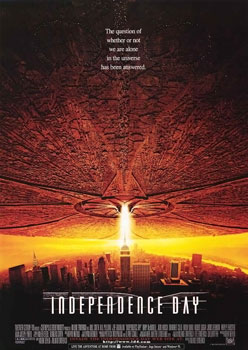
Independence_day_movieposter

In my latest article for TomDispatch.com, I focus on the “alien” nature of U.S. military interventions.  Here are some excerpts from my article:

The latest Independence Day movie, despite earning disastrous reviews, is probably still rumbling its way through a multiplex near you. The basic plot hasn’t changed: ruthless aliens from afar (yet again) invade, seeking to exploit our precious planet while annihilating humanity (something that, to the best of our knowledge, only we are actually capable of). But we humans, in such movies as in reality, are a resilient lot. Enough of the plucky and the lucky emerge from the rubble to organize a counterattack. Despite being outclassed by the aliens’ shockingly superior technology and awe-inspiring arsenal of firepower, humanity finds a way to save the Earth while — you won’t be surprised to know — thoroughly thrashing said aliens.

Remember the original Independence Day from two decades ago? Derivative and predictable it may have been, but it was also a campy spectacle — with Will Smith’s cigar-chomping military pilot, Bill Pullman’s kickass president in a cockpit, and the White House being blown to smithereens by those aliens. That was 1996. The Soviet Union was half-a-decade gone and the U.S. was the planet’s “sole superpower.” Still, who knew that seven years later, on the deck of an aircraft carrier, an all-too-real American president would climb out of a similar cockpit in a flight suit, having essentially just blown part of the Middle East to smithereens, and declare his very own “mission accomplished” moment?

In the aftermath of the invasion of Afghanistan and the “shock and awe” assault on Iraq, the never-ending destructiveness of the wars that followed, coupled with the U.S. government’s deployment of deadly robotic drones and special ops units across the globe, alien invasion movies aren’t — at least for me — the campy fun they once were, and not just because the latest of them is louder, dumber, and more cliché-ridden than ever. I suspect that there’s something else at work as well, something that’s barely risen to consciousness here: in these years, we’ve morphed into the planet’s invading aliens.

Think about it. Over the last half-century, whenever and wherever the U.S. military “deploys,” often to underdeveloped towns and villages in places like Vietnam, Afghanistan, or Iraq, it arrives very much in the spirit of those sci-fi aliens. After all, it brings with it dazzlingly destructive futuristic weaponry and high-tech gadgetry of all sorts (known in the military as “force-multipliers”). It then proceeds to build mothership-style bases that are often like American small towns plopped down in a new environment. Nowadays in such lands, American drones patrol the skies (think: the Terminator films), blast walls accented with razor wire and klieg lights provide “force protection” on the ground, and the usual attack helicopters, combat jets, and gunships hover overhead like so many alien craft. To designate targets to wipe out, U.S. forces even use lasers!

In the field, American military officers emerge from high-tech vehicles to bark out commands in a harsh “alien” tongue. (You know: English.) Even as American leaders offer reassuring words to the natives (and to the public in “the homeland”) about the U.S. military being a force for human liberation, the message couldn’t be more unmistakable if you happen to be living in such countries: the “aliens” are here, and they’re planning to take control, weapons loaded and ready to fire.

Other U.S. military officers have noticed this dynamic. In 2004, near Samarra in Iraq’s Salahuddin province, for instance, then-Major Guy Parmeter recalled asking a farmer if he’d “seen any foreign fighters” about. The farmer’s reply was as simple as it was telling: “Yes, you.” Parmeter noted, “You have a bunch of epiphanies over the course of your experience here [in Iraq], and it made me think: How are we perceived, who are we to them?”

Americans may see themselves as liberators, but to the Iraqis and so many other peoples Washington has targeted with its drones, jets, and high-tech weaponry, we are the invaders.

Do you recall what the aliens were after in the first Independence Day movie? Resources. In that film, they were compared to locusts, traveling from planet to planet, stripping them of their valuables while killing their inhabitants. These days, that narrative should sound a lot less alien to us. After all, would Washington have committed itself quite so fully to the Greater Middle East if it hadn’t possessed all that oil so vital to our consumption-driven way of life? That’s what the Carter Doctrine of 1980 was about: it defined the Persian Gulf as a U.S. “vital interest” precisely because, to quote former Deputy Secretary of Defense Paul Wolfowitz’s apt description of Iraq, it “floats on a sea of oil.”

Consider it an irony of alien disaster movies that they manage to critique U.S. military ambitions vis-à-vis the “primitive” natives of far-off lands (even if none of us and few of the filmmakers know it). Like it or not, as the world’s sole superpower, dependent on advanced technology to implement its global ambitions, the U.S. provides a remarkably good model for the imperial and imperious aliens of our screen life.

Read more at TomDispatch.com.