

W.J. Astore
I’ve been writing for TomDispatch.com and the amazing Tom Engelhardt since 2007. When I wrote my first article, “Saving the Military from Itself: Why Medals and Metrics Mislead,” I never imagined I would come to write 37 more for Tom and his site over the next eight years. TomDispatch has given me an opportunity to write about topics like the elimination of nuclear weapons, the rise of American militarism, the perils of calling all troops in the military “heroes,” the over-hyping of American military prowess by our leaders, and many others. In all my articles, I hope I’ve offered a contrary perspective on the U.S. military as well as American culture, among other subjects.
My latest article, America’s mutant military, is a personal odyssey of sorts. I reflect on how the military has changed since I entered it in 1985. Today’s post-Cold War U.S. military is, to put it bluntly, not as I envisioned it would be as the Berlin Wall was falling and the Soviet Union was collapsing. Today’s military still has its Cold War weaponry and mindset largely intact, even as a new “mutant” military has emerged, based on special ops and connected to corporations and intelligence agencies, a military hybrid that is often shrouded in secrecy even as it’s celebrated openly in Hollywood action films.
My essay runs 2300 words, so I encourage you to read all of it at TomDispatch. What follows are a few excerpts from it:
It’s 1990. I’m a young captain in the U.S. Air Force. I’ve just witnessed the fall of the Berlin Wall, something I never thought I’d see, short of a third world war. Right now I’m witnessing the slow death of the Soviet Union, without the accompanying nuclear Armageddon so many feared. Still, I’m slightly nervous as my military gears up for an unexpected new campaign, Operation Desert Shield/Storm, to expel Iraqi autocrat Saddam Hussein’s military from Kuwait. It’s a confusing moment. After all, the Soviet Union was forever (until it wasn’t) and Saddam had been a stalwart U.S. friend, his country a bulwark against the Iran of the Ayatollahs. (For anyone who doubts that history, just check out the now-infamous 1983 photo of Donald Rumsfeld, then special envoy for President Reagan, all smiles and shaking hands with Saddam in Baghdad.) Still, whatever my anxieties, the Soviet Union collapsed without a whimper and the campaign against Saddam’s battle-tested forces proved to be a “cakewalk,” with ground combat over in a mere 100 hours.
Think of it as the trifecta moment: Vietnam syndrome vanquished forever, Saddam’s army destroyed, and the U.S. left standing as the planet’s “sole superpower.”
Post-Desert Storm, the military of which I was a part stood triumphant on a planet that was visibly ours and ours alone. Washington had won the Cold War. It had won everything, in fact. End of story. Saddam admittedly was still in power in Baghdad, but he had been soundly spanked. Not a single peer enemy loomed on the horizon. It seemed as if, in the words of former U.N. ambassador and uber-conservative Jeane Kirkpatrick, the U.S. could return to being a normal country in normal times.
[But it didn’t happen. With the Soviets gone, the U.S. military itself was now uncontained, and many hankered to use its power to achieve America’s goal of global power.]
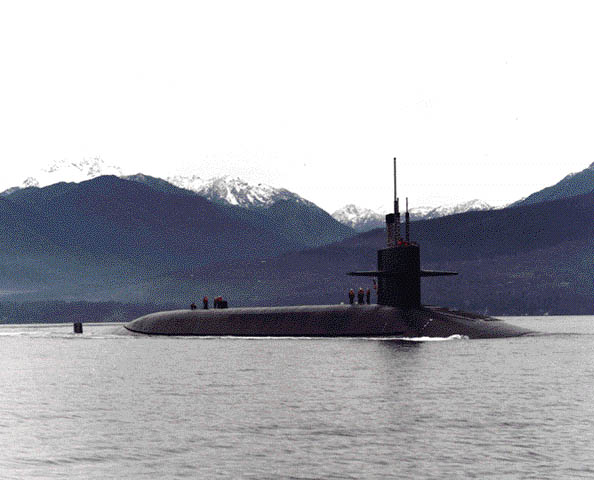
Yet even as civilian leaders hankered to flex America’s military muscle in unpromising places like Bosnia and Somalia in the 1990s, and Afghanistan, Iraq, Libya, Pakistan, and Yemen in this century, the military itself has remained remarkably mired in Cold War thinking. If I could transport the 1990 version of me to 2015, here’s one thing that would stun him a quarter-century after the collapse of the Soviet Union: the force structure of the U.S. military has changed remarkably little. Its nuclear triad of land-based ICBMs, submarine-launched SLBMs, and nuclear-capable bombers remains thoroughly intact. Indeed, it’s being updated and enhanced at mind-boggling expense (perhaps as high as a trillion dollars over the next three decades). The U.S. Navy? Still built around large, super-expensive, and vulnerableaircraft carrier task forces. The U.S. Air Force? Still pursuing new, ultra-high-tech strategic bombers and new, wildly expensive fighters and attack aircraft — first the F-22, now the F-35, both supremely disappointing. The U.S. Army? Still configured to fight large-scale, conventional battles, a surplus of M-1 Abrams tanks sitting in mothballs just in case they’re needed to plug the Fulda Gap in Germany against a raging Red Army. Except it’s 2015, not 1990, and no mass of Soviet T-72 tanks remains poised to surge through that gap.
[Along with the persistence of America’s “Cold War” military, a new military emerged, especially in the aftermath of 9-11.]
In 2015, so many of America’s “trigger-pullers” overseas are no longer, strictly speaking, professional military. They’re mercenaries, guns for hire, or CIA drone pilots (some on loan from the Air Force), or warrior corporations and intelligence contractors looking to get in on a piece of the action in a war on terror where progress is defined — official denials to the contrary — by body count, by the number of “enemy combatants” killed in drone or other strikes.
Indeed, the very persistence of traditional Cold War structures and postures within the “big” military has helped hide the full-scale emergence of a new and dangerous mutant version of our armed forces. A bewildering mish-mash of special ops, civilian contractors (both armed and unarmed), and CIA and other intelligence operatives, all plunged into a penumbra of secrecy, all largely hidden from view (even as they’re openly celebrated in various Hollywood action movies), this mutant military is forever clamoring for a greater piece of the action.
While the old-fashioned, uniformed military guards its Cold War turf, preserved like some set of monstrous museum exhibits, the mutant military strives with great success to expand its power across the globe. Since 9/11, it’s the mutant military that has gotten the lion’s share of the action and much of the adulation — here’s looking at you, SEAL Team 6 — along with its ultimate enabler, the civilian commander-in-chief, now acting in essence as America’s assassin-in-chief.
Think of it this way: a quarter-century after the end of the Cold War, the U.S. military is completely uncontained.
[And an uncontained military, in a country that celebrates its troops as heroes, that boasts of itself as having the best military in all of recorded history, does not bode well for America’s democratic future.]
Go to TomDispatch.com to read the entire article. Thank you!
 Bracing Views