The scary part is that the official death toll of 76,134 is an undercount. So many bodies remain under rubble or just plain obliterated by bombs.
Of course, the so-called cease fire in Gaza is anything but as Israel continues its policy of not-so-selective killing and slow strangulation. If you suggest genocide is wrong, the predictable response from the Israeli-U.S. government is that you’re a Hamas terrorist sympathizer and probably an anti-Semite as well (the latter is true even if you’re Jewish).
Coincidentally, I just took a drink after typing that and started choking. OK, maybe that wasn’t a coincidence.
I remember during Catholic service we’d sing the hymn: “Whatsoever you do to the least my brothers, that you do unto me.” I guess they’re just empty words to all those avowed Christians in the government.
Back in June of 2023, I wrote a letter to my archdiocese in response to a request for money. (I am a lapsed Catholic who has in the past given money to the Church.) Here is the letter I wrote, with some follow-on thoughts:
*****
June 2023
Most Reverend ***
Archdiocese of Boston
Dear Reverend ***
I received your Catholic Appeal funding letter dated June 1st. I won’t be contributing…
[Well into the 1990s,] I took my Catholic faith seriously; in fact, my master’s thesis at Johns Hopkins, which examined Catholic responses to science in the mid-19th century, especially Darwinism, geology, and polygenism, was published in the Catholic Historical Review. But scandals involving the Church drove me to question my commitment to Catholicism and especially its patriarchal hierarchy, which was so intimately involved in the coverups of crimes committed against innocents.
I grew up in Brockton, Mass., where the archdiocese assigned a predatory priest to our church of St. Patrick’s. His name was Robert F. Daly. He abused minors and was eventually defrocked by the Church, but far too late. (See the Boston Globe, 6/14/11.)
When I attended St. Patrick’s in the 1970s, Father Daly was teaching CCD. A sexual predator was attempting to teach young people the meaning of Christian love. He had a decent definition for love, something like “giving, without expecting anything in return.” Selfless love, I suppose. Tragically, he obviously failed catastrophically to practice what he preached.
Fortunately, I was never abused. I was supposed to have one meeting with him, alone, that was cancelled at the last minute. I’d like to imagine God was looking out for me on that day, but that’s absurd. Why wasn’t God looking out for all those children abused by Catholic clergy like Father Daly?
To be blunt, I am thoroughly disgusted by the moral cowardice of the archdiocese in confronting fully its painful legacy of failing to protect vulnerable children against predatory priests like Father Daly. Shame on the Church.
The Bible says that all sins may be forgiven except those against the Holy Spirit. This is supposed to refer to a stubborn form of blasphemy. Yet I truly can’t think of a worse sin committed by the Church than to allow innocent children to suffer at the hands of predators disguised as “fathers.”
I sincerely hope you are doing something to change the Church, to reform it, to save it. I fear the Church has not fully confessed its sins, and in that sense it truly does not deserve absolution from the laity. Far too often, the Church has placed its own survival ahead of Truth, ahead of Christ as the Way and the Truth, and thus the Church has washed its hands of its crimes, as Pontius Pilate did.
I am staggered by this betrayal.
Perhaps you have truly fought to reform the Church. If you have not yet done so, perhaps you will soon find the moral courage. I pass no judgment on you. Judge not, lest you be judged. But I do find the Church to be wanting.
Recalling scripture, if the Church does not abide in Christ, should it not be cast into the fire and be consumed?
I am sorry to share such a bleak message with you. I find the Church’s decline to be truly tragic because we need high moral standards now more than ever. Yet the Church is adrift, consumed by petty concerns and obedience to power. Just one example: The U.S. Church cannot even clearly condemn the moral depravity of genocidal nuclear weapons!
I realize I am seriously out of step with today’s Catholic church. I believe priests should be able to marry if they so choose. I believe women who have a calling should be ordained as priests. I believe the Church’s position on abortion is absolutist and wrong. More than anything, I believe the Church is too concerned with itself and its own survival and therefore is alienated from the true spirit of Christ, a spirit of compassion and love.
Unlike you, I cannot in good conscience claim to be “devotedly yours in Christ.” But I am sincere in wishing you the moral courage you will need to manifest your devotion in directions that will help the least of those among us the most. For I well recall the song we sang in our youth: Whatsoever you do for the least of my brothers, that you do unto Me.
Sincerely yours
*****
I’m happy to say I get a thoughtful response from a local bishop, who assured me the Church was serious about reform, was doing all that it could to eliminate pedophilia and to punish those who were guilty of it, and that therefore the Church no longer needed outside policing.
It was the last statement that puzzled me. The Church disgraced itself precisely because it had swept decades of crimes under the rug. Hadn’t the Church learned that earnest attempts at reform by insiders were necessary but not sufficient?
So I wrote back these comments to the bishop:
I will say this as well: I don’t think the Church can police itself from within. That’s what produced the scandals to begin with. It’s like asking the Pentagon to police itself, or police forces with their “internal affairs” departments.
The Church has to open itself to being accountable to the laity, not just to reformers like yourself. Thus the Church has to cede power and a certain measure of autonomy, and institutions are loath to do this, for obvious reasons. Meanwhile, the Church is being weakened by lawsuits, as people seek compensation (and perhaps a measure of vengeance) for sins of the past.
Skeptics would reply that it took a huge scandal with major financial implications to force the Church to do the right thing.
For too long, the Church tolerated these crimes. The Church is hardly unique here. Think of sexual assaults within the military (notably during basic training), or think of the Sandusky scandal at Penn State, where Joe Paterno clearly knew of (some) of Sandusky’s abuse, yet chose not to take adequate action. (I was at Penn College when that scandal broke.)
The challenge, as you know, is that the Church is supposed to be a role model, an exemplar of virtue. Priests hold a special place of trust within communities and are therefore held in especially high regard.
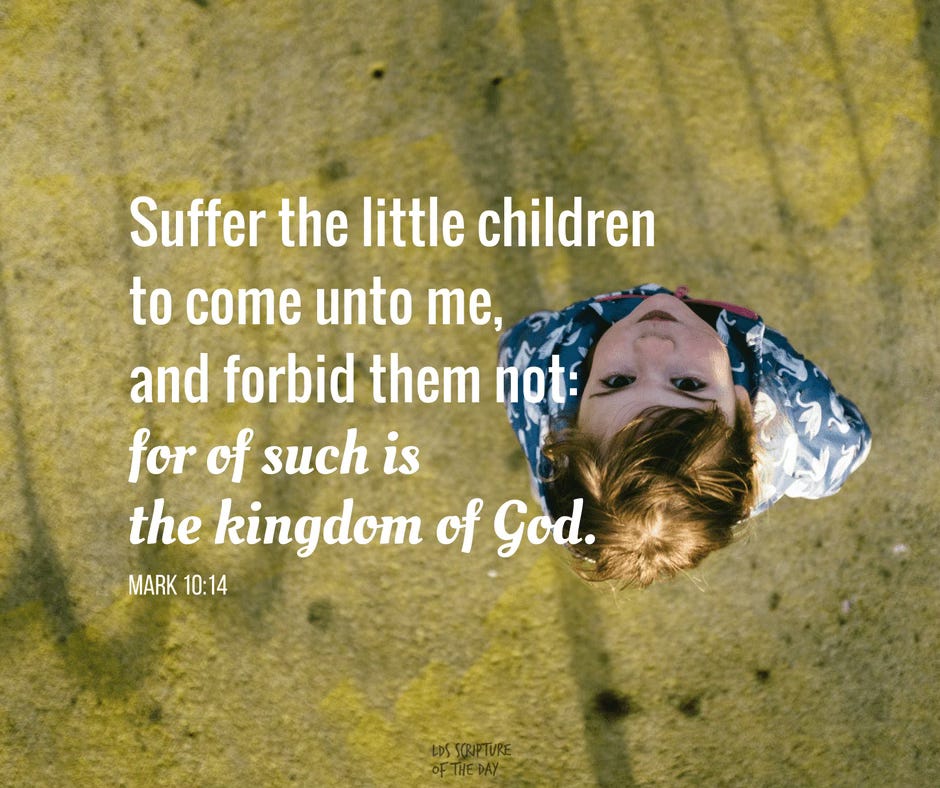
Image courtesy of the Mormon (LDS) Church
As my older brother-in-law explained to me, if a young boy or girl accused a priest of assault in the 1950s or 1960s, few if any people would have believed them. Indeed, the youngster was likely to be slapped by a parent for defaming a priest. That moral authority, that respect, was earned by so many priests who had done the right thing, set the right example. It was ruined by a minority of priests who became predators and a Church hierarchy that largely looked the other way, swept it under the rug, or otherwise failed to act quickly and decisively.
As you say, the Church has learned. It is now better at policing itself. The shame of it all is that it took so much suffering by innocents, and the revelations of the same and the moral outrage that followed, to get the Church to change.
*****
Friends of mine who are still firm believers tell me, correctly, that the Church is much more than the hierarchy. It certainly shouldn’t be defined by the grievous sins of a few. Still, I can’t bring myself to rejoin a Church that so grievously failed the most innocent among us.
There’s a passage in the New Testament where Christ says: “Suffer little children to come unto me.” As in, let the children come, I will bless them, for they in their innocence and humility are examples to us all. He didn’t teach, let the children suffer, molest them and exploit them, then cover it all up.
I still have respect for priests who exhibit the true fruits of their calling. I still find the teachings of Christ to be foundational to my moral outlook. But I find the Church itself to be unnecessary to the practice of my faith, such as it is. I do hope the Church truly embraces transparency and service; I hope it recalls as well its need to preach life and love and peace, as we need these now more than ever.
Shouldn’t anyone who’s sane be a peace activist? And shouldn’t we question the sanity — or at least the motives — of anyone who’s constantly advocating for more spending on weapons and war?
How do we change the narrative? How do we return to Christ’s idea of “blessed are the peacemakers”?
The obstacles are many. The national security state is immensely large and incredibly powerful. The mainstream media is a big problem since it’s been captured by corporations. The few political candidates who advocate for a different path, such as Tulsi Gabbard or Dennis Kucinich, get smeared as useful idiots for the “enemy” or dismissed as impractical dreamers by that same corporate media.
Surely, we need many things to effect meaningful change. We need public funding of elections. We need better education focused on questioning and challenging authority. We need better and braver leaders — but will they simply be assassinated like JFK, MLK, and RFK? Among others?
We need to speak up, and we are. We need to enlist religion when we can. True Christianity — true religion — is our natural ally.
We need, as peace activist John Rachel reminded me, to connect cuts in military spending to helping people — that is, we need real peace dividends, “peace checks,” if you will. Rebates to the American people tied directly to much lower spending on wars and weapons.
We need to remember what Master Po said in “Kung Fu”: fear is the only darkness. And thus we need to come into the light.
We need to stop buying guns and start reading books. I once read: “Blessed are the peacemakers, for they shall be called children of God.” I don’t recall blessings being bestowed on weapons and the makers and owners of the same.
There are so many things we need to do. Most of all, I think, is that we need to respect life and our planet, because if we don’t, the human experiment is going to come crashing down, and too many other forms of life on our planet will be driven to extinction by our own myopic selfishness and folly.
You’ve heard the saying, Power concedes nothing without a demand. We need to demand an end to fear, an end to folly (as with nuclear “modernization” at a cost of $1.7 trillion, never mind the unimaginable costs of a nuclear war).
We need to demand peace.
I think the planet’s oligarchs know the danger. So they work to keep us divided, distracted, and downtrodden. (As I’ve written about here.) If we’re kept divided by partisan BS and rumors of war, distracted by infotainment and the like, and downtrodden by medical and other forms of debt, menial work at starvation wages, and so forth, it’s difficult for people to unite.
We need to unite anyway. Unite to save our planet from ourselves and our destructive impulses. From our greed and selfishness.
There was a time when we humans congratulated ourselves as being made in the image of God. When we saw the earth as God’s creation that we should revere. How do we regain reverence for each other and for this wonder-filled planet of ours, a planet that keeps surprising us with its glories?
We need a collective awakening. A mass movement. One that recognizes that peace is normal and that war is insane, one dedicated to exploration of the world around us rather than its exploitation. One that demands the best from our minds even as it touches our souls. Perhaps that’s overly mystical or utopian or just plain fuzzy, but we need something like it or things are going to get far worse for ourselves and our planet.
My dad was a skeptic. He taught me the saying, never believe anything you read, and only half of what you see. Sound advice in this heavily propagandized world of ours.
Despite my dad’s skepticism, I eventually earned a doctorate in history and wrote books in which I pretended to know what was going on in the past. Or, that’s the way my dad would have put it. To my claims he would sometimes say, “Were you there, Charlie?” In other words, if you weren’t a direct witness to the event in question, how can you say what really happened? In fact, even if you did witness it, are you sure of what you saw or heard or sensed? Our senses can be unreliable for all sorts of reasons, such as fatigue, bias, distractions, and so on.
How do we know what we know? Can we ascertain truth? “Truth — what is truth?” Pontius Pilate asked Christ. Small wonder that so many people seek truth through religion when there’s so little of it available in non-religious realms. (Of course, religion operates on faith, not on truth per se, though those who believe see faith as a way to truth, perhaps as a form of truth.)
I think the most “true” thing in my life, the thing I doubt least of all, is the love of my closest friends and family. Once again, my dad had something to say here. He believed that you’d be lucky to have a handful of friends in your life who truly cared about you, who’d be there for you no matter what, who’d take a bullet for you, as my dad put it. And, let’s face it: not many Facebook “friends” fit my dad’s definition here!
So, I suppose my dad taught me to question received “truths” and also to ponder what real friendship is all about. The latter shouldn’t be easy; it’s not a trivial matter of clicking “friend” on a social media site. Friends are there for you, my dad explained, they are sympathetic, they are sacrificial, because in some sense they love you.
Which leads me back to Christ, friend of humanity, who was sympathetic to our human plight in all its zaniness and sordidness and who nevertheless sacrificed himself for us. How many of us think of Christ as the Ultimate Friend? For that’s what he was and is, if you believe in him.
I was raised Catholic by my dad (my mom didn’t go to church, but that’s another story). My dad, the radical skeptic, had faith in the Church and in Christ. I have no faith in the Church, sadly, but I do have faith in Christ and his teachings, which to me show us a path toward the truth in the form of a better life, a more compassionate and generous one.
Today, we find ourselves immersed in a matrix of lies, or “alternative truths” if you prefer. My dad had, I think, the way out. He taught me not to believe too easily, not to be glib, even as he showed me through his own example what living a life of value was about.
Be radically skeptical, yes. But believe in what is right; seek truth and recognize its demands on you. (Truth is rarely easy, especially truth about oneself.) And then manifest it as best you can.
It’s a tall order, dad, and I still have a long way to go. We all do, for it’s really all about the quest, not the destination. Seek and ye shall find are words that comfort me. Surely I heard them first standing next to my dad in church, listening to the gospel, the good news, the teachings of Christ.
But no man, no church, no entity has a monopoly on truth. It can be found in other religions and outside of religion. It can be found within and without. All I know — or think I know — is that it won’t be easy. But what of value is?
Perhaps my favorite biblical verse comes from the New Testament in Luke 17:21 when Christ says to the Pharisees, “The kingdom of God is within you.” You could spend a lifetime thinking about that.
Recently, I googled it and discovered the Catholic church has tried to demystify it, retranslating it as “the Kingdom of God is in the midst of you” and suggesting Christ here is trying to awaken the Pharisees to his presence and to recruit more apostles. So much for looking within at this most profound of Christ’s teachings.
I have many gripes with “modern” translations of the Bible, which largely diminish, even despoil, the poetry of older translations like the KJV (King James Version) or the even earlier translation by William Tyndale.
So I broke out my Catholic Bible from 1962; it renders the passage as “For behold, the kingdom of God is within you.” My NIV Bible from 1984 is the same, except there’s a footnote that says “within” could be translated as “among.” Is nothing sacred, all you wannabe translators and all you organized church tools?
Christ’s teaching that the kingdom of God is within you is a mystery. What does it mean? This is what it means to me. In trying to understand God, I think we humans are really trying to understand ourselves. The vast power of our own minds and imaginations. It’s not God that’s limitless: it’s our conceptions of what god (or gods) can be. But even as we humans imagine and conceive of god, we become jealous of our mental creations and then start lording them over others. We conceive of god(s) as jealous and vindictive and violent because we are.
Some will immediately say that I blaspheme; that I’m saying that humans are really god in the sense we create god. Of course, the Bible teaches the opposite: that God created us.
It is of course a matter of faith but think about this. We’re told we’re made in God’s image (even though we’ve been so busy creating him in our image). Surely this doesn’t refer to our bodies, which age and decay. Surely this refers to our minds, our dreams, our imaginations, which viewed in the aggregate across humanity continue to grow, to discover new things, to conceive of new ideas. To create. As humans, we create. And when we create, we ignite the divine spark within us.
Yet we are obviously not god. For I was taught God is good. God is love. And we humans are definitely not consistently good or loving. Quite the opposite. But of course we can displace our sins onto a fallen angel who corrupts us: Lucifer. It’s not our fault, or not entirely ours, right? The devil made me do it.
I prefer to think of god as the absolute best of us, the most mysterious part of us, our ability to create, to conceive of new things, to dream, to imagine. That human ability seems god-like in the sense it’s truly unlimited. And if it’s not unlimited, how would we know it wasn’t?
It’s not time to worship ourselves in place of god. Rather, as Abraham Lincoln said in a different context, it’s time to start looking to the better angels of our nature. It’s time to tap the kingdom of God within us. And to share it without jealousy or rancor or exclusivity.
And not only within us; the kingdom of God is also all around us. Humans are an incredibly destructive lot. We must not think much of God when we’re so busy despoiling and destroying her creation.
The sacred is within and without. And if we start thinking that way, and have a proper reverence for the sacred, we can focus on being constructive rather than destructive. We can honor the god within us by cherishing and saving the god without us. That means putting life first, all forms of life, including our own, as manifestations of the divine spark.
Postscript 1: I hope God forgives my random capitalization of her/his name.
Postscript 2: A friend notes how much ink’s been spilled throughout history contemplating God’s nature, the lives of saints, and so on. Theology used to be “the queen of the sciences.” I sent this back to him:
One thing about studying theology with such fervor — you probably won’t invent weapons to blow the world into a literal Armageddon from above. No — you’ll just imagine Armageddon coming from above. That said, it’s also true that religion can be used so powerfully to condone the murderous mistreatment of others. Knowledge is power, after all, even (especially?) knowledge of god [whatever “knowledge of god” means]. God is good, but humanity? Not so much.
In Christianity, God sent a Gospel or “good news.” He told us to love one another. How has such a simple message of goodness and giving become so badly twisted and so often ignored?
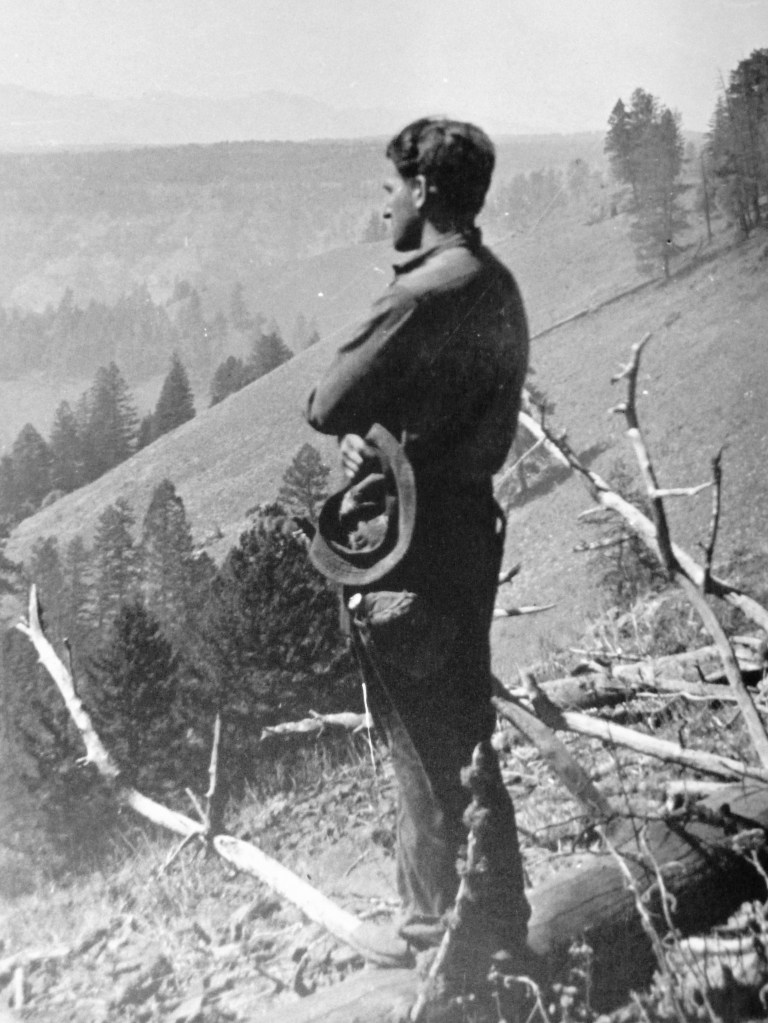
My 1st trip to the Continental Divide, about 35 years ago
Today, I want to share a bracing view, courtesy of my mother. She converted to Catholicism (from Protestantism) when she married my dad, but she wasn’t much of a church-goer. When my dad suggested she should accompany him to mass on Sundays, she had a telling rejoinder:
You worry about your soul — I’ll worry about mine.
Excellent advice. Mom had a way of speaking that cut to the chase.
When it comes to religion, too many Americans seek to push their beliefs on others. And often there’s some guilt or a veiled threat in the push. “A good person goes to church.” “These are holy days of obligation.” “You should go to set a good example for the kids.” “Don’t forget judgment day — God is looking down on you right now.”
My mom was having none of that. She also didn’t need church to do the right thing. She was kind and generous and, in my opinion, followed the example of the Gospel without making airs about it.
When it comes to religion, few people want to be pushed into attending “mandatory” practices. Indeed, I’ve always liked Christ’s teachings on praying to God in private, rather than standing on a street corner and shouting your beliefs to the masses. Speaking of which, I once witnessed a man doing exactly that in Oxford, England, shouting on the street, proclaiming the good news. When someone complained, he cited a Biblical passage that enjoined him to proclaim his faith in a loud voice so that others might follow in his footsteps.
That’s a problem with the Bible: So many passages, so many messages, so many interpretations.
Still, I persist in believing in my mother’s aphorism: Focus on the health of your own soul and its relationship to whatever higher power or higher ideals you believe in. Don’t focus on the souls and the beliefs and practices of others.
Or, as Christ put it, “Judge not — lest you be judged.”






 Bracing Views