A Pilot in the Cockpit Is a Major Win for My Old Service
Recent Air Force projects have not been entirely successful, to put it gently. The F-22 Raptor was never built in the quantities the Air Force desired, nor was the B-2 stealth bomber. The F-35 has proven to be a disappointment, an overpriced “Ferrari” by the Air Force’s own admission that spends too much time in the shop even as its price over time continues to soar. The less said about the KC-46 tanker the better, as its future remains very much up in the air (or stuck on the ground, leaking fuel).
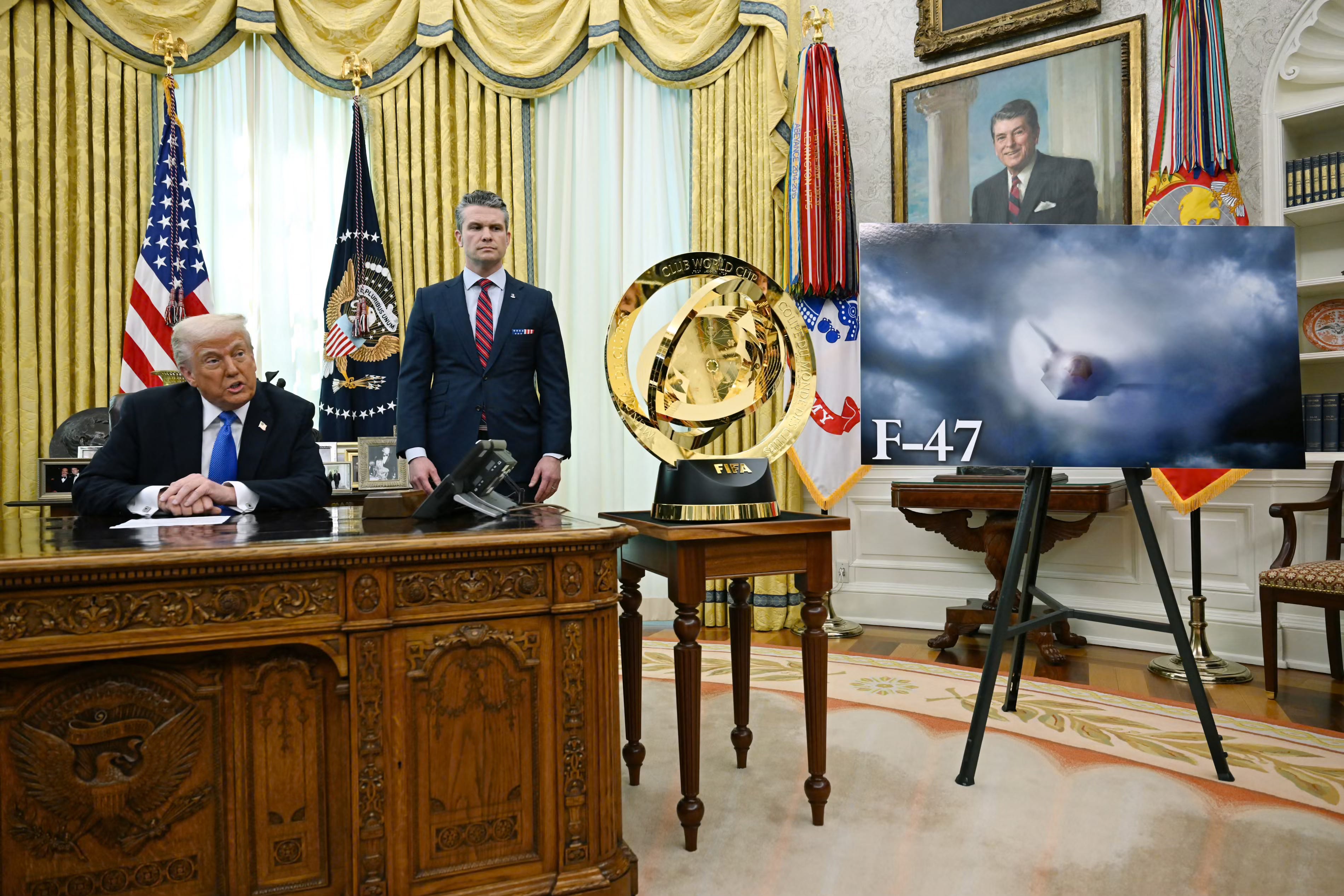
No worries. The Air Force and Boeing have been rewarded for their stellar performance with a new jet announced by President Trump yesterday, the F-47. (I don’t know what happened to the F-36 through 46 models.)
Look how badass that F-47 “bird” looks in that artist’s depiction!
Its key attribute, besides the usual hype about stealth and ultra-powerful engines and super-sensors and the like, is that it’s got a human pilot in the cockpit. This wasn’t a foregone conclusion, given Elon Musk’s belief in drones, whether fully automated or flown by pilots on the ground, at a distance. Keeping men and women in the cockpit was, is, and will always remain the most important goal of the Air Force, built as it is around the allure of pilots as masters of the air.
An interesting feature of this “6th generation” program is that the pilot will allegedly be able to control autonomous drones acting as “loyal wingmen” to the piloted F-47. That complexity should add scores of billions to the eventual price tag.
Trump always likes to boast that stealth planes like the proposed F-47, which have a low RCS, or radar cross section, will literally be invisible. The enemy will never see the F-47 coming, Trump said, jumping on board the hype train. Meanwhile, Boeing, the main contractor for the F-47, is already reaping rewards as its stock price has climbed at Mach 2 in the aftermath of Trump’s announcement.
The initial budget request of $20 billion will soon rocket skyward as the usual cost overruns kick in their afterburners. The Air Force promises the F-47 will cost less than the F-22 per unit, but if you believe that, take a look at the rising costs of the B-2, or the F-35, or the KC-46.
America may be a shitstorm today, but no other country burns through money for needless warplanes than the great USA. You may have stellar bullet trains, China, but do you have invisible 6th generation air supremacy jets? I thought not. USA! USA!
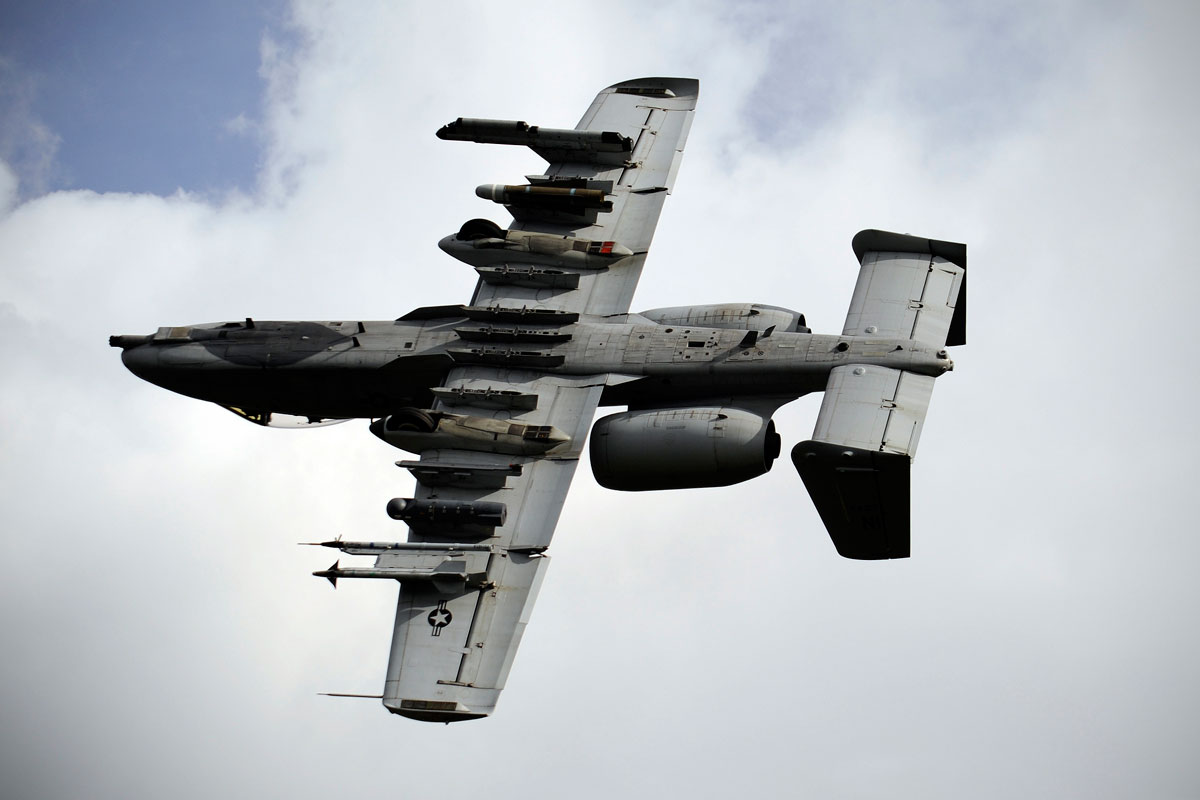
You can hang a lot more weaponry from an A-10 Warthog (vintage 1970s) than you can from a modern F-35
W.J. Astore
Is Donald Trump putting coal in Lockheed Martin’s Christmas stocking?
Trump has sent another tweet about the F-35 jet fighter (Lockheed Martin is the primary contractor), this time asking Boeing to price out a comparable F-18 Super Hornet as a possible replacement for that jet. Trump’s tweet caused Lockheed Martin shares to dive even as Boeing shares climbed.
Trump is right to pressure Lockheed Martin on the F-35, though I’m not sure tweets are the best way to do this. I remember planning for the F-35 twenty years ago when I was on active duty in the Air Force. The F-35 Joint Strike Fighter was supposed to be a relatively low cost fighter/attack aircraft that would meet Air Force, Navy, and Marine needs. Back then, the flyaway cost was estimated at $40 million per plane, more expensive than the F-16 but roughly equivalent to the F-15E “Strike Eagle.” The current flyaway cost is roughly $200 million per plane,* and even higher for the Marine Corps version with its vertical landing/short takeoff capacity.
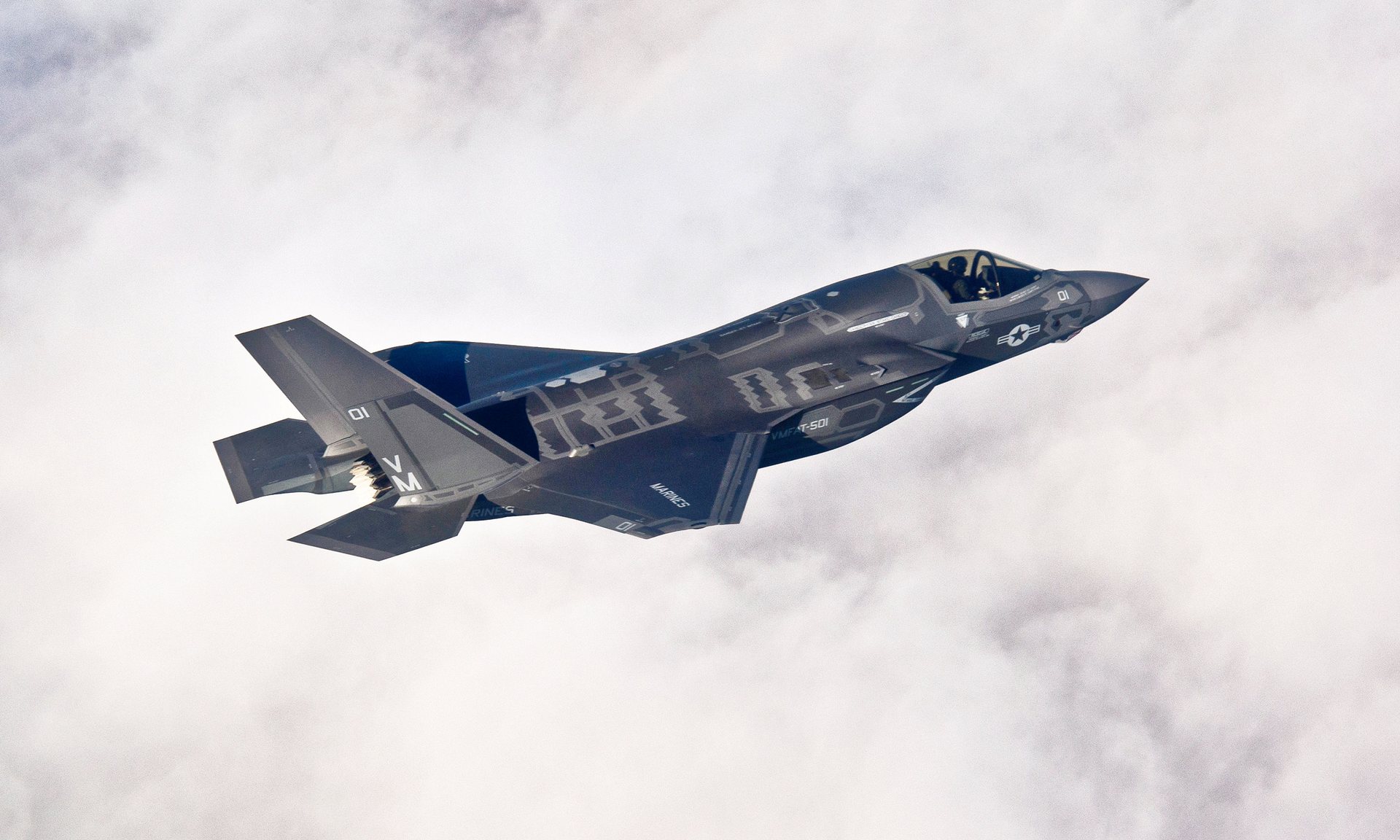
The F-35: Stealthy but expensive, with a long history of cost overruns
What happened? Everything went wrong as each service piled requirements onto the F-35 and all kinds of exotic features were added to it. Stealth capability. Loads of special software featuring millions of lines of code. Unique (and expensive) helmets for its pilots. Vertical landing/short takeoff capacity for the Marines, which drove an airframe configuration that made it less maneuverable for the Air Force. In short, the F-35 became like a Swiss army knife, featuring lots of tools and moving parts. Sure, in a pinch a Swiss army knife can be used as a screwdriver or what have you, but most of the time what you really need is the best screwdriver for the job.
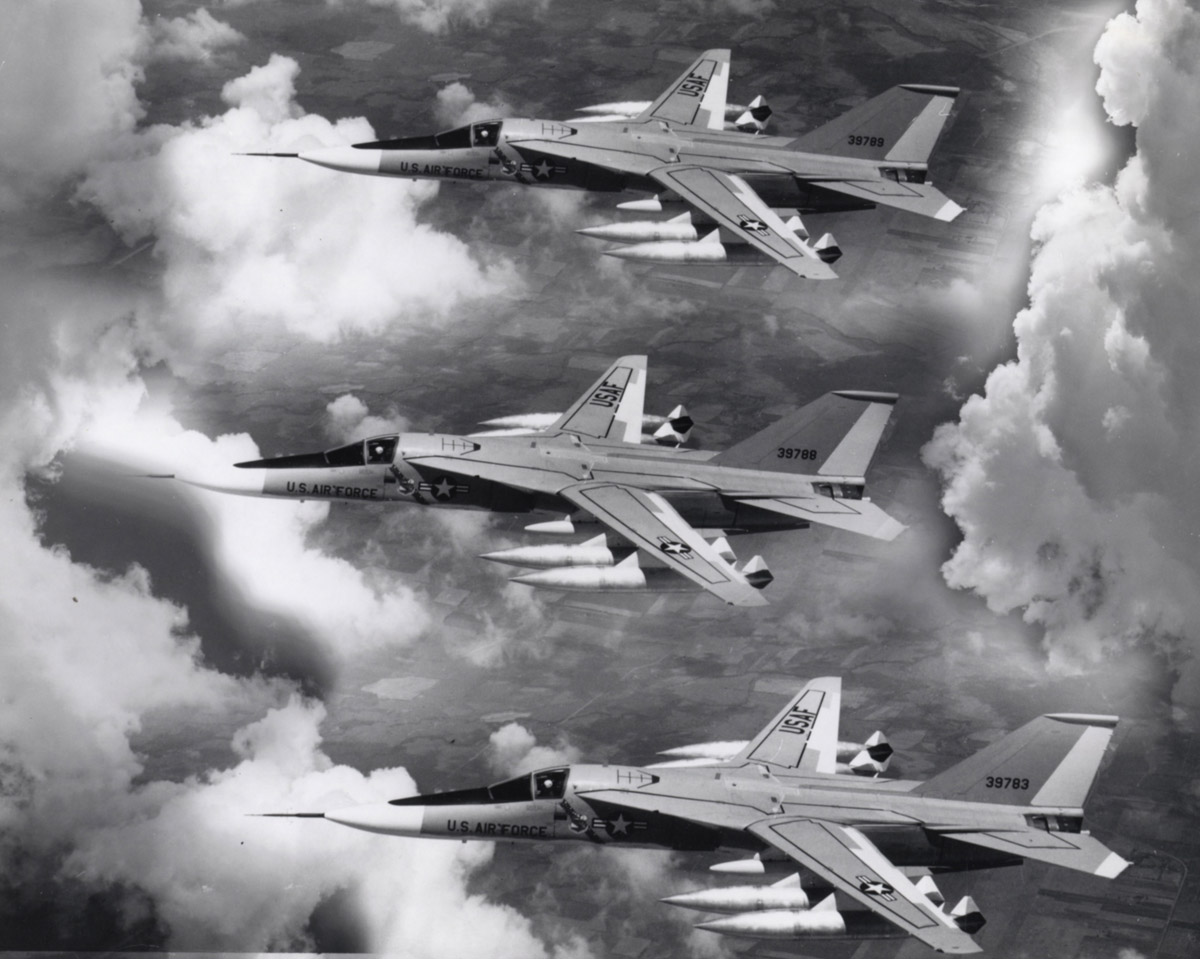
The F-35 is reminiscent of another ill-fated effort to build a jet acceptable to all the services: the F-111 “swing-wing” program of the 1960s.
Big and ungainly, the F-111 was mainly used as a bomber and electronics warfare plane
The Navy never deployed it, and the Air Force was never that happy with it, converting it to a fighter/bomber and an electronics warfare plane. The Navy went on to build its own fighter jet, the F-14, even as the Air Force built its fighter jet, the F-15. Then the Air Force and Navy got two decent fighter/attack jets, the F-16 and F-18, out of the lightweight fighter competition.**
Here’s the thing: Although jets like the F-15 and F-18 are not stealthy, they are very effective, especially when updated with the latest weaponry and avionics and flown by skilled pilots. Meanwhile, highly effective UAVs (drones) have emerged, e.g. Predators and Reapers, with long loiter times and no risk of U.S. casualties. To put it bluntly, does the U.S. really need the F-35, especially given its high cost and underwhelming performance?
Back to Donald Trump. Is he bluffing when he threatens to buy Boeing-made F-18s instead of the F-35? Is he posturing to get Lockheed Martin to cut the price of the F-35 (which, at this late stage of its development, may not even be possible)? One thing is certain: A lot of good American jobs are riding on Trump’s tweets. Expect Lockheed Martin to rally its Congressional allies to defend the program. The plane’s multitude of contracts were deliberately spread throughout the 50 states to gain as much Congressional support as possible.
For a little fun, go to the Lockheed Martin website at the following link:
Let’s put in Pennsylvania. Here’s what you get: 41 supplier locations, 2100 jobs, $172.5M in economic impact. How about New York? 77 suppliers, 8160 jobs, $695.2M in economic impact. How about Bernie Sanders’s state of Vermont? 3 suppliers, 1410 jobs, $124.5 million in economic impact. Small wonder that even Bernie Sanders during the campaign was an F-35 supporter.
One thing is certain: the stealthy F-35 has not evaded Trump’s radar. Whether Trump will shoot it down or simply watch it as it soars on by while burning through piles of money remains to be seen.
Note: For a more detailed report on the F-35’s performance issues, see “The F-35 Stealth Fighter May Never Be Ready for Combat: Testing report contradicts the U.S. Air Force’s rosy pronouncements,” by DAN GRAZIER & MANDY SMITHBERGER, available at this link. In short, the plane’s “requirement” to be stealthy is driving higher costs and lower performance. The plane gobbles gas so it has limited combat endurance. It’s a step backwards in effectiveness, at a much higher cost to the American taxpayer than previous planes such as the F-15, F-16, and A-10. Meanwhile, many of its missions are now filled by drones.
For a counterpoint in favor of the F-35, see this link. The F-35 has unique capabilities; it should, given its price tag. Leaving aside high cost and questionable performance, it’s vital to remember the mission. Are there really missions that only the F-35 can do, or that no plane can do as effectively? But the real case for the F-35 seems to come down to the fact that the program is simply too big to fail; the “sunk costs” are too high; its rivals are too old; and too many American jobs are dependent on it. In short, the U.S. military is stuck with the plane — and the American taxpayer is stuck with the bill.
*Estimates vary about the final flyaway cost since it’s ultimately dependent on how many F-35s are produced. Current estimates for the entire U.S. purchase are $400 billion, with another trillion dollars for maintenance and spares and related costs over the program’s lifetime.
**The most rugged and effective attack jet in the Air Force’s inventory, the A-10, was never much liked by the Air Force; generals have fought to eliminate it in favor of the much less effective F-35, but Congress has actually fought back to keep the A-10, affectionately known as the Warthog, a name and image contrary to the AF fighter pilot mystique of “eagles” and “fighting falcons.”


 Bracing Views