Yesterday, I posted the following comment to a fine article that addressed America’s nuclear triad and the reality that we really only need the Navy’s nuclear submarine force for deterrence:
My old service, the Air Force, will fight for new ICBMs and new “stealth” bombers just because they always want MORE. More money, more bases, more planes, more power. Doesn’t matter if America needs them or not. Doesn’t matter if new nuclear weapons may end the world. What matters is dominance, especially Air Force dominance over the U.S. Navy and Army.
“Nothing can stop the U.S. Air Force” in its budgetary battles at the Pentagon.
Honestly, this is self-evident to me. The Air Force always wants more planes, especially offensive aircraft like fighters and bombers. The Army always wants more divisions, more equipment, a bigger Army. The Navy always wants more ships.
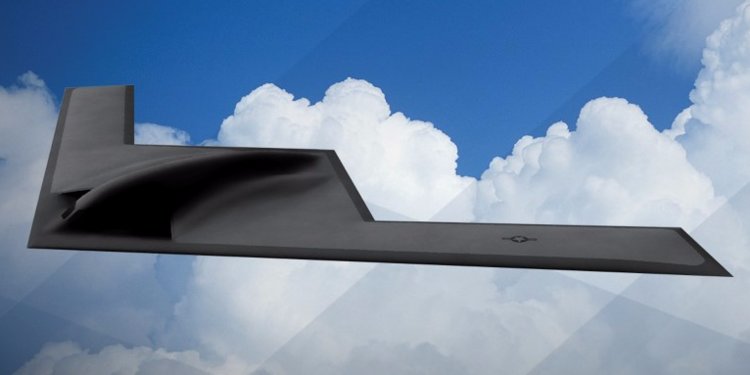
Who cares if it costs $700 million per plane? Or even a billion? It’s a bomber and the Air Force wants it! (The B-21 Raider)
Within the armed services, there are special interests. So, for example, the Navy carrier enthusiasts fight for their hegemony while the submariners fight to keep their slice of the budgetary pie. Within the “old” Army, the combat branches (infantry, armor, artillery) fought to ensure their continued relevance (and money). Now there’s an entire special ops and forces community, a military within the military, along with a new Space Force, a cyber command, various intelligence “communities,” all fighting for more budgetary authority and power.
Everyone always wants MORE. Victory in the U.S. military is measured by who wins the Pentagon budgetary battles, not who wins in Vietnam or Iraq or Afghanistan.
Service parochialism is encouraged at the highest levels and is instilled by the service academies. A friend of mine’s daughter recently received her acceptance letter to West Point. The letter stressed the proud tradition of the Army, and though it mentioned service, it said nothing about the Constitution and the oath of office. Each service academy stresses loyalty to service branch. Duty, honor, country takes a back seat to bleeding Air Force blue or Army green.
Pride in service isn’t necessarily a bad thing, but it can be blinding on issues like building new ICBMs and stealth bombers. The default Air Force position is to support more missiles and bombers “just because.” Because they’re “our” toys, part of “our” mission, bringing with them bases, command billets, influence, and all the rest.
Service parochialism ensures a military that is wasteful, overly conservative, and dysfunctional. Too much bleeding of Army green or Air Force blue has led to too much real bleeding of red.
The Stupidity of the Sentinel ICBM and the B-21 Raider Bomber
My fellow Americans, your government wants to spend nearly $2 trillion over the next 30 years to “modernize” its nuclear arsenal. Modernization, of course, is a euphemism. And the Pentagon actually uses the word “invest” rather than “spend.” The dividends on this “investment” go to the weapons makers, obviously, not to the American people.
Let’s first consider the Sentinel ICBM; the military wants to buy 400+ of these and stuff them in fixed silos in places like Wyoming and North Dakota. Land-based ICBMs were (among other things) obsolete by the 1970s; that’s why the MX was developed as a mobile system under President Jimmy Carter. Fortunately, the shell-game idea of moving nuclear missiles around by truck or rail was too dear and dumb even for the government. You don’t “modernize” that which is obsolete and redundant (and escalatory due to its inherent vulnerability). The smart move here is to eliminate land-based ICBMs.
Speaking as a retired Air Force officer, my old service will always want more of everything, including that which is obsolete. It’s all about budgetary share. No enemy is more to be dominated than the other services, who are also competing for money.
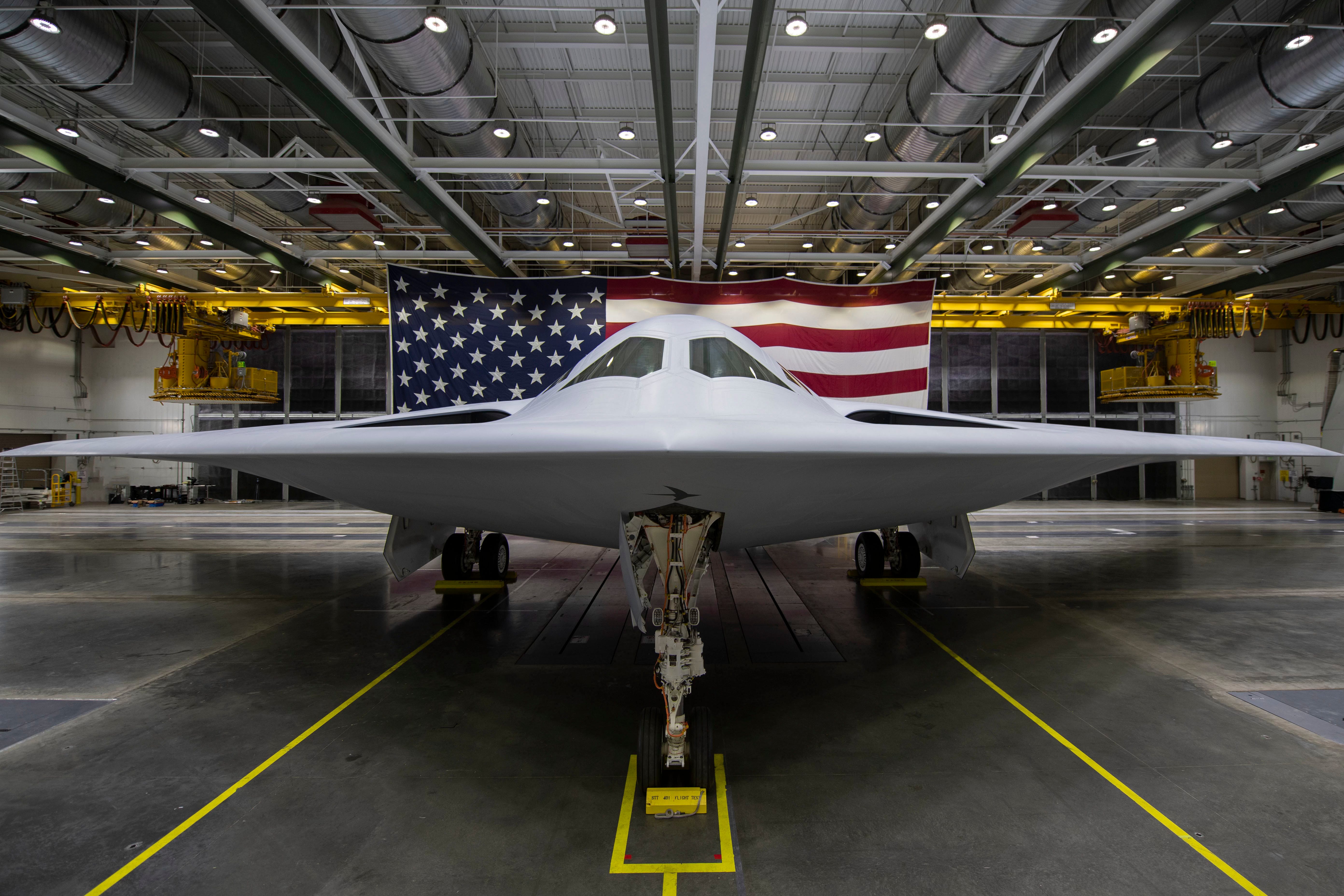
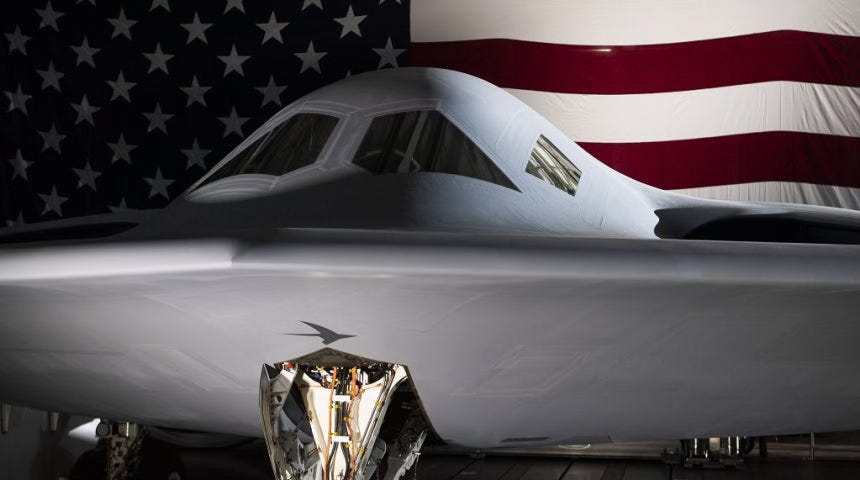
The B-21 Raider, with American flag (Northrop Grumman photo)
Similarly, strategic bombers to drop nuclear bombs (or even to launch cruise missiles) are not needed for nuclear deterrence. The whole idea of “penetrating” strategic bombers was obsolete by the late 1970s, which is why President Carter cancelled the B-1 bomber (it was revived by Ronald Reagan). We simply don’t need more strategic nuclear bombers–but the AF will always want them. If pilots can fly it (even if they have to do it remotely, as with drones), the AF wants it. Who cares if the B-21 will cost roughly $1 billion per plane when it’s finally fielded?
There is no need for the Sentinel or Raider. But the Air Force will fight until doomsday to protect its budgetary authority and the pilot and command billets that come with nuke missile fields and planes.
Let’s never forget the power of the industrial side of the military-industrial complex as well. There are hundreds—even thousands— of billions of dollars at stake here, so of course industry will fight to the end (of all of us) for the money. Weapons makers will spend millions on lobbyists, and millions more to buy politicians, to make billions in return. The profit margin here is better than crypto or most anything, actually.
They say alchemists were wrong that lead could be turned into gold, but every day the lead of bullets is sold, earning gold for the weapons makers, so alchemy is real after all. Now America’s weapons makers are turning radioactive uranium and plutonium into nearly $2 trillion in gold (or paper money, at least), the ultimate alchemical trick.
As a late-stage baby boomer, a child of the 1960s, I grew up dreaming about America’s nuclear triad. You may remember that it consisted of strategic bombers like the B-52 Stratofortress, land-based intercontinental ballistic missiles (ICBMs) like the Minuteman, and submarine-launched ballistic missiles (SLBMs) like the Poseidon, all delivery systems for what we then called “the Bomb.” I took it for granted that we needed all three “legs” — yes, that was also the term of the time — of that triad to ward off the Soviet Union (aka the “evil empire”).
It took me some time to realize that the triad was anything but the trinity, that it was instead a product of historical contingency. Certainly, my mind was clouded because two legs of that triad were the prerogative of the U.S. Air Force, my chosen branch of service. When I was a teenager, the Air Force had 1,054 ICBMs (mainly Minutemen missiles) in silos in rural states like Montana, North Dakota, and Wyoming, along with hundreds of strategic bombers kept on constant alert against the Soviet menace. They represented enormous power not just in destructive force measured in megatonnage but in budgetary authority for the Air Force. The final leg of that triad, the most “survivable” one in case of a nuclear war, was (and remains) the Navy’s SLBMs on nuclear submarines. (Back in the day, the Army was so jealous that it, too, tried to go atomic, but its nuclear artillery shells and tactical missiles were child’s play compared to the potentially holocaust-producing arsenals of the Air Force and Navy.)
When I said that the triad wasn’t the trinity, what I meant (the obvious aside) was this: the U.S. military no longer needs nuclear strategic bombers and land-based ICBMs in order to threaten to destroy the planet. As a retired Air Force officer who worked in Cheyenne Mountain, America’s nuclear redoubt, during the tail end of the first Cold War, and as a historian who once upon a time taught courses on the atomic bomb at the Air Force Academy, I have some knowledge and experience here. Those two “legs” of the nuclear triad, bombers and ICBMs, have long been redundant, obsolete, a total waste of taxpayer money — leaving aside, of course, that they would prove genocidal in an unprecedented fashion were they ever to be used.
Nevertheless, such thoughts have no effect on our military. Instead, the Air Force is pushing ahead with plans to field — yes! — a new strategic bomber, the B-21 Raider, and — yes, again! — a new ICBM, the Sentinel, whose combined price tag will likely exceed $500 billion. The first thing any sane commander-in-chief with an urge to help this country would do is cancel those new nuclear delivery systems tomorrow. Instead of rearming, America should begin disarming, but don’t hold your breath on that one.
A Brief History of America’s Nuclear Triad
It all started with atomic bombs and bombers. In August 1945, the Japanese cities of Hiroshima and Nagasaki were obliterated by two atomic bombs carried by B-29 bombers, ending World War II. However, in the years that followed, as the Cold War with the Soviet Union heated up, the only “delivery system” the military had for its growing thermonuclear arsenal was the strategic bomber. Those were the glory days of the Strategic Air Command, or SAC, whose motto (believe it or not) was “Peace Is Our Profession” — the “peace” of a mass nuclear grave, had those hydrogen bombs ever been dropped on their intended targets in the Soviet Union and China.
However, as this country’s weapons makers produced ever more powerful hydrogen bombs and strategic bombers, a revolution was afoot in missile technology. By the late 1950s, missiles tipped with nuclear warheads became a practical reality. By the 1960s, the Air Force was already lobbying for 10,000 ICBMs, even if my old service had to settle for a mere thousand or so of them during the administration of President John F. Kennedy. Meanwhile, the Navy was maneuvering its way into the act by demonstrating that it was indeed possible for mobile, difficult-to-detect submarines to carry nuclear-tipped missiles.
By the late 1960s, that triad of potentially ultimate nuclear death had become so sacrosanct that it was untouchable. More than half a century later, America’s nuclear triad has endured and, all too sadly, is likely to do so far longer than you or me (if not, of course, used).
You might wonder why that should be so. It’s not for any sensible military or strategic reason. By the 1980s, if not before, bombers and ICBMs were obsolete. That was why President Jimmy Carter canceled the B-1 bomber in 1977 (though it would be revived under President Ronald Reagan, with the Air Force buying 100 of those expensive, essentially useless aircraft). That was why the Air Force developed the “peacekeeper” MX ICBM, which was supposed to be mobile (shuffled around by rail) or hidden via an elaborate shell game. Such notions were soon abandoned, though not the missiles themselves, which were stuffed for a time into fixed silos. The endurance of such weapons systems owes everything to Air Force stubbornness and the lobbying power of the industrial side of the military-industrial complex, as well as to members of Congress loath to give up ICBM and bomber bases in their districts, no matter how costly, unnecessary, and omnicidal they may be.
In that light, consider the Navy’s current force of highly capable Ohio-class nuclear submarines. There are 14 of them, each armed with up to 20 Trident II missiles, each with up to eight warheads. We’re talking, in other words, about at least 160 potentially devastating nuclear explosions, each roughly five to 20 times more powerful than the Hiroshima bomb, from a single sub. In fact, it’s possible that just one of those submarines has an arsenal with enough destructive power not just to kill millions of us humans, but to tip the earth into a nuclear winter in which billions more of us could starve to death. And America has 14 of them!
Why, then, does the Air Force argue that it, too, “needs” new strategic bombers and ICBMs? The traditional arguments go like this: bombers can be launched as a show of resolve and, unlike missiles, recalled. They are also allegedly more flexible. In Air Force jargon, they can be rerouted against “targets of opportunity” in a future nuclear war. Of course, generals can always produce a scenario, however world-ending, to justify any weapons system, based on what an enemy might or might not do or discover. Nonetheless, strategic bombers were already nearing obsolescence when Stanley Kubrick made his classic antinuclear satire, Dr. Strangelove (1964), so prominently featuring them.
And what about land-based ICBMs? Once the claim was that they had more “throw-weight” (bigger warheads) than SLBMs and were also more accurate (being launched from fixed silos rather than a mobile platform like a submarine). But with GPS and other advances in technology, submarine-launched missiles are now as accurate as land-based ones and “throw-weight” (sheer megatonnage) always mattered far less than accuracy.
Worse yet, land-based ICBMs in fixed silos are theoretically more vulnerable to an enemy “sneak” attack and so more escalatory in nature. The U.S. currently has 400 Minuteman III ICBMs sitting in silos. If possible incoming enemy nuclear missiles were detected, an American president might have less than 30 minutes — and possibly only 10 or so — to decide whether to launch this country’s ICBM force or risk losing it entirely.
That’s not much time to determine the all-too-literal fate of the planet, is it, especially given the risk that the enemy attack might prove to be a “false alarm“? Just before I arrived at Cheyenne Mountain, there were two such alarms (one stemming from a technical failure, the other from human error when a simulation tape was loaded into computers without any notification that it was just a “war game”). Until they were found to be false alarms, both led to elevated DEFCONs (defense readiness conditions) in preparation for possible nuclear war.
New ICBMs will only add “use them or lose them” pressure to the global situation. Mobile, elusive, and difficult to detect, the Navy’s submarine force is more than sufficient to deter any possible enemy from launching a nuclear attack on the United States. Strategic bombers and ICBMs add plenty of bang and bucks but only to the Air Force budget and the profits of the merchants of mass nuclear death who make them.
A Sane Path Forward for America’s Nuclear Force
I still remember the nuclear freeze movement, the stunningly popular antinuclear protest of the early 1980s. I also remember when President Reagan and Soviet leader Mikhail Gorbachev met in 1986 and seriously discussed total nuclear disarmament. I remember Barack Obama, as a 2008 presidential candidate, being joined by old Cold War stalwarts like Henry Kissinger and Sam Nunn in calling for the eventual elimination of nuclear weapons.
Today, we’re not supposed to recall any of that. Instead, we’re told to focus on the way a developing “new cold war” with Russia and China is driving a “requirement” for a “modernized” U.S. nuclear triad that could cost $2 trillion over the next 30 years. Meanwhile, we’re discouraged from thinking too much about the actual risks of nuclear war. The Biden administration, for example, professes little concern about the possibility that arming Ukraine with weaponry capable of hitting deep inside Russia could lead to destabilization and the possible use of nuclear weapons on the battlefield (something Vladimir Putin has threatened to do). Nor are we to fret about surrounding China with ever more U.S. military bases and sending ever more weaponry to Taiwan, while the Chinese are enlarging their own force of ICBMs; or, for that matter, about the fact that the last nuclear agreement limiting the size of the American and Russian arsenals will run out in less than 1,000 days.
To such issues, the only response America’s “best and brightest” ever have is this one: give us more/newer strategic bombers, more/newer ICBMs, and more/newer nuclear submarines (whatever the cost)! To those men, it’s as if nuclear war were a theoretical (and distinctly money-making) chess match — and yes, they are indeed still mostly men! — a challenging game whose only components are profits, jobs, money, and power. Yet when the only story to be told is one featuring more nuclear warheads and more delivery systems, it’s hard not to conclude that, in some horrific fashion, nuclear Armageddon is indeed us (or at least them).
And though few spend much time thinking about it anymore, that’s madness personified. What’s needed instead is a new conviction that a nuclear Armageddon must not be our fate and, to make that so, we must act to eliminate all ICBMs, cancel the B-21 bomber, retire the B-1s and B-2s, work on global nuclear disarmament, start thinking about how to get rid of those nuclear subs, and begin to imagine what it would be like to invest the money saved in rebuilding America. It sure beats destroying the world.
And again, in the most practical terms possible, if we’re set on preserving Armageddon, America’s existing force of Ohio-class nuclear submarines is more than enough both to do so and undoubtedly to “deter” any possible opponent.
There was a time, in the early stages of the first Cold War, when America’s leaders professed fears of “bomber” and “missile” gaps vis-à-vis the Soviet Union — gaps that existed only in their minds; or rather only in the reverse sense, since the U.S. was ahead of the Soviets in both technologies. Today, the bomber and missile “gaps” are, in fact, gaps in logic wielded by a Pentagon that insists strategic bombers and ICBMs remain a “must” for this country’s safety and security.
It’s all such nonsense and I’m disgusted by it. I want my personal thermonuclear odyssey to come to an end. As a kid in the 1970s, I built a model of the B-1 bomber. As a ROTC cadet in the early 1980s, I made a presentation on the U.S./Soviet nuclear balance. As a young Air Force officer, I hunkered down in Cheyenne Mountain, awaiting a nuclear attack that fortunately never came. When I visited Los Alamos and the Trinity Test Site at Alamogordo, New Mexico, in 1992, I saw what J. Robert Oppenheimer’s original atomic “gadget” had done to the tower from which it had been suspended. When the Soviet Union collapsed, I genuinely hoped that this country’s (and the world’s) long nuclear nightmare might finally be coming to an end.
Tragically, it was not to be. The gloomy Los Alamos of 1992, faced with serious cuts to its nuclear-weapons-producing budget, is once again an ebullient boom town. Lots of new plutonium pits are being dug. Lots more money is flooding in to give birth to a new generation of nuclear weapons. Of course, it’s madness, sheer madness, yet,this time, it’s all happening so quietly.
Even as the nuclear clock ticks ever closer to midnight, nobody is ducking and covering in America’s classrooms anymore (except against mass shooters). No one’s building a nuclear bomb shelter in their backyard (though doomsday shelters for the ultra-rich seem to have become status symbols). We’re all going about our business as if such a war were inconceivable and, in any case, akin to a natural disaster in being essentially out of our control.
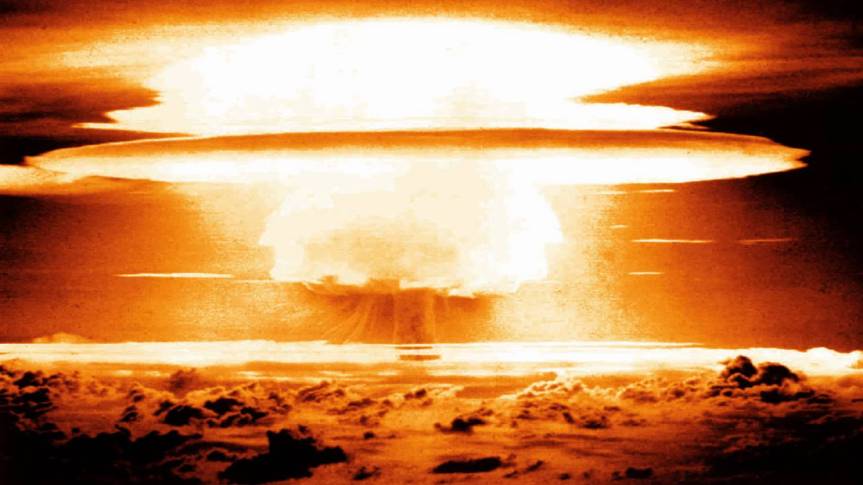
And yet even as we live our lives, the possibility of a nuclear Armageddon remains somewhere in our deepest fears and fantasies. Worse yet, the more we suppress the thought of such horrors and the more we refuse even to think about acting to prevent them, the more likely it is that such an Armageddon will indeed come for all of us one day, and the “trinity” we’ll experience will be a horrific version of the blinding flash of light first seen by J. Robert Oppenheimer and crew at that remote desert site nearly 80 years ago.
The Madness of Nuclear Warfare, Alive and Well in America
W.J. Astore
(Here’s my latest for TomDispatch.com; If you haven’t subscribed, you should!)
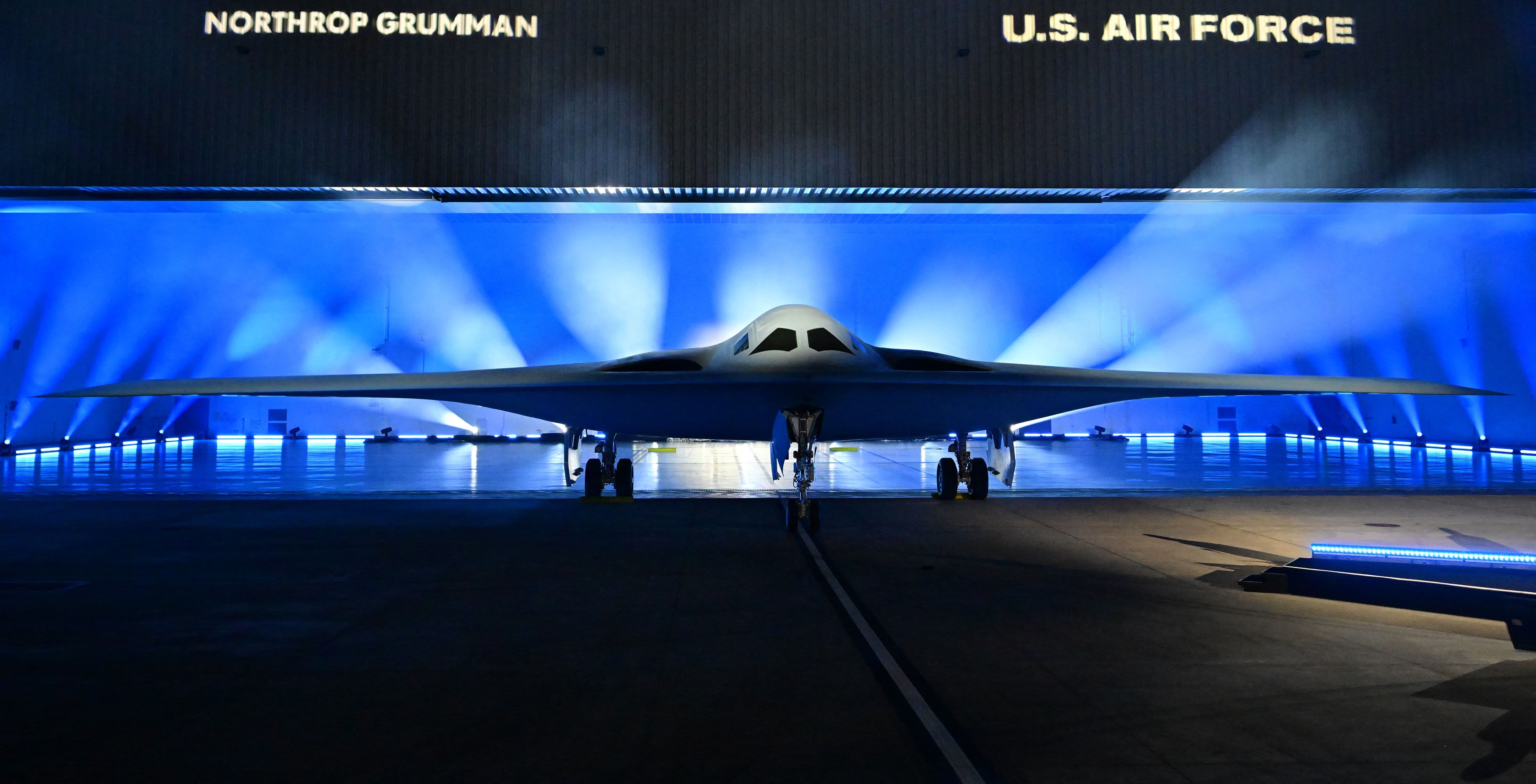
Hey, cheer up because it truly is a beauty! I’m talking about this country’s latest “stealth bomber,” the B-21 Raider, just revealed by Northrop Grumman, the company that makes it, in all its glory. With its striking bat-winged shape and its ability to deliver a very big bang (as in nuclear weapons), it’s our very own “bomber of the future.” As Secretary of Defense Lloyd Austin put it at its explosive debut, it will “fortify America’s ability to deter aggression, today and into the future.” Now, that truly makes me proud to be an American.
And while you’re at it, on this MAD (as in mutually assured destruction) world of ours, let that scene, that peculiar form of madness, involving the potential end of everything on Planet Earth, sink in. As a retired Air Force officer, it reminded me all too vividly of my former service and brought to mind the old motto of the Strategic Air Command(SAC), “Peace Is Our Profession.” Headed in its proudest years by the notorious General Curtis LeMay, it promised “peace” via the threat of the total nuclear annihilation of America’s enemies.
SAC long controlled two “legs” of this country’s nuclear triad: its land-based bombers and intercontinental ballistic missiles, or ICBMs. During the Cold War, those Titans, Minutemen, and MX “Peacekeepers” were kept on constant alert, ready to pulverize much of the planet at a moment’s notice. It didn’t matter that this country was likely to be pulverized, too, in any war with the Soviet Union. What mattered was remaining atop the nuclear pile. A concomitant benefit was keeping conventional wars from spinning out of control by threatening the nuclear option or, as was said at the time, “going nuclear.” (In the age of Biden, it’s “Armageddon.”)
Luckily, since the atomic destruction of Hiroshima and Nagasaki in 1945, the world hasn’t gone nuclear again and yet this country’s military continues, with the help of weapons makers like Northrop Grumman, to hustle down that very path to Armageddon. Once upon a time, the absurdity of all this was captured by Stanley Kubrick’s masterpiece, the satirical 1964 film Dr. Strangelove, which featured a “war room” in which there was no fighting, even as its occupants oversaw a nuclear doomsday. Sadly enough, that movie still seems eerily relevant nearly 60 years later in a world lacking the Soviet Union, where the threat of nuclear war nonetheless looms ever larger. What gives?
The short answer is that America’s leaders, like their counterparts in Russia and China, seem to have a collective death wish, a shared willingness to embrace the most violent and catastrophic weapons in the name of peace.
Nuclear Bombers and ICBMs Return!
There’s nothing magical about the nuclear triad. It’s not the Holy “Trinity,” as a congressman from Florida said long ago. Even so, it’s worshipped by the U.S. military in its own all-too-expensive fashion. America’s triad consists of bombers capable of carrying nuclear weapons (B-52s, B-1s, B-2s, and someday B-21s), those land-based ICBMs, and that most survivable “leg,” the U.S. Navy’s Trident-missile-firing submarines. No other country has a triad quite as impressive (if that’s the word for it), nor is any other country planning to spend up to $2 trillion over the next three decades “modernizing” it. The Air Force, of course, controls the first two legs of that triad and isn’t about to give them up just because they’re redundant to America’s “defense” (given those submarines), while constituting a threat to life on this planet.
Recently, when the Air Force unveiled that B-21 Raider, its latest nuclear-capable bomber, we learned that it looks much like its predecessor, the B-2 Spirit, with its bat-like shape (known as a “flying wing” design) driven by stealth or the avoidance of radar detection. The Air Force plans to buy “at least” 100 of those planes at a projected cost of roughly $750 million each. Count on one thing, though: with the inevitable delays and cost overruns associated with any high-tech military project these days, the flyaway cost will likely exceed $1 billion per plane, or at least $100 billion of your taxpayer dollars (and possibly even $200 billion).
Four years ago, when I first wrote about the B-21, its estimated cost was $550 million per plane, but you know the story, right? The F-35 was supposed to be a low-cost, multi-role fighter jet. A generation later, by the Air Force’s own admission, it’s now a staggeringly expensive “Ferrari” of a plane, sexy in appearance but laden with flaws. Naturally, the B-21 is advertised as a multi-role bomber that can carry “conventional” or non-nuclear munitions as well as thermonuclear ones, but its main reason for being is its alleged ability to put nuclear bombs on target, even without Slim Pickens (“Major Kong” in Kubrick’s Dr. Strangelove) riding down on one of them.
The main arguments for expensive nuclear bombers are that they can be launched as a show of resolve but also, unlike missiles, recalled, if necessary. (Or so we hope anyway.) They have a “man in the loop” for greater targeting flexibility and so complicate the enemy’s defensive planning. Such arguments may have made some sense in the 1950s and early 1960s, before ICBMs and their sub-launched equivalents were fully mature technologies, but they’re stuff and nonsense today. If nuclear-capable nations like Russia and China aren’t already deterred by the hundreds of missiles with thousands of highly accurate nuclear warheads in America’s possession, they’re not about to be deterred by a few dozen, or even 100, new B-21 stealth bombers, no matter the recent Hollywood-style hype about them.
Yet logic couldn’t matter less here. What matters is that the Air Force has had nuclear-capable bombers since those first modified B-29s that dropped Little Boy and Fat Man on Hiroshima and Nagasaki, and the generals are simply not about to give them up — ever. Meanwhile, building any sophisticated weapons system like the B-21 is sure to employ tens of thousands of workers. (There are already 400 parts suppliersfor the B-21 scattered across 40 states to ensure the undying love of the most congressional representatives imaginable.) It’s also a boondoggle for America’s many merchants of death, especially the lead contractor, Northrop Grumman.
A reader at my Bracing Views Substack, a Vietnam veteran, nailed it when he described his own reaction to the B-21’s unveiling:
“What struck me in my heart (fortunately, I have a great pacemaker) was the self-assured, almost condescending demeanor of the Secretary [of Defense], the Hollywood staging and lighting, and the complete absence of consideration of what cognitive/emotional/moral injuries might be inflicted on the viewer, never mind experiencing exposure to the actual bomber and its payload — add in the incredible cost and use of taxpayer money for a machine and support system that can never actually be used, or if used, would produce incalculable destruction of people and planet; again, never mind how all that could have been used to start making America into a functioning social democracy instead of a declining, tottering empire.”
Social democracy? Perish the thought. The U.S. economy is propped up by a militarized Keynesianism tightly embraced by Congress and whatever administration is in the White House. So, no matter how unnecessary those bombers may be, no matter how their costs spiral ever upwards, they’re likely to endure. Look for them flying over a sports stadium near you, perhaps in 2030 — if, that is, we’re still alive as a species.
As the Air Force buys new stealth bombers with your tax dollars, they also plan to purchase a new generation of ICBMs, or a “ground-based strategic deterrent” in Newspeak, to plant in missile silos in garden spots like rural Montana, Nebraska, North Dakota, and Wyoming. The Air Force has had ICBMs since the 1960s. Roughly 1,000 of them (though that service initially requested 10,000) were kept on high alert well into the 1980s. Today’s ICBM force is smaller, but ever more expensive to maintain due to its age. It’s also redundant, thanks to the Navy’s more elusive and survivable nuclear deterrent. But, again, logic doesn’t matter here. Whether needed or not, the Air Force wants those new land-based missiles just like those stealth bombers and Congress is all too willing to fund them in your name.
Ka-ching! But hopefully not ka-boom!
Just as the purchase price for the B-21 project is expected to start at $100 billion (but will likely far exceed that), the new ICBMs, known as Sentinels, are also estimated to cost $100 billion. It brings to mind an old saying (slightly updated): a hundred billion here, a hundred billion there, and pretty soon you’re talking real money. In a case of egregious double-dipping, Northrop Grumman is once again the lead contractor, having recently opened a $1.4 billion facility to design the new missile in Colorado Springs, conveniently close to the Air Force Academy and various other Air and Space Force facilities. Location, location, location!
Why such nuclear folly? The usual reasons, of course. Building genocidal missiles creates jobs. It’s a boon and a half for the industrial part of the military-industrial-congressional complex. It’s considered “healthy” for the communities where those missiles will be located, rural areas that would suffer economically if the Air Force bases there were instead dismantled or decommissioned. For that service, shiny new ICBMs are a budget bonanza, while helping to ensure that the real “enemy” — and yes, I have the U.S. Navy in mind — won’t end up with a monopoly on world-ending weaponry.
In the coming decades, expect those “Sentinels” to be planted in fields far from where most Americans live under the guiding principle that, if we keep them out of sight, they’ll be out of mind as well. Yet I can’t help but think that this country’s military is out of its mind in “planting” them there when the only harvest can be of mass death.
It’s a MAD Old World
As MAD magazine’s Alfred E. Neuman would undoubtedly have said, “What, me worry?”
Oh, MAD old world that has such nukes in it! Color me astonished, in fact, that America’s nuclear weapons mix hasn’t changed much since the 1960s. That sort of world-ending persistence should tell us something, but what exactly? For one thing, that not enough of us can imagine a brave new world without genocidal nuclear weapons in it.
In 1986, President Ronald Reagan and Soviet leader Mikhail Gorbachev actually did so. They came close, in fact, to reaching a deal to eliminate nuclear weapons. Sadly, Reagan proved reluctant to abandon his dream of a nuclear space shield, then popularly known as “Star Wars” or, more formally, as the Strategic Defense Initiative. Since Reagan, sadly enough, U.S. presidents have stayed the course on nukes. Most disappointingly, the Nobel Prize-winning Barack Obama spoke of eliminating them, supported by former Cold War stalwarts like Henry Kissinger and George Schultz, only to abandon that goal, partly to solidify support in the Senate for a nuclear deal with Iran that, no less sadly, is itself pretty much dead and buried today.
If saintly Reagan and saintly Obama couldn’t do it, what hope do ordinary Americans have of ending our nuclear MADness? Well, to quote a real saint, Catholic peace activist Dorothy Day, “Our problems stem from our acceptance of this filthy, rotten system.” It’s hard to think of a system more filthy or rotten than one that threatens to destroy most life on our planet, so that this country could in some fashion “win” World War III.
Win what, exactly? A burnt cinder of a planet?
Look, I’ve known airmen who’ve piloted nuclear bombers. I’ve known missileersresponsible for warheads that could kill millions (if ever launched). My brother guarded ICBM silos when he was a security policeman in SAC. I sat in the Air Force’s missile-warning center at Cheyenne Mountain under 2,000 feet of solid granite as we ran computerized war games that ended in… yep, mutually assured destruction. We were, at least individually, not insane. We were doing our duty, following orders, preparing for the worst, while (most of us, anyway) hoping for the best.
A word of advice: don’t look for those within this nightmarish system to change it, not when our elected representatives are part of the very military-industrial complex that sustains this MADness. Only an alert and knowledgeable citizenry, with real freedom, could act to do so for the benefit of humanity. But will we ever do that?
“We’re going backwards as a country,” my wife reminds me — and I fear that she’s right. She summarized the hoopla at the B-21’s recent unveiling this way: “Let’s go gaga over a mass-murder machine.”
Collectively, it seems that we may be on the verge of returning to a nightmarish past, where we lived in fear of a nuclear war that would kill us all, the tall and the small, and especially the smallest among us, our children, who really are our future.
My fear: that we’ve already become comfortably numb to it and no longer can take on that culture of mass death. I say this with great sadness, as an American citizen and a human being.
No matter. At least a few of us will have profited from building new ultra-expensive stealth bombers and shiny new missiles, while ensuring that mushroom clouds remain somewhere in our collective future. Isn’t that what life is truly all about?
Isn’t it reassuring to know your taxpayer dollars are buying lots of “Ferraris” for the U.S. military?
W.J. Astore
If you truly want to help the U.S. military, slash its yearly budget.
It’s counterintuitive, right? We think more money will help the Pentagon field effective forces and to be better prepared to defend America. But that hasn’t proven to be the case. The more money the Pentagon gets, the more money gets spent on unnecessary and often poorly performing weapons systems. Take my old service, the U.S. Air Force. It doesn’t need the B-21 bomber. It doesn’t need new ICBMs. The F-35 fighter is a major disappointment, a “Ferrari” according to the Air Force Chief of Staff, i.e. an exotic and temperamental plane you fly only on occasion, which isn’t what the Air Force wanted or needed. Similarly, the Navy is building aircraft carriers that can’t launch planes effectively and “little crappy ships” that have no role at all. And the Army has thousands of M-1 Abrams tanks parked in storage that it’ll probably never use.
Do you have a friend with too much money? Maybe he got an inheritance or some other windfall. And the money makes him stupid. It’s stipulated in the inheritance that he must spend all of it within a year or two (the way Pentagon appropriations work), and if he fails to spend it, he’ll get less in the future. So he spends wildly, without giving it much thought, because he’s got the money and because he has to. And spending money on expensive “Ferraris” is fun. He’s not encouraged to think about how to use the money wisely, rather the reverse. So he just buys big ticket items willy-nilly.
Congress, of course, is the Pentagon’s enabler. Whatever the military wants nowadays, Congress is determined to give the brass more, in the false name of supporting the troops. It’s not the troops that see the money, it’s the industrial side of Ike’s military-industrial complex that profits the most. There’s something truly unseemly about Congress throwing money at the Pentagon while camp-following weapons contractors siphon it up.
Technically, incredibly, the U.S. military is no longer at war, i.e. “large-scale combat operations,” according to Secretary of Defense Lloyd Austin. Perhaps you missed the announcement that new U.S. troops coming on active duty wouldn’t automatically receive the National Defense Service Medal, as they have since 9/11 and the subsequent global war on terror. With those “large-scale” wars finally ended, shouldn’t the Pentagon’s budget decrease in a big way? Wars in Iraq and Afghanistan were costing the U.S. over $100 billion a year, yet as they have ended, the Pentagon’s budget has increased by more than $100 billion. Talk about counterintuitive! Wars end as war budgets increase. Only in America.
There is no logic here. I’m reminded of a scene from the original Star Trek in which Spock is befuddled by an attack on Captain Kirk because there’s apparently no logic to it. As an alien patiently explains to Spock, “Perhaps you should forget logic and devote yourself to motivations of passion or gain.” It’s a telling lesson for anyone looking to explain the illogic of America’s defense budget.
Get rid of the passion and gain in the Pentagon’s budget, America. It’s time to use logic and make major cuts. Force the military to think rather than to spend. Who knows … we may end up with a leaner, even a smarter, military, one committed less to war and more to supporting and defending the U.S. Constitution.
Mutually Assured Destruction (MAD) is making a comeback as the Pentagon hypes a new Cold War with China and Russia. Threat inflation is a big part of this “new” war, just as it was in the old one. So too is greed. There’s much money to be made (a trillion or more dollars, perhaps) in building new nuclear missiles and bombers, even though these weapons represent incipient holocausts.
We need to stop this MADness. There is no need for a new Cold War, and there is no need for new nuclear weapons, weapons that could very well destroy human civilization and most of life on our planet.
This is the subject of my latest article at TomDispatch.com. What follows is an excerpt. I encourage you to read the article in its entirety here.
Stop the MADness. Seriously.
Only Fools Replay Doomsday
In the early 1960s, at the height of America’s original Cold War with the Soviet Union, my old service branch, the Air Force, sought to build 10,000 land-based nuclear missiles. These were intended to augment the hundreds of nuclear bombers it already had, like the B-52s featured so memorably in the movie Dr. Strangelove. Predictably, massive future overkill was justified in the name of “deterrence,” though the nuclear war plan in force back then was more about obliteration. It featured a devastating attack on the Soviet Union and communist China that would kill an estimated 600 million people in six months (the equivalent of 100 Holocausts, notes Daniel Ellsberg in his book, The Doomsday Machine). Slightly saner heads finally prevailed — in the sense that the Air Force eventually got “only” 1,000 of those Minuteman nuclear missiles.
Despite the strategic arms limitation talks between the U.S. and the Soviet Union, the dire threat of nuclear Armageddon persisted, reaching a fresh peak in the 1980s during Ronald Reagan’s presidency. At the time, he memorably declared the Soviet Union to be an “evil empire,” while nuclear-capable Pershing II and ground-launched cruise missiles were rushed to Europe. At that same moment, more than a few Europeans, joined by some Americans, took to the streets, calling for a nuclear freeze— an end to new nuclear weapons and the destabilizing deployment of the ones that already existed. If only…
It was in this heady environment that, in uniform, I found myself working in the ultimate nuclear redoubt of the Cold War. I was under 2,000 feet of solid granite in a North American Aerospace Defense (NORAD) command post built into Cheyenne Mountain at the southern end of the Colorado front range that includes Pikes Peak. When off-duty, I used to hike up a trail that put me roughly level with the top of Cheyenne Mountain. There, I saw it from a fresh perspective, with all its antennas blinking, ready to receive and relay warnings and commands that could have ended in my annihilation in a Soviet first strike or retaliatory counterstrike.
Yet, to be honest, I didn’t give much thought to the possibility of Armageddon. As a young Air Force lieutenant, I was caught up in the minuscule role I was playing in an unimaginably powerful military machine. And as a hiker out of uniform, I would always do my best to enjoy the bracing air, the bright sunshine, and the deep blue skies as I climbed near the timberline in those Colorado mountains. Surrounded by such natural grandeur, I chose not to give more than a moment’s thought to the nightmarish idea that I might be standing at ground zero of the opening act of World War III. Because there was one thing I knew with certainty: if the next war went nuclear, whether I was on-duty under the mountain or off-duty hiking nearby, I was certainly going to be dead.
Then came 1991 and the collapse of the Soviet Union. The Cold War was over! America had won! Rather than nightmares of the Red Storm Rising sort that novelist Tom Clancy had imagined or Hollywood’s Red Dawn in which there was an actual communist invasion of this country, we could now dream of “peace dividends,” of America becoming a normal country in normal times.
It was, as the phrase went, “morning again in America” — or, at least, it could have been. Yet here I sit, 30 years later, at sea level rather than near the timberline, stunned by the resurgence of a twenty-first-century version of anticommunist hysteria and at the idea of a new cold war with Russia, the rump version of the Soviet Union of my younger days, joined by an emerging China, both still ostensibly conspiring to endanger our national security, or so experts in and out of the Pentagon tell us.
Excuse me while my youthful 28-year-old self asks my cranky 58-year-old self a few questions: What the hell happened? Dammit, we won the Cold War three decades ago. Decisively so! How, then, could we have allowed a new one to emerge? Why would any sane nation want to refight a war that it had already won at enormous cost? Who in their right mind would want to hit the “replay” button on such a costly, potentially cataclysmic strategic paradigm as deterrence through MAD, or mutually assured destruction?
In a new article for TomDispatch.com. I tackle the Air Force’s latest stealth bomber, the B-21 Raider. The project will likely cost $100 billion, and possibly much more than this over its lifetime. Is this truly what we need for our national “defense”?
By their nature, bombers are not defensive weapons. They’re designed to take the fight to the enemy with overwhelming destructive force. In other words, the B-21, strictly speaking, is not for national defense: it’s for national offense. That’s why the U.S. Air Force speaks so proudly of “global strike” against “any target.” It’s the empowerment as well as the enshrinement of a vision of violent and disruptive action by the U.S. military anytime, anywhere, on the planet. If we weren’t Americans, we’d recognize this vision for what it really is: a form of militarism gone mad.
Here is an excerpt from my article at TomDispatch.
The Air Force’s Strange Love for the New B-21 Bomber The Military-Industrial Complex Strikes (Out) Again
By William J. Astore
Did you know the U.S. Air Force is working on a new stealth bomber? Don’t blame yourself if you didn’t, since the project is so secret that most members of Congress aren’t privy to the details. (Talk about stealthy!) Known as the B-21 Raider, after General Doolittle’s Raiders of World War II fame, it’s designed to carry thermonuclear weapons as well as conventional missiles and bombs. In conceptual drawings, it looks much like its predecessor, the B-2 Spirit stealth bomber, all wing and no fuselage, a shape that should help it to penetrate and survive the most hostile air defense systems on Earth for the purposes of a “global strike.” (Think: nuclear Armageddon.)
As the Air Force acquires those future B-21s, the B-2s will be retired along with the older B-1B bomber, although the venerable B-52 (of the Cold War era), much modified, will remain in service for the foreseeable future. At $550 million per plane (before the inevitable cost overruns even kick in), the Air Force plans to buy as many as 200 B-21s. That’s more than $100 billion in procurement costs alone, a boon for Northrop Grumman, the plane’s primary contractor.
If history is any judge, however, a boon for Northrop Grumman is likely to prove a bust for the American taxpayer. As a start, the United States has no real need for a new, stealthy, super-expensive, nuclear-capable, deep-penetrating strategic bomber for use against “peer” rivals China and Russia …
Here’s the nightmarish reality of actually bringing such weapons systems online: when the U.S. military develops a capability, it seeks to use it, even in cases where it’s wildly inappropriate. (Again, think of the massive B-52 bombings in Vietnam, Laos, and Cambodia in a counterinsurgency campaign classically meant to win “hearts and minds.”) Fielding a new strategic bomber for global strike, including potential thermonuclear attacks, will not so much enhance national security as potentially embolden future presidents to strike whenever and wherever they want in a fashion devastating to human life. The B-21 isn’t a force-multiplier. It’s an Armageddon-enabler.
Flying High in our B-21s
Having marketed himself as a savvy military critic, is there any possibility that Donald Trump will have the smarts of Jimmy Carter when it comes to the B-21 program? Will he save America at least $100 billion (and probably far more) while eliminating yet another redundant weapons system within the Department of Defense? Fat chance. Even if he wanted to, The Donald doesn’t stand a chance against the Pentagon these days.
Flush with billions and billions of new taxpayer dollars, including funds for those F-35s and for new nukes from a bipartisan coalition in an otherwise riven Congress, America’s military services will fight for any and all major weapons systems, the B-21 included. So, too, will Congress, especially if Northrop Grumman follows the production strategy first employed by Rockwell International with the B-1: spreading the plane’s subcontractors and parts suppliers to as many states and Congressional districts as possible. This would, of course, ensure that cuts to the B-21 program would impact jobs and so drive votes in Congress in its favor. After all, what congressional representative would be willing to vote against high-paying jobs in his or her own state or district in the name of American security?
So here’s my advice to young model-builders everywhere: don’t blow up your B-21s anytime soon. Rest assured that the real thing is coming. If the Air Force wants to ensure that it has a new bomber, in the name of blasting America’s enemies to oblivion, so be it. It worked (partially and at tremendous cost) in 1943 in the flak- and fighter-filled skies of Nazi Germany, so why shouldn’t it work in 2043 over the skies of who-knows-where-istan?
Why does “your” Air Force think this way? Not just because it loves big bombers, but also because its biggest rivals aren’t in Russia or China or some “rogue” state like Iran. They’re right here in “the homeland.” I’m talking, of course, about the other military services. Yes, interservice rivalries remain alive and well at the Pentagon. If the U.S. Navy can continue to build breathtakingly expensive nuclear-powered aircraft carriers (like the much-troubled USS Gerald R. Ford) and submarines, and if the Army can have all its tanks, helicopters, and associated toys, then, dammit, the Air Force can have what truly makes it special and unique: a new stealthy strategic bomber escorted by an even newer long-range stealthy fighter.
And don’t just blame the Air Force for such retrograde thinking. Its leaders know what’s easiest to sell Congress: big, splashy projects that entail decades of funding and create tens of thousands of jobs. As congressional representatives line up to push for their pieces of the action, military contractors are only too happy to oblige. As the lead contractor for the B-21, Northrop Grumman of Falls Church, Virginia, has the most to gain, but other winners will include United Technologies of East Hartford, Connecticut; BAE Systems of Nashua, New Hampshire; Spirit Aerosystems of Wichita, Kansas; Orbital ATK of Clearfield, Utah, and Dayton, Ohio; Rockwell Collins of Cedar Rapids, Iowa; GKN Aerospace of St Louis, Missouri; and Janicki Industries of Sedro-Woolley, Washington. And these are just the major suppliers for that aircraft; dozens of other parts suppliers will be needed, and they’ll be carefully allocated to as many Congressional districts as possible. Final assembly of the plane will likely take place in Palmdale, California, integrating components supplied from sea to shining sea. Who says America’s coastal enclaves can’t join with the heartland to get things done?
Even if President Trump wanted to cancel the B-21 — and given his recent speech to graduates of the Naval Academy, the odds are that there isn’t a weapons system anywhere he doesn’t want to bring to fruition — chances are that in today’s climate of militarism he would face enormous push-back. As a colleague who’s still on active duty in the Air Force puts it, “What makes today worse than the Carter days is our flag-humping, military-slobbering culture. We can’t even have a discussion of what the country’s needs are for fear of ‘offending’ or ‘disrespecting’ the troops. Today, Carter would be painted as disloyal to those troops he was consigning to an early death because every procurement decision centers on a ‘grave’ or ‘existential’ threat to national security with immediate and deadly consequences.”
And so the Air Force and its flyboy generals will win the fight for the B-21 and take the American taxpayer along for the ride — unless, that is, we somehow have the courage to pry the control sticks from the cold, dead hands of hidebound military tradition and lobbying firepower. Until we do, it’s off we go (yet again), into the wild blue yonder, flying high in our B-21s.




 Bracing Views